


High-Circularity Rigid Packaging Based on Preferred Polymers Market Outlook
The High-Circularity Rigid Packaging Based on Preferred Polymers market was valued at $1.48 billion in 2025 and is projected to reach $3.14 billion by 2034, growing at a CAGR of 8.7% during the forecast period 2026-2034. This market is witnessing significant growth due to the increasing demand for sustainable packaging solutions across various industries. The shift towards eco-friendly packaging materials is driven by stringent environmental regulations and consumer preferences for sustainable products. The adoption of high-circularity rigid packaging is further fueled by advancements in polymer technology, which enhance the recyclability and durability of packaging materials. The market is also benefiting from the growing awareness among consumers and businesses about the environmental impact of packaging waste, leading to increased investments in circular economy initiatives.
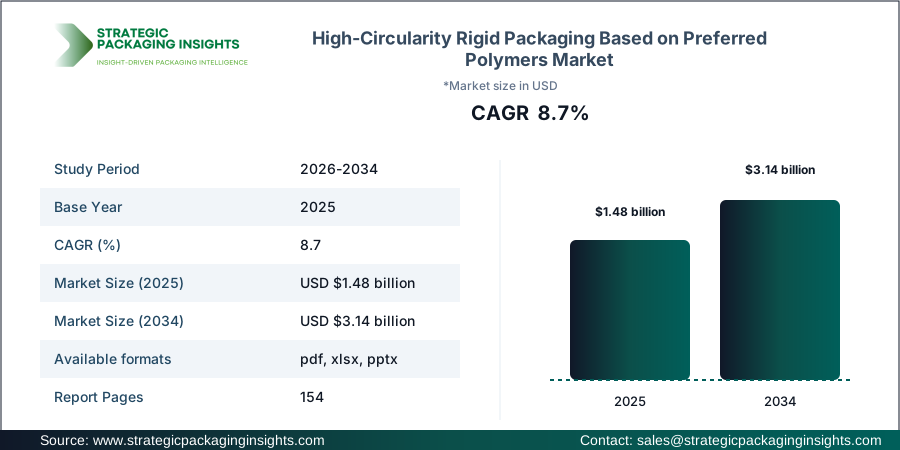
Despite the promising growth prospects, the market faces challenges such as high initial costs associated with the development and implementation of high-circularity packaging solutions. Regulatory hurdles and the need for significant infrastructure investments to support recycling processes are also restraining market growth. However, the potential for cost savings in the long term, coupled with the increasing availability of government incentives for sustainable practices, presents substantial growth opportunities. The market is poised for expansion as companies continue to innovate and develop new materials and technologies that enhance the sustainability and functionality of rigid packaging solutions.
Report Scope
| Attributes | Details |
| Report Title | High-Circularity Rigid Packaging Based on Preferred Polymers Market Size, Future Growth and Forecast 2034 |
| By Polymer Type | PET, HDPE, PP, Bio-based Polymers |
| By Product Type | Bottles, Jars, Tubs, Containers |
| By Application | Food, Beverages, Personal Care, Home Care |
| By End Use | FMCG, Retailers, Converters |
| Region | Asia Pacific, North America, Latin America, Europe, Middle East & Africa |
| Base Year | 2025 |
| Historic Period | 2018-2024 |
| Forecast Period | 2026-2034 |
| Number of Pages | 154 |
| Customization Available | Yes* |
Opportunities & Threats
The High-Circularity Rigid Packaging market presents numerous opportunities, particularly in the realm of technological advancements and innovation. Companies are increasingly investing in research and development to create new polymer blends that offer enhanced recyclability and performance. This innovation is crucial as it allows for the production of packaging that not only meets environmental standards but also maintains the integrity and safety of the packaged goods. Additionally, the growing trend of urbanization and the rise in e-commerce are driving demand for efficient and sustainable packaging solutions, providing further opportunities for market expansion. As consumers become more environmentally conscious, there is a significant opportunity for companies to differentiate themselves by offering high-circularity packaging solutions that align with consumer values.
Another opportunity lies in the expansion of the market into emerging economies, where there is a growing demand for sustainable packaging solutions. These regions are experiencing rapid industrialization and urbanization, leading to increased consumption of packaged goods. By establishing a presence in these markets, companies can tap into a new customer base and drive growth. Furthermore, partnerships and collaborations with local governments and organizations can facilitate the development of recycling infrastructure, which is essential for the success of high-circularity packaging initiatives. This collaborative approach can also help companies navigate regulatory challenges and gain a competitive edge in the market.
However, the market also faces threats, particularly from the volatility of raw material prices and the availability of recycled materials. Fluctuations in the cost of raw materials can impact the profitability of companies operating in this market. Additionally, the limited availability of high-quality recycled materials can pose a challenge to the production of high-circularity packaging solutions. Companies must invest in efficient supply chain management and develop strategies to mitigate these risks. Furthermore, the market is subject to stringent regulations and standards, which can vary significantly across regions. Navigating these regulatory landscapes requires significant resources and expertise, posing a potential barrier to entry for new players in the market.
Drivers & Challenges
One of the primary drivers of the High-Circularity Rigid Packaging market is the increasing consumer demand for sustainable and environmentally friendly packaging solutions. As awareness of environmental issues grows, consumers are becoming more conscious of their purchasing decisions and are seeking products that align with their values. This shift in consumer behavior is prompting companies to adopt high-circularity packaging solutions that reduce waste and minimize environmental impact. Additionally, government regulations and policies aimed at reducing plastic waste and promoting recycling are driving the adoption of sustainable packaging solutions. These regulations are encouraging companies to invest in research and development to create innovative packaging materials that meet environmental standards.
Technological advancements in polymer science and recycling processes are also driving the growth of the High-Circularity Rigid Packaging market. Innovations in polymer technology have led to the development of new materials that offer improved recyclability and performance. These advancements are enabling companies to produce packaging solutions that are not only sustainable but also meet the functional requirements of various industries. Furthermore, the development of advanced recycling technologies is enhancing the efficiency and effectiveness of recycling processes, making it easier for companies to implement high-circularity packaging solutions. These technological advancements are expected to continue driving market growth in the coming years.
Despite the positive drivers, the market faces several challenges, including the high cost of implementing high-circularity packaging solutions. The development and production of sustainable packaging materials require significant investments in research and development, as well as the establishment of recycling infrastructure. These costs can be prohibitive for small and medium-sized enterprises, limiting their ability to adopt high-circularity packaging solutions. Additionally, the market is subject to regulatory challenges, as companies must navigate complex and varying regulations across different regions. These challenges require significant resources and expertise, posing a barrier to entry for new players in the market. Companies must develop strategies to overcome these challenges and capitalize on the opportunities presented by the growing demand for sustainable packaging solutions.
Market Share Analysis
The competitive landscape of the High-Circularity Rigid Packaging market is characterized by the presence of several key players who are driving innovation and growth in the industry. Companies such as ALPLA, Berry Global, Amcor, Plastipak, and Graham Packaging are leading the market with their extensive product portfolios and strong focus on sustainability. These companies are investing heavily in research and development to create new polymer blends and packaging solutions that meet the growing demand for high-circularity packaging. Their commitment to sustainability and innovation has enabled them to maintain a competitive edge in the market.
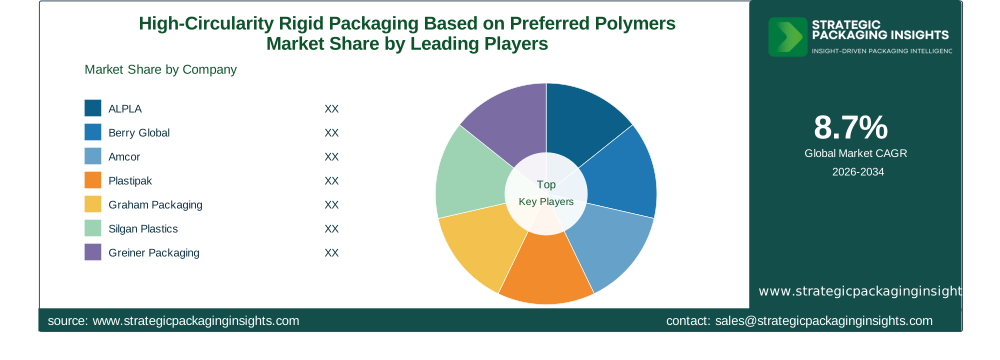
ALPLA is a prominent player in the market, known for its innovative packaging solutions and commitment to sustainability. The company has a strong focus on developing high-circularity packaging solutions that reduce environmental impact and enhance recyclability. Berry Global is another key player, offering a wide range of packaging solutions that cater to various industries. The company's emphasis on sustainability and innovation has helped it maintain a strong market position. Amcor is also a leading player in the market, known for its advanced packaging technologies and commitment to reducing plastic waste. The company's focus on sustainability and innovation has enabled it to capture a significant share of the market.
Plastipak and Graham Packaging are also key players in the market, known for their extensive product portfolios and focus on sustainability. Plastipak is a leader in the development of high-circularity packaging solutions, with a strong emphasis on innovation and environmental responsibility. Graham Packaging is known for its advanced packaging technologies and commitment to reducing plastic waste. The company's focus on sustainability and innovation has helped it maintain a competitive edge in the market. Other notable players in the market include Silgan Plastics, Greiner Packaging, Logoplaste, Sonoco, and Huhtamaki, all of which are investing in research and development to create innovative packaging solutions that meet the growing demand for high-circularity packaging.
Key Highlights
- The High-Circularity Rigid Packaging market is projected to grow at a CAGR of 8.7% from 2026 to 2034.
- Increasing consumer demand for sustainable packaging solutions is driving market growth.
- Technological advancements in polymer science are enhancing the recyclability of packaging materials.
- Government regulations and policies are promoting the adoption of high-circularity packaging solutions.
- Key players in the market are investing in research and development to create innovative packaging solutions.
- The market is expanding into emerging economies, providing new growth opportunities.
- Challenges include high implementation costs and regulatory hurdles.
Top Countries Insights
In the High-Circularity Rigid Packaging market, the United States is a leading player, with a market size of $1.2 billion and a CAGR of 7%. The country's strong focus on sustainability and environmental responsibility is driving demand for high-circularity packaging solutions. Government regulations and policies aimed at reducing plastic waste are also promoting the adoption of sustainable packaging solutions. Additionally, the presence of key players in the market, such as Berry Global and Amcor, is contributing to the growth of the market in the United States.
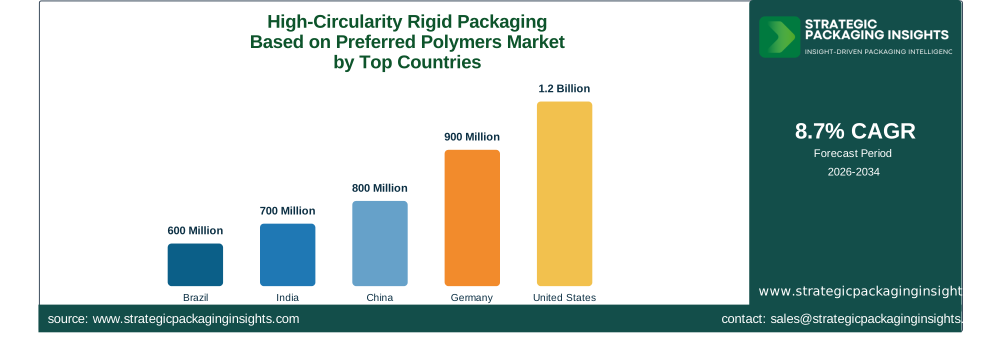
Germany is another key market for high-circularity rigid packaging, with a market size of $900 million and a CAGR of 6%. The country's strong focus on sustainability and innovation is driving demand for high-circularity packaging solutions. Government regulations and policies aimed at reducing plastic waste are also promoting the adoption of sustainable packaging solutions. Additionally, the presence of key players in the market, such as ALPLA and Greiner Packaging, is contributing to the growth of the market in Germany.
China is a rapidly growing market for high-circularity rigid packaging, with a market size of $800 million and a CAGR of 9%. The country's rapid industrialization and urbanization are driving demand for sustainable packaging solutions. Government regulations and policies aimed at reducing plastic waste are also promoting the adoption of high-circularity packaging solutions. Additionally, the presence of key players in the market, such as Plastipak and Graham Packaging, is contributing to the growth of the market in China.
India is another emerging market for high-circularity rigid packaging, with a market size of $700 million and a CAGR of 10%. The country's rapid industrialization and urbanization are driving demand for sustainable packaging solutions. Government regulations and policies aimed at reducing plastic waste are also promoting the adoption of high-circularity packaging solutions. Additionally, the presence of key players in the market, such as Silgan Plastics and Huhtamaki, is contributing to the growth of the market in India.
Brazil is a key market for high-circularity rigid packaging, with a market size of $600 million and a CAGR of 8%. The country's strong focus on sustainability and environmental responsibility is driving demand for high-circularity packaging solutions. Government regulations and policies aimed at reducing plastic waste are also promoting the adoption of sustainable packaging solutions. Additionally, the presence of key players in the market, such as Logoplaste and Sonoco, is contributing to the growth of the market in Brazil.
High-Circularity Rigid Packaging Based on Preferred Polymers Market Segments Insights

By Polymer Type Analysis
The High-Circularity Rigid Packaging market is segmented by polymer type into PET, HDPE, PP, and bio-based polymers. PET is the most widely used polymer in the market due to its excellent recyclability and durability. The demand for PET-based packaging solutions is driven by the increasing consumer preference for sustainable and environmentally friendly products. HDPE is another popular polymer type, known for its strength and resistance to impact. The demand for HDPE-based packaging solutions is driven by the growing need for durable and lightweight packaging materials. PP is also gaining traction in the market due to its versatility and cost-effectiveness. Bio-based polymers are emerging as a promising alternative to traditional polymers, offering enhanced sustainability and reduced environmental impact.
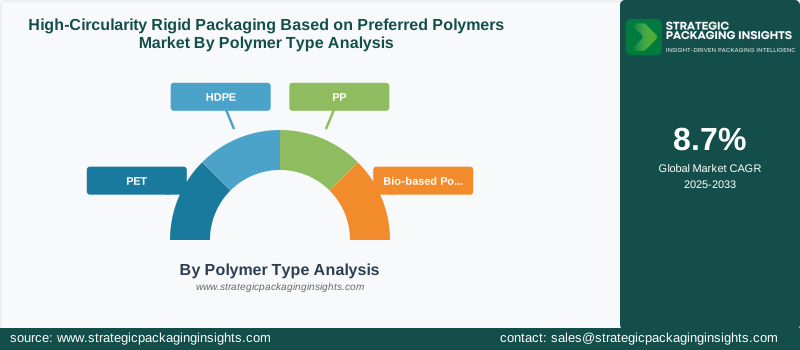
The market for bio-based polymers is expected to grow significantly during the forecast period, driven by the increasing demand for sustainable packaging solutions. Companies are investing in research and development to create new bio-based polymer blends that offer improved performance and recyclability. The adoption of bio-based polymers is also supported by government regulations and policies aimed at reducing plastic waste and promoting the use of renewable resources. The growing awareness among consumers about the environmental impact of packaging materials is further driving the demand for bio-based polymers in the market.
By Product Type Analysis
The High-Circularity Rigid Packaging market is segmented by product type into bottles, jars, tubs, and containers. Bottles are the most widely used product type in the market, driven by the increasing demand for beverages and personal care products. The demand for bottle-based packaging solutions is also driven by the growing trend of urbanization and the rise in e-commerce. Jars are another popular product type, known for their versatility and convenience. The demand for jar-based packaging solutions is driven by the increasing consumption of food and personal care products.
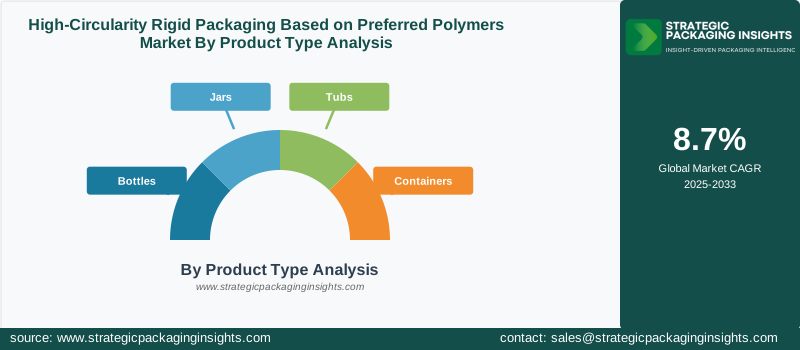
Tubs and containers are also gaining traction in the market due to their durability and ease of use. The demand for tub-based packaging solutions is driven by the growing need for convenient and sustainable packaging options. Containers are widely used in the market for their ability to protect and preserve the quality of packaged goods. The demand for container-based packaging solutions is driven by the increasing consumption of packaged food and beverages. Companies are investing in research and development to create new product designs that enhance the functionality and sustainability of rigid packaging solutions.
By Application Analysis
The High-Circularity Rigid Packaging market is segmented by application into food, beverages, personal care, and home care. The food segment is the largest application segment in the market, driven by the increasing demand for packaged food products. The demand for food-based packaging solutions is also driven by the growing trend of convenience and on-the-go consumption. The beverages segment is another significant application segment, driven by the increasing consumption of bottled water and other beverages.
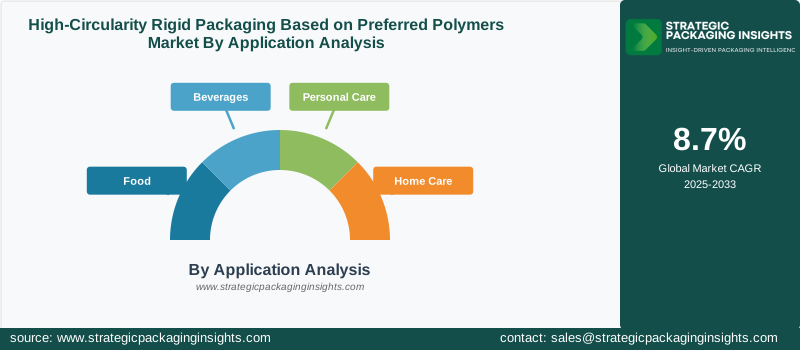
The personal care segment is also gaining traction in the market due to the growing demand for sustainable and environmentally friendly packaging solutions. The demand for personal care-based packaging solutions is driven by the increasing consumer preference for products that align with their values. The home care segment is also experiencing growth, driven by the increasing demand for cleaning and household products. Companies are investing in research and development to create new packaging solutions that meet the functional and sustainability requirements of various application segments.
By End Use Analysis
The High-Circularity Rigid Packaging market is segmented by end use into FMCG, retailers, and converters. The FMCG segment is the largest end-use segment in the market, driven by the increasing demand for packaged goods. The demand for FMCG-based packaging solutions is also driven by the growing trend of convenience and on-the-go consumption. Retailers are another significant end-use segment, driven by the increasing demand for sustainable and environmentally friendly packaging solutions.
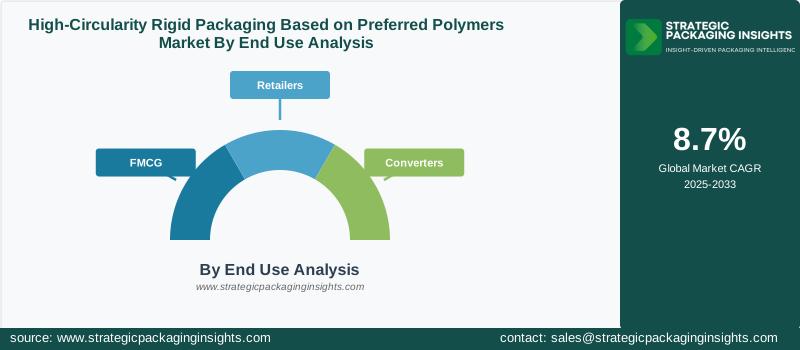
The converters segment is also gaining traction in the market due to the growing need for customized and innovative packaging solutions. The demand for converter-based packaging solutions is driven by the increasing consumer preference for products that align with their values. Companies are investing in research and development to create new packaging solutions that meet the functional and sustainability requirements of various end-use segments. The growing awareness among consumers about the environmental impact of packaging materials is further driving the demand for high-circularity packaging solutions in the market.
High-Circularity Rigid Packaging Based on Preferred Polymers Market Segments
The High-Circularity Rigid Packaging Based on Preferred Polymers market has been segmented on the basis ofBy Polymer Type
- PET
- HDPE
- PP
- Bio-based Polymers
By Product Type
- Bottles
- Jars
- Tubs
- Containers
By Application
- Food
- Beverages
- Personal Care
- Home Care
By End Use
- FMCG
- Retailers
- Converters
Region
- Asia Pacific
- North America
- Latin America
- Europe
- Middle East & Africa




