


High Barrier Pharmaceutical Packaging Films for Blister Market Outlook
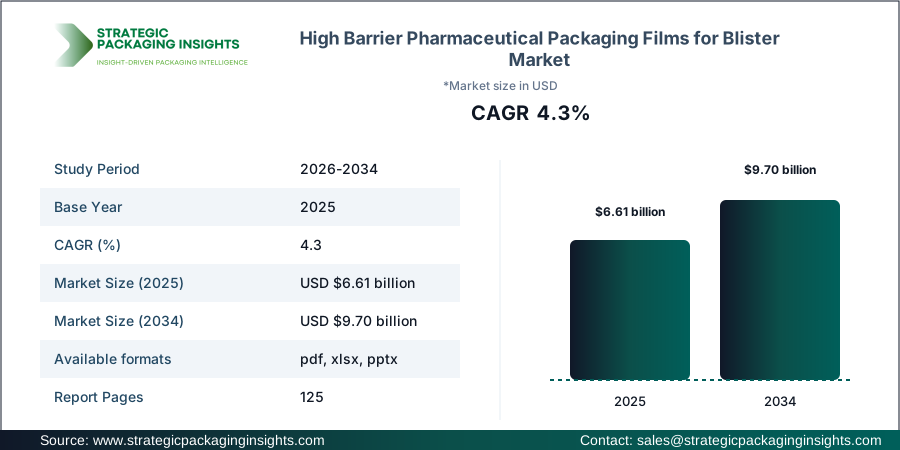
The High Barrier Pharmaceutical Packaging Films for Blister market was valued at $6.61 billion in 2025 and is projected to reach $9.70 billion by 2034, growing at a CAGR of 4.3% during the forecast period 2026-2034. This market is driven by the increasing demand for advanced packaging solutions that ensure the safety and efficacy of pharmaceutical products. The rise in chronic diseases and the growing geriatric population are fueling the demand for pharmaceuticals, thereby boosting the need for high barrier packaging films. These films provide superior protection against moisture, oxygen, and light, which are critical in maintaining the stability and shelf life of pharmaceutical products. The market is also witnessing innovations in material technology, with companies investing in research and development to create more efficient and sustainable packaging solutions.
However, the market faces challenges such as stringent regulatory requirements and the high cost of raw materials, which can hinder growth. Regulatory bodies across the globe have set stringent guidelines for pharmaceutical packaging to ensure patient safety, which can increase the complexity and cost of compliance for manufacturers. Despite these challenges, the market holds significant growth potential due to the increasing focus on sustainable packaging solutions and the expansion of the pharmaceutical industry in emerging markets. The growing trend of outsourcing pharmaceutical manufacturing to contract development and manufacturing organizations (CDMOs) is also expected to drive demand for high barrier packaging films, as these organizations seek to provide comprehensive packaging solutions to their clients.
Report Scope
| Attributes | Details |
| Report Title | High Barrier Pharmaceutical Packaging Films for Blister Market Size, Future Growth and Forecast 2034 |
| Material Type | PVC/PVDC, Aclar films, Cold-form foil, PET barrier films |
| Application | Tablets, Capsules, Medical devices |
| Barrier Type | Moisture barrier, Oxygen barrier, Light barrier |
| End Use | Pharma, CDMOs, Healthcare packaging converters |
| Region | Asia Pacific, North America, Latin America, Europe, Middle East & Africa |
| Base Year | 2025 |
| Historic Period | 2018-2024 |
| Forecast Period | 2026-2034 |
| Number of Pages | 125 |
| Customization Available | Yes* |
Opportunities & Threats
The High Barrier Pharmaceutical Packaging Films for Blister market presents numerous opportunities for growth, particularly in the area of sustainable packaging solutions. As environmental concerns continue to rise, there is a growing demand for eco-friendly packaging materials that reduce the carbon footprint of pharmaceutical products. Companies that invest in the development of biodegradable and recyclable packaging films are likely to gain a competitive edge in the market. Additionally, the increasing prevalence of chronic diseases and the aging population are driving the demand for pharmaceuticals, which in turn boosts the need for high barrier packaging films. The expansion of the pharmaceutical industry in emerging markets, such as Asia Pacific and Latin America, also presents significant growth opportunities for market players.
Another opportunity lies in the advancement of material technology, which is enabling the development of more efficient and cost-effective packaging solutions. Innovations in nanotechnology and smart packaging are expected to revolutionize the market, offering enhanced protection and functionality. Companies that leverage these technologies to create innovative packaging solutions are likely to capture a larger share of the market. Furthermore, the trend of personalized medicine and the increasing focus on patient-centric healthcare are driving the demand for customized packaging solutions, providing additional growth opportunities for market players.
Despite the opportunities, the market faces threats from stringent regulatory requirements and the high cost of raw materials. Regulatory bodies across the globe have set stringent guidelines for pharmaceutical packaging to ensure patient safety, which can increase the complexity and cost of compliance for manufacturers. Additionally, the volatility in raw material prices can impact the profitability of packaging manufacturers, posing a threat to market growth. Companies need to navigate these challenges by investing in research and development to create cost-effective and compliant packaging solutions.
Drivers & Challenges
The primary drivers of the High Barrier Pharmaceutical Packaging Films for Blister market include the increasing demand for pharmaceuticals and the need for advanced packaging solutions that ensure the safety and efficacy of these products. The rise in chronic diseases and the growing geriatric population are fueling the demand for pharmaceuticals, thereby boosting the need for high barrier packaging films. These films provide superior protection against moisture, oxygen, and light, which are critical in maintaining the stability and shelf life of pharmaceutical products. Additionally, the expansion of the pharmaceutical industry in emerging markets, such as Asia Pacific and Latin America, is driving demand for high barrier packaging films.
Another significant driver is the advancement of material technology, which is enabling the development of more efficient and cost-effective packaging solutions. Innovations in nanotechnology and smart packaging are expected to revolutionize the market, offering enhanced protection and functionality. Companies that leverage these technologies to create innovative packaging solutions are likely to capture a larger share of the market. Furthermore, the trend of personalized medicine and the increasing focus on patient-centric healthcare are driving the demand for customized packaging solutions, providing additional growth opportunities for market players.
However, the market faces challenges such as stringent regulatory requirements and the high cost of raw materials, which can hinder growth. Regulatory bodies across the globe have set stringent guidelines for pharmaceutical packaging to ensure patient safety, which can increase the complexity and cost of compliance for manufacturers. Additionally, the volatility in raw material prices can impact the profitability of packaging manufacturers, posing a threat to market growth. Companies need to navigate these challenges by investing in research and development to create cost-effective and compliant packaging solutions.
Market Share Analysis
The competitive landscape of the High Barrier Pharmaceutical Packaging Films for Blister market is characterized by the presence of several key players who are actively engaged in product innovation and strategic collaborations to strengthen their market position. Companies such as Amcor, TekniPlex, Klöckner Pentaplast, Constantia Flexibles, and UFlex are leading the market with their extensive product portfolios and strong distribution networks. These companies are focusing on expanding their production capacities and investing in research and development to create innovative packaging solutions that meet the evolving needs of the pharmaceutical industry.
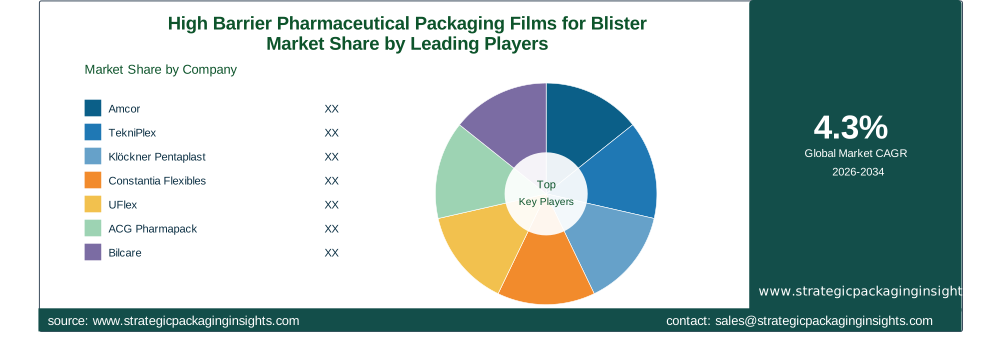
Amcor, a global leader in packaging solutions, holds a significant share of the market due to its comprehensive range of high barrier packaging films and its focus on sustainability. The company is committed to reducing its environmental impact by developing recyclable and biodegradable packaging materials. TekniPlex, another major player, is known for its advanced material technology and its ability to provide customized packaging solutions to its clients. The company's focus on innovation and quality has helped it maintain a strong position in the market.
Klöckner Pentaplast is a key player in the market, offering a wide range of high barrier packaging films that provide superior protection against moisture, oxygen, and light. The company's focus on sustainability and its commitment to reducing its carbon footprint have made it a preferred choice for pharmaceutical companies. Constantia Flexibles, known for its innovative packaging solutions, is also a major player in the market. The company's focus on research and development and its ability to provide customized solutions have helped it capture a significant share of the market.
Other notable players in the market include UFlex, ACG Pharmapack, Bilcare, Honeywell, Perlen Packaging, and Winpak. These companies are focusing on expanding their product portfolios and strengthening their distribution networks to enhance their market presence. The competitive landscape of the market is expected to remain dynamic, with companies investing in research and development and strategic collaborations to gain a competitive edge.
Key Highlights
- The market is projected to grow from $6.61 billion in 2025 to $9.70 billion by 2034, at a CAGR of 4.3%.
- Increasing demand for pharmaceuticals and advanced packaging solutions is driving market growth.
- Innovations in material technology and smart packaging are expected to revolutionize the market.
- Stringent regulatory requirements and high raw material costs pose challenges to market growth.
- Companies are focusing on sustainable packaging solutions to reduce their environmental impact.
- The expansion of the pharmaceutical industry in emerging markets presents significant growth opportunities.
- Key players include Amcor, TekniPlex, Klöckner Pentaplast, Constantia Flexibles, and UFlex.
Top Countries Insights
In the High Barrier Pharmaceutical Packaging Films for Blister market, the United States holds a significant share due to its well-established pharmaceutical industry and the presence of major market players. The market in the U.S. is driven by the increasing demand for advanced packaging solutions that ensure the safety and efficacy of pharmaceutical products. The country's stringent regulatory requirements also drive the demand for high-quality packaging films. The market size in the U.S. is valued at approximately $2.5 billion, with a CAGR of 3%.
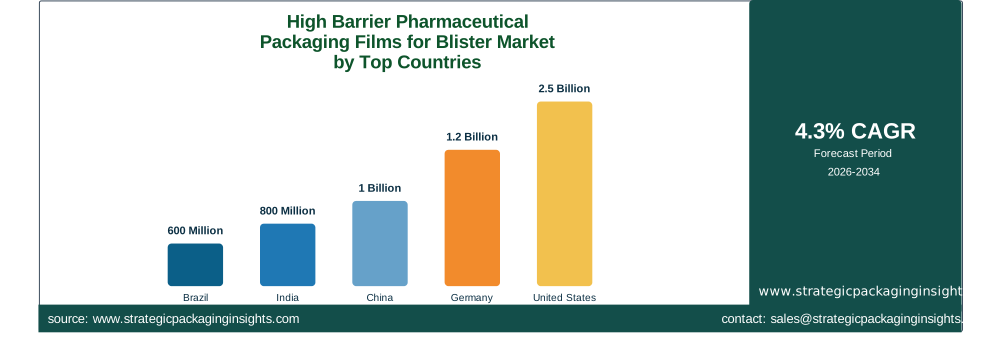
Germany is another key market for high barrier pharmaceutical packaging films, driven by its strong pharmaceutical sector and focus on innovation. The country's emphasis on sustainability and eco-friendly packaging solutions is also contributing to market growth. Germany's market size is estimated at $1.2 billion, with a CAGR of 4%. The presence of leading packaging companies and a robust regulatory framework further support market expansion.
China is experiencing rapid growth in the high barrier pharmaceutical packaging films market, driven by the expansion of its pharmaceutical industry and increasing demand for advanced packaging solutions. The country's focus on improving healthcare infrastructure and increasing investment in research and development are key growth drivers. China's market size is valued at $1 billion, with a CAGR of 6%.
India is emerging as a significant market for high barrier pharmaceutical packaging films, supported by the growth of its pharmaceutical industry and increasing focus on quality packaging solutions. The country's favorable government policies and initiatives to promote the pharmaceutical sector are driving market growth. India's market size is estimated at $800 million, with a CAGR of 5%.
Brazil is also witnessing growth in the high barrier pharmaceutical packaging films market, driven by the expansion of its pharmaceutical industry and increasing demand for advanced packaging solutions. The country's focus on improving healthcare infrastructure and increasing investment in research and development are key growth drivers. Brazil's market size is valued at $600 million, with a CAGR of 4%.
High Barrier Pharmaceutical Packaging Films for Blister Market Segments Insights

Material Type Analysis
The material type segment of the High Barrier Pharmaceutical Packaging Films for Blister market is dominated by PVC/PVDC films, which are widely used due to their excellent barrier properties and cost-effectiveness. These films provide superior protection against moisture, oxygen, and light, making them ideal for pharmaceutical packaging. The demand for PVC/PVDC films is driven by their versatility and ability to be easily thermoformed, which is essential for blister packaging applications. However, environmental concerns regarding the use of PVC are driving the demand for alternative materials such as Aclar films and PET barrier films.
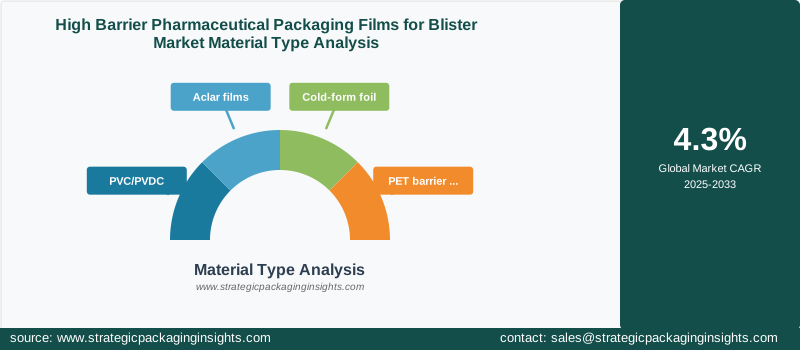
Aclar films are gaining popularity due to their exceptional moisture barrier properties and clarity, which enhance the visual appeal of pharmaceutical products. These films are particularly suitable for packaging moisture-sensitive drugs and are increasingly being adopted by pharmaceutical companies seeking to improve product stability and shelf life. Cold-form foil is another material type that is witnessing growth, driven by its ability to provide a complete barrier against moisture, oxygen, and light. This makes it ideal for packaging highly sensitive pharmaceutical products that require maximum protection.
Application Analysis
The application segment of the High Barrier Pharmaceutical Packaging Films for Blister market is primarily driven by the demand for packaging solutions for tablets and capsules. These dosage forms are widely used in the pharmaceutical industry, and their packaging requires high barrier films to ensure product stability and efficacy. The increasing prevalence of chronic diseases and the growing geriatric population are driving the demand for tablets and capsules, thereby boosting the need for high barrier packaging films. The medical devices segment is also witnessing growth, driven by the increasing demand for advanced packaging solutions that provide protection against environmental factors and ensure the safety of medical devices.
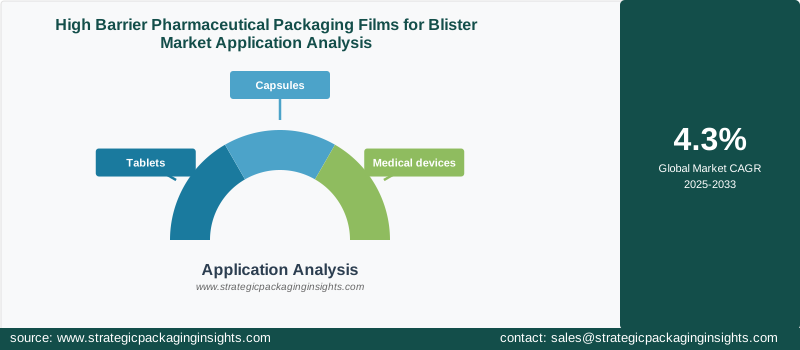
The demand for high barrier packaging films for tablets is driven by the need to protect these dosage forms from moisture, oxygen, and light, which can degrade the active ingredients and reduce their efficacy. Capsules, which are often used to deliver moisture-sensitive drugs, also require high barrier packaging films to maintain their stability and shelf life. The growing trend of personalized medicine and the increasing focus on patient-centric healthcare are driving the demand for customized packaging solutions, providing additional growth opportunities for market players.
Barrier Type Analysis
The barrier type segment of the High Barrier Pharmaceutical Packaging Films for Blister market is dominated by moisture barrier films, which are essential for protecting pharmaceutical products from moisture ingress. These films are widely used in the packaging of moisture-sensitive drugs, as they provide superior protection against humidity and help maintain product stability and shelf life. The demand for moisture barrier films is driven by the increasing prevalence of chronic diseases and the growing geriatric population, which are fueling the demand for pharmaceuticals.
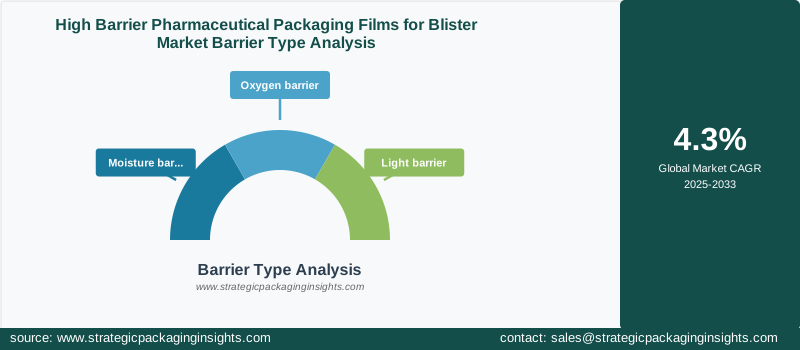
Oxygen barrier films are also witnessing growth, driven by their ability to protect pharmaceutical products from oxidation, which can degrade the active ingredients and reduce their efficacy. These films are particularly suitable for packaging oxygen-sensitive drugs and are increasingly being adopted by pharmaceutical companies seeking to improve product stability and shelf life. Light barrier films, which protect pharmaceutical products from light-induced degradation, are also in demand, particularly for packaging light-sensitive drugs.
End Use Analysis
The end use segment of the High Barrier Pharmaceutical Packaging Films for Blister market is primarily driven by the demand from the pharmaceutical industry, which requires high barrier packaging films to ensure the safety and efficacy of its products. The increasing prevalence of chronic diseases and the growing geriatric population are driving the demand for pharmaceuticals, thereby boosting the need for high barrier packaging films. The expansion of the pharmaceutical industry in emerging markets, such as Asia Pacific and Latin America, is also driving demand for high barrier packaging films.
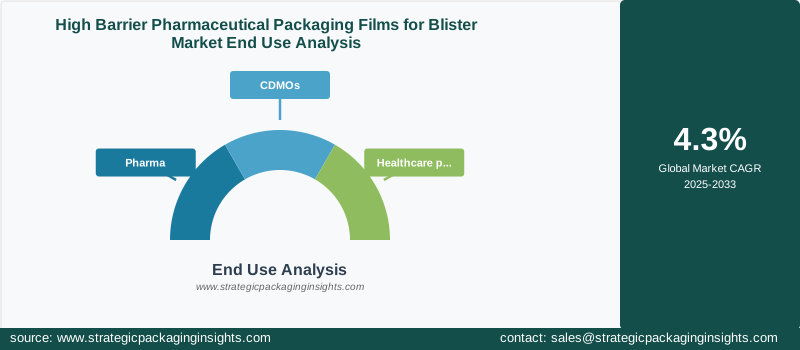
Contract development and manufacturing organizations (CDMOs) are another key end user of high barrier packaging films, as they seek to provide comprehensive packaging solutions to their clients. The growing trend of outsourcing pharmaceutical manufacturing to CDMOs is driving demand for high barrier packaging films, as these organizations require advanced packaging solutions that ensure the safety and efficacy of pharmaceutical products. Healthcare packaging converters, which provide customized packaging solutions to the pharmaceutical industry, are also witnessing growth, driven by the increasing demand for high barrier packaging films.
High Barrier Pharmaceutical Packaging Films for Blister Market Segments
The High Barrier Pharmaceutical Packaging Films for Blister market has been segmented on the basis ofMaterial Type
- PVC/PVDC
- Aclar films
- Cold-form foil
- PET barrier films
Application
- Tablets
- Capsules
- Medical devices
Barrier Type
- Moisture barrier
- Oxygen barrier
- Light barrier
End Use
- Pharma
- CDMOs
- Healthcare packaging converters
Region
- Asia Pacific
- North America
- Latin America
- Europe
- Middle East & Africa




