


High Barrier Packaging Film for Pharmaceuticals Market Outlook
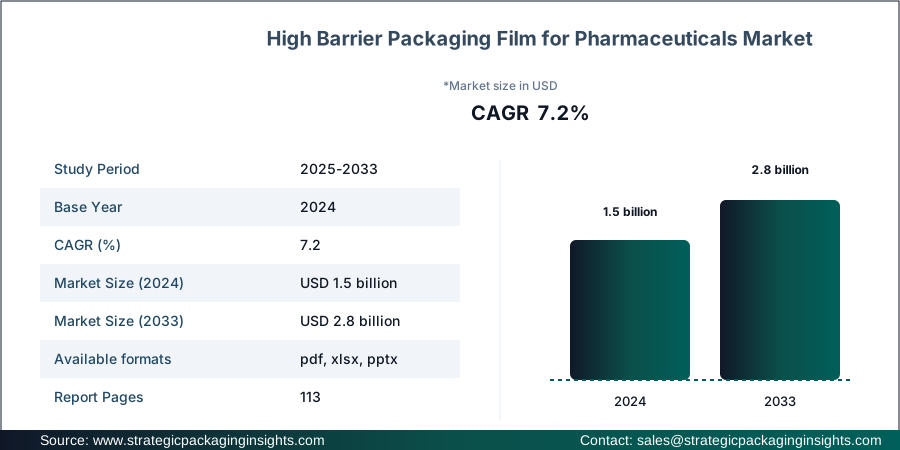
The High Barrier Packaging Film for Pharmaceuticals market was valued at $1.5 billion in 2024 and is projected to reach $2.8 billion by 2033, growing at a CAGR of 7.2% during the forecast period 2025-2033. This market is driven by the increasing demand for effective packaging solutions that ensure the safety and efficacy of pharmaceutical products. The rise in chronic diseases and the subsequent increase in pharmaceutical production are significant contributors to this growth. Additionally, the stringent regulations regarding pharmaceutical packaging to prevent contamination and ensure product integrity are propelling the demand for high barrier packaging films. The market is also witnessing innovations in material technology, which are enhancing the barrier properties of packaging films, thereby expanding their application scope.
Report Scope
| Attributes | Details |
| Report Title | High Barrier Packaging Film for Pharmaceuticals Market Size, Future Growth and Forecast 2033 |
| Material Type | Polyethylene, Polypropylene, Polyvinyl Chloride, Polyamide, Others |
| Application | Blister Packaging, Sachets, Bags, Pouches, Others |
| End-User | Pharmaceutical Companies, Contract Packaging, Others |
| Region | Asia Pacific, North America, Latin America, Europe, Middle East & Africa |
| Base Year | 2024 |
| Historic Period | 2017-2023 |
| Forecast Period | 2025-2033 |
| Number of Pages | 113 |
| Customization Available | Yes* |
Opportunities & Threats
One of the primary opportunities in the High Barrier Packaging Film for Pharmaceuticals market is the growing demand for sustainable packaging solutions. As environmental concerns rise, pharmaceutical companies are increasingly seeking eco-friendly packaging options that do not compromise on barrier properties. This has led to the development of biodegradable and recyclable high barrier films, which are gaining traction in the market. Additionally, the expansion of the pharmaceutical industry in emerging markets presents significant growth opportunities. Countries in Asia Pacific and Latin America are witnessing a surge in pharmaceutical manufacturing, driven by increasing healthcare needs and favorable government policies, which in turn boosts the demand for high barrier packaging films.
Another opportunity lies in the advancement of smart packaging technologies. The integration of features such as RFID tags and QR codes in packaging films is enhancing the traceability and authenticity of pharmaceutical products. This not only helps in combating counterfeit drugs but also improves supply chain efficiency. Companies investing in smart packaging solutions are likely to gain a competitive edge in the market. Furthermore, the increasing focus on personalized medicine is driving the need for customized packaging solutions, which high barrier films can effectively provide, thereby opening new avenues for market players.
However, the market faces certain restraints, primarily due to the high cost of raw materials used in the production of high barrier films. The volatility in raw material prices can significantly impact the profitability of manufacturers. Additionally, the complex manufacturing processes involved in producing high barrier films require substantial capital investment, which can be a barrier for new entrants. Moreover, stringent regulatory requirements regarding the use of certain materials in pharmaceutical packaging can pose challenges for manufacturers, necessitating continuous innovation and compliance efforts.
Drivers & Challenges
The primary driver for the High Barrier Packaging Film for Pharmaceuticals market is the increasing demand for effective packaging solutions that ensure the safety and efficacy of pharmaceutical products. With the rise in chronic diseases and the subsequent increase in pharmaceutical production, there is a growing need for packaging that can protect drugs from moisture, oxygen, and other environmental factors. High barrier films offer superior protection, making them an ideal choice for pharmaceutical packaging. Additionally, the stringent regulations regarding pharmaceutical packaging to prevent contamination and ensure product integrity are propelling the demand for high barrier packaging films.
Another significant driver is the innovation in material technology, which is enhancing the barrier properties of packaging films. Manufacturers are investing in research and development to create films with improved barrier properties, such as increased resistance to moisture and oxygen. These advancements are expanding the application scope of high barrier films, making them suitable for a wider range of pharmaceutical products. Furthermore, the growing trend of outsourcing pharmaceutical manufacturing to contract packaging organizations is boosting the demand for high barrier films, as these organizations require reliable packaging solutions to maintain product quality during transportation and storage.
Despite these drivers, the market faces challenges, particularly due to the high cost of raw materials used in the production of high barrier films. The volatility in raw material prices can significantly impact the profitability of manufacturers. Additionally, the complex manufacturing processes involved in producing high barrier films require substantial capital investment, which can be a barrier for new entrants. Moreover, stringent regulatory requirements regarding the use of certain materials in pharmaceutical packaging can pose challenges for manufacturers, necessitating continuous innovation and compliance efforts.
Market Share Analysis
The competitive landscape of the High Barrier Packaging Film for Pharmaceuticals market is characterized by the presence of several key players who are focusing on strategic initiatives such as mergers and acquisitions, partnerships, and product innovations to strengthen their market position. The market is moderately fragmented, with a mix of global and regional players. Companies are investing in research and development to enhance the barrier properties of their films and to develop sustainable packaging solutions that meet the evolving needs of the pharmaceutical industry.
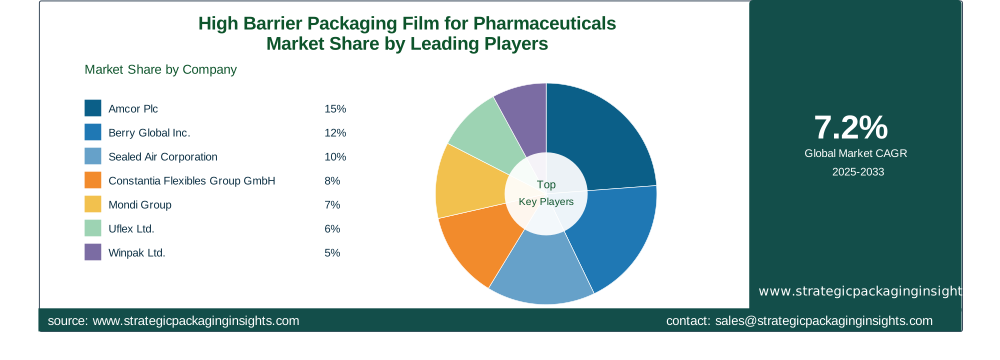
Among the major players, Amcor Plc holds a significant market share due to its extensive product portfolio and strong global presence. The company is known for its innovative packaging solutions that cater to the specific needs of the pharmaceutical industry. Similarly, Berry Global Inc. is a prominent player, offering a wide range of high barrier films that provide superior protection for pharmaceutical products. The company's focus on sustainability and innovation has helped it maintain a competitive edge in the market.
Another key player, Sealed Air Corporation, is recognized for its advanced packaging technologies that enhance the safety and efficacy of pharmaceutical products. The company's commitment to sustainability and its strategic partnerships with pharmaceutical companies have contributed to its strong market position. Constantia Flexibles Group GmbH is also a notable player, known for its high-quality packaging solutions that meet the stringent regulatory requirements of the pharmaceutical industry.
Other significant players in the market include Mondi Group, Uflex Ltd., and Winpak Ltd., each of which has carved a niche in the high barrier packaging film market through continuous innovation and strategic collaborations. These companies are focusing on expanding their product offerings and enhancing their production capabilities to cater to the growing demand for high barrier films in the pharmaceutical sector. The competitive landscape is expected to intensify as more companies invest in sustainable and smart packaging solutions to meet the evolving needs of the pharmaceutical industry.
Key Highlights
- The High Barrier Packaging Film for Pharmaceuticals market is projected to grow at a CAGR of 7.2% from 2025 to 2033.
- Increasing demand for sustainable and eco-friendly packaging solutions is driving market growth.
- Advancements in material technology are enhancing the barrier properties of packaging films.
- Smart packaging technologies are gaining traction, offering improved traceability and authenticity.
- The expansion of the pharmaceutical industry in emerging markets presents significant growth opportunities.
- High raw material costs and complex manufacturing processes pose challenges for market players.
- Key players are focusing on strategic initiatives such as mergers, acquisitions, and partnerships to strengthen their market position.
- Stringent regulatory requirements necessitate continuous innovation and compliance efforts.
- Outsourcing pharmaceutical manufacturing to contract packaging organizations is boosting demand for high barrier films.
- Personalized medicine is driving the need for customized packaging solutions.
Top Countries Insights
In the High Barrier Packaging Film for Pharmaceuticals market, the United States holds a significant share, with a market size of approximately $500 million and a CAGR of 6%. The country's well-established pharmaceutical industry and stringent regulatory standards drive the demand for high-quality packaging solutions. Additionally, the focus on sustainability and innovation in packaging technologies further propels market growth.
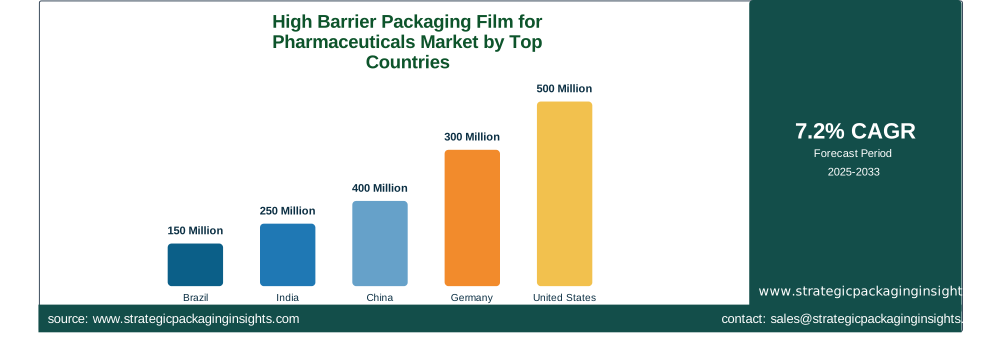
Germany is another key player in the market, with a market size of around $300 million and a CAGR of 5%. The country's strong pharmaceutical manufacturing base and emphasis on research and development contribute to the demand for advanced packaging solutions. The German market is also driven by the increasing adoption of smart packaging technologies that enhance product traceability and authenticity.
China is witnessing rapid growth in the High Barrier Packaging Film for Pharmaceuticals market, with a market size of $400 million and a CAGR of 8%. The country's expanding pharmaceutical industry, driven by rising healthcare needs and favorable government policies, is a major growth driver. Additionally, the increasing focus on sustainable packaging solutions is boosting the demand for high barrier films in China.
India, with a market size of $250 million and a CAGR of 7%, is emerging as a significant market for high barrier packaging films. The country's growing pharmaceutical sector, coupled with government initiatives to promote domestic manufacturing, is driving market growth. The demand for eco-friendly and cost-effective packaging solutions is also contributing to the market's expansion.
Brazil, with a market size of $150 million and a CAGR of 6%, is a notable market for high barrier packaging films. The country's pharmaceutical industry is expanding, driven by increasing healthcare expenditure and a growing population. The demand for high-quality packaging solutions that ensure product safety and efficacy is a key growth driver in the Brazilian market.
High Barrier Packaging Film for Pharmaceuticals Market Segments Insights

Material Type Analysis
The material type segment in the High Barrier Packaging Film for Pharmaceuticals market is dominated by polyethylene, which is widely used due to its excellent barrier properties and cost-effectiveness. Polyethylene films offer superior protection against moisture and oxygen, making them ideal for pharmaceutical packaging. The demand for polyethylene films is further driven by their versatility and ease of processing, which allows manufacturers to produce films with varying thicknesses and properties to meet specific packaging requirements.
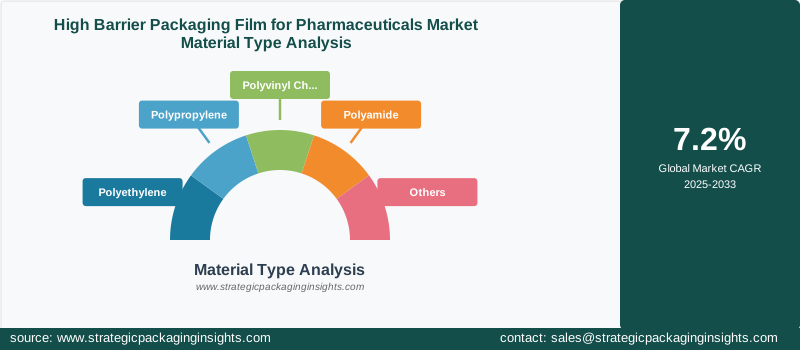
Polypropylene is another significant material type in the market, known for its high clarity and strength. Polypropylene films are increasingly being used in pharmaceutical packaging due to their excellent chemical resistance and ability to withstand high temperatures. The growing demand for transparent packaging solutions that allow consumers to view the product without compromising on protection is boosting the adoption of polypropylene films. Additionally, advancements in material technology are enhancing the barrier properties of polypropylene films, making them suitable for a wider range of pharmaceutical applications.
Application Analysis
In terms of application, blister packaging holds a significant share in the High Barrier Packaging Film for Pharmaceuticals market. Blister packaging is widely used for solid dosage forms such as tablets and capsules, providing excellent protection against environmental factors. The demand for blister packaging is driven by its ability to enhance product shelf life and ensure patient safety through tamper-evident features. Additionally, the increasing focus on patient compliance and convenience is boosting the adoption of blister packaging in the pharmaceutical industry.
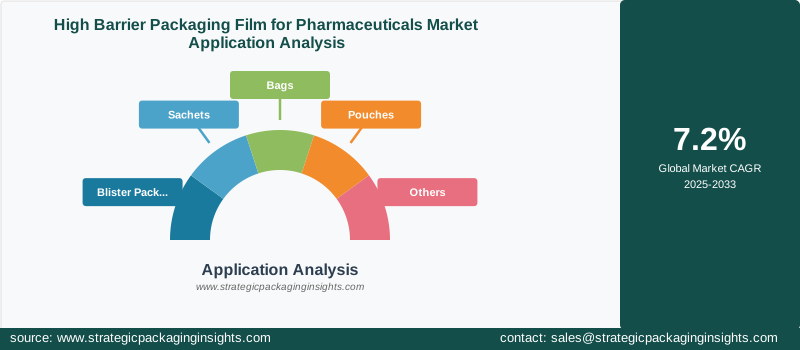
Sachets and pouches are also gaining traction in the market, particularly for liquid and semi-solid pharmaceutical products. These packaging formats offer flexibility and ease of use, making them popular among consumers. The demand for sachets and pouches is further driven by the growing trend of single-dose packaging, which provides convenience and reduces the risk of contamination. Manufacturers are investing in innovative packaging solutions that offer superior barrier properties and meet the evolving needs of the pharmaceutical industry.
End-User Analysis
The end-user segment of the High Barrier Packaging Film for Pharmaceuticals market is dominated by pharmaceutical companies, which account for a significant share of the market. These companies require high-quality packaging solutions that ensure the safety and efficacy of their products. The demand for high barrier films is driven by the need to comply with stringent regulatory requirements and to protect products from environmental factors. Pharmaceutical companies are increasingly investing in advanced packaging solutions that offer superior protection and enhance product shelf life.
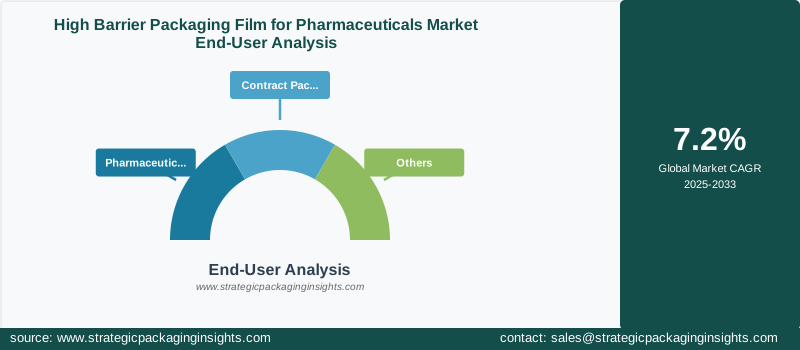
Contract packaging organizations are also a key end-user segment in the market, as they provide packaging services to pharmaceutical companies. The growing trend of outsourcing pharmaceutical manufacturing to contract packaging organizations is boosting the demand for high barrier films. These organizations require reliable packaging solutions that maintain product quality during transportation and storage. The demand for customized packaging solutions that meet specific client requirements is further driving the adoption of high barrier films in this segment.
High Barrier Packaging Film for Pharmaceuticals Market Segments
The High Barrier Packaging Film for Pharmaceuticals market has been segmented on the basis ofMaterial Type
- Polyethylene
- Polypropylene
- Polyvinyl Chloride
- Polyamide
- Others
Application
- Blister Packaging
- Sachets
- Bags
- Pouches
- Others
End-User
- Pharmaceutical Companies
- Contract Packaging
- Others
Region
- Asia Pacific
- North America
- Latin America
- Europe
- Middle East & Africa




