


Hazardous Chemical Packaging Market Outlook
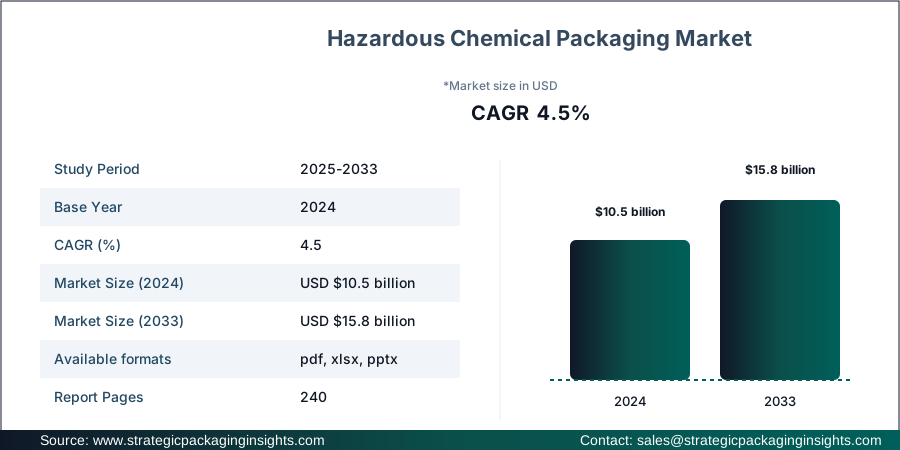
The hazardous chemical packaging market was valued at $10.5 billion in 2024 and is projected to reach $15.8 billion by 2033, growing at a CAGR of 4.5% during the forecast period 2025-2033. This market is driven by the increasing demand for safe and secure packaging solutions to handle and transport hazardous chemicals. The rise in industrial activities, particularly in emerging economies, has led to a surge in the production and consumption of chemicals, thereby boosting the demand for effective packaging solutions. Additionally, stringent regulations regarding the safe handling and transportation of hazardous materials are compelling industries to adopt advanced packaging solutions, further propelling market growth.
Report Scope
| Attributes | Details |
| Report Title | Hazardous Chemical Packaging Market Size, Future Growth and Forecast 2033 |
| Material | Plastic, Metal, Glass, Others |
| Packaging Type | Drums, IBCs, Bottles, Cans, Others |
| End-User | Chemical Industry, Pharmaceutical Industry, Agriculture, Oil & Gas, Others |
| Region | Asia Pacific, North America, Latin America, Europe, Middle East & Africa |
| Base Year | 2024 |
| Historic Period | 2017-2023 |
| Forecast Period | 2025-2033 |
| Number of Pages | 240 |
| Customization Available | Yes* |
Opportunities & Threats
The hazardous chemical packaging market presents significant opportunities for growth, particularly in the development of eco-friendly and sustainable packaging solutions. As environmental concerns continue to rise, there is a growing demand for packaging materials that are not only effective in containing hazardous substances but also minimize environmental impact. Companies investing in research and development to create biodegradable and recyclable packaging options are likely to gain a competitive edge. Furthermore, the increasing globalization of the chemical industry offers opportunities for market expansion, as companies seek to standardize packaging solutions across different regions to ensure compliance with international safety standards.
Another opportunity lies in the advancement of smart packaging technologies. The integration of IoT and sensor technologies in packaging can enhance the safety and monitoring of hazardous chemicals during transportation and storage. Smart packaging solutions can provide real-time data on the condition of the chemicals, such as temperature and pressure, ensuring that they remain within safe limits. This not only improves safety but also reduces the risk of accidents and spills, which can have severe environmental and financial consequences. Companies that can effectively integrate these technologies into their packaging solutions are likely to see increased demand from safety-conscious industries.
However, the market also faces certain restrainers, such as the high cost of advanced packaging solutions. While there is a clear demand for safer and more sustainable packaging, the initial investment required for developing and implementing these solutions can be prohibitive for some companies, particularly small and medium-sized enterprises. Additionally, the complexity of regulatory compliance across different regions can pose challenges for companies looking to expand their operations globally. Navigating these regulations requires significant resources and expertise, which can be a barrier to entry for new players in the market.
Drivers & Challenges
One of the primary drivers of the hazardous chemical packaging market is the stringent regulatory framework governing the transportation and handling of hazardous materials. Governments and international bodies have established comprehensive guidelines to ensure the safe packaging and transportation of hazardous chemicals, which has led to increased demand for compliant packaging solutions. These regulations are particularly stringent in developed regions such as North America and Europe, where safety standards are high, driving companies to invest in advanced packaging technologies to meet these requirements.
Another significant driver is the growth of the chemical industry itself. As industries such as pharmaceuticals, agriculture, and oil & gas continue to expand, the demand for chemicals and, consequently, for hazardous chemical packaging is on the rise. The increasing production and consumption of chemicals necessitate robust packaging solutions to prevent leaks, spills, and contamination, thereby ensuring the safety of both the environment and human health. This growth is particularly pronounced in emerging economies, where industrialization is rapidly advancing, creating new opportunities for market players.
Despite these drivers, the market faces challenges such as the high cost of raw materials used in packaging production. Materials like high-density polyethylene (HDPE) and stainless steel, which are commonly used in hazardous chemical packaging, have seen price fluctuations due to supply chain disruptions and geopolitical tensions. These cost variations can impact the profitability of packaging manufacturers and may lead to increased prices for end-users. Additionally, the need for continuous innovation to meet evolving safety standards and customer demands requires significant investment in research and development, which can be a financial burden for companies.
Market Share Analysis
The hazardous chemical packaging market is characterized by a competitive landscape with several key players vying for market share. Companies such as Greif, Inc., Mauser Group B.V., and Schutz GmbH & Co. KGaA are among the leading players, each holding a significant share of the market. These companies have established themselves through a combination of strategic acquisitions, extensive product portfolios, and a strong focus on innovation and sustainability. The competitive landscape is further intensified by the presence of regional players who cater to specific markets and offer customized solutions to meet local regulatory requirements.
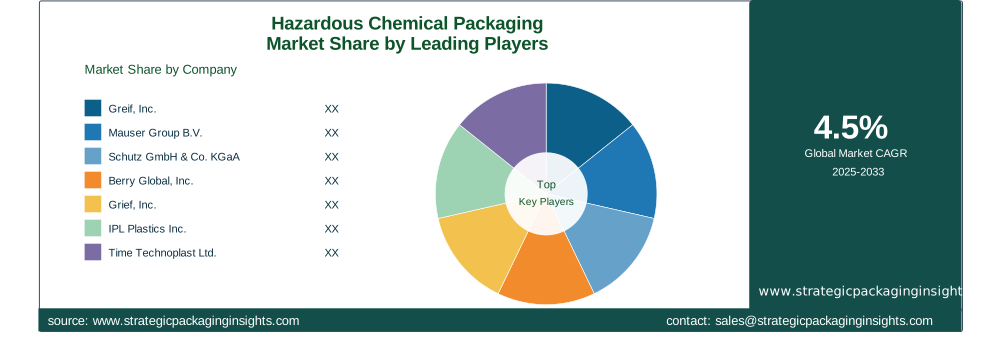
Greif, Inc., for instance, is a prominent player in the market, known for its comprehensive range of industrial packaging solutions. The company has a strong global presence, with operations in over 40 countries, and is committed to sustainability, as evidenced by its focus on developing eco-friendly packaging options. Similarly, Mauser Group B.V. has made significant strides in the market through its innovative packaging solutions and strategic partnerships. The company has a robust R&D division that continuously works on enhancing the safety and efficiency of its packaging products.
Schutz GmbH & Co. KGaA is another major player, renowned for its expertise in intermediate bulk containers (IBCs) and drum packaging. The company has a strong emphasis on quality and safety, which has helped it maintain a leading position in the market. Other notable companies include Berry Global, Inc., known for its extensive range of plastic packaging solutions, and Grief, Inc., which offers a diverse portfolio of packaging products tailored to the needs of the chemical industry.
In addition to these major players, the market also includes several smaller companies that specialize in niche segments of hazardous chemical packaging. These companies often focus on specific materials or packaging types, such as glass or metal containers, and cater to specialized industries like pharmaceuticals or agriculture. The presence of these niche players adds to the competitive dynamics of the market, as they often offer highly customized solutions that meet the unique needs of their clients.
Key Highlights
- The hazardous chemical packaging market is projected to grow at a CAGR of 4.5% from 2025 to 2033.
- Stringent regulatory frameworks are driving demand for compliant packaging solutions.
- Eco-friendly and sustainable packaging options are gaining traction in the market.
- Smart packaging technologies are emerging as a key trend, enhancing safety and monitoring capabilities.
- The market is characterized by a competitive landscape with several key players holding significant shares.
- High raw material costs pose a challenge to market growth.
- Emerging economies present significant opportunities for market expansion.
- Companies are investing in R&D to develop innovative packaging solutions.
- Regional players offer customized solutions to meet local regulatory requirements.
- The chemical industry's growth is a major driver of the hazardous chemical packaging market.
Top Countries Insights
In the hazardous chemical packaging market, the United States stands out as a key player, with a market size of $3.2 billion and a CAGR of 5%. The country's stringent regulatory environment and advanced industrial base drive demand for high-quality packaging solutions. The presence of major chemical manufacturers further boosts the market, as these companies require robust packaging to ensure the safe transportation of hazardous materials.
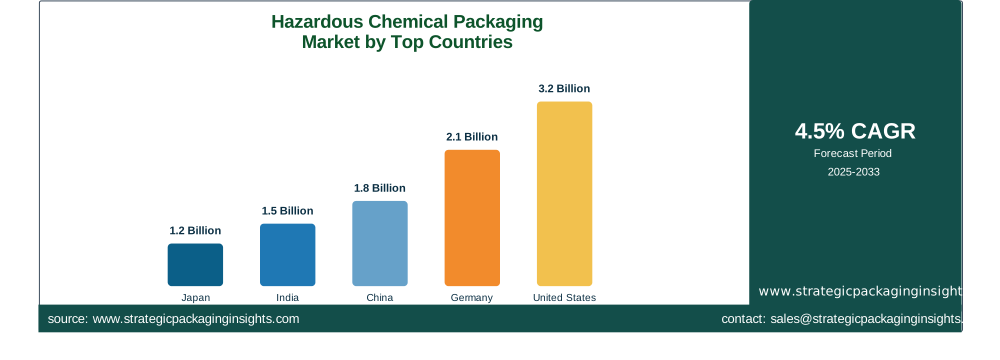
Germany is another significant market, valued at $2.1 billion with a CAGR of 4%. The country's strong focus on environmental sustainability and innovation in packaging technologies positions it as a leader in the European market. German companies are at the forefront of developing eco-friendly packaging solutions, which are increasingly in demand across the region.
China, with a market size of $1.8 billion and a CAGR of 6%, is rapidly emerging as a major player in the hazardous chemical packaging market. The country's booming chemical industry and increasing industrial activities drive demand for effective packaging solutions. Additionally, government initiatives to improve safety standards and environmental regulations are encouraging companies to adopt advanced packaging technologies.
India, with a market size of $1.5 billion and a CAGR of 7%, presents significant growth opportunities. The country's expanding industrial base and increasing focus on safety and environmental sustainability are key drivers of market growth. Indian companies are investing in modern packaging solutions to meet the rising demand from various industries, including pharmaceuticals and agriculture.
Japan, valued at $1.2 billion with a CAGR of 3%, is known for its advanced packaging technologies and high safety standards. The country's focus on innovation and quality makes it a key player in the Asia Pacific region. Japanese companies are leaders in developing smart packaging solutions that enhance safety and monitoring capabilities, catering to the needs of the chemical industry.
Evolving Market Dynamics (2018-2024) and Strategic Foresight (2025-2033)
| Metric | 2018-2024 | 2025-2033 |
|---|---|---|
| CAGR | 3.8% | 4.5% |
| Market Size Evolution | $8.9 billion to $10.5 billion | $10.5 billion to $15.8 billion |
| Segment Distribution Shifts | Increased demand for plastic and metal packaging | Rising preference for eco-friendly and smart packaging |
| Regional Contribution Changes | Dominance of North America and Europe | Growing influence of Asia Pacific and Latin America |
| Technological Impact Factors | Introduction of basic safety features | Integration of IoT and sensor technologies |
| Client Demand Transformations | Focus on compliance and safety | Emphasis on sustainability and innovation |
Hazardous Chemical Packaging Market Segments Insights

Material Analysis
The material segment of the hazardous chemical packaging market is dominated by plastic, metal, and glass, each offering unique advantages. Plastic packaging, particularly high-density polyethylene (HDPE), is favored for its lightweight, durability, and cost-effectiveness. It is widely used in the chemical industry for packaging liquids and solids due to its resistance to corrosion and chemical reactions. Metal packaging, including steel and aluminum, is preferred for its strength and ability to withstand extreme conditions, making it ideal for transporting hazardous chemicals over long distances. Glass packaging, although less common, is used for its inert properties, ensuring that the packaging does not react with the contents, making it suitable for certain chemicals.
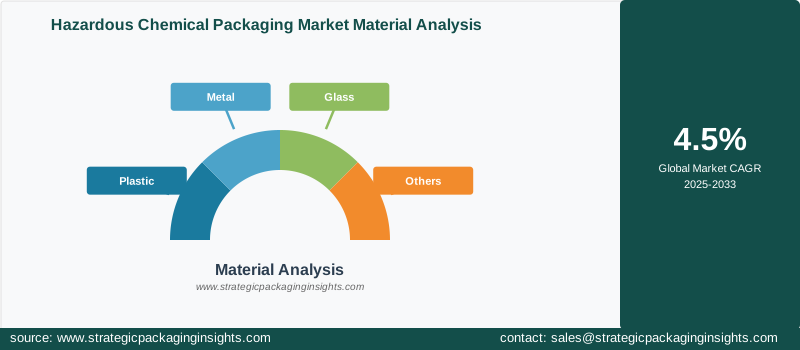
Trends in this segment indicate a growing shift towards sustainable materials, with companies investing in research and development to create biodegradable and recyclable packaging options. The demand for eco-friendly materials is driven by increasing environmental awareness and regulatory pressures to reduce plastic waste. Additionally, advancements in material science are leading to the development of innovative packaging solutions that offer enhanced safety features, such as leak-proof seals and tamper-evident closures. As the market evolves, companies that can offer sustainable and innovative material solutions are likely to gain a competitive advantage.
Packaging Type Analysis
The packaging type segment includes drums, intermediate bulk containers (IBCs), bottles, cans, and others, each catering to specific needs of the hazardous chemical industry. Drums are a popular choice for bulk transportation of chemicals, offering durability and ease of handling. IBCs are favored for their versatility and efficiency in transporting large volumes of liquids, providing a cost-effective solution for industries dealing with hazardous chemicals. Bottles and cans are used for smaller quantities, offering convenience and precision in dispensing chemicals.
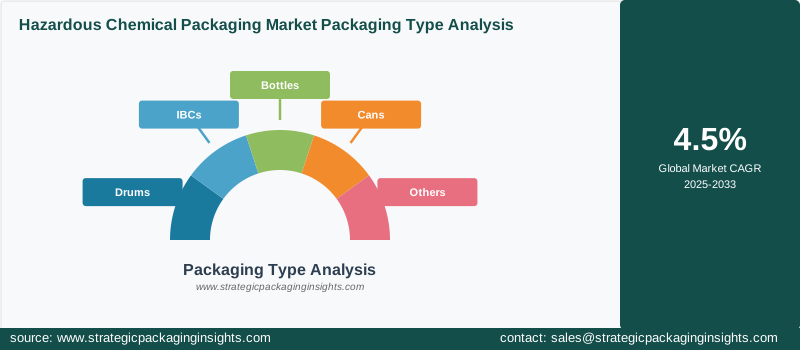
Recent trends in this segment highlight the increasing adoption of smart packaging solutions, integrating technologies such as RFID tags and sensors to monitor the condition of the chemicals during transportation. This not only enhances safety but also provides valuable data for supply chain management. The demand for customized packaging solutions is also on the rise, with companies seeking packaging that meets specific regulatory and safety requirements. As the market continues to grow, the ability to offer innovative and tailored packaging solutions will be crucial for companies looking to capture market share.
End-User Analysis
The end-user segment of the hazardous chemical packaging market is diverse, encompassing industries such as chemicals, pharmaceuticals, agriculture, oil & gas, and others. The chemical industry is the largest consumer of hazardous chemical packaging, driven by the need for safe and compliant transportation of a wide range of chemicals. The pharmaceutical industry also represents a significant market, with stringent regulations governing the packaging of hazardous substances to ensure patient safety and product integrity.
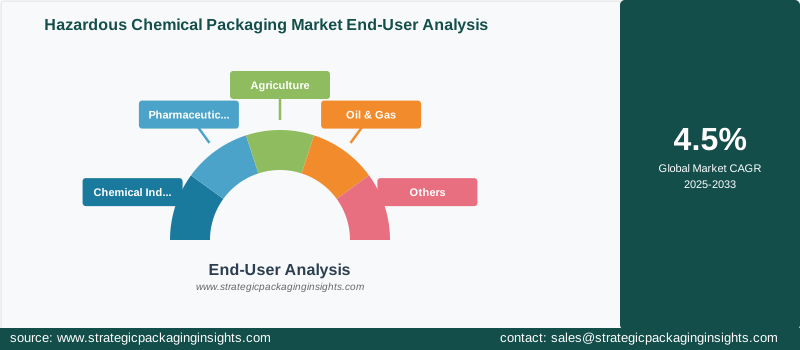
Agriculture and oil & gas are other key end-users, requiring robust packaging solutions to handle and transport hazardous materials such as pesticides and petroleum products. Trends in this segment indicate a growing emphasis on sustainability and safety, with companies seeking packaging solutions that minimize environmental impact while ensuring compliance with regulatory standards. The ability to offer industry-specific packaging solutions that address these needs will be a key differentiator for companies in this market.
Region Analysis
The regional analysis of the hazardous chemical packaging market reveals significant variations in demand and growth across different regions. North America and Europe have traditionally been the largest markets, driven by stringent regulatory frameworks and a strong industrial base. However, the Asia Pacific region is emerging as a key growth area, with rapid industrialization and increasing demand for chemicals driving the need for effective packaging solutions.
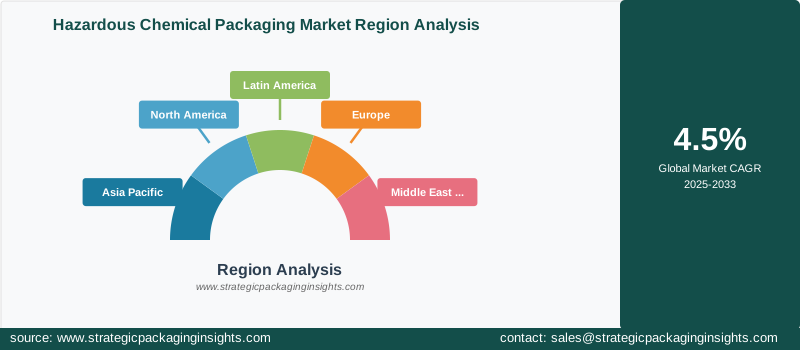
Latin America and the Middle East & Africa are also witnessing growth, albeit at a slower pace, as industries in these regions expand and modernize. The demand for hazardous chemical packaging in these regions is driven by the need to comply with international safety standards and the increasing focus on environmental sustainability. As the market continues to evolve, companies that can adapt to regional variations in demand and regulatory requirements will be well-positioned to capture market share.
Hazardous Chemical Packaging Market Segments
The Hazardous Chemical Packaging market has been segmented on the basis ofMaterial
- Plastic
- Metal
- Glass
- Others
Packaging Type
- Drums
- IBCs
- Bottles
- Cans
- Others
End-User
- Chemical Industry
- Pharmaceutical Industry
- Agriculture
- Oil & Gas
- Others
Region
- Asia Pacific
- North America
- Latin America
- Europe
- Middle East & Africa




