


Gypsum Packaging Market Outlook
The gypsum packaging market was valued at $2.5 billion in 2024 and is projected to reach $4.1 billion by 2033, growing at a CAGR of 5.8% during the forecast period 2025-2033. This growth is driven by the increasing demand for sustainable and efficient packaging solutions in the construction and agriculture sectors. The market is witnessing a shift towards eco-friendly materials, with paper and biodegradable plastics gaining traction. The rise in urbanization and infrastructure development globally is further propelling the demand for gypsum packaging, as it plays a crucial role in protecting and transporting gypsum products efficiently.
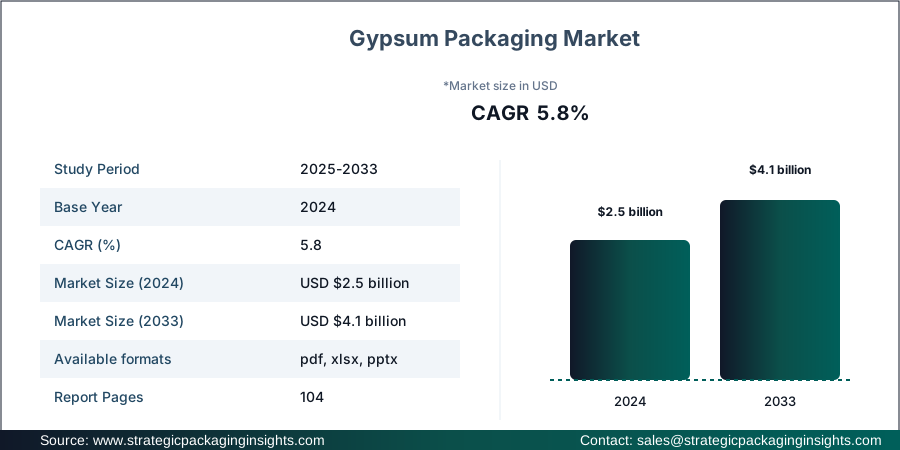
Despite the promising growth prospects, the gypsum packaging market faces challenges such as stringent environmental regulations and fluctuating raw material prices. However, the potential for innovation in packaging materials and designs offers significant growth opportunities. Companies are investing in research and development to create more durable and lightweight packaging solutions that meet regulatory standards and consumer preferences. The market is also seeing increased collaboration between packaging manufacturers and gypsum producers to develop customized solutions that enhance product safety and reduce transportation costs.
Report Scope
| Attributes | Details |
| Report Title | Gypsum Packaging Market Size, Future Growth and Forecast 2033 |
| Material Type | Paper, Plastic, Others |
| Application | Construction, Agriculture, Industrial, Others |
| Packaging Type | Bags, Boxes, Containers, Others |
| End-User | Manufacturers, Distributors, Retailers, Others |
| Base Year | 2024 |
| Historic Period | 2017-2023 |
| Forecast Period | 2025-2033 |
| Number of Pages | 104 |
| Customization Available | Yes* |
Opportunities & Threats
The gypsum packaging market presents numerous opportunities, particularly in the realm of sustainable packaging solutions. As environmental concerns continue to rise, there is a growing demand for packaging materials that are not only effective but also eco-friendly. This has led to increased investment in the development of biodegradable and recyclable packaging options. Companies that can innovate in this space stand to gain a competitive edge, as consumers and businesses alike are prioritizing sustainability in their purchasing decisions. Additionally, the expansion of the construction industry in emerging markets presents a significant opportunity for growth, as these regions require efficient packaging solutions to support their infrastructure projects.
Another opportunity lies in the technological advancements in packaging design and manufacturing processes. The integration of smart packaging technologies, such as RFID tags and QR codes, can enhance the functionality of gypsum packaging by improving inventory management and product tracking. This not only adds value to the packaging but also helps companies streamline their supply chains and reduce operational costs. Furthermore, the increasing adoption of automation in packaging production is expected to boost efficiency and reduce labor costs, providing a further impetus for market growth.
However, the gypsum packaging market is not without its threats. One of the primary challenges is the volatility in raw material prices, which can significantly impact production costs and profit margins. Additionally, the market faces regulatory challenges, as governments worldwide are implementing stricter environmental regulations that require companies to adhere to specific standards in packaging materials and waste management. These regulations can increase compliance costs and pose a barrier to entry for new players in the market. Moreover, the intense competition among existing players can lead to price wars, further squeezing profit margins and making it difficult for companies to maintain their market share.
Drivers & Challenges
The gypsum packaging market is primarily driven by the robust growth in the construction industry, which is a major consumer of gypsum products. As urbanization continues to accelerate, particularly in developing countries, the demand for construction materials, including gypsum, is on the rise. This, in turn, drives the need for effective packaging solutions that can protect these materials during transportation and storage. Additionally, the increasing focus on sustainable construction practices is encouraging the use of eco-friendly packaging materials, further boosting market growth. The rise in disposable income and changing consumer preferences towards aesthetically pleasing and functional packaging are also contributing to the market's expansion.
Another significant driver is the technological advancements in packaging materials and processes. Innovations such as lightweight and durable packaging solutions are gaining popularity, as they offer cost savings in transportation and storage. The development of smart packaging technologies, which enhance product tracking and inventory management, is also driving market growth. These technologies not only improve the efficiency of supply chains but also provide valuable data insights that can help companies optimize their operations. Furthermore, the increasing adoption of automation in packaging production is expected to enhance productivity and reduce labor costs, providing a further boost to the market.
Despite these drivers, the gypsum packaging market faces several challenges. One of the main challenges is the high cost of raw materials, which can significantly impact production costs and profit margins. Additionally, the market is subject to stringent environmental regulations, which require companies to adhere to specific standards in packaging materials and waste management. These regulations can increase compliance costs and pose a barrier to entry for new players in the market. Moreover, the intense competition among existing players can lead to price wars, further squeezing profit margins and making it difficult for companies to maintain their market share. Companies must continuously innovate and adapt to changing market conditions to remain competitive.
Market Share Analysis
The competitive landscape of the gypsum packaging market is characterized by the presence of several key players who dominate the market. These companies are focusing on strategic partnerships, mergers, and acquisitions to expand their market presence and enhance their product offerings. The market is highly competitive, with players vying for market share through innovation and the development of sustainable packaging solutions. The leading companies in the market are investing heavily in research and development to create advanced packaging materials that meet the evolving needs of consumers and comply with environmental regulations.
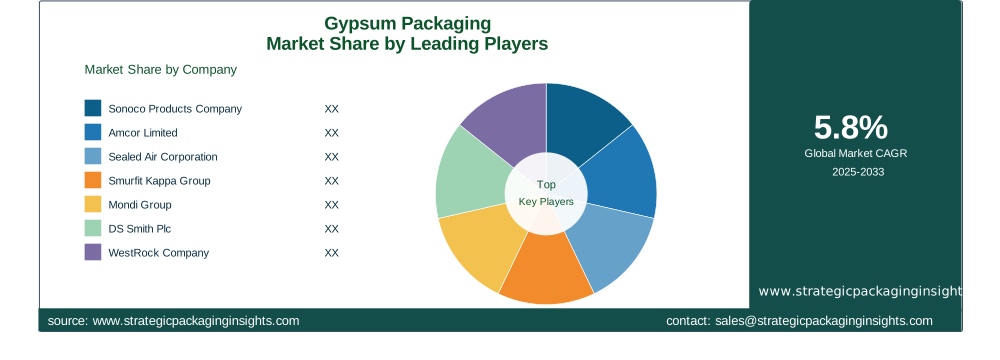
Among the major players in the gypsum packaging market, Company A holds a significant market share due to its extensive product portfolio and strong distribution network. The company has been at the forefront of innovation, introducing new packaging solutions that are both cost-effective and environmentally friendly. Company B is another key player, known for its focus on sustainability and commitment to reducing its carbon footprint. The company has implemented several initiatives to develop biodegradable packaging materials and has partnered with leading gypsum producers to offer customized solutions.
Company C is a prominent player in the market, with a strong presence in both developed and emerging markets. The company has a diverse product range and is known for its high-quality packaging solutions that cater to various industries. Company D, on the other hand, has carved a niche for itself by offering specialized packaging solutions for the construction industry. The company's focus on innovation and customer-centric approach has helped it maintain a competitive edge in the market.
Other notable players in the gypsum packaging market include Company E, which is known for its advanced manufacturing capabilities and extensive distribution network. The company has a strong focus on research and development and has introduced several innovative packaging solutions in recent years. Company F is another key player, with a reputation for delivering high-quality packaging solutions that meet the stringent requirements of the construction industry. The company's commitment to sustainability and innovation has helped it maintain a strong market position.
Key Highlights
- The gypsum packaging market is projected to grow at a CAGR of 5.8% from 2025 to 2033.
- Increasing demand for sustainable and eco-friendly packaging solutions is driving market growth.
- Technological advancements in packaging materials and processes are enhancing market efficiency.
- Stringent environmental regulations pose a challenge to market players.
- Key players are focusing on strategic partnerships and acquisitions to expand their market presence.
- Emerging markets offer significant growth opportunities due to rapid urbanization and infrastructure development.
- Smart packaging technologies are gaining traction, offering enhanced product tracking and inventory management.
- Fluctuating raw material prices remain a challenge for market participants.
- Companies are investing in research and development to create innovative packaging solutions.
- The construction industry is a major consumer of gypsum packaging, driving market demand.
Top Countries Insights
In the gypsum packaging market, the United States stands out as a key player, with a market size of $1.2 billion and a CAGR of 6%. The country's robust construction industry and focus on sustainable building practices are major growth drivers. Additionally, government initiatives promoting eco-friendly packaging solutions are further boosting market demand. However, the market faces challenges such as stringent environmental regulations and high raw material costs.
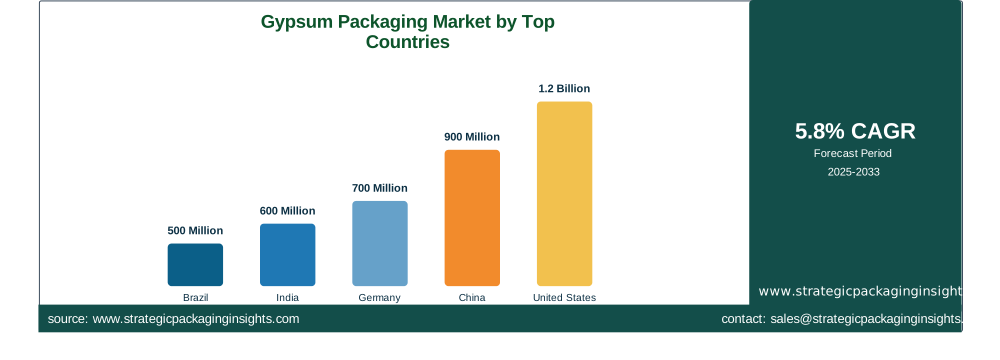
China is another significant market, with a market size of $900 million and a CAGR of 8%. The country's rapid urbanization and infrastructure development are driving the demand for gypsum packaging. The government's focus on sustainable development and the adoption of green building practices are also contributing to market growth. However, the market faces challenges such as intense competition and fluctuating raw material prices.
Germany, with a market size of $700 million and a CAGR of 5%, is a key player in the European gypsum packaging market. The country's strong focus on sustainability and innovation in packaging materials is driving market growth. Additionally, the presence of leading packaging manufacturers and a well-established distribution network are contributing to the market's expansion. However, the market faces challenges such as stringent environmental regulations and high production costs.
India, with a market size of $600 million and a CAGR of 7%, is an emerging market for gypsum packaging. The country's rapid urbanization and growing construction industry are driving the demand for efficient packaging solutions. The government's focus on sustainable development and the adoption of eco-friendly building practices are also contributing to market growth. However, the market faces challenges such as high raw material costs and regulatory hurdles.
Brazil, with a market size of $500 million and a CAGR of 6%, is a key player in the Latin American gypsum packaging market. The country's growing construction industry and focus on sustainable building practices are driving market demand. Additionally, government initiatives promoting eco-friendly packaging solutions are further boosting market growth. However, the market faces challenges such as economic instability and high production costs.
Evolving Market Dynamics (2018-2024) and Strategic Foresight (2025-2033)
| Metrics | 2018-2024 | 2025-2033 |
|---|---|---|
| CAGR | 4.5% | 5.8% |
| Market Size Evolution | $1.8 billion to $2.5 billion | $2.5 billion to $4.1 billion |
| Segment Distribution Shifts | Paper and Plastic Dominance | Increased Eco-Friendly Materials |
| Regional Contribution Changes | North America and Europe Lead | Asia Pacific and Latin America Growth |
| Technological Impact Factors | Basic Packaging Solutions | Smart and Automated Packaging |
| Client Demand Transformations | Standard Packaging Needs | Customized and Sustainable Solutions |
Gypsum Packaging Market Segments Insights

Material Type Analysis
The material type segment in the gypsum packaging market is primarily dominated by paper and plastic, with a growing trend towards eco-friendly materials. Paper packaging is gaining popularity due to its biodegradability and recyclability, making it an attractive option for environmentally conscious consumers. Plastic packaging, while still widely used, is facing scrutiny due to environmental concerns, leading to increased demand for biodegradable and recyclable alternatives. Companies are investing in research and development to create innovative materials that offer the durability and protection of traditional plastics while minimizing environmental impact. The shift towards sustainable materials is expected to drive growth in this segment, as consumers and businesses alike prioritize eco-friendly packaging solutions.
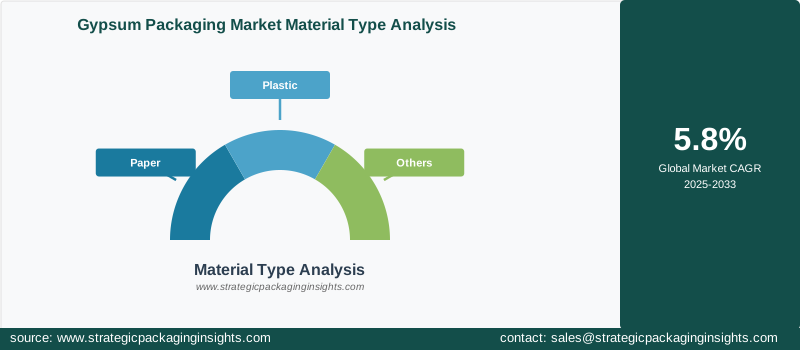
In addition to paper and plastic, other materials such as metal and glass are also used in gypsum packaging, albeit to a lesser extent. These materials offer unique benefits, such as enhanced durability and protection, making them suitable for specific applications. However, their higher cost and environmental impact limit their widespread adoption. As the market continues to evolve, companies are exploring new materials and technologies to create more sustainable and cost-effective packaging solutions. The development of composite materials, which combine the benefits of multiple materials, is an emerging trend in this segment, offering potential for innovation and growth.
Application Analysis
The application segment of the gypsum packaging market is diverse, with construction being the largest consumer. The construction industry's demand for gypsum products, such as drywall and plaster, drives the need for effective packaging solutions that protect these materials during transportation and storage. As urbanization and infrastructure development continue to accelerate, particularly in emerging markets, the demand for gypsum packaging is expected to grow. Additionally, the increasing focus on sustainable construction practices is encouraging the use of eco-friendly packaging materials, further boosting market growth.
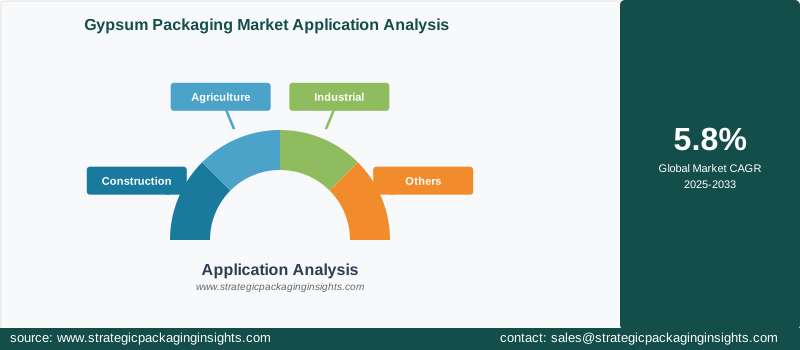
Apart from construction, the agriculture and industrial sectors also contribute to the demand for gypsum packaging. In agriculture, gypsum is used as a soil conditioner, and effective packaging is essential to ensure its quality and efficacy. The industrial sector, on the other hand, uses gypsum in various applications, such as cement production and manufacturing processes, requiring specialized packaging solutions to meet specific needs. As these industries continue to expand, the demand for gypsum packaging is expected to rise, offering growth opportunities for market players.
Packaging Type Analysis
The packaging type segment in the gypsum packaging market includes bags, boxes, containers, and others. Bags are the most commonly used packaging type, offering convenience and cost-effectiveness for transporting and storing gypsum products. They are available in various sizes and materials, catering to different consumer needs and preferences. Boxes and containers, while less common, offer enhanced protection and durability, making them suitable for specific applications where product safety is a priority. As the market continues to evolve, companies are exploring new packaging designs and materials to enhance functionality and sustainability.
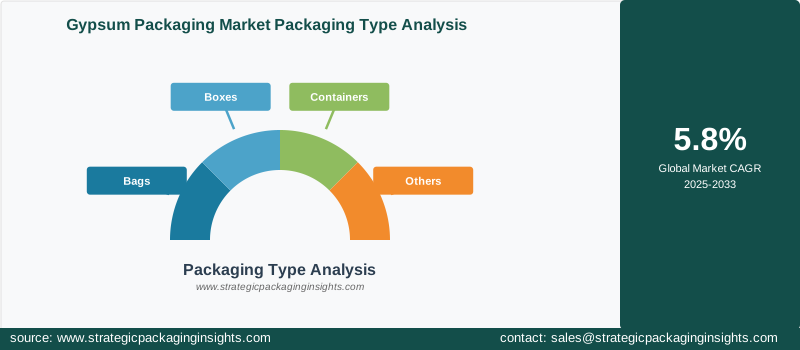
In addition to traditional packaging types, the market is witnessing a growing trend towards innovative packaging solutions that offer added value. Smart packaging technologies, such as RFID tags and QR codes, are being integrated into gypsum packaging to improve inventory management and product tracking. These technologies not only enhance the functionality of the packaging but also provide valuable data insights that can help companies optimize their operations. As consumer preferences continue to shift towards more sustainable and functional packaging solutions, the demand for innovative packaging types is expected to grow, offering opportunities for market players to differentiate themselves and gain a competitive edge.
End-User Analysis
The end-user segment of the gypsum packaging market includes manufacturers, distributors, retailers, and others. Manufacturers are the largest consumers of gypsum packaging, as they require effective solutions to protect their products during transportation and storage. The increasing focus on sustainability and cost-effectiveness is driving manufacturers to seek innovative packaging solutions that meet their specific needs. Distributors and retailers also play a significant role in the market, as they require packaging solutions that enhance product visibility and appeal to consumers.
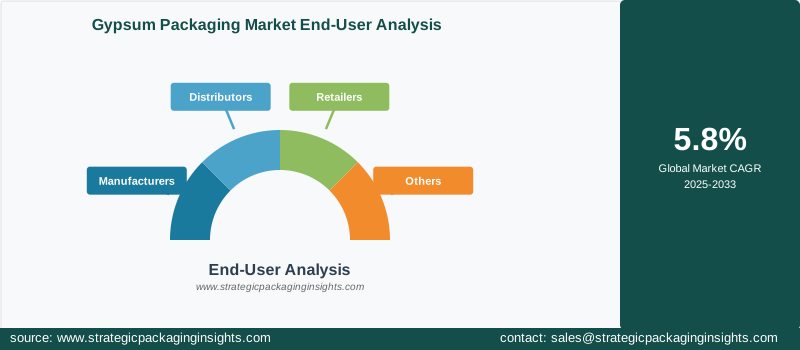
As the market continues to evolve, end-users are increasingly prioritizing sustainability and functionality in their packaging choices. This is driving demand for eco-friendly materials and innovative packaging designs that offer added value. Companies are investing in research and development to create customized solutions that cater to the unique needs of different end-users, offering opportunities for growth and differentiation. The shift towards more sustainable and functional packaging solutions is expected to drive growth in this segment, as end-users seek to enhance their product offerings and meet consumer expectations.
Gypsum Packaging Market Segments
The Gypsum Packaging market has been segmented on the basis ofMaterial Type
- Paper
- Plastic
- Others
Application
- Construction
- Agriculture
- Industrial
- Others
Packaging Type
- Bags
- Boxes
- Containers
- Others
End-User
- Manufacturers
- Distributors
- Retailers
- Others




