


Green Packaging Film Market Outlook
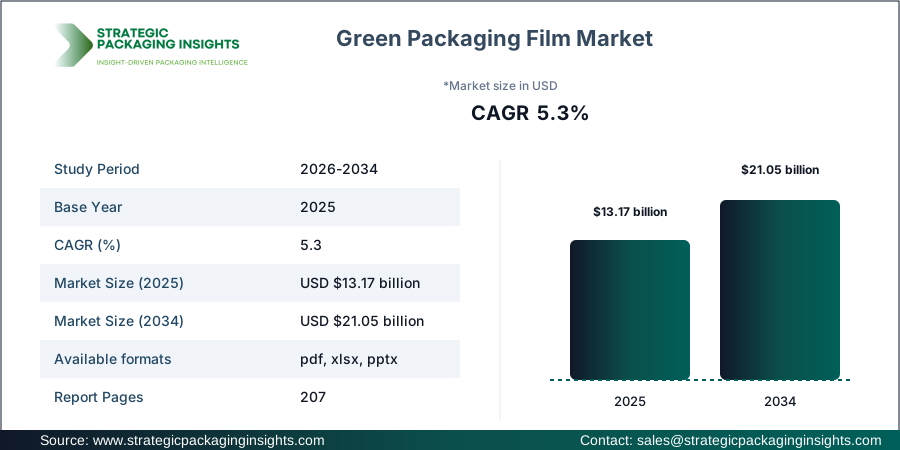
The Green Packaging Film market was valued at $13.17 billion in 2025 and is projected to reach $21.05 billion by 2034, growing at a CAGR of 5.3% during the forecast period 2026-2034. This market is driven by increasing consumer awareness about environmental sustainability and stringent government regulations aimed at reducing plastic waste. The demand for eco-friendly packaging solutions is on the rise, with industries such as food and beverage, personal care, and retail leading the charge. The shift towards sustainable packaging is further fueled by technological advancements in biodegradable materials and the growing trend of circular economy practices.
Despite the promising growth prospects, the Green Packaging Film market faces several challenges. High production costs associated with eco-friendly materials and the lack of infrastructure for recycling and composting in many regions pose significant barriers. However, the market holds immense potential for growth, driven by innovations in material science and increasing investments in sustainable packaging solutions. Companies are focusing on developing cost-effective and efficient green packaging films to cater to the rising demand from various end-use industries.
Report Scope
| Attributes | Details |
| Report Title | Green Packaging Film Market Size, Future Growth and Forecast 2034 |
| By Material Type | bio-based films, recyclable mono-material films, PCR films, compostable films |
| By Application | food, personal care, retail, e-commerce |
| By Film Type | shrink film, lidding film, pouch film, wrap film |
| By End Use | CPG brands, retailers, converters |
| Region | Asia Pacific, North America, Latin America, Europe, Middle East & Africa |
| Base Year | 2025 |
| Historic Period | 2018-2024 |
| Forecast Period | 2026-2034 |
| Number of Pages | 207 |
| Customization Available | Yes* |
Opportunities & Threats
The Green Packaging Film market presents numerous opportunities for growth, primarily driven by the increasing consumer preference for sustainable and eco-friendly products. As consumers become more environmentally conscious, there is a growing demand for packaging solutions that minimize environmental impact. This trend is particularly evident in the food and beverage industry, where companies are increasingly adopting green packaging films to meet consumer expectations and regulatory requirements. Additionally, advancements in material science and technology are enabling the development of innovative green packaging solutions that offer superior performance and sustainability.
Another significant opportunity lies in the expansion of e-commerce and online retail, which is driving the demand for sustainable packaging solutions. As more consumers shop online, there is a growing need for packaging materials that are not only environmentally friendly but also durable and efficient. Green packaging films offer an ideal solution, providing the necessary protection for products while minimizing environmental impact. This trend is expected to continue, creating new opportunities for companies operating in the Green Packaging Film market.
However, the market also faces several threats, including the high cost of production associated with eco-friendly materials. The lack of infrastructure for recycling and composting in many regions poses a significant challenge, limiting the adoption of green packaging films. Additionally, the market is highly competitive, with numerous players vying for market share. Companies must continuously innovate and invest in research and development to stay ahead of the competition and meet the evolving needs of consumers and regulatory bodies.
Drivers & Challenges
The primary drivers of the Green Packaging Film market include increasing consumer awareness about environmental sustainability and stringent government regulations aimed at reducing plastic waste. As consumers become more environmentally conscious, there is a growing demand for packaging solutions that minimize environmental impact. This trend is particularly evident in the food and beverage industry, where companies are increasingly adopting green packaging films to meet consumer expectations and regulatory requirements. Additionally, advancements in material science and technology are enabling the development of innovative green packaging solutions that offer superior performance and sustainability.
Another significant driver is the expansion of e-commerce and online retail, which is driving the demand for sustainable packaging solutions. As more consumers shop online, there is a growing need for packaging materials that are not only environmentally friendly but also durable and efficient. Green packaging films offer an ideal solution, providing the necessary protection for products while minimizing environmental impact. This trend is expected to continue, creating new opportunities for companies operating in the Green Packaging Film market.
Despite the promising growth prospects, the Green Packaging Film market faces several challenges. High production costs associated with eco-friendly materials and the lack of infrastructure for recycling and composting in many regions pose significant barriers. Additionally, the market is highly competitive, with numerous players vying for market share. Companies must continuously innovate and invest in research and development to stay ahead of the competition and meet the evolving needs of consumers and regulatory bodies.
Market Share Analysis
The competitive landscape of the Green Packaging Film market is characterized by the presence of several key players, each striving to gain a significant share of the market. Companies such as Amcor, Mondi, Berry Global, UFlex, and Taghleef Industries are leading the charge, leveraging their extensive experience and expertise in the packaging industry to develop innovative and sustainable solutions. These companies are investing heavily in research and development to create eco-friendly packaging films that meet the evolving needs of consumers and regulatory bodies.
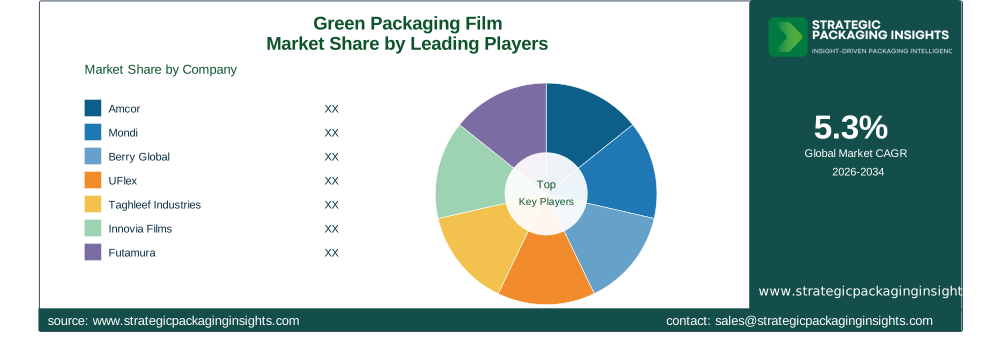
Amcor, a global leader in packaging solutions, holds a significant share of the Green Packaging Film market. The company is known for its commitment to sustainability and innovation, offering a wide range of eco-friendly packaging solutions. Mondi, another major player, is renowned for its focus on sustainable packaging and its efforts to reduce environmental impact through innovative product development. Berry Global, with its extensive product portfolio and strong market presence, is also a key player in the market, offering a range of sustainable packaging solutions.
UFlex, a leading flexible packaging company, is making significant strides in the Green Packaging Film market with its focus on sustainability and innovation. The company is committed to developing eco-friendly packaging solutions that meet the needs of consumers and regulatory bodies. Taghleef Industries, a global leader in the production of BOPP films, is also a key player in the market, offering a range of sustainable packaging solutions that cater to the needs of various industries.
Other notable companies in the Green Packaging Film market include Innovia Films, Futamura, NatureWorks, Novamont, and BASF. These companies are investing heavily in research and development to create innovative and sustainable packaging solutions that meet the evolving needs of consumers and regulatory bodies. The competitive landscape of the market is characterized by intense competition, with companies striving to gain a significant share of the market through innovation and strategic partnerships.
Key Highlights
- The Green Packaging Film market is projected to grow at a CAGR of 5.3% from 2026 to 2034.
- Increasing consumer awareness about environmental sustainability is driving demand for eco-friendly packaging solutions.
- Stringent government regulations aimed at reducing plastic waste are boosting market growth.
- The food and beverage industry is a major driver of demand for green packaging films.
- Advancements in material science and technology are enabling the development of innovative green packaging solutions.
- The expansion of e-commerce and online retail is driving demand for sustainable packaging solutions.
- High production costs and lack of recycling infrastructure pose significant challenges to market growth.
- Key players in the market include Amcor, Mondi, Berry Global, UFlex, and Taghleef Industries.
- Companies are investing heavily in research and development to create innovative and sustainable packaging solutions.
- The market is characterized by intense competition, with numerous players vying for market share.
Top Countries Insights
In the Green Packaging Film market, the United States stands out as a key player, with a market size of approximately $3.5 billion and a CAGR of 4%. The country's strong regulatory framework and consumer demand for sustainable products drive growth. Innovations in biodegradable materials and a robust recycling infrastructure further bolster the market. However, challenges such as high production costs and competition from traditional packaging materials persist.
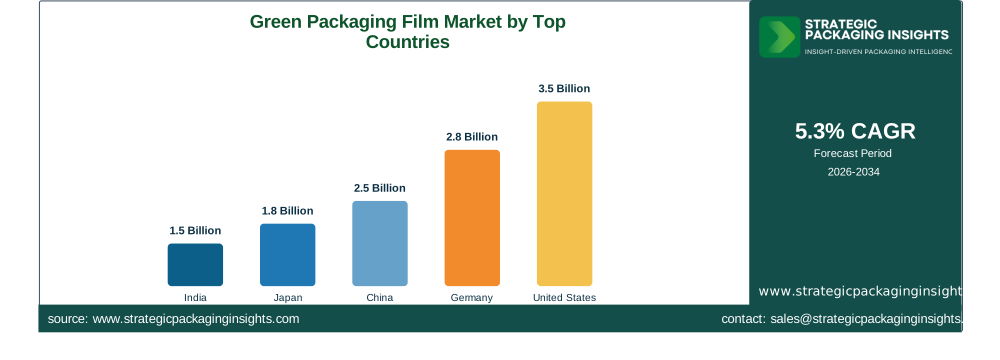
Germany is another significant market, valued at around $2.8 billion with a CAGR of 5%. The country's commitment to environmental sustainability and stringent regulations on plastic waste reduction fuel demand for green packaging films. The presence of leading packaging companies and advancements in material science contribute to market growth. However, the high cost of eco-friendly materials remains a challenge.
China, with a market size of $2.5 billion and a CAGR of 6%, is rapidly emerging as a major player in the Green Packaging Film market. The country's growing consumer awareness about environmental issues and government initiatives to reduce plastic waste drive demand. The expansion of e-commerce and online retail further boosts the market. However, the lack of recycling infrastructure poses a significant challenge.
In Japan, the Green Packaging Film market is valued at approximately $1.8 billion, with a CAGR of 3%. The country's focus on sustainability and innovation in packaging solutions drives market growth. The presence of leading packaging companies and advancements in material science contribute to the market's expansion. However, high production costs and competition from traditional packaging materials remain challenges.
India, with a market size of $1.5 billion and a CAGR of 7%, is experiencing rapid growth in the Green Packaging Film market. The country's increasing consumer awareness about environmental sustainability and government initiatives to reduce plastic waste drive demand. The expansion of e-commerce and online retail further boosts the market. However, the lack of recycling infrastructure and high production costs pose significant challenges.
Green Packaging Film Market Segments Insights

Material Type Analysis
The Green Packaging Film market is segmented by material type into bio-based films, recyclable mono-material films, PCR films, and compostable films. Bio-based films are gaining traction due to their renewable nature and reduced carbon footprint. These films are derived from natural sources such as corn starch and sugarcane, making them an attractive option for environmentally conscious consumers. Recyclable mono-material films are also witnessing increased demand, driven by their ease of recycling and compatibility with existing recycling infrastructure. PCR films, made from post-consumer recycled materials, are gaining popularity as companies strive to incorporate more recycled content into their packaging solutions. Compostable films, which break down into natural elements under composting conditions, are becoming increasingly popular in regions with established composting infrastructure.
Each material type offers unique benefits and challenges. Bio-based films, while environmentally friendly, often come with higher production costs compared to traditional materials. Recyclable mono-material films offer a sustainable solution but require proper recycling infrastructure to be effective. PCR films help reduce plastic waste by incorporating recycled content, but their availability and quality can vary. Compostable films provide an eco-friendly alternative but require specific conditions for effective composting. Companies in the Green Packaging Film market are investing in research and development to overcome these challenges and develop innovative solutions that meet the evolving needs of consumers and regulatory bodies.
Application Analysis
The Green Packaging Film market is segmented by application into food, personal care, retail, and e-commerce. The food industry is a major driver of demand for green packaging films, as companies seek to meet consumer expectations for sustainable and eco-friendly packaging solutions. Green packaging films offer an ideal solution for food packaging, providing the necessary protection for products while minimizing environmental impact. The personal care industry is also witnessing increased demand for green packaging films, driven by consumer preference for sustainable and environmentally friendly products. Retail and e-commerce are significant growth areas, as the expansion of online shopping drives demand for durable and sustainable packaging solutions.
Each application segment presents unique opportunities and challenges. The food industry requires packaging solutions that offer superior barrier properties and shelf life, while the personal care industry demands packaging that is both aesthetically pleasing and environmentally friendly. Retail and e-commerce require packaging solutions that are durable and efficient, capable of protecting products during transit while minimizing environmental impact. Companies in the Green Packaging Film market are investing in research and development to develop innovative solutions that meet the specific needs of each application segment.
Film Type Analysis
The Green Packaging Film market is segmented by film type into shrink film, lidding film, pouch film, and wrap film. Shrink films are widely used in the packaging industry due to their versatility and ability to conform to the shape of the product, providing a secure and tamper-evident seal. Lidding films are gaining popularity in the food industry, offering a convenient and sustainable solution for sealing containers and trays. Pouch films are increasingly used in the personal care and food industries, providing a flexible and eco-friendly packaging solution. Wrap films are commonly used in the retail and e-commerce sectors, offering a durable and sustainable solution for protecting products during transit.
Each film type offers unique benefits and challenges. Shrink films provide a secure and tamper-evident seal but require specialized equipment for application. Lidding films offer a convenient and sustainable solution but may require specific sealing equipment. Pouch films provide a flexible and eco-friendly packaging solution but may have higher production costs compared to traditional materials. Wrap films offer a durable and sustainable solution but require proper recycling infrastructure to be effective. Companies in the Green Packaging Film market are investing in research and development to overcome these challenges and develop innovative solutions that meet the evolving needs of consumers and regulatory bodies.
End Use Analysis
The Green Packaging Film market is segmented by end use into CPG brands, retailers, and converters. CPG brands are increasingly adopting green packaging films to meet consumer expectations for sustainable and eco-friendly products. These companies are investing in research and development to develop innovative packaging solutions that minimize environmental impact while maintaining product quality and shelf life. Retailers are also witnessing increased demand for green packaging films, driven by consumer preference for sustainable and environmentally friendly products. Converters, who transform raw materials into finished packaging products, play a crucial role in the Green Packaging Film market, providing the necessary expertise and technology to develop innovative and sustainable packaging solutions.
Each end-use segment presents unique opportunities and challenges. CPG brands require packaging solutions that offer superior barrier properties and shelf life, while retailers demand packaging that is both aesthetically pleasing and environmentally friendly. Converters require access to the latest technology and materials to develop innovative and sustainable packaging solutions. Companies in the Green Packaging Film market are investing in research and development to develop innovative solutions that meet the specific needs of each end-use segment.
Green Packaging Film Market Segments
The Green Packaging Film market has been segmented on the basis ofBy Material Type
- bio-based films
- recyclable mono-material films
- PCR films
- compostable films
By Application
- food
- personal care
- retail
- e-commerce
By Film Type
- shrink film
- lidding film
- pouch film
- wrap film
By End Use
- CPG brands
- retailers
- converters
Region
- Asia Pacific
- North America
- Latin America
- Europe
- Middle East & Africa




