


Gravure Printing for Flexible Packaging Market Outlook
The Gravure Printing for Flexible Packaging market size was valued at USD $4.2 Billion in 2025 and is anticipated to reach USD $6.5 Billion by 2035, growing at a CAGR of 4.5% during the forecast period according to Strategic Packaging Insights.
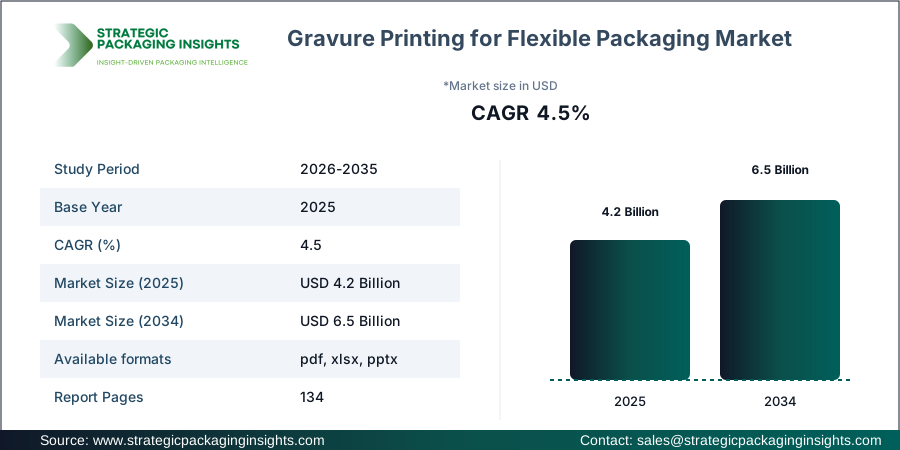
The most impactful market driver is the increasing demand for sustainable and high-quality packaging solutions in the food and beverage industry. The shift towards eco-friendly packaging materials and the need for superior print quality are driving the adoption of gravure printing technology. Regulatory bodies like the European Commission are emphasizing sustainable packaging practices, further propelling market growth.
Report Scope
| Attributes | Details |
| Report Title | Gravure Printing for Flexible Packaging Market Projected to Scale to 6.5 Billion by 2035, Assesses Strategic Packaging Insights |
| By Printing Technology | Rotogravure Printing, Electronic Gravure Printing, Direct Gravure Printing, Sheet-Fed Gravure Printing |
| By Ink Type | Solvent-Based Inks, Water-Based Inks, UV-Curable Inks, Electron Beam Curable Inks, Low-VOC Inks |
| By Substrate | Polyethylene (PE), Polypropylene (PP), Biaxially Oriented Polypropylene (BOPP), Polyethylene Terephthalate (PET), Polyamide (PA), Polyvinyl Chloride (PVC), Aluminum Foil, Paper |
| By Number of Colors | Below 4 Colors, 4–6 Colors, 7–8 Colors, Above 8 Colors |
| By Packaging Format | Pouches, Bags, Sachets, Wrappers, Flow Wraps, Laminated Films, Shrink Films, Other Formats |
| By Application | Food Packaging, Beverage Packaging, Pharmaceutical Packaging, Personal Care Packaging, Household Products, Pet Food Packaging, Tobacco Packaging, Industrial Packaging |
| By End Use Industry | Food and Beverage, Pharmaceuticals, Personal Care and Cosmetics, Household Care, Pet Care, Tobacco, Industrial |
| By Automation Level | Manual, Semi-Automatic, Fully Automatic |
| By Region | North America, Europe, Asia-Pacific, Latin America, Middle East and Africa |
| Base Year | 2025 |
| Historic Period | 2018-2024 |
| Forecast Period | 2026-2035 |
| Number of Pages | 134 |
| Customization Available | Yes* |
Market Trends Analysis
Gravure printing for flexible packaging is witnessing a shift towards sustainable practices, with a strong emphasis on using low-VOC and water-based inks. This trend is driven by stringent environmental regulations and consumer demand for eco-friendly packaging. The adoption of digital technologies and automation in gravure printing processes is enhancing operational efficiency and reducing waste, contributing to cost savings and improved sustainability.
Another significant trend is the increasing demand for customized and high-quality packaging solutions. Brand owners are focusing on enhancing product appeal through innovative packaging designs and superior print quality. This trend is driving investments in advanced gravure printing technologies that offer high precision and consistency. The growing e-commerce sector is also influencing packaging trends, with a focus on lightweight and durable packaging solutions to optimize logistics and reduce costs.
Industry Transformation Analysis
The gravure printing industry is undergoing a transformation with the integration of digital technologies and automation. This shift is enhancing operational efficiency and reducing production costs. The adoption of Industry 4.0 technologies, such as IoT and AI, is enabling real-time monitoring and predictive maintenance, leading to improved machine uptime and productivity. The focus on sustainability is driving the development of eco-friendly inks and substrates, aligning with global environmental goals.
The value chain is evolving with increased collaboration between raw material suppliers, converters, and brand owners. This collaboration is facilitating the development of innovative packaging solutions that meet consumer demands for sustainability and quality. The industry is also witnessing consolidation, with key players expanding their capabilities through mergers and acquisitions to strengthen their market position and enhance their technological expertise.
Trends & Disruptions Impacting Customers' Customers
Downstream customers, particularly in the food and beverage industry, are increasingly prioritizing sustainability and quality in their packaging solutions. This shift is driven by consumer demand for eco-friendly products and regulatory pressures to reduce environmental impact. The rise of e-commerce is also influencing packaging requirements, with a focus on lightweight and durable solutions that ensure product safety during transit.
These changes are impacting the gravure printing market by driving demand for advanced printing technologies that offer high precision and sustainability. Brand owners are seeking innovative packaging designs that enhance product appeal and differentiate their offerings in a competitive market. This trend is creating opportunities for gravure printing companies to invest in new technologies and expand their product portfolios to meet evolving customer needs.
Gravure Printing for Flexible Packaging Market Ecosystem
The gravure printing for flexible packaging ecosystem involves a complex interplay of raw material suppliers, substrate producers, converters, and distributors. Raw materials such as polymers, inks, and additives are sourced from specialized suppliers. These materials are then processed into substrates like films and sheets, which serve as the base for gravure printing.
The printing stage involves the application of gravure technology to create high-quality images and designs on flexible substrates. This is followed by the converting process, where printed substrates are transformed into final packaging formats such as pouches, bags, and wrappers. The distribution stage involves logistics and supply chain management to ensure timely delivery of packaged products to end users.
Analyst Perspective
Analyst Perspective: The gravure printing for flexible packaging market is poised for significant growth, driven by the increasing demand for sustainable and high-quality packaging solutions.
The most important structural change is the shift towards eco-friendly inks and substrates, which is reshaping the competitive landscape and driving innovation. Companies are investing in advanced printing technologies to enhance product appeal and meet consumer demands for sustainability.
Market participants should focus on developing innovative packaging solutions that align with sustainability goals and regulatory requirements. Monitoring advancements in digital printing technologies and automation will be crucial for maintaining a competitive edge in this evolving market.
Opportunities & Threats
The gravure printing for flexible packaging market presents significant opportunities for growth, particularly in the food and beverage industry. The increasing demand for sustainable packaging solutions is driving investments in eco-friendly inks and substrates. Companies that can offer innovative and high-quality packaging designs are well-positioned to capture market share and meet evolving consumer preferences.
Technological advancements in digital printing and automation are creating opportunities for operational efficiency and cost savings. The integration of IoT and AI technologies is enabling real-time monitoring and predictive maintenance, enhancing machine uptime and productivity. Companies that can leverage these technologies to improve their printing processes will gain a competitive advantage.
However, the market also faces challenges, including raw material volatility and regulatory uncertainty. The fluctuating prices of polymers and inks can impact production costs and profitability. Additionally, evolving environmental regulations require companies to continuously adapt their processes and materials to meet compliance standards.
Competition from alternative printing technologies, such as digital and flexographic printing, poses a threat to the gravure printing market. These technologies offer advantages in terms of speed and flexibility, which can impact the demand for gravure printing solutions. Companies must differentiate their offerings and demonstrate the unique benefits of gravure printing to maintain their market position.
Drivers & Challenges
The primary driver of the gravure printing for flexible packaging market is the increasing demand for high-quality and sustainable packaging solutions. The food and beverage industry, in particular, is seeking innovative packaging designs that enhance product appeal and meet consumer preferences for eco-friendly products. The shift towards sustainable packaging materials and the need for superior print quality are driving the adoption of gravure printing technology.
Regulatory mandates and brand circularity targets are also influencing market growth. Governments and regulatory bodies are emphasizing sustainable packaging practices, which is encouraging companies to invest in eco-friendly inks and substrates. The focus on reducing packaging waste and improving recyclability is driving innovation in gravure printing processes and materials.
Despite these drivers, the market faces challenges related to raw material volatility and competition from alternative printing technologies. The fluctuating prices of polymers and inks can impact production costs and profitability. Additionally, digital and flexographic printing technologies offer advantages in terms of speed and flexibility, which can affect the demand for gravure printing solutions. Companies must differentiate their offerings and demonstrate the unique benefits of gravure printing to maintain their market position.
Packaging Market Economics
The economics of gravure printing for flexible packaging are influenced by several factors, including raw material costs, conversion costs, and energy expenses. The prices of polymers and inks, which are key raw materials, can fluctuate based on market conditions and supply chain dynamics. Conversion costs, including printing and lamination, are significant components of the overall cost structure.
Energy costs also play a crucial role in the economics of gravure printing, as the process requires substantial energy input for drying and curing inks. Companies must optimize their energy consumption to reduce costs and improve sustainability. The integration of digital technologies and automation can enhance operational efficiency and reduce waste, contributing to cost savings and improved profitability.
Packaging Value Chain & Cost Analysis
The value chain for gravure printing in flexible packaging involves several tiers, each contributing to the overall cost structure. Tier-3 includes resin synthesis and additives, which are essential for producing high-quality inks and substrates. Tier-2 involves film extrusion and substrate production, where raw materials are processed into films and sheets for printing.
Tier-1 encompasses converting, printing, and lamination, where substrates are transformed into final packaging formats. Downstream activities include co-packing, distribution, and recycling, which are critical for delivering packaged products to end users and managing end-of-life processing. Companies must optimize their value chain operations to reduce costs and improve efficiency.
Unit Economics & Substrate Cost Analysis
The unit economics of gravure printing for flexible packaging are influenced by raw material costs, energy expenses, and conversion efficiencies. The cost of polymers and inks, which are primary raw materials, can vary based on market conditions and supply chain dynamics. Energy costs are also significant, as the printing process requires substantial energy input for drying and curing inks.
Conversion efficiencies, including printing and lamination, impact the overall cost structure. Companies must optimize their processes to reduce waste and improve productivity. The integration of digital technologies and automation can enhance operational efficiency and reduce costs, contributing to improved profitability and competitiveness.
Packaging Regulatory & Sustainability Analysis
The gravure printing for flexible packaging market is subject to various regulatory and sustainability requirements. Regulatory bodies such as the European Commission and the U.S. EPA are emphasizing sustainable packaging practices, which is driving the adoption of eco-friendly inks and substrates. Companies must comply with regulations related to recyclability, food-contact safety, and labeling requirements.
Sustainability initiatives, such as extended producer responsibility (EPR) and packaging waste reduction targets, are influencing market dynamics. Companies are investing in innovative packaging solutions that align with sustainability goals and regulatory requirements. The focus on reducing packaging waste and improving recyclability is driving innovation in gravure printing processes and materials.
Strategic Mergers, Acquisitions & Capacity Expansions
Recent strategic developments in the gravure printing for flexible packaging market include mergers, acquisitions, and capacity expansions by key players. Companies are expanding their capabilities through strategic partnerships and acquisitions to strengthen their market position and enhance their technological expertise. These developments are enabling companies to offer innovative packaging solutions and meet evolving consumer demands.
For example, Bobst Group has been investing in advanced printing technologies to enhance its product portfolio and expand its market presence. Similarly, Windmöller & Hölscher has been focusing on capacity expansions to meet the growing demand for sustainable packaging solutions. These strategic initiatives are reshaping the competitive landscape and driving innovation in the gravure printing market.
Strategic Action Directives
Brand Packaging Engineers & Sustainability Directors should focus on material selection and mono-material qualification to enhance recyclability and meet sustainability goals. Barrier performance and PCR integration are critical for developing innovative packaging solutions that align with regulatory requirements and consumer preferences.
Converter Operations & Extrusion Leads should optimize line speed, tooling, and changeover processes to improve operational efficiency and reduce scrap. Managing PCR variability and capacity utilization is essential for maintaining competitiveness and meeting customer demands.
Procurement & Material Sourcing Managers should focus on resin contracts, price indexing, and supplier diversification to mitigate risks associated with raw material volatility. EPR exposure and regulatory compliance are critical considerations for sourcing decisions.
Investors should monitor capacity expansions, margin structures, and M&A activities to identify growth opportunities and assess market concentration. Technology advancements and market dynamics are key factors influencing investment decisions in the gravure printing market.
Market Share Analysis
The gravure printing for flexible packaging market is characterized by a competitive landscape with several key players vying for market share. Companies such as Bobst Group, Windmöller & Hölscher, and Uteco Group are prominent players with a strong presence in the market. These companies are investing in advanced printing technologies and expanding their capabilities to meet the growing demand for sustainable packaging solutions.
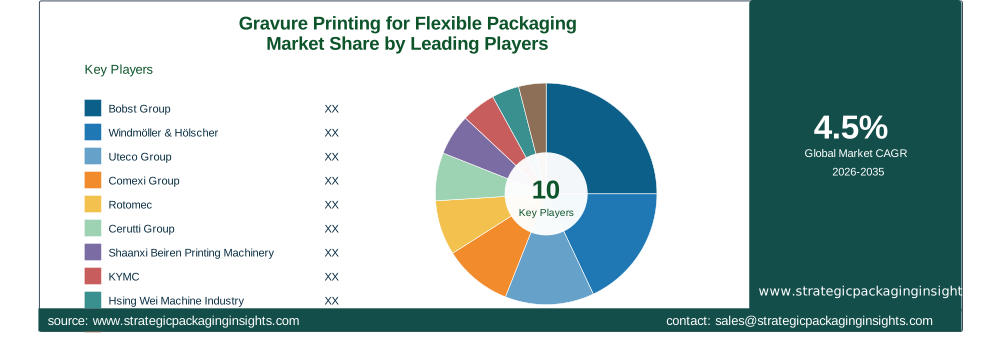
Bobst Group is a leading player in the gravure printing market, known for its innovative printing technologies and strong market presence. The company has been focusing on expanding its product portfolio and enhancing its technological expertise to maintain its competitive edge. Windmöller & Hölscher is another key player, known for its advanced printing solutions and commitment to sustainability.
Uteco Group is a prominent player in the gravure printing market, offering a wide range of printing solutions for flexible packaging. The company is known for its innovative technologies and strong customer relationships. Comexi Group is also a key player, focusing on sustainability and technological advancements to meet evolving consumer demands.
Other notable players in the market include Rotomec, Cerutti Group, and Shaanxi Beiren Printing Machinery. These companies are investing in capacity expansions and strategic partnerships to strengthen their market position and enhance their technological capabilities. The competitive landscape is characterized by a focus on innovation, sustainability, and customer-centric solutions.
Key Highlights
- Largest Region: Asia Pacific
- Fastest-Growing Region: Asia Pacific
- Largest Segment: Food Packaging
- Fastest-Growing Segment: Food Packaging
- Base-year market size: USD 4.2 Billion
- Forecast-year market size: USD 6.5 Billion
- CAGR: 4.5%
- Important application: Food Packaging
- Major end-use industry: Food and Beverage
- Major market driver: Demand for sustainable packaging solutions
Regional Insights
The gravure printing for flexible packaging market is witnessing significant growth across major regions, with Asia Pacific emerging as the largest and fastest-growing region. The increasing demand for sustainable packaging solutions and the growing food and beverage industry are driving market growth in this region. North America and Europe are also key markets, with a focus on technological advancements and sustainability initiatives.
North America
In North America, the gravure printing market is driven by the demand for high-quality packaging solutions in the food and beverage industry. The region is characterized by a focus on sustainability and technological advancements, with companies investing in eco-friendly inks and substrates to meet regulatory requirements and consumer preferences.
The presence of key players and the adoption of advanced printing technologies are contributing to market growth. The focus on reducing packaging waste and improving recyclability is driving innovation in gravure printing processes and materials.
Europe
Europe is a significant market for gravure printing, with a strong emphasis on sustainability and regulatory compliance. The European Commission's focus on sustainable packaging practices is driving the adoption of eco-friendly inks and substrates. The region is characterized by a high level of technological innovation and a strong focus on reducing packaging waste.
The food and beverage industry is a major driver of market growth, with companies seeking innovative packaging solutions that enhance product appeal and meet consumer preferences. The presence of key players and the focus on sustainability are contributing to market growth in Europe.
Asia Pacific
Asia Pacific is the largest and fastest-growing region for gravure printing, driven by the increasing demand for sustainable packaging solutions in the food and beverage industry. The region is characterized by a focus on technological advancements and the adoption of eco-friendly inks and substrates.
The growing e-commerce sector is also influencing packaging trends, with a focus on lightweight and durable solutions that optimize logistics and reduce costs. The presence of key players and the focus on sustainability are contributing to market growth in Asia Pacific.
Latin America
In Latin America, the gravure printing market is driven by the demand for high-quality packaging solutions in the food and beverage industry. The region is characterized by a focus on sustainability and technological advancements, with companies investing in eco-friendly inks and substrates to meet regulatory requirements and consumer preferences.
The presence of key players and the adoption of advanced printing technologies are contributing to market growth. The focus on reducing packaging waste and improving recyclability is driving innovation in gravure printing processes and materials.
Middle East & Africa
The Middle East & Africa region is witnessing growth in the gravure printing market, driven by the demand for sustainable packaging solutions in the food and beverage industry. The region is characterized by a focus on technological advancements and the adoption of eco-friendly inks and substrates.
The presence of key players and the focus on sustainability are contributing to market growth. The growing e-commerce sector is also influencing packaging trends, with a focus on lightweight and durable solutions that optimize logistics and reduce costs.
Gravure Printing for Flexible Packaging Market Segments Insights

By Printing Technology Analysis
The gravure printing market is segmented by printing technology, including rotogravure, electronic gravure, direct gravure, and sheet-fed gravure printing. Rotogravure printing is the most widely used technology, known for its high precision and consistency. The demand for electronic gravure printing is growing due to its ability to offer high-quality prints with reduced setup times.
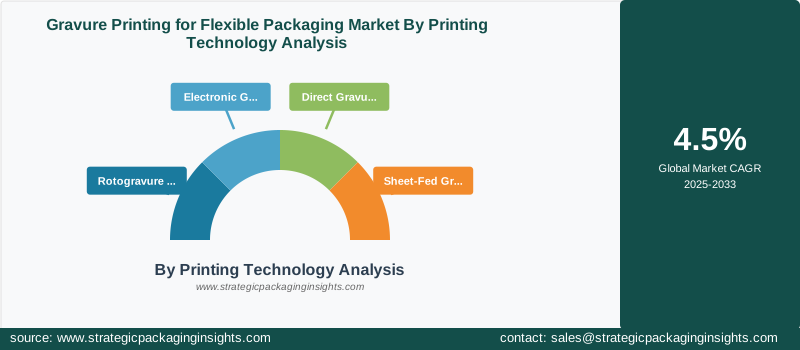
Direct gravure printing is gaining traction in applications requiring high-speed production and superior print quality. Sheet-fed gravure printing is used for specific applications where flexibility and customization are required. The focus on technological advancements and the need for high-quality packaging solutions are driving the adoption of advanced gravure printing technologies.
By Ink Type Analysis
The market is segmented by ink type, including solvent-based, water-based, UV-curable, electron beam curable, and low-VOC inks. Solvent-based inks are widely used due to their fast drying times and superior adhesion properties. However, the demand for water-based and low-VOC inks is increasing due to environmental regulations and consumer preferences for eco-friendly products.
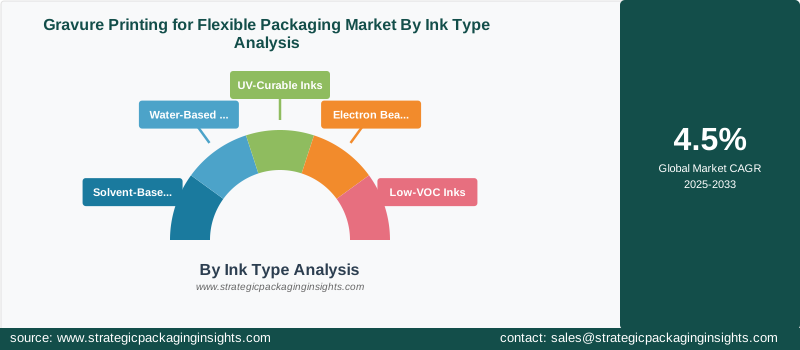
UV-curable and electron beam curable inks are gaining popularity for their ability to offer high-quality prints with minimal environmental impact. The focus on sustainability and regulatory compliance is driving the adoption of eco-friendly inks in gravure printing applications.
By Substrate Analysis
The gravure printing market is segmented by substrate, including polyethylene, polypropylene, BOPP, PET, PA, PVC, aluminum foil, and paper. Polyethylene and polypropylene are the most commonly used substrates due to their versatility and cost-effectiveness. BOPP and PET are gaining popularity for their superior barrier properties and printability.
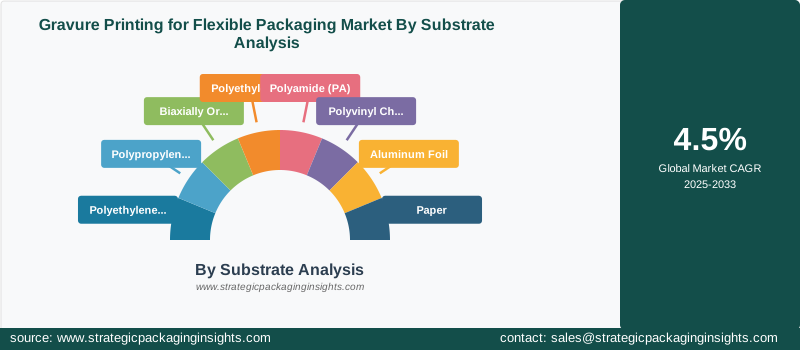
Aluminum foil and paper are used for specific applications requiring high barrier performance and sustainability. The focus on material innovation and the need for high-quality packaging solutions are driving the adoption of advanced substrates in gravure printing applications.
By Number of Colors Analysis
The market is segmented by the number of colors, including below 4 colors, 4-6 colors, 7-8 colors, and above 8 colors. The demand for high-quality and customized packaging solutions is driving the adoption of gravure printing technologies that offer a wide range of color options.
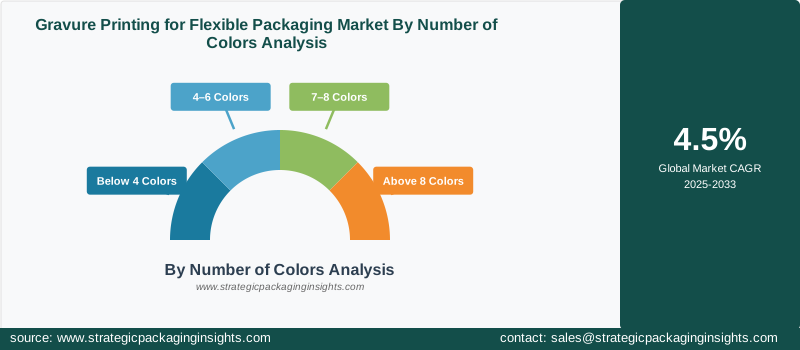
Packaging designs with 4-6 colors are widely used for standard applications, while 7-8 colors and above are preferred for premium and customized packaging solutions. The focus on enhancing product appeal and meeting consumer preferences is driving the demand for advanced gravure printing technologies with a wide color gamut.
By Packaging Format Analysis
The gravure printing market is segmented by packaging format, including pouches, bags, sachets, wrappers, flow wraps, laminated films, shrink films, and other formats. Pouches and bags are the most commonly used formats due to their versatility and convenience. Sachets and wrappers are gaining popularity for single-use and portion-controlled applications.
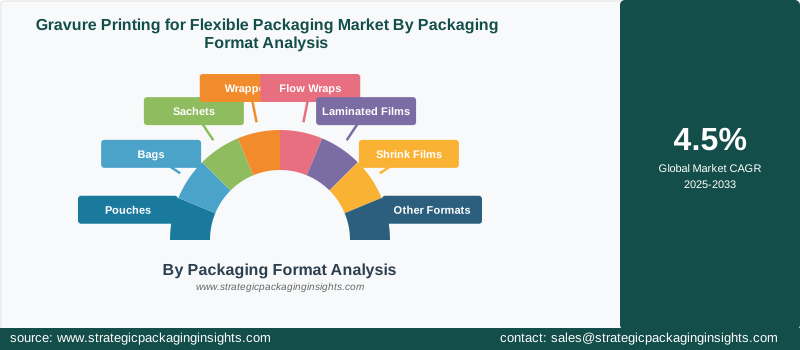
Laminated films and shrink films are used for specific applications requiring high barrier performance and durability. The focus on innovation and the need for high-quality packaging solutions are driving the adoption of advanced packaging formats in gravure printing applications.
By Application Analysis
The gravure printing market is segmented by application, including food packaging, beverage packaging, pharmaceutical packaging, personal care packaging, household products, pet food packaging, tobacco packaging, and industrial packaging. Food packaging is the largest segment, driven by the demand for high-quality and sustainable packaging solutions.
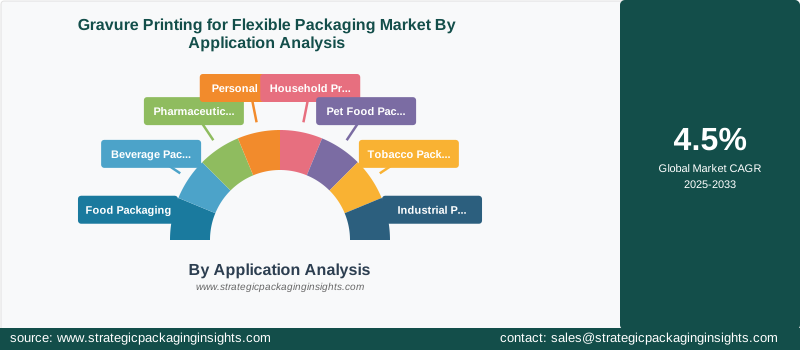
Beverage packaging is gaining traction due to the increasing demand for innovative and eco-friendly packaging designs. Pharmaceutical and personal care packaging are also significant segments, with a focus on meeting regulatory requirements and consumer preferences for safety and sustainability.
By End Use Industry Analysis
The market is segmented by end-use industry, including food and beverage, pharmaceuticals, personal care and cosmetics, household care, pet care, tobacco, and industrial. The food and beverage industry is the largest end-use industry, driven by the demand for high-quality and sustainable packaging solutions.
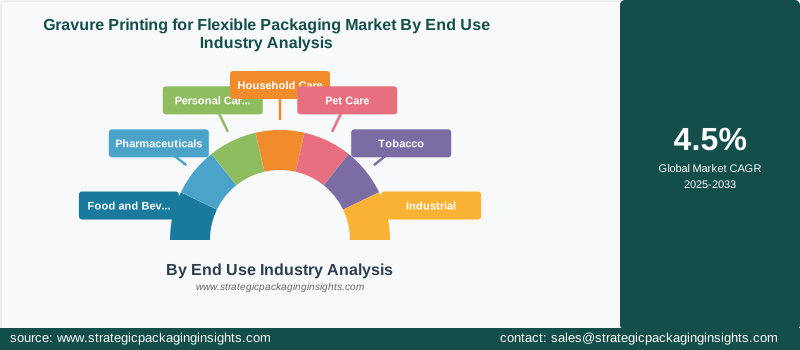
The pharmaceutical and personal care industries are also significant, with a focus on meeting regulatory requirements and consumer preferences for safety and sustainability. The focus on innovation and the need for high-quality packaging solutions are driving the adoption of gravure printing technologies in various end-use industries.
By Automation Level Analysis
The gravure printing market is segmented by automation level, including manual, semi-automatic, and fully automatic. Fully automatic systems are gaining popularity due to their ability to enhance operational efficiency and reduce production costs. Semi-automatic systems are used for specific applications requiring flexibility and customization.
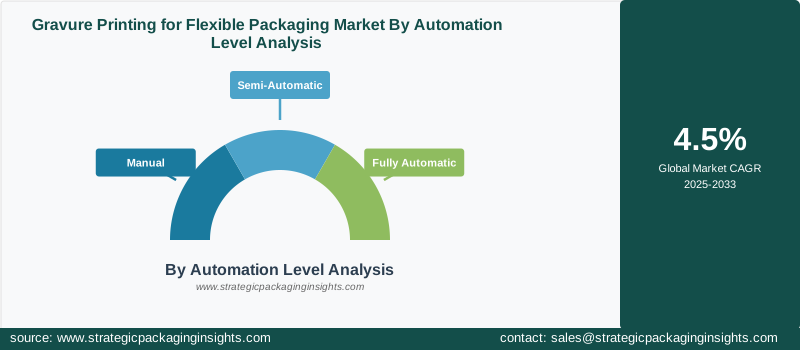
Manual systems are used for small-scale and specialized applications. The focus on technological advancements and the need for high-quality packaging solutions are driving the adoption of advanced automation levels in gravure printing applications.
Gravure Printing for Flexible Packaging Market Segments
The Gravure Printing for Flexible Packaging market has been segmented on the basis ofBy Printing Technology
- Rotogravure Printing
- Electronic Gravure Printing
- Direct Gravure Printing
- Sheet-Fed Gravure Printing
By Ink Type
- Solvent-Based Inks
- Water-Based Inks
- UV-Curable Inks
- Electron Beam Curable Inks
- Low-VOC Inks
By Substrate
- Polyethylene (PE)
- Polypropylene (PP)
- Biaxially Oriented Polypropylene (BOPP)
- Polyethylene Terephthalate (PET)
- Polyamide (PA)
- Polyvinyl Chloride (PVC)
- Aluminum Foil
- Paper
By Number of Colors
- Below 4 Colors
- 4–6 Colors
- 7–8 Colors
- Above 8 Colors
By Packaging Format
- Pouches
- Bags
- Sachets
- Wrappers
- Flow Wraps
- Laminated Films
- Shrink Films
- Other Formats
By Application
- Food Packaging
- Beverage Packaging
- Pharmaceutical Packaging
- Personal Care Packaging
- Household Products
- Pet Food Packaging
- Tobacco Packaging
- Industrial Packaging
By End Use Industry
- Food and Beverage
- Pharmaceuticals
- Personal Care and Cosmetics
- Household Care
- Pet Care
- Tobacco
- Industrial
By Automation Level
- Manual
- Semi-Automatic
- Fully Automatic
By Region
- North America
- Europe
- Asia-Pacific
- Latin America
- Middle East and Africa




