


Graphene Films Market Outlook
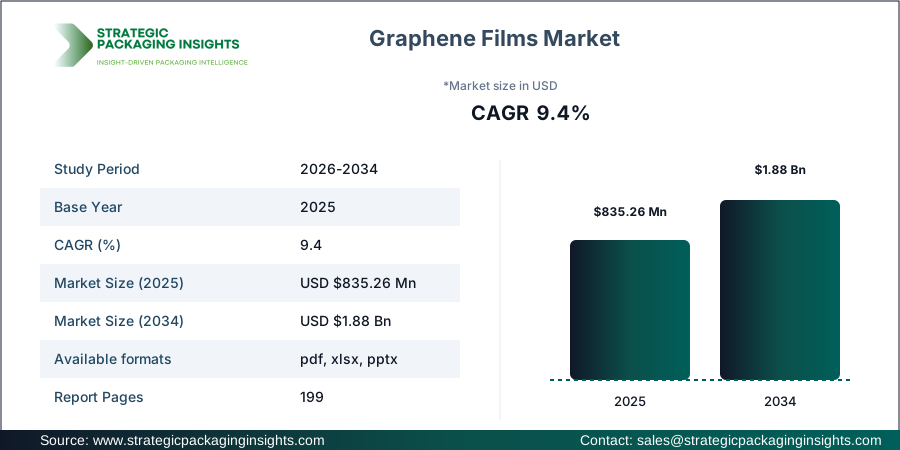
The Graphene Films market size was valued at USD 835.26 million in 2025 and is anticipated to reach USD 1.88 billion by 2034, growing at a CAGR of 9.4% during the forecast period according to Strategic Packaging Insights. Graphenea, a leading player in the market, has been instrumental in driving innovation and adoption of graphene films across various sectors. The increasing demand for lightweight, durable, and conductive materials in electronics and energy storage applications is a significant driver for this market. The unique properties of graphene, such as its high electrical conductivity and mechanical strength, make it an ideal material for next-generation electronic devices and energy solutions.
One of the most impactful drivers of the Graphene Films market is the growing emphasis on sustainable and efficient energy solutions. Governments worldwide are investing heavily in renewable energy projects, which in turn is boosting the demand for advanced materials like graphene films. For instance, the European Union's Green Deal aims to make Europe the first climate-neutral continent by 2050, which includes significant investments in renewable energy technologies. This initiative is expected to create substantial opportunities for graphene films in energy storage and conversion applications, further propelling market growth. Companies like Haydale Graphene are actively developing graphene-enhanced products to meet these emerging needs, positioning themselves as key players in the sustainable energy landscape.
Report Scope
| Attributes | Details |
| Report Title | Graphene Films Market Size, Future Growth and Forecast 2034 |
| By Product Type | Monolayer Graphene Films, Multilayer Graphene Films, Graphene Oxide Films |
| By Application | Electronics, Sensors, Energy Storage, Barrier Films |
| By End Use | Electronics, Energy, Healthcare, Industrial |
| By Production Method | CVD, Exfoliation, Solution Processing |
| Region | Asia Pacific, North America, Latin America, Europe, Middle East & Africa |
| Base Year | 2025 |
| Historic Period | 2018-2024 |
| Forecast Period | 2026-2034 |
| Number of Pages | 199 |
| Customization Available | Yes* |
Sustainability & Circular Economy Analysis
Sustainability initiatives and circular economy practices are increasingly shaping the packaging market, with a strong focus on reducing environmental impact. The integration of recyclable materials and reusable packaging solutions is becoming a standard practice among manufacturers. Graphene films, known for their durability and lightweight properties, are being explored as potential eco-friendly alternatives to traditional packaging materials. This shift towards sustainable packaging is driven by consumer preferences for environmentally responsible products and stringent packaging regulations aimed at reducing waste and carbon footprints.
Eco-friendly material innovation is at the forefront of the packaging industry's transformation. Companies are investing in research and development to create graphene-based materials that offer superior performance while minimizing environmental impact. Waste reduction strategies, such as extended producer responsibility (EPR) programs, are encouraging manufacturers to design products with end-of-life considerations in mind. These trends are influencing packaging design, manufacturing processes, and supply chain strategies, as companies strive to meet regulatory compliance and enhance their long-term market competitiveness.
The adoption of sustainability trends is also impacting investment decisions within the packaging industry. Investors are increasingly prioritizing companies that demonstrate strong environmental, social, and governance (ESG) initiatives. This focus on sustainability is driving the development of new business models and partnerships aimed at creating a circular economy. As a result, packaging manufacturers, brand owners, and retailers are collaborating to develop innovative solutions that align with consumer sustainability preferences and regulatory requirements. The ongoing shift towards sustainable packaging is expected to create new opportunities for growth and innovation in the graphene films market.
Packaging Value Chain & Supply Chain Analysis
The packaging value chain and supply chain ecosystem are critical components of the graphene films market. Raw material sourcing is a key factor, as the availability and cost of graphene significantly impact production capabilities and market performance. Packaging converters and manufacturers play a vital role in transforming raw graphene into usable films, while packaging machinery and logistics providers ensure efficient production and distribution. Strategic partnerships between brand owners, retailers, and recycling networks are essential for optimizing supply chain efficiency and enhancing business competitiveness.
Supply chain efficiency is influenced by several factors, including transportation, production capabilities, and procurement strategies. Companies are increasingly focusing on localization and global sourcing to mitigate risks associated with raw material availability and transportation costs. Inventory management and supply chain resilience are also critical considerations, as companies strive to maintain a steady supply of graphene films to meet growing demand. These factors are driving the development of innovative supply chain solutions that enhance overall market performance and competitiveness.
Strategic partnerships and collaborations are becoming increasingly important in the graphene films market. Companies are forming alliances with research institutions, technology providers, and industry stakeholders to drive innovation and expand their market presence. These partnerships enable companies to leverage complementary strengths and resources, resulting in improved product offerings and enhanced customer value. As the market continues to evolve, the ability to adapt to changing supply chain dynamics and capitalize on strategic partnerships will be crucial for success in the graphene films industry.
Opportunities & Threats
The Graphene Films market presents numerous opportunities for growth and innovation. One significant opportunity lies in the expanding electronics industry, where the demand for advanced materials with superior electrical conductivity and thermal properties is on the rise. Graphene films are well-positioned to meet these needs, offering lightweight and flexible solutions for next-generation electronic devices. Additionally, the growing focus on renewable energy and energy storage solutions presents another opportunity for graphene films, as they can enhance the efficiency and performance of batteries and supercapacitors.
Another promising opportunity for the graphene films market is the increasing adoption of graphene-based materials in the healthcare sector. Graphene's unique properties, such as its biocompatibility and antibacterial characteristics, make it an ideal material for medical devices and sensors. The healthcare industry's ongoing efforts to develop innovative diagnostic and therapeutic solutions are driving the demand for advanced materials like graphene films. Companies that can successfully integrate graphene into healthcare applications stand to gain a competitive advantage in this rapidly evolving market.
Despite the numerous opportunities, the graphene films market also faces certain threats and challenges. One of the primary challenges is the high cost of graphene production, which can limit its widespread adoption across various industries. Additionally, the market is subject to regulatory constraints and environmental concerns related to the production and disposal of graphene-based materials. Companies must navigate these challenges by investing in cost-effective production methods and ensuring compliance with environmental regulations to maintain their competitive edge in the market.
Drivers & Challenges
The Graphene Films market is driven by several key factors, including the increasing demand for advanced materials in the electronics and energy sectors. The unique properties of graphene, such as its high electrical conductivity, mechanical strength, and thermal stability, make it an ideal material for a wide range of applications. The growing emphasis on renewable energy and energy storage solutions is also driving the demand for graphene films, as they can enhance the efficiency and performance of batteries and supercapacitors. Companies like Directa Plus are actively developing graphene-enhanced products to meet these emerging needs, positioning themselves as leaders in the market.
Another significant driver of the graphene films market is the ongoing advancements in production methods and technologies. Innovations in chemical vapor deposition (CVD), exfoliation, and solution processing are enabling the large-scale production of high-quality graphene films at a lower cost. These advancements are making graphene films more accessible to a broader range of industries, further fueling market growth. Additionally, the increasing focus on sustainability and eco-friendly materials is driving the adoption of graphene films as a viable alternative to traditional materials in various applications.
Despite the positive drivers, the graphene films market faces several challenges that could hinder its growth. One of the primary challenges is the high cost of graphene production, which can limit its widespread adoption across various industries. Additionally, the market is subject to regulatory constraints and environmental concerns related to the production and disposal of graphene-based materials. Companies must navigate these challenges by investing in cost-effective production methods and ensuring compliance with environmental regulations to maintain their competitive edge in the market.
Market Share Analysis
The competitive landscape of the Graphene Films market is characterized by the presence of several key players, each striving to gain a significant share of the market. Companies like Graphenea, Haydale Graphene, and Directa Plus are at the forefront of innovation, continuously developing new products and technologies to meet the evolving needs of the market. These companies are leveraging their expertise in graphene production and application to establish themselves as leaders in the industry.
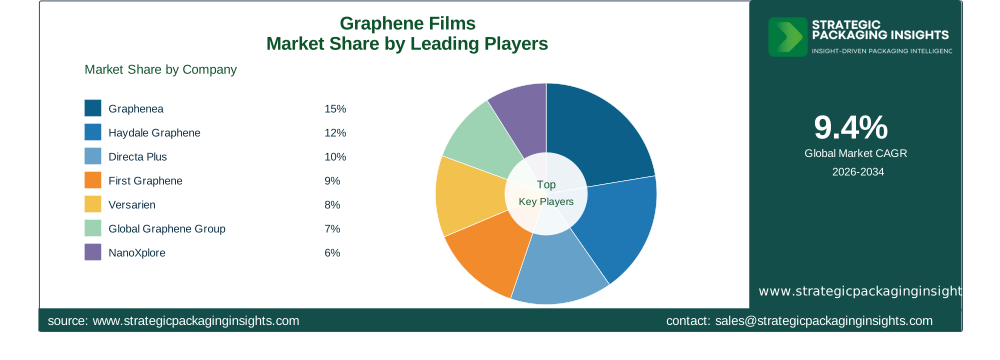
Graphenea, a prominent player in the market, is known for its high-quality graphene products and strong focus on research and development. The company has established a robust global presence, with operations spanning across Europe, North America, and Asia. Haydale Graphene, another key player, is recognized for its innovative approach to graphene-enhanced materials and its commitment to sustainability. The company's extensive product portfolio and strategic partnerships have enabled it to capture a significant share of the market.
Directa Plus is also a major player in the graphene films market, known for its advanced production technologies and strong focus on customer-centric solutions. The company's unique approach to graphene production and application has positioned it as a leader in the industry. Other notable players in the market include First Graphene, Versarien, and Global Graphene Group, each contributing to the market's growth through their innovative products and solutions.
Overall, the competitive landscape of the graphene films market is dynamic and rapidly evolving, with companies continuously striving to enhance their product offerings and expand their market presence. The ability to innovate and adapt to changing market dynamics will be crucial for companies looking to maintain their competitive edge in this fast-paced industry.
Key Highlights
- Market Size: The Graphene Films market was valued at USD 835.26 million in 2025 and is projected to reach USD 1.88 billion by 2034.
- Growth Rate: The market is expected to grow at a CAGR of 9.4% during the forecast period.
- Key Players: Major companies include Graphenea, Haydale Graphene, and Directa Plus.
- Product Innovation: Advancements in production methods like CVD and exfoliation are driving market growth.
- Application Expansion: Increasing demand in electronics and energy storage sectors.
- Regional Growth: Asia Pacific is expected to witness significant growth due to rising industrialization.
- Sustainability Focus: Growing emphasis on eco-friendly materials and sustainable practices.
Graphene Films Market Segments Insights

Product Type Analysis
The Graphene Films market is segmented by product type into Monolayer Graphene Films, Multilayer Graphene Films, and Graphene Oxide Films. Monolayer graphene films are gaining traction due to their exceptional electrical conductivity and mechanical strength, making them ideal for high-performance electronic applications. Multilayer graphene films, on the other hand, offer enhanced durability and are increasingly used in industrial applications where robustness is crucial. Graphene oxide films are being explored for their potential in flexible electronics and sensors, owing to their unique chemical properties and ease of processing.
Competition within the product type segment is intense, with companies like Graphenea and Haydale Graphene leading the charge in innovation and product development. These companies are investing heavily in research and development to enhance the performance and scalability of their graphene films. Customer demand for high-quality, cost-effective graphene films is driving companies to explore new production methods and technologies, such as chemical vapor deposition (CVD) and solution processing, to meet the evolving needs of the market.
Application Analysis
The application segment of the Graphene Films market includes Electronics, Sensors, Energy Storage, and Barrier Films. The electronics sector is a major driver of demand for graphene films, as the material's superior electrical conductivity and flexibility make it ideal for use in next-generation electronic devices. Sensors are another key application area, with graphene films being used to develop highly sensitive and accurate sensors for various industries, including healthcare and environmental monitoring.
Energy storage is a rapidly growing application segment, with graphene films being used to enhance the performance and efficiency of batteries and supercapacitors. The barrier films segment is also witnessing increased demand, as graphene films offer excellent barrier properties against gases and moisture, making them suitable for packaging and protective applications. Companies like Directa Plus and Versarien are actively developing graphene-enhanced products to cater to these diverse application needs, positioning themselves as leaders in the market.
End Use Analysis
The end-use segment of the Graphene Films market is categorized into Electronics, Energy, Healthcare, and Industrial. The electronics industry is a major consumer of graphene films, driven by the demand for advanced materials with superior electrical and thermal properties. The energy sector is also a significant end-user, with graphene films being used to improve the efficiency and performance of renewable energy solutions, such as solar cells and energy storage systems.
The healthcare industry is increasingly adopting graphene films for use in medical devices and sensors, owing to their biocompatibility and antibacterial properties. The industrial sector is exploring the use of graphene films in various applications, including coatings and composites, to enhance product performance and durability. Companies like Global Graphene Group and NanoXplore are actively developing graphene-based solutions to meet the diverse needs of these end-use industries, driving market growth and innovation.
Production Method Analysis
The production method segment of the Graphene Films market includes Chemical Vapor Deposition (CVD), Exfoliation, and Solution Processing. CVD is a widely used method for producing high-quality graphene films, offering excellent control over film thickness and uniformity. Exfoliation is another popular method, known for its simplicity and cost-effectiveness, making it suitable for large-scale production of graphene films.
Solution processing is gaining traction as an emerging production method, offering the potential for scalable and cost-effective production of graphene films. Companies are investing in research and development to optimize these production methods and enhance the quality and performance of their graphene films. The ongoing advancements in production technologies are expected to drive market growth and expand the application potential of graphene films across various industries.
Graphene Films Market Segments
The Graphene Films market has been segmented on the basis ofBy Product Type
- Monolayer Graphene Films
- Multilayer Graphene Films
- Graphene Oxide Films
By Application
- Electronics
- Sensors
- Energy Storage
- Barrier Films
By End Use
- Electronics
- Energy
- Healthcare
- Industrial
By Production Method
- CVD
- Exfoliation
- Solution Processing
Region
- Asia Pacific
- North America
- Latin America
- Europe
- Middle East & Africa




