


Glass Spice Jars Market Outlook
The Glass Spice Jars market size was valued at USD 2.41 billion in 2025 and is anticipated to reach USD 3.81 billion by 2034, growing at a CAGR of 5.2% during the forecast period according to Strategic Packaging Insights. The market is witnessing a robust demand driven by the increasing popularity of home cooking and the rising trend of gourmet food preparation. Brands like O-I Glass and Ardagh Group are capitalizing on this trend by offering innovative and aesthetically pleasing glass spice jars that cater to both functionality and design. The demand for glass spice jars is further fueled by the growing consumer preference for sustainable and eco-friendly packaging solutions, which glass inherently provides due to its recyclability and non-toxic nature.

One of the most impactful drivers of the Glass Spice Jars market is the increasing regulatory emphasis on sustainable packaging solutions. Governments worldwide are implementing stringent regulations to reduce plastic waste, thereby encouraging the use of glass as a preferred packaging material. This regulatory push is complemented by consumer awareness and demand for environmentally friendly products, which is significantly boosting the market for glass spice jars. Companies like Berlin Packaging and TricorBraun are responding to these trends by investing in sustainable packaging innovations and expanding their product lines to include more eco-friendly options. This alignment with regulatory and consumer trends is expected to drive substantial growth in the glass spice jars market over the coming years.
Report Scope
| Attributes | Details |
| Report Title | Glass Spice Jars Market Size, Future Growth and Forecast 2034 |
| Capacity | Below 100 ml, 100–250 ml, Above 250 ml |
| Closure Type | Screw Cap, Shaker Cap, Cork Closure, Metal Lid |
| Application | Spices, Herbs, Seasonings, Gourmet Foods |
| End Use | Food Brands, Retail, Households, HoReCa |
| Region | Asia Pacific, North America, Latin America, Europe, Middle East & Africa |
| Base Year | 2025 |
| Historic Period | 2018-2024 |
| Forecast Period | 2026-2034 |
| Number of Pages | 129 |
| Customization Available | Yes* |
Sustainability & Circular Economy Analysis
Sustainability initiatives are profoundly influencing the packaging market, with glass spice jars being at the forefront due to their recyclable nature. The shift towards recyclable materials is driven by both consumer demand and regulatory pressures, encouraging manufacturers to adopt eco-friendly practices. Companies like Stoelzle Glass and SKS Bottle are leading the charge by integrating recycled glass into their production processes, thereby reducing the carbon footprint and promoting a circular economy. This trend not only enhances brand reputation but also aligns with global sustainability goals, making glass spice jars a preferred choice for environmentally conscious consumers.
The adoption of lightweight packaging is another significant trend impacting the glass spice jars market. By reducing the weight of glass jars, manufacturers can lower transportation costs and minimize environmental impact. This innovation is crucial for maintaining competitiveness in the market, as it allows companies to offer cost-effective solutions without compromising on quality. Additionally, the use of eco-friendly materials and waste reduction strategies are becoming standard practices, with companies like Kaufman Container and Burch Bottle implementing these measures to meet consumer expectations and regulatory requirements.
Extended Producer Responsibility (EPR) is also playing a pivotal role in shaping the glass spice jars market. EPR policies require manufacturers to take responsibility for the entire lifecycle of their products, including disposal and recycling. This has led to increased investment in recycling networks and sustainable supply chain strategies. Companies are now focusing on designing packaging that is not only aesthetically pleasing but also easy to recycle, thereby enhancing their long-term market competitiveness. As a result, the glass spice jars market is poised for significant growth, driven by sustainability trends and regulatory compliance.
Packaging Value Chain & Supply Chain Analysis
The packaging value chain for glass spice jars is complex, involving multiple stakeholders from raw material sourcing to end-user delivery. Raw material availability, particularly high-quality glass, is crucial for maintaining production efficiency and meeting consumer demand. Companies like Piramal Glass and Vetropack are investing in strategic partnerships with raw material suppliers to ensure a steady supply of quality glass, which is essential for maintaining their competitive edge in the market. These partnerships also enable manufacturers to optimize their procurement strategies and reduce costs, thereby enhancing overall market performance.
Packaging converters and manufacturers play a vital role in the value chain, transforming raw materials into finished products. The efficiency of this process is influenced by the availability of advanced packaging machinery and skilled labor. Companies are increasingly investing in automation and technology to streamline production processes and improve product quality. This focus on production capabilities is essential for meeting the growing demand for glass spice jars and maintaining supply chain resilience. Additionally, logistics and distribution channels are critical components of the supply chain, ensuring timely delivery of products to retailers and end-users.
Recycling networks and inventory management are also integral to the packaging value chain, particularly in the context of sustainability. Companies are implementing robust recycling programs to minimize waste and promote a circular economy. This not only aligns with consumer preferences but also enhances brand reputation and regulatory compliance. Effective inventory management is crucial for maintaining supply chain efficiency and meeting market demand. By optimizing inventory levels and reducing lead times, companies can improve their competitiveness and ensure long-term success in the glass spice jars market.
Opportunities & Threats
The Glass Spice Jars market presents numerous opportunities for growth, driven by the increasing demand for sustainable packaging solutions. As consumers become more environmentally conscious, there is a growing preference for glass packaging due to its recyclability and non-toxic properties. This trend is creating opportunities for companies to innovate and expand their product lines to include more eco-friendly options. Additionally, the rise of e-commerce and online grocery shopping is driving demand for aesthetically pleasing and durable packaging solutions, further boosting the market for glass spice jars.
Another significant opportunity lies in the expanding gourmet food and spice market. As consumers become more adventurous in their culinary pursuits, there is a growing demand for high-quality spices and seasonings, which in turn drives demand for premium packaging solutions. Companies can capitalize on this trend by offering innovative and visually appealing glass spice jars that enhance the overall consumer experience. Furthermore, the increasing popularity of home cooking and meal preparation is creating opportunities for companies to target the household segment, offering convenient and functional packaging solutions.
Despite these opportunities, the Glass Spice Jars market faces several threats, including the high cost of raw materials and production. The price volatility of glass and other raw materials can impact profit margins and pose challenges for manufacturers. Additionally, the market is highly competitive, with numerous players vying for market share. Companies must continuously innovate and differentiate their products to maintain a competitive edge. Regulatory compliance and environmental concerns also pose challenges, requiring companies to invest in sustainable practices and technologies to meet evolving consumer and regulatory expectations.
Drivers & Challenges
The Glass Spice Jars market is driven by several key factors, including the increasing demand for sustainable and eco-friendly packaging solutions. As consumers become more environmentally conscious, there is a growing preference for glass packaging due to its recyclability and non-toxic properties. This trend is driving demand for glass spice jars, as they offer a sustainable alternative to plastic packaging. Additionally, the rise of e-commerce and online grocery shopping is driving demand for aesthetically pleasing and durable packaging solutions, further boosting the market for glass spice jars.
Another significant driver of the Glass Spice Jars market is the expanding gourmet food and spice market. As consumers become more adventurous in their culinary pursuits, there is a growing demand for high-quality spices and seasonings, which in turn drives demand for premium packaging solutions. Companies can capitalize on this trend by offering innovative and visually appealing glass spice jars that enhance the overall consumer experience. Furthermore, the increasing popularity of home cooking and meal preparation is creating opportunities for companies to target the household segment, offering convenient and functional packaging solutions.
Despite these drivers, the Glass Spice Jars market faces several challenges, including the high cost of raw materials and production. The price volatility of glass and other raw materials can impact profit margins and pose challenges for manufacturers. Additionally, the market is highly competitive, with numerous players vying for market share. Companies must continuously innovate and differentiate their products to maintain a competitive edge. Regulatory compliance and environmental concerns also pose challenges, requiring companies to invest in sustainable practices and technologies to meet evolving consumer and regulatory expectations.
Market Share Analysis
The Glass Spice Jars market is characterized by a competitive landscape with several key players vying for market share. Companies like O-I Glass, Ardagh Group, and Berlin Packaging are leading the market with their innovative product offerings and strong brand presence. These companies have established themselves as leaders in the industry by focusing on sustainability, product quality, and customer satisfaction. Their extensive product portfolios and global distribution networks enable them to cater to a wide range of customer needs and preferences.

O-I Glass is a prominent player in the Glass Spice Jars market, known for its commitment to sustainability and innovation. The company offers a wide range of glass packaging solutions, including spice jars, that are designed to meet the evolving needs of consumers. Ardagh Group is another key player, offering a diverse range of glass packaging products that cater to various industries, including food and beverage. The company's focus on sustainability and product quality has helped it maintain a strong market position.
Berlin Packaging is a leading supplier of glass spice jars, known for its extensive product portfolio and customer-centric approach. The company offers a wide range of packaging solutions, including custom designs and sustainable options, to meet the diverse needs of its customers. TricorBraun is another major player in the market, offering innovative packaging solutions that combine functionality and aesthetics. The company's focus on customer satisfaction and product quality has helped it establish a strong presence in the market.
Other notable players in the Glass Spice Jars market include Stoelzle Glass, SKS Bottle, Kaufman Container, Burch Bottle, Piramal Glass, and Vetropack. These companies are known for their commitment to sustainability and innovation, offering a wide range of glass packaging solutions that cater to various industries. Their focus on product quality and customer satisfaction has helped them maintain a competitive edge in the market. As the demand for glass spice jars continues to grow, these companies are well-positioned to capitalize on emerging opportunities and drive market growth.
Key Highlights
- Market Size: The Glass Spice Jars market was valued at USD 2.41 billion in 2025 and is projected to reach USD 3.81 billion by 2034.
- Growth Rate: The market is expected to grow at a CAGR of 5.2% during the forecast period.
- Leading Companies: Key players include O-I Glass, Ardagh Group, and Berlin Packaging.
- Capacity Segment: The 100-250 ml segment is experiencing significant growth.
- Closure Type: Screw Cap is the most popular closure type in the market.
- Application: Spices and seasonings are the primary applications driving demand.
- Region: Asia Pacific is expected to witness the highest growth rate.
Glass Spice Jars Market Segments Insights

Capacity Analysis
The capacity segment of the Glass Spice Jars market is divided into three categories: Below 100 ml, 100-250 ml, and Above 250 ml. The 100-250 ml segment is experiencing significant growth due to its versatility and suitability for a wide range of applications. This segment is particularly popular among consumers who prefer to purchase spices and seasonings in moderate quantities, ensuring freshness and flavor retention. Companies like O-I Glass and Ardagh Group are focusing on this segment by offering innovative designs and customizable options to cater to diverse consumer preferences.

The Below 100 ml segment is also gaining traction, driven by the increasing demand for sample-sized and travel-friendly packaging solutions. This segment is particularly popular among gourmet food brands and specialty retailers who offer premium spices and seasonings in smaller quantities. The Above 250 ml segment, while smaller in comparison, caters to bulk buyers and commercial users, such as restaurants and food service providers. As the demand for glass spice jars continues to grow, companies are investing in capacity expansion and product innovation to meet the evolving needs of consumers.
Closure Type Analysis
The closure type segment of the Glass Spice Jars market includes Screw Cap, Shaker Cap, Cork Closure, and Metal Lid. The Screw Cap segment is the most popular closure type, offering convenience and ease of use for consumers. This segment is particularly favored by households and retail brands, as it provides a secure seal that preserves the freshness and flavor of spices and seasonings. Companies like Berlin Packaging and TricorBraun are focusing on this segment by offering a wide range of screw cap designs and materials to cater to diverse consumer preferences.
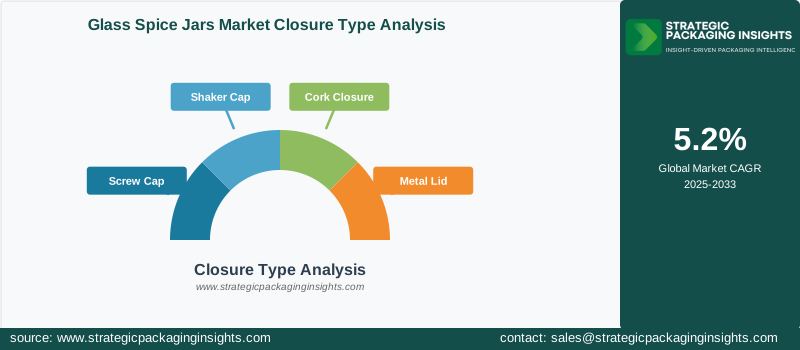
The Shaker Cap segment is also experiencing growth, driven by the increasing demand for convenient and user-friendly packaging solutions. This segment is particularly popular among consumers who prefer to sprinkle spices and seasonings directly from the jar. The Cork Closure and Metal Lid segments, while smaller in comparison, cater to niche markets and premium brands that prioritize aesthetics and product differentiation. As the demand for glass spice jars continues to grow, companies are investing in closure type innovation and customization to meet the evolving needs of consumers.
Application Analysis
The application segment of the Glass Spice Jars market includes Spices, Herbs, Seasonings, and Gourmet Foods. The Spices and Seasonings segments are the primary applications driving demand for glass spice jars, as consumers increasingly seek high-quality and flavorful ingredients for their culinary creations. Companies like Stoelzle Glass and SKS Bottle are focusing on these segments by offering innovative packaging solutions that enhance the overall consumer experience and preserve the freshness and flavor of spices and seasonings.
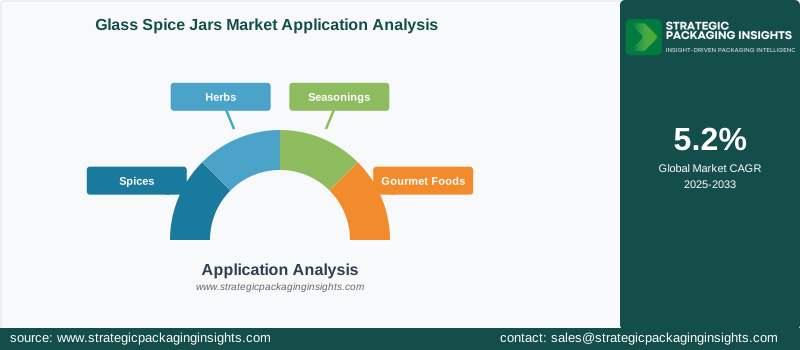
The Herbs segment is also experiencing growth, driven by the increasing popularity of herbal remedies and natural ingredients. This segment is particularly popular among health-conscious consumers who prioritize organic and natural products. The Gourmet Foods segment, while smaller in comparison, caters to premium brands and specialty retailers who offer high-end and artisanal products. As the demand for glass spice jars continues to grow, companies are investing in application-specific packaging solutions and product innovation to meet the evolving needs of consumers.
End Use Analysis
The end use segment of the Glass Spice Jars market includes Food Brands, Retail, Households, and HoReCa (Hotels, Restaurants, and Cafes). The Food Brands segment is the largest end use segment, driven by the increasing demand for branded and premium packaging solutions. Companies like Kaufman Container and Burch Bottle are focusing on this segment by offering customizable and innovative packaging solutions that enhance brand visibility and consumer appeal.
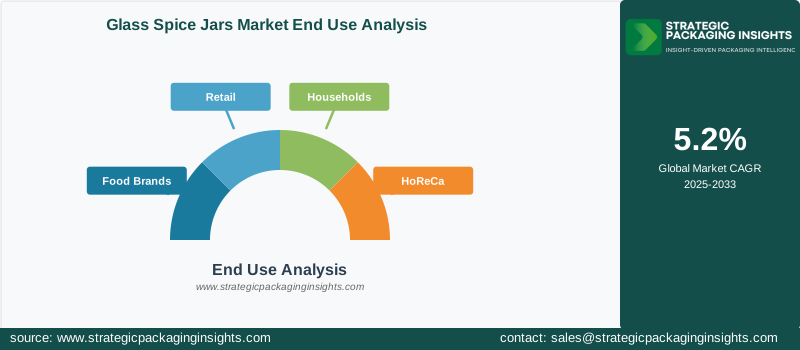
The Retail segment is also experiencing growth, driven by the increasing popularity of gourmet food stores and specialty retailers. This segment is particularly popular among consumers who seek high-quality and unique packaging solutions for their culinary creations. The Households segment, while smaller in comparison, caters to individual consumers who prioritize convenience and functionality in their packaging solutions. The HoReCa segment, while niche, caters to commercial users and bulk buyers who require durable and cost-effective packaging solutions. As the demand for glass spice jars continues to grow, companies are investing in end use-specific packaging solutions and product innovation to meet the evolving needs of consumers.
Glass Spice Jars Market Segments
The Glass Spice Jars market has been segmented on the basis ofCapacity
- Below 100 ml
- 100–250 ml
- Above 250 ml
Closure Type
- Screw Cap
- Shaker Cap
- Cork Closure
- Metal Lid
Application
- Spices
- Herbs
- Seasonings
- Gourmet Foods
End Use
- Food Brands
- Retail
- Households
- HoReCa
Region
- Asia Pacific
- North America
- Latin America
- Europe
- Middle East & Africa




