


Funding-Backed Bioplastic Innovation Projects for FMCG Packaging Market Outlook
The Funding-Backed Bioplastic Innovation Projects for FMCG Packaging market was valued at $9.37 billion in 2025 and is projected to reach $26.68 billion by 2034, growing at a CAGR of 12.3% during the forecast period 2026-2034. This market is witnessing significant growth due to the increasing demand for sustainable packaging solutions in the fast-moving consumer goods (FMCG) sector. The shift towards eco-friendly materials is driven by consumer awareness and stringent environmental regulations. Bioplastics, derived from renewable resources, offer a viable alternative to conventional plastics, reducing carbon footprint and enhancing brand image. The market is further propelled by technological advancements in bioplastic production, which have improved material properties and expanded application areas. The growing investment in research and development, supported by government initiatives and private funding, is expected to fuel market expansion.
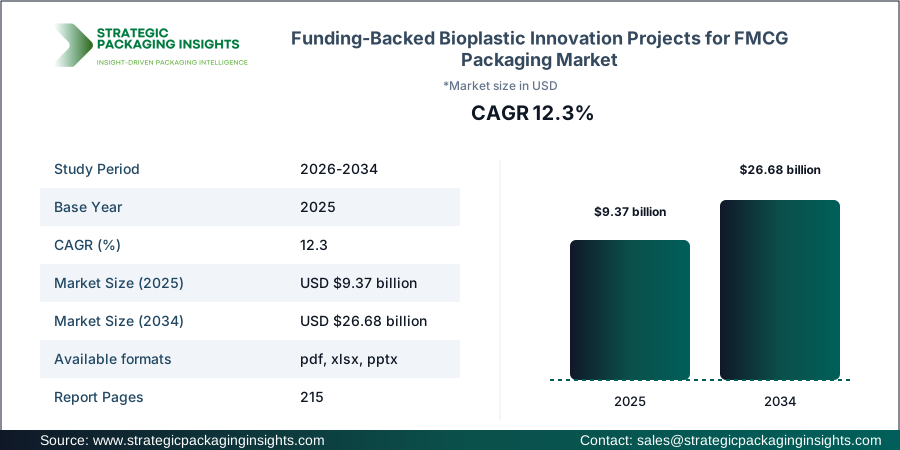
Despite the promising growth prospects, the market faces challenges such as high production costs and limited availability of raw materials. Regulatory hurdles and the need for infrastructure development for bioplastic waste management also pose significant restraints. However, the potential for bioplastics to replace traditional plastics in various applications presents substantial growth opportunities. The increasing collaboration between bioplastic manufacturers and FMCG companies to develop customized solutions is expected to drive market growth. Additionally, the rising trend of circular economy practices and the focus on reducing plastic waste are likely to create new avenues for market expansion.
Report Scope
| Attributes | Details |
| Report Title | Funding-Backed Bioplastic Innovation Projects for FMCG Packaging Market Size, Future Growth and Forecast 2034 |
| Material Type | PLA, PHA, Starch Blends, Bio-PE |
| Application | Films, Rigid Packs, Coatings, Trays |
| Funding Type | Public Grants, Corporate Venture, Strategic Partnerships |
| End Use | Food, Beverages, Personal Care, Home Care |
| Region | Asia Pacific, North America, Latin America, Europe, Middle East & Africa |
| Base Year | 2025 |
| Historic Period | 2018-2024 |
| Forecast Period | 2026-2034 |
| Number of Pages | 215 |
| Customization Available | Yes* |
Opportunities & Threats
The Funding-Backed Bioplastic Innovation Projects for FMCG Packaging market presents numerous opportunities, primarily driven by the increasing consumer demand for sustainable and eco-friendly packaging solutions. As environmental concerns continue to rise, consumers are becoming more conscious of the impact of plastic waste on the environment. This shift in consumer behavior is encouraging FMCG companies to adopt bioplastic packaging, which is biodegradable and reduces the carbon footprint. Furthermore, advancements in bioplastic technology have led to the development of materials with improved properties, such as enhanced durability and flexibility, making them suitable for a wide range of applications. The growing investment in research and development, supported by government initiatives and private funding, is expected to drive innovation and expand the market.
Another significant opportunity lies in the increasing collaboration between bioplastic manufacturers and FMCG companies. These partnerships aim to develop customized packaging solutions that meet specific requirements, such as shelf life, product protection, and aesthetic appeal. By working closely with FMCG companies, bioplastic manufacturers can better understand market needs and develop innovative products that cater to consumer preferences. Additionally, the rising trend of circular economy practices, which focus on reducing waste and promoting recycling, is expected to create new avenues for market growth. As more companies adopt sustainable practices, the demand for bioplastic packaging is likely to increase, further driving market expansion.
However, the market also faces several threats that could hinder its growth. One of the primary challenges is the high production cost of bioplastics compared to conventional plastics. The limited availability of raw materials and the need for specialized production facilities contribute to these high costs, making it difficult for bioplastics to compete with traditional plastics on price. Additionally, regulatory hurdles and the lack of infrastructure for bioplastic waste management pose significant challenges. Governments and industry stakeholders need to work together to address these issues and create a supportive environment for the growth of the bioplastic market. Despite these challenges, the potential for bioplastics to replace traditional plastics in various applications presents substantial growth opportunities.
Drivers & Challenges
The Funding-Backed Bioplastic Innovation Projects for FMCG Packaging market is primarily driven by the increasing demand for sustainable packaging solutions. As environmental concerns continue to rise, consumers are becoming more conscious of the impact of plastic waste on the environment. This shift in consumer behavior is encouraging FMCG companies to adopt bioplastic packaging, which is biodegradable and reduces the carbon footprint. Furthermore, advancements in bioplastic technology have led to the development of materials with improved properties, such as enhanced durability and flexibility, making them suitable for a wide range of applications. The growing investment in research and development, supported by government initiatives and private funding, is expected to drive innovation and expand the market.
Another significant driver is the increasing collaboration between bioplastic manufacturers and FMCG companies. These partnerships aim to develop customized packaging solutions that meet specific requirements, such as shelf life, product protection, and aesthetic appeal. By working closely with FMCG companies, bioplastic manufacturers can better understand market needs and develop innovative products that cater to consumer preferences. Additionally, the rising trend of circular economy practices, which focus on reducing waste and promoting recycling, is expected to create new avenues for market growth. As more companies adopt sustainable practices, the demand for bioplastic packaging is likely to increase, further driving market expansion.
Despite the promising growth prospects, the market faces several challenges that could hinder its growth. One of the primary challenges is the high production cost of bioplastics compared to conventional plastics. The limited availability of raw materials and the need for specialized production facilities contribute to these high costs, making it difficult for bioplastics to compete with traditional plastics on price. Additionally, regulatory hurdles and the lack of infrastructure for bioplastic waste management pose significant challenges. Governments and industry stakeholders need to work together to address these issues and create a supportive environment for the growth of the bioplastic market. Despite these challenges, the potential for bioplastics to replace traditional plastics in various applications presents substantial growth opportunities.
Market Share Analysis
The competitive landscape of the Funding-Backed Bioplastic Innovation Projects for FMCG Packaging market is characterized by the presence of several key players who are actively engaged in research and development to enhance their product offerings. Companies such as NatureWorks, TotalEnergies Corbion, Novamont, Danimer Scientific, Avantium, BASF, Braskem, Mitsubishi Chemical, Kaneka, and CJ Biomaterials are leading the market with their innovative bioplastic solutions. These companies are focusing on strategic partnerships, mergers, and acquisitions to expand their market presence and strengthen their product portfolios. The market is highly competitive, with companies striving to gain a competitive edge through technological advancements and product differentiation.
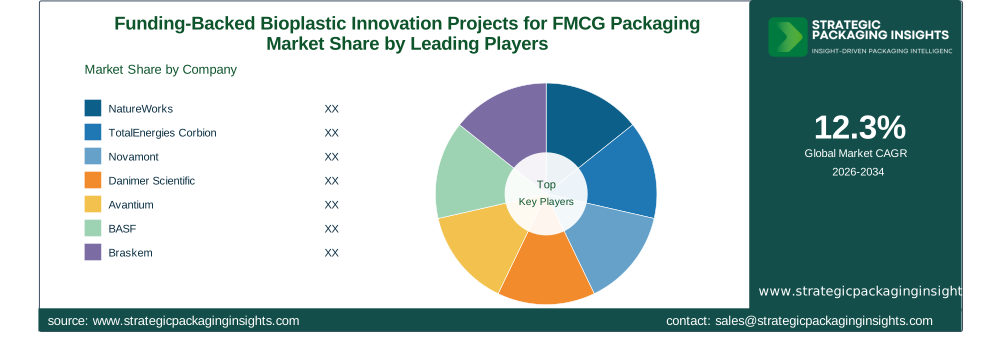
NatureWorks, a prominent player in the bioplastic market, is known for its Ingeo brand of polylactic acid (PLA) biopolymers. The company has been at the forefront of bioplastic innovation, focusing on developing sustainable solutions for various applications, including packaging. TotalEnergies Corbion, a joint venture between TotalEnergies and Corbion, specializes in the production of PLA bioplastics. The company is committed to sustainability and has been actively involved in research and development to enhance the performance of its bioplastic products. Novamont, an Italian company, is renowned for its Mater-Bi range of biodegradable and compostable bioplastics, which are widely used in packaging applications.
Danimer Scientific, a leading biopolymer manufacturer, is known for its Nodax PHA (polyhydroxyalkanoate) technology, which offers a sustainable alternative to traditional plastics. The company has been actively collaborating with FMCG companies to develop customized bioplastic solutions. Avantium, a Dutch company, is focused on developing innovative bioplastic materials, including PEF (polyethylene furanoate), which is derived from renewable resources. BASF, a global chemical company, is actively involved in the bioplastic market through its ecovio and ecoflex product lines, which offer biodegradable and compostable solutions for packaging applications.
Braskem, a Brazilian petrochemical company, is a leading producer of bio-based polyethylene (bio-PE), which is derived from sugarcane. The company is committed to sustainability and has been investing in research and development to enhance the performance of its bioplastic products. Mitsubishi Chemical, a Japanese company, is known for its BioPBS (polybutylene succinate) bioplastics, which are used in various packaging applications. Kaneka, another Japanese company, is focused on developing innovative bioplastic solutions, including PHBH (poly(3-hydroxybutyrate-co-3-hydroxyhexanoate)), which is biodegradable and compostable. CJ Biomaterials, a subsidiary of CJ CheilJedang, is actively involved in the production of PHA bioplastics, which offer a sustainable alternative to conventional plastics.
Key Highlights
- The Funding-Backed Bioplastic Innovation Projects for FMCG Packaging market is projected to grow at a CAGR of 12.3% from 2026 to 2034.
- Increasing consumer demand for sustainable packaging solutions is driving market growth.
- Technological advancements in bioplastic production are expanding application areas.
- High production costs and limited raw material availability pose significant challenges.
- Collaborations between bioplastic manufacturers and FMCG companies are on the rise.
- Government initiatives and private funding are supporting research and development.
- The market is characterized by intense competition among key players.
- Regulatory hurdles and waste management infrastructure are critical challenges.
- The shift towards circular economy practices is creating new growth opportunities.
- Bioplastics offer a viable alternative to conventional plastics, reducing carbon footprint.
Top Countries Insights
In the Funding-Backed Bioplastic Innovation Projects for FMCG Packaging market, the United States stands out as a key player, with a market size of approximately $3.5 billion and a CAGR of 10%. The country's strong focus on sustainability and environmental regulations has driven the adoption of bioplastics in the FMCG sector. Government initiatives promoting the use of eco-friendly materials and increasing consumer awareness about plastic waste are significant growth drivers. However, challenges such as high production costs and the need for infrastructure development for bioplastic waste management remain.
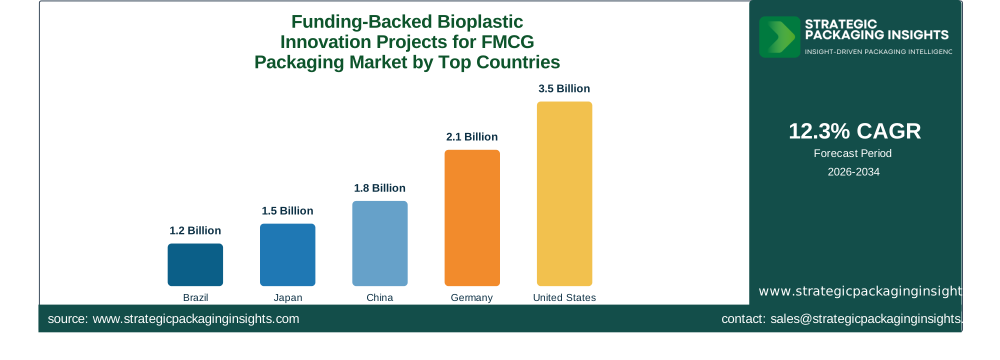
Germany, with a market size of around $2.1 billion and a CAGR of 9%, is another leading country in the bioplastic packaging market. The country's stringent environmental regulations and strong emphasis on sustainability have fueled the demand for bioplastics. The presence of key players such as BASF and Novamont, along with government support for research and development, has further boosted market growth. However, the high cost of bioplastics compared to conventional plastics remains a challenge.
China, with a market size of approximately $1.8 billion and a CAGR of 15%, is experiencing rapid growth in the bioplastic packaging market. The country's large consumer base and increasing awareness about environmental issues are driving the demand for sustainable packaging solutions. Government policies promoting the use of renewable materials and investments in bioplastic production facilities are significant growth drivers. However, the lack of infrastructure for bioplastic waste management poses a challenge.
Japan, with a market size of around $1.5 billion and a CAGR of 8%, is a key player in the bioplastic packaging market. The country's focus on innovation and technological advancements has led to the development of high-performance bioplastic materials. The presence of leading companies such as Mitsubishi Chemical and Kaneka, along with government support for sustainable practices, has contributed to market growth. However, the high production cost of bioplastics remains a challenge.
Brazil, with a market size of approximately $1.2 billion and a CAGR of 7%, is emerging as a significant player in the bioplastic packaging market. The country's abundant availability of renewable resources, such as sugarcane, has facilitated the production of bio-based polyethylene. Government initiatives promoting sustainability and the presence of key players such as Braskem are driving market growth. However, regulatory hurdles and the need for infrastructure development for bioplastic waste management remain challenges.
Funding-Backed Bioplastic Innovation Projects for FMCG Packaging Market Segments Insights

Material Type Analysis
The Funding-Backed Bioplastic Innovation Projects for FMCG Packaging market is segmented by material type into PLA, PHA, starch blends, and bio-PE. Polylactic acid (PLA) is one of the most widely used bioplastics due to its versatility and biodegradability. It is derived from renewable resources such as corn starch and sugarcane, making it an eco-friendly alternative to conventional plastics. The demand for PLA is driven by its application in various packaging solutions, including films, rigid packs, and trays. The growing consumer preference for sustainable packaging and the increasing adoption of PLA by FMCG companies are expected to drive market growth.
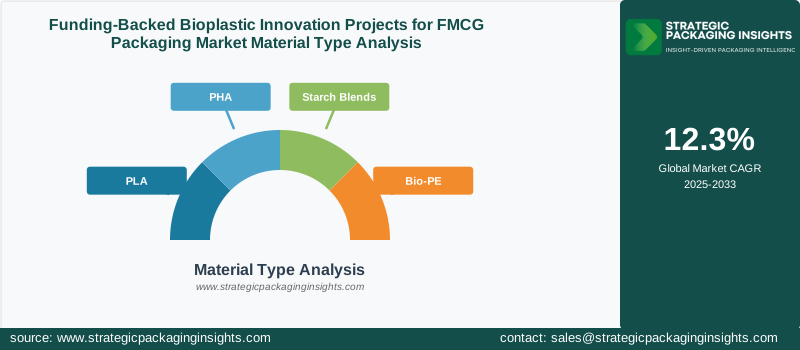
Polyhydroxyalkanoates (PHA) are another significant segment in the bioplastic market. PHAs are biodegradable and compostable, making them suitable for a wide range of applications, including packaging. The demand for PHAs is driven by their superior properties, such as high thermal stability and resistance to moisture. The increasing investment in research and development to enhance the performance of PHAs is expected to boost market growth. Starch blends, derived from renewable resources, are also gaining traction in the bioplastic market. These materials offer a cost-effective solution for sustainable packaging and are widely used in applications such as films and coatings.
Application Analysis
The application segment of the Funding-Backed Bioplastic Innovation Projects for FMCG Packaging market includes films, rigid packs, coatings, and trays. Films are one of the most common applications of bioplastics, offering flexibility and durability for packaging solutions. The demand for bioplastic films is driven by the increasing consumer preference for sustainable packaging and the growing adoption of bioplastics by FMCG companies. Rigid packs, made from bioplastics, offer a sustainable alternative to traditional plastic packaging. These packs are widely used in the food and beverage industry, where product protection and shelf life are critical.
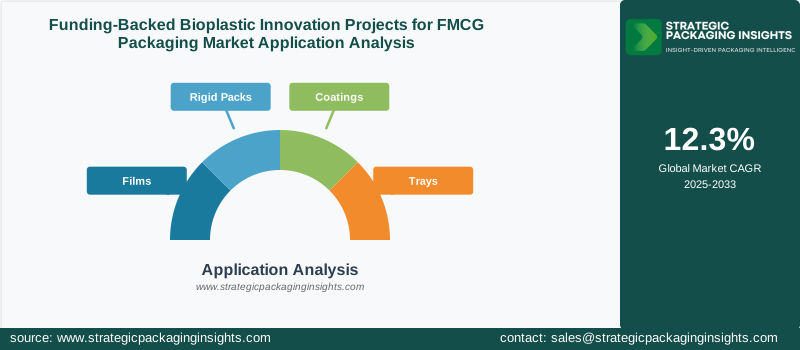
Coatings, another significant application of bioplastics, provide a protective layer for packaging materials, enhancing their durability and resistance to moisture. The demand for bioplastic coatings is driven by the increasing focus on sustainable packaging solutions and the growing adoption of bioplastics by FMCG companies. Trays, made from bioplastics, offer a sustainable alternative to conventional plastic trays. These trays are widely used in the food industry, where product presentation and protection are essential. The increasing consumer preference for eco-friendly packaging and the growing adoption of bioplastics by FMCG companies are expected to drive market growth.
Funding Type Analysis
The Funding-Backed Bioplastic Innovation Projects for FMCG Packaging market is segmented by funding type into public grants, corporate venture, and strategic partnerships. Public grants play a crucial role in supporting research and development in the bioplastic market. Governments worldwide are providing financial support to encourage the development of sustainable packaging solutions. These grants are aimed at promoting innovation and reducing the environmental impact of packaging materials. The increasing availability of public grants is expected to drive market growth.
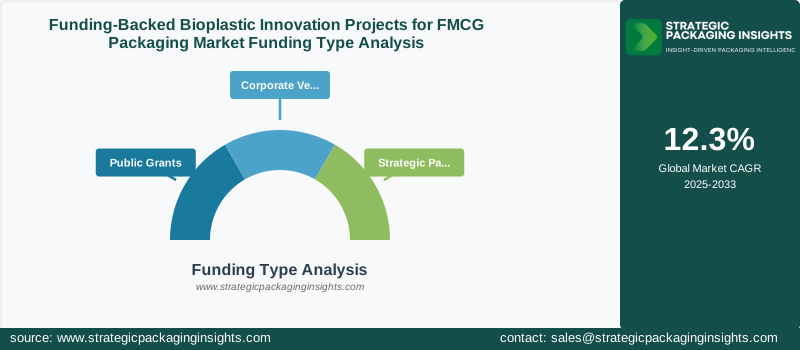
Corporate venture funding is another significant segment in the bioplastic market. FMCG companies are increasingly investing in bioplastic manufacturers to develop customized packaging solutions that meet specific requirements. These investments are aimed at enhancing product offerings and gaining a competitive edge in the market. Strategic partnerships between bioplastic manufacturers and FMCG companies are also on the rise. These partnerships aim to develop innovative packaging solutions that cater to consumer preferences and meet regulatory requirements. The increasing collaboration between bioplastic manufacturers and FMCG companies is expected to drive market growth.
End Use Analysis
The end-use segment of the Funding-Backed Bioplastic Innovation Projects for FMCG Packaging market includes food, beverages, personal care, and home care. The food industry is one of the largest consumers of bioplastic packaging, driven by the increasing demand for sustainable packaging solutions. Bioplastics offer a viable alternative to conventional plastics, reducing the environmental impact of packaging materials. The growing consumer preference for eco-friendly packaging and the increasing adoption of bioplastics by FMCG companies are expected to drive market growth.
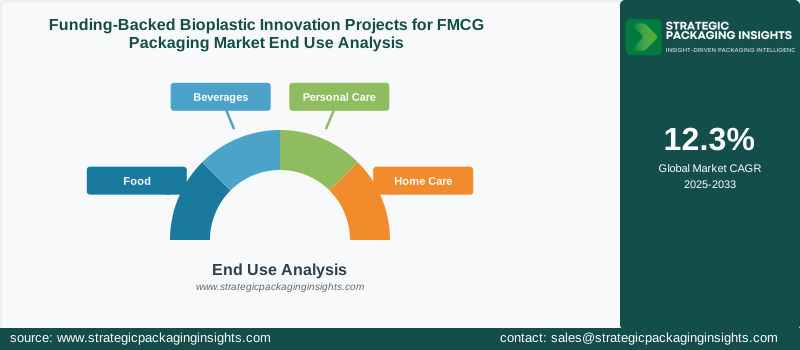
The beverage industry is another significant end-user of bioplastic packaging. The demand for bioplastics in this industry is driven by the increasing focus on sustainability and the growing adoption of bioplastics by FMCG companies. Personal care and home care products are also witnessing a growing demand for bioplastic packaging. The increasing consumer preference for sustainable packaging solutions and the growing adoption of bioplastics by FMCG companies are expected to drive market growth. The rising trend of circular economy practices and the focus on reducing plastic waste are likely to create new avenues for market expansion.
Funding-Backed Bioplastic Innovation Projects for FMCG Packaging Market Segments
The Funding-Backed Bioplastic Innovation Projects for FMCG Packaging market has been segmented on the basis ofMaterial Type
- PLA
- PHA
- Starch Blends
- Bio-PE
Application
- Films
- Rigid Packs
- Coatings
- Trays
Funding Type
- Public Grants
- Corporate Venture
- Strategic Partnerships
End Use
- Food
- Beverages
- Personal Care
- Home Care
Region
- Asia Pacific
- North America
- Latin America
- Europe
- Middle East & Africa




