


Functional Additives And Barrier Coatings Market Outlook
The Functional Additives And Barrier Coatings market size was valued at USD 2.6 billion in 2025 and is anticipated to reach USD 3.9 billion by 2034, growing at a CAGR of 4.70% during the forecast period according to Strategic Packaging Insights. This market is driven by the increasing demand for sustainable packaging solutions, as consumers and industries alike are becoming more environmentally conscious. Companies like Stora Enso and Mondi are leading the charge by developing innovative coatings that enhance the functionality of packaging materials while reducing environmental impact. The growth is further fueled by advancements in technology that allow for the creation of more effective barrier coatings, which are essential in preserving product quality and extending shelf life.
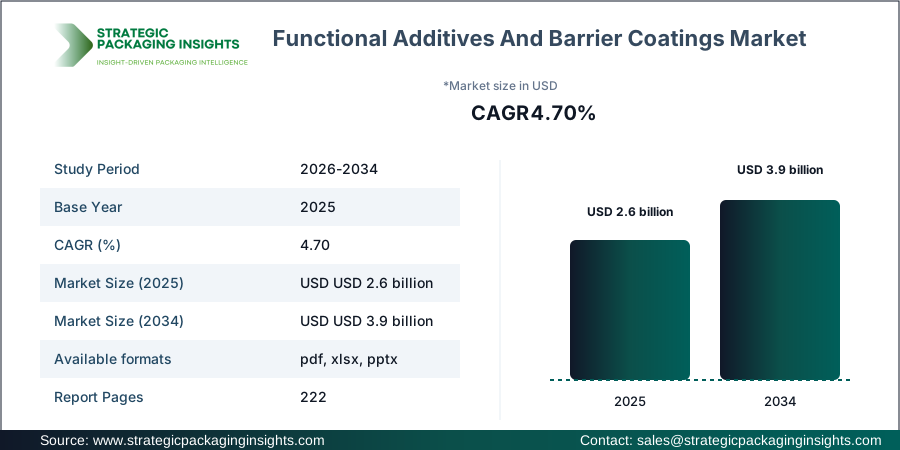
One of the most impactful drivers of this market is the rising regulatory pressure to reduce plastic waste and promote recycling. Governments worldwide are implementing stringent regulations that encourage the use of eco-friendly materials and sustainable practices. For instance, the European Union's directive on single-use plastics has significantly influenced the packaging industry, pushing companies to adopt functional additives and barrier coatings that are biodegradable or recyclable. This regulatory environment is creating opportunities for companies like H.B. Fuller and Dow Chemical to innovate and expand their product offerings, thereby driving market growth.
Report Scope
| Attributes | Details |
| Report Title | Functional Additives And Barrier Coatings Market Size, Future Growth and Forecast 2034 |
| By Coating Type | Wax Coating, Pigment Coating, UV Coating, Poly Coating, Water-Based / Dispersion Coating, Bio-Based Coating, Extrusion Coating |
| By Function | Gas / Oxygen Barrier, Water / Moisture Barrier, Grease & Oil Resistance (OGR), Heat Resistance, Aroma Barrier, Light / UV Barrier |
| By Material | Polyethylene (PE/LDPE/HDPE), PLA & Biopolymers, EVOH, Acrylics, Polysaccharides, Nanoclay / Nanocomposites, Waxes |
| By Substrate | Paper & Paperboard, Plastic Films, Molded Fiber, Corrugated Board |
| By End Use | Food & Beverage Packaging, Pharmaceutical, Personal Care & Cosmetics, Industrial, E-commerce |
| By Region | North America (U.S., Canada, Mexico), Europe (Germany, UK, France, Italy, Spain, Rest of Europe), Asia Pacific (China, India, Japan, South Korea, Australia, Rest of Asia Pacific), Latin America (Brazil, Argentina, Rest of Latin America), Middle East & Africa (GCC Countries, South Africa, Rest of MEA) |
| Base Year | 2025 |
| Historic Period | 2018-2024 |
| Forecast Period | 2026-2034 |
| Number of Pages | 222 |
| Customization Available | Yes* |
Sustainability & Circular Economy Analysis
Sustainability initiatives and circular economy practices are reshaping the packaging market, with a strong emphasis on reducing environmental impact. Companies are increasingly adopting recyclable materials and reusable packaging solutions to align with consumer preferences for eco-friendly products. This shift is driving innovation in lightweight packaging and the development of new materials that minimize waste. For example, bio-based coatings are gaining traction as they offer a sustainable alternative to traditional petroleum-based coatings, reducing the carbon footprint of packaging products.
The influence of sustainability trends extends to packaging design and manufacturing processes. Companies are investing in eco-friendly material innovation and waste reduction strategies to meet regulatory compliance and enhance their market competitiveness. Extended Producer Responsibility (EPR) regulations are prompting manufacturers to take greater responsibility for the lifecycle of their products, leading to more sustainable supply chain strategies. This focus on sustainability is not only a regulatory requirement but also a strategic decision that can enhance brand reputation and customer loyalty.
As consumer preferences shift towards sustainable products, companies are prioritizing ESG initiatives and carbon footprint reduction in their investment decisions. This trend is influencing the entire packaging value chain, from raw material sourcing to end-of-life disposal. By adopting circular economy practices, companies can improve their long-term market competitiveness and resilience. The integration of sustainability into business strategies is becoming a key differentiator in the packaging industry, driving growth and innovation.
Packaging Value Chain & Supply Chain Analysis
The packaging value chain is a complex ecosystem that involves multiple stakeholders, from raw material suppliers to end consumers. Efficient raw material sourcing is crucial for maintaining supply chain resilience and ensuring the availability of essential components for functional additives and barrier coatings. Companies like Avery Dennison and Toppan Printing are optimizing their procurement strategies to secure high-quality materials while minimizing costs. This approach not only enhances production capabilities but also supports sustainable business practices.
Packaging converters and manufacturers play a pivotal role in transforming raw materials into finished products. The efficiency of these processes is influenced by the availability of advanced packaging machinery and strategic partnerships with logistics providers. Companies are investing in state-of-the-art equipment to improve production efficiency and reduce lead times. By collaborating with reliable distribution channels, manufacturers can ensure timely delivery of products to brand owners and retailers, enhancing overall market performance.
Recycling networks and inventory management are integral components of the packaging supply chain. Companies are implementing innovative recycling solutions to close the loop and promote circular economy practices. Localization and global sourcing strategies are being adopted to mitigate risks associated with supply chain disruptions. By balancing local and global sourcing, companies can enhance their supply chain resilience and maintain a competitive edge in the market. These strategies are essential for navigating the challenges of a dynamic and evolving packaging industry.
Opportunities & Threats
The Functional Additives And Barrier Coatings market presents numerous opportunities for growth, driven by the increasing demand for sustainable packaging solutions. As consumers become more environmentally conscious, there is a growing preference for products that offer enhanced functionality while minimizing environmental impact. This trend is creating opportunities for companies to develop innovative coatings that meet these demands. For instance, the rise of e-commerce is driving the need for packaging solutions that provide superior protection and durability, opening new avenues for market expansion.
Another significant opportunity lies in the development of bio-based and biodegradable coatings. As regulatory pressures to reduce plastic waste intensify, companies that can offer sustainable alternatives are well-positioned to capture market share. The growing awareness of the environmental impact of packaging materials is prompting companies to invest in research and development to create coatings that are not only effective but also environmentally friendly. This focus on sustainability is expected to drive innovation and growth in the market.
Despite the opportunities, the market faces several threats that could hinder growth. One of the primary challenges is the high cost of raw materials, which can impact the profitability of manufacturers. Additionally, the complexity of regulatory compliance can pose a significant barrier to entry for new players. Companies must navigate a complex landscape of regulations and standards, which can be time-consuming and costly. Furthermore, the rapid pace of technological advancements requires companies to continuously innovate to remain competitive, which can be a daunting task for smaller players.
Drivers & Challenges
The Functional Additives And Barrier Coatings market is driven by several key factors, including the increasing demand for sustainable packaging solutions and the need for enhanced product protection. As consumers become more environmentally conscious, there is a growing preference for packaging materials that offer superior functionality while minimizing environmental impact. This trend is driving companies to develop innovative coatings that meet these demands, such as bio-based and biodegradable options. Additionally, the rise of e-commerce is creating a need for packaging solutions that provide superior protection and durability, further driving market growth.
Another significant driver of the market is the regulatory pressure to reduce plastic waste and promote recycling. Governments worldwide are implementing stringent regulations that encourage the use of eco-friendly materials and sustainable practices. This regulatory environment is creating opportunities for companies to innovate and expand their product offerings, thereby driving market growth. Companies like H.B. Fuller and Dow Chemical are at the forefront of this trend, developing coatings that are not only effective but also environmentally friendly.
Despite the drivers, the market faces several challenges that could hinder growth. One of the primary challenges is the high cost of raw materials, which can impact the profitability of manufacturers. Additionally, the complexity of regulatory compliance can pose a significant barrier to entry for new players. Companies must navigate a complex landscape of regulations and standards, which can be time-consuming and costly. Furthermore, the rapid pace of technological advancements requires companies to continuously innovate to remain competitive, which can be a daunting task for smaller players.
Market Share Analysis
The competitive landscape of the Functional Additives And Barrier Coatings market is characterized by the presence of several key players who are driving innovation and growth. Companies like Stora Enso, Mondi, and Michelman are leading the market with their advanced product offerings and strong focus on sustainability. These companies are investing heavily in research and development to create coatings that meet the evolving demands of consumers and regulatory bodies. Their commitment to innovation and sustainability is helping them maintain a competitive edge in the market.
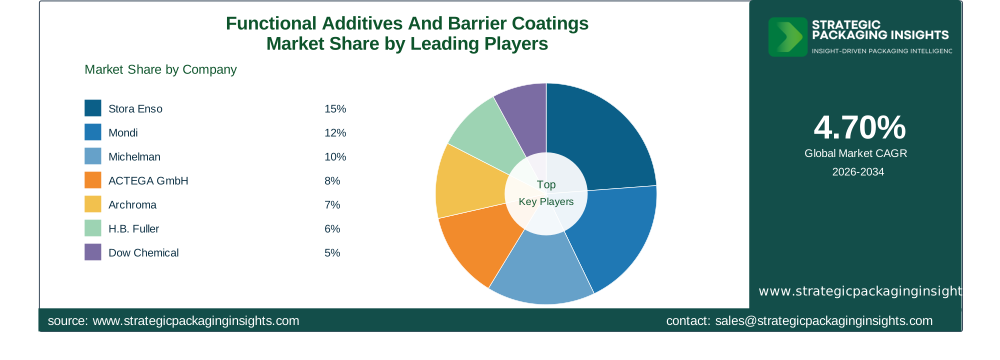
Stora Enso, a leading provider of renewable solutions, is known for its innovative approach to sustainable packaging. The company is focused on developing bio-based coatings that offer superior functionality while minimizing environmental impact. Mondi, another key player, is renowned for its comprehensive range of barrier coatings that cater to various industries, including food and beverage, pharmaceuticals, and personal care. The company's commitment to sustainability and innovation has helped it establish a strong presence in the market.
Michelman, a global leader in advanced materials, is recognized for its expertise in water-based coatings and surface modifiers. The company's products are designed to enhance the performance of packaging materials while reducing their environmental footprint. ACTEGA GmbH, a subsidiary of ALTANA, is known for its high-quality coatings and sealants that provide excellent barrier properties and durability. The company's focus on innovation and customer-centric solutions has helped it maintain a strong position in the market.
Other notable players in the market include Archroma, H.B. Fuller, Dow Chemical, Avery Dennison, Toppan Printing, WestRock, International Paper, Stahl Holdings, Cosmo Specialty Chemicals, and Lecta. These companies are leveraging their expertise and resources to develop innovative coatings that meet the diverse needs of consumers and industries. Their commitment to sustainability and innovation is driving growth and shaping the future of the Functional Additives And Barrier Coatings market.
Key Highlights
- Market Size: USD 2.6 billion in 2025, projected to reach USD 3.9 billion by 2034.
- Growth Rate: Forecasted CAGR of 4.70% during the forecast period.
- Leading Companies: Stora Enso, Mondi, Michelman, ACTEGA GmbH, Archroma.
- Key Segments: Coating Type, Function, Material, Substrate, End Use.
- Regional Insights: Asia Pacific is expected to witness significant growth.
- Sustainability Focus: Increasing demand for bio-based and biodegradable coatings.
- Regulatory Impact: Stringent regulations driving innovation and market growth.
Functional Additives And Barrier Coatings Market Segments Insights

By Coating Type Analysis
The Functional Additives And Barrier Coatings market is segmented by coating type, which includes wax coating, pigment coating, UV coating, poly coating, water-based/dispersion coating, bio-based coating, and extrusion coating. Each of these coatings offers unique properties that cater to specific industry needs. For instance, wax coatings are widely used in food packaging due to their excellent moisture barrier properties. Pigment coatings, on the other hand, are favored for their aesthetic appeal and ability to enhance the visual appeal of packaging materials. The demand for UV coatings is driven by their ability to provide superior protection against ultraviolet radiation, making them ideal for applications in the personal care and cosmetics industry.
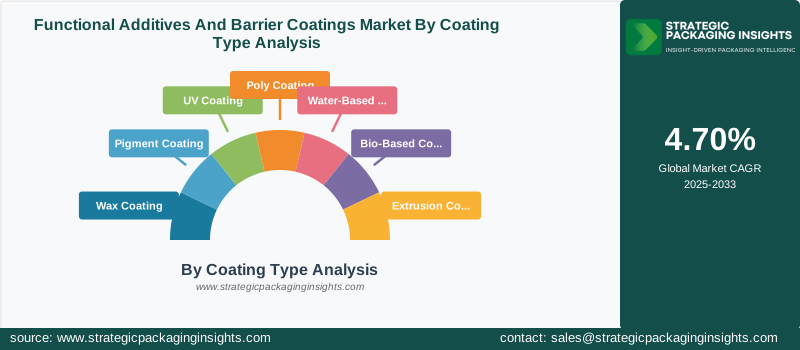
Poly coatings are gaining popularity due to their versatility and ability to provide a strong barrier against moisture and gases. Water-based/dispersion coatings are preferred for their eco-friendly properties and ease of application. Bio-based coatings are emerging as a sustainable alternative to traditional coatings, offering excellent barrier properties while minimizing environmental impact. Extrusion coatings are widely used in the packaging industry for their ability to provide a seamless and durable barrier against external elements. The growing demand for these coatings is driven by the need for sustainable and high-performance packaging solutions.
By Function Analysis
The market is also segmented by function, which includes gas/oxygen barrier, water/moisture barrier, grease & oil resistance (OGR), heat resistance, aroma barrier, and light/UV barrier. Each of these functions plays a crucial role in enhancing the performance of packaging materials. Gas/oxygen barriers are essential for preserving the freshness and quality of perishable goods, making them a popular choice in the food and beverage industry. Water/moisture barriers are critical for preventing moisture ingress, which can compromise the integrity of packaging materials and the products they contain.
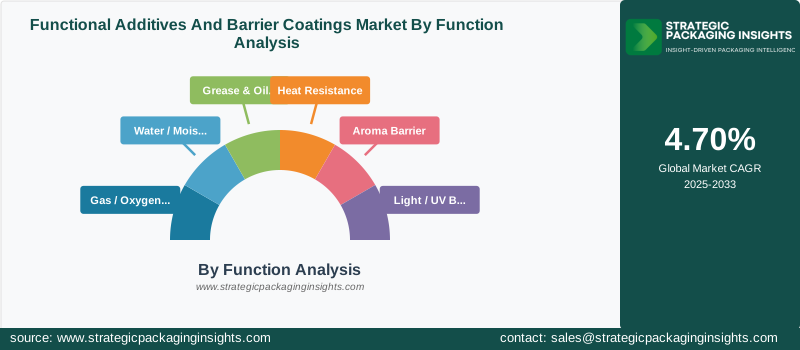
Grease & oil resistance (OGR) coatings are widely used in food packaging to prevent the penetration of oils and fats, ensuring the longevity and quality of packaged goods. Heat resistance coatings are essential for applications that require exposure to high temperatures, such as industrial packaging. Aroma barriers are crucial for preserving the fragrance and flavor of products, making them a popular choice in the personal care and cosmetics industry. Light/UV barriers are essential for protecting products from the harmful effects of ultraviolet radiation, ensuring their longevity and quality.
By Material Analysis
The Functional Additives And Barrier Coatings market is segmented by material, which includes polyethylene (PE/LDPE/HDPE), PLA & biopolymers, EVOH, acrylics, polysaccharides, nanoclay/nanocomposites, and waxes. Each of these materials offers unique properties that cater to specific industry needs. Polyethylene is widely used for its excellent barrier properties and versatility, making it a popular choice in the packaging industry. PLA & biopolymers are gaining traction as sustainable alternatives to traditional materials, offering excellent barrier properties while minimizing environmental impact.
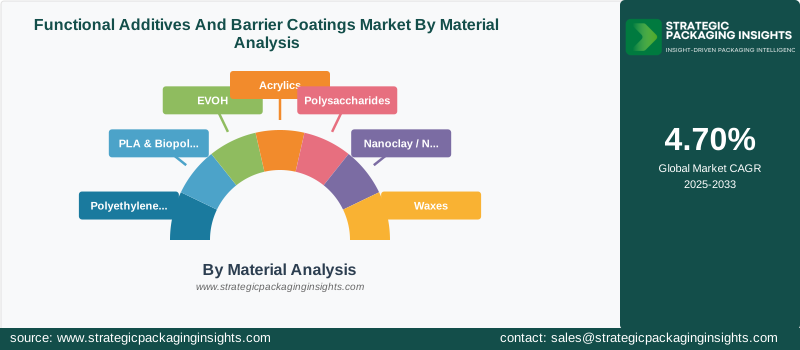
EVOH is favored for its superior gas barrier properties, making it ideal for applications in the food and beverage industry. Acrylics are known for their clarity and ability to enhance the visual appeal of packaging materials. Polysaccharides are emerging as a sustainable alternative to traditional materials, offering excellent barrier properties while minimizing environmental impact. Nanoclay/nanocomposites are gaining popularity for their ability to enhance the mechanical and barrier properties of packaging materials. Waxes are widely used for their excellent moisture barrier properties, making them a popular choice in the food packaging industry.
By Substrate Analysis
The market is also segmented by substrate, which includes paper & paperboard, plastic films, molded fiber, and corrugated board. Each of these substrates offers unique properties that cater to specific industry needs. Paper & paperboard are widely used for their recyclability and ability to provide a strong barrier against external elements. Plastic films are favored for their versatility and ability to provide a strong barrier against moisture and gases. Molded fiber is emerging as a sustainable alternative to traditional substrates, offering excellent barrier properties while minimizing environmental impact.
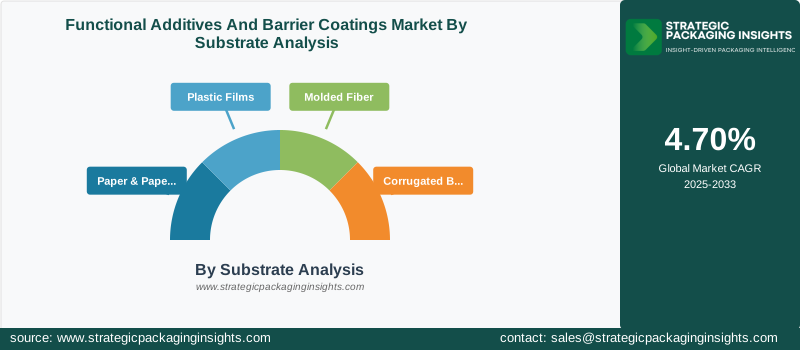
Corrugated board is widely used for its strength and ability to provide a strong barrier against external elements, making it a popular choice in the packaging industry. The growing demand for these substrates is driven by the need for sustainable and high-performance packaging solutions. Companies are investing in research and development to create substrates that offer superior functionality while minimizing environmental impact. This focus on sustainability is expected to drive innovation and growth in the market.
By End Use Analysis
The Functional Additives And Barrier Coatings market is segmented by end use, which includes food & beverage packaging, pharmaceutical, personal care & cosmetics, industrial, and e-commerce. Each of these end-use segments offers unique opportunities for growth and innovation. The food & beverage packaging segment is driven by the need for packaging solutions that preserve the freshness and quality of perishable goods. The pharmaceutical segment is driven by the need for packaging solutions that provide superior protection against external elements, ensuring the safety and efficacy of pharmaceutical products.
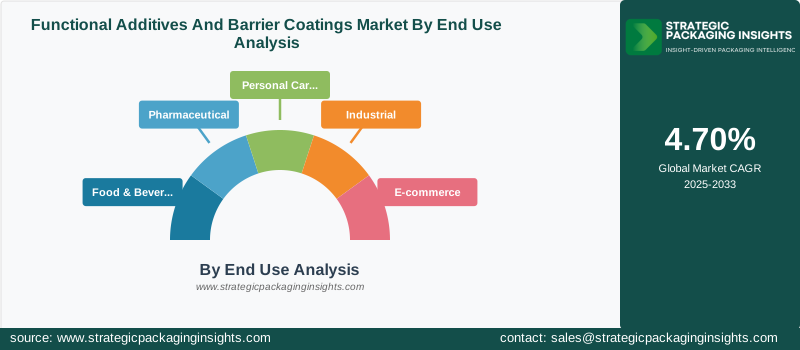
The personal care & cosmetics segment is driven by the need for packaging solutions that enhance the visual appeal and functionality of products. The industrial segment is driven by the need for packaging solutions that provide superior protection against external elements, ensuring the safety and integrity of industrial products. The e-commerce segment is driven by the need for packaging solutions that provide superior protection and durability, ensuring the safe delivery of products to consumers. The growing demand for these end-use segments is driving innovation and growth in the market.
Functional Additives And Barrier Coatings Market Segments
The Functional Additives And Barrier Coatings market has been segmented on the basis ofBy Coating Type
- Wax Coating
- Pigment Coating
- UV Coating
- Poly Coating
- Water-Based / Dispersion Coating
- Bio-Based Coating
- Extrusion Coating
By Function
- Gas / Oxygen Barrier
- Water / Moisture Barrier
- Grease & Oil Resistance (OGR)
- Heat Resistance
- Aroma Barrier
- Light / UV Barrier
By Material
- Polyethylene (PE/LDPE/HDPE)
- PLA & Biopolymers
- EVOH
- Acrylics
- Polysaccharides
- Nanoclay / Nanocomposites
- Waxes
By Substrate
- Paper & Paperboard
- Plastic Films
- Molded Fiber
- Corrugated Board
By End Use
- Food & Beverage Packaging
- Pharmaceutical
- Personal Care & Cosmetics
- Industrial
- E-commerce
By Region
- North America (U.S., Canada, Mexico)
- Europe (Germany, UK, France, Italy, Spain, Rest of Europe)
- Asia Pacific (China, India, Japan, South Korea, Australia, Rest of Asia Pacific)
- Latin America (Brazil, Argentina, Rest of Latin America)
- Middle East & Africa (GCC Countries, South Africa, Rest of MEA)




