


Fruit Juice Packaging Market Outlook
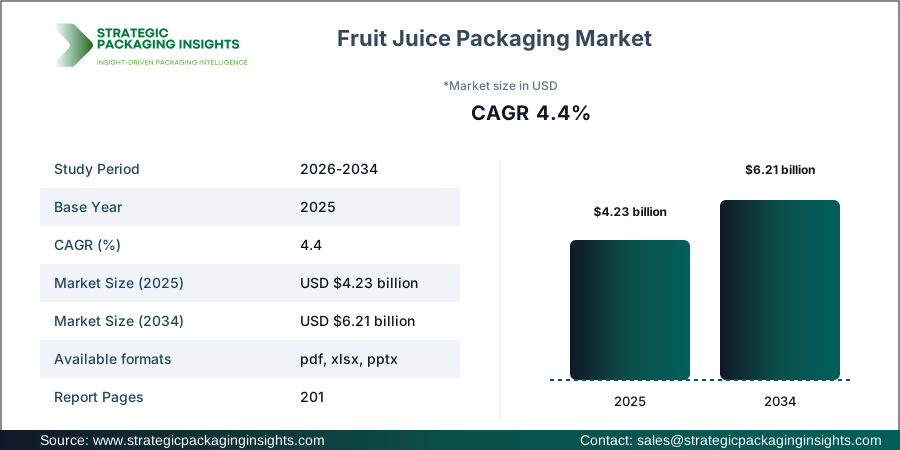
The fruit juice packaging market was valued at $4.23 billion in 2025 and is projected to reach $6.21 billion by 2034, growing at a CAGR of 4.4% during the forecast period 2026-2034. This growth is driven by increasing consumer demand for convenient and sustainable packaging solutions. The shift towards healthier beverage options has led to a surge in fruit juice consumption, thereby boosting the demand for innovative packaging solutions that preserve freshness and extend shelf life. Additionally, advancements in packaging technology, such as aseptic packaging and smart packaging, are expected to further propel market growth. The market is also witnessing a trend towards eco-friendly packaging materials, as consumers and manufacturers alike become more environmentally conscious.
However, the market faces certain restraints, including stringent regulations regarding packaging waste and recycling. Governments across the globe are implementing policies to reduce plastic waste, which could impact the use of certain packaging materials. Despite these challenges, the market holds significant growth potential, particularly in emerging economies where rising disposable incomes and urbanization are driving demand for packaged beverages. The increasing focus on product differentiation and branding through packaging design is also expected to create new opportunities for market players.
Report Scope
| Attributes | Details |
| Report Title | Fruit Juice Packaging Market Size, Future Growth and Forecast 2034 |
| By Packaging Type | Cartons, PET Bottles, Glass Bottles, Pouches |
| By Material Type | Paperboard, PET, Glass, Flexible Laminates |
| By Capacity | Single-Serve, Family Pack, Bulk Pack |
| By End Use | Juice Brands, Beverage Companies, Foodservice, Retailers |
| Region | Asia Pacific, North America, Latin America, Europe, Middle East & Africa |
| Base Year | 2025 |
| Historic Period | 2018-2024 |
| Forecast Period | 2026-2034 |
| Number of Pages | 201 |
| Customization Available | Yes* |
Opportunities & Threats
The fruit juice packaging market presents numerous opportunities, particularly in the realm of sustainable packaging solutions. As consumers become more environmentally conscious, there is a growing demand for packaging that is not only functional but also eco-friendly. This has led to increased investment in research and development of biodegradable and recyclable packaging materials. Companies that can innovate in this space stand to gain a competitive edge, as sustainability becomes a key differentiator in the market. Additionally, the rise of e-commerce and online grocery shopping is creating new avenues for growth, as packaging needs to be robust enough to withstand the rigors of shipping while still being attractive to consumers.
Another significant opportunity lies in the customization and personalization of packaging. With consumers increasingly seeking unique and personalized products, packaging that can be tailored to individual preferences is gaining traction. This trend is particularly evident in the premium segment, where consumers are willing to pay a premium for packaging that reflects their personal style and values. Companies that can offer customizable packaging solutions are likely to attract a loyal customer base and drive sales growth.
On the flip side, the market faces threats from regulatory pressures and the high cost of raw materials. Governments worldwide are implementing stricter regulations on packaging waste and recycling, which could increase compliance costs for manufacturers. Additionally, fluctuations in the prices of raw materials such as paperboard and plastics can impact profit margins. Companies need to navigate these challenges carefully to maintain their competitive position in the market.
Drivers & Challenges
One of the primary drivers of the fruit juice packaging market is the increasing consumer preference for convenient and ready-to-drink beverages. As lifestyles become busier, consumers are seeking packaging solutions that offer convenience without compromising on quality. This has led to a surge in demand for single-serve and portable packaging options, which are easy to carry and consume on the go. Additionally, the growing awareness of health and wellness is driving demand for fruit juices, further boosting the need for effective packaging solutions that preserve the nutritional value of the product.
Technological advancements in packaging are also playing a crucial role in driving market growth. Innovations such as aseptic packaging, which allows for the preservation of juice without the need for preservatives, are gaining popularity. Smart packaging solutions that provide real-time information about the product, such as freshness indicators and QR codes for traceability, are also becoming increasingly common. These advancements not only enhance the consumer experience but also help manufacturers differentiate their products in a competitive market.
However, the market is not without its challenges. One of the major challenges is the environmental impact of packaging waste. With increasing awareness of the environmental consequences of plastic waste, there is growing pressure on manufacturers to adopt sustainable packaging solutions. This requires significant investment in research and development, which can be a barrier for smaller companies. Additionally, the high cost of raw materials and the complexity of the supply chain can pose challenges for manufacturers looking to optimize their operations and reduce costs.
Market Share Analysis
The fruit juice packaging market is characterized by intense competition, with several key players vying for market share. Tetra Pak, a leader in the packaging industry, holds a significant share of the market due to its innovative packaging solutions and strong global presence. The company's focus on sustainability and its extensive product portfolio have helped it maintain a competitive edge. Similarly, SIG Group and Elopak are prominent players in the market, known for their advanced packaging technologies and commitment to environmental sustainability.

Amcor, another major player, has a strong foothold in the market with its diverse range of packaging solutions. The company's focus on innovation and sustainability has enabled it to capture a significant share of the market. Berry Global and ALPLA are also key players, known for their expertise in plastic packaging solutions. These companies have been investing heavily in research and development to create sustainable and cost-effective packaging solutions.
Plastipak and Ardagh Group are other notable players in the market, with a strong focus on glass and plastic packaging solutions. Their commitment to quality and innovation has helped them establish a strong presence in the market. Mondi and Smurfit Kappa, known for their paper-based packaging solutions, are also key players in the market. These companies have been focusing on expanding their product offerings and enhancing their sustainability credentials to meet the growing demand for eco-friendly packaging solutions.
Key Highlights
- The fruit juice packaging market is projected to grow at a CAGR of 4.4% from 2026 to 2034.
- Increasing consumer demand for convenient and sustainable packaging solutions is driving market growth.
- Technological advancements in packaging, such as aseptic and smart packaging, are gaining popularity.
- Regulatory pressures and the high cost of raw materials pose challenges for market players.
- Customization and personalization of packaging are emerging trends in the market.
- The rise of e-commerce is creating new opportunities for growth in the packaging market.
- Key players in the market include Tetra Pak, SIG Group, Elopak, Amcor, and Berry Global.
Top Countries Insights
In the fruit juice packaging market, the United States stands out as a key player, with a market size of approximately $1.2 billion and a CAGR of 3%. The country's robust demand for convenient and sustainable packaging solutions, coupled with a strong focus on health and wellness, drives market growth. Government initiatives promoting recycling and sustainable packaging further bolster the market. However, regulatory challenges related to packaging waste management remain a concern for manufacturers.
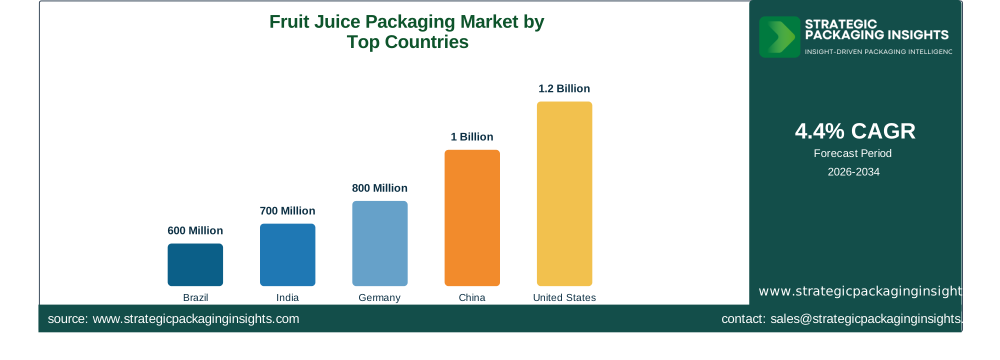
China, with a market size of around $1 billion and a CAGR of 5%, is another significant player in the market. The country's rapid urbanization and rising disposable incomes are driving demand for packaged beverages, including fruit juices. The government's focus on reducing plastic waste and promoting eco-friendly packaging solutions is expected to create new opportunities for market players. However, the high cost of raw materials and complex supply chains pose challenges for manufacturers.
Germany, with a market size of approximately $800 million and a CAGR of 4%, is a key market in Europe. The country's strong emphasis on sustainability and recycling drives demand for eco-friendly packaging solutions. The government's stringent regulations on packaging waste management present both challenges and opportunities for market players. Companies that can innovate and comply with these regulations are likely to gain a competitive edge.
India, with a market size of around $700 million and a CAGR of 6%, is an emerging market with significant growth potential. The country's growing middle class and increasing health consciousness are driving demand for fruit juices and, consequently, packaging solutions. The government's initiatives to promote sustainable packaging and reduce plastic waste are expected to create new opportunities for market players. However, the lack of infrastructure for recycling and waste management remains a challenge.
Brazil, with a market size of approximately $600 million and a CAGR of 4%, is a key market in Latin America. The country's strong agricultural base and growing demand for packaged beverages drive market growth. The government's focus on promoting sustainable packaging solutions and reducing plastic waste is expected to create new opportunities for market players. However, economic instability and regulatory challenges pose risks for manufacturers.
Fruit Juice Packaging Market Segments Insights

Packaging Type Analysis
The fruit juice packaging market is segmented by packaging type into cartons, PET bottles, glass bottles, and pouches. Cartons are a popular choice due to their lightweight nature and ability to preserve the freshness of the juice. They are particularly favored for their eco-friendly attributes, as they are often made from renewable resources and are recyclable. PET bottles, on the other hand, are valued for their durability and transparency, allowing consumers to see the product inside. This packaging type is especially popular in regions where consumer preference leans towards visually appealing packaging. Glass bottles, while heavier, are often associated with premium products and are favored for their ability to preserve the taste and quality of the juice. Pouches are gaining traction due to their convenience and portability, making them ideal for on-the-go consumption.
Each packaging type has its own set of drivers and challenges. For instance, cartons are driven by the increasing demand for sustainable packaging solutions, while PET bottles benefit from advancements in lightweighting technology that reduce material usage without compromising strength. Glass bottles face challenges related to their weight and fragility, but their premium appeal continues to drive demand in certain segments. Pouches, with their flexible design, offer opportunities for innovation in packaging design and functionality, but they also face challenges related to recyclability and environmental impact.
Material Type Analysis
The market is also segmented by material type into paperboard, PET, glass, and flexible laminates. Paperboard is a preferred material for its sustainability and recyclability, aligning with the growing consumer demand for eco-friendly packaging solutions. PET is favored for its lightweight and durable properties, making it a popular choice for both manufacturers and consumers. Glass, while less common due to its weight and fragility, is often used for premium products where preserving the quality and taste of the juice is paramount. Flexible laminates are gaining popularity for their versatility and ability to provide barrier protection, extending the shelf life of the product.
Each material type presents unique opportunities and challenges. Paperboard is driven by the increasing focus on sustainability, but it faces challenges related to moisture resistance and strength. PET benefits from advancements in recycling technology, but concerns about plastic waste continue to pose challenges. Glass offers excellent barrier properties and a premium feel, but its weight and fragility can be drawbacks. Flexible laminates offer opportunities for innovation in packaging design and functionality, but they also face challenges related to recyclability and environmental impact.
Capacity Analysis
The market is further segmented by capacity into single-serve, family pack, and bulk pack. Single-serve packaging is driven by the increasing demand for convenience and portability, as consumers seek products that fit their on-the-go lifestyles. Family packs are popular for their cost-effectiveness and suitability for home consumption, catering to families and larger households. Bulk packs, while less common, are favored by foodservice providers and retailers for their efficiency and cost savings.
Each capacity segment has its own set of drivers and challenges. Single-serve packaging is driven by the growing trend of snacking and on-the-go consumption, but it faces challenges related to packaging waste and environmental impact. Family packs benefit from economies of scale and are driven by the increasing demand for value-for-money products, but they face challenges related to storage and shelf life. Bulk packs offer opportunities for cost savings and efficiency, but they also face challenges related to handling and transportation.
End Use Analysis
The market is segmented by end use into juice brands, beverage companies, foodservice, and retailers. Juice brands are a major driver of the market, as they seek innovative packaging solutions to differentiate their products and enhance brand appeal. Beverage companies, including both large multinationals and smaller players, are also key drivers of the market, as they seek packaging solutions that enhance product quality and shelf life. Foodservice providers and retailers are increasingly demanding packaging solutions that offer convenience and efficiency, as they seek to meet the needs of their customers.
Each end-use segment presents unique opportunities and challenges. Juice brands are driven by the need for differentiation and branding, but they face challenges related to cost and sustainability. Beverage companies benefit from advancements in packaging technology, but they also face challenges related to regulatory compliance and environmental impact. Foodservice providers and retailers are driven by the need for convenience and efficiency, but they face challenges related to packaging waste and recyclability.
Fruit Juice Packaging Market Segments
The Fruit Juice Packaging market has been segmented on the basis ofBy Packaging Type
- Cartons
- PET Bottles
- Glass Bottles
- Pouches
By Material Type
- Paperboard
- PET
- Glass
- Flexible Laminates
By Capacity
- Single-Serve
- Family Pack
- Bulk Pack
By End Use
- Juice Brands
- Beverage Companies
- Foodservice
- Retailers
Region
- Asia Pacific
- North America
- Latin America
- Europe
- Middle East & Africa




