


Frozen Food Packaging Machine Market Outlook
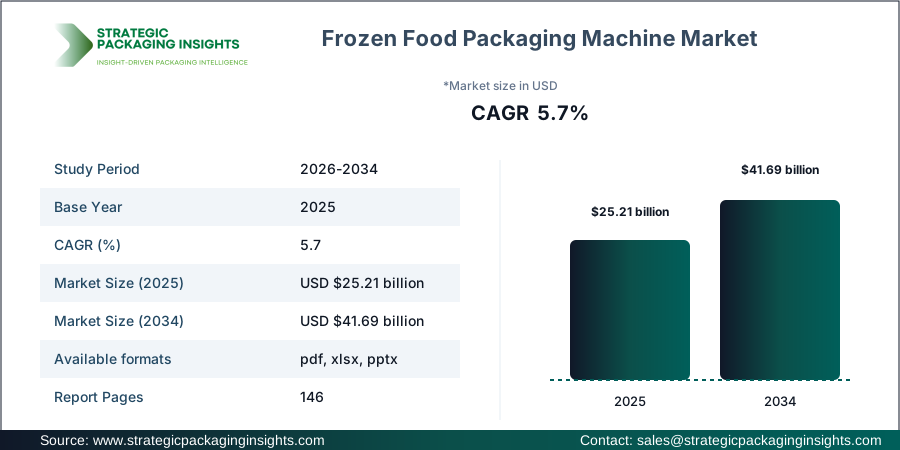
The Frozen Food Packaging Machine market was valued at $25.21 billion in 2025 and is projected to reach $41.69 billion by 2034, growing at a CAGR of 5.7% during the forecast period 2026-2034. This market is witnessing significant growth due to the increasing demand for frozen food products globally. The convenience offered by frozen foods, coupled with the rising number of working professionals, is driving the demand for efficient packaging solutions. The market is also benefiting from technological advancements in packaging machinery, which enhance the efficiency and speed of packaging processes. Additionally, the growing trend of automation in the food packaging industry is further propelling the market growth.
However, the market faces certain challenges, such as stringent regulations regarding food safety and packaging materials. These regulations can increase the cost of compliance for manufacturers, potentially hindering market growth. Despite these challenges, the market holds significant growth potential, driven by the increasing adoption of advanced packaging technologies and the expansion of the frozen food industry in emerging markets. The demand for sustainable and eco-friendly packaging solutions is also expected to create new opportunities for market players.
Report Scope
| Attributes | Details |
| Report Title | Frozen Food Packaging Machine Market Size, Future Growth and Forecast 2034 |
| Machine Type | Filling, Sealing, Wrapping, Cartoning |
| Automation | Semi-Automatic, Automatic, Robotic |
| Application | Bakery, Snacks, Dairy, Meat, Ready Meals |
| End Use | Food Processors, Contract Packers, FMCG |
| Region | Asia Pacific, North America, Latin America, Europe, Middle East & Africa |
| Base Year | 2025 |
| Historic Period | 2018-2024 |
| Forecast Period | 2026-2034 |
| Number of Pages | 146 |
| Customization Available | Yes* |
Opportunities & Threats
The Frozen Food Packaging Machine market presents numerous opportunities for growth, primarily driven by the increasing demand for frozen food products worldwide. As consumers continue to seek convenience and longer shelf life in food products, the demand for efficient and reliable packaging solutions is on the rise. This trend is particularly evident in urban areas, where busy lifestyles and the need for quick meal solutions are prevalent. Additionally, the growing trend of online grocery shopping is further boosting the demand for frozen food packaging machines, as e-commerce platforms require robust packaging solutions to ensure product safety during transportation.
Another significant opportunity lies in the development of sustainable and eco-friendly packaging solutions. With increasing awareness about environmental issues, consumers and regulatory bodies are pushing for greener packaging alternatives. This shift is encouraging manufacturers to innovate and develop packaging machines that can handle biodegradable and recyclable materials. Companies that can offer such solutions are likely to gain a competitive edge in the market. Furthermore, the expansion of the frozen food industry in emerging markets presents a lucrative opportunity for market players to expand their presence and tap into new customer bases.
Despite the promising opportunities, the market faces certain threats that could hinder its growth. One of the primary challenges is the stringent regulatory environment surrounding food safety and packaging materials. Compliance with these regulations can be costly and time-consuming for manufacturers, potentially impacting their profitability. Additionally, the high initial investment required for advanced packaging machinery can be a barrier for small and medium-sized enterprises (SMEs) looking to enter the market. Moreover, the volatility in raw material prices can affect the overall cost structure of packaging solutions, posing a threat to market stability.
Drivers & Challenges
The Frozen Food Packaging Machine market is driven by several key factors, including the increasing demand for frozen food products and the need for efficient packaging solutions. The convenience offered by frozen foods, along with their longer shelf life, is a major driver of market growth. As more consumers opt for ready-to-eat meals and quick meal solutions, the demand for reliable packaging machines is on the rise. Additionally, technological advancements in packaging machinery are enhancing the efficiency and speed of packaging processes, further driving market growth. The integration of automation and robotics in packaging machines is also a significant driver, as it improves productivity and reduces labor costs.
Another important driver is the growing trend of sustainable packaging solutions. With increasing awareness about environmental issues, consumers and regulatory bodies are demanding greener packaging alternatives. This trend is encouraging manufacturers to innovate and develop packaging machines that can handle biodegradable and recyclable materials. Companies that can offer such solutions are likely to gain a competitive edge in the market. Furthermore, the expansion of the frozen food industry in emerging markets presents a lucrative opportunity for market players to expand their presence and tap into new customer bases.
Despite the promising drivers, the market faces several challenges that could hinder its growth. One of the primary challenges is the stringent regulatory environment surrounding food safety and packaging materials. Compliance with these regulations can be costly and time-consuming for manufacturers, potentially impacting their profitability. Additionally, the high initial investment required for advanced packaging machinery can be a barrier for small and medium-sized enterprises (SMEs) looking to enter the market. Moreover, the volatility in raw material prices can affect the overall cost structure of packaging solutions, posing a threat to market stability.
Market Share Analysis
The Frozen Food Packaging Machine market is characterized by a competitive landscape with several key players vying for market share. Companies such as Syntegon, IMA Group, Krones, Sidel, Tetra Pak, Coesia, ProMach, GEA Group, Marchesini Group, and MULTIVAC are some of the prominent players in the market. These companies are focusing on strategic initiatives such as mergers and acquisitions, partnerships, and product innovations to strengthen their market position. The competitive rivalry in the market is intense, with players constantly striving to offer advanced and efficient packaging solutions to meet the evolving needs of consumers.
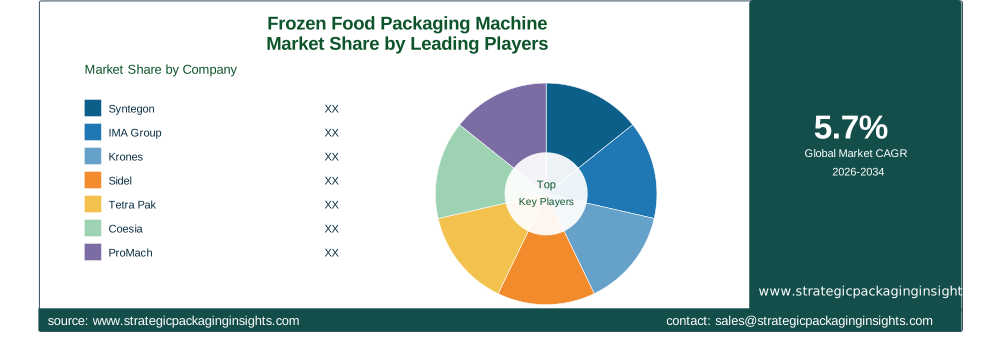
Syntegon, formerly known as Bosch Packaging Technology, is a leading player in the market, known for its innovative packaging solutions and strong global presence. The company offers a wide range of packaging machines for various applications, including frozen foods. IMA Group is another major player, renowned for its advanced packaging technologies and focus on sustainability. The company is actively investing in research and development to enhance its product offerings and cater to the growing demand for eco-friendly packaging solutions.
Krones and Sidel are also significant players in the market, known for their expertise in beverage packaging solutions. These companies are leveraging their technological capabilities to expand their presence in the frozen food packaging segment. Tetra Pak, a leader in food processing and packaging solutions, is focusing on innovation and sustainability to maintain its competitive edge. The company is actively developing packaging machines that can handle biodegradable and recyclable materials, in line with the growing demand for sustainable packaging solutions.
Coesia, ProMach, GEA Group, Marchesini Group, and MULTIVAC are other notable players in the market, each with its unique strengths and capabilities. These companies are focusing on expanding their product portfolios and enhancing their distribution networks to capture a larger share of the market. The competitive landscape is dynamic, with players continuously striving to innovate and offer advanced packaging solutions to meet the evolving needs of consumers.
Key Highlights
- The Frozen Food Packaging Machine market is projected to grow at a CAGR of 5.7% from 2026 to 2034.
- Technological advancements in packaging machinery are enhancing efficiency and speed.
- The demand for sustainable and eco-friendly packaging solutions is on the rise.
- Stringent regulations regarding food safety and packaging materials pose challenges.
- The market is characterized by intense competitive rivalry among key players.
- Emerging markets present significant growth opportunities for market players.
- High initial investment costs can be a barrier for SMEs entering the market.
- Volatility in raw material prices can impact the cost structure of packaging solutions.
- Automation and robotics are key trends driving market growth.
- Online grocery shopping is boosting the demand for frozen food packaging machines.
Top Countries Insights
In the Frozen Food Packaging Machine market, the United States stands out as a key player, with a market size of approximately $8.5 billion and a CAGR of 6%. The country's robust food processing industry and high demand for convenience foods drive the market. Additionally, technological advancements and a focus on automation in packaging processes contribute to market growth. However, stringent regulations regarding food safety and packaging materials pose challenges for manufacturers.
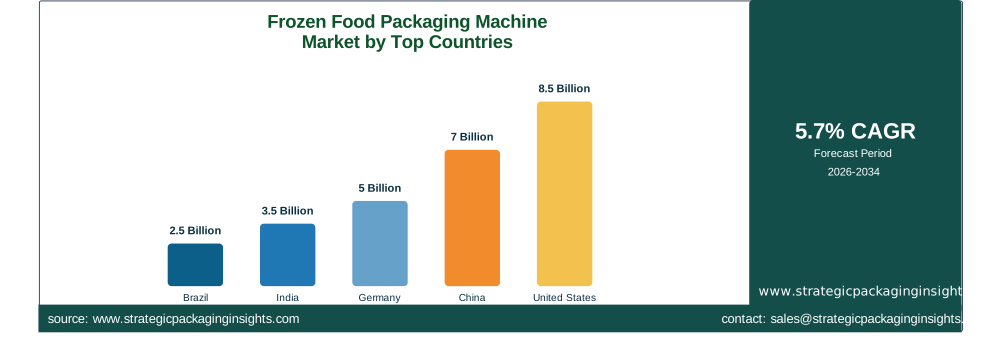
China is another significant market, with a market size of around $7 billion and a CAGR of 8%. The country's growing middle class and increasing disposable income levels are driving the demand for frozen food products, thereby boosting the packaging machine market. The government's focus on food safety and quality standards is also encouraging manufacturers to invest in advanced packaging technologies. However, the market faces challenges related to the high cost of advanced machinery and the need for skilled labor.
Germany, with a market size of approximately $5 billion and a CAGR of 5%, is a key player in the European market. The country's strong manufacturing base and focus on innovation in packaging technologies drive market growth. The demand for sustainable packaging solutions is also on the rise, with consumers and regulatory bodies pushing for greener alternatives. However, the market faces challenges related to compliance with stringent EU regulations and the high cost of sustainable materials.
India, with a market size of around $3.5 billion and a CAGR of 9%, presents significant growth opportunities for market players. The country's expanding food processing industry and increasing demand for convenience foods are driving the market. The government's initiatives to promote food safety and quality standards are also encouraging manufacturers to invest in advanced packaging technologies. However, the market faces challenges related to the high cost of machinery and the need for skilled labor.
Brazil, with a market size of approximately $2.5 billion and a CAGR of 7%, is a key player in the Latin American market. The country's growing middle class and increasing demand for frozen food products are driving the market. The government's focus on food safety and quality standards is also encouraging manufacturers to invest in advanced packaging technologies. However, the market faces challenges related to the high cost of machinery and the need for skilled labor.
Frozen Food Packaging Machine Market Segments Insights

Machine Type Analysis
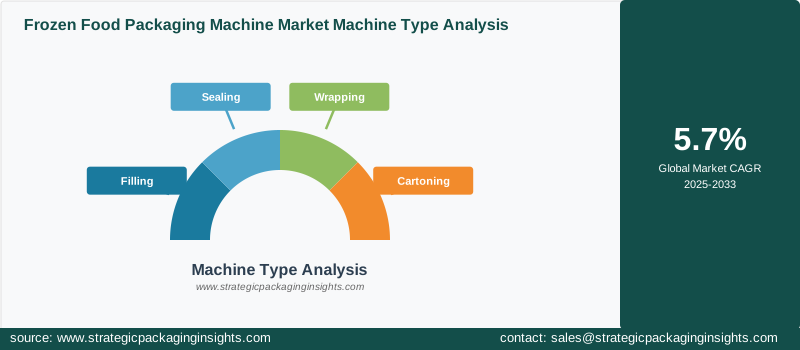
The Frozen Food Packaging Machine market is segmented by machine type into filling, sealing, wrapping, and cartoning. Each of these segments plays a crucial role in the packaging process, catering to different needs and requirements of the frozen food industry. The filling machines are essential for accurately dispensing the right amount of product into packaging containers, ensuring consistency and reducing waste. Sealing machines, on the other hand, are vital for maintaining the integrity and freshness of the packaged products by providing airtight seals. Wrapping machines offer an additional layer of protection, safeguarding the products during transportation and storage. Cartoning machines are used for secondary packaging, providing structural support and enhancing the visual appeal of the products.
The demand for these machines is driven by the increasing consumption of frozen food products and the need for efficient and reliable packaging solutions. Technological advancements in packaging machinery, such as the integration of automation and robotics, are further enhancing the efficiency and speed of these machines. Manufacturers are focusing on developing machines that can handle a wide range of packaging materials, including biodegradable and recyclable options, to meet the growing demand for sustainable packaging solutions. The competition in this segment is intense, with key players constantly innovating to offer advanced and efficient packaging solutions.
Automation Analysis
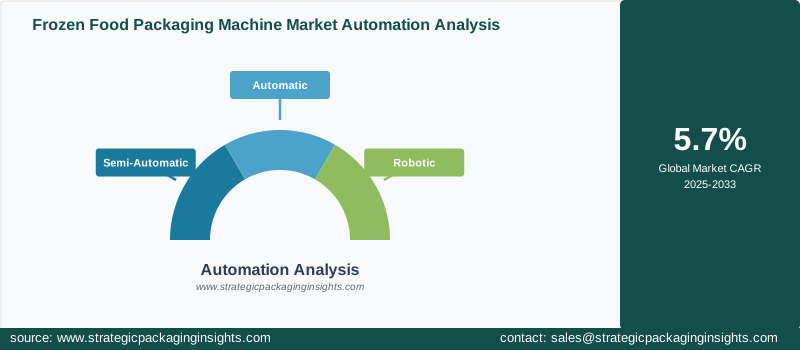
The automation segment of the Frozen Food Packaging Machine market is categorized into semi-automatic, automatic, and robotic machines. Automation is a key trend driving the market, as it enhances productivity, reduces labor costs, and improves the overall efficiency of packaging processes. Semi-automatic machines offer a balance between manual intervention and automation, making them suitable for small to medium-sized enterprises (SMEs) with limited budgets. Automatic machines, on the other hand, provide higher efficiency and speed, making them ideal for large-scale operations. Robotic machines represent the pinnacle of automation, offering unparalleled precision and flexibility in packaging processes.
The demand for automated packaging machines is driven by the increasing need for efficiency and consistency in packaging processes. The integration of advanced technologies, such as artificial intelligence and machine learning, is further enhancing the capabilities of these machines, allowing them to adapt to changing packaging requirements and optimize performance. Manufacturers are focusing on developing machines that can handle a wide range of packaging materials and formats, catering to the diverse needs of the frozen food industry. The competition in this segment is fierce, with key players investing heavily in research and development to offer cutting-edge solutions.
Application Analysis
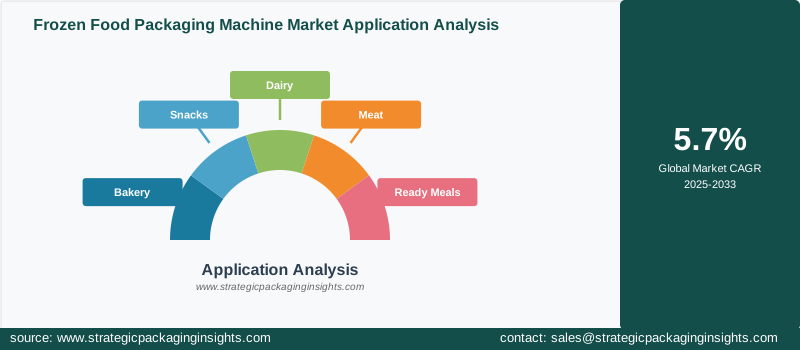
The application segment of the Frozen Food Packaging Machine market is divided into bakery, snacks, dairy, meat, and ready meals. Each of these applications has unique packaging requirements, driven by the specific characteristics of the products. Bakery products, for example, require packaging solutions that maintain freshness and prevent moisture loss. Snacks, on the other hand, need packaging that provides protection against physical damage and contamination. Dairy products require packaging that ensures product safety and extends shelf life, while meat products need packaging that prevents spoilage and maintains hygiene. Ready meals require packaging that is convenient and easy to use, catering to the on-the-go lifestyle of consumers.
The demand for packaging machines in these applications is driven by the increasing consumption of frozen food products and the need for efficient and reliable packaging solutions. Technological advancements in packaging machinery, such as the integration of automation and robotics, are further enhancing the efficiency and speed of these machines. Manufacturers are focusing on developing machines that can handle a wide range of packaging materials, including biodegradable and recyclable options, to meet the growing demand for sustainable packaging solutions. The competition in this segment is intense, with key players constantly innovating to offer advanced and efficient packaging solutions.
End Use Analysis
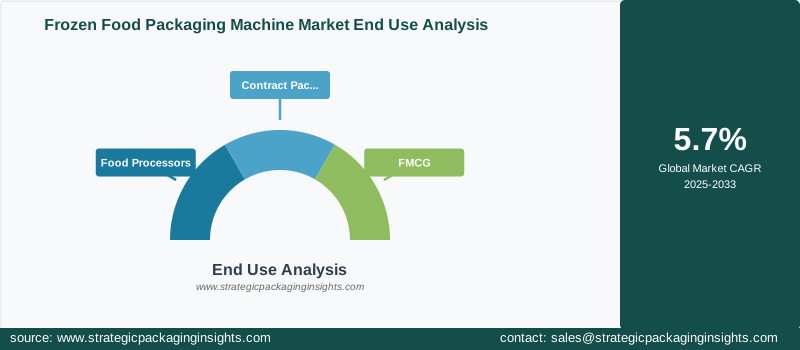
The end-use segment of the Frozen Food Packaging Machine market is categorized into food processors, contract packers, and FMCG companies. Each of these end-users has unique packaging requirements, driven by the specific characteristics of their operations. Food processors require packaging machines that offer high efficiency and speed, as they deal with large volumes of products. Contract packers, on the other hand, need machines that offer flexibility and adaptability, as they cater to a wide range of clients with diverse packaging needs. FMCG companies require packaging machines that offer consistency and reliability, as they deal with high-demand products that require quick turnaround times.
The demand for packaging machines in these end-use segments is driven by the increasing consumption of frozen food products and the need for efficient and reliable packaging solutions. Technological advancements in packaging machinery, such as the integration of automation and robotics, are further enhancing the efficiency and speed of these machines. Manufacturers are focusing on developing machines that can handle a wide range of packaging materials, including biodegradable and recyclable options, to meet the growing demand for sustainable packaging solutions. The competition in this segment is intense, with key players constantly innovating to offer advanced and efficient packaging solutions.
Frozen Food Packaging Machine Market Segments
The Frozen Food Packaging Machine market has been segmented on the basis ofMachine Type
- Filling
- Sealing
- Wrapping
- Cartoning
Automation
- Semi-Automatic
- Automatic
- Robotic
Application
- Bakery
- Snacks
- Dairy
- Meat
- Ready Meals
End Use
- Food Processors
- Contract Packers
- FMCG
Region
- Asia Pacific
- North America
- Latin America
- Europe
- Middle East & Africa




