


Freshness Sensor Packaging for Seafood Market Outlook
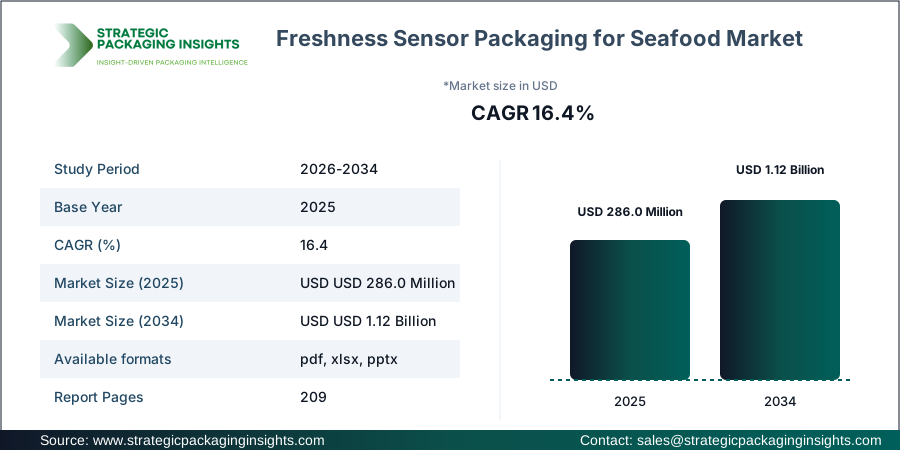
The Freshness Sensor Packaging for Seafood market size was valued at USD 286.0 Million in 2025 and is anticipated to reach USD 1.12 Billion by 2034, growing at a CAGR of 16.4% during the forecast period according to Strategic Packaging Insights. This market is witnessing significant growth due to the increasing demand for seafood with extended shelf life and enhanced quality assurance. Companies like Insignia Technologies and SpotSee are at the forefront, leveraging advanced sensor technologies to meet consumer expectations for freshness and safety. The integration of freshness sensors in packaging not only helps in maintaining the quality of seafood but also aids in reducing food waste, which is a critical concern globally.
One of the most impactful drivers of this market is the rising consumer awareness regarding food safety and quality. According to recent reports, consumers are increasingly demanding transparency in food sourcing and handling, which is pushing seafood processors and retailers to adopt innovative packaging solutions. Companies such as Varcode and Zebra Technologies are investing in research and development to create more efficient and cost-effective sensor technologies. This trend is further supported by government regulations aimed at ensuring food safety and reducing foodborne illnesses, thereby creating a conducive environment for the growth of freshness sensor packaging solutions.
Report Scope
| Attributes | Details |
| Report Title | Freshness Sensor Packaging for Seafood Market Size, Future Growth and Forecast 2034 |
| By Sensor Type | Colorimetric Sensors, Gas Sensors, pH Sensors, Biosensors, RFID-Integrated Freshness Sensors |
| By Packaging Type | Flexible Packaging, Vacuum Packaging, Modified Atmosphere Packaging (MAP), Rigid Trays, Pouches |
| By Seafood Type | Fish, Shrimp, Crab, Lobster, Shellfish, Mixed Seafood |
| By End User | Seafood Processors, Retail & Supermarkets, Foodservice Companies, Seafood Exporters, Cold Chain Logistics Providers |
| Region | Asia Pacific, North America, Latin America, Europe, Middle East & Africa |
| Base Year | 2025 |
| Historic Period | 2018-2024 |
| Forecast Period | 2026-2034 |
| Number of Pages | 209 |
| Customization Available | Yes* |
Sustainability & Circular Economy Analysis
Sustainability initiatives are significantly shaping the Freshness Sensor Packaging for Seafood market. The adoption of recyclable materials and reusable packaging is becoming a norm as companies strive to reduce their carbon footprint. Eco-friendly material innovation is at the forefront, with companies like Avery Dennison and Evigence Sensors leading the charge in developing sustainable packaging solutions. These efforts are not only driven by consumer preferences but also by stringent packaging regulations that mandate the use of environmentally friendly materials.
The circular economy practices are influencing packaging design and manufacturing processes. Companies are investing in lightweight packaging solutions that minimize material usage while maintaining product integrity. Waste reduction strategies are being implemented across the supply chain, from raw material sourcing to end-user delivery. Extended Producer Responsibility (EPR) is becoming a key focus area, encouraging manufacturers to take accountability for the entire lifecycle of their packaging products.
These sustainability trends are influencing investment decisions and supply chain strategies. Companies are prioritizing partnerships with suppliers who adhere to ESG initiatives and demonstrate a commitment to reducing environmental impact. Regulatory compliance is becoming a critical factor in maintaining long-term market competitiveness, as non-compliance can lead to significant financial and reputational risks. As a result, packaging manufacturers, brand owners, and retailers are increasingly aligning their operations with sustainability goals to meet consumer expectations and regulatory requirements.
Packaging Value Chain & Supply Chain Analysis
The packaging value chain for freshness sensor packaging in the seafood market is complex and involves multiple stakeholders. Raw material sourcing is a critical component, with companies like Mitsubishi Gas Chemical ensuring the availability of high-quality materials for sensor integration. Packaging converters and manufacturers play a pivotal role in transforming these materials into functional packaging solutions. Companies such as Amcor plc and Sealed Air Corporation are leading the way in developing innovative packaging designs that incorporate freshness sensors.
Logistics and distribution channels are essential for ensuring the timely delivery of packaged seafood products. Cold chain logistics providers are crucial in maintaining the integrity of seafood during transportation. Strategic partnerships between packaging manufacturers and logistics providers are enhancing supply chain efficiency and resilience. Inventory management and procurement strategies are being optimized to ensure the availability of packaging materials and components, reducing lead times and minimizing disruptions.
Global sourcing and localization are key trends in the supply chain ecosystem. Companies are balancing the need for cost-effective sourcing with the demand for localized production to meet regional market requirements. Supply chain resilience is being strengthened through diversification of suppliers and investment in advanced packaging machinery. These efforts are aimed at enhancing overall market performance and business competitiveness, ensuring that companies can meet the growing demand for freshness sensor packaging solutions in the seafood industry.
Opportunities & Threats
The Freshness Sensor Packaging for Seafood market presents numerous opportunities for growth and innovation. One significant opportunity lies in the development of advanced sensor technologies that offer real-time monitoring of seafood freshness. Companies like Timestrip UK Ltd. and Freshpoint Quality Assurance Ltd. are exploring new sensor designs that provide accurate and reliable data, enabling better decision-making for seafood processors and retailers. Additionally, the increasing demand for seafood in emerging markets presents a lucrative opportunity for market expansion.
Another opportunity is the integration of Internet of Things (IoT) technologies with freshness sensors. This integration allows for seamless data collection and analysis, providing valuable insights into supply chain operations and consumer preferences. Companies that can effectively leverage IoT technologies to enhance their packaging solutions will gain a competitive edge in the market. Furthermore, the growing focus on sustainability and eco-friendly packaging solutions offers opportunities for companies to differentiate themselves by offering environmentally responsible products.
However, the market also faces several threats that could hinder its growth. One major threat is the high cost of sensor technologies, which can be a barrier to adoption for small and medium-sized enterprises. Additionally, regulatory challenges related to food safety and packaging standards can pose significant hurdles for companies operating in this market. Companies must navigate these regulatory landscapes carefully to avoid potential fines and disruptions to their operations.
Drivers & Challenges
The primary drivers of the Freshness Sensor Packaging for Seafood market include the increasing demand for seafood with extended shelf life and the growing consumer awareness of food safety. Companies like CCL Industries and SATO Holdings are capitalizing on these drivers by developing innovative packaging solutions that enhance seafood freshness and quality. The rise in e-commerce and online grocery shopping is also driving demand for freshness sensor packaging, as consumers seek assurance of product quality during transit.
Technological advancements in sensor technologies are another key driver of market growth. Companies are investing in research and development to create more efficient and cost-effective sensors that can be easily integrated into packaging solutions. The adoption of RFID-integrated freshness sensors is gaining traction, offering real-time monitoring capabilities that enhance supply chain transparency and efficiency. These technological innovations are expected to drive market growth in the coming years.
Despite these drivers, the market faces several challenges that could impact its growth. One significant challenge is the high cost of sensor technologies, which can limit adoption among smaller companies. Additionally, the complexity of integrating sensors into packaging solutions can pose technical challenges for manufacturers. Companies must invest in skilled personnel and advanced manufacturing processes to overcome these challenges and ensure the successful implementation of freshness sensor packaging solutions.
Market Share Analysis
The Freshness Sensor Packaging for Seafood market is characterized by a competitive landscape with several key players vying for market share. Companies like Insignia Technologies and SpotSee are leading the market with their innovative sensor technologies and strong market presence. These companies have established themselves as leaders by offering a wide range of sensor solutions that cater to the diverse needs of the seafood industry.
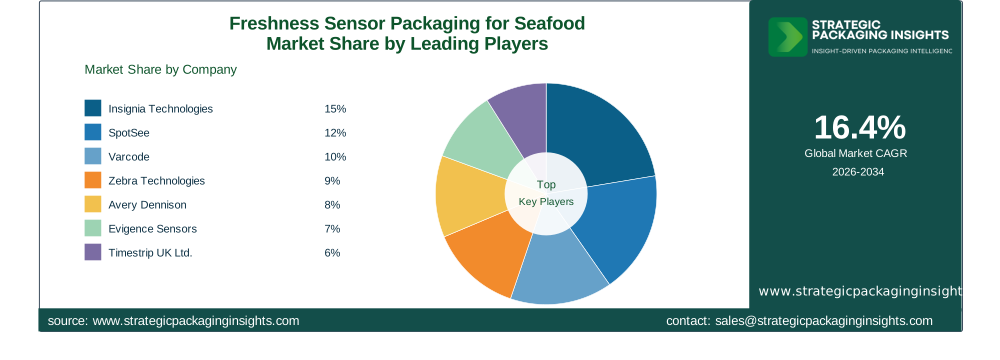
Varcode and Zebra Technologies are also significant players in the market, known for their advanced sensor technologies and commitment to quality. These companies have invested heavily in research and development to create cutting-edge solutions that enhance seafood freshness and safety. Their strong distribution networks and strategic partnerships have enabled them to capture a significant share of the market.
Avery Dennison and Evigence Sensors are recognized for their focus on sustainability and eco-friendly packaging solutions. These companies have developed innovative packaging designs that incorporate recyclable materials and reduce environmental impact. Their commitment to sustainability has resonated with consumers and helped them gain a competitive edge in the market.
Other notable players in the market include Timestrip UK Ltd., Freshpoint Quality Assurance Ltd., Amcor plc, Sealed Air Corporation, Multisorb Technologies, Mitsubishi Gas Chemical, Temptime Corporation, CCL Industries, and SATO Holdings. These companies have established themselves as key players through their extensive product portfolios, strong customer relationships, and global market presence.
Key Highlights
- Market Size: USD 286.0 Million in 2025, projected to reach USD 1.12 Billion by 2034.
- Growth Rate: Forecasted CAGR of 16.4% from 2026 to 2034.
- Leading Companies: Insignia Technologies, SpotSee, Varcode, Zebra Technologies, Avery Dennison.
- Emerging Technologies: RFID-integrated freshness sensors gaining traction.
- Sustainability Focus: Increasing adoption of eco-friendly packaging solutions.
- Regional Growth: Asia Pacific expected to witness significant growth.
- Consumer Trends: Rising demand for transparency in food sourcing and handling.
Freshness Sensor Packaging for Seafood Market Segments Insights

By Sensor Type Analysis
The Freshness Sensor Packaging for Seafood market is segmented by sensor type, including colorimetric sensors, gas sensors, pH sensors, biosensors, and RFID-integrated freshness sensors. Colorimetric sensors are widely used due to their cost-effectiveness and ease of integration into packaging solutions. These sensors provide visual indicators of seafood freshness, making them popular among consumers and retailers. Gas sensors, on the other hand, offer more precise monitoring of seafood quality by detecting changes in gas composition within the packaging. This segment is expected to witness significant growth as companies invest in advanced sensor technologies to enhance accuracy and reliability.
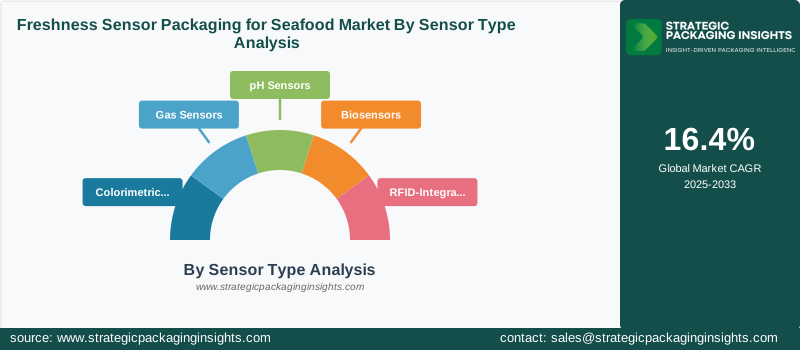
pH sensors and biosensors are gaining traction in the market due to their ability to provide real-time monitoring of seafood freshness. These sensors offer valuable insights into the biochemical changes occurring within the packaging, enabling better decision-making for seafood processors and retailers. RFID-integrated freshness sensors are emerging as a key trend in the market, offering seamless integration with IoT technologies for enhanced supply chain transparency and efficiency. Companies are investing in research and development to create more efficient and cost-effective RFID sensors, which are expected to drive market growth in the coming years.
By Packaging Type Analysis
The market is also segmented by packaging type, including flexible packaging, vacuum packaging, modified atmosphere packaging (MAP), rigid trays, and pouches. Flexible packaging is the most widely used packaging type due to its versatility and cost-effectiveness. This packaging type offers excellent protection against external contaminants and is easy to handle, making it popular among seafood processors and retailers. Vacuum packaging is another popular choice, providing an airtight seal that extends the shelf life of seafood products.
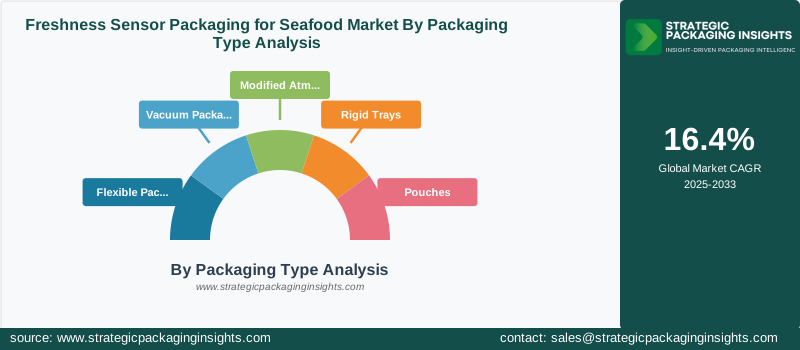
Modified atmosphere packaging (MAP) is gaining popularity due to its ability to maintain the freshness and quality of seafood by altering the gas composition within the packaging. This packaging type is particularly beneficial for high-value seafood products that require extended shelf life. Rigid trays and pouches are also widely used in the market, offering excellent protection and convenience for consumers. Companies are investing in innovative packaging designs that incorporate freshness sensors to enhance product quality and safety.
By Seafood Type Analysis
The Freshness Sensor Packaging for Seafood market is segmented by seafood type, including fish, shrimp, crab, lobster, shellfish, and mixed seafood. Fish is the most widely consumed seafood type, driving demand for freshness sensor packaging solutions. The increasing popularity of shrimp and crab is also contributing to market growth, as consumers seek assurance of product quality and freshness. Lobster and shellfish are high-value seafood products that require specialized packaging solutions to maintain their quality and extend their shelf life.
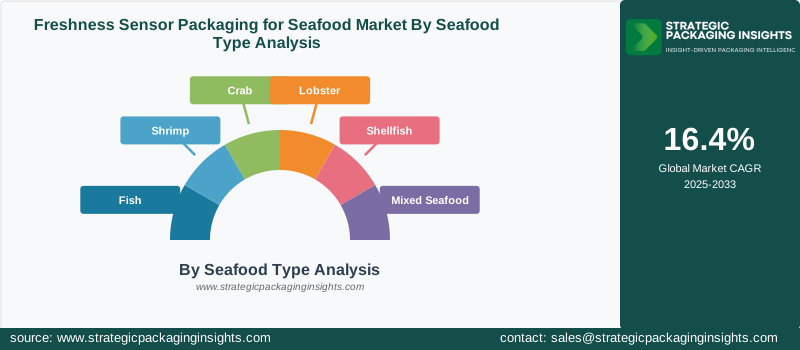
Mixed seafood is gaining popularity among consumers due to its convenience and variety. This segment is expected to witness significant growth as companies invest in innovative packaging solutions that cater to the diverse needs of consumers. The demand for freshness sensor packaging solutions is driven by the increasing consumer awareness of food safety and quality, as well as the growing popularity of seafood in emerging markets.
By End User Analysis
The market is segmented by end user, including seafood processors, retail & supermarkets, foodservice companies, seafood exporters, and cold chain logistics providers. Seafood processors are the primary end users of freshness sensor packaging solutions, as they seek to maintain the quality and freshness of their products throughout the supply chain. Retail & supermarkets are also significant end users, as they strive to meet consumer demand for fresh and high-quality seafood products.
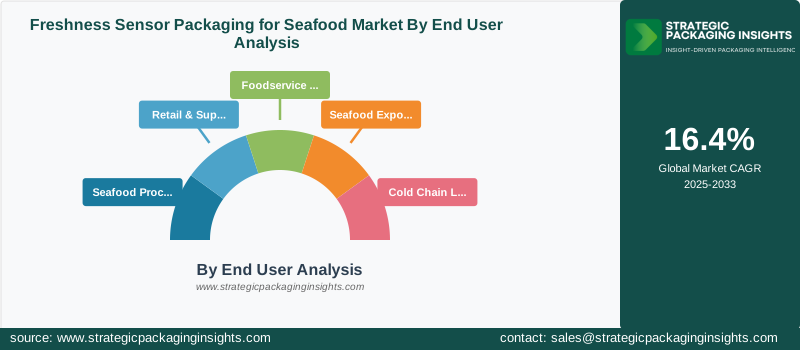
Foodservice companies are increasingly adopting freshness sensor packaging solutions to ensure the quality and safety of their seafood offerings. Seafood exporters and cold chain logistics providers are also key end users, as they require reliable packaging solutions to maintain the integrity of seafood products during transportation. The demand for freshness sensor packaging solutions is driven by the increasing consumer awareness of food safety and quality, as well as the growing popularity of seafood in emerging markets.
Freshness Sensor Packaging for Seafood Market Segments
The Freshness Sensor Packaging for Seafood market has been segmented on the basis ofBy Sensor Type
- Colorimetric Sensors
- Gas Sensors
- pH Sensors
- Biosensors
- RFID-Integrated Freshness Sensors
By Packaging Type
- Flexible Packaging
- Vacuum Packaging
- Modified Atmosphere Packaging (MAP)
- Rigid Trays
- Pouches
By Seafood Type
- Fish
- Shrimp
- Crab
- Lobster
- Shellfish
- Mixed Seafood
By End User
- Seafood Processors
- Retail & Supermarkets
- Foodservice Companies
- Seafood Exporters
- Cold Chain Logistics Providers
Region
- Asia Pacific
- North America
- Latin America
- Europe
- Middle East & Africa




