


Freshness Monitoring Packaging Market Outlook
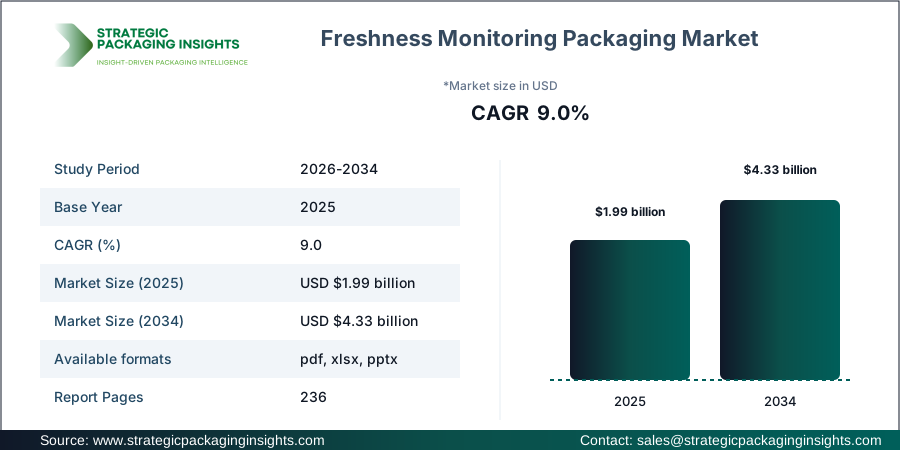
The Freshness Monitoring Packaging market was valued at $1.99 billion in 2025 and is projected to reach $4.33 billion by 2034, growing at a CAGR of 9.0% during the forecast period 2026-2034. This market is driven by the increasing demand for food safety and quality assurance across various sectors, including food and beverage, healthcare, and logistics. The rise in consumer awareness regarding food freshness and the growing need for efficient supply chain management are significant factors contributing to the market's expansion. Additionally, technological advancements in packaging solutions, such as smart labels and RFID sensors, are enhancing the capabilities of freshness monitoring, further propelling market growth.
Despite the promising growth prospects, the Freshness Monitoring Packaging market faces certain challenges. Regulatory constraints and the high cost of advanced packaging technologies can hinder market expansion. However, the potential for growth remains substantial, driven by the increasing adoption of freshness monitoring solutions in emerging markets and the continuous innovation in packaging technologies. The market's growth potential is further supported by the rising demand for sustainable and eco-friendly packaging solutions, which align with global environmental goals and consumer preferences.
Report Scope
| Attributes | Details |
| Report Title | Freshness Monitoring Packaging Market Size, Future Growth and Forecast 2034 |
| By Technology | Time-Temperature Indicators, Gas Indicators, RFID Sensors, Smart Labels |
| By Packaging Type | Labels, Films, Pouches, Trays |
| By Application | Meat & Seafood, Dairy, Fresh Produce, Pharmaceuticals |
| By End Use | Food & Beverage, Retail, Healthcare, Logistics |
| Region | Asia Pacific, North America, Latin America, Europe, Middle East & Africa |
| Base Year | 2025 |
| Historic Period | 2018-2024 |
| Forecast Period | 2026-2034 |
| Number of Pages | 236 |
| Customization Available | Yes* |
Opportunities & Threats
The Freshness Monitoring Packaging market presents numerous opportunities for growth, primarily driven by the increasing demand for innovative packaging solutions that ensure product quality and safety. The food and beverage industry, in particular, is witnessing a surge in demand for freshness monitoring packaging due to the rising consumer awareness about food safety and quality. This trend is further supported by the growing e-commerce sector, which requires efficient packaging solutions to maintain product integrity during transportation. Additionally, the healthcare sector offers significant growth opportunities, as freshness monitoring packaging is increasingly used to ensure the safety and efficacy of pharmaceuticals and medical supplies.
Another opportunity lies in the development of sustainable and eco-friendly packaging solutions. As environmental concerns continue to rise, consumers and businesses are seeking packaging options that minimize environmental impact. This has led to increased investment in research and development of biodegradable and recyclable packaging materials, which are expected to drive market growth. Furthermore, the integration of advanced technologies, such as IoT and AI, into freshness monitoring packaging solutions is creating new avenues for innovation and market expansion.
However, the market also faces certain threats that could impede its growth. One of the primary challenges is the high cost associated with advanced freshness monitoring technologies, which can limit their adoption, particularly among small and medium-sized enterprises. Additionally, regulatory constraints related to packaging materials and technologies can pose significant hurdles for market players. These regulations vary across regions, making it challenging for companies to navigate the complex regulatory landscape and ensure compliance. Moreover, the market is highly competitive, with numerous players vying for market share, which can lead to pricing pressures and reduced profit margins.
Drivers & Challenges
The Freshness Monitoring Packaging market is driven by several key factors, including the increasing demand for food safety and quality assurance. Consumers are becoming more conscious of the quality and freshness of the products they purchase, leading to a growing demand for packaging solutions that can monitor and maintain product freshness. This trend is particularly evident in the food and beverage industry, where freshness monitoring packaging is essential for ensuring the safety and quality of perishable goods. Additionally, the rise of e-commerce and online grocery shopping has further fueled the demand for freshness monitoring packaging, as these platforms require efficient packaging solutions to maintain product integrity during transportation.
Technological advancements in packaging solutions are also driving market growth. Innovations such as smart labels, RFID sensors, and time-temperature indicators are enhancing the capabilities of freshness monitoring packaging, allowing for real-time monitoring of product conditions. These technologies provide valuable data that can be used to optimize supply chain management and reduce food waste, further driving market demand. Moreover, the increasing focus on sustainability and eco-friendly packaging solutions is encouraging the development of biodegradable and recyclable packaging materials, which are expected to drive market growth in the coming years.
Despite the positive growth drivers, the Freshness Monitoring Packaging market faces several challenges. One of the primary challenges is the high cost associated with advanced freshness monitoring technologies, which can limit their adoption, particularly among small and medium-sized enterprises. Additionally, regulatory constraints related to packaging materials and technologies can pose significant hurdles for market players. These regulations vary across regions, making it challenging for companies to navigate the complex regulatory landscape and ensure compliance. Furthermore, the market is highly competitive, with numerous players vying for market share, which can lead to pricing pressures and reduced profit margins.
Market Share Analysis
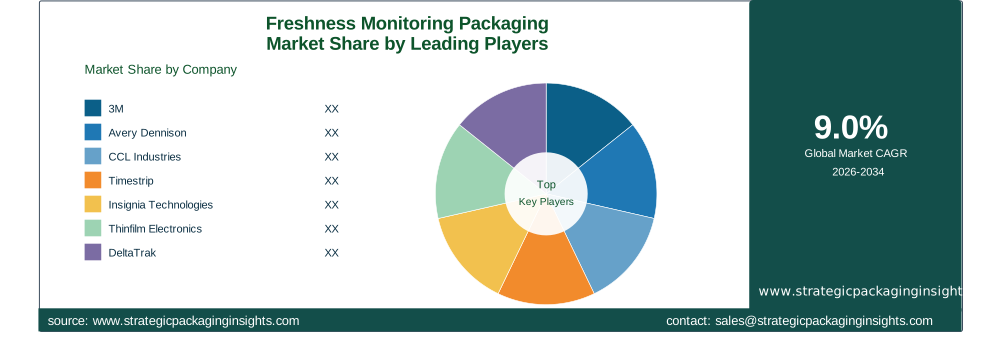
The Freshness Monitoring Packaging market is characterized by a competitive landscape with several key players dominating the market. Companies such as 3M, Avery Dennison, CCL Industries, Timestrip, Insignia Technologies, Thinfilm Electronics, DeltaTrak, Zebra Technologies, TempTime, and PakSense are some of the major players in this market. These companies are actively engaged in research and development activities to innovate and enhance their product offerings, thereby maintaining their competitive edge in the market. The market is also witnessing strategic collaborations and partnerships among key players to expand their market presence and strengthen their product portfolios.
3M is a leading player in the Freshness Monitoring Packaging market, known for its innovative packaging solutions and strong focus on research and development. The company offers a wide range of freshness monitoring packaging products, including time-temperature indicators and RFID sensors, which are widely used in the food and beverage industry. Avery Dennison is another major player in the market, offering a comprehensive range of labeling and packaging solutions that cater to various industries, including food and beverage, healthcare, and logistics.
CCL Industries is a prominent player in the market, known for its advanced labeling and packaging solutions. The company has a strong presence in the global market and offers a wide range of freshness monitoring packaging products, including smart labels and RFID sensors. Timestrip is a key player in the market, specializing in time-temperature indicators and other freshness monitoring solutions. The company is known for its innovative product offerings and strong focus on sustainability and eco-friendly packaging solutions.
Insignia Technologies is a leading provider of freshness monitoring packaging solutions, offering a range of products that cater to the food and beverage industry. The company is known for its innovative packaging solutions that enhance product freshness and safety. Thinfilm Electronics is another major player in the market, offering advanced RFID sensors and smart labels that are widely used in the food and beverage and healthcare industries. DeltaTrak, Zebra Technologies, TempTime, and PakSense are also key players in the market, known for their innovative packaging solutions and strong focus on research and development.
Key Highlights
- The Freshness Monitoring Packaging market is projected to grow at a CAGR of 9.0% from 2026 to 2034.
- Technological advancements in packaging solutions, such as smart labels and RFID sensors, are driving market growth.
- The food and beverage industry is a major end-user of freshness monitoring packaging solutions.
- Increasing consumer awareness about food safety and quality is fueling market demand.
- The market is witnessing a growing demand for sustainable and eco-friendly packaging solutions.
- Regulatory constraints and high costs of advanced technologies are key challenges for market players.
- Strategic collaborations and partnerships among key players are shaping the competitive landscape.
- The healthcare sector offers significant growth opportunities for freshness monitoring packaging solutions.
- Emerging markets are expected to drive market growth due to increasing adoption of freshness monitoring solutions.
Top Countries Insights
In the Freshness Monitoring Packaging market, the United States stands out as a leading country, with a market size of approximately $1.2 billion and a CAGR of 8%. The country's growth is driven by the strong presence of key market players and the increasing demand for innovative packaging solutions in the food and beverage industry. The regulatory environment in the U.S. also supports the adoption of freshness monitoring packaging, with stringent food safety standards driving the need for advanced packaging technologies.
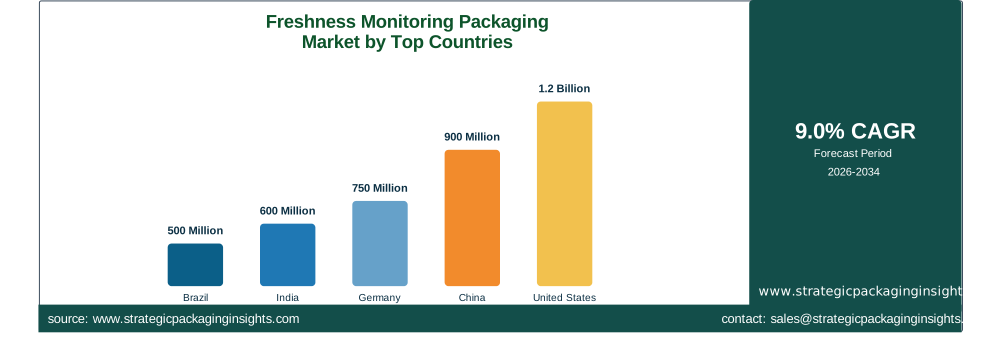
China is another significant market for freshness monitoring packaging, with a market size of around $900 million and a CAGR of 12%. The country's rapid economic growth and expanding middle class are driving demand for high-quality food products, which in turn is boosting the demand for freshness monitoring packaging. Additionally, the Chinese government's focus on improving food safety standards is encouraging the adoption of advanced packaging solutions.
Germany is a key player in the European freshness monitoring packaging market, with a market size of approximately $750 million and a CAGR of 7%. The country's strong focus on sustainability and environmental protection is driving demand for eco-friendly packaging solutions. Additionally, the presence of leading packaging companies and a well-established food and beverage industry are contributing to market growth.
India is emerging as a promising market for freshness monitoring packaging, with a market size of around $600 million and a CAGR of 15%. The country's growing population and increasing disposable income are driving demand for packaged food products, which is boosting the demand for freshness monitoring packaging. The Indian government's initiatives to improve food safety standards are also supporting market growth.
Brazil is a significant market in Latin America, with a market size of approximately $500 million and a CAGR of 10%. The country's expanding food and beverage industry and increasing consumer awareness about food safety are driving demand for freshness monitoring packaging. Additionally, the Brazilian government's efforts to improve food safety standards are encouraging the adoption of advanced packaging solutions.
Freshness Monitoring Packaging Market Segments Insights

By Technology Analysis
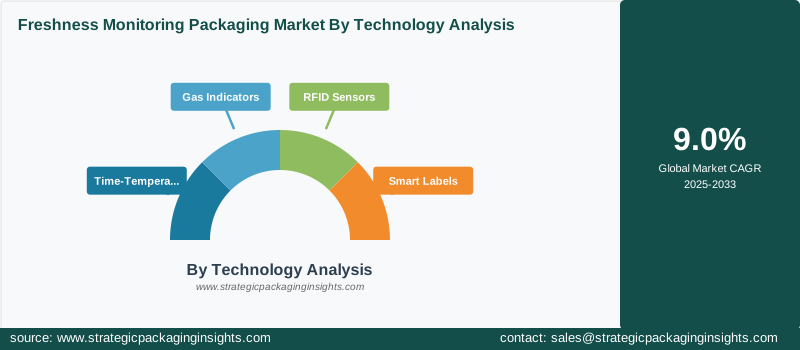
The Freshness Monitoring Packaging market is segmented by technology into Time-Temperature Indicators, Gas Indicators, RFID Sensors, and Smart Labels. Time-Temperature Indicators are widely used in the food and beverage industry to monitor the freshness of perishable goods. These indicators provide real-time data on temperature changes, helping to ensure product quality and safety. Gas Indicators are also gaining traction, particularly in the meat and seafood industry, where they are used to detect spoilage and maintain product freshness. RFID Sensors and Smart Labels are increasingly being adopted across various industries due to their ability to provide detailed information on product conditions and enhance supply chain management.
RFID Sensors are particularly popular in the logistics and healthcare sectors, where they are used to track and monitor the condition of products during transportation and storage. These sensors provide valuable data that can be used to optimize supply chain operations and reduce food waste. Smart Labels are also gaining popularity due to their ability to provide real-time information on product freshness and quality. These labels are widely used in the food and beverage industry, where they help to ensure product safety and compliance with regulatory standards.
By Packaging Type Analysis
The Freshness Monitoring Packaging market is segmented by packaging type into Labels, Films, Pouches, and Trays. Labels are the most widely used packaging type, accounting for a significant share of the market. They are used across various industries, including food and beverage, healthcare, and logistics, to provide information on product freshness and quality. Films are also widely used in the market, particularly in the food and beverage industry, where they are used to wrap and protect perishable goods. Pouches and Trays are gaining popularity due to their convenience and ability to maintain product freshness.
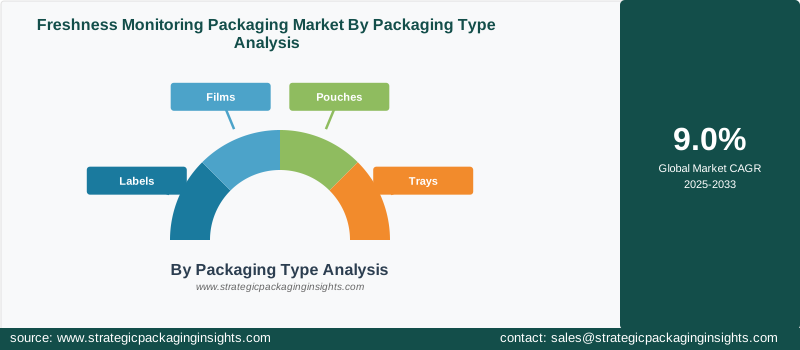
Pouches are particularly popular in the food and beverage industry, where they are used to package a wide range of products, including snacks, beverages, and ready-to-eat meals. These pouches are designed to maintain product freshness and extend shelf life, making them an ideal choice for perishable goods. Trays are also widely used in the market, particularly in the meat and seafood industry, where they are used to package and display fresh products. These trays are designed to maintain product freshness and enhance product presentation, making them a popular choice among retailers.
By Application Analysis
The Freshness Monitoring Packaging market is segmented by application into Meat & Seafood, Dairy, Fresh Produce, and Pharmaceuticals. The Meat & Seafood segment is the largest application segment, accounting for a significant share of the market. This segment is driven by the increasing demand for freshness monitoring packaging solutions that ensure the safety and quality of perishable goods. The Dairy segment is also witnessing significant growth, driven by the rising demand for high-quality dairy products and the need for efficient packaging solutions that maintain product freshness.
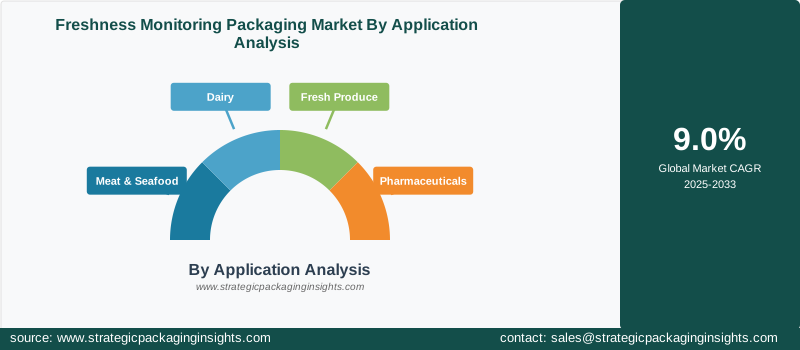
The Fresh Produce segment is another key application segment, driven by the increasing demand for fresh fruits and vegetables and the need for packaging solutions that extend shelf life and maintain product quality. The Pharmaceuticals segment is also witnessing significant growth, driven by the increasing demand for freshness monitoring packaging solutions that ensure the safety and efficacy of pharmaceutical products. This segment is particularly important in the healthcare industry, where product safety and quality are of utmost importance.
By End Use Analysis
The Freshness Monitoring Packaging market is segmented by end use into Food & Beverage, Retail, Healthcare, and Logistics. The Food & Beverage segment is the largest end-use segment, accounting for a significant share of the market. This segment is driven by the increasing demand for freshness monitoring packaging solutions that ensure the safety and quality of food and beverage products. The Retail segment is also witnessing significant growth, driven by the increasing demand for packaging solutions that enhance product presentation and maintain product freshness.
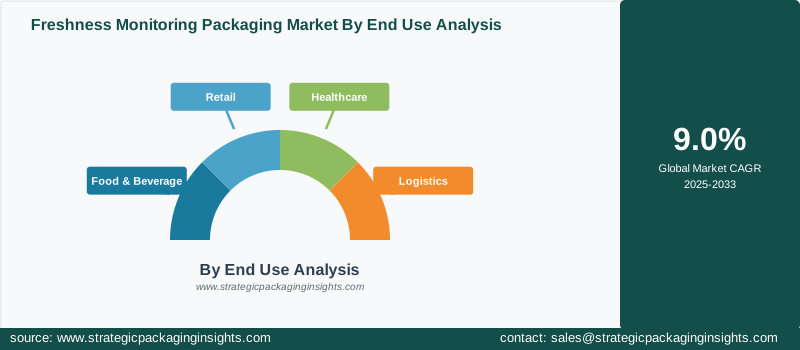
The Healthcare segment is another key end-use segment, driven by the increasing demand for freshness monitoring packaging solutions that ensure the safety and efficacy of pharmaceutical products. This segment is particularly important in the healthcare industry, where product safety and quality are of utmost importance. The Logistics segment is also witnessing significant growth, driven by the increasing demand for packaging solutions that enhance supply chain management and reduce food waste. This segment is particularly important in the e-commerce industry, where efficient packaging solutions are essential for maintaining product integrity during transportation.
Freshness Monitoring Packaging Market Segments
The Freshness Monitoring Packaging market has been segmented on the basis ofBy Technology
- Time-Temperature Indicators
- Gas Indicators
- RFID Sensors
- Smart Labels
By Packaging Type
- Labels
- Films
- Pouches
- Trays
By Application
- Meat & Seafood
- Dairy
- Fresh Produce
- Pharmaceuticals
By End Use
- Food & Beverage
- Retail
- Healthcare
- Logistics
Region
- Asia Pacific
- North America
- Latin America
- Europe
- Middle East & Africa




