


Food Processing Seals Market Outlook
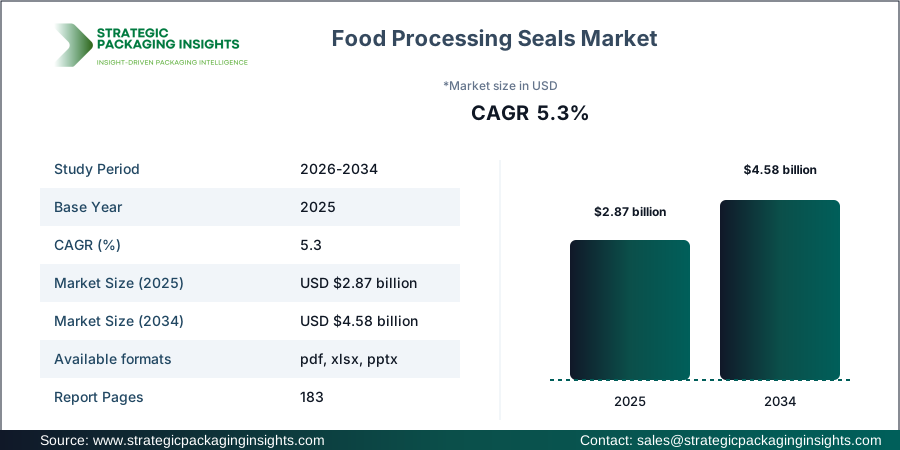
The Food Processing Seals market was valued at $2.87 billion in 2025 and is projected to reach $4.58 billion by 2034, growing at a CAGR of 5.3% during the forecast period 2026-2034. This market is driven by the increasing demand for processed and packaged food products, which necessitates the use of high-quality seals to ensure food safety and extend shelf life. The growing awareness about food hygiene and safety standards is also propelling the demand for advanced sealing solutions in the food processing industry. Additionally, technological advancements in seal materials and designs are enhancing the performance and durability of food processing seals, further boosting market growth.
However, the market faces challenges such as stringent regulatory requirements and the need for compliance with food safety standards, which can increase production costs and limit market expansion. Despite these challenges, the market holds significant growth potential due to the rising trend of automation in food processing facilities, which requires reliable and efficient sealing solutions. The increasing focus on sustainability and the development of eco-friendly seal materials are also expected to create new opportunities for market players in the coming years.
Report Scope
| Attributes | Details |
| Report Title | Food Processing Seals Market Size, Future Growth and Forecast 2034 |
| By Product Type | Gaskets, O-Rings, Mechanical Seals, Lip Seals |
| By Material Type | EPDM, Silicone, PTFE, Nitrile |
| By Application | Mixers, Pumps, Valves, Filling Lines |
| By End Use | Dairy, Beverages, Meat Processing, Bakery |
| Region | Asia Pacific, North America, Latin America, Europe, Middle East & Africa |
| Base Year | 2025 |
| Historic Period | 2018-2024 |
| Forecast Period | 2026-2034 |
| Number of Pages | 183 |
| Customization Available | Yes* |
Opportunities & Threats
The Food Processing Seals market presents numerous opportunities, primarily driven by the increasing demand for processed food products globally. As consumers continue to seek convenience and longer shelf life in food products, the need for effective sealing solutions becomes paramount. This demand is further amplified by the growing trend of ready-to-eat meals and packaged food items, which require robust sealing to maintain freshness and prevent contamination. Additionally, the expansion of the food processing industry in emerging markets offers lucrative opportunities for seal manufacturers to tap into new customer bases and expand their market presence.
Another significant opportunity lies in the development of innovative sealing materials and technologies. With the increasing focus on sustainability and environmental concerns, there is a growing demand for eco-friendly and biodegradable seal materials. Companies that invest in research and development to create such products can gain a competitive edge in the market. Furthermore, the integration of smart technologies in food processing seals, such as sensors for real-time monitoring of seal integrity, can open new avenues for growth and differentiation in the market.
On the other hand, the market faces threats from stringent regulatory requirements and compliance standards. Food processing seals must adhere to various food safety regulations, which can vary across regions and increase the complexity of manufacturing processes. Non-compliance can lead to significant financial penalties and damage to brand reputation. Additionally, the volatility in raw material prices and supply chain disruptions can pose challenges to market stability and profitability. Companies need to navigate these threats carefully to sustain their growth and market position.
Drivers & Challenges
The primary drivers of the Food Processing Seals market include the increasing demand for food safety and hygiene, which necessitates the use of high-quality sealing solutions in food processing applications. As consumers become more health-conscious, there is a growing emphasis on maintaining the integrity and safety of food products throughout the supply chain. This has led to the adoption of advanced sealing technologies that prevent contamination and ensure product quality. Additionally, the rise in automation and technological advancements in food processing equipment is driving the demand for reliable and efficient seals that can withstand high-pressure and high-temperature environments.
Another key driver is the expansion of the food processing industry, particularly in emerging markets. As urbanization and changing lifestyles lead to increased consumption of processed and packaged foods, the demand for food processing seals is expected to rise. The growing trend of globalization and international trade in food products also necessitates the use of standardized sealing solutions to meet diverse regulatory requirements and ensure product safety during transportation and storage.
Despite these drivers, the market faces several challenges, including the high cost of compliance with food safety regulations and standards. Manufacturers must invest in rigorous testing and certification processes to ensure their products meet the necessary requirements, which can increase production costs and impact profitability. Additionally, the market is highly competitive, with numerous players vying for market share. Companies must continuously innovate and differentiate their products to stay ahead of the competition. The volatility in raw material prices and supply chain disruptions can also pose challenges to market stability and growth.
Market Share Analysis
The Food Processing Seals market is characterized by a competitive landscape with several key players holding significant market shares. Companies such as Freudenberg Sealing Technologies, Trelleborg, Parker Hannifin, SKF, and Saint-Gobain are among the leading players in the market, known for their extensive product portfolios and strong distribution networks. These companies have established themselves as reliable suppliers of high-quality sealing solutions, catering to the diverse needs of the food processing industry.
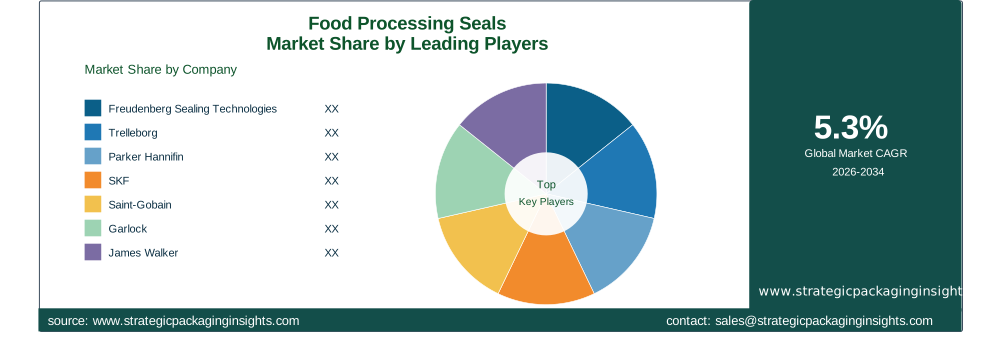
Freudenberg Sealing Technologies is a prominent player in the market, offering a wide range of sealing products designed for various food processing applications. The company's focus on innovation and sustainability has helped it maintain a strong market position. Trelleborg, another key player, is known for its advanced sealing technologies and commitment to quality and customer satisfaction. The company's global presence and extensive distribution network enable it to serve customers across different regions effectively.
Parker Hannifin is a leading provider of motion and control technologies, including sealing solutions for the food processing industry. The company's expertise in engineering and technology innovation has positioned it as a trusted partner for food processing companies seeking reliable sealing solutions. SKF, a global leader in bearings and seals, offers a comprehensive range of sealing products designed to enhance the performance and reliability of food processing equipment.
Saint-Gobain, Garlock, James Walker, EagleBurgmann, Flowserve, and John Crane are also key players in the market, each with its unique strengths and capabilities. These companies are focused on expanding their product offerings and enhancing their technological capabilities to meet the evolving needs of the food processing industry. The competitive landscape is characterized by continuous innovation and strategic partnerships, as companies strive to gain a competitive edge and capture a larger share of the market.
Key Highlights
- The Food Processing Seals market is projected to grow at a CAGR of 5.3% from 2026 to 2034.
- Increasing demand for processed and packaged food products is driving market growth.
- Technological advancements in seal materials and designs are enhancing product performance.
- Stringent regulatory requirements pose challenges to market expansion.
- Emerging markets offer significant growth opportunities for seal manufacturers.
- Focus on sustainability is driving the development of eco-friendly seal materials.
- Integration of smart technologies in seals is opening new avenues for growth.
- Key players include Freudenberg Sealing Technologies, Trelleborg, and Parker Hannifin.
- Market characterized by continuous innovation and strategic partnerships.
Top Countries Insights
In the Food Processing Seals market, the United States holds a significant share, driven by the presence of a well-established food processing industry and stringent food safety regulations. The market in the U.S. is valued at approximately $1.2 billion, with a CAGR of 4%. The demand for high-quality sealing solutions is fueled by the increasing consumption of processed and packaged foods, as well as the need for compliance with food safety standards.
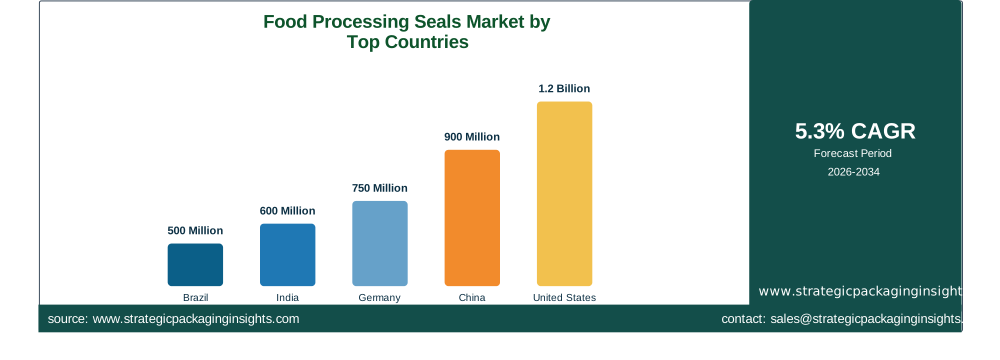
China is another key market for food processing seals, with a market size of around $900 million and a CAGR of 6%. The rapid urbanization and changing dietary habits in China are driving the demand for processed foods, which in turn boosts the need for effective sealing solutions. The government's focus on improving food safety standards and regulations further supports market growth.
Germany, with its strong manufacturing base and advanced food processing industry, is a leading market in Europe. The market size in Germany is estimated at $750 million, with a CAGR of 5%. The emphasis on quality and innovation in sealing solutions is driving market growth, along with the increasing demand for sustainable and eco-friendly materials.
India is emerging as a promising market for food processing seals, with a market size of $600 million and a CAGR of 7%. The growing middle-class population and increasing disposable incomes are leading to higher consumption of processed foods, creating opportunities for seal manufacturers. The government's initiatives to promote food processing industries also contribute to market expansion.
Brazil, with its expanding food processing sector, is another important market, valued at $500 million and a CAGR of 5%. The demand for sealing solutions is driven by the need to ensure food safety and quality in the processing and packaging of various food products. The focus on improving food safety standards and regulations supports market growth in the region.
Food Processing Seals Market Segments Insights

Product Type Analysis
The Food Processing Seals market is segmented by product type into Gaskets, O-Rings, Mechanical Seals, and Lip Seals. Gaskets are widely used in food processing applications due to their ability to provide a reliable seal between two surfaces, preventing leakage and contamination. The demand for gaskets is driven by their versatility and effectiveness in various food processing equipment, such as mixers and pumps. O-Rings, known for their durability and resistance to high temperatures and pressures, are also in high demand, particularly in applications requiring frequent disassembly and reassembly.
Mechanical seals are gaining popularity in the food processing industry due to their ability to provide a secure and leak-proof seal in dynamic applications. These seals are commonly used in pumps and mixers, where they help maintain product integrity and prevent contamination. Lip seals, on the other hand, are used in applications where a rotating shaft passes through a stationary housing, providing a barrier against contaminants and ensuring smooth operation. The demand for lip seals is driven by their ability to withstand harsh operating conditions and extend the lifespan of equipment.
Material Type Analysis
The market is also segmented by material type, including EPDM, Silicone, PTFE, and Nitrile. EPDM is a popular choice for food processing seals due to its excellent resistance to heat, ozone, and weathering. It is commonly used in applications where high-temperature resistance is required, such as in ovens and steamers. Silicone seals are favored for their flexibility and ability to maintain a tight seal at both high and low temperatures, making them ideal for use in a wide range of food processing applications.
PTFE, known for its chemical resistance and non-stick properties, is widely used in applications where contact with aggressive chemicals or sticky substances is common. Nitrile seals, with their excellent oil and fuel resistance, are used in applications involving contact with oils and fats. The choice of material depends on the specific requirements of the application, including temperature, pressure, and chemical exposure, as well as regulatory compliance and cost considerations.
Application Analysis
By application, the Food Processing Seals market is segmented into Mixers, Pumps, Valves, and Filling Lines. Mixers require seals that can withstand high shear forces and prevent leakage of ingredients, ensuring consistent product quality. The demand for seals in mixers is driven by the need for efficient mixing and blending of ingredients in various food products. Pumps, which are used to transfer liquids and semi-solids, require seals that can handle high pressures and prevent contamination.
Valves, which control the flow of liquids and gases, require seals that can provide a tight seal and prevent leakage. The demand for seals in valves is driven by the need for precise control of flow rates and the prevention of cross-contamination. Filling lines, which are used to fill containers with food products, require seals that can ensure accurate filling and prevent spillage. The demand for seals in filling lines is driven by the need for efficient and hygienic packaging of food products.
End Use Analysis
The market is further segmented by end use into Dairy, Beverages, Meat Processing, and Bakery. The dairy industry requires seals that can withstand frequent cleaning and sterilization processes, as well as exposure to dairy products, which can be corrosive. The demand for seals in the dairy industry is driven by the need for hygienic processing and packaging of dairy products. The beverage industry requires seals that can handle high pressures and prevent contamination of beverages.
In meat processing, seals are required to withstand exposure to fats and oils, as well as frequent cleaning and sterilization processes. The demand for seals in meat processing is driven by the need for hygienic processing and packaging of meat products. The bakery industry requires seals that can withstand high temperatures and prevent contamination of baked goods. The demand for seals in the bakery industry is driven by the need for efficient and hygienic processing and packaging of bakery products.
Food Processing Seals Market Segments
The Food Processing Seals market has been segmented on the basis ofBy Product Type
- Gaskets
- O-Rings
- Mechanical Seals
- Lip Seals
By Material Type
- EPDM
- Silicone
- PTFE
- Nitrile
By Application
- Mixers
- Pumps
- Valves
- Filling Lines
By End Use
- Dairy
- Beverages
- Meat Processing
- Bakery
Region
- Asia Pacific
- North America
- Latin America
- Europe
- Middle East & Africa




