


Foldable Steel Containers Market Outlook
The Foldable Steel Containers market size was valued at USD 2.75 billion in 2025 and is anticipated to reach USD 4.19 billion by 2034, growing at a CAGR of 4.8% during the forecast period according to Strategic Packaging Insights. The market is witnessing robust growth due to the increasing demand for efficient storage solutions across various industries. Companies like SSI Schaefer and Steel King are leading the charge by innovating in design and functionality, catering to the diverse needs of sectors such as automotive, manufacturing, and logistics. The versatility and durability of foldable steel containers make them a preferred choice for businesses looking to optimize space and reduce transportation costs.
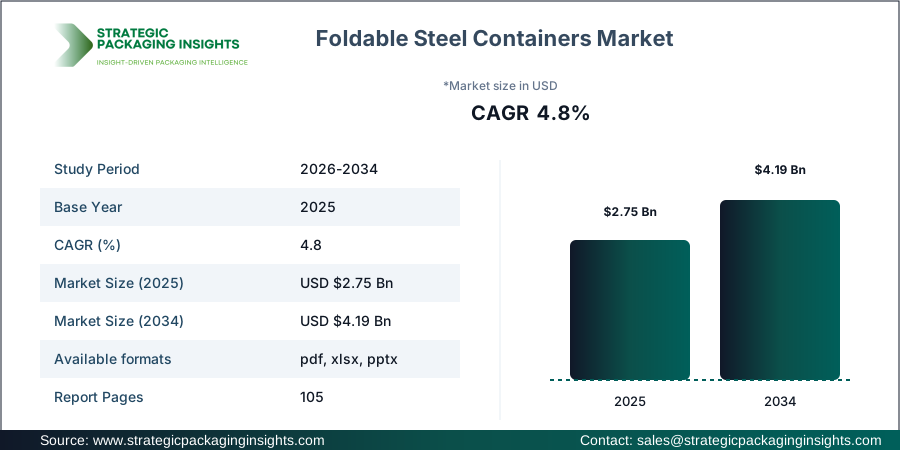
One of the most impactful drivers of this market is the growing emphasis on sustainability and cost-efficiency in logistics and supply chain operations. According to industry reports, businesses are increasingly adopting foldable steel containers to minimize their carbon footprint and enhance operational efficiency. This trend is further supported by government regulations promoting sustainable practices in packaging and logistics. Companies like Nefab and ORBIS are at the forefront, offering solutions that align with these regulatory frameworks, thereby gaining a competitive edge in the market.
Report Scope
| Attributes | Details |
| Report Title | Foldable Steel Containers Market Size, Future Growth and Forecast 2034 |
| Product Type | Collapsible Steel Containers, Stackable Steel Containers, Wire Mesh Containers |
| Capacity | Light-Duty, Medium-Duty, Heavy-Duty |
| Application | Automotive Parts, Industrial Storage, Warehouse Handling, Export Logistics |
| End Use | Automotive, Manufacturing, Logistics, Retail |
| Region | Asia Pacific, North America, Latin America, Europe, Middle East & Africa |
| Base Year | 2025 |
| Historic Period | 2018-2024 |
| Forecast Period | 2026-2034 |
| Number of Pages | 105 |
| Customization Available | Yes* |
Sustainability & Circular Economy Analysis
Sustainability initiatives are significantly shaping the foldable steel containers market, as businesses strive to reduce their environmental impact. The use of recyclable materials in manufacturing these containers is a key trend, with companies like Schoeller Allibert leading the way in eco-friendly material innovation. These initiatives not only help in reducing waste but also align with consumer preferences for sustainable products. The integration of lightweight packaging solutions further enhances the appeal of foldable steel containers, making them a viable option for companies looking to reduce their carbon footprint.
The circular economy model is gaining traction, influencing packaging design and manufacturing processes. Companies are investing in reusable packaging solutions, which not only extend the lifecycle of products but also contribute to waste reduction strategies. This shift is evident in the strategic decisions of major players like Marlin Steel, who are focusing on developing containers that can be easily recycled and reused. Such practices are not only beneficial for the environment but also offer cost savings for businesses, making them an attractive investment.
Extended Producer Responsibility (EPR) regulations are also playing a crucial role in shaping the market dynamics. These regulations require manufacturers to take responsibility for the entire lifecycle of their products, including disposal. As a result, companies are adopting innovative waste management strategies and enhancing their supply chain resilience. This regulatory compliance is crucial for maintaining long-term market competitiveness, as it influences investment decisions and supply chain strategies. The focus on ESG initiatives is further driving the demand for sustainable packaging solutions, positioning foldable steel containers as a key component in achieving these goals.
Packaging Value Chain & Supply Chain Analysis
The packaging value chain for foldable steel containers is complex, involving multiple stakeholders from raw material sourcing to end-user delivery. Raw material availability is a critical factor, influencing production capabilities and overall market performance. Companies like Vestil Manufacturing are optimizing their procurement strategies to ensure a steady supply of high-quality steel, which is essential for maintaining product standards. The role of packaging converters and manufacturers is pivotal, as they transform raw materials into finished products that meet industry specifications.
Logistics and distribution channels are integral components of the supply chain, affecting the efficiency and cost-effectiveness of delivering foldable steel containers to various markets. Strategic partnerships with logistics providers enable companies to enhance their distribution networks, ensuring timely delivery and reducing transportation costs. Brand owners and retailers play a significant role in the value chain, as they drive demand for innovative packaging solutions that align with consumer preferences and regulatory requirements.
Recycling networks are becoming increasingly important in the packaging value chain, as companies focus on sustainability and waste reduction. Efficient inventory management and supply chain resilience are crucial for maintaining competitiveness in the market. Localization and global sourcing strategies are being adopted by companies like Cargopak to mitigate risks associated with supply chain disruptions. These strategies not only enhance operational efficiency but also contribute to the overall sustainability goals of the industry, positioning foldable steel containers as a key solution in the evolving packaging landscape.
Opportunities & Threats
The foldable steel containers market presents numerous opportunities for growth, driven by the increasing demand for efficient and sustainable packaging solutions. The automotive and logistics sectors are key end-users, seeking innovative storage solutions to optimize space and reduce costs. Companies like Manorga are capitalizing on this demand by offering customizable containers that cater to specific industry needs. The growing trend of e-commerce and globalization is further boosting the demand for foldable steel containers, as businesses seek reliable and durable packaging solutions for international shipping.
Technological advancements in manufacturing processes are opening new avenues for market expansion. The integration of smart technologies, such as RFID tracking and IoT-enabled solutions, is enhancing the functionality of foldable steel containers, making them more attractive to end-users. These innovations not only improve operational efficiency but also provide valuable data insights for inventory management and supply chain optimization. As a result, companies investing in R&D and technological innovation are well-positioned to capture a larger market share.
However, the market also faces certain threats, primarily related to the volatility of raw material prices and stringent regulatory requirements. The fluctuating cost of steel can impact production costs and profit margins, posing a challenge for manufacturers. Additionally, compliance with environmental regulations and standards can be resource-intensive, requiring significant investment in sustainable practices and technologies. Companies must navigate these challenges effectively to maintain their competitive edge and capitalize on the growth opportunities in the market.
Drivers & Challenges
The primary drivers of the foldable steel containers market include the increasing demand for efficient storage solutions and the growing emphasis on sustainability. The automotive and logistics sectors are major contributors to market growth, as they require durable and space-saving packaging solutions. Companies like ORBIS are leveraging these trends by offering innovative products that meet the evolving needs of these industries. The focus on reducing transportation costs and optimizing supply chain operations is further driving the demand for foldable steel containers.
Another significant driver is the advancement in manufacturing technologies, which is enhancing the quality and functionality of foldable steel containers. The integration of smart technologies, such as IoT and RFID, is providing end-users with valuable insights into inventory management and supply chain optimization. These technological advancements are not only improving operational efficiency but also offering a competitive advantage to companies investing in R&D. As a result, the market is witnessing increased adoption of foldable steel containers across various industries.
Despite the positive growth prospects, the market faces several challenges, including the volatility of raw material prices and stringent regulatory requirements. The fluctuating cost of steel can impact production costs and profit margins, posing a challenge for manufacturers. Additionally, compliance with environmental regulations and standards can be resource-intensive, requiring significant investment in sustainable practices and technologies. Companies must navigate these challenges effectively to maintain their competitive edge and capitalize on the growth opportunities in the market.
Market Share Analysis
The competitive landscape of the foldable steel containers market is characterized by the presence of several key players, each striving to enhance their market share through innovation and strategic partnerships. SSI Schaefer is a prominent player, known for its extensive product portfolio and focus on sustainability. The company has established a strong presence in the market by offering high-quality, durable containers that cater to various industry needs. Steel King is another major player, recognized for its robust manufacturing capabilities and commitment to customer satisfaction.
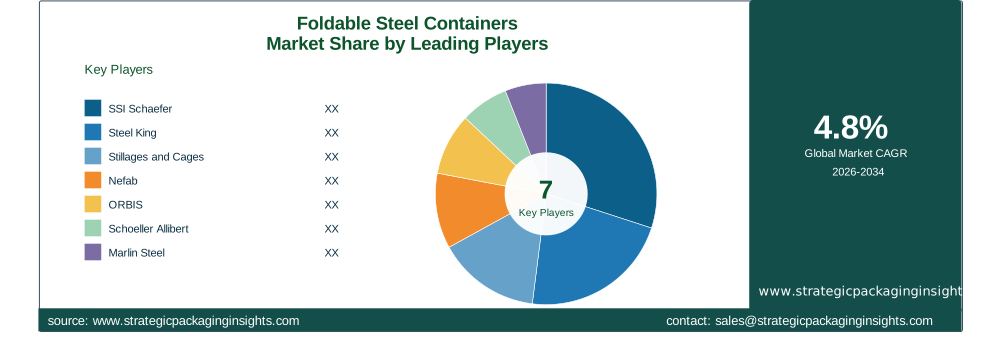
Stillages and Cages, a leading manufacturer of foldable steel containers, has gained a competitive edge by offering customizable solutions that meet specific industry requirements. The company's focus on innovation and quality has enabled it to capture a significant market share. Nefab, known for its sustainable packaging solutions, is also a key player in the market. The company's emphasis on eco-friendly materials and waste reduction strategies has positioned it as a leader in the foldable steel containers market.
ORBIS and Schoeller Allibert are notable players, recognized for their innovative product offerings and commitment to sustainability. ORBIS has leveraged its expertise in material handling solutions to expand its market presence, while Schoeller Allibert's focus on eco-friendly packaging has resonated with environmentally conscious consumers. Marlin Steel and Vestil Manufacturing are also key contributors to the market, known for their high-quality products and customer-centric approach.
Cargopak and Manorga are emerging players, gaining traction in the market through strategic partnerships and product innovation. Cargopak's focus on supply chain optimization and Manorga's emphasis on customizable solutions have enabled them to capture a growing market share. These companies, along with others, are driving the competitive dynamics of the foldable steel containers market, shaping its future growth trajectory.
Key Highlights
- Market Size: The foldable steel containers market was valued at USD 2.75 billion in 2025 and is projected to reach USD 4.19 billion by 2034.
- Growth Rate: The market is expected to grow at a CAGR of 4.8% during the forecast period.
- Leading Companies: Key players include SSI Schaefer, Steel King, and Nefab, among others.
- Product Innovation: Companies are focusing on eco-friendly and customizable solutions to meet industry demands.
- Regional Growth: Asia Pacific is anticipated to witness significant growth due to increasing industrialization.
- Technological Advancements: Integration of IoT and RFID technologies is enhancing product functionality.
- Sustainability Focus: Emphasis on recyclable materials and waste reduction strategies is driving market trends.
Foldable Steel Containers Market Segments Insights

Product Type Analysis
The foldable steel containers market is segmented by product type into collapsible steel containers, stackable steel containers, and wire mesh containers. Collapsible steel containers are gaining popularity due to their space-saving design and ease of handling. These containers are ideal for industries that require efficient storage solutions, such as automotive and logistics. Stackable steel containers offer the advantage of maximizing storage space, making them a preferred choice for warehouse handling and industrial storage applications. Wire mesh containers, known for their durability and visibility, are widely used in export logistics and retail sectors. Companies like SSI Schaefer and Steel King are leading the market by offering innovative product designs that cater to diverse industry needs.
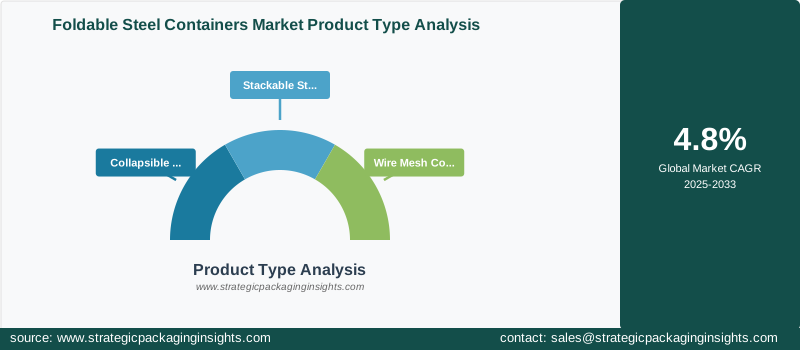
The demand for collapsible steel containers is driven by the need for cost-effective and sustainable packaging solutions. These containers are designed to reduce transportation costs and minimize environmental impact, aligning with the growing emphasis on sustainability. Stackable steel containers are favored for their ability to optimize space utilization, which is crucial for industries with limited storage capacity. Wire mesh containers, with their robust construction and visibility features, are ideal for applications that require easy access to stored goods. The market is witnessing increased adoption of these containers across various industries, driven by the need for efficient and reliable packaging solutions.
Capacity Analysis
The foldable steel containers market is segmented by capacity into light-duty, medium-duty, and heavy-duty containers. Light-duty containers are designed for applications that require lightweight and portable solutions, such as retail and warehouse handling. Medium-duty containers offer a balance between strength and weight, making them suitable for industrial storage and automotive parts applications. Heavy-duty containers are built to withstand harsh environments and heavy loads, making them ideal for export logistics and manufacturing sectors. Companies like Nefab and ORBIS are focusing on developing containers that cater to specific capacity requirements, ensuring optimal performance and durability.
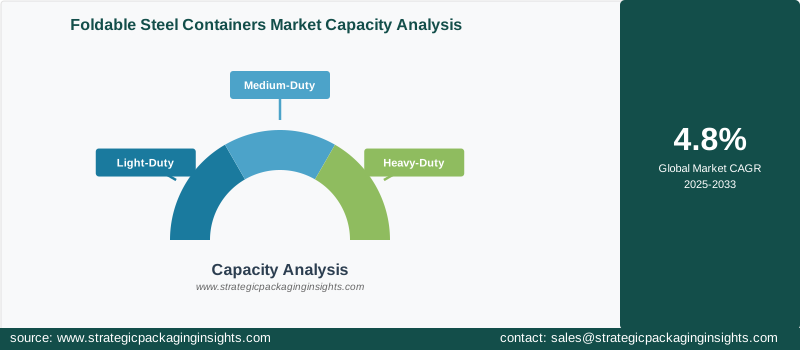
The demand for light-duty containers is driven by the need for cost-effective and flexible packaging solutions. These containers are designed to be easily transported and stored, making them a popular choice for industries with dynamic storage needs. Medium-duty containers are favored for their versatility and ability to handle a wide range of applications, from automotive parts to industrial storage. Heavy-duty containers, with their robust construction and high load-bearing capacity, are essential for industries that require reliable and durable packaging solutions. The market is witnessing increased adoption of these containers, driven by the need for efficient and cost-effective storage solutions.
Application Analysis
The foldable steel containers market is segmented by application into automotive parts, industrial storage, warehouse handling, and export logistics. The automotive parts segment is a major contributor to market growth, driven by the need for efficient and reliable packaging solutions. Industrial storage applications require durable and space-saving containers, making foldable steel containers a preferred choice. Warehouse handling applications benefit from the versatility and ease of use of these containers, which help optimize space utilization and improve operational efficiency. Export logistics applications require robust and secure packaging solutions, making foldable steel containers an ideal choice for international shipping.
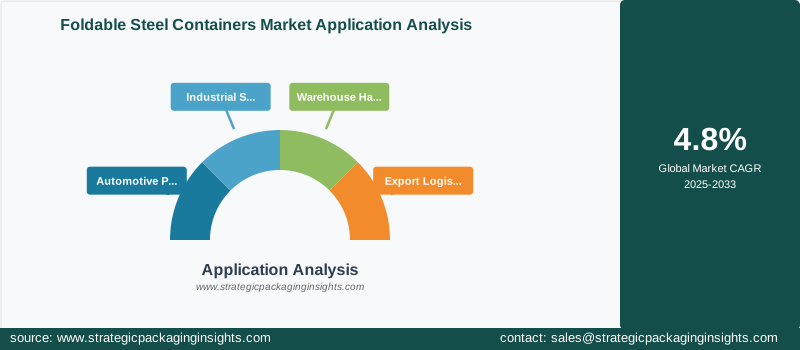
The demand for foldable steel containers in automotive parts applications is driven by the need for efficient storage and transportation solutions. These containers are designed to protect valuable automotive components during transit, ensuring their safe delivery to end-users. Industrial storage applications require containers that can withstand harsh environments and heavy loads, making foldable steel containers a popular choice. Warehouse handling applications benefit from the space-saving design and ease of handling of these containers, which help improve operational efficiency. Export logistics applications require containers that can withstand the rigors of international shipping, making foldable steel containers an ideal choice for these applications.
End Use Analysis
The foldable steel containers market is segmented by end use into automotive, manufacturing, logistics, and retail. The automotive sector is a major end-user, driven by the need for efficient and reliable packaging solutions. Manufacturing applications require durable and space-saving containers, making foldable steel containers a preferred choice. Logistics applications benefit from the versatility and ease of use of these containers, which help optimize space utilization and improve operational efficiency. Retail applications require flexible and cost-effective packaging solutions, making foldable steel containers an ideal choice for this sector.
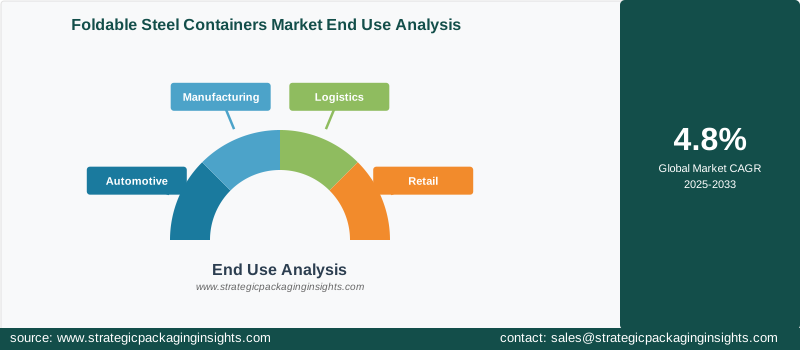
The demand for foldable steel containers in automotive applications is driven by the need for efficient storage and transportation solutions. These containers are designed to protect valuable automotive components during transit, ensuring their safe delivery to end-users. Manufacturing applications require containers that can withstand harsh environments and heavy loads, making foldable steel containers a popular choice. Logistics applications benefit from the space-saving design and ease of handling of these containers, which help improve operational efficiency. Retail applications require containers that can be easily transported and stored, making foldable steel containers an ideal choice for this sector.
Foldable Steel Containers Market Segments
The Foldable Steel Containers market has been segmented on the basis ofProduct Type
- Collapsible Steel Containers
- Stackable Steel Containers
- Wire Mesh Containers
Capacity
- Light-Duty
- Medium-Duty
- Heavy-Duty
Application
- Automotive Parts
- Industrial Storage
- Warehouse Handling
- Export Logistics
End Use
- Automotive
- Manufacturing
- Logistics
- Retail
Region
- Asia Pacific
- North America
- Latin America
- Europe
- Middle East & Africa




