


Fluoropolymer Barrier Films & High Performance Pharmaceutical Packaging Materials Market Outlook
The Fluoropolymer Barrier Films & High Performance Pharmaceutical Packaging Materials market size was valued at USD $1.86 Billion in 2025 and is anticipated to reach USD $3.48 Billion by 2035, growing at a CAGR of 6.46% % during the forecast period according to Strategic Packaging Insights.
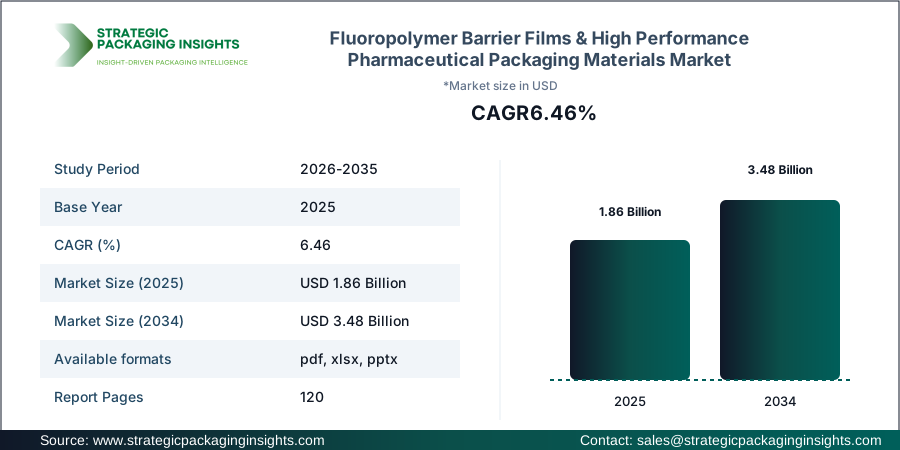
The increasing demand for high-performance packaging solutions in the pharmaceutical industry is a significant driver of market growth. The need for advanced barrier properties to protect sensitive pharmaceutical products from moisture, oxygen, and other environmental factors is pushing the adoption of fluoropolymer films. Regulatory requirements for drug safety and efficacy further support the demand for these materials, as they ensure product integrity and compliance with stringent standards.
Report Scope
| Attributes | Details |
| Report Title | Fluoropolymer Barrier Films & High Performance Pharmaceutical Packaging Materials Market Projected to Scale to 3.48 Billion by 2035, Assesses Strategic Packaging Insights |
| By Material Type | Polytetrafluoroethylene (PTFE), Perfluoroalkoxy Alkane (PFA), Fluorinated Ethylene Propylene (FEP), Ethylene Tetrafluoroethylene (ETFE), Polyvinylidene Fluoride (PVDF), Ethylene Chlorotrifluoroethylene (ECTFE) |
| By Film Structure | Monolayer Films, Multi-Layer Films, Laminated Films, Coextruded Films, Coated Films |
| By Barrier Property | Moisture Barrier, Oxygen Barrier, Chemical Barrier, Light Barrier, Gas Barrier, Aroma Barrier |
| By Packaging Type | Blister Packs, Pouches, Sachets, Vials, Bottles, Tubes, Lidding Films, Flexible Pharmaceutical Packaging |
| By Application | Pharmaceuticals, Biopharmaceuticals, Medical Devices, Diagnostics, Drug Delivery Systems, Clinical Trial Packaging, Specialty Healthcare Products |
| By End User | Pharmaceutical Manufacturers, Biotechnology Companies, Medical Device Manufacturers, Contract Manufacturing Organizations, Contract Packaging Organizations, Healthcare Institutions |
| By Packaging Function | Product Protection, Sterile Barrier Protection, Shelf-Life Extension, Contamination Prevention, Chemical Resistance, Temperature and Environmental Protection |
| By Region | North America, Europe, Asia-Pacific, Latin America, Middle East and Africa |
| Base Year | 2025 |
| Historic Period | 2018-2024 |
| Forecast Period | 2026-2035 |
| Number of Pages | 120 |
| Customization Available | Yes* |
Market Trends Analysis
Fluoropolymer barrier films are witnessing increased adoption due to their superior barrier properties, which are essential for maintaining the efficacy of pharmaceutical products. The trend towards lightweight and flexible packaging solutions is driving innovation in film structures, with multi-layer and coextruded films gaining traction. These films offer enhanced protection while reducing material usage, aligning with sustainability goals. Additionally, the shift towards personalized medicine and biologics is creating demand for specialized packaging solutions that can accommodate diverse product forms and delivery systems.
Sustainability initiatives are influencing the market, with a focus on reducing environmental impact through recyclable and biodegradable materials. Companies are investing in research and development to create eco-friendly alternatives without compromising on performance. The integration of digital technologies, such as smart packaging, is also emerging as a trend, offering opportunities for enhanced product tracking and consumer engagement. These trends are shaping the competitive landscape, encouraging companies to innovate and differentiate their offerings.
Industry Transformation Analysis
The fluoropolymer barrier films industry is undergoing significant transformation, driven by advancements in manufacturing technologies and material science. The development of high-performance films with improved barrier properties is enabling manufacturers to meet the stringent requirements of the pharmaceutical sector. Automation and digitalization are enhancing production efficiency, reducing costs, and improving product quality. These technological advancements are reshaping the value chain, with increased collaboration between material suppliers, converters, and end-users to optimize packaging solutions.
Localization of production facilities is becoming a strategic priority for companies to mitigate supply chain disruptions and reduce lead times. The focus on sustainability is prompting companies to explore circular economy models, incorporating recycled content and designing for recyclability. Regulatory pressures are also influencing industry dynamics, with companies needing to comply with evolving standards and certifications. These changes are creating opportunities for new entrants and driving consolidation among existing players to strengthen market positions and expand capabilities.
Trends & Disruptions Impacting Customers' Customers
Pharmaceutical manufacturers and healthcare institutions are the primary downstream customers driving demand for fluoropolymer barrier films. The increasing complexity of pharmaceutical formulations and the need for extended shelf life are key factors influencing their packaging requirements. As personalized medicine and biologics gain prominence, there is a growing demand for customized packaging solutions that can accommodate diverse product forms and delivery systems. Regulatory compliance and product safety remain top priorities, necessitating the use of high-performance materials that ensure product integrity and patient safety.
These downstream changes are impacting product demand and innovation in the fluoropolymer barrier films market. Manufacturers are focusing on developing advanced materials that offer superior barrier properties and meet specific customer needs. The shift towards sustainable packaging solutions is also influencing purchasing decisions, with customers seeking eco-friendly alternatives that align with their sustainability goals. These trends are creating opportunities for market growth and encouraging companies to invest in research and development to stay competitive.
Fluoropolymer Barrier Films & High Performance Pharmaceutical Packaging Materials Market Ecosystem
The market ecosystem for fluoropolymer barrier films involves a complex value chain, starting from raw material procurement to end-user applications. Resin production is a critical stage, where companies like DuPont and Chemours play a significant role in supplying high-quality fluoropolymer resins. Film production involves advanced extrusion technologies to create films with precise barrier properties. Converting processes further enhance the films into various packaging formats, meeting the specific needs of pharmaceutical manufacturers.
Distribution channels ensure the timely delivery of finished products to end-users, maintaining the integrity and quality of the packaging solutions. The ecosystem is characterized by strong interdependencies, with material suppliers, converters, and end-users collaborating to optimize packaging performance. Capacity constraints and supply chain disruptions can impact the market, highlighting the importance of strategic partnerships and localized production facilities to ensure a steady supply of materials and products.
Analyst Perspective
Analyst Perspective: The fluoropolymer barrier films market is poised for significant growth, driven by the increasing demand for high-performance packaging solutions in the pharmaceutical sector.
The most important structural change is the shift towards sustainable packaging solutions, with companies investing in recyclable and biodegradable materials. This trend is likely to impact competitive positioning, as companies that can offer eco-friendly alternatives without compromising on performance will gain a competitive edge.
Companies, investors, and suppliers should closely monitor regulatory developments and sustainability initiatives, as these factors will shape market dynamics and influence purchasing decisions. Staying ahead of these trends will be crucial for maintaining market relevance and capturing growth opportunities.
Opportunities & Threats
The fluoropolymer barrier films market presents significant opportunities for growth, driven by the increasing demand for high-performance packaging solutions in the pharmaceutical industry. The need for advanced barrier properties to protect sensitive pharmaceutical products from environmental factors is a key driver. Companies that can develop innovative materials with superior barrier properties will be well-positioned to capture market share. Additionally, the trend towards personalized medicine and biologics is creating demand for specialized packaging solutions, offering opportunities for product differentiation and premium pricing.
Technological advancements in film production and converting processes are opening new avenues for innovation. The integration of digital technologies, such as smart packaging, offers opportunities for enhanced product tracking and consumer engagement. Companies that can leverage these technologies to offer value-added solutions will gain a competitive advantage. Furthermore, the focus on sustainability is driving demand for eco-friendly packaging materials, creating opportunities for companies that can develop recyclable and biodegradable alternatives.
However, the market also faces several threats, including raw material volatility and supply chain disruptions. The reliance on specialized fluoropolymer resins can lead to supply constraints and pricing pressures, impacting profitability. Companies need to establish robust supply chain strategies and diversify their supplier base to mitigate these risks. Regulatory uncertainty is another challenge, as evolving standards and certifications can impact market dynamics. Companies must stay abreast of regulatory developments and ensure compliance to avoid potential disruptions.
Competition in the market is intensifying, with established players and new entrants vying for market share. Companies need to differentiate their offerings through innovation and superior performance to maintain a competitive edge. Additionally, the high capital requirements for manufacturing and R&D can pose barriers to entry for smaller players. Companies must carefully manage their investments and focus on strategic partnerships to enhance their capabilities and expand their market presence.
Drivers & Challenges
The primary driver of the fluoropolymer barrier films market is the increasing demand for high-performance packaging solutions in the pharmaceutical industry. The need for advanced barrier properties to protect sensitive pharmaceutical products from environmental factors is a key factor driving market growth. Regulatory requirements for drug safety and efficacy further support the demand for these materials, as they ensure product integrity and compliance with stringent standards. Additionally, the trend towards personalized medicine and biologics is creating demand for specialized packaging solutions that can accommodate diverse product forms and delivery systems.
Technological advancements in film production and converting processes are also driving market growth. The development of high-performance films with improved barrier properties is enabling manufacturers to meet the stringent requirements of the pharmaceutical sector. Automation and digitalization are enhancing production efficiency, reducing costs, and improving product quality. These technological advancements are reshaping the value chain, with increased collaboration between material suppliers, converters, and end-users to optimize packaging solutions.
However, the market faces several challenges, including raw material volatility and supply chain disruptions. The reliance on specialized fluoropolymer resins can lead to supply constraints and pricing pressures, impacting profitability. Companies need to establish robust supply chain strategies and diversify their supplier base to mitigate these risks. Regulatory uncertainty is another challenge, as evolving standards and certifications can impact market dynamics. Companies must stay abreast of regulatory developments and ensure compliance to avoid potential disruptions.
Packaging Market Economics
The economics of fluoropolymer barrier films are influenced by several factors, including raw material costs, conversion costs, and energy expenses. The pricing of fluoropolymer resins, such as PTFE and PFA, plays a significant role in determining the overall cost structure. Conversion costs, including extrusion and coextrusion processes, are critical in shaping the final product pricing. Energy costs also impact production economics, as film manufacturing is energy-intensive. Companies must optimize their production processes to achieve cost efficiencies and maintain competitive pricing.
Logistics and distribution costs are also important considerations, as they affect the overall supply chain efficiency. The need for specialized packaging solutions in the pharmaceutical industry requires companies to invest in advanced technologies and equipment, impacting capital expenditure. However, the ability to offer high-performance packaging solutions with superior barrier properties allows companies to command premium pricing, enhancing profitability. Companies must carefully manage their cost structures and pricing strategies to remain competitive in the market.
Packaging Value Chain & Cost Analysis
The value chain for fluoropolymer barrier films involves several tiers, each contributing to the overall cost structure. Tier-3 includes resin synthesis and additives, where companies like DuPont and Chemours play a significant role in supplying high-quality fluoropolymer resins. Tier-2 involves film extrusion and substrate production, where advanced technologies are used to create films with precise barrier properties. Tier-1 includes converting, printing, and lamination processes, where films are processed into various packaging formats to meet specific customer needs.
Downstream activities include co-packing, CPG brand filling, and distribution, ensuring the timely delivery of finished products to end-users. The value chain is characterized by strong interdependencies, with material suppliers, converters, and end-users collaborating to optimize packaging performance. Capacity constraints and supply chain disruptions can impact the market, highlighting the importance of strategic partnerships and localized production facilities to ensure a steady supply of materials and products.
Unit Economics & Substrate Cost Analysis
The unit economics of fluoropolymer barrier films are influenced by several factors, including raw material costs, energy expenses, and conversion processes. The pricing of fluoropolymer resins, such as PTFE and PFA, plays a significant role in determining the overall cost structure. Energy costs also impact production economics, as film manufacturing is energy-intensive. Companies must optimize their production processes to achieve cost efficiencies and maintain competitive pricing.
Conversion costs, including extrusion and coextrusion processes, are critical in shaping the final product pricing. The need for specialized packaging solutions in the pharmaceutical industry requires companies to invest in advanced technologies and equipment, impacting capital expenditure. However, the ability to offer high-performance packaging solutions with superior barrier properties allows companies to command premium pricing, enhancing profitability. Companies must carefully manage their cost structures and pricing strategies to remain competitive in the market.
Packaging Regulatory & Sustainability Analysis
The regulatory landscape for fluoropolymer barrier films is shaped by stringent standards and certifications, particularly in the pharmaceutical industry. Regulatory bodies such as the FDA and EMA set guidelines for drug safety and efficacy, influencing packaging requirements. Companies must ensure compliance with these regulations to avoid potential disruptions and maintain market access. Sustainability is also a key consideration, with increasing pressure to reduce environmental impact through recyclable and biodegradable materials.
Companies are investing in research and development to create eco-friendly alternatives without compromising on performance. The integration of digital technologies, such as smart packaging, offers opportunities for enhanced product tracking and consumer engagement. These trends are shaping the competitive landscape, encouraging companies to innovate and differentiate their offerings. Companies must stay ahead of regulatory developments and sustainability initiatives to maintain market relevance and capture growth opportunities.
Strategic Mergers, Acquisitions & Capacity Expansions
Recent strategic developments in the fluoropolymer barrier films market include mergers, acquisitions, and capacity expansions by key players. Companies like DuPont and Chemours have been actively expanding their production capacities to meet the growing demand for high-performance packaging solutions. Strategic partnerships and collaborations are also on the rise, with companies seeking to enhance their capabilities and expand their market presence.
Technology investments are a key focus, with companies investing in advanced manufacturing processes and digital technologies to improve product quality and production efficiency. The integration of smart packaging solutions is gaining traction, offering opportunities for enhanced product tracking and consumer engagement. These strategic developments are shaping the competitive landscape, encouraging companies to innovate and differentiate their offerings. Companies must stay ahead of regulatory developments and sustainability initiatives to maintain market relevance and capture growth opportunities.
Strategic Action Directives
Brand Packaging Engineers & Sustainability Directors: Focus on material selection and mono-material qualification to enhance barrier performance and recyclability. Integrate PCR to meet sustainability goals.
Converter Operations & Extrusion Leads: Optimize line speed and tooling to reduce scrap and improve capacity utilization. Address PCR variability to maintain product quality.
Procurement & Material Sourcing Managers: Diversify supplier base and establish resin contracts to mitigate price volatility. Index prices to manage cost fluctuations effectively.
Investors: Monitor capacity expansions and technology investments to identify growth opportunities. Assess market concentration and competitive dynamics for strategic decision-making.
Market Share Analysis
The fluoropolymer barrier films market is characterized by a competitive landscape with several key players vying for market share. Companies like 3M, DuPont, and Honeywell International are prominent players, offering a wide range of high-performance packaging solutions. These companies have a strong presence in North America and Europe, leveraging their extensive distribution networks and technological expertise to maintain a competitive edge.
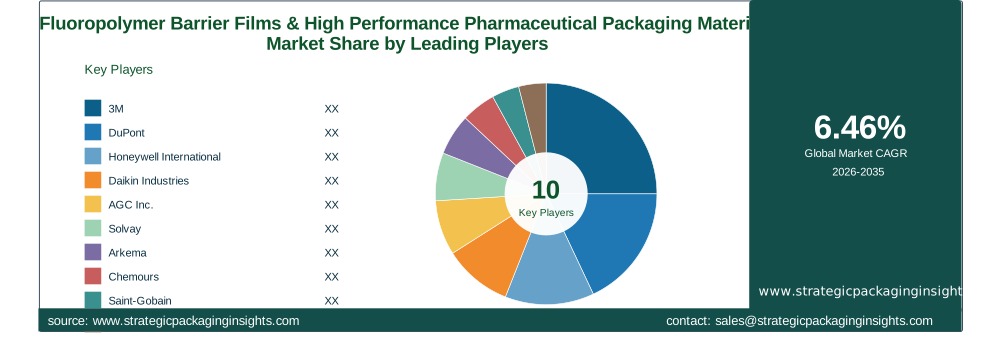
DuPont is a leading player in the market, known for its innovative fluoropolymer resins and advanced manufacturing processes. The company's focus on sustainability and product innovation has helped it capture a significant share of the market. Honeywell International is another key player, offering a diverse portfolio of barrier films with superior performance characteristics. The company's strong research and development capabilities enable it to stay ahead of market trends and meet evolving customer needs.
AGC Inc. and Solvay are also notable players in the market, with a focus on expanding their product offerings and enhancing their production capacities. These companies are investing in advanced technologies and strategic partnerships to strengthen their market positions. The competitive landscape is further shaped by the presence of regional players, who are leveraging their local expertise and customer relationships to capture market share.
The market is witnessing increased consolidation, with companies seeking to enhance their capabilities and expand their market presence through mergers and acquisitions. Strategic partnerships and collaborations are also on the rise, as companies aim to leverage complementary strengths and technologies to offer value-added solutions. The competitive dynamics are driving companies to innovate and differentiate their offerings, with a focus on sustainability and performance to meet the evolving needs of the pharmaceutical industry.
Key Highlights
- Largest Region: North America
- Fastest-Growing Region: Asia Pacific
- Largest Segment: Pharmaceuticals
- Fastest-Growing Segment: Biopharmaceuticals
- Base-year market size: $1.86 Billion
- Forecast-year market size: $3.48 Billion
- CAGR: 6.46%
- Important application: Drug Delivery Systems
- Major end-use industry: Pharmaceutical Manufacturers
- Major market driver: Demand for high-performance packaging solutions
Regional Insights
The global market for fluoropolymer barrier films is dominated by North America, which is the largest region due to its advanced pharmaceutical industry and strong demand for high-performance packaging solutions. Asia Pacific is the fastest-growing region, driven by the expanding pharmaceutical sector and increasing investments in healthcare infrastructure. Europe also holds a significant share of the market, with a focus on sustainability and regulatory compliance driving demand for advanced packaging materials.
North America
North America is the largest market for fluoropolymer barrier films, driven by the presence of a well-established pharmaceutical industry and strong demand for high-performance packaging solutions. The region's focus on regulatory compliance and product safety is a key driver of market growth. Companies in North America are investing in advanced manufacturing technologies and sustainable packaging solutions to meet evolving customer needs and regulatory requirements.
The United States is the largest contributor to the market in North America, with a strong focus on innovation and product development. The country's advanced healthcare infrastructure and increasing demand for personalized medicine are driving the adoption of fluoropolymer barrier films. Canada is also a significant market, with a focus on sustainability and regulatory compliance driving demand for advanced packaging materials.
Europe
Europe is a significant market for fluoropolymer barrier films, with a focus on sustainability and regulatory compliance driving demand for advanced packaging materials. The region's stringent regulations and emphasis on product safety are key drivers of market growth. Companies in Europe are investing in research and development to create eco-friendly alternatives and meet evolving customer needs.
Germany is the largest market in Europe, with a strong focus on innovation and product development. The country's advanced healthcare infrastructure and increasing demand for personalized medicine are driving the adoption of fluoropolymer barrier films. The United Kingdom and France are also significant markets, with a focus on sustainability and regulatory compliance driving demand for advanced packaging materials.
Asia Pacific
Asia Pacific is the fastest-growing market for fluoropolymer barrier films, driven by the expanding pharmaceutical sector and increasing investments in healthcare infrastructure. The region's focus on regulatory compliance and product safety is a key driver of market growth. Companies in Asia Pacific are investing in advanced manufacturing technologies and sustainable packaging solutions to meet evolving customer needs and regulatory requirements.
China is the largest market in Asia Pacific, with a strong focus on innovation and product development. The country's expanding pharmaceutical sector and increasing demand for personalized medicine are driving the adoption of fluoropolymer barrier films. India and Japan are also significant markets, with a focus on sustainability and regulatory compliance driving demand for advanced packaging materials.
Latin America
Latin America is a growing market for fluoropolymer barrier films, driven by the expanding pharmaceutical sector and increasing investments in healthcare infrastructure. The region's focus on regulatory compliance and product safety is a key driver of market growth. Companies in Latin America are investing in advanced manufacturing technologies and sustainable packaging solutions to meet evolving customer needs and regulatory requirements.
Brazil is the largest market in Latin America, with a strong focus on innovation and product development. The country's expanding pharmaceutical sector and increasing demand for personalized medicine are driving the adoption of fluoropolymer barrier films. Mexico and Argentina are also significant markets, with a focus on sustainability and regulatory compliance driving demand for advanced packaging materials.
Middle East & Africa
The Middle East & Africa is a growing market for fluoropolymer barrier films, driven by the expanding pharmaceutical sector and increasing investments in healthcare infrastructure. The region's focus on regulatory compliance and product safety is a key driver of market growth. Companies in the Middle East & Africa are investing in advanced manufacturing technologies and sustainable packaging solutions to meet evolving customer needs and regulatory requirements.
South Africa is the largest market in the Middle East & Africa, with a strong focus on innovation and product development. The country's expanding pharmaceutical sector and increasing demand for personalized medicine are driving the adoption of fluoropolymer barrier films. Saudi Arabia and the UAE are also significant markets, with a focus on sustainability and regulatory compliance driving demand for advanced packaging materials.
Fluoropolymer Barrier Films & High Performance Pharmaceutical Packaging Materials Market Segments Insights

By Material Type Analysis
The fluoropolymer barrier films market is segmented by material type, with PTFE, PFA, FEP, ETFE, PVDF, and ECTFE being the key materials used. PTFE is the most widely used material due to its excellent chemical resistance and high-temperature stability. PFA and FEP are also popular choices, offering superior barrier properties and flexibility. The demand for these materials is driven by their ability to provide effective protection against moisture, oxygen, and other environmental factors, ensuring the integrity of pharmaceutical products.
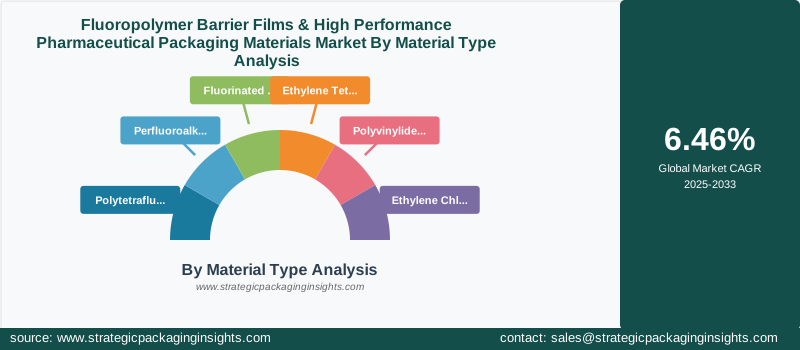
ETFE and PVDF are gaining traction due to their excellent mechanical properties and resistance to harsh chemicals. These materials are increasingly used in applications requiring high-performance barrier properties, such as drug delivery systems and specialty healthcare products. ECTFE is also used in niche applications, offering a unique combination of chemical resistance and mechanical strength. The choice of material depends on the specific requirements of the application, with companies focusing on developing innovative materials to meet evolving customer needs.
By Film Structure Analysis
The market is segmented by film structure, with monolayer, multi-layer, laminated, coextruded, and coated films being the key types. Multi-layer and coextruded films are the most popular choices, offering enhanced barrier properties and flexibility. These films are designed to provide effective protection against moisture, oxygen, and other environmental factors, ensuring the integrity of pharmaceutical products. Laminated films are also widely used, offering additional protection and durability.
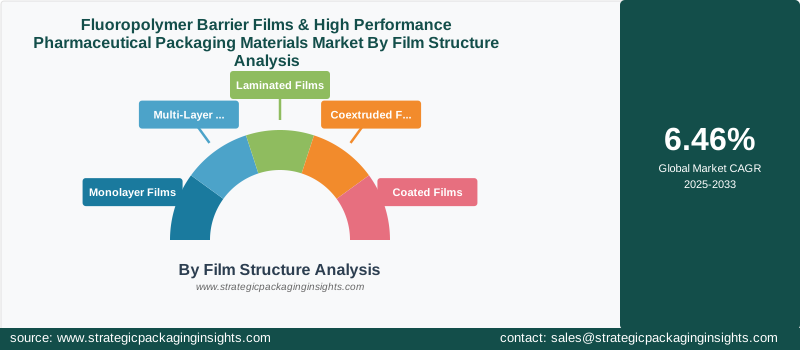
Monolayer films are used in applications requiring basic barrier properties, while coated films are used in applications requiring additional protection against specific environmental factors. The choice of film structure depends on the specific requirements of the application, with companies focusing on developing innovative film structures to meet evolving customer needs. The trend towards lightweight and flexible packaging solutions is driving innovation in film structures, with companies investing in advanced technologies to enhance performance and reduce material usage.
By Barrier Property Analysis
The market is segmented by barrier property, with moisture, oxygen, chemical, light, gas, and aroma barriers being the key types. Moisture and oxygen barriers are the most important properties, ensuring the integrity of pharmaceutical products by preventing degradation and contamination. Chemical barriers are also critical, providing protection against harsh chemicals and ensuring product safety.
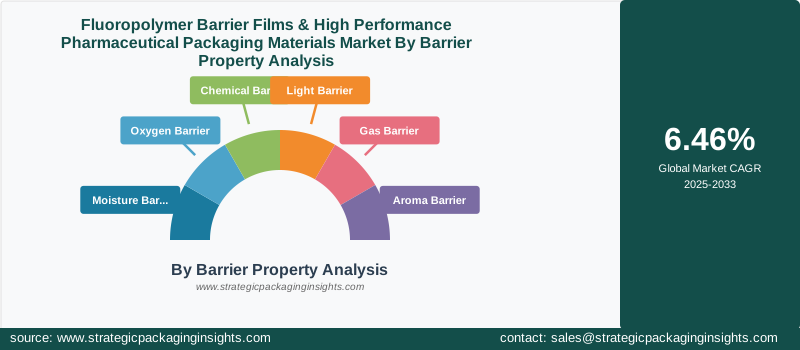
Light and gas barriers are used in applications requiring additional protection against specific environmental factors, while aroma barriers are used in applications requiring protection against odor contamination. The choice of barrier property depends on the specific requirements of the application, with companies focusing on developing innovative materials to meet evolving customer needs. The trend towards personalized medicine and biologics is creating demand for specialized packaging solutions with enhanced barrier properties, offering opportunities for product differentiation and premium pricing.
By Packaging Type Analysis
The market is segmented by packaging type, with blister packs, pouches, sachets, vials, bottles, tubes, lidding films, and flexible pharmaceutical packaging being the key types. Blister packs and pouches are the most popular choices, offering effective protection against moisture, oxygen, and other environmental factors. These packaging types are widely used in the pharmaceutical industry, ensuring the integrity of products and compliance with regulatory requirements.
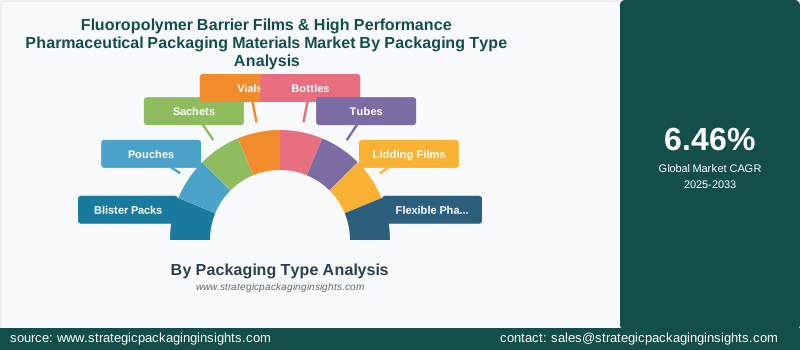
Sachets and vials are used in applications requiring additional protection and convenience, while bottles and tubes are used in applications requiring larger packaging formats. Lidding films and flexible pharmaceutical packaging are used in applications requiring additional protection and flexibility. The choice of packaging type depends on the specific requirements of the application, with companies focusing on developing innovative packaging solutions to meet evolving customer needs. The trend towards lightweight and flexible packaging solutions is driving innovation in packaging types, with companies investing in advanced technologies to enhance performance and reduce material usage.
By Application Analysis
The market is segmented by application, with pharmaceuticals, biopharmaceuticals, medical devices, diagnostics, drug delivery systems, clinical trial packaging, and specialty healthcare products being the key applications. Pharmaceuticals and biopharmaceuticals are the most important applications, driving demand for high-performance packaging solutions with superior barrier properties. The need for advanced packaging solutions to protect sensitive pharmaceutical products from environmental factors is a key driver of market growth.
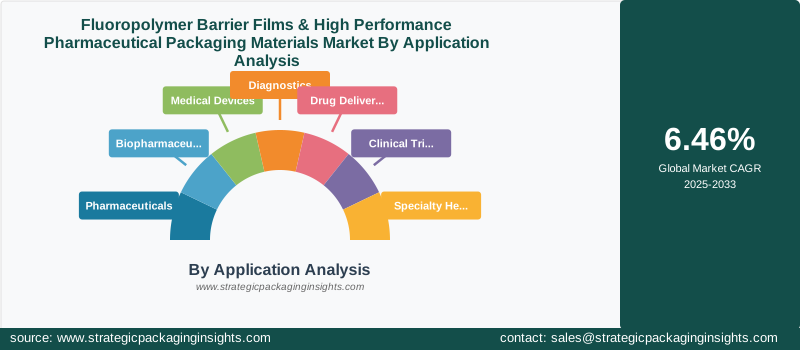
Medical devices and diagnostics are also significant applications, requiring specialized packaging solutions to ensure product safety and compliance with regulatory requirements. Drug delivery systems and clinical trial packaging are gaining traction, driven by the trend towards personalized medicine and biologics. Specialty healthcare products are also a growing application, offering opportunities for product differentiation and premium pricing. The choice of application depends on the specific requirements of the product, with companies focusing on developing innovative packaging solutions to meet evolving customer needs.
By End User Analysis
The market is segmented by end user, with pharmaceutical manufacturers, biotechnology companies, medical device manufacturers, contract manufacturing organizations, contract packaging organizations, and healthcare institutions being the key end users. Pharmaceutical manufacturers are the most important end users, driving demand for high-performance packaging solutions with superior barrier properties. The need for advanced packaging solutions to protect sensitive pharmaceutical products from environmental factors is a key driver of market growth.
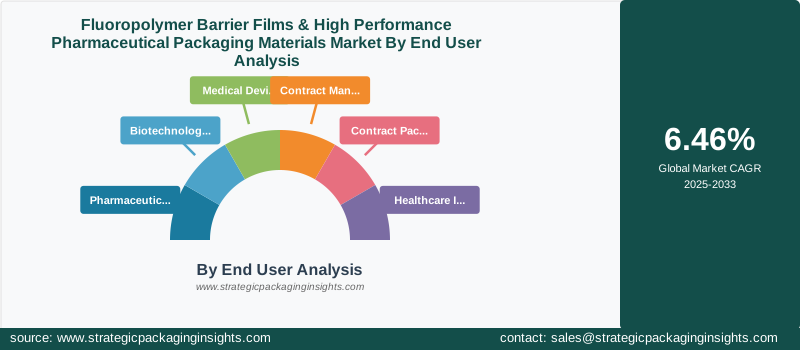
Biotechnology companies and medical device manufacturers are also significant end users, requiring specialized packaging solutions to ensure product safety and compliance with regulatory requirements. Contract manufacturing organizations and contract packaging organizations are gaining traction, driven by the trend towards outsourcing and cost optimization. Healthcare institutions are also a growing end user, offering opportunities for product differentiation and premium pricing. The choice of end user depends on the specific requirements of the product, with companies focusing on developing innovative packaging solutions to meet evolving customer needs.
By Packaging Function Analysis
The market is segmented by packaging function, with product protection, sterile barrier protection, shelf-life extension, contamination prevention, chemical resistance, and temperature and environmental protection being the key functions. Product protection and sterile barrier protection are the most important functions, ensuring the integrity of pharmaceutical products and compliance with regulatory requirements. The need for advanced packaging solutions to protect sensitive pharmaceutical products from environmental factors is a key driver of market growth.
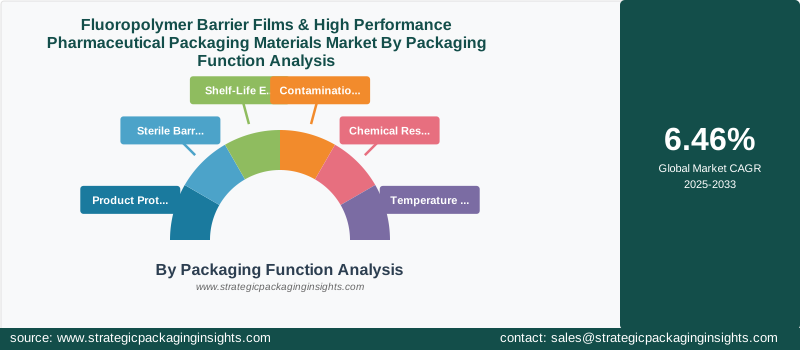
Shelf-life extension and contamination prevention are also critical functions, providing additional protection and ensuring product safety. Chemical resistance and temperature and environmental protection are used in applications requiring additional protection against specific environmental factors. The choice of packaging function depends on the specific requirements of the application, with companies focusing on developing innovative packaging solutions to meet evolving customer needs. The trend towards personalized medicine and biologics is creating demand for specialized packaging solutions with enhanced functions, offering opportunities for product differentiation and premium pricing.
Fluoropolymer Barrier Films & High Performance Pharmaceutical Packaging Materials Market Segments
The Fluoropolymer Barrier Films & High Performance Pharmaceutical Packaging Materials market has been segmented on the basis ofBy Material Type
- Polytetrafluoroethylene (PTFE)
- Perfluoroalkoxy Alkane (PFA)
- Fluorinated Ethylene Propylene (FEP)
- Ethylene Tetrafluoroethylene (ETFE)
- Polyvinylidene Fluoride (PVDF)
- Ethylene Chlorotrifluoroethylene (ECTFE)
By Film Structure
- Monolayer Films
- Multi-Layer Films
- Laminated Films
- Coextruded Films
- Coated Films
By Barrier Property
- Moisture Barrier
- Oxygen Barrier
- Chemical Barrier
- Light Barrier
- Gas Barrier
- Aroma Barrier
By Packaging Type
- Blister Packs
- Pouches
- Sachets
- Vials
- Bottles
- Tubes
- Lidding Films
- Flexible Pharmaceutical Packaging
By Application
- Pharmaceuticals
- Biopharmaceuticals
- Medical Devices
- Diagnostics
- Drug Delivery Systems
- Clinical Trial Packaging
- Specialty Healthcare Products
By End User
- Pharmaceutical Manufacturers
- Biotechnology Companies
- Medical Device Manufacturers
- Contract Manufacturing Organizations
- Contract Packaging Organizations
- Healthcare Institutions
By Packaging Function
- Product Protection
- Sterile Barrier Protection
- Shelf-Life Extension
- Contamination Prevention
- Chemical Resistance
- Temperature and Environmental Protection
By Region
- North America
- Europe
- Asia-Pacific
- Latin America
- Middle East and Africa




