


Flow Wrap Machines Analysis Market Outlook
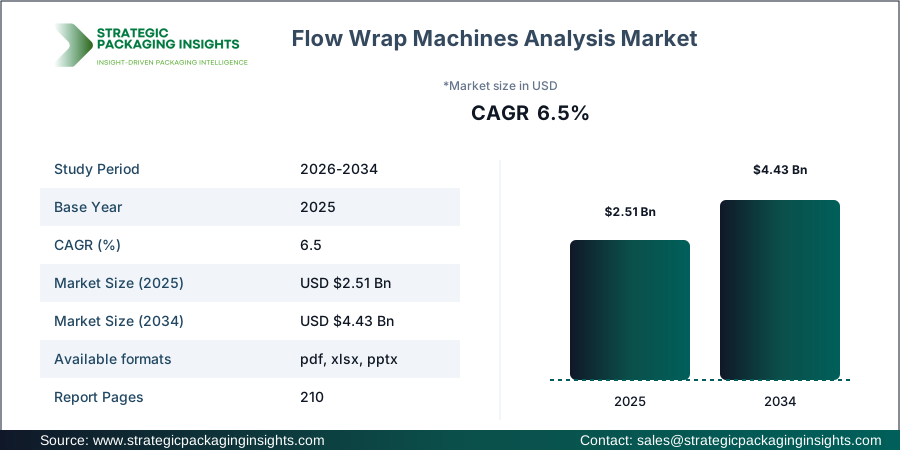
The Flow Wrap Machines Analysis market size was valued at USD 2.51 billion in 2025 and is anticipated to reach USD 4.43 billion by 2034, growing at a CAGR of 6.5% during the forecast period according to Strategic Packaging Insights. The market is witnessing robust growth driven by the increasing demand for efficient packaging solutions across various industries. Companies like Syntegon and IMA Group are at the forefront, leveraging technological advancements to enhance machine efficiency and reduce operational costs. The surge in e-commerce and the need for sustainable packaging solutions are further propelling market expansion, as businesses seek to optimize their packaging processes to meet consumer demands.
One of the most impactful drivers of the Flow Wrap Machines Analysis market is the growing emphasis on automation and efficiency in packaging operations. According to industry reports, the integration of advanced technologies such as IoT and AI in flow wrap machines is significantly enhancing productivity and reducing downtime. This trend is particularly evident in sectors like food and beverage, where companies like ULMA Packaging and Fuji Machinery are innovating to meet the high standards of hygiene and speed required. The push towards automation is not only improving operational efficiency but also enabling companies to achieve greater precision and consistency in packaging, thereby enhancing product quality and customer satisfaction.
Report Scope
| Attributes | Details |
| Report Title | Flow Wrap Machines Analysis Market Size, Future Growth and Forecast 2034 |
| Machine Type | Horizontal Flow Wrappers, Servo Flow Wrappers, High-Speed Flow Wrappers |
| Application | Bakery, Confectionery, Fresh Produce, Medical Products |
| End Use | Food & Beverage, Healthcare, Personal Care, Industrial |
| Automation Level | Semi-Automatic, Automatic |
| Region | Asia Pacific, North America, Latin America, Europe, Middle East & Africa |
| Base Year | 2025 |
| Historic Period | 2018-2024 |
| Forecast Period | 2026-2034 |
| Number of Pages | 210 |
| Customization Available | Yes* |
Sustainability & Circular Economy Analysis
Sustainability initiatives are increasingly shaping the flow wrap machines market, as companies strive to align with eco-friendly practices. The use of recyclable materials and the development of lightweight packaging solutions are becoming standard practices, driven by consumer demand for sustainable products. Companies like Coesia and Omori Machinery are investing in research and development to create machines that can handle eco-friendly materials without compromising on efficiency. This shift towards sustainability is not only reducing the carbon footprint of packaging operations but also enhancing brand reputation and customer loyalty.
The circular economy is influencing packaging design and manufacturing strategies, with a focus on waste reduction and resource optimization. Extended Producer Responsibility (EPR) regulations are prompting manufacturers to consider the entire lifecycle of packaging materials, from production to disposal. This has led to innovations in packaging machinery that facilitate the use of biodegradable and compostable materials. As a result, companies are able to meet regulatory requirements while also appealing to environmentally conscious consumers. The integration of ESG initiatives into business strategies is further driving investment in sustainable packaging technologies.
Consumer preferences for sustainability are also impacting supply chain strategies, as companies seek to source materials locally to reduce transportation emissions. This trend is particularly evident in regions like Europe and North America, where stringent packaging regulations are in place. The focus on sustainability is not only influencing procurement strategies but also encouraging collaboration between manufacturers, suppliers, and retailers to develop more efficient and eco-friendly packaging solutions. As the market continues to evolve, companies that prioritize sustainability are likely to gain a competitive edge and achieve long-term success.
Packaging Value Chain & Supply Chain Analysis
The packaging value chain is a complex ecosystem involving multiple stakeholders, from raw material suppliers to end consumers. In the flow wrap machines market, efficient raw material sourcing is crucial for maintaining production capabilities and meeting demand. Companies like Ilapak and ProMach are focusing on building strong relationships with suppliers to ensure a steady supply of high-quality materials. This not only enhances production efficiency but also reduces the risk of supply chain disruptions, which can impact overall market performance.
Packaging converters and manufacturers play a pivotal role in the value chain, transforming raw materials into finished products. The integration of advanced packaging machinery, such as those offered by PFM Packaging Machinery and Hayssen, is enhancing production capabilities and enabling manufacturers to meet the diverse needs of their clients. Strategic partnerships and collaborations are also becoming increasingly important, as companies seek to leverage each other's strengths to optimize production processes and reduce costs. This collaborative approach is fostering innovation and driving market growth.
Logistics and distribution channels are critical components of the supply chain, ensuring that packaged products reach consumers efficiently and cost-effectively. The rise of e-commerce has heightened the importance of robust logistics networks, prompting companies to invest in advanced inventory management and transportation solutions. Supply chain resilience is a key focus, with companies adopting strategies to mitigate risks and ensure continuity of operations. Localization and global sourcing are also being balanced to optimize supply chain efficiency and meet regional market demands. As the market continues to evolve, companies that prioritize supply chain optimization are likely to achieve greater competitiveness and success.
Opportunities & Threats
The flow wrap machines market presents significant opportunities for growth, driven by the increasing demand for efficient and sustainable packaging solutions. The rise of e-commerce and the need for rapid packaging processes are creating opportunities for companies to innovate and expand their product offerings. The integration of advanced technologies, such as IoT and AI, is enabling manufacturers to enhance machine efficiency and reduce operational costs. Companies that invest in research and development to create innovative packaging solutions are likely to gain a competitive edge and capture a larger market share.
Another opportunity lies in the growing emphasis on sustainability and eco-friendly packaging solutions. As consumers become more environmentally conscious, there is a rising demand for packaging materials that are recyclable, biodegradable, and compostable. Companies that prioritize sustainability in their product development and manufacturing processes are likely to attract environmentally conscious consumers and enhance their brand reputation. The implementation of extended producer responsibility (EPR) regulations is also creating opportunities for companies to innovate and develop sustainable packaging solutions that meet regulatory requirements.
Despite the opportunities, the flow wrap machines market faces several threats that could impact growth. One of the primary challenges is the high cost of advanced packaging machinery, which can be a barrier for small and medium-sized enterprises (SMEs) looking to adopt new technologies. Additionally, the market is subject to stringent regulatory requirements, particularly in regions like Europe and North America, where packaging standards are high. Companies must navigate these regulations carefully to avoid compliance issues and potential fines. The competitive landscape is also intense, with numerous players vying for market share, which could lead to price wars and margin pressures.
Drivers & Challenges
The flow wrap machines market is driven by several key factors, including the increasing demand for efficient and automated packaging solutions. The rise of e-commerce and the need for rapid packaging processes are driving the adoption of advanced packaging machinery. Companies like Syntegon and IMA Group are leading the way in developing innovative solutions that enhance machine efficiency and reduce operational costs. The integration of IoT and AI technologies is also driving market growth, enabling manufacturers to achieve greater precision and consistency in packaging operations.
Another significant driver is the growing emphasis on sustainability and eco-friendly packaging solutions. As consumers become more environmentally conscious, there is a rising demand for packaging materials that are recyclable, biodegradable, and compostable. Companies that prioritize sustainability in their product development and manufacturing processes are likely to attract environmentally conscious consumers and enhance their brand reputation. The implementation of extended producer responsibility (EPR) regulations is also driving innovation in sustainable packaging solutions.
Despite the drivers, the flow wrap machines market faces several challenges that could impact growth. One of the primary challenges is the high cost of advanced packaging machinery, which can be a barrier for small and medium-sized enterprises (SMEs) looking to adopt new technologies. Additionally, the market is subject to stringent regulatory requirements, particularly in regions like Europe and North America, where packaging standards are high. Companies must navigate these regulations carefully to avoid compliance issues and potential fines. The competitive landscape is also intense, with numerous players vying for market share, which could lead to price wars and margin pressures.
Market Share Analysis
The competitive landscape of the flow wrap machines market is characterized by the presence of several key players, each striving to capture a significant share of the market. Companies like Syntegon, IMA Group, and ULMA Packaging are leading the market with their innovative solutions and strong market presence. These companies are investing heavily in research and development to enhance their product offerings and meet the evolving needs of their customers. The focus on sustainability and automation is driving competition, as companies seek to differentiate themselves through advanced technologies and eco-friendly solutions.
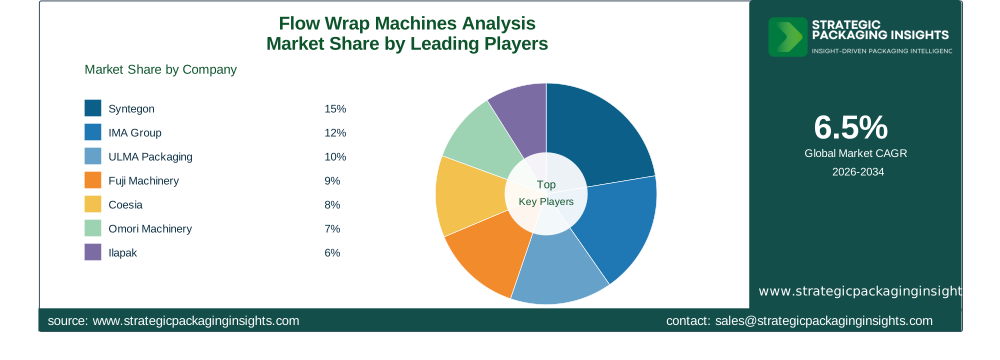
Syntegon, formerly known as Bosch Packaging Technology, is a major player in the flow wrap machines market, known for its cutting-edge technology and comprehensive product portfolio. The company is focused on developing sustainable packaging solutions that meet the highest standards of efficiency and quality. IMA Group is another key player, renowned for its innovative packaging machinery and commitment to sustainability. The company's focus on research and development has enabled it to create advanced solutions that cater to a wide range of industries, including food and beverage, healthcare, and personal care.
ULMA Packaging is a leading provider of flow wrap machines, known for its high-quality products and customer-centric approach. The company is committed to sustainability and innovation, offering a range of eco-friendly packaging solutions that meet the needs of its diverse customer base. Fuji Machinery is another prominent player, recognized for its advanced packaging technology and strong market presence. The company's focus on automation and efficiency has enabled it to capture a significant share of the market, particularly in the food and beverage sector.
Other notable players in the market include Coesia, Omori Machinery, Ilapak, ProMach, PFM Packaging Machinery, and Hayssen. These companies are leveraging their expertise and technological capabilities to develop innovative packaging solutions that meet the evolving needs of their customers. The competitive landscape is dynamic, with companies continuously striving to enhance their product offerings and expand their market presence. As the market continues to evolve, companies that prioritize innovation and sustainability are likely to achieve greater success and capture a larger share of the market.
Key Highlights
- Market Size: The flow wrap machines market was valued at USD 2.51 billion in 2025 and is projected to reach USD 4.43 billion by 2034.
- Growth Rate: The market is expected to grow at a CAGR of 6.5% during the forecast period.
- Key Players: Major companies include Syntegon, IMA Group, ULMA Packaging, and Fuji Machinery.
- Automation Trend: Increasing demand for automated packaging solutions is driving market growth.
- Sustainability Focus: Eco-friendly packaging solutions are gaining traction among consumers.
- Regional Insights: Asia Pacific is expected to witness significant growth due to rising demand for packaging solutions.
- Technological Advancements: Integration of IoT and AI technologies is enhancing machine efficiency.
Flow Wrap Machines Analysis Market Segments Insights

Machine Type Analysis
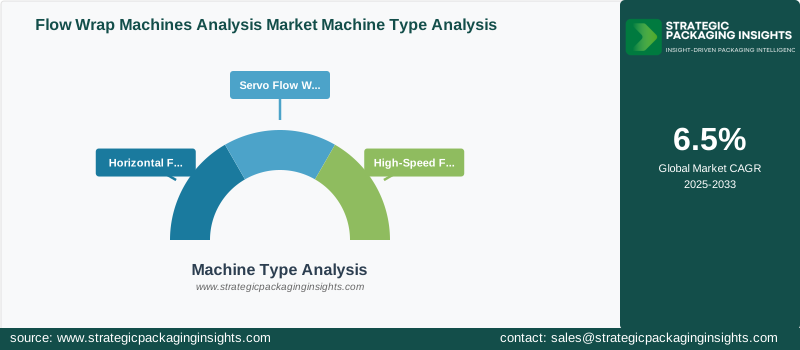
The flow wrap machines market is segmented by machine type into horizontal flow wrappers, servo flow wrappers, and high-speed flow wrappers. Horizontal flow wrappers are widely used due to their versatility and ability to handle a variety of products, making them a popular choice in the food and beverage industry. Companies like Syntegon and ULMA Packaging are leading the market with their innovative horizontal flow wrapping solutions that offer high efficiency and precision. Servo flow wrappers are gaining traction due to their advanced technology and ability to provide greater control and accuracy in packaging operations. High-speed flow wrappers are in demand for their ability to handle large volumes of products quickly and efficiently, making them ideal for high-production environments.
The demand for high-speed flow wrappers is particularly strong in the confectionery and bakery sectors, where rapid packaging processes are essential to meet consumer demand. Companies like Fuji Machinery and Coesia are at the forefront of developing high-speed flow wrapping solutions that offer enhanced performance and reliability. The integration of advanced technologies, such as IoT and AI, is further enhancing the capabilities of these machines, enabling manufacturers to achieve greater efficiency and reduce operational costs. As the market continues to evolve, companies that invest in advanced flow wrapping solutions are likely to gain a competitive edge and capture a larger share of the market.
Application Analysis
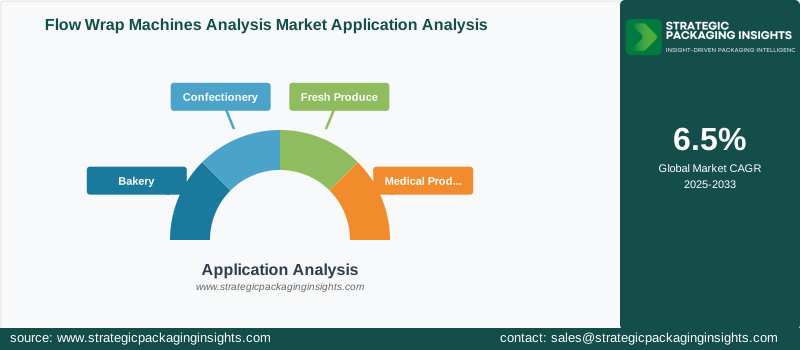
The flow wrap machines market is segmented by application into bakery, confectionery, fresh produce, and medical products. The bakery and confectionery sectors are major drivers of market growth, with increasing demand for packaged products driving the adoption of flow wrap machines. Companies like IMA Group and Omori Machinery are leading the market with their innovative solutions that cater to the specific needs of these industries. The focus on hygiene and product safety is driving the demand for advanced packaging solutions that offer high efficiency and precision.
The fresh produce sector is also witnessing significant growth, with the need for efficient packaging solutions to preserve product freshness and extend shelf life. Companies like Ilapak and ProMach are developing innovative flow wrapping solutions that cater to the unique requirements of the fresh produce industry. The medical products sector is another key application area, with the demand for sterile and secure packaging solutions driving the adoption of flow wrap machines. As the market continues to evolve, companies that offer tailored solutions to meet the specific needs of different application areas are likely to achieve greater success and capture a larger share of the market.
End Use Analysis
The flow wrap machines market is segmented by end use into food and beverage, healthcare, personal care, and industrial sectors. The food and beverage sector is a major driver of market growth, with increasing demand for packaged products driving the adoption of flow wrap machines. Companies like Syntegon and ULMA Packaging are leading the market with their innovative solutions that cater to the specific needs of the food and beverage industry. The focus on hygiene and product safety is driving the demand for advanced packaging solutions that offer high efficiency and precision.
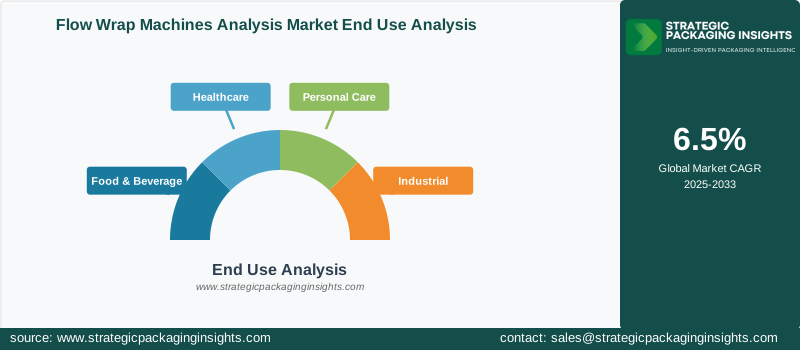
The healthcare sector is also witnessing significant growth, with the need for sterile and secure packaging solutions driving the adoption of flow wrap machines. Companies like IMA Group and Omori Machinery are developing innovative solutions that cater to the unique requirements of the healthcare industry. The personal care and industrial sectors are also key end-use areas, with the demand for efficient and reliable packaging solutions driving market growth. As the market continues to evolve, companies that offer tailored solutions to meet the specific needs of different end-use sectors are likely to achieve greater success and capture a larger share of the market.
Automation Level Analysis
The flow wrap machines market is segmented by automation level into semi-automatic and automatic machines. Automatic flow wrap machines are in high demand due to their ability to enhance efficiency and reduce labor costs. Companies like Fuji Machinery and Coesia are leading the market with their advanced automatic flow wrapping solutions that offer high precision and reliability. The integration of IoT and AI technologies is further enhancing the capabilities of these machines, enabling manufacturers to achieve greater efficiency and reduce operational costs.
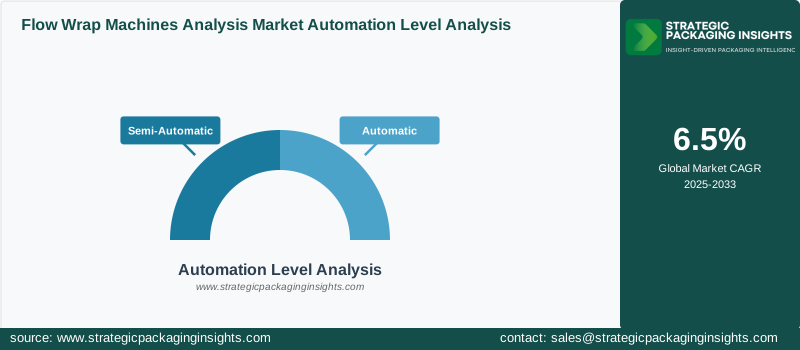
Semi-automatic flow wrap machines are also witnessing significant demand, particularly in small and medium-sized enterprises (SMEs) that require cost-effective packaging solutions. Companies like Ilapak and ProMach are developing innovative semi-automatic flow wrapping solutions that cater to the specific needs of SMEs. The focus on automation is driving market growth, with companies investing in advanced technologies to enhance machine efficiency and reduce operational costs. As the market continues to evolve, companies that offer a range of automation solutions to meet the diverse needs of their customers are likely to achieve greater success and capture a larger share of the market.
Flow Wrap Machines Analysis Market Segments
The Flow Wrap Machines Analysis market has been segmented on the basis ofMachine Type
- Horizontal Flow Wrappers
- Servo Flow Wrappers
- High-Speed Flow Wrappers
Application
- Bakery
- Confectionery
- Fresh Produce
- Medical Products
End Use
- Food & Beverage
- Healthcare
- Personal Care
- Industrial
Automation Level
- Semi-Automatic
- Automatic
Region
- Asia Pacific
- North America
- Latin America
- Europe
- Middle East & Africa




