


Floor Displays Market Outlook
The Floor Displays market size was valued at USD 3.69 billion in 2025 and is anticipated to reach USD 5.97 billion by 2034, growing at a CAGR of 5.5% during the forecast period according to Strategic Packaging Insights. The market is witnessing significant growth driven by the increasing demand for effective in-store marketing solutions. Floor displays, known for their versatility and ability to attract consumer attention, are becoming a staple in retail environments. Companies like WestRock and Smurfit Kappa are leading the charge by offering innovative display solutions that cater to various industries, including retail and FMCG. The growing emphasis on enhancing customer engagement and brand visibility is further propelling the market's expansion.
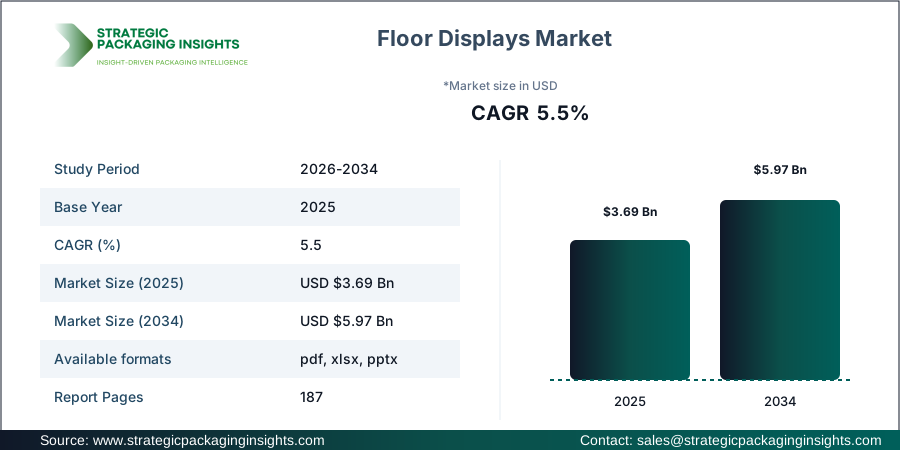
One of the most impactful drivers of the Floor Displays market is the rising trend of retail promotions and the need for effective point-of-purchase displays. According to industry reports, retailers are increasingly investing in floor displays to boost product visibility and drive sales. This trend is supported by the growing competition among brands to capture consumer attention in crowded retail spaces. Companies like DS Smith and International Paper are capitalizing on this trend by developing customizable and eye-catching display solutions. Additionally, the shift towards sustainable and eco-friendly materials in display manufacturing is gaining traction, aligning with consumer preferences for environmentally responsible products.
Report Scope
| Attributes | Details |
| Report Title | Floor Displays Market Size, Future Growth and Forecast 2034 |
| By Material Type | Corrugated Board, Plastic, Metal, Wood |
| By Product Type | Free-Standing Displays, Pallet Displays, Dump Bins, Modular Displays |
| By Application | Retail Promotion, Food Display, Cosmetics Display, Electronics Display |
| By End Use | Retail, FMCG, Food & Beverage, Consumer Electronics |
| Region | Asia Pacific, North America, Latin America, Europe, Middle East & Africa |
| Base Year | 2025 |
| Historic Period | 2018-2024 |
| Forecast Period | 2026-2034 |
| Number of Pages | 187 |
| Customization Available | Yes* |
Sustainability & Circular Economy Analysis
Sustainability initiatives and circular economy practices are significantly influencing the packaging market, including floor displays. The shift towards recyclable materials and eco-friendly innovations is reshaping the design and manufacturing processes. Companies are increasingly adopting lightweight packaging solutions to reduce material usage and transportation costs. This trend is driven by consumer demand for sustainable products and stringent packaging regulations. The integration of recyclable materials in floor displays not only reduces the carbon footprint but also enhances brand image, appealing to environmentally conscious consumers.
Reusable packaging and waste reduction strategies are becoming integral to the floor displays market. Brands are focusing on creating displays that can be easily disassembled and reused, minimizing waste generation. Extended Producer Responsibility (EPR) policies are encouraging manufacturers to take responsibility for the entire lifecycle of their products, promoting sustainable practices. This shift is influencing investment decisions and supply chain strategies, as companies prioritize eco-friendly materials and processes to meet regulatory compliance and consumer expectations.
ESG initiatives are playing a crucial role in shaping the competitive landscape of the floor displays market. Companies are investing in carbon footprint reduction technologies and sustainable sourcing practices to enhance their market competitiveness. These initiatives are not only driving innovation in packaging design but also influencing long-term business strategies. As sustainability becomes a key differentiator, companies like Mondi and Menasha Packaging are leading the way by integrating eco-friendly practices into their operations, ensuring compliance with evolving regulations and consumer preferences.
Packaging Value Chain & Supply Chain Analysis
The packaging value chain for floor displays involves a complex ecosystem of raw material sourcing, manufacturing, and distribution. Raw material availability, particularly for corrugated board and plastic, plays a critical role in determining production capabilities and cost efficiency. Packaging converters and manufacturers like Georgia-Pacific and Sonoco are pivotal in transforming raw materials into finished products, ensuring quality and innovation in design. The strategic partnerships between raw material suppliers and manufacturers are essential for maintaining a steady supply chain and meeting market demand.
Logistics and distribution channels are crucial components of the floor displays supply chain. Efficient transportation and inventory management are vital for ensuring timely delivery and reducing operational costs. Companies are increasingly focusing on localization and global sourcing strategies to enhance supply chain resilience. This approach not only mitigates risks associated with geopolitical uncertainties but also optimizes procurement strategies. Brand owners and retailers rely on robust distribution networks to ensure the availability of floor displays across various retail outlets, enhancing market reach and consumer accessibility.
Recycling networks and waste management are integral to the sustainability of the floor displays supply chain. Companies are investing in recycling technologies and collaborating with waste management firms to ensure the responsible disposal of used displays. This focus on sustainability is influencing procurement strategies and investment decisions, as companies prioritize eco-friendly materials and processes. The integration of circular economy principles into the supply chain is enhancing the overall market performance and competitiveness, aligning with consumer preferences for sustainable products.
Opportunities & Threats
The Floor Displays market presents numerous opportunities for growth, driven by the increasing demand for innovative and customizable display solutions. The rise of e-commerce and the need for effective in-store marketing strategies are creating new avenues for market expansion. Companies are investing in advanced technologies to develop interactive and engaging displays that enhance customer experience. The growing trend of experiential retail is further fueling the demand for floor displays, as brands seek to create immersive shopping environments that captivate consumers and drive sales.
Another significant opportunity lies in the adoption of sustainable and eco-friendly materials in display manufacturing. As consumers become more environmentally conscious, there is a growing demand for displays made from recyclable and biodegradable materials. Companies that prioritize sustainability in their product offerings are likely to gain a competitive edge in the market. Additionally, the implementation of extended producer responsibility (EPR) policies is encouraging manufacturers to adopt sustainable practices, creating opportunities for innovation and differentiation in the market.
Despite the promising opportunities, the Floor Displays market faces several threats that could hinder its growth. One of the primary challenges is the volatility in raw material prices, particularly for corrugated board and plastic. Fluctuations in material costs can impact production expenses and profit margins, posing a risk to market stability. Additionally, the increasing competition from digital marketing channels and online advertising poses a threat to traditional in-store marketing strategies. Companies must continuously innovate and adapt to changing consumer preferences to remain competitive in the evolving retail landscape.
Drivers & Challenges
The Floor Displays market is driven by several key factors, including the growing emphasis on retail promotions and the need for effective point-of-purchase displays. Retailers are increasingly investing in floor displays to enhance product visibility and drive sales. This trend is supported by the rising competition among brands to capture consumer attention in crowded retail spaces. Companies like DS Smith and International Paper are capitalizing on this trend by developing customizable and eye-catching display solutions that cater to various industries, including retail and FMCG.
Another significant driver is the shift towards sustainable and eco-friendly materials in display manufacturing. As consumers become more environmentally conscious, there is a growing demand for displays made from recyclable and biodegradable materials. Companies that prioritize sustainability in their product offerings are likely to gain a competitive edge in the market. Additionally, the implementation of extended producer responsibility (EPR) policies is encouraging manufacturers to adopt sustainable practices, creating opportunities for innovation and differentiation in the market.
Despite the promising drivers, the Floor Displays market faces several challenges that could hinder its growth. One of the primary challenges is the volatility in raw material prices, particularly for corrugated board and plastic. Fluctuations in material costs can impact production expenses and profit margins, posing a risk to market stability. Additionally, the increasing competition from digital marketing channels and online advertising poses a threat to traditional in-store marketing strategies. Companies must continuously innovate and adapt to changing consumer preferences to remain competitive in the evolving retail landscape.
Market Share Analysis
The competitive landscape of the Floor Displays market is characterized by the presence of several key players, each striving to enhance their market share through innovation and strategic partnerships. Companies like WestRock and Smurfit Kappa are leading the market with their extensive product portfolios and strong distribution networks. These companies are focusing on developing customizable and sustainable display solutions to meet the evolving needs of retailers and consumers. Their commitment to innovation and sustainability is driving their market dominance.
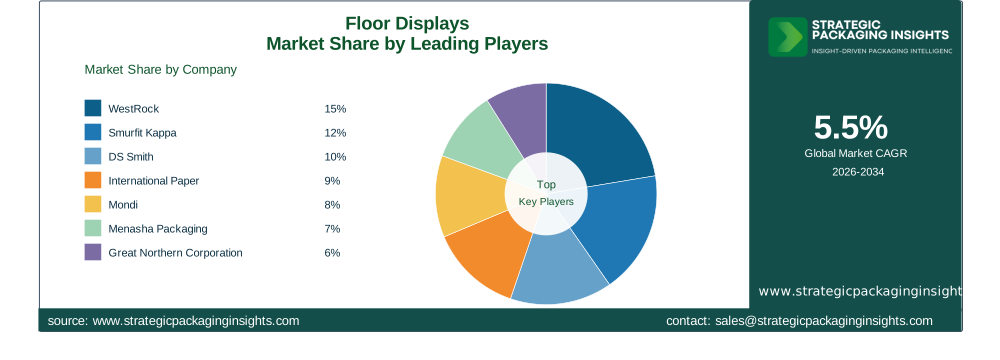
DS Smith and International Paper are also prominent players in the Floor Displays market, known for their innovative design capabilities and commitment to sustainability. These companies are investing in advanced technologies to develop eco-friendly displays that align with consumer preferences for environmentally responsible products. Their focus on sustainability and innovation is enhancing their competitive position in the market, allowing them to capture a significant share of the market.
Mondi and Menasha Packaging are other key players in the market, known for their strong focus on customer-centric solutions and sustainable practices. These companies are leveraging their expertise in packaging design and manufacturing to develop innovative display solutions that cater to various industries, including retail and FMCG. Their commitment to sustainability and customer satisfaction is driving their market growth and competitiveness.
Great Northern Corporation and Georgia-Pacific are also making significant contributions to the Floor Displays market, with their focus on quality and innovation. These companies are investing in research and development to enhance their product offerings and meet the evolving needs of consumers. Their strategic partnerships and collaborations with retailers and brand owners are further strengthening their market position and driving their growth.
Key Highlights
- Market Size: The Floor Displays market was valued at USD 3.69 billion in 2025 and is projected to reach USD 5.97 billion by 2034.
- Growth Rate: The market is expected to grow at a CAGR of 5.5% during the forecast period.
- Leading Companies: Key players include WestRock, Smurfit Kappa, DS Smith, and International Paper.
- Material Type: Corrugated board is the most widely used material in floor displays.
- Product Type: Free-standing displays are the most popular product type.
- Application: Retail promotion is the largest application segment.
- Region: North America holds the largest market share, followed by Europe and Asia Pacific.
Floor Displays Market Segments Insights

Material Type Analysis
The Floor Displays market is segmented by material type into corrugated board, plastic, metal, and wood. Corrugated board is the most widely used material due to its lightweight, cost-effectiveness, and recyclability. Companies like WestRock and Smurfit Kappa are leading the market with their innovative corrugated board solutions that cater to various industries. The demand for sustainable and eco-friendly materials is driving the adoption of corrugated board in floor displays, as it aligns with consumer preferences for environmentally responsible products.
Plastic is another significant material type in the floor displays market, known for its durability and versatility. Companies are investing in advanced technologies to develop recyclable and biodegradable plastic displays that meet regulatory compliance and consumer expectations. The growing emphasis on sustainability is influencing the choice of materials in display manufacturing, with companies prioritizing eco-friendly options to enhance their market competitiveness. Metal and wood are also used in floor displays, offering unique design possibilities and aesthetic appeal.
Product Type Analysis
The Floor Displays market is segmented by product type into free-standing displays, pallet displays, dump bins, and modular displays. Free-standing displays are the most popular product type, known for their versatility and ability to attract consumer attention. Companies like DS Smith and International Paper are developing innovative free-standing display solutions that cater to various industries, including retail and FMCG. The demand for customizable and eye-catching displays is driving the growth of this segment, as brands seek to enhance product visibility and drive sales.
Pallet displays are another significant product type, offering cost-effective and efficient solutions for bulk product promotion. Companies are investing in advanced technologies to develop pallet displays that are easy to assemble and transport, reducing operational costs and enhancing supply chain efficiency. Dump bins and modular displays are also gaining traction in the market, offering flexible and customizable solutions for various retail environments. The growing trend of experiential retail is further fueling the demand for innovative and engaging display solutions.
Application Analysis
The Floor Displays market is segmented by application into retail promotion, food display, cosmetics display, and electronics display. Retail promotion is the largest application segment, driven by the increasing demand for effective in-store marketing solutions. Companies are investing in advanced technologies to develop interactive and engaging displays that enhance customer experience and drive sales. The growing competition among brands to capture consumer attention in crowded retail spaces is further propelling the growth of this segment.
Food display is another significant application segment, known for its ability to enhance product visibility and attract consumer attention. Companies are developing innovative food display solutions that cater to various retail environments, including supermarkets and convenience stores. Cosmetics and electronics displays are also gaining traction in the market, offering unique design possibilities and aesthetic appeal. The demand for customizable and eye-catching displays is driving the growth of these segments, as brands seek to enhance product visibility and drive sales.
End Use Analysis
The Floor Displays market is segmented by end use into retail, FMCG, food & beverage, and consumer electronics. Retail is the largest end-use segment, driven by the increasing demand for effective in-store marketing solutions. Companies are investing in advanced technologies to develop interactive and engaging displays that enhance customer experience and drive sales. The growing competition among brands to capture consumer attention in crowded retail spaces is further propelling the growth of this segment.
FMCG is another significant end-use segment, known for its ability to enhance product visibility and attract consumer attention. Companies are developing innovative FMCG display solutions that cater to various retail environments, including supermarkets and convenience stores. Food & beverage and consumer electronics are also gaining traction in the market, offering unique design possibilities and aesthetic appeal. The demand for customizable and eye-catching displays is driving the growth of these segments, as brands seek to enhance product visibility and drive sales.
Floor Displays Market Segments
The Floor Displays market has been segmented on the basis ofBy Material Type
- Corrugated Board
- Plastic
- Metal
- Wood
By Product Type
- Free-Standing Displays
- Pallet Displays
- Dump Bins
- Modular Displays
By Application
- Retail Promotion
- Food Display
- Cosmetics Display
- Electronics Display
By End Use
- Retail
- FMCG
- Food & Beverage
- Consumer Electronics
Region
- Asia Pacific
- North America
- Latin America
- Europe
- Middle East & Africa




