


Flexible Snack Food Packaging Market Outlook
The Flexible Snack Food Packaging market size was valued at USD $18.6 Billion in 2025 and is anticipated to reach USD $30.2 Billion by 2035, growing at a CAGR of 4.9% % during the forecast period according to Strategic Packaging Insights.
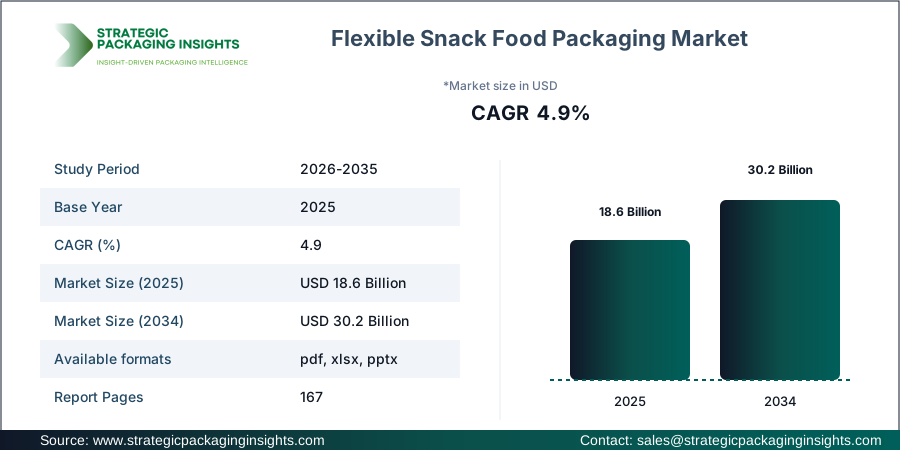
The most impactful market driver is the increasing consumer demand for convenient and sustainable packaging solutions. This trend is supported by the growing preference for on-the-go snacks and the rising awareness of environmental sustainability. Companies are investing in innovative packaging materials and designs to meet these demands, as evidenced by initiatives from major players like Amcor plc and Mondi Group.
Report Scope
| Attributes | Details |
| Report Title | Flexible Snack Food Packaging Market Projected to Scale to 30.2 Billion by 2035, Assesses Strategic Packaging Insights |
| By Packaging Format | Stand-Up Pouches, Flat Pouches, Pillow Bags, Gusseted Bags, Stick Packs, Sachets, Flow Wraps, Quad Seal Bags, Zip-Lock Bags, Other Flexible Formats |
| By Material | Polypropylene (PP), Biaxially Oriented Polypropylene (BOPP), Polyethylene (PE), Polyethylene Terephthalate (PET), Metallized Films, Aluminum Foil Laminates, Paper-Based Flexible Materials, Bio-Based and Compostable Materials |
| By Barrier Type | Standard Barrier, Oxygen Barrier, Moisture Barrier, Light Barrier, High Barrier |
| By Closure Type | Heat Seal, Zipper, Slider, Press-to-Close, Resealable Seal, Tear Notch |
| By Snack Type | Potato Chips, Extruded Snacks, Nuts and Seeds, Popcorn, Crackers and Biscuits, Pretzels, Granola and Snack Bars, Dried Fruits, Meat Snacks, Confectionery Snacks, Other Snacks |
| By Application | Single-Serve Packaging, Multi-Serve Packaging, Family-Size Packaging, On-the-Go Packaging, Portion-Control Packaging |
| By Distribution Channel | Supermarkets and Hypermarkets, Convenience Stores, Specialty Stores, Online Retail, Foodservice, Other Channels |
| By End Use | Retail, Foodservice, Institutional, E-Commerce |
| By Region | North America, Europe, Asia-Pacific, Latin America, Middle East and Africa |
| Base Year | 2025 |
| Historic Period | 2018-2024 |
| Forecast Period | 2026-2035 |
| Number of Pages | 167 |
| Customization Available | Yes* |
Market Trends Analysis
One major trend in the Flexible Snack Food Packaging market is the shift towards sustainable materials, such as bio-based and compostable materials. This trend is driven by consumer demand for environmentally friendly packaging and regulatory pressures to reduce plastic waste. Companies are increasingly adopting mono-material solutions and down-gauging techniques to enhance recyclability and reduce material usage, impacting procurement strategies and product development.
Another significant trend is the rise of digital transformation and automation in packaging processes. The integration of AI and IoT technologies in packaging lines is improving operational efficiency and enabling real-time monitoring of production. This technological advancement is leading to cost savings and enhanced product quality, influencing investment decisions and competitive positioning in the market.
Industry Transformation Analysis
The Flexible Snack Food Packaging industry is undergoing significant transformation with advancements in manufacturing processes and value-chain optimization. The adoption of automated and digitalized production lines is enhancing operational efficiency and reducing lead times. This shift is driven by the need for faster turnaround times and cost-effective production, impacting supplier relationships and capacity utilization.
Sustainability integration is another key aspect of industry transformation. Companies are focusing on reducing their carbon footprint by optimizing material usage and enhancing recyclability. This involves collaboration with suppliers to procure sustainable materials and investments in recycling technologies. The long-term commercial impact includes improved brand reputation and compliance with evolving regulatory standards.
Trends & Disruptions Impacting Customers' Customers
Downstream customers, such as snack manufacturers and retailers, are increasingly prioritizing sustainability and convenience in their packaging choices. The demand for eco-friendly packaging solutions is rising, driven by consumer awareness and regulatory mandates. Additionally, the shift towards e-commerce and online retail is influencing packaging design, with a focus on durability and protection during transit.
These changes are influencing product demand and innovation in the Flexible Snack Food Packaging market. Manufacturers are required to develop packaging solutions that meet the evolving needs of their customers, leading to opportunities for new product development and market expansion. Suppliers must adapt to these changes by offering innovative materials and technologies that align with customer expectations and regulatory requirements.
Flexible Snack Food Packaging Market Ecosystem
The Flexible Snack Food Packaging ecosystem involves a complex interplay of raw material suppliers, converters, and end-users. Value creation occurs through efficient material flows and optimized supply-chain dependencies. Procurement relationships are crucial for securing sustainable materials and ensuring consistent supply. Capacity constraints in resin production and converting processes can impact downstream demand and market dynamics.
Changes in the ecosystem, such as advancements in recycling technologies and shifts towards sustainable materials, are affecting the market. Companies are investing in innovative solutions to enhance recyclability and reduce environmental impact, aligning with consumer expectations and regulatory requirements. These developments are driving growth and creating opportunities for market expansion.
Analyst Perspective
Analyst Perspective: The Flexible Snack Food Packaging market is poised for significant growth driven by sustainability and convenience trends.
The most important structural change is the shift towards sustainable materials and packaging formats. This change is likely to impact procurement strategies and product development, as companies strive to meet consumer and regulatory demands.
Companies, investors, and suppliers should watch for advancements in recycling technologies and regulatory changes during the forecast period. These factors are crucial for maintaining competitive advantage and ensuring long-term growth in the market.
Opportunities & Threats
Market opportunities in the Flexible Snack Food Packaging sector include the growing demand for sustainable and convenient packaging solutions. The shift towards bio-based and compostable materials presents opportunities for innovation and differentiation. Companies can capitalize on this trend by developing eco-friendly packaging formats that meet consumer and regulatory expectations.
Technological advancements in digital printing and automation offer opportunities for cost reduction and enhanced product quality. The integration of AI and IoT technologies in packaging processes can improve operational efficiency and enable real-time monitoring, providing a competitive edge in the market.
However, the market faces threats from raw material volatility and regulatory uncertainty. Fluctuations in resin prices and supply chain disruptions can impact production costs and profitability. Companies must navigate these challenges by diversifying their supplier base and implementing risk management strategies.
Additionally, the increasing focus on recyclability and sustainability poses challenges related to packaging design and material selection. Companies must balance performance requirements with environmental considerations, which may involve trade-offs in barrier performance and cost.
Drivers & Challenges
Key drivers of the Flexible Snack Food Packaging market include the rising demand for convenient and sustainable packaging solutions. Consumer preferences for on-the-go snacks and environmentally friendly packaging are driving innovation in materials and designs. Regulatory mandates for reducing plastic waste and enhancing recyclability are also influencing market dynamics.
Brand owners are increasingly setting circularity targets, prompting the adoption of mono-material solutions and down-gauging techniques. These initiatives are supported by advancements in barrier technologies and material science, enabling the development of high-performance packaging formats that meet consumer and regulatory expectations.
Challenges in the market include the complexity of balancing performance requirements with sustainability goals. Companies must navigate trade-offs in barrier performance and cost while ensuring compliance with evolving regulations. Additionally, supply chain constraints and resin price volatility can impact production and profitability, requiring strategic procurement and risk management approaches.
Packaging Market Economics
The economics of Flexible Snack Food Packaging are influenced by raw material costs, conversion expenses, and energy consumption. Resin pricing, particularly for PP, PE, and PET, plays a significant role in determining overall packaging costs. Conversion costs, including extrusion, printing, and lamination, are critical factors in the production process.
Energy costs and logistics expenses also impact the economics of packaging formats. Companies must optimize their operations to reduce waste and improve efficiency, balancing cost considerations with sustainability goals. Procurement strategies and capacity utilization are essential for maintaining competitive pricing and ensuring consistent supply.
Packaging Value Chain & Cost Analysis
The value chain for Flexible Snack Food Packaging involves multiple tiers, from resin synthesis and substrate production to converting and distribution. Tier-3 activities include resin synthesis and additive production, while Tier-2 encompasses film extrusion and substrate manufacturing.
Tier-1 activities focus on converting processes such as printing, lamination, and forming. Downstream activities include co-packing, distribution, and recycling. Capacity utilization and resin supply are critical factors influencing the value chain, impacting lead times and production efficiency.
Logistics and scrap management are essential for optimizing costs and ensuring sustainability. Companies must navigate complex procurement relationships and end-of-life infrastructure to meet regulatory requirements and consumer expectations.
Unit Economics & Substrate Cost Analysis
Unit economics in Flexible Snack Food Packaging are driven by raw material costs, including resin and feedstock prices. Energy consumption and extrusion expenses are significant components of production costs. Printing, lamination, and forming processes also contribute to overall unit economics.
Tooling and scrap management are critical for optimizing production efficiency and reducing waste. Labor and logistics expenses further impact unit costs, requiring strategic planning and operational efficiency. Companies must balance cost considerations with sustainability goals to maintain competitive pricing and meet consumer expectations.
Packaging Regulatory & Sustainability Analysis
Regulatory and sustainability factors play a crucial role in the Flexible Snack Food Packaging market. Packaging regulations, such as the European Commission's directives on recyclability and single-use plastics, influence material selection and design. Extended Producer Responsibility (EPR) schemes and packaging taxes further impact market dynamics.
Sustainability initiatives, including PCR requirements and labeling standards, are driving innovation in packaging materials and formats. Companies must navigate complex regulatory landscapes and align their strategies with evolving consumer expectations and environmental goals.
Strategic Mergers, Acquisitions & Capacity Expansions
Recent strategic developments in the Flexible Snack Food Packaging market include mergers, acquisitions, and capacity expansions. Companies like Amcor plc and Mondi Group have been actively expanding their capabilities through strategic acquisitions and investments in new technologies.
These developments aim to enhance production capacity, improve sustainability, and strengthen market presence. The strategic rationale behind these moves includes gaining access to innovative materials, expanding geographic reach, and meeting increasing demand for sustainable packaging solutions.
Strategic Action Directives
Brand Packaging Engineers & Sustainability Directors: Focus on material selection and mono-material qualification to enhance recyclability and meet regulatory requirements.
Converter Operations & Extrusion Leads: Optimize line speed and tooling to improve efficiency and reduce scrap, while managing PCR variability and capacity utilization.
Procurement & Material Sourcing Managers: Diversify supplier base and implement price indexing for resin contracts to mitigate risk and ensure consistent supply.
Investors: Monitor capacity expansions and technology investments to identify growth opportunities and assess market concentration.
Market Share Analysis
The Flexible Snack Food Packaging market is characterized by a competitive landscape with several key players holding significant market shares. Companies like Amcor plc, Mondi Group, and Sealed Air Corporation are prominent in the market, leveraging their extensive product portfolios and technological capabilities to maintain competitive positions.
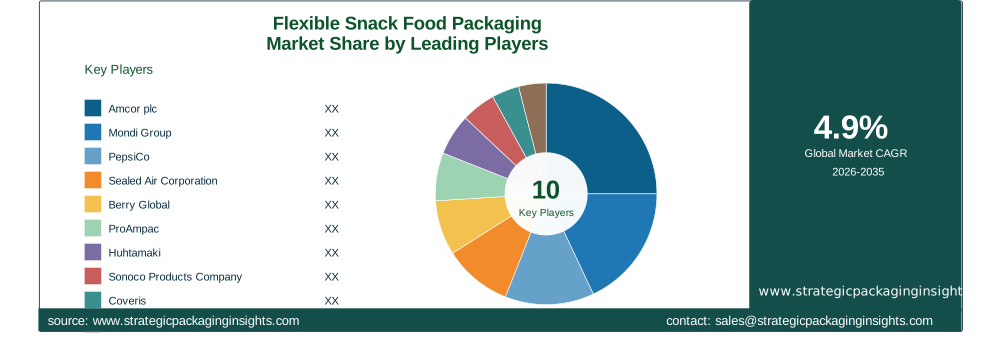
Amcor plc is known for its innovative packaging solutions and strong focus on sustainability, while Mondi Group emphasizes eco-friendly materials and advanced manufacturing processes. Sealed Air Corporation is recognized for its expertise in protective packaging and barrier technologies.
Other notable players include Berry Global, ProAmpac, and Huhtamaki, each contributing to the market with unique product offerings and strategic initiatives. These companies are investing in capacity expansions and technological advancements to meet the growing demand for flexible snack food packaging.
The competitive structure of the market is influenced by factors such as product innovation, sustainability initiatives, and geographic presence. Companies are focusing on expanding their market reach and enhancing their product portfolios to capture emerging opportunities and address evolving consumer preferences.
Key Highlights
- Largest Region: North America
- Fastest-Growing Region: Asia Pacific
- Largest Segment: Stand-Up Pouches
- Fastest-Growing Segment: Bio-Based and Compostable Materials
- Base-year market size: $18.6 Billion
- Forecast-year market size: $30.2 Billion
- CAGR: 4.9%
- Important application: On-the-Go Packaging
- Major end-use industry: Retail
- Major market driver: Demand for sustainable packaging solutions
Regional Insights
The global Flexible Snack Food Packaging market is segmented into major regions, including North America, Europe, Asia Pacific, Latin America, and the Middle East & Africa. North America is the largest region, driven by high consumer demand for convenient and sustainable packaging solutions. The fastest-growing region is Asia Pacific, supported by increasing urbanization and rising disposable incomes.
North America
North America holds a significant share of the Flexible Snack Food Packaging market, driven by consumer demand for convenience and sustainability. The region benefits from advanced manufacturing capabilities and a strong focus on innovation. Key players are investing in sustainable materials and technologies to meet regulatory requirements and consumer expectations.
The U.S. and Canada are major contributors to the market, with a high adoption rate of flexible packaging formats. The presence of leading companies and a well-established supply chain infrastructure further support market growth in the region.
Europe
Europe is a mature market for Flexible Snack Food Packaging, characterized by stringent regulations and a strong emphasis on sustainability. The European Commission's directives on recyclability and single-use plastics are driving innovation in packaging materials and formats.
Countries like Germany, France, and the UK are key markets, with a focus on eco-friendly packaging solutions. Companies are investing in advanced technologies and sustainable materials to align with regulatory requirements and consumer preferences.
Asia Pacific
Asia Pacific is the fastest-growing region in the Flexible Snack Food Packaging market, driven by increasing urbanization and rising disposable incomes. The region's growing middle class and changing consumer lifestyles are boosting demand for convenient and sustainable packaging solutions.
China, India, and Japan are major markets, with significant investments in manufacturing capabilities and infrastructure. Companies are expanding their presence in the region to capture emerging opportunities and meet the growing demand for flexible packaging formats.
Latin America
Latin America is experiencing moderate growth in the Flexible Snack Food Packaging market, supported by increasing consumer awareness and demand for sustainable packaging solutions. The region's growing food and beverage industry is driving demand for flexible packaging formats.
Brazil and Mexico are key markets, with a focus on innovation and sustainability. Companies are investing in advanced technologies and sustainable materials to meet consumer expectations and regulatory requirements.
Middle East & Africa
The Middle East & Africa region is witnessing steady growth in the Flexible Snack Food Packaging market, driven by increasing consumer demand for convenience and sustainability. The region's growing food and beverage industry is supporting market expansion.
Countries like the UAE, Saudi Arabia, and South Africa are key markets, with a focus on innovation and sustainability. Companies are investing in advanced technologies and sustainable materials to meet consumer expectations and regulatory requirements.
Flexible Snack Food Packaging Market Segments Insights

By Packaging Format Analysis
The Flexible Snack Food Packaging market is segmented by packaging format, with stand-up pouches being the largest segment. These pouches offer convenience, resealability, and extended shelf life, making them popular among consumers. The demand for flat pouches and pillow bags is also significant, driven by their cost-effectiveness and versatility.
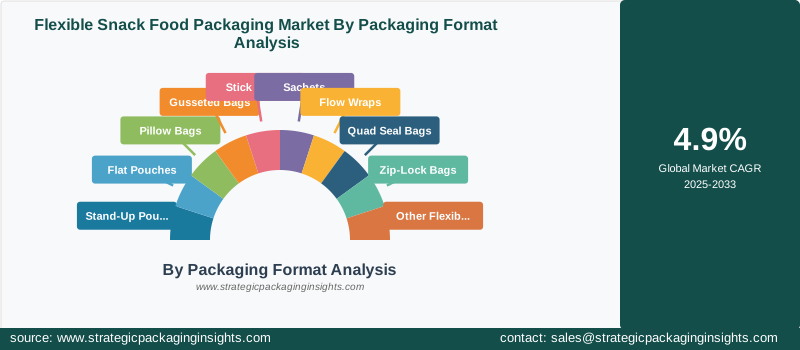
Gusseted bags and stick packs are gaining traction due to their compact design and ease of use. The market is witnessing innovation in packaging formats, with companies focusing on enhancing functionality and sustainability. The adoption of bio-based and compostable materials is influencing packaging design and material selection.
By Material Analysis
Polypropylene (PP) and polyethylene (PE) are the most commonly used materials in flexible snack food packaging, offering durability and cost-effectiveness. Biaxially oriented polypropylene (BOPP) and polyethylene terephthalate (PET) are preferred for their barrier properties and clarity.
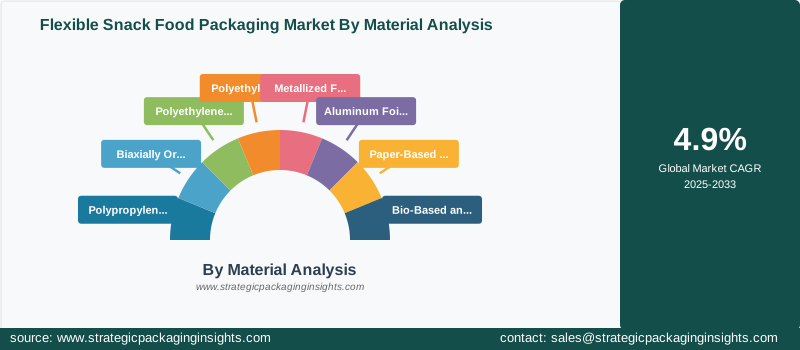
The market is witnessing a shift towards sustainable materials, such as bio-based and compostable materials, driven by consumer demand and regulatory pressures. Metallized films and aluminum foil laminates are used for high-barrier applications, providing protection against moisture, oxygen, and light.
By Barrier Type Analysis
The Flexible Snack Food Packaging market is segmented by barrier type, with standard barrier packaging being the most common. Oxygen and moisture barriers are critical for preserving product freshness and extending shelf life. Light barriers are used for products sensitive to light exposure.
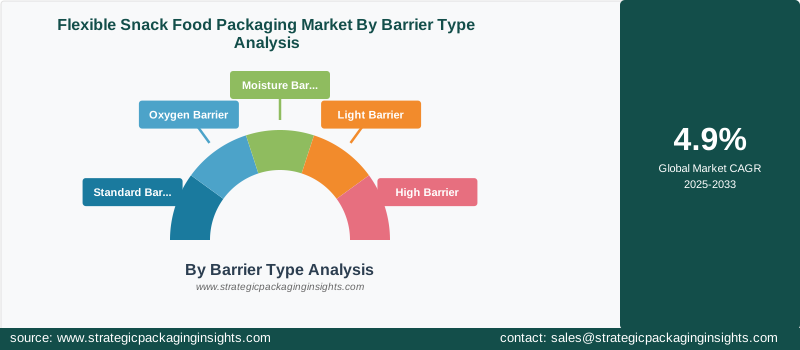
High-barrier packaging is gaining popularity for premium snack products, offering enhanced protection and shelf life. Companies are investing in advanced barrier technologies to meet consumer expectations and regulatory requirements, influencing material selection and packaging design.
By Closure Type Analysis
Heat seals are the most widely used closure type in flexible snack food packaging, offering a secure and tamper-evident seal. Zippers and sliders are popular for resealable packaging, providing convenience and extended shelf life.
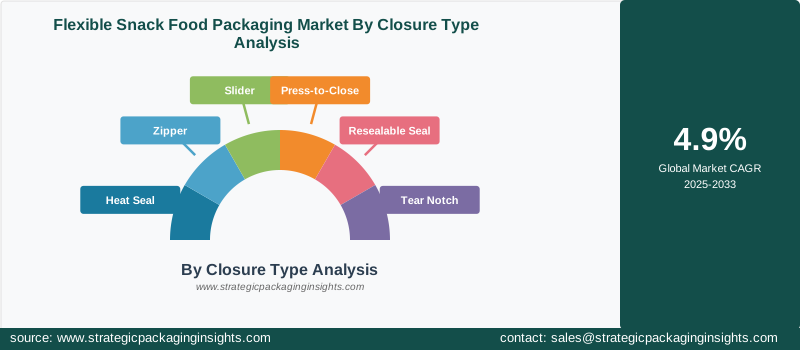
Press-to-close and resealable seals are gaining traction for their ease of use and functionality. Tear notches are commonly used for single-serve packaging, offering easy access to the product. Companies are focusing on enhancing closure functionality to meet consumer preferences and improve product protection.
By Snack Type Analysis
The Flexible Snack Food Packaging market is segmented by snack type, with potato chips being the largest segment. The demand for extruded snacks, nuts and seeds, and popcorn is also significant, driven by consumer preferences for healthy and convenient snacks.
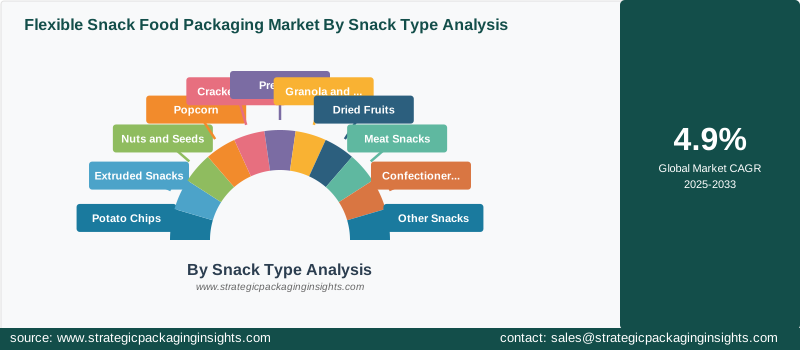
Crackers and biscuits, pretzels, and granola bars are gaining popularity due to their portability and nutritional benefits. The market is witnessing innovation in snack packaging, with companies focusing on enhancing functionality and sustainability to meet consumer expectations.
By Application Analysis
Single-serve packaging is the largest application segment in the Flexible Snack Food Packaging market, driven by consumer demand for convenience and portion control. Multi-serve and family-size packaging are also significant, offering value and cost-effectiveness.
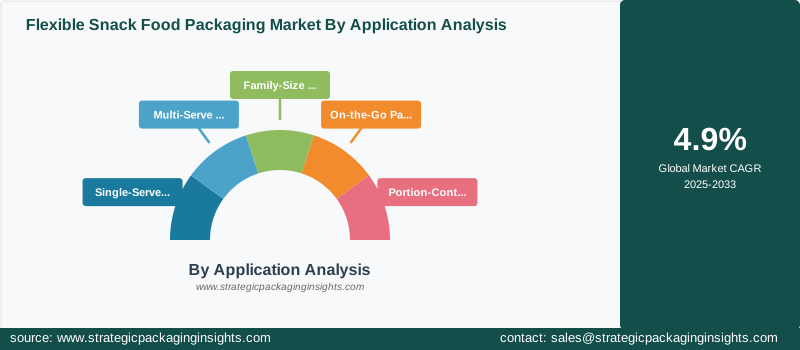
On-the-go packaging is gaining traction due to changing consumer lifestyles and preferences for portable snacks. Portion-control packaging is popular for its ability to meet dietary needs and reduce food waste. Companies are focusing on developing innovative packaging solutions to meet diverse consumer needs.
By Distribution Channel Analysis
Supermarkets and hypermarkets are the largest distribution channels for flexible snack food packaging, offering a wide range of products and convenience for consumers. Convenience stores and specialty stores are also significant, providing accessibility and variety.
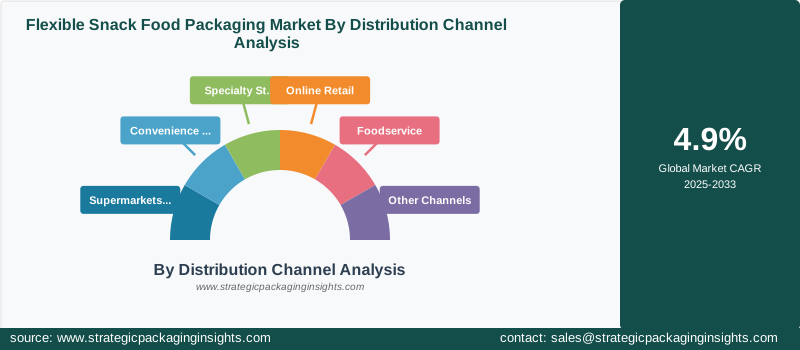
Online retail is gaining popularity due to the growing trend of e-commerce and consumer preference for home delivery. Foodservice channels are important for bulk packaging and institutional sales. Companies are focusing on expanding their distribution networks to capture emerging opportunities and meet consumer demand.
By End Use Analysis
The retail sector is the largest end-use segment in the Flexible Snack Food Packaging market, driven by consumer demand for convenience and variety. Foodservice and institutional sectors are also significant, offering opportunities for bulk packaging and customized solutions.
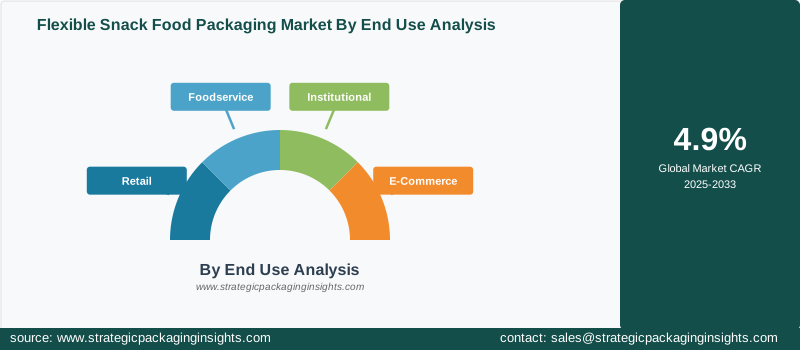
E-commerce is gaining traction due to the growing trend of online shopping and consumer preference for home delivery. Companies are focusing on developing innovative packaging solutions to meet the diverse needs of different end-use sectors and capture emerging opportunities.
Flexible Snack Food Packaging Market Segments
The Flexible Snack Food Packaging market has been segmented on the basis ofBy Packaging Format
- Stand-Up Pouches
- Flat Pouches
- Pillow Bags
- Gusseted Bags
- Stick Packs
- Sachets
- Flow Wraps
- Quad Seal Bags
- Zip-Lock Bags
- Other Flexible Formats
By Material
- Polypropylene (PP)
- Biaxially Oriented Polypropylene (BOPP)
- Polyethylene (PE)
- Polyethylene Terephthalate (PET)
- Metallized Films
- Aluminum Foil Laminates
- Paper-Based Flexible Materials
- Bio-Based and Compostable Materials
By Barrier Type
- Standard Barrier
- Oxygen Barrier
- Moisture Barrier
- Light Barrier
- High Barrier
By Closure Type
- Heat Seal
- Zipper
- Slider
- Press-to-Close
- Resealable Seal
- Tear Notch
By Snack Type
- Potato Chips
- Extruded Snacks
- Nuts and Seeds
- Popcorn
- Crackers and Biscuits
- Pretzels
- Granola and Snack Bars
- Dried Fruits
- Meat Snacks
- Confectionery Snacks
- Other Snacks
By Application
- Single-Serve Packaging
- Multi-Serve Packaging
- Family-Size Packaging
- On-the-Go Packaging
- Portion-Control Packaging
By Distribution Channel
- Supermarkets and Hypermarkets
- Convenience Stores
- Specialty Stores
- Online Retail
- Foodservice
- Other Channels
By End Use
- Retail
- Foodservice
- Institutional
- E-Commerce
By Region
- North America
- Europe
- Asia-Pacific
- Latin America
- Middle East and Africa




