


Flexible Packaging Machinery Market Outlook
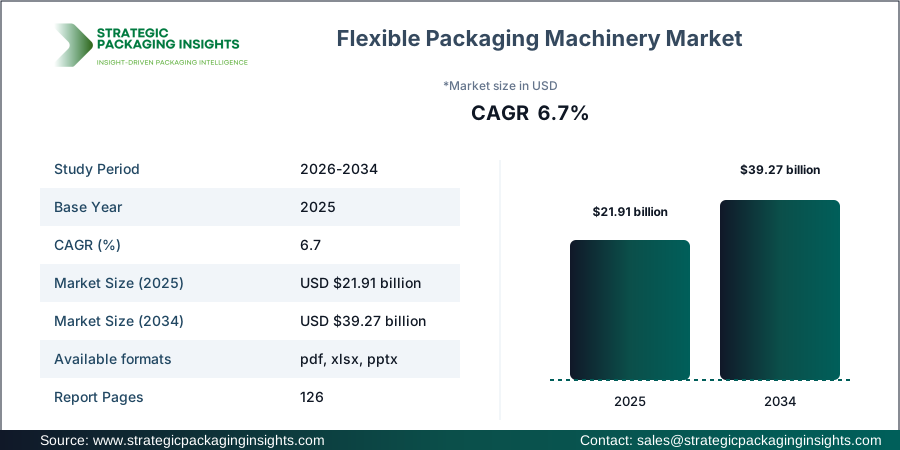
The Flexible Packaging Machinery market was valued at $21.91 billion in 2025 and is projected to reach $39.27 billion by 2034, growing at a CAGR of 6.7% during the forecast period 2026-2034. This market is experiencing robust growth driven by the increasing demand for flexible packaging solutions across various industries such as food, pharmaceuticals, and personal care. The shift towards sustainable and eco-friendly packaging options is also propelling the market forward, as companies strive to reduce their carbon footprint and meet consumer demand for environmentally responsible products. The rise in e-commerce and the need for efficient packaging solutions that ensure product safety during transit are further contributing to the market's expansion.
However, the market faces certain challenges, including stringent regulatory requirements and the high cost of advanced machinery. Despite these hurdles, the potential for growth remains significant, particularly in emerging markets where industrialization and urbanization are driving demand for packaged goods. The increasing adoption of automation and robotics in packaging processes is expected to enhance efficiency and reduce operational costs, providing further impetus to market growth. As companies continue to innovate and develop new technologies, the flexible packaging machinery market is poised for substantial growth in the coming years.
Report Scope
| Attributes | Details |
| Report Title | Flexible Packaging Machinery Market Size, Future Growth and Forecast 2034 |
| Machine Type | VFFS, HFFS, Pouch Machines, Wrapping Machines |
| Automation | Semi-Automatic, Automatic, Robotic |
| Application | Food, Pharma, Personal Care, Chemicals |
| End Use | FMCG, Healthcare, Contract Packers, Converters |
| Region | Asia Pacific, North America, Latin America, Europe, Middle East & Africa |
| Base Year | 2025 |
| Historic Period | 2018-2024 |
| Forecast Period | 2026-2034 |
| Number of Pages | 126 |
| Customization Available | Yes* |
Opportunities & Threats
The flexible packaging machinery market presents numerous opportunities for growth, particularly in the realm of technological advancements. The integration of IoT and AI in packaging machinery is revolutionizing the industry by enabling real-time monitoring and predictive maintenance, which enhances operational efficiency and reduces downtime. Additionally, the growing trend towards customization and personalization in packaging is creating new avenues for manufacturers to offer tailored solutions that meet specific customer needs. The increasing focus on sustainability is also driving demand for machinery that can handle biodegradable and recyclable materials, opening up new markets for eco-friendly packaging solutions.
Another significant opportunity lies in the expansion of the e-commerce sector, which is fueling demand for flexible packaging solutions that ensure product safety and integrity during transit. As online shopping continues to grow, the need for efficient and reliable packaging machinery is expected to rise, providing a lucrative market for manufacturers. Furthermore, the increasing demand for packaged food and beverages in emerging markets presents a substantial growth opportunity, as rising disposable incomes and changing consumer preferences drive demand for convenient and ready-to-eat products.
Despite these opportunities, the market faces certain threats, including the high cost of advanced machinery and the complexity of integrating new technologies into existing systems. Additionally, stringent regulatory requirements related to packaging materials and processes pose a challenge for manufacturers, as they must ensure compliance while maintaining cost-effectiveness. The competitive landscape is also a potential threat, as new entrants and existing players vie for market share, leading to price wars and margin pressures. However, companies that can innovate and adapt to changing market dynamics are likely to thrive in this competitive environment.
Drivers & Challenges
One of the primary drivers of the flexible packaging machinery market is the increasing demand for packaged food and beverages. As consumers seek convenience and longer shelf life, the need for efficient packaging solutions is on the rise. This trend is particularly pronounced in emerging markets, where urbanization and rising disposable incomes are driving demand for packaged goods. Additionally, the growing focus on sustainability is encouraging manufacturers to develop machinery that can handle eco-friendly materials, further boosting market growth.
Another key driver is the advancement in technology, particularly the integration of automation and robotics in packaging processes. These innovations are enhancing efficiency, reducing labor costs, and improving product quality, making them attractive to manufacturers looking to optimize their operations. The rise of e-commerce is also contributing to market growth, as the need for secure and reliable packaging solutions becomes increasingly important in ensuring product safety during transit.
However, the market faces several challenges, including the high cost of advanced machinery and the complexity of integrating new technologies into existing systems. Additionally, stringent regulatory requirements related to packaging materials and processes pose a challenge for manufacturers, as they must ensure compliance while maintaining cost-effectiveness. The competitive landscape is also a potential threat, as new entrants and existing players vie for market share, leading to price wars and margin pressures. Despite these challenges, the flexible packaging machinery market is poised for growth, driven by innovation and the increasing demand for efficient and sustainable packaging solutions.
Market Share Analysis
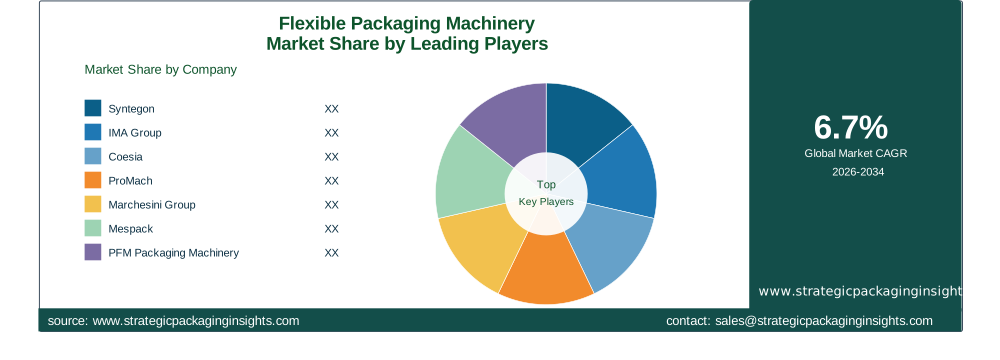
The competitive landscape of the flexible packaging machinery market is characterized by the presence of several key players who are driving innovation and growth in the industry. Companies such as Syntegon, IMA Group, Coesia, ProMach, and Marchesini Group are leading the market with their advanced machinery solutions and strong global presence. These companies are investing heavily in research and development to introduce new technologies and enhance their product offerings, thereby maintaining their competitive edge.
Syntegon, a leading player in the market, is known for its innovative packaging solutions that cater to a wide range of industries, including food, pharmaceuticals, and personal care. The company's focus on sustainability and efficiency has helped it capture a significant share of the market. Similarly, IMA Group is renowned for its cutting-edge technology and comprehensive product portfolio, which includes machinery for various packaging applications. The company's commitment to quality and customer satisfaction has earned it a strong reputation in the industry.
Coesia, another major player, is recognized for its advanced automation solutions that enhance productivity and reduce operational costs. The company's focus on innovation and customer-centric approach has enabled it to expand its market presence and capture a substantial share of the market. ProMach, with its diverse range of packaging machinery and strong distribution network, is also a key player in the market. The company's emphasis on customization and flexibility has helped it meet the evolving needs of its customers and maintain its competitive position.
Other notable companies in the market include Marchesini Group, Mespack, PFM Packaging Machinery, ULMA Packaging, Viking Masek, and TNA Solutions. These companies are leveraging their expertise and technological capabilities to offer innovative solutions that address the challenges faced by manufacturers in the packaging industry. By focusing on sustainability, efficiency, and customer satisfaction, these companies are well-positioned to capitalize on the growth opportunities in the flexible packaging machinery market.
Key Highlights
- The flexible packaging machinery market is projected to grow from $21.91 billion in 2025 to $39.27 billion by 2034, at a CAGR of 6.7%.
- Technological advancements, including IoT and AI integration, are driving market growth by enhancing operational efficiency.
- The rise of e-commerce is fueling demand for flexible packaging solutions that ensure product safety during transit.
- Customization and personalization in packaging are creating new opportunities for manufacturers to offer tailored solutions.
- The increasing focus on sustainability is driving demand for machinery that can handle biodegradable and recyclable materials.
- Emerging markets present significant growth opportunities due to rising disposable incomes and changing consumer preferences.
- Stringent regulatory requirements and high machinery costs pose challenges for market players.
- Key players in the market include Syntegon, IMA Group, Coesia, ProMach, and Marchesini Group.
- Automation and robotics are enhancing efficiency and reducing operational costs in packaging processes.
- The competitive landscape is characterized by innovation and the introduction of new technologies.
Top Countries Insights
In the flexible packaging machinery market, the United States stands out as a key player, with a market size of approximately $5.2 billion and a CAGR of 5%. The country's strong industrial base and advanced technological infrastructure are significant growth drivers. Additionally, the increasing demand for packaged food and beverages, coupled with the rise of e-commerce, is fueling market expansion. However, regulatory challenges related to packaging materials and environmental concerns pose potential hurdles for manufacturers.
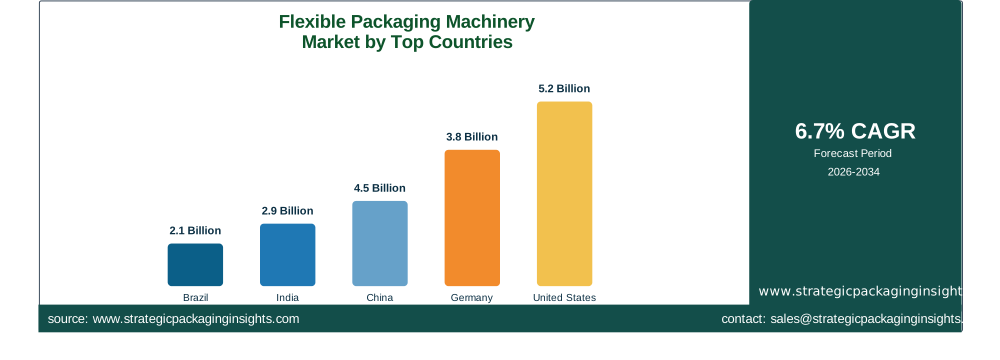
Germany, with a market size of around $3.8 billion and a CAGR of 4%, is another major player in the market. The country's focus on innovation and sustainability is driving demand for advanced packaging machinery. The presence of leading manufacturers and a strong emphasis on research and development are further contributing to market growth. However, the high cost of machinery and stringent regulatory requirements are challenges that manufacturers must navigate.
China, with a market size of approximately $4.5 billion and a CAGR of 7%, is experiencing rapid growth in the flexible packaging machinery market. The country's expanding industrial base and increasing demand for packaged goods are key growth drivers. Additionally, government initiatives to promote sustainable packaging solutions are creating new opportunities for manufacturers. However, the competitive landscape and regulatory challenges remain potential obstacles.
India, with a market size of around $2.9 billion and a CAGR of 8%, is emerging as a significant player in the market. The country's growing middle class and increasing disposable incomes are driving demand for packaged food and beverages. Additionally, the rise of e-commerce and the need for efficient packaging solutions are contributing to market growth. However, infrastructure challenges and regulatory hurdles pose potential challenges for manufacturers.
Brazil, with a market size of approximately $2.1 billion and a CAGR of 6%, is also a key player in the market. The country's expanding food and beverage industry and increasing focus on sustainability are driving demand for flexible packaging machinery. However, economic instability and regulatory challenges are potential obstacles that manufacturers must address to capitalize on growth opportunities.
Flexible Packaging Machinery Market Segments Insights

Machine Type Analysis
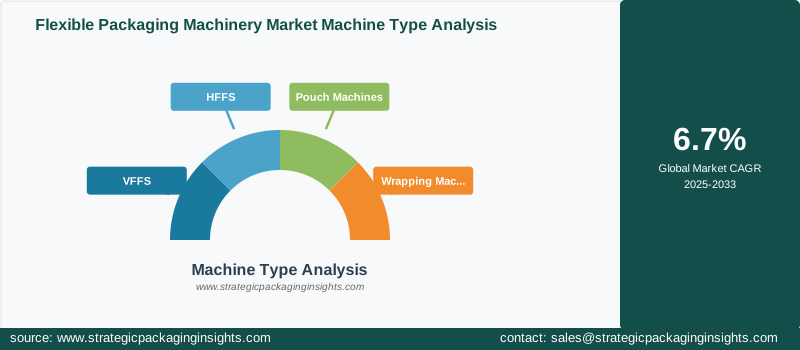
The machine type segment of the flexible packaging machinery market is categorized into VFFS (Vertical Form Fill Seal), HFFS (Horizontal Form Fill Seal), pouch machines, and wrapping machines. VFFS machines are gaining traction due to their versatility and efficiency in packaging a wide range of products, from snacks to pharmaceuticals. The demand for HFFS machines is also on the rise, driven by their ability to handle high-speed packaging operations and produce a variety of package styles. Pouch machines are becoming increasingly popular as they offer flexibility in packaging design and are suitable for both liquid and solid products. Wrapping machines, known for their precision and speed, are widely used in the food and confectionery industries.
The growing demand for convenience and ready-to-eat products is driving the adoption of these machines across various industries. Additionally, advancements in technology, such as the integration of automation and robotics, are enhancing the efficiency and performance of these machines, making them more attractive to manufacturers. The increasing focus on sustainability is also influencing the machine type segment, as manufacturers seek machinery that can handle eco-friendly materials and reduce waste. As a result, the machine type segment is expected to witness significant growth during the forecast period.
Automation Analysis
The automation segment of the flexible packaging machinery market is divided into semi-automatic, automatic, and robotic systems. Automatic machines are leading the market due to their ability to enhance productivity and reduce labor costs. These machines are equipped with advanced features such as real-time monitoring and predictive maintenance, which improve operational efficiency and minimize downtime. Robotic systems are also gaining popularity as they offer precision and flexibility in packaging operations, making them ideal for complex and high-speed applications.
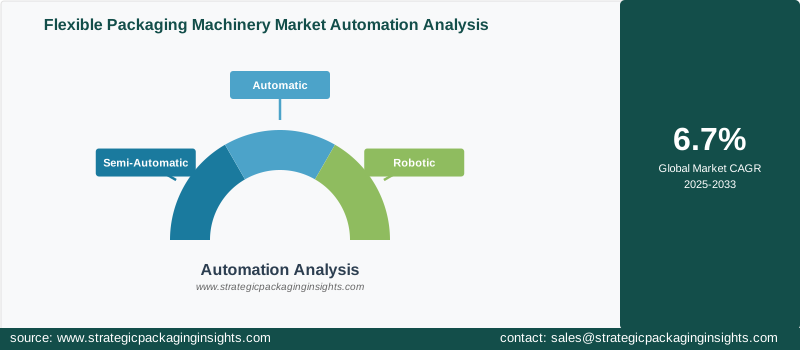
Semi-automatic machines, while less advanced, are still in demand due to their cost-effectiveness and suitability for small to medium-sized enterprises. The increasing adoption of automation in packaging processes is driven by the need for efficiency and the desire to reduce human intervention, which minimizes the risk of errors and contamination. As technology continues to evolve, the automation segment is expected to witness significant growth, with manufacturers increasingly investing in advanced systems to optimize their operations and meet the growing demand for flexible packaging solutions.
Application Analysis
The application segment of the flexible packaging machinery market includes food, pharmaceuticals, personal care, and chemicals. The food industry is the largest consumer of flexible packaging machinery, driven by the increasing demand for packaged and ready-to-eat products. The need for efficient packaging solutions that ensure product safety and extend shelf life is fueling the adoption of advanced machinery in this sector. The pharmaceutical industry is also a significant contributor to market growth, as the demand for secure and tamper-evident packaging solutions continues to rise.
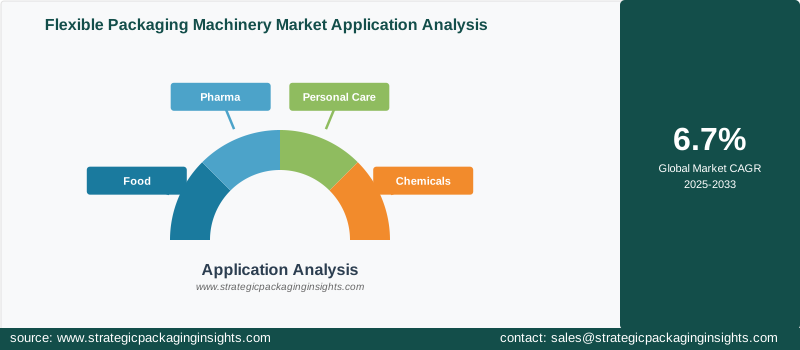
The personal care and chemical industries are also driving demand for flexible packaging machinery, as manufacturers seek solutions that offer flexibility in design and ensure product integrity. The growing focus on sustainability is influencing the application segment, with companies increasingly adopting machinery that can handle biodegradable and recyclable materials. As consumer preferences continue to evolve, the application segment is expected to witness substantial growth, driven by the need for innovative and efficient packaging solutions across various industries.
End Use Analysis
The end-use segment of the flexible packaging machinery market is categorized into FMCG (Fast-Moving Consumer Goods), healthcare, contract packers, and converters. The FMCG sector is the largest end-user of flexible packaging machinery, driven by the increasing demand for packaged food and beverages, personal care products, and household items. The need for efficient and reliable packaging solutions that ensure product safety and convenience is fueling the adoption of advanced machinery in this sector.
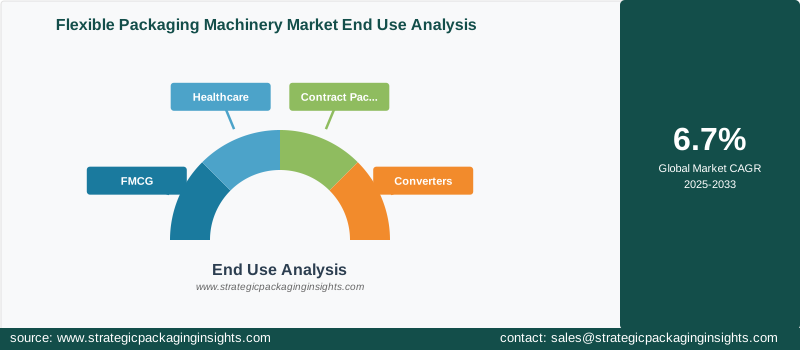
The healthcare industry is also a significant end-user, as the demand for secure and tamper-evident packaging solutions continues to rise. Contract packers and converters are increasingly adopting flexible packaging machinery to meet the growing demand for customized and personalized packaging solutions. The focus on sustainability is influencing the end-use segment, with companies seeking machinery that can handle eco-friendly materials and reduce waste. As the demand for flexible packaging solutions continues to grow, the end-use segment is expected to witness significant growth during the forecast period.
Flexible Packaging Machinery Market Segments
The Flexible Packaging Machinery market has been segmented on the basis ofMachine Type
- VFFS
- HFFS
- Pouch Machines
- Wrapping Machines
Automation
- Semi-Automatic
- Automatic
- Robotic
Application
- Food
- Pharma
- Personal Care
- Chemicals
End Use
- FMCG
- Healthcare
- Contract Packers
- Converters
Region
- Asia Pacific
- North America
- Latin America
- Europe
- Middle East & Africa




