


Flexible Film Packaging Machines Market Outlook
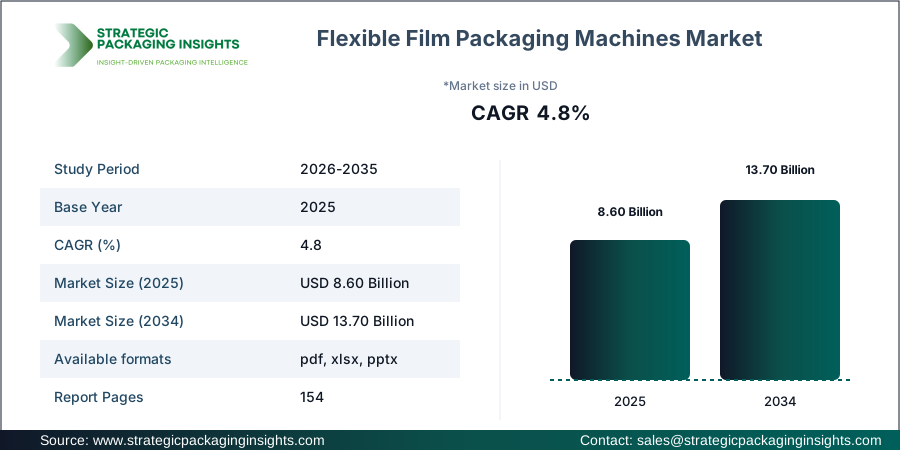
The Flexible Film Packaging Machines market size was valued at USD $8.60 Billion in 2025 and is anticipated to reach USD $13.70 Billion by 2035, growing at a CAGR of 4.80% % during the forecast period according to Strategic Packaging Insights. The market is driven by the increasing demand for flexible packaging solutions across various industries, including food and beverages, pharmaceuticals, and personal care. The adoption of advanced technologies such as IoT-enabled machines and AI-based inspection systems is further propelling market growth.Report Scope
| Attributes | Details |
| Report Title | Flexible Film Packaging Machines Market Projected to Scale to 13.70 Billion by 2035, Assesses Strategic Packaging Insights |
| By machine type | Vertical Form-Fill-Seal Machines, Horizontal Form-Fill-Seal Machines, Pre-Made Pouch Packaging Machines, Bagging Machines, Wrapping Machines, Thermoforming Machines, Blister Packaging Machines, Shrink Wrapping Machines, Overwrapping Machines, Sachet and Stick Pack Machines |
| By packaging format | Pouches, Bags, Sachets, Stick Packs, Roll Film, Multilayer Films, Stand-Up Pouches, Flat Pouches, Spouted Pouches, Vacuum Packs |
| By film type | Polyethylene Films, Polypropylene Films, Polyester Films, Polyamide Films, EVOH Films, PVC Films, Biodegradable Films, Compostable Films, Recyclable Mono-Material Films, Multilayer Films |
| By automation level | Fully Automatic, Semi-Automatic, Manual |
| By technology | Servo-Driven Systems, Pneumatic Systems, Robotics Integration, Digital Control Systems, IoT-Enabled Machines, AI-Based Inspection Systems, Automated Changeover Systems |
| By sealing technology | Heat Sealing, Ultrasonic Sealing, Impulse Sealing, Continuous Sealing, Hot-Wire Sealing |
| By application | Food Packaging, Beverage Packaging, Pharmaceutical Packaging, Personal Care Packaging, Cosmetics Packaging, Household Products Packaging, Pet Food Packaging, Agricultural Products Packaging, Industrial Products Packaging, Chemical Packaging |
| By end use industry | Food and Beverages, Pharmaceuticals, Personal Care and Cosmetics, Household Products, Consumer Goods, Chemicals, Agriculture, Pet Food, Industrial Manufacturing, E-Commerce and Logistics |
| By machine capacity | Low-Speed Machines, Medium-Speed Machines, High-Speed Machines, Ultra-High-Speed Machines |
| By functionality | Filling, Forming, Sealing, Wrapping, Cutting, Pouch Making, Bag Making, Product Inspection, Coding and Marking, Weighing and Dosing |
| By region | North America, Europe, Asia Pacific, Latin America, Middle East and Africa |
| Base Year | 2025 |
| Historic Period | 2018-2024 |
| Forecast Period | 2026-2035 |
| Number of Pages | 154 |
| Customization Available | Yes* |
Market Trends Analysis
The Flexible Film Packaging Machines market is witnessing significant trends, including the shift towards sustainable packaging solutions. Companies are increasingly adopting recyclable mono-material films and biodegradable films to meet consumer demand for eco-friendly packaging. This trend is influencing product development and procurement strategies, as manufacturers seek to enhance the recyclability and sustainability of their packaging solutions.
Another notable trend is the integration of digital technologies such as IoT and AI in packaging machines. These technologies are enhancing operational efficiency, enabling real-time monitoring, and improving quality control processes. The adoption of automated changeover systems and robotics integration is also gaining traction, driven by the need for increased production speed and flexibility in packaging operations.
Industry Transformation Analysis
The Flexible Film Packaging Machines industry is undergoing a transformation with the increasing adoption of automation and digitalization. Manufacturers are investing in advanced machinery that offers higher efficiency and precision. The integration of robotics and AI-based systems is streamlining operations, reducing downtime, and enhancing product quality. This transformation is reshaping the competitive landscape, with companies focusing on technological advancements to gain a competitive edge.
The value chain is also evolving, with a greater emphasis on sustainability and recyclability. Companies are exploring new materials and technologies to reduce environmental impact and comply with regulatory requirements. The shift towards mono-material films and the use of PCR (post-consumer recycled) content are key focus areas for manufacturers aiming to meet sustainability targets and consumer expectations.
Trends & Disruptions Impacting Customers' Customers
Downstream customers, particularly in the food and beverage industry, are increasingly prioritizing sustainability and convenience in packaging. The demand for flexible packaging solutions that offer extended shelf life, easy handling, and reduced environmental impact is driving innovation in the Flexible Film Packaging Machines market. Companies are focusing on developing packaging solutions that align with consumer preferences for eco-friendly and user-friendly products.
These changes are influencing product demand and purchasing decisions, as customers seek packaging solutions that enhance product appeal and meet regulatory standards. The emphasis on sustainability is also driving innovation, with manufacturers exploring new materials and technologies to improve recyclability and reduce carbon footprint. This shift presents opportunities for companies to differentiate their offerings and capture market share by aligning with evolving consumer expectations.
Flexible Film Packaging Machines Market Ecosystem
The Flexible Film Packaging Machines market ecosystem involves a complex interplay of various stages, from raw material procurement to distribution. The value creation process begins with the sourcing of polymers and additives, which are then extruded and converted into films. These films undergo further processing, including printing and converting, to create the final packaging formats.
Supply-chain dependencies are critical, with manufacturers relying on a steady supply of raw materials and efficient logistics to meet demand. Capacity constraints and procurement relationships play a significant role in determining market dynamics. Changes in the ecosystem, such as shifts towards sustainable materials and technologies, are impacting the market by influencing production processes and consumer preferences.
Analyst Perspective
Analyst Perspective: The Flexible Film Packaging Machines market is poised for growth, driven by technological advancements and increasing demand for sustainable packaging solutions.
The integration of IoT and AI technologies is a significant structural change, enhancing operational efficiency and quality control. Companies investing in these technologies are likely to gain a competitive advantage by offering innovative and efficient packaging solutions.
Market participants should focus on sustainability initiatives and technological advancements to capture growth opportunities. Monitoring regulatory changes and consumer preferences will be crucial for aligning product offerings with market demands and achieving long-term success.
Opportunities & Threats
The Flexible Film Packaging Machines market presents significant opportunities for growth, driven by the increasing demand for flexible packaging solutions across various industries. The shift towards sustainable packaging is a key opportunity, with companies investing in recyclable and biodegradable films to meet consumer and regulatory demands. The adoption of advanced technologies such as IoT and AI is also creating opportunities for innovation and efficiency improvements.
Emerging markets in Asia Pacific and Latin America offer substantial growth potential, with rising consumer demand and expanding manufacturing capabilities. Companies can capitalize on these opportunities by expanding their presence in these regions and developing tailored solutions to meet local market needs. The focus on sustainability and technological advancements will be critical for capturing market share and driving growth.
However, the market also faces threats, including raw material price volatility and regulatory uncertainty. Fluctuations in polymer prices can impact production costs and profitability, while evolving regulations may require companies to adapt their processes and products. The competitive landscape is also challenging, with numerous players vying for market share and driving pricing pressures.
Supply chain constraints and capacity limitations pose additional threats, particularly in the context of increasing demand for flexible packaging solutions. Companies must navigate these challenges by optimizing their supply chains, investing in capacity expansion, and developing strategic partnerships to ensure a steady supply of materials and maintain competitive pricing.
Drivers & Challenges
The Flexible Film Packaging Machines market is driven by several key factors, including the growing demand for flexible packaging solutions in the food and beverage industry. The need for convenient, lightweight, and sustainable packaging is driving innovation and adoption of advanced packaging machines. The integration of digital technologies such as IoT and AI is enhancing operational efficiency and quality control, further propelling market growth.
Regulatory mandates and consumer preferences for sustainable packaging are also significant drivers, with companies investing in recyclable and biodegradable films to meet these demands. The focus on reducing environmental impact and enhancing recyclability is influencing product development and procurement strategies, creating opportunities for growth and differentiation.
However, the market faces challenges, including raw material price volatility and supply chain constraints. Fluctuations in polymer prices can impact production costs and profitability, while capacity limitations may hinder the ability to meet increasing demand. Companies must navigate these challenges by optimizing their supply chains, investing in capacity expansion, and developing strategic partnerships to ensure a steady supply of materials and maintain competitive pricing.
Packaging Market Economics
The economics of the Flexible Film Packaging Machines market are influenced by several factors, including raw material costs, conversion costs, and energy expenses. The pricing of polymers and additives plays a significant role in determining production costs, with fluctuations impacting profitability. Conversion costs, including extrusion and printing, are also critical, with manufacturers seeking to optimize processes to reduce expenses.
Energy costs are another important consideration, particularly in the context of increasing automation and digitalization. Companies are investing in energy-efficient technologies to reduce operational expenses and enhance sustainability. The focus on recyclability and sustainability is also influencing procurement strategies, with companies exploring new materials and technologies to meet regulatory and consumer demands.
Packaging Value Chain & Cost Analysis
The value chain for Flexible Film Packaging Machines involves several tiers, from resin synthesis and film extrusion to converting and distribution. Tier-3 activities include resin synthesis and the production of additives and masterbatch, which are critical for film production. Tier-2 involves film extrusion and substrate production, with manufacturers focusing on optimizing processes to enhance efficiency and reduce costs.
Tier-1 activities include converting, printing, and lamination, with companies investing in advanced technologies to improve quality and reduce waste. Downstream activities involve co-packing, distribution, and recycling, with a focus on enhancing sustainability and meeting regulatory requirements. Capacity utilization and procurement strategies are critical for maintaining competitive pricing and ensuring a steady supply of materials.
Unit Economics & Substrate Cost Analysis
The unit economics of Flexible Film Packaging Machines are influenced by several factors, including raw material costs, energy expenses, and conversion costs. The pricing of polymers and additives is a key consideration, with fluctuations impacting production costs and profitability. Energy expenses are also significant, particularly in the context of increasing automation and digitalization.
Conversion costs, including extrusion, printing, and lamination, are critical for determining unit economics, with manufacturers seeking to optimize processes to reduce expenses. The focus on sustainability and recyclability is also influencing procurement strategies, with companies exploring new materials and technologies to meet regulatory and consumer demands. The emphasis on reducing environmental impact and enhancing recyclability is driving innovation and creating opportunities for growth.
Packaging Regulatory & Sustainability Analysis
The Flexible Film Packaging Machines market is subject to various regulatory requirements, including packaging regulations, EPR, and recycling targets. Regulatory bodies such as the European Commission and U.S. EPA are setting standards for recyclability and sustainability, influencing product development and procurement strategies. Companies are investing in recyclable and biodegradable films to meet these requirements and align with consumer preferences for sustainable packaging.
The focus on reducing environmental impact and enhancing recyclability is driving innovation and creating opportunities for growth. Companies are exploring new materials and technologies to meet regulatory and consumer demands, with a focus on reducing carbon footprint and enhancing sustainability. The emphasis on sustainability is also influencing procurement strategies, with companies seeking to optimize processes and reduce waste.
Strategic Mergers, Acquisitions & Capacity Expansions
Recent strategic developments in the Flexible Film Packaging Machines market include mergers, acquisitions, and capacity expansions. Companies are investing in new technologies and expanding their manufacturing capabilities to meet increasing demand and enhance competitiveness. Strategic partnerships and collaborations are also playing a significant role in driving innovation and growth.
For example, MULTIVAC has expanded its manufacturing capabilities with the acquisition of a new production facility, enhancing its capacity to meet increasing demand. Similarly, Syntegon Technology has invested in new technologies to enhance its product offerings and improve operational efficiency. These strategic developments are reshaping the competitive landscape and creating opportunities for growth and differentiation.
Strategic Action Directives
Brand Packaging Engineers & Sustainability Directors should focus on material selection and recyclability to meet regulatory and consumer demands. The integration of PCR content and mono-material qualification are critical for enhancing sustainability and reducing environmental impact.
Converter Operations & Extrusion Leads should prioritize line speed and tooling optimization to enhance efficiency and reduce waste. The focus on capacity utilization and scrap reduction is critical for maintaining competitive pricing and meeting increasing demand.
Procurement & Material Sourcing Managers should focus on resin contracts and supplier diversification to mitigate raw material price volatility and ensure a steady supply of materials. The emphasis on EPR exposure and price indexing is also critical for optimizing procurement strategies and reducing costs.
Investors should focus on capacity expansion and technology investments to capture growth opportunities and enhance competitiveness. The emphasis on sustainability and digitalization is critical for driving innovation and creating long-term value.
Market Share Analysis
The Flexible Film Packaging Machines market is characterized by a competitive landscape with several key players, including MULTIVAC, Syntegon Technology, GEA Group, Coesia Group, and Barry-Wehmiller Companies. These companies are investing in advanced technologies and expanding their manufacturing capabilities to enhance competitiveness and meet increasing demand.
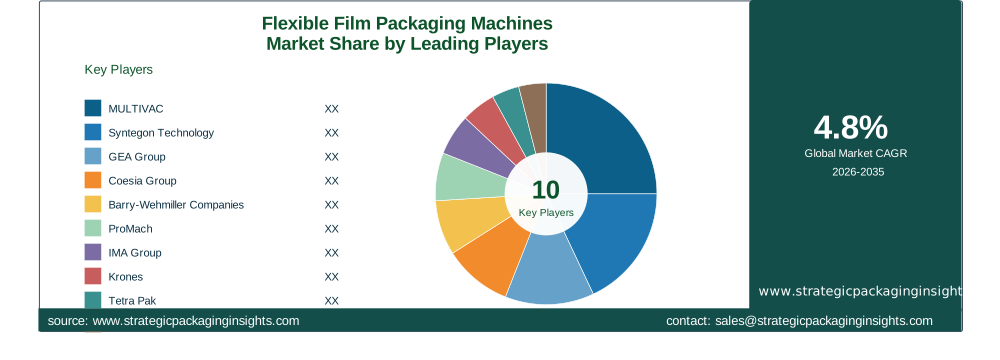
MULTIVAC is a leading player in the market, known for its innovative packaging solutions and strong global presence. The company has expanded its manufacturing capabilities with the acquisition of a new production facility, enhancing its capacity to meet increasing demand. Similarly, Syntegon Technology is investing in new technologies to enhance its product offerings and improve operational efficiency.
GEA Group and Coesia Group are also key players in the market, focusing on technological advancements and sustainability initiatives to drive growth and differentiation. These companies are investing in new technologies and expanding their manufacturing capabilities to meet increasing demand and enhance competitiveness.
The competitive landscape is characterized by a focus on innovation and sustainability, with companies investing in advanced technologies and expanding their manufacturing capabilities to enhance competitiveness and meet increasing demand. The emphasis on sustainability and digitalization is critical for driving innovation and creating long-term value.
Key Highlights
- Largest Region: Asia Pacific
- Fastest-Growing Region: Asia Pacific
- Largest Segment: Food and Beverages
- Fastest-Growing Segment: IoT-Enabled Machines
- Base-year market size: $8.60 Billion
- Forecast-year market size: $13.70 Billion
- CAGR: 4.80%
- Important application: Food Packaging
- Major end-use industry: Food and Beverages
- Major market driver: Demand for sustainable packaging solutions
Regional Insights
The Flexible Film Packaging Machines market is witnessing significant growth across major regions, with Asia Pacific emerging as the largest and fastest-growing market. The region's growth is driven by increasing demand in the food and beverage industry, coupled with expanding manufacturing capabilities and rising consumer demand for sustainable packaging solutions.
North America
In North America, the market is characterized by a strong focus on technological advancements and sustainability initiatives. The demand for flexible packaging solutions is driven by the food and beverage industry, with companies investing in advanced technologies to enhance operational efficiency and meet regulatory requirements.
The emphasis on sustainability and recyclability is influencing product development and procurement strategies, with companies exploring new materials and technologies to meet consumer and regulatory demands. The focus on reducing environmental impact and enhancing recyclability is driving innovation and creating opportunities for growth.
Europe
Europe is a mature market for Flexible Film Packaging Machines, with a strong emphasis on sustainability and regulatory compliance. The demand for flexible packaging solutions is driven by the food and beverage industry, with companies investing in advanced technologies to enhance operational efficiency and meet regulatory requirements.
The focus on sustainability and recyclability is influencing product development and procurement strategies, with companies exploring new materials and technologies to meet consumer and regulatory demands. The emphasis on reducing environmental impact and enhancing recyclability is driving innovation and creating opportunities for growth.
Asia Pacific
Asia Pacific is the largest and fastest-growing market for Flexible Film Packaging Machines, driven by increasing demand in the food and beverage industry and expanding manufacturing capabilities. The region's growth is supported by rising consumer demand for sustainable packaging solutions and the adoption of advanced technologies.
The focus on sustainability and recyclability is influencing product development and procurement strategies, with companies exploring new materials and technologies to meet consumer and regulatory demands. The emphasis on reducing environmental impact and enhancing recyclability is driving innovation and creating opportunities for growth.
Latin America
In Latin America, the market is characterized by increasing demand for flexible packaging solutions in the food and beverage industry. The region's growth is supported by expanding manufacturing capabilities and rising consumer demand for sustainable packaging solutions.
The focus on sustainability and recyclability is influencing product development and procurement strategies, with companies exploring new materials and technologies to meet consumer and regulatory demands. The emphasis on reducing environmental impact and enhancing recyclability is driving innovation and creating opportunities for growth.
Middle East & Africa
The Middle East & Africa region is witnessing moderate growth in the Flexible Film Packaging Machines market, driven by increasing demand in the food and beverage industry. The region's growth is supported by expanding manufacturing capabilities and rising consumer demand for sustainable packaging solutions.
The focus on sustainability and recyclability is influencing product development and procurement strategies, with companies exploring new materials and technologies to meet consumer and regulatory demands. The emphasis on reducing environmental impact and enhancing recyclability is driving innovation and creating opportunities for growth.
Flexible Film Packaging Machines Market Segments Insights

By Machine Type Analysis
The Flexible Film Packaging Machines market is segmented by machine type, with Vertical Form-Fill-Seal Machines and Horizontal Form-Fill-Seal Machines being the most widely used. These machines are favored for their versatility and efficiency in packaging various products, particularly in the food and beverage industry. The demand for Pre-Made Pouch Packaging Machines and Bagging Machines is also growing, driven by the need for convenient and flexible packaging solutions.
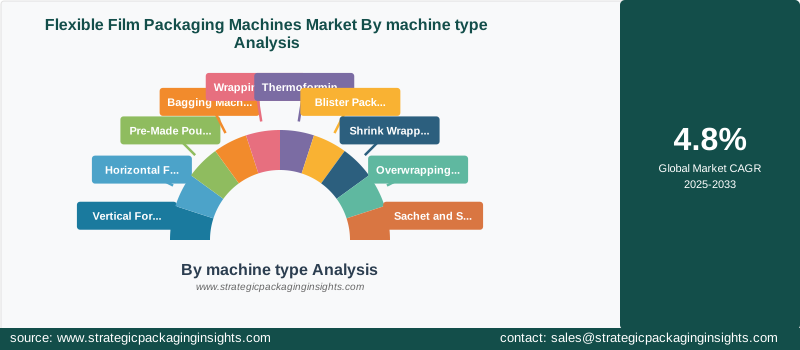
Thermoforming Machines and Blister Packaging Machines are gaining traction in the pharmaceutical and personal care industries, where product protection and presentation are critical. The adoption of Shrink Wrapping Machines and Overwrapping Machines is increasing in the consumer goods sector, where packaging aesthetics and product visibility are important. The focus on automation and efficiency is driving the demand for advanced packaging machines with integrated technologies such as IoT and AI.
By Packaging Format Analysis
The market is segmented by packaging format, with pouches and bags being the most popular choices due to their versatility and convenience. The demand for stand-up pouches and spouted pouches is increasing, driven by consumer preferences for easy-to-use and resealable packaging. The adoption of vacuum packs and multilayer films is also growing, particularly in the food and beverage industry, where product freshness and shelf life are critical.
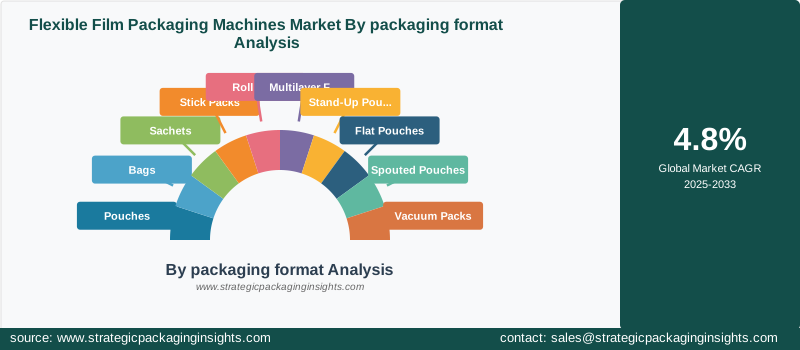
Sachets and stick packs are gaining popularity in the personal care and pharmaceutical industries, where single-use and portion-controlled packaging are important. The focus on sustainability is driving the demand for recyclable and biodegradable films, with companies exploring new materials and technologies to enhance recyclability and reduce environmental impact. The emphasis on reducing packaging waste and enhancing sustainability is influencing product development and procurement strategies.
By Film Type Analysis
The market is segmented by film type, with polyethylene films and polypropylene films being the most widely used due to their versatility and cost-effectiveness. The demand for polyester films and polyamide films is also growing, driven by their superior barrier properties and durability. The adoption of EVOH films and PVC films is increasing in the food and beverage industry, where product protection and shelf life are critical.
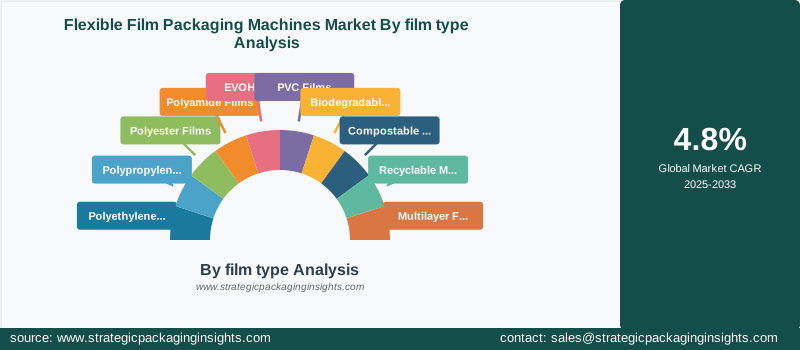
The focus on sustainability is driving the demand for biodegradable and compostable films, with companies exploring new materials and technologies to enhance recyclability and reduce environmental impact. The emphasis on reducing packaging waste and enhancing sustainability is influencing product development and procurement strategies. The adoption of recyclable mono-material films is also gaining traction, driven by regulatory requirements and consumer preferences for sustainable packaging solutions.
By Automation Level Analysis
The market is segmented by automation level, with fully automatic machines being the most widely used due to their efficiency and precision. The demand for semi-automatic and manual machines is also growing, particularly in small and medium-sized enterprises where cost considerations are important. The focus on automation and efficiency is driving the demand for advanced packaging machines with integrated technologies such as IoT and AI.
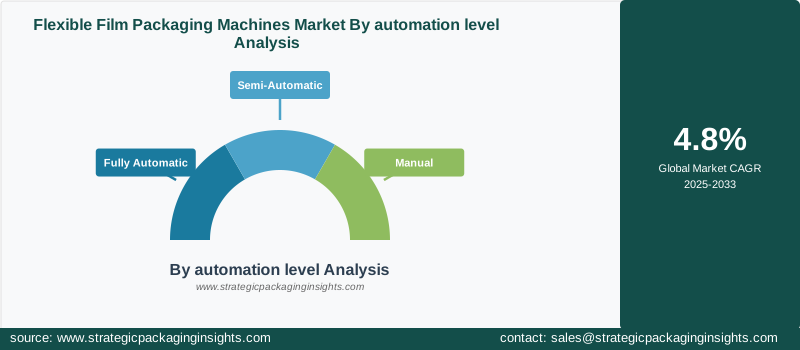
The adoption of automated changeover systems and robotics integration is gaining traction, driven by the need for increased production speed and flexibility in packaging operations. The emphasis on reducing downtime and enhancing operational efficiency is influencing product development and procurement strategies. The focus on sustainability and digitalization is also driving innovation and creating opportunities for growth.
By Technology Analysis
The market is segmented by technology, with servo-driven systems and pneumatic systems being the most widely used due to their reliability and precision. The demand for robotics integration and digital control systems is also growing, driven by the need for increased automation and efficiency in packaging operations. The adoption of IoT-enabled machines and AI-based inspection systems is gaining traction, driven by the need for real-time monitoring and quality control.
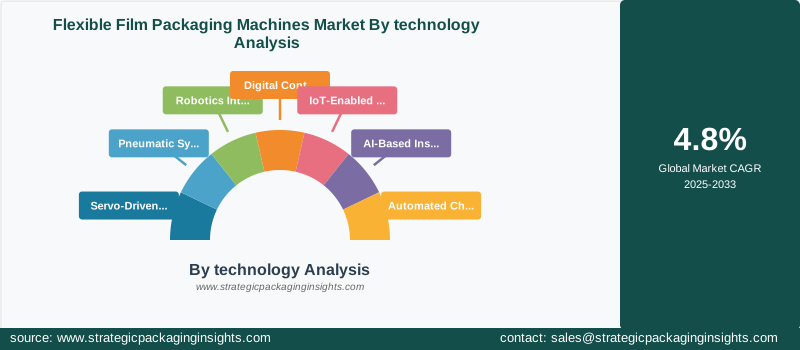
The focus on automation and efficiency is driving the demand for advanced packaging machines with integrated technologies such as IoT and AI. The emphasis on reducing downtime and enhancing operational efficiency is influencing product development and procurement strategies. The focus on sustainability and digitalization is also driving innovation and creating opportunities for growth.
By Sealing Technology Analysis
The market is segmented by sealing technology, with heat sealing and ultrasonic sealing being the most widely used due to their reliability and efficiency. The demand for impulse sealing and continuous sealing is also growing, driven by the need for increased production speed and flexibility in packaging operations. The adoption of hot-wire sealing is gaining traction, particularly in the food and beverage industry, where product protection and shelf life are critical.
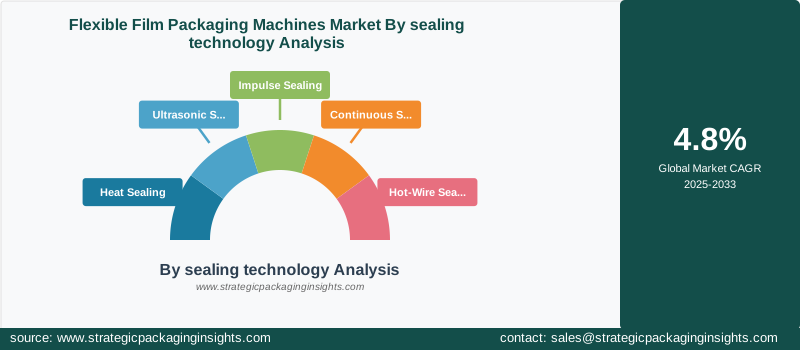
The focus on automation and efficiency is driving the demand for advanced packaging machines with integrated technologies such as IoT and AI. The emphasis on reducing downtime and enhancing operational efficiency is influencing product development and procurement strategies. The focus on sustainability and digitalization is also driving innovation and creating opportunities for growth.
By Application Analysis
The market is segmented by application, with food packaging and beverage packaging being the most widely used due to their versatility and convenience. The demand for pharmaceutical packaging and personal care packaging is also growing, driven by the need for product protection and presentation. The adoption of cosmetics packaging and household products packaging is gaining traction, driven by consumer preferences for easy-to-use and resealable packaging.
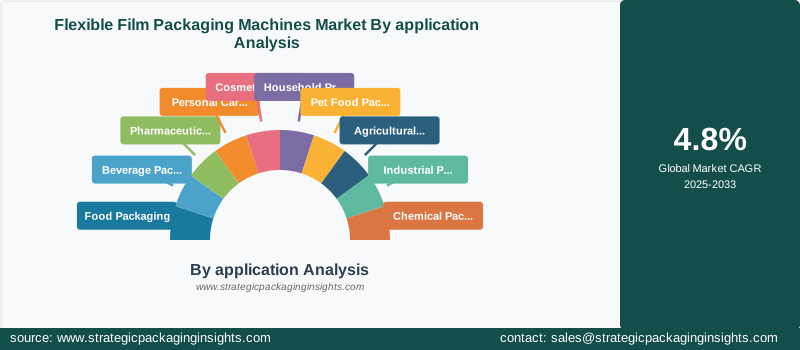
The focus on sustainability is driving the demand for recyclable and biodegradable films, with companies exploring new materials and technologies to enhance recyclability and reduce environmental impact. The emphasis on reducing packaging waste and enhancing sustainability is influencing product development and procurement strategies. The adoption of recyclable mono-material films is also gaining traction, driven by regulatory requirements and consumer preferences for sustainable packaging solutions.
By End Use Industry Analysis
The market is segmented by end use industry, with food and beverages being the largest and fastest-growing segment due to the increasing demand for flexible packaging solutions. The demand for pharmaceuticals and personal care and cosmetics is also growing, driven by the need for product protection and presentation. The adoption of household products and consumer goods is gaining traction, driven by consumer preferences for easy-to-use and resealable packaging.
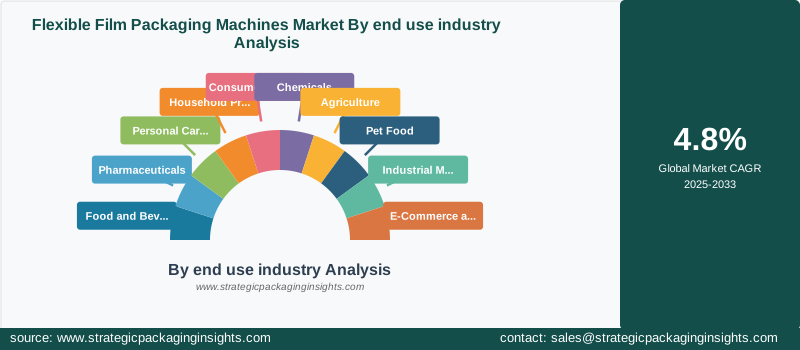
The focus on sustainability is driving the demand for recyclable and biodegradable films, with companies exploring new materials and technologies to enhance recyclability and reduce environmental impact. The emphasis on reducing packaging waste and enhancing sustainability is influencing product development and procurement strategies. The adoption of recyclable mono-material films is also gaining traction, driven by regulatory requirements and consumer preferences for sustainable packaging solutions.
By Machine Capacity Analysis
The market is segmented by machine capacity, with high-speed machines and ultra-high-speed machines being the most widely used due to their efficiency and precision. The demand for low-speed machines and medium-speed machines is also growing, particularly in small and medium-sized enterprises where cost considerations are important. The focus on automation and efficiency is driving the demand for advanced packaging machines with integrated technologies such as IoT and AI.
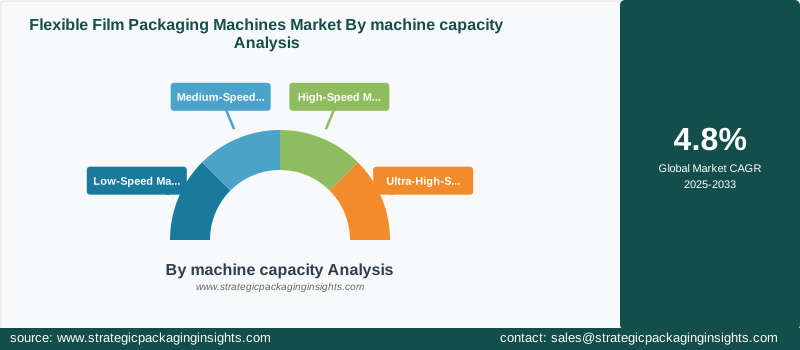
The adoption of automated changeover systems and robotics integration is gaining traction, driven by the need for increased production speed and flexibility in packaging operations. The emphasis on reducing downtime and enhancing operational efficiency is influencing product development and procurement strategies. The focus on sustainability and digitalization is also driving innovation and creating opportunities for growth.
By Functionality Analysis
The market is segmented by functionality, with filling and forming being the most widely used due to their versatility and convenience. The demand for sealing and wrapping is also growing, driven by the need for product protection and presentation. The adoption of cutting and pouch making is gaining traction, driven by consumer preferences for easy-to-use and resealable packaging.
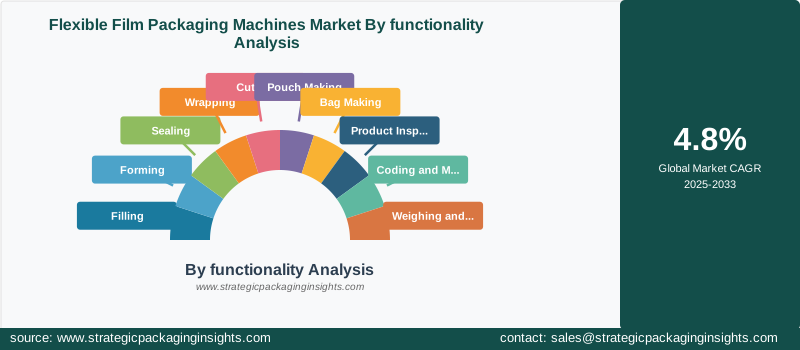
The focus on sustainability is driving the demand for recyclable and biodegradable films, with companies exploring new materials and technologies to enhance recyclability and reduce environmental impact. The emphasis on reducing packaging waste and enhancing sustainability is influencing product development and procurement strategies. The adoption of recyclable mono-material films is also gaining traction, driven by regulatory requirements and consumer preferences for sustainable packaging solutions.
Flexible Film Packaging Machines Market Segments
The Flexible Film Packaging Machines market has been segmented on the basis ofBy machine type
- Vertical Form-Fill-Seal Machines
- Horizontal Form-Fill-Seal Machines
- Pre-Made Pouch Packaging Machines
- Bagging Machines
- Wrapping Machines
- Thermoforming Machines
- Blister Packaging Machines
- Shrink Wrapping Machines
- Overwrapping Machines
- Sachet and Stick Pack Machines
By packaging format
- Pouches
- Bags
- Sachets
- Stick Packs
- Roll Film
- Multilayer Films
- Stand-Up Pouches
- Flat Pouches
- Spouted Pouches
- Vacuum Packs
By film type
- Polyethylene Films
- Polypropylene Films
- Polyester Films
- Polyamide Films
- EVOH Films
- PVC Films
- Biodegradable Films
- Compostable Films
- Recyclable Mono-Material Films
- Multilayer Films
By automation level
- Fully Automatic
- Semi-Automatic
- Manual
By technology
- Servo-Driven Systems
- Pneumatic Systems
- Robotics Integration
- Digital Control Systems
- IoT-Enabled Machines
- AI-Based Inspection Systems
- Automated Changeover Systems
By sealing technology
- Heat Sealing
- Ultrasonic Sealing
- Impulse Sealing
- Continuous Sealing
- Hot-Wire Sealing
By application
- Food Packaging
- Beverage Packaging
- Pharmaceutical Packaging
- Personal Care Packaging
- Cosmetics Packaging
- Household Products Packaging
- Pet Food Packaging
- Agricultural Products Packaging
- Industrial Products Packaging
- Chemical Packaging
By end use industry
- Food and Beverages
- Pharmaceuticals
- Personal Care and Cosmetics
- Household Products
- Consumer Goods
- Chemicals
- Agriculture
- Pet Food
- Industrial Manufacturing
- E-Commerce and Logistics
By machine capacity
- Low-Speed Machines
- Medium-Speed Machines
- High-Speed Machines
- Ultra-High-Speed Machines
By functionality
- Filling
- Forming
- Sealing
- Wrapping
- Cutting
- Pouch Making
- Bag Making
- Product Inspection
- Coding and Marking
- Weighing and Dosing
By region
- North America
- Europe
- Asia Pacific
- Latin America
- Middle East and Africa




