


Filter Bag Market Outlook
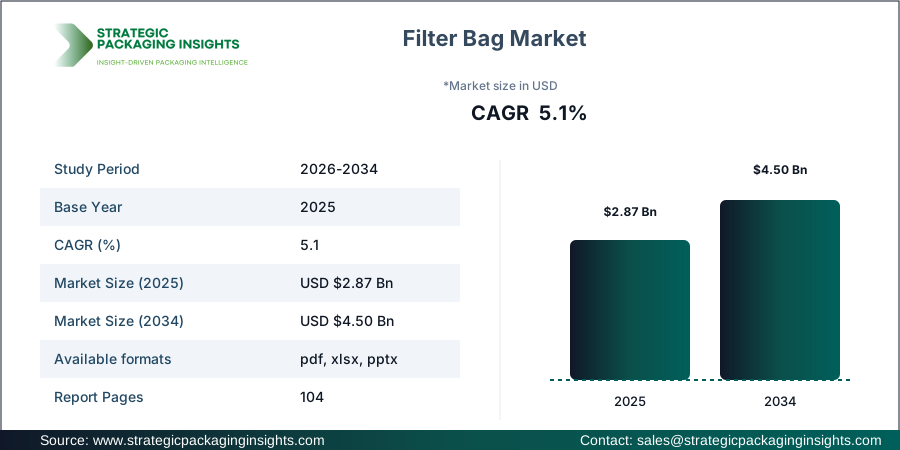
The Filter Bag market was valued at $2.87 billion in 2025 and is projected to reach $4.50 billion by 2034, growing at a CAGR of 5.1% during the forecast period 2026-2034. This growth is driven by increasing industrial activities and stringent environmental regulations that necessitate efficient filtration solutions. The demand for filter bags is particularly high in sectors such as manufacturing, food processing, and healthcare, where maintaining air and liquid purity is critical. The market is also benefiting from technological advancements in filtration materials and designs, which enhance the efficiency and lifespan of filter bags. As industries continue to expand and environmental concerns rise, the filter bag market is poised for significant growth.
Despite the promising growth prospects, the filter bag market faces challenges such as fluctuating raw material prices and the availability of alternative filtration technologies. Regulatory limits on emissions and waste management also pose constraints, requiring companies to innovate continuously to meet compliance standards. However, these challenges also present opportunities for growth, as companies that can offer cost-effective and compliant solutions are likely to gain a competitive edge. The market's potential is further bolstered by the increasing adoption of eco-friendly and sustainable filtration solutions, which align with global environmental goals.
Report Scope
| Attributes | Details |
| Report Title | Filter Bag Market Size, Future Growth and Forecast 2034 |
| By Product Type | Liquid Filter Bags, Dust Collector Bags, Tea Filter Bags, Industrial Filter Bags |
| By Material Type | Polyester, Polypropylene, Nylon, Paper |
| By Application | Food, Chemicals, Pharmaceuticals, Industrial Filtration |
| By End Use | Manufacturing, Food Processing, Healthcare, Utilities |
| Region | Asia Pacific, North America, Latin America, Europe, Middle East & Africa |
| Base Year | 2025 |
| Historic Period | 2018-2024 |
| Forecast Period | 2026-2034 |
| Number of Pages | 104 |
| Customization Available | Yes* |
Opportunities & Threats
The filter bag market presents numerous opportunities, particularly in emerging economies where industrialization is rapidly advancing. As these regions develop, the demand for efficient filtration systems to manage industrial emissions and waste is expected to rise significantly. Additionally, the growing awareness of environmental sustainability is driving the adoption of eco-friendly filter bags, which are made from biodegradable materials. This trend is opening new avenues for manufacturers to innovate and capture market share by offering sustainable solutions. Furthermore, advancements in nanotechnology are enabling the development of filter bags with enhanced filtration capabilities, providing opportunities for companies to differentiate their products in a competitive market.
Another opportunity lies in the increasing demand for customized filtration solutions. Industries such as pharmaceuticals and food processing require highly specialized filtration systems to meet stringent quality standards. This demand for customization is encouraging manufacturers to invest in research and development to create tailor-made solutions that cater to specific industry needs. Additionally, the integration of smart technologies in filtration systems is gaining traction, allowing for real-time monitoring and maintenance, which enhances operational efficiency and reduces downtime. Companies that can leverage these technological advancements are likely to gain a competitive advantage in the market.
However, the filter bag market is not without its threats. One of the primary challenges is the volatility in raw material prices, which can significantly impact production costs and profit margins. The availability of alternative filtration technologies, such as membrane filtration and electrostatic precipitators, also poses a threat to the traditional filter bag market. These alternatives often offer higher efficiency and lower maintenance costs, making them attractive options for industries looking to optimize their operations. Additionally, stringent environmental regulations can increase compliance costs for manufacturers, potentially affecting their competitiveness in the market.
Drivers & Challenges
The primary drivers of the filter bag market include the increasing industrialization and urbanization across the globe. As industries expand, the need for effective filtration systems to manage emissions and maintain air quality becomes paramount. This is particularly true in sectors such as manufacturing and utilities, where large volumes of pollutants are generated. Additionally, the growing emphasis on environmental sustainability is driving the adoption of filter bags, as they offer an efficient and cost-effective solution for reducing industrial emissions. The development of advanced filtration materials, such as high-performance synthetic fibers, is also contributing to market growth by enhancing the efficiency and durability of filter bags.
Technological advancements are another significant driver of the filter bag market. Innovations in filtration technology, such as the use of nanofibers and smart filtration systems, are enhancing the performance and lifespan of filter bags. These advancements are enabling manufacturers to offer products that meet the increasingly stringent regulatory standards for emissions and waste management. Furthermore, the rising demand for energy-efficient filtration solutions is encouraging companies to develop products that reduce energy consumption while maintaining high filtration efficiency. This focus on energy efficiency is particularly relevant in regions with high energy costs, where reducing operational expenses is a priority for industries.
Despite these drivers, the filter bag market faces several challenges. One of the main challenges is the competition from alternative filtration technologies, which often offer superior performance and lower maintenance costs. Additionally, the market is subject to fluctuations in raw material prices, which can impact production costs and profitability. The need for continuous innovation to meet evolving regulatory standards also presents a challenge for manufacturers, as it requires significant investment in research and development. Moreover, the market is highly fragmented, with numerous small and medium-sized players competing for market share, which can lead to price competition and margin pressures.
Market Share Analysis
The filter bag market is characterized by a competitive landscape with several key players dominating the market. Companies such as Eaton, Pall Corporation, Donaldson, and Parker Hannifin hold significant market shares due to their extensive product portfolios and strong distribution networks. These companies have established themselves as leaders in the market by consistently investing in research and development to innovate and improve their product offerings. Their ability to provide customized solutions and maintain high-quality standards has enabled them to capture a substantial share of the market.
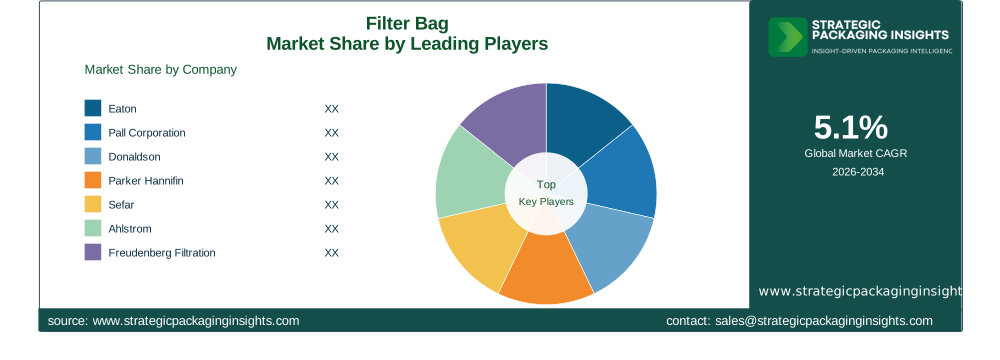
In addition to these major players, companies like Sefar, Ahlstrom, and Freudenberg Filtration are also prominent in the filter bag market. These companies have carved out niches by focusing on specific applications and industries, such as food processing and pharmaceuticals. Their expertise in developing specialized filtration solutions has allowed them to build strong relationships with customers and secure long-term contracts. Furthermore, their commitment to sustainability and eco-friendly products has resonated well with environmentally conscious consumers, further enhancing their market position.
Camfil, 3M, and Filtration Group are other notable players in the filter bag market. These companies have leveraged their global presence and technological expertise to expand their market reach and offer innovative filtration solutions. Their focus on quality and customer satisfaction has helped them maintain a competitive edge in the market. Additionally, their strategic partnerships and acquisitions have enabled them to strengthen their product portfolios and enhance their market presence. As the market continues to evolve, these companies are well-positioned to capitalize on emerging opportunities and drive growth.
The competitive landscape of the filter bag market is further intensified by the presence of numerous regional and local players. These companies often compete on price and offer cost-effective solutions to cater to the needs of small and medium-sized enterprises. While they may not have the same resources as the larger players, their agility and ability to adapt to changing market conditions allow them to capture niche segments and maintain a foothold in the market. Overall, the filter bag market is dynamic and competitive, with companies continuously striving to innovate and differentiate themselves to gain a competitive advantage.
Key Highlights
- The filter bag market is projected to grow from $2.87 billion in 2025 to $4.50 billion by 2034, at a CAGR of 5.1%.
- Key drivers include increasing industrialization, environmental regulations, and technological advancements in filtration materials.
- Opportunities exist in emerging markets and the demand for eco-friendly and customized filtration solutions.
- Challenges include raw material price volatility and competition from alternative filtration technologies.
- Major players include Eaton, Pall Corporation, Donaldson, Parker Hannifin, and Sefar.
- Technological advancements such as nanotechnology and smart filtration systems are enhancing market growth.
- The market is highly competitive, with numerous regional and local players offering cost-effective solutions.
Top Countries Insights
In the filter bag market, the United States stands out as a leading country, with a market size of approximately $1.2 billion and a CAGR of 4%. The country's stringent environmental regulations and the presence of major manufacturing industries drive the demand for efficient filtration solutions. Additionally, technological advancements and a focus on sustainability are key growth drivers in the U.S. market. However, challenges such as high raw material costs and competition from alternative technologies persist.
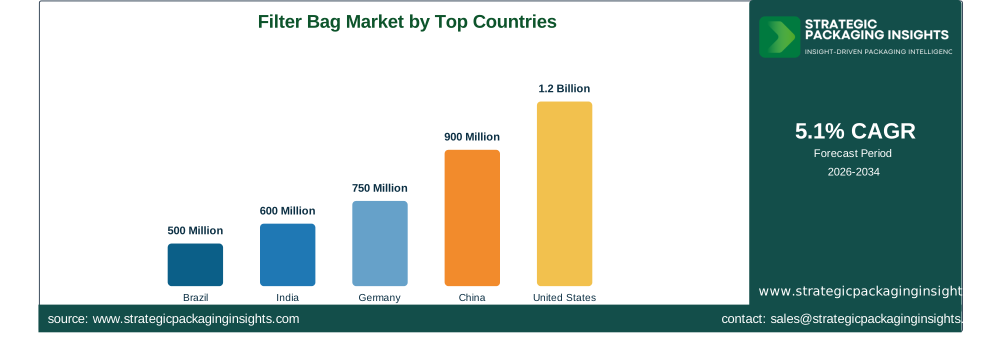
China is another significant player in the filter bag market, with a market size of around $900 million and a CAGR of 6%. The rapid industrialization and urbanization in China have led to increased demand for filtration systems to manage emissions and waste. Government initiatives to improve air quality and reduce pollution are further propelling market growth. However, the market faces challenges such as regulatory compliance and the need for continuous innovation to meet evolving standards.
Germany, with a market size of $750 million and a CAGR of 5%, is a key market for filter bags in Europe. The country's strong manufacturing sector and commitment to environmental sustainability drive the demand for advanced filtration solutions. Innovations in filtration technology and a focus on energy efficiency are key growth drivers. However, the market faces challenges such as high production costs and competition from alternative technologies.
India, with a market size of $600 million and a CAGR of 7%, is an emerging market for filter bags. The country's growing industrial sector and increasing environmental awareness are driving the demand for efficient filtration systems. Government initiatives to promote clean energy and reduce pollution are also contributing to market growth. However, challenges such as infrastructure limitations and regulatory compliance persist.
Brazil, with a market size of $500 million and a CAGR of 5%, is a significant market in Latin America. The country's expanding industrial sector and focus on environmental sustainability are driving the demand for filter bags. However, the market faces challenges such as economic instability and competition from alternative technologies. Despite these challenges, the market presents opportunities for growth, particularly in the food processing and manufacturing sectors.
Filter Bag Market Segments Insights

Product Type Analysis
The filter bag market is segmented by product type into liquid filter bags, dust collector bags, tea filter bags, and industrial filter bags. Liquid filter bags are widely used in industries such as chemicals and pharmaceuticals, where maintaining liquid purity is crucial. The demand for dust collector bags is driven by the need to control air pollution in manufacturing and processing industries. Tea filter bags, although a niche segment, are gaining popularity due to the increasing consumption of tea and the demand for convenient brewing solutions. Industrial filter bags are essential in various applications, including cement and metal processing, where they help in managing dust and emissions.
Technological advancements in filtration materials and designs are enhancing the efficiency and lifespan of these products, making them more attractive to end-users. The development of high-performance synthetic fibers and nanofiber technologies is particularly noteworthy, as they offer superior filtration capabilities and durability. Additionally, the growing emphasis on sustainability is driving the demand for eco-friendly filter bags made from biodegradable materials. As industries continue to expand and environmental concerns rise, the demand for efficient and sustainable filtration solutions is expected to grow, driving the market for filter bags.
Material Type Analysis
The filter bag market is also segmented by material type, including polyester, polypropylene, nylon, and paper. Polyester filter bags are popular due to their durability and resistance to chemicals and high temperatures, making them suitable for various industrial applications. Polypropylene filter bags are favored for their cost-effectiveness and versatility, while nylon filter bags are known for their strength and abrasion resistance. Paper filter bags, although less durable, are used in applications where cost is a primary consideration.
The choice of material is often dictated by the specific requirements of the application, such as temperature, chemical exposure, and filtration efficiency. Advances in material technology are enabling the development of filter bags with enhanced performance characteristics, such as higher filtration efficiency and longer service life. The growing demand for eco-friendly materials is also influencing the market, with manufacturers increasingly focusing on developing sustainable alternatives to traditional materials. As industries seek to reduce their environmental footprint, the demand for filter bags made from biodegradable and recyclable materials is expected to rise.
Application Analysis
The application segment of the filter bag market includes food, chemicals, pharmaceuticals, and industrial filtration. In the food industry, filter bags are used to ensure product purity and safety, while in the chemical industry, they are essential for managing emissions and waste. The pharmaceutical industry relies on filter bags to maintain stringent quality standards and prevent contamination. Industrial filtration applications, such as cement and metal processing, require robust filtration solutions to manage dust and emissions.
The demand for filter bags in these applications is driven by the need to comply with regulatory standards and improve operational efficiency. Technological advancements in filtration technology are enabling the development of more efficient and cost-effective solutions, which are particularly important in industries with high operational costs. The growing emphasis on sustainability is also influencing the market, with companies increasingly seeking eco-friendly filtration solutions to reduce their environmental impact. As industries continue to expand and regulatory standards become more stringent, the demand for advanced filtration solutions is expected to grow.
End Use Analysis
The end-use segment of the filter bag market includes manufacturing, food processing, healthcare, and utilities. In the manufacturing sector, filter bags are used to manage emissions and maintain air quality, while in food processing, they ensure product purity and safety. The healthcare industry relies on filter bags to maintain sterile environments and prevent contamination. In the utilities sector, filter bags are used to manage emissions and improve operational efficiency.
The demand for filter bags in these end-use industries is driven by the need to comply with regulatory standards and improve operational efficiency. Technological advancements in filtration technology are enabling the development of more efficient and cost-effective solutions, which are particularly important in industries with high operational costs. The growing emphasis on sustainability is also influencing the market, with companies increasingly seeking eco-friendly filtration solutions to reduce their environmental impact. As industries continue to expand and regulatory standards become more stringent, the demand for advanced filtration solutions is expected to grow.
Filter Bag Market Segments
The Filter Bag market has been segmented on the basis ofBy Product Type
- Liquid Filter Bags
- Dust Collector Bags
- Tea Filter Bags
- Industrial Filter Bags
By Material Type
- Polyester
- Polypropylene
- Nylon
- Paper
By Application
- Food
- Chemicals
- Pharmaceuticals
- Industrial Filtration
By End Use
- Manufacturing
- Food Processing
- Healthcare
- Utilities
Region
- Asia Pacific
- North America
- Latin America
- Europe
- Middle East & Africa




