


Fiber-Based Blister Pack Market Outlook
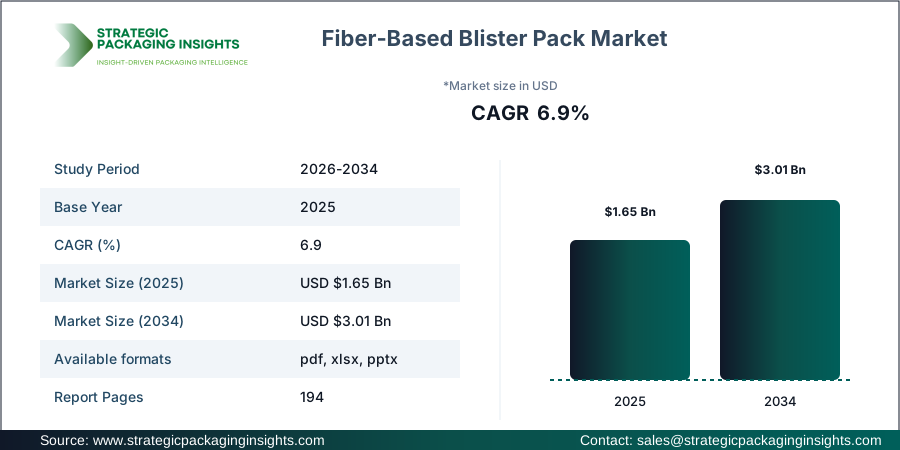
The Fiber-Based Blister Pack market was valued at $1.65 billion in 2025 and is projected to reach $3.01 billion by 2034, growing at a CAGR of 6.9% during the forecast period 2026-2034. This growth is driven by increasing consumer demand for sustainable packaging solutions, as well as regulatory pressures to reduce plastic waste. The market is witnessing a shift towards eco-friendly materials, with companies investing in innovative packaging technologies that utilize renewable resources. The pharmaceutical and food & beverage sectors are particularly significant contributors to this market expansion, as they seek to enhance product safety and shelf life while minimizing environmental impact.
Despite the promising growth trajectory, the Fiber-Based Blister Pack market faces challenges such as high production costs and limited availability of raw materials. Regulatory constraints and the need for specialized machinery for production also pose barriers to market entry for new players. However, advancements in material science and increasing investments in research and development are expected to mitigate these challenges, offering lucrative opportunities for market participants. The market's potential is further bolstered by the growing consumer awareness and preference for sustainable packaging solutions, which is anticipated to drive demand across various end-use industries.
Report Scope
| Attributes | Details |
| Report Title | Fiber-Based Blister Pack Market Size, Future Growth and Forecast 2034 |
| Material | Wood, Paper, Pulp, Bioplastics |
| Application | Pharmaceuticals, Food & Beverage, Consumer Goods |
| Packaging Type | Blister Packs, Trays |
| Region | Asia Pacific, North America, Latin America, Europe, Middle East & Africa |
| Base Year | 2025 |
| Historic Period | 2018-2024 |
| Forecast Period | 2026-2034 |
| Number of Pages | 194 |
| Customization Available | Yes* |
Opportunities & Threats
The Fiber-Based Blister Pack market presents significant opportunities driven by the increasing demand for sustainable packaging solutions. As consumers become more environmentally conscious, there is a growing preference for packaging that reduces plastic waste and utilizes renewable resources. This trend is particularly evident in the food & beverage and pharmaceutical industries, where companies are seeking to enhance their sustainability credentials. Additionally, advancements in material science are enabling the development of innovative fiber-based materials that offer superior performance characteristics, such as improved barrier properties and enhanced durability. These innovations are expected to drive market growth by expanding the range of applications for fiber-based blister packs.
Another opportunity lies in the regulatory landscape, which is increasingly favoring sustainable packaging solutions. Governments around the world are implementing stringent regulations to reduce plastic waste and promote the use of eco-friendly materials. This regulatory push is creating a favorable environment for the adoption of fiber-based blister packs, as companies seek to comply with these regulations and avoid potential penalties. Furthermore, the growing trend of e-commerce is driving demand for protective packaging solutions that can withstand the rigors of shipping and handling, providing an additional growth avenue for the market.
However, the market also faces threats, particularly from the high production costs associated with fiber-based materials. The cost of raw materials and the need for specialized machinery can make fiber-based blister packs more expensive than traditional plastic alternatives. This cost differential can be a barrier to adoption, particularly for price-sensitive industries. Additionally, the limited availability of certain raw materials, such as sustainably sourced wood and pulp, can constrain market growth. Companies must navigate these challenges by investing in research and development to improve production efficiencies and reduce costs.
Drivers & Challenges
The primary drivers of the Fiber-Based Blister Pack market include the increasing consumer demand for sustainable packaging solutions and the regulatory push towards reducing plastic waste. As consumers become more environmentally conscious, there is a growing preference for packaging that minimizes environmental impact. This trend is particularly pronounced in the food & beverage and pharmaceutical industries, where companies are seeking to enhance their sustainability credentials. Additionally, advancements in material science are enabling the development of innovative fiber-based materials that offer superior performance characteristics, such as improved barrier properties and enhanced durability. These innovations are expected to drive market growth by expanding the range of applications for fiber-based blister packs.
Another significant driver is the regulatory landscape, which is increasingly favoring sustainable packaging solutions. Governments around the world are implementing stringent regulations to reduce plastic waste and promote the use of eco-friendly materials. This regulatory push is creating a favorable environment for the adoption of fiber-based blister packs, as companies seek to comply with these regulations and avoid potential penalties. Furthermore, the growing trend of e-commerce is driving demand for protective packaging solutions that can withstand the rigors of shipping and handling, providing an additional growth avenue for the market.
Despite these drivers, the market faces several challenges, including high production costs and limited availability of raw materials. The cost of raw materials and the need for specialized machinery can make fiber-based blister packs more expensive than traditional plastic alternatives. This cost differential can be a barrier to adoption, particularly for price-sensitive industries. Additionally, the limited availability of certain raw materials, such as sustainably sourced wood and pulp, can constrain market growth. Companies must navigate these challenges by investing in research and development to improve production efficiencies and reduce costs.
Market Share Analysis
The Fiber-Based Blister Pack market is characterized by a competitive landscape with several key players vying for market share. Companies such as Amcor, Berry Global, Sealed Air, Klöckner, Sonoco, Mondi, Smurfit Kappa, Innovia, MeadWestvaco, and Greif are prominent in this space, each bringing unique strengths and capabilities to the market. These companies are investing heavily in research and development to innovate and expand their product offerings, with a focus on sustainability and performance. The competitive dynamics are further influenced by strategic partnerships, mergers, and acquisitions, as companies seek to strengthen their market position and expand their geographic reach.
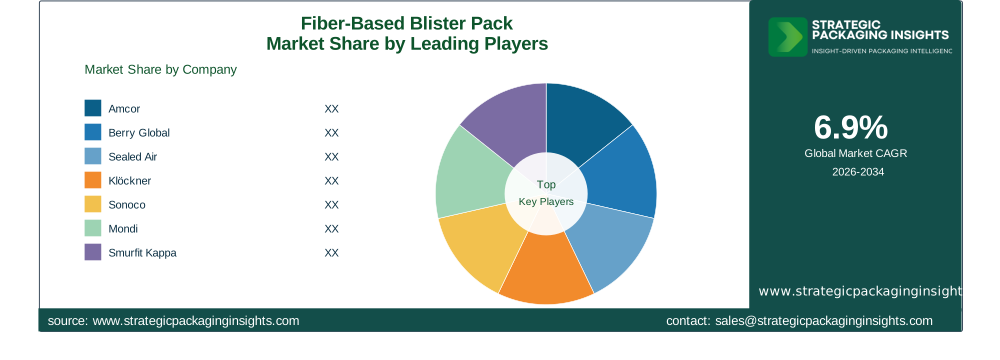
Amcor, a leading player in the market, is known for its commitment to sustainability and innovation. The company has been at the forefront of developing eco-friendly packaging solutions, leveraging its extensive research and development capabilities. Berry Global, another major player, has a strong focus on sustainability and has been actively working to reduce its environmental footprint. The company has made significant investments in developing fiber-based packaging solutions that meet the evolving needs of its customers.
Sealed Air is renowned for its innovative packaging solutions and has a strong presence in the fiber-based blister pack market. The company has been focusing on expanding its product portfolio to include more sustainable options, in line with the growing demand for eco-friendly packaging. Klöckner, with its extensive experience in the packaging industry, has been actively investing in research and development to enhance its fiber-based packaging offerings. The company is committed to sustainability and has been working to reduce its environmental impact through innovative packaging solutions.
Sonoco and Mondi are also key players in the market, each with a strong focus on sustainability and innovation. Sonoco has been investing in developing fiber-based packaging solutions that offer superior performance characteristics, while Mondi has been focusing on expanding its product portfolio to include more sustainable options. Smurfit Kappa, Innovia, MeadWestvaco, and Greif are also prominent players in the market, each bringing unique strengths and capabilities to the table. These companies are investing heavily in research and development to innovate and expand their product offerings, with a focus on sustainability and performance.
Key Highlights
- The Fiber-Based Blister Pack market is projected to grow at a CAGR of 6.9% from 2026 to 2034.
- Increasing consumer demand for sustainable packaging solutions is a major driver of market growth.
- Regulatory pressures to reduce plastic waste are creating a favorable environment for market expansion.
- Advancements in material science are enabling the development of innovative fiber-based materials.
- The pharmaceutical and food & beverage sectors are significant contributors to market growth.
- High production costs and limited availability of raw materials are key challenges for the market.
- Companies are investing in research and development to improve production efficiencies and reduce costs.
- The competitive landscape is characterized by strategic partnerships, mergers, and acquisitions.
- Key players in the market include Amcor, Berry Global, Sealed Air, Klöckner, Sonoco, Mondi, Smurfit Kappa, Innovia, MeadWestvaco, and Greif.
Top Countries Insights
In the Fiber-Based Blister Pack market, the United States stands out as a key player, with a market size of approximately $500 million and a CAGR of 7%. The country's strong focus on sustainability and regulatory support for eco-friendly packaging solutions are driving market growth. The demand for fiber-based blister packs is particularly high in the pharmaceutical and food & beverage sectors, where companies are seeking to enhance product safety and shelf life while minimizing environmental impact.
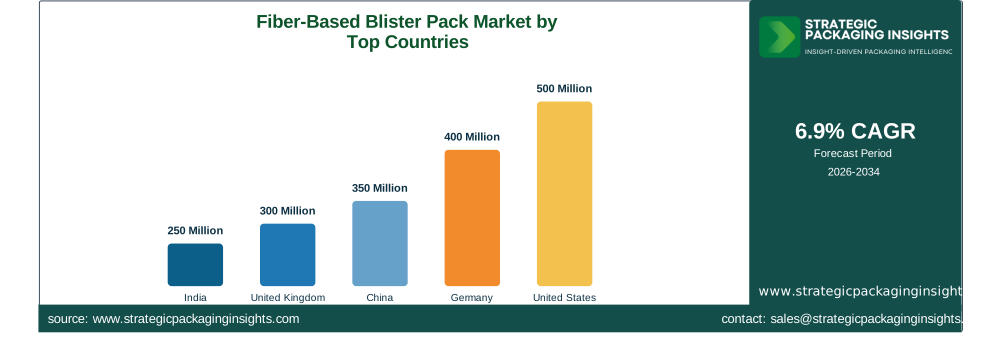
Germany is another significant market, with a market size of around $400 million and a CAGR of 6%. The country's robust manufacturing sector and strong emphasis on sustainability are key growth drivers. German companies are investing in innovative packaging solutions that utilize renewable resources, in line with the country's stringent environmental regulations. The food & beverage industry is a major contributor to market growth, as companies seek to enhance their sustainability credentials.
China, with a market size of approximately $350 million and a CAGR of 8%, is a rapidly growing market for fiber-based blister packs. The country's large population and growing consumer awareness of environmental issues are driving demand for sustainable packaging solutions. The pharmaceutical industry is a significant contributor to market growth, as companies seek to comply with regulatory requirements and enhance product safety.
In the United Kingdom, the market size is estimated at $300 million, with a CAGR of 5%. The country's strong focus on sustainability and regulatory support for eco-friendly packaging solutions are driving market growth. The demand for fiber-based blister packs is particularly high in the consumer goods sector, where companies are seeking to enhance product safety and shelf life while minimizing environmental impact.
India, with a market size of approximately $250 million and a CAGR of 9%, is an emerging market for fiber-based blister packs. The country's growing population and increasing consumer awareness of environmental issues are driving demand for sustainable packaging solutions. The food & beverage industry is a major contributor to market growth, as companies seek to enhance their sustainability credentials and comply with regulatory requirements.
Fiber-Based Blister Pack Market Segments Insights

Material Analysis
The Fiber-Based Blister Pack market is segmented by material into wood, paper, pulp, and bioplastics. Wood-based blister packs are gaining traction due to their renewable nature and biodegradability. Companies are investing in sustainable forestry practices to ensure a steady supply of raw materials, which is crucial for market growth. Paper and pulp-based blister packs are also popular, offering a balance between cost-effectiveness and environmental sustainability. These materials are widely used in the food & beverage and pharmaceutical industries, where packaging safety and sustainability are paramount.
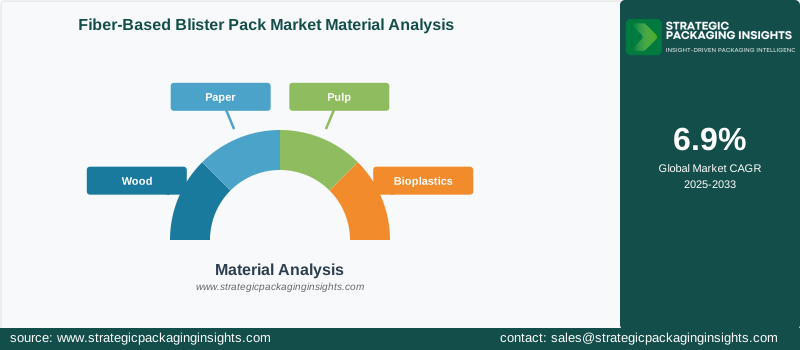
Bioplastics are emerging as a promising material segment, driven by advancements in material science and increasing consumer demand for eco-friendly packaging solutions. Bioplastics offer superior performance characteristics, such as improved barrier properties and enhanced durability, making them suitable for a wide range of applications. The growing trend of e-commerce is also driving demand for bioplastic blister packs, as companies seek protective packaging solutions that can withstand the rigors of shipping and handling.
Application Analysis
The application segment of the Fiber-Based Blister Pack market includes pharmaceuticals, food & beverage, and consumer goods. The pharmaceutical industry is a significant contributor to market growth, as companies seek to enhance product safety and shelf life while minimizing environmental impact. Fiber-based blister packs offer superior protection against moisture and contamination, making them ideal for pharmaceutical applications. The food & beverage industry is also a major driver of market growth, as companies seek to enhance their sustainability credentials and comply with regulatory requirements.
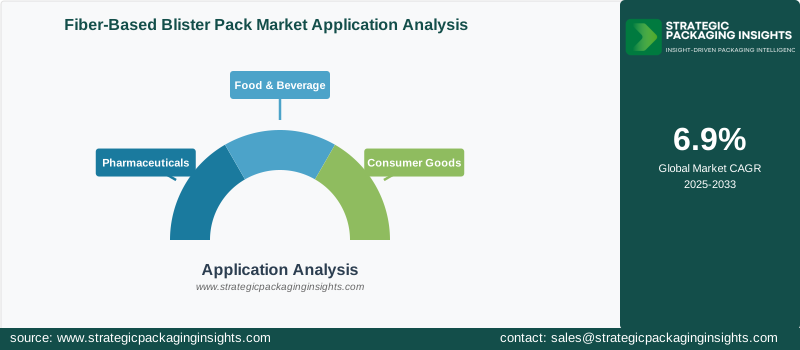
In the consumer goods sector, fiber-based blister packs are gaining popularity due to their eco-friendly nature and ability to enhance product safety and shelf life. Companies are investing in innovative packaging solutions that utilize renewable resources, in line with the growing consumer demand for sustainable packaging. The increasing trend of e-commerce is also driving demand for fiber-based blister packs, as companies seek protective packaging solutions that can withstand the rigors of shipping and handling.
Packaging Type Analysis
The Fiber-Based Blister Pack market is segmented by packaging type into blister packs and trays. Blister packs are the most popular packaging type, offering a balance between cost-effectiveness and environmental sustainability. These packs are widely used in the pharmaceutical and food & beverage industries, where packaging safety and sustainability are paramount. Companies are investing in innovative blister pack designs that utilize renewable resources and offer superior performance characteristics, such as improved barrier properties and enhanced durability.
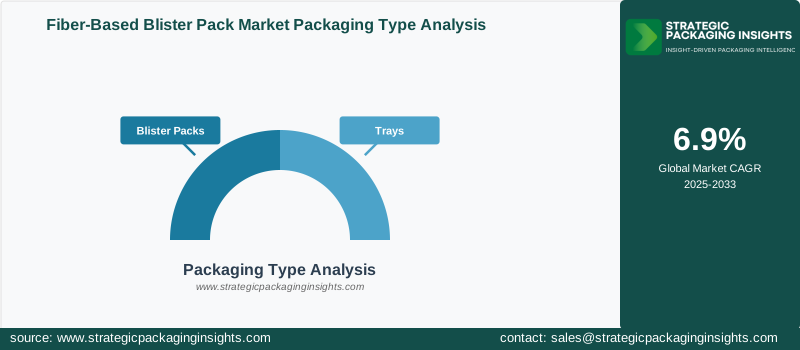
Trays are also gaining popularity in the market, driven by the growing demand for eco-friendly packaging solutions. Trays offer superior protection against moisture and contamination, making them ideal for a wide range of applications. The increasing trend of e-commerce is also driving demand for trays, as companies seek protective packaging solutions that can withstand the rigors of shipping and handling. Companies are investing in innovative tray designs that utilize renewable resources and offer superior performance characteristics, in line with the growing consumer demand for sustainable packaging.
Fiber-Based Blister Pack Market Segments
The Fiber-Based Blister Pack market has been segmented on the basis ofMaterial
- Wood
- Paper
- Pulp
- Bioplastics
Application
- Pharmaceuticals
- Food & Beverage
- Consumer Goods
Packaging Type
- Blister Packs
- Trays
Region
- Asia Pacific
- North America
- Latin America
- Europe
- Middle East & Africa




