


Fertilizer Packaging Market Outlook
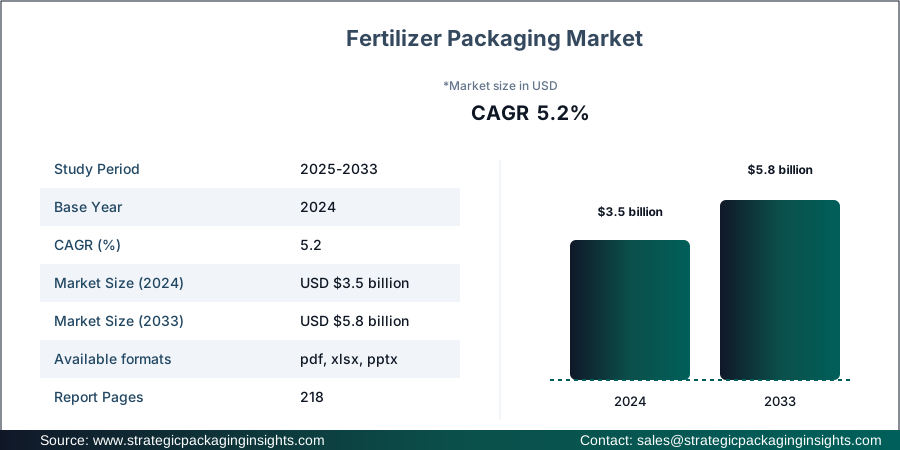
The fertilizer packaging market was valued at $3.5 billion in 2024 and is projected to reach $5.8 billion by 2033, growing at a CAGR of 5.2% during the forecast period 2025-2033. This growth is driven by the increasing demand for efficient and sustainable packaging solutions in the agricultural sector. As the global population continues to rise, the need for enhanced agricultural productivity has become paramount, leading to a surge in fertilizer consumption. Consequently, the demand for innovative packaging solutions that ensure the safe and effective delivery of fertilizers is on the rise. The market is also witnessing a shift towards eco-friendly and biodegradable packaging materials, aligning with global sustainability goals.
Report Scope
| Attributes | Details |
| Report Title | Fertilizer Packaging Market Size, Future Growth and Forecast 2033 |
| Material Type | Plastic, Paper, Metal |
| Product Type | Bags, Pouches, Bottles, Drums |
| Application | Chemical Fertilizers, Organic Fertilizers, Biofertilizers |
| Region | Asia Pacific, North America, Europe, Latin America, Middle East & Africa |
| Base Year | 2024 |
| Historic Period | 2017-2023 |
| Forecast Period | 2025-2033 |
| Number of Pages | 218 |
| Customization Available | Yes* |
Opportunities & Threats
The fertilizer packaging market presents significant opportunities for growth, particularly in the development of sustainable and biodegradable packaging solutions. As environmental concerns continue to mount, there is a growing demand for packaging materials that minimize ecological impact. Companies that invest in research and development to create innovative, eco-friendly packaging options are likely to gain a competitive edge. Additionally, the increasing adoption of precision agriculture techniques is driving the need for packaging solutions that can accommodate smaller, more precise quantities of fertilizers, opening up new avenues for market expansion.
Another opportunity lies in the expansion of the fertilizer packaging market in emerging economies. Countries in Asia Pacific and Latin America are experiencing rapid agricultural development, leading to increased fertilizer consumption. This trend is creating a demand for advanced packaging solutions that can enhance the shelf life and efficacy of fertilizers. Companies that can tailor their products to meet the specific needs of these regions are well-positioned to capitalize on this growth potential. Furthermore, the integration of smart packaging technologies, such as RFID tags and QR codes, offers opportunities for enhancing product traceability and consumer engagement.
However, the market also faces certain restrainers, such as the volatility in raw material prices. The cost of materials like plastic and paper can fluctuate significantly, impacting the overall production costs for fertilizer packaging. Additionally, stringent environmental regulations regarding the use of non-biodegradable materials pose challenges for manufacturers. Companies must navigate these regulatory landscapes carefully to ensure compliance while maintaining profitability. The increasing competition from local and international players also adds pressure on pricing strategies and profit margins.
Drivers & Challenges
One of the primary drivers of the fertilizer packaging market is the growing emphasis on agricultural productivity. With the global population projected to reach 9.7 billion by 2050, there is an urgent need to increase food production. Fertilizers play a crucial role in enhancing crop yields, and effective packaging solutions are essential for their safe storage and transportation. The demand for packaging that can protect fertilizers from moisture, contamination, and physical damage is driving innovation in the market. Additionally, the rise of organic farming practices is boosting the demand for specialized packaging solutions that cater to organic fertilizers.
Technological advancements in packaging materials and designs are also driving market growth. The development of high-barrier films and coatings that provide superior protection against environmental factors is gaining traction. These innovations not only extend the shelf life of fertilizers but also improve their efficacy. Moreover, the increasing adoption of digital printing technologies is enabling manufacturers to offer customized packaging solutions that enhance brand visibility and consumer appeal. The integration of smart packaging features, such as sensors and indicators, is further enhancing the functionality of fertilizer packaging.
Despite these drivers, the fertilizer packaging market faces several challenges. One of the key challenges is the environmental impact of packaging waste. The agricultural sector is under increasing scrutiny to reduce its carbon footprint, and packaging is a significant contributor to waste. Companies must invest in sustainable packaging solutions to address these concerns. Additionally, the high cost of advanced packaging technologies can be a barrier for small and medium-sized enterprises. The need for continuous innovation and adaptation to changing consumer preferences also poses challenges for market players.
Market Share Analysis
The fertilizer packaging market is characterized by a competitive landscape with several key players vying for market share. Leading companies in this market include Amcor Limited, Mondi Group, Berry Global Inc., Sonoco Products Company, and Smurfit Kappa Group. These companies are focusing on strategic partnerships, mergers, and acquisitions to expand their product portfolios and strengthen their market positions. The market is also witnessing the entry of new players, particularly in emerging economies, which is intensifying competition.
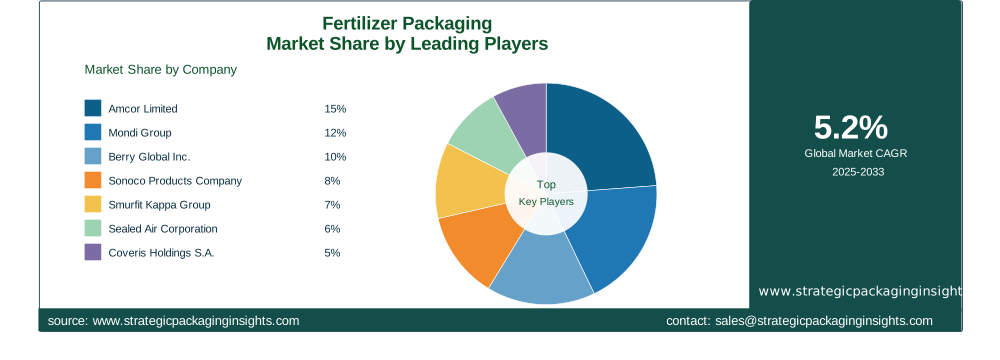
Amcor Limited holds a significant share in the fertilizer packaging market, leveraging its extensive product range and global presence. The company is known for its innovative packaging solutions that cater to various agricultural needs. Mondi Group is another major player, offering sustainable and customizable packaging options. The company's focus on eco-friendly materials and advanced manufacturing technologies has helped it maintain a strong market position. Berry Global Inc. is recognized for its high-performance packaging solutions that enhance product protection and shelf life.
Sonoco Products Company is a key player in the market, known for its diverse packaging solutions that cater to both chemical and organic fertilizers. The company's emphasis on sustainability and innovation has enabled it to capture a significant market share. Smurfit Kappa Group is also a prominent player, offering a wide range of paper-based packaging solutions. The company's commitment to sustainability and its extensive distribution network have contributed to its success in the market.
Other notable companies in the fertilizer packaging market include Sealed Air Corporation, Coveris Holdings S.A., LC Packaging International BV, and ProAmpac LLC. These companies are focusing on expanding their product offerings and enhancing their manufacturing capabilities to meet the growing demand for fertilizer packaging. The competitive landscape is further shaped by the presence of regional players who cater to specific markets and offer cost-effective solutions.
Key Highlights
- The fertilizer packaging market is projected to grow at a CAGR of 5.2% from 2025 to 2033.
- Increasing demand for sustainable and biodegradable packaging solutions is driving market growth.
- Technological advancements in packaging materials and designs are enhancing product protection and shelf life.
- Emerging economies in Asia Pacific and Latin America present significant growth opportunities.
- Integration of smart packaging technologies is enhancing product traceability and consumer engagement.
- Volatility in raw material prices poses a challenge for manufacturers.
- Stringent environmental regulations are impacting the use of non-biodegradable materials.
- Leading companies are focusing on strategic partnerships and acquisitions to expand their market presence.
- Customization and digital printing technologies are gaining traction in the market.
- Regional players are offering cost-effective solutions to cater to specific markets.
Top Countries Insights
In the fertilizer packaging market, the United States holds a significant share, with a market size of $1.2 billion and a CAGR of 4%. The country's advanced agricultural sector and focus on sustainable practices drive demand for innovative packaging solutions. Government policies supporting eco-friendly packaging further bolster market growth. China, with a market size of $900 million and a CAGR of 6%, is experiencing rapid growth due to its expanding agricultural activities and increasing adoption of precision farming techniques. The government's emphasis on sustainable agriculture is also a key growth driver.
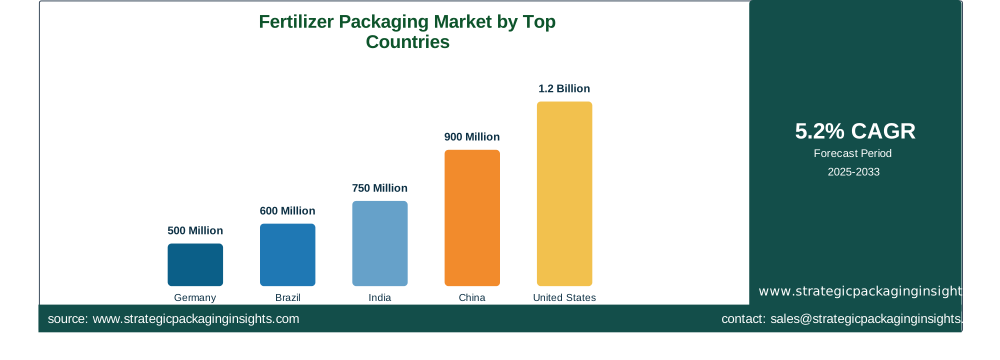
India, with a market size of $750 million and a CAGR of 7%, is witnessing robust growth driven by the rising demand for fertilizers and the adoption of modern farming practices. The government's initiatives to promote organic farming and reduce plastic waste are influencing packaging trends. Brazil, with a market size of $600 million and a CAGR of 5%, is benefiting from its large agricultural sector and increasing exports of agricultural products. The demand for durable and efficient packaging solutions is on the rise.
Germany, with a market size of $500 million and a CAGR of 3%, is focusing on sustainable packaging solutions to meet stringent environmental regulations. The country's advanced manufacturing capabilities and emphasis on innovation are driving market growth. The demand for biodegradable and recyclable packaging materials is particularly strong in Germany, aligning with the country's commitment to sustainability.
Evolving Market Dynamics (2018-2024) and Strategic Foresight (2025-2033)
| Metrics | 2018-2024 | 2025-2033 |
|---|---|---|
| CAGR | 4.5% | 5.2% |
| Market Size Evolution | $2.8 billion to $3.5 billion | $3.5 billion to $5.8 billion |
| Segment Distribution Shifts | Plastic Dominance | Shift to Biodegradable Materials |
| Regional Contribution Changes | North America Leading | Asia Pacific Emerging |
| Technological Impact Factors | Basic Packaging | Smart Packaging Integration |
| Client Demand Transformations | Standard Solutions | Customized and Eco-Friendly Solutions |
Fertilizer Packaging Market Segments Insights

Material Type Analysis
The fertilizer packaging market is segmented by material type into plastic, paper, and metal. Plastic packaging dominates the market due to its durability, lightweight nature, and cost-effectiveness. However, the growing environmental concerns and regulatory pressures are driving a shift towards biodegradable and recyclable materials. Paper packaging is gaining traction as a sustainable alternative, offering benefits such as biodegradability and renewability. Metal packaging, though less common, is used for its superior protective qualities and is preferred for high-value fertilizers that require extended shelf life.
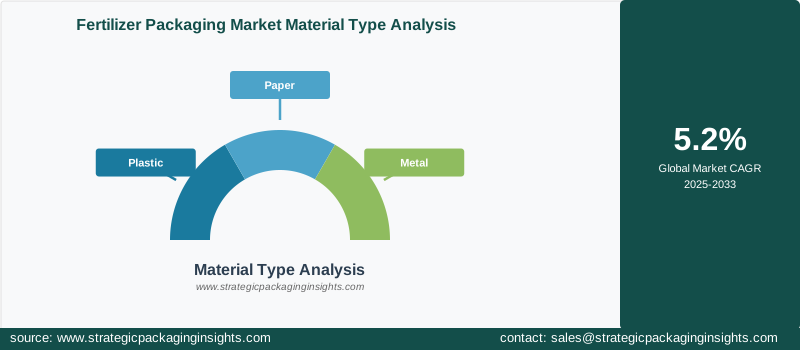
Plastic packaging, particularly polyethylene and polypropylene, remains the most widely used material in the fertilizer packaging market. Its versatility and ability to provide excellent moisture barriers make it ideal for protecting fertilizers from environmental factors. However, the increasing focus on sustainability is encouraging manufacturers to explore bio-based plastics and compostable materials. Paper packaging is emerging as a popular choice for organic fertilizers, aligning with the growing demand for eco-friendly solutions. Metal packaging, while niche, is favored for premium products that require robust protection.
Product Type Analysis
The product type segment of the fertilizer packaging market includes bags, pouches, bottles, and drums. Bags are the most commonly used packaging format, offering convenience and cost-effectiveness. They are available in various sizes and materials, catering to different fertilizer types and quantities. Pouches are gaining popularity due to their lightweight nature and ability to provide airtight seals, enhancing product shelf life. Bottles and drums are used for liquid fertilizers and high-value products that require secure and durable packaging.
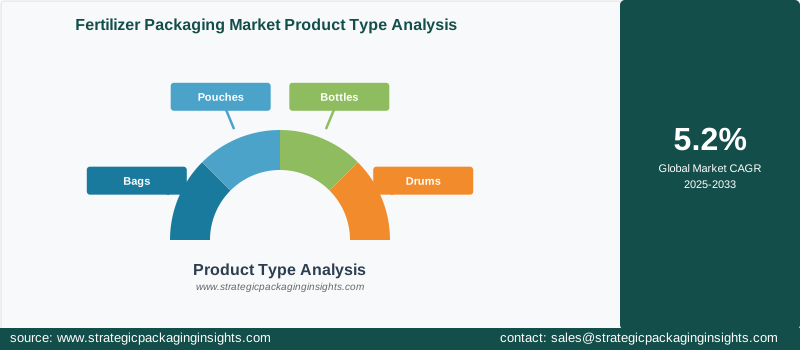
Bags, particularly woven polypropylene bags, dominate the fertilizer packaging market due to their strength and affordability. They are widely used for bulk packaging of fertilizers, providing protection against moisture and physical damage. Pouches, often made from laminated films, are preferred for smaller quantities and specialty fertilizers. Their resealable features and barrier properties make them ideal for maintaining product freshness. Bottles and drums, typically made from high-density polyethylene, are used for liquid fertilizers and products that require precise dosing and application.
Application Analysis
The application segment of the fertilizer packaging market is divided into chemical fertilizers, organic fertilizers, and biofertilizers. Chemical fertilizers account for the largest share, driven by their widespread use in conventional agriculture. The demand for packaging solutions that can protect these fertilizers from moisture and contamination is high. Organic fertilizers are gaining popularity as consumers and farmers shift towards sustainable farming practices. Packaging for organic fertilizers focuses on eco-friendly materials and designs that align with organic certification standards.
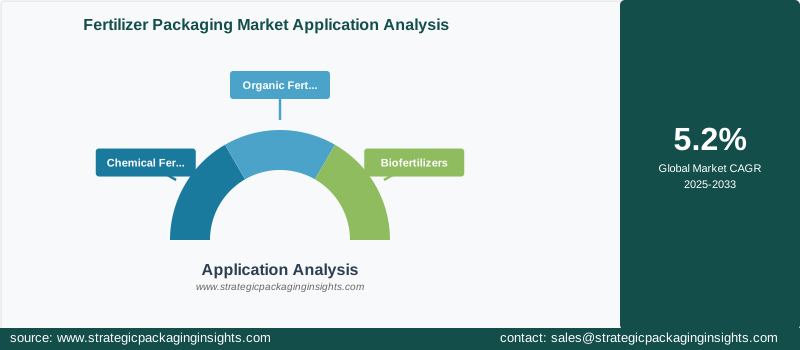
Chemical fertilizers, such as nitrogen, phosphorus, and potassium-based products, dominate the fertilizer packaging market. The need for packaging that can withstand harsh environmental conditions and prevent nutrient loss is critical. Organic fertilizers, including compost and manure-based products, are experiencing increased demand as the organic farming movement gains momentum. Packaging for organic fertilizers emphasizes sustainability and biodegradability. Biofertilizers, though a smaller segment, are growing rapidly due to their role in enhancing soil health and reducing chemical inputs.
Region Analysis
The fertilizer packaging market is geographically segmented into North America, Europe, Asia Pacific, Latin America, and the Middle East & Africa. Asia Pacific is the fastest-growing region, driven by the expanding agricultural sector and increasing adoption of modern farming practices. The demand for efficient and sustainable packaging solutions is rising as countries like China and India focus on enhancing agricultural productivity. North America and Europe are mature markets, with a strong emphasis on sustainability and innovation in packaging materials.
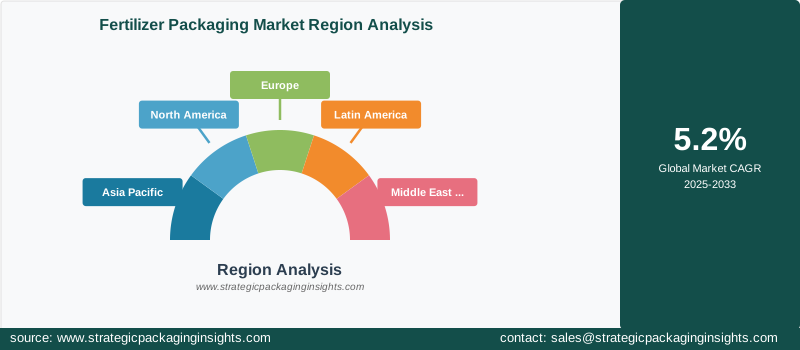
Asia Pacific, led by China and India, is experiencing rapid growth in the fertilizer packaging market. The region's large agricultural base and government initiatives to promote sustainable farming practices are key drivers. North America, particularly the United States, is focusing on advanced packaging technologies and eco-friendly materials. Europe is emphasizing sustainability, with stringent regulations driving the adoption of biodegradable and recyclable packaging solutions. Latin America and the Middle East & Africa are emerging markets, with increasing demand for efficient packaging solutions to support agricultural development.
Fertilizer Packaging Market Segments
The Fertilizer Packaging market has been segmented on the basis ofMaterial Type
- Plastic
- Paper
- Metal
Product Type
- Bags
- Pouches
- Bottles
- Drums
Application
- Chemical Fertilizers
- Organic Fertilizers
- Biofertilizers
Region
- Asia Pacific
- North America
- Europe
- Latin America
- Middle East & Africa




