


EPP Foam Packaging Market Outlook
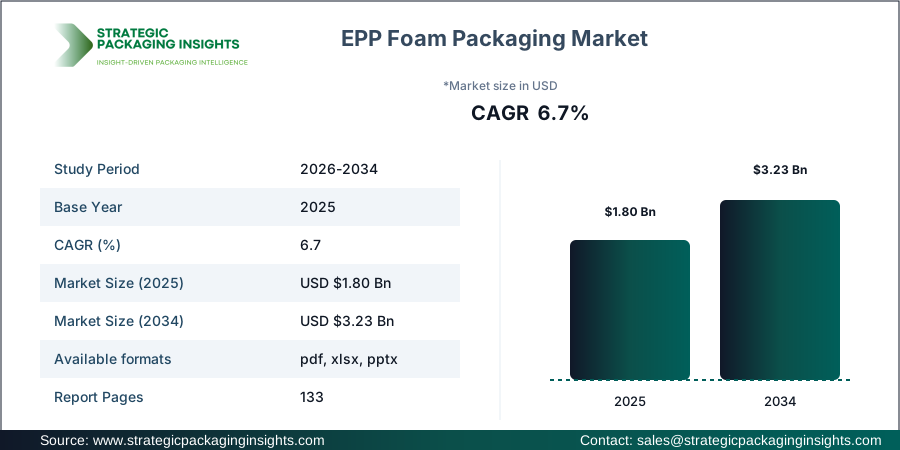
The EPP Foam Packaging market size was valued at USD 1.80 billion in 2025 and is anticipated to reach USD 3.23 billion by 2034, growing at a CAGR of 6.7% during the forecast period according to Strategic Packaging Insights. This growth is driven by the increasing demand for lightweight and durable packaging solutions across various industries, including automotive, electronics, and healthcare. Companies like JSP Corporation and BASF are at the forefront of innovation in EPP foam packaging, offering products that meet the evolving needs of these sectors. The market's expansion is further supported by the rising trend of sustainable packaging solutions, which EPP foam inherently supports due to its recyclability and energy-efficient production processes.
One of the most impactful drivers of the EPP Foam Packaging market is the automotive industry's shift towards lightweight materials to improve fuel efficiency and reduce emissions. According to industry reports, the automotive sector's demand for EPP foam is expected to grow significantly as manufacturers seek materials that offer both strength and weight reduction. This trend is bolstered by government regulations aimed at reducing carbon emissions, which encourage the use of materials like EPP foam that contribute to overall vehicle weight reduction. Companies such as Kaneka and Sekisui Chemical are leveraging this trend by developing advanced EPP foam solutions tailored for automotive applications, thereby enhancing their market position and driving growth.
Report Scope
| Attributes | Details |
| Report Title | EPP Foam Packaging Market Size, Future Growth and Forecast 2034 |
| By Product Type | EPP Inserts, EPP Boxes, EPP Trays, Reusable Containers |
| By Application | Automotive Components, Electronics, Cold Chain, Medical Devices |
| By End Use | Automotive, Healthcare, Electronics, Logistics |
| By Density | Low, Medium, High |
| Region | Asia Pacific, North America, Latin America, Europe, Middle East & Africa |
| Base Year | 2025 |
| Historic Period | 2018-2024 |
| Forecast Period | 2026-2034 |
| Number of Pages | 133 |
| Customization Available | Yes* |
Sustainability & Circular Economy Analysis
Sustainability initiatives and circular economy practices are increasingly shaping the EPP Foam Packaging market. The focus on recyclable materials and eco-friendly innovations is driving manufacturers to adopt EPP foam due to its excellent recyclability and minimal environmental impact. Companies are investing in technologies that enhance the recyclability of EPP foam, aligning with consumer preferences for sustainable packaging solutions. This shift is not only influencing packaging design but also impacting manufacturing processes, as companies strive to reduce waste and improve energy efficiency.
The adoption of lightweight packaging solutions is another significant trend in the EPP Foam Packaging market. Lightweight packaging reduces transportation costs and carbon emissions, making it an attractive option for companies looking to enhance their sustainability credentials. EPP foam's lightweight nature, combined with its durability, makes it an ideal choice for industries such as automotive and electronics, where reducing the carbon footprint is a priority. This trend is driving investment in R&D to develop innovative EPP foam products that meet the stringent requirements of these industries.
Extended Producer Responsibility (EPR) regulations are also influencing the EPP Foam Packaging market. These regulations require manufacturers to take responsibility for the entire lifecycle of their products, including end-of-life disposal. As a result, companies are focusing on developing EPP foam solutions that are not only recyclable but also reusable, thereby reducing waste and promoting a circular economy. This focus on sustainability is enhancing the long-term competitiveness of companies in the EPP Foam Packaging market, as they align their strategies with evolving regulatory requirements and consumer expectations.
Packaging Value Chain & Supply Chain Analysis
The EPP Foam Packaging market's value chain is complex, involving multiple stakeholders from raw material suppliers to end-users. Raw material sourcing is a critical component, with companies like BASF and Furukawa Electric playing a pivotal role in supplying high-quality EPP foam materials. These materials are then converted into packaging products by manufacturers and converters, who are responsible for ensuring that the final products meet industry standards and customer specifications. The efficiency of this value chain is crucial for maintaining competitive pricing and ensuring timely delivery of products to end-users.
Supply chain efficiency is a key factor influencing the performance of the EPP Foam Packaging market. Companies are investing in advanced logistics and distribution channels to enhance their supply chain resilience and ensure the timely delivery of products. Strategic partnerships with logistics providers and distributors are helping companies optimize their supply chains, reduce costs, and improve service levels. This focus on supply chain efficiency is particularly important in the context of global sourcing, where companies must navigate complex international logistics to meet customer demands.
Localization is another important trend in the EPP Foam Packaging market, as companies seek to reduce their reliance on global supply chains and enhance their responsiveness to local market needs. By establishing local manufacturing and distribution facilities, companies can reduce transportation costs, improve lead times, and better serve their customers. This trend is particularly relevant in regions like Asia Pacific and North America, where demand for EPP foam packaging is growing rapidly. Companies like Hanwha Solutions and Knauf Industries are leveraging localization strategies to strengthen their market presence and enhance their competitive advantage.
Opportunities & Threats
The EPP Foam Packaging market presents several opportunities for growth, driven by the increasing demand for sustainable and lightweight packaging solutions. The automotive industry's shift towards lightweight materials offers significant growth potential for EPP foam, as manufacturers seek to improve fuel efficiency and reduce emissions. Additionally, the electronics industry is increasingly adopting EPP foam for packaging sensitive components, due to its excellent shock absorption and thermal insulation properties. This trend is creating opportunities for companies to develop innovative EPP foam solutions that meet the specific needs of these industries.
Another opportunity lies in the growing demand for reusable packaging solutions, particularly in the logistics and cold chain sectors. EPP foam's durability and thermal insulation properties make it an ideal choice for reusable packaging applications, where maintaining product integrity during transportation is critical. Companies are investing in R&D to develop EPP foam products that can withstand multiple uses, thereby reducing waste and enhancing sustainability. This focus on reusable packaging is expected to drive growth in the EPP Foam Packaging market, as companies seek to meet the evolving needs of their customers.
Despite these opportunities, the EPP Foam Packaging market faces several threats, including the volatility of raw material prices and the availability of alternative packaging materials. Fluctuations in the prices of raw materials such as polypropylene can impact the profitability of EPP foam manufacturers, as they struggle to maintain competitive pricing. Additionally, the availability of alternative packaging materials, such as biodegradable plastics, poses a threat to the growth of the EPP Foam Packaging market. Companies must continuously innovate and improve their products to remain competitive in this dynamic market environment.
Drivers & Challenges
The primary driver of the EPP Foam Packaging market is the increasing demand for lightweight and durable packaging solutions across various industries. The automotive industry's focus on reducing vehicle weight to improve fuel efficiency and meet regulatory requirements is a significant driver of demand for EPP foam. Additionally, the electronics industry is adopting EPP foam for packaging sensitive components, due to its excellent shock absorption and thermal insulation properties. This trend is further supported by the growing emphasis on sustainability, as EPP foam is recyclable and energy-efficient to produce.
Another key driver is the growing demand for sustainable packaging solutions, as consumers and regulators increasingly prioritize environmental considerations. EPP foam's recyclability and minimal environmental impact make it an attractive option for companies looking to enhance their sustainability credentials. This trend is driving investment in R&D to develop innovative EPP foam products that meet the evolving needs of industries such as automotive, electronics, and healthcare. Companies are also focusing on developing reusable EPP foam packaging solutions, which align with the principles of a circular economy and reduce waste.
However, the EPP Foam Packaging market faces several challenges, including the volatility of raw material prices and the availability of alternative packaging materials. Fluctuations in the prices of raw materials such as polypropylene can impact the profitability of EPP foam manufacturers, as they struggle to maintain competitive pricing. Additionally, the availability of alternative packaging materials, such as biodegradable plastics, poses a threat to the growth of the EPP Foam Packaging market. Companies must continuously innovate and improve their products to remain competitive in this dynamic market environment.
Market Share Analysis
The competitive landscape of the EPP Foam Packaging market is characterized by the presence of several key players, including JSP Corporation, Kaneka, BASF, Sekisui Chemical, and Sonoco. These companies are at the forefront of innovation in EPP foam packaging, offering a wide range of products that cater to the diverse needs of industries such as automotive, electronics, and healthcare. The market is highly competitive, with companies focusing on product innovation, strategic partnerships, and mergers and acquisitions to strengthen their market position.
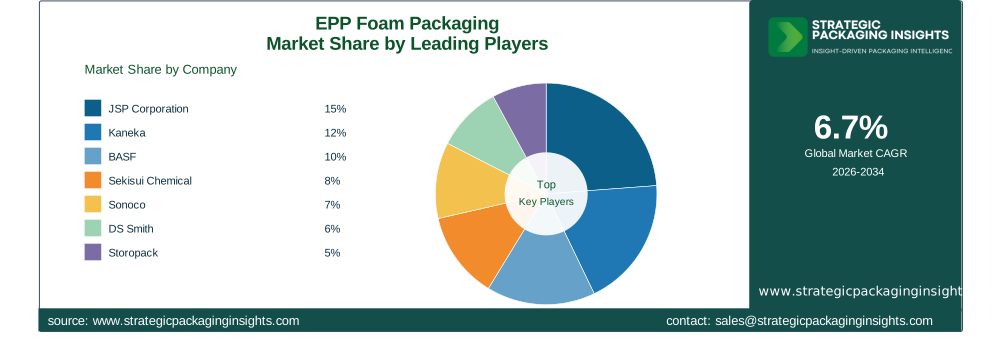
JSP Corporation is a leading player in the EPP Foam Packaging market, known for its innovative products and strong focus on sustainability. The company has a significant market share, driven by its extensive product portfolio and strong customer relationships. Kaneka is another major player, offering a range of EPP foam solutions that cater to the needs of the automotive and electronics industries. The company's focus on R&D and product innovation has helped it maintain a competitive edge in the market.
BASF is a key player in the EPP Foam Packaging market, known for its high-quality products and strong focus on sustainability. The company has a significant market share, driven by its extensive product portfolio and strong customer relationships. Sekisui Chemical is another major player, offering a range of EPP foam solutions that cater to the needs of the automotive and electronics industries. The company's focus on R&D and product innovation has helped it maintain a competitive edge in the market.
Sonoco is a leading player in the EPP Foam Packaging market, known for its innovative products and strong focus on sustainability. The company has a significant market share, driven by its extensive product portfolio and strong customer relationships. DS Smith is another major player, offering a range of EPP foam solutions that cater to the needs of the automotive and electronics industries. The company's focus on R&D and product innovation has helped it maintain a competitive edge in the market.
Key Highlights
- Market Size: The EPP Foam Packaging market was valued at USD 1.80 billion in 2025 and is projected to reach USD 3.23 billion by 2034.
- Growth Rate: The market is expected to grow at a CAGR of 6.7% during the forecast period.
- Leading Companies: Key players include JSP Corporation, Kaneka, BASF, Sekisui Chemical, and Sonoco.
- Product Innovation: Companies are focusing on developing innovative EPP foam solutions to meet the evolving needs of industries.
- Sustainability Focus: The market is driven by the growing demand for sustainable and recyclable packaging solutions.
- Regional Growth: Asia Pacific and North America are key regions driving market growth.
- Application Segments: Automotive and electronics industries are major consumers of EPP foam packaging.
EPP Foam Packaging Market Segments Insights

By Product Type Analysis
The EPP Foam Packaging market is segmented by product type into EPP Inserts, EPP Boxes, EPP Trays, and Reusable Containers. EPP Inserts are widely used in the automotive and electronics industries due to their excellent shock absorption and thermal insulation properties. These inserts provide superior protection for sensitive components, making them an ideal choice for packaging applications. EPP Boxes are gaining popularity in the logistics and cold chain sectors, where maintaining product integrity during transportation is critical. The demand for reusable containers is also growing, driven by the increasing focus on sustainability and waste reduction.
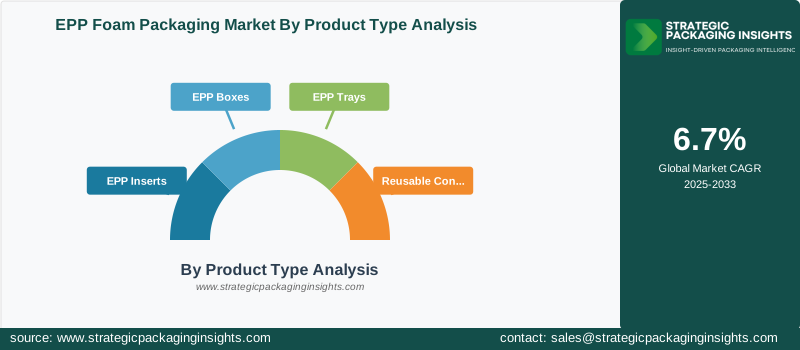
EPP Trays are another important segment, used extensively in the healthcare and electronics industries. These trays offer excellent protection for delicate components and are designed to withstand harsh environmental conditions. The growing demand for lightweight and durable packaging solutions is driving the adoption of EPP Trays across various industries. Companies are investing in R&D to develop innovative EPP Tray solutions that meet the specific needs of their customers. The focus on product innovation and sustainability is expected to drive growth in the EPP Foam Packaging market, as companies seek to enhance their competitive advantage.
By Application Analysis
The EPP Foam Packaging market is segmented by application into Automotive Components, Electronics, Cold Chain, and Medical Devices. The automotive industry is a major consumer of EPP foam, driven by the need for lightweight materials that improve fuel efficiency and reduce emissions. EPP foam is used extensively in the packaging of automotive components, providing superior protection and thermal insulation. The electronics industry is another key application segment, where EPP foam is used to package sensitive components and protect them from damage during transportation.
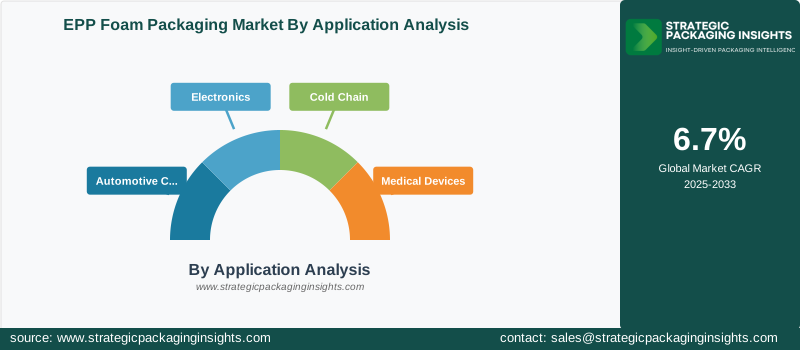
The cold chain sector is also driving demand for EPP foam packaging, as companies seek to maintain product integrity during transportation. EPP foam's excellent thermal insulation properties make it an ideal choice for cold chain applications, where maintaining a consistent temperature is critical. The medical devices industry is another important application segment, where EPP foam is used to package delicate instruments and equipment. The growing demand for lightweight and durable packaging solutions is driving the adoption of EPP foam across these application segments, as companies seek to enhance their sustainability credentials and reduce waste.
By End Use Analysis
The EPP Foam Packaging market is segmented by end use into Automotive, Healthcare, Electronics, and Logistics. The automotive industry is a major end-user of EPP foam, driven by the need for lightweight materials that improve fuel efficiency and reduce emissions. EPP foam is used extensively in the packaging of automotive components, providing superior protection and thermal insulation. The healthcare industry is another key end-user, where EPP foam is used to package delicate instruments and equipment, ensuring their safety during transportation.
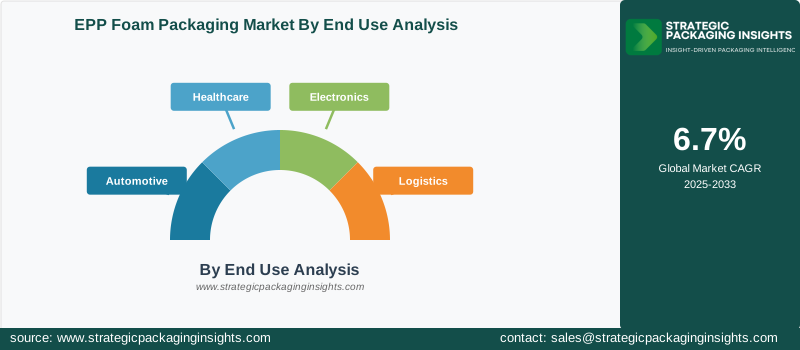
The electronics industry is also a significant end-user of EPP foam, where it is used to package sensitive components and protect them from damage during transportation. The logistics sector is another important end-user, where EPP foam is used to package a wide range of products, from consumer goods to industrial equipment. The growing demand for lightweight and durable packaging solutions is driving the adoption of EPP foam across these end-use segments, as companies seek to enhance their sustainability credentials and reduce waste.
By Density Analysis
The EPP Foam Packaging market is segmented by density into Low, Medium, and High. Low-density EPP foam is widely used in the packaging of lightweight products, where cost-effectiveness and ease of handling are important considerations. Medium-density EPP foam is used in applications where a balance between strength and weight is required, such as in the packaging of automotive components and electronics. High-density EPP foam is used in applications where maximum protection is required, such as in the packaging of heavy or delicate products.
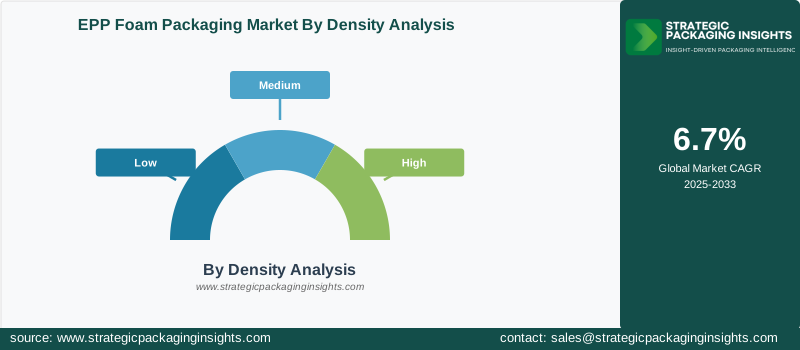
The growing demand for lightweight and durable packaging solutions is driving the adoption of EPP foam across these density segments, as companies seek to enhance their sustainability credentials and reduce waste. Companies are investing in R&D to develop innovative EPP foam solutions that meet the specific needs of their customers, with a focus on product innovation and sustainability. The focus on product innovation and sustainability is expected to drive growth in the EPP Foam Packaging market, as companies seek to enhance their competitive advantage.
EPP Foam Packaging Market Segments
The EPP Foam Packaging market has been segmented on the basis ofBy Product Type
- EPP Inserts
- EPP Boxes
- EPP Trays
- Reusable Containers
By Application
- Automotive Components
- Electronics
- Cold Chain
- Medical Devices
By End Use
- Automotive
- Healthcare
- Electronics
- Logistics
By Density
- Low
- Medium
- High
Region
- Asia Pacific
- North America
- Latin America
- Europe
- Middle East & Africa




