


Envelope Sealing Machines Market Outlook
The Envelope Sealing Machines market size was valued at USD 450 million in 2025 and is anticipated to reach USD 640 million by 2034, growing at a CAGR of 4.00% during the forecast period according to Strategic Packaging Insights. The market is witnessing a steady growth trajectory driven by the increasing demand for efficient mailing solutions across various sectors such as banking, government, and e-commerce. Companies like Quadient (Neopost) and Pitney Bowes are at the forefront, offering innovative sealing solutions that cater to the evolving needs of businesses. The rise in e-commerce and logistics activities has further fueled the demand for envelope sealing machines, as businesses seek to streamline their mailing processes and enhance operational efficiency.
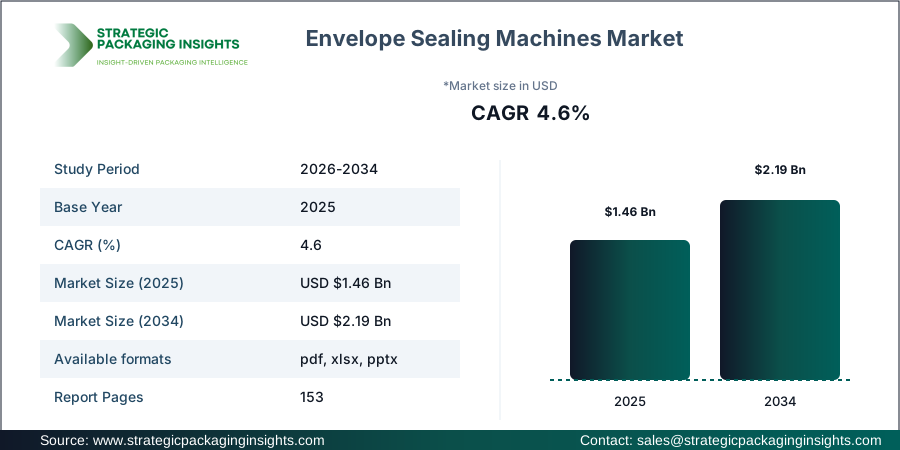
One of the most impactful drivers of the Envelope Sealing Machines market is the growing emphasis on automation and efficiency in mailing operations. As businesses strive to reduce manual labor and improve productivity, the adoption of semi-automatic and fully automatic inserter-sealers is on the rise. According to industry reports, the integration of advanced technologies in sealing machines is enabling companies to handle large volumes of mail with precision and speed, thereby reducing operational costs and enhancing customer satisfaction. This trend is particularly evident in sectors such as direct mail and printing services, where the need for high-speed, reliable sealing solutions is paramount.
Report Scope
| Attributes | Details |
| Report Title | Envelope Sealing Machines Market Size, Future Growth and Forecast 2034 |
| By Type | Manual / Desktop Sealers, Semi-Automatic, Fully Automatic Inserter-Sealers, Tabbing & Sealing Systems |
| By Sealing Method | Moisture / Water Sealing, Pressure Sealing, Self-Seal / Adhesive |
| By Speed | Up to 5,000 envelopes/hour, 5,000-15,000 envelopes/hour, Above 15,000 envelopes/hour |
| By End Use | Banking & Financial Services, Government & Utilities, Direct Mail & Printing Services, Healthcare (Statements, Records), Corporate Offices, E-commerce & Logistics |
| By Region | North America (U.S., Canada, Mexico), Europe (Germany, UK, France, Italy, Spain, Rest of Europe), Asia Pacific (China, India, Japan, South Korea, Australia, Rest of Asia Pacific), Latin America (Brazil, Argentina, Rest of Latin America), Middle East & Africa (GCC Countries, South Africa, Rest of MEA) |
| Base Year | 2025 |
| Historic Period | 2018-2024 |
| Forecast Period | 2026-2034 |
| Number of Pages | 134 |
| Customization Available | Yes* |
Sustainability & Circular Economy Analysis
Sustainability initiatives are increasingly shaping the envelope sealing machines market, as companies and consumers alike prioritize eco-friendly practices. The use of recyclable materials and the development of reusable packaging solutions are becoming standard in the industry. This shift is driven by the growing awareness of environmental issues and the need to reduce waste. Companies are investing in lightweight packaging and eco-friendly material innovations to minimize their carbon footprint and comply with stringent environmental regulations. These efforts not only enhance brand reputation but also align with consumer preferences for sustainable products.
The circular economy is influencing packaging design and manufacturing processes, encouraging companies to adopt waste reduction strategies and extended producer responsibility (EPR) programs. By focusing on the entire lifecycle of packaging materials, businesses can create more sustainable supply chains and reduce their environmental impact. This approach is gaining traction among packaging manufacturers and brand owners, who are increasingly investing in technologies that support recycling and reuse. As a result, the market for envelope sealing machines is evolving to accommodate these sustainability trends, with a focus on developing machines that are compatible with eco-friendly materials.
Regulatory compliance is another critical factor driving the adoption of sustainable practices in the envelope sealing machines market. Governments worldwide are implementing stricter packaging regulations to curb environmental pollution and promote sustainable development. Companies are responding by enhancing their ESG initiatives and investing in technologies that reduce energy consumption and emissions. These efforts are crucial for maintaining long-term market competitiveness and meeting the growing demand for sustainable packaging solutions. As the industry continues to evolve, businesses that prioritize sustainability will be better positioned to capitalize on emerging opportunities and navigate regulatory challenges.
Packaging Value Chain & Supply Chain Analysis
The packaging value chain for envelope sealing machines encompasses a wide range of activities, from raw material sourcing to the final delivery of products to end-users. Raw material availability plays a crucial role in determining the efficiency and cost-effectiveness of the supply chain. Packaging converters and manufacturers rely on a steady supply of high-quality materials to produce reliable sealing machines. Strategic partnerships with suppliers and logistics providers are essential for ensuring timely delivery and maintaining inventory levels. Companies like FP Mailing Solutions and Formax are leveraging their extensive networks to optimize procurement strategies and enhance supply chain resilience.
Logistics and distribution channels are critical components of the envelope sealing machines market, influencing overall market performance and competitiveness. Efficient transportation and inventory management are vital for meeting customer demands and minimizing operational costs. Companies are increasingly adopting localization strategies to reduce lead times and improve service levels. By establishing regional distribution centers and leveraging global sourcing capabilities, businesses can enhance their responsiveness to market changes and strengthen their competitive position. This approach is particularly important in regions like Asia Pacific and North America, where demand for envelope sealing machines is on the rise.
Recycling networks and waste management practices are becoming integral to the packaging value chain, as companies seek to align with sustainability goals and regulatory requirements. By incorporating recycling initiatives into their operations, businesses can reduce waste and promote a circular economy. This not only enhances brand reputation but also supports long-term growth by meeting consumer expectations for environmentally responsible products. As the envelope sealing machines market continues to evolve, companies that prioritize supply chain efficiency and sustainability will be better positioned to capitalize on emerging opportunities and navigate industry challenges.
Opportunities & Threats
The envelope sealing machines market presents numerous opportunities for growth, driven by technological advancements and the increasing demand for efficient mailing solutions. The rise of e-commerce and logistics activities has created a significant demand for high-speed, reliable sealing machines that can handle large volumes of mail. Companies that invest in research and development to enhance machine capabilities and integrate advanced technologies will be well-positioned to capture market share. Additionally, the growing emphasis on sustainability presents opportunities for businesses to develop eco-friendly sealing solutions that align with consumer preferences and regulatory requirements.
Another opportunity lies in the expansion of the market into emerging economies, where the demand for automated mailing solutions is on the rise. As businesses in these regions seek to improve operational efficiency and reduce labor costs, the adoption of semi-automatic and fully automatic inserter-sealers is expected to increase. Companies that establish a strong presence in these markets and offer tailored solutions to meet local needs will be able to capitalize on this growth potential. Furthermore, strategic partnerships and collaborations with local distributors and suppliers can enhance market penetration and drive long-term success.
Despite the opportunities, the envelope sealing machines market faces several threats that could impact growth. One of the primary challenges is the increasing competition from digital communication technologies, which are reducing the reliance on traditional mailing solutions. As businesses shift towards electronic communication methods, the demand for envelope sealing machines may decline. Additionally, fluctuations in raw material prices and supply chain disruptions can pose significant risks to market stability. Companies must adopt proactive strategies to mitigate these threats, such as diversifying their product offerings and enhancing supply chain resilience.
Drivers & Challenges
The envelope sealing machines market is driven by several key factors, including the growing demand for automation and efficiency in mailing operations. As businesses seek to reduce manual labor and improve productivity, the adoption of advanced sealing machines is on the rise. The integration of technologies such as artificial intelligence and machine learning is enabling companies to enhance machine capabilities and streamline operations. This trend is particularly evident in sectors such as banking and financial services, where the need for high-speed, reliable sealing solutions is paramount. Companies that invest in innovation and technology development will be well-positioned to capture market share and drive growth.
Another significant driver of the market is the increasing emphasis on sustainability and eco-friendly practices. As consumers and businesses become more environmentally conscious, the demand for sustainable packaging solutions is growing. Companies are responding by developing sealing machines that are compatible with recyclable materials and support waste reduction initiatives. This focus on sustainability not only enhances brand reputation but also aligns with regulatory requirements and consumer preferences. As the market continues to evolve, businesses that prioritize sustainability will be better positioned to capitalize on emerging opportunities and navigate industry challenges.
Despite the positive drivers, the envelope sealing machines market faces several challenges that could impact growth. One of the primary challenges is the increasing competition from digital communication technologies, which are reducing the reliance on traditional mailing solutions. As businesses shift towards electronic communication methods, the demand for envelope sealing machines may decline. Additionally, fluctuations in raw material prices and supply chain disruptions can pose significant risks to market stability. Companies must adopt proactive strategies to mitigate these challenges, such as diversifying their product offerings and enhancing supply chain resilience.
Market Share Analysis
The envelope sealing machines market is characterized by a competitive landscape, with several key players vying for market share. Companies such as Quadient (Neopost), Pitney Bowes, and FP Mailing Solutions (Francotyp-Postalia) are leading the market with their innovative sealing solutions and extensive product portfolios. These companies have established strong brand recognition and customer loyalty, enabling them to maintain a competitive edge. The market is also witnessing the entry of new players, who are leveraging advanced technologies and strategic partnerships to capture market share and drive growth.
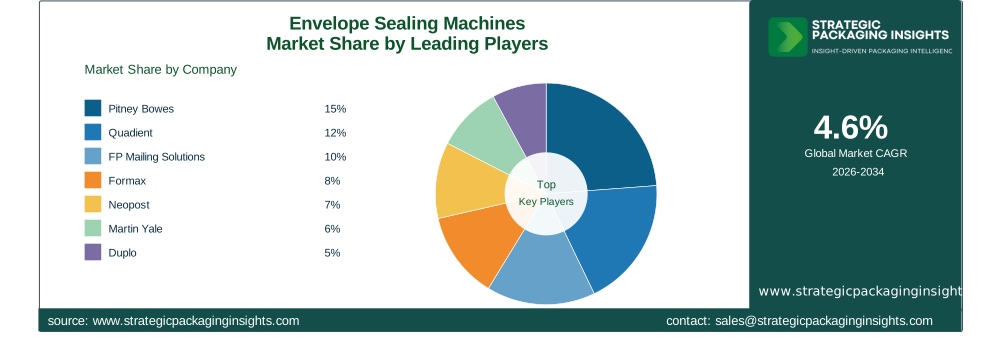
Quadient (Neopost) is a prominent player in the envelope sealing machines market, known for its comprehensive range of mailing solutions and commitment to innovation. The company offers a wide array of products, including manual, semi-automatic, and fully automatic sealing machines, catering to diverse customer needs. Quadient's focus on research and development has enabled it to introduce cutting-edge technologies that enhance machine performance and efficiency. With a strong global presence and a robust distribution network, Quadient is well-positioned to capitalize on emerging market opportunities and maintain its leadership position.
Pitney Bowes is another key player in the market, renowned for its advanced mailing and shipping solutions. The company's envelope sealing machines are designed to deliver high-speed, reliable performance, making them ideal for businesses with large mailing volumes. Pitney Bowes' commitment to sustainability and innovation has earned it a strong reputation in the industry. The company continues to invest in research and development to enhance its product offerings and meet the evolving needs of its customers. With a focus on customer satisfaction and operational excellence, Pitney Bowes is poised for continued success in the envelope sealing machines market.
FP Mailing Solutions (Francotyp-Postalia) is a leading provider of mailing equipment and solutions, offering a diverse range of envelope sealing machines to meet the needs of various industries. The company's products are known for their reliability, efficiency, and ease of use, making them popular among businesses worldwide. FP Mailing Solutions' commitment to quality and customer service has earned it a loyal customer base and a strong market presence. The company continues to expand its product portfolio and explore new market opportunities, positioning itself for long-term growth and success.
Key Highlights
- Market Size: Valued at USD 450 million in 2025, projected to reach USD 640 million by 2034.
- Growth Rate: Expected CAGR of 4.00% during the forecast period.
- Leading Companies: Quadient (Neopost), Pitney Bowes, FP Mailing Solutions.
- Growing Segments: Fully Automatic Inserter-Sealers and Semi-Automatic Machines.
- Key Regions: Asia Pacific and North America are leading markets.
- Sustainability Focus: Increasing demand for eco-friendly sealing solutions.
- Technological Advancements: Integration of AI and machine learning in sealing machines.
Envelope Sealing Machines Market Segments Insights

By Type Analysis
The envelope sealing machines market is segmented by type into manual/desktop sealers, semi-automatic, fully automatic inserter-sealers, and tabbing & sealing systems. Manual and desktop sealers are popular among small businesses and offices due to their affordability and ease of use. However, the demand for semi-automatic and fully automatic inserter-sealers is on the rise, driven by the need for high-speed, efficient mailing solutions. These machines are particularly favored by large enterprises and industries with high mailing volumes, such as banking and financial services, direct mail, and printing services. Companies like Quadient (Neopost) and Pitney Bowes are leading the market with their advanced automatic sealing solutions, which offer enhanced productivity and operational efficiency.
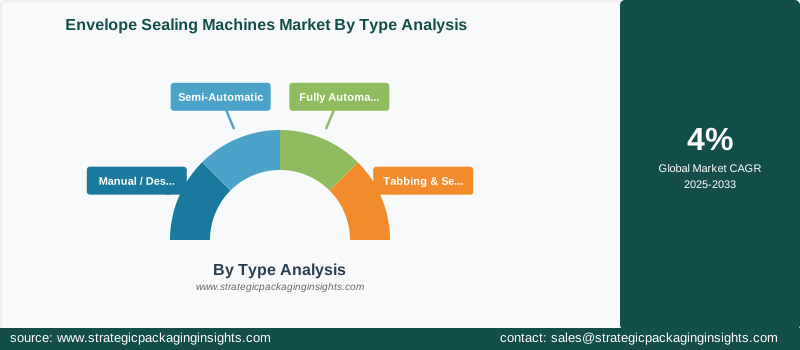
Fully automatic inserter-sealers are gaining traction due to their ability to handle large volumes of mail with precision and speed. These machines are equipped with advanced technologies that enable seamless integration with existing mailing systems, reducing manual intervention and minimizing errors. The growing emphasis on automation and efficiency in mailing operations is driving the adoption of these machines across various sectors. Additionally, the development of tabbing & sealing systems is catering to the specific needs of businesses involved in direct mail and marketing campaigns, where the ability to seal and tab envelopes quickly and accurately is crucial.
By Sealing Method Analysis
The market is also segmented by sealing method, including moisture/water sealing, pressure sealing, and self-seal/adhesive methods. Moisture and water sealing methods are traditional and widely used due to their simplicity and cost-effectiveness. However, pressure sealing and self-seal/adhesive methods are gaining popularity due to their convenience and reliability. Pressure sealing machines are particularly favored in sectors such as government and utilities, where secure and tamper-proof sealing is essential. Self-seal/adhesive methods are popular among businesses seeking quick and hassle-free sealing solutions, as they eliminate the need for additional sealing materials.
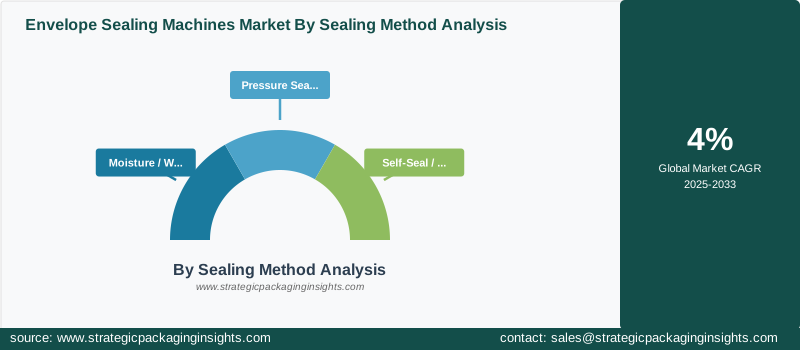
The adoption of advanced sealing methods is driven by the need for enhanced security and efficiency in mailing operations. Companies are investing in research and development to improve the performance and reliability of sealing machines, ensuring they meet the evolving needs of businesses. The integration of innovative sealing technologies is enabling companies to offer customized solutions that cater to specific industry requirements. As the market continues to evolve, businesses that prioritize innovation and customer satisfaction will be better positioned to capture market share and drive growth.
By Speed Analysis
Speed is a critical factor in the envelope sealing machines market, with machines categorized based on their sealing capacity per hour. The market is segmented into machines that can seal up to 5, 000 envelopes per hour, 5, 000-15, 000 envelopes per hour, and those above 15, 000 envelopes per hour. Machines with higher sealing capacities are in demand among large enterprises and industries with high mailing volumes, such as e-commerce and logistics. These machines offer enhanced productivity and efficiency, enabling businesses to meet tight deadlines and improve operational performance.
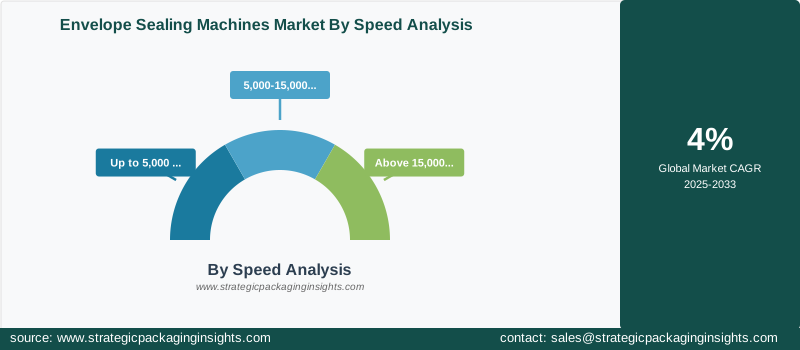
The demand for high-speed sealing machines is driven by the need for quick and efficient mailing solutions in sectors such as direct mail and printing services. Companies are investing in advanced technologies to enhance machine capabilities and improve sealing speed, ensuring they meet the evolving needs of businesses. The integration of automation and intelligent systems is enabling companies to offer high-speed sealing solutions that reduce manual intervention and minimize errors. As the market continues to grow, businesses that prioritize speed and efficiency will be better positioned to capitalize on emerging opportunities and drive long-term success.
By End Use Analysis
The envelope sealing machines market is segmented by end use into banking & financial services, government & utilities, direct mail & printing services, healthcare, corporate offices, and e-commerce & logistics. The banking and financial services sector is a major consumer of sealing machines, driven by the need for secure and efficient mailing solutions. Government and utilities also rely on sealing machines for secure document handling and distribution. The direct mail and printing services sector is witnessing significant growth, as businesses seek to enhance their marketing efforts and improve customer engagement through targeted mailing campaigns.
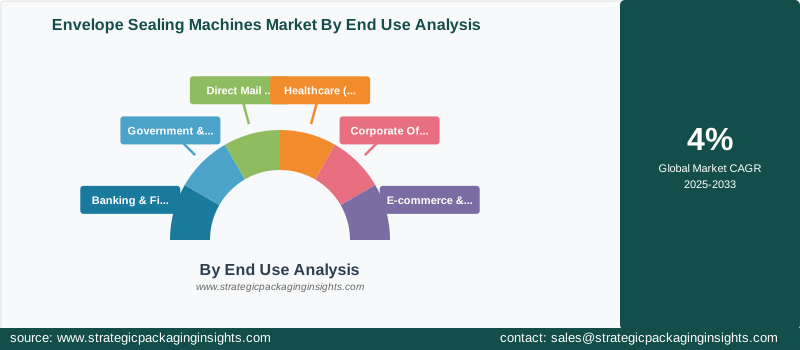
The healthcare sector is another key end-user of sealing machines, with hospitals and clinics using these machines for secure handling of patient records and statements. Corporate offices and e-commerce & logistics companies are also significant consumers of sealing machines, driven by the need for efficient mailing solutions to support their operations. As the market continues to evolve, businesses that offer tailored solutions to meet the specific needs of these sectors will be better positioned to capture market share and drive growth.
Envelope Sealing Machines Market Segments
The Envelope Sealing Machines market has been segmented on the basis ofBy Type
- Manual / Desktop Sealers
- Semi-Automatic
- Fully Automatic Inserter-Sealers
- Tabbing & Sealing Systems
By Sealing Method
- Moisture / Water Sealing
- Pressure Sealing
- Self-Seal / Adhesive
By Speed
- Up to 5,000 envelopes/hour
- 5,000-15,000 envelopes/hour
- Above 15,000 envelopes/hour
By End Use
- Banking & Financial Services
- Government & Utilities
- Direct Mail & Printing Services
- Healthcare (Statements, Records)
- Corporate Offices
- E-commerce & Logistics
By Region
- North America (U.S., Canada, Mexico)
- Europe (Germany, UK, France, Italy, Spain, Rest of Europe)
- Asia Pacific (China, India, Japan, South Korea, Australia, Rest of Asia Pacific)
- Latin America (Brazil, Argentina, Rest of Latin America)
- Middle East & Africa (GCC Countries, South Africa, Rest of MEA)




