


Envelope Paper Market Outlook
The Envelope Paper market size was valued at USD 2.8 billion in 2025 and is anticipated to reach USD 3.6 billion by 2034, growing at a CAGR of 2.80% during the forecast period according to Strategic Packaging Insights. The market is driven by the increasing demand for sustainable and recyclable paper products, as consumers and businesses alike are becoming more environmentally conscious. Companies like International Paper and Domtar are leading the charge in producing eco-friendly envelope paper solutions that meet the growing demand for sustainable packaging options. The rise in e-commerce and direct mail marketing has also contributed to the steady growth of the envelope paper market, as businesses seek reliable and cost-effective mailing solutions.
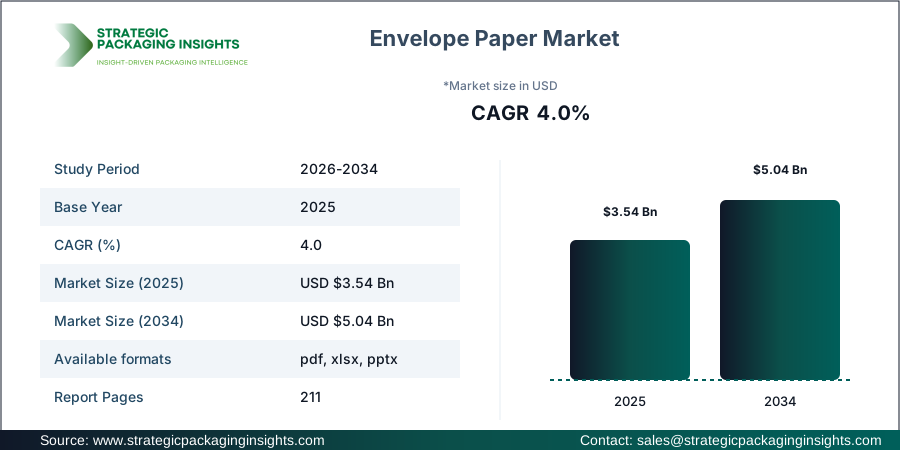
One of the most impactful drivers of the envelope paper market is the increasing regulatory pressure to reduce plastic usage and promote paper-based alternatives. Governments worldwide are implementing stringent regulations to curb plastic waste, which has led to a surge in demand for paper products, including envelope paper. This shift is supported by initiatives such as the European Union's directive to reduce single-use plastics, which encourages the use of paper-based packaging. As a result, companies like Mondi and UPM are investing in innovative paper technologies to enhance the durability and functionality of envelope paper, ensuring compliance with these regulations while meeting consumer expectations for quality and sustainability.
Report Scope
| Attributes | Details |
| Report Title | Envelope Paper Market Size, Future Growth and Forecast 2034 |
| By Paper Type | Wove Paper, Kraft Paper (White, Brown), Laid Paper, Recycled Paper, Security / Opaque Grades, Specialty & Colored |
| By Weight | Below 80 GSM, 80-100 GSM, 100-120 GSM, Above 120 GSM |
| By Application | Commercial / Transactional Envelopes, Direct Mail, Courier & Padded Mailers, Greeting Card Envelopes, Security Envelopes |
| By End Use | Envelope Converters, Printers, Government & Financial Mailers, E-commerce Mailers |
| By Region | North America (U.S., Canada, Mexico), Europe (Germany, UK, France, Italy, Spain, Rest of Europe), Asia Pacific (China, India, Japan, South Korea, Australia, Rest of Asia Pacific), Latin America (Brazil, Argentina, Rest of Latin America), Middle East & Africa (GCC Countries, South Africa, Rest of MEA) |
| Base Year | 2025 |
| Historic Period | 2018-2024 |
| Forecast Period | 2026-2034 |
| Number of Pages | 111 |
| Customization Available | Yes* |
Sustainability & Circular Economy Analysis
Sustainability initiatives are significantly shaping the envelope paper market, as companies strive to align with circular economy practices. The use of recyclable materials and eco-friendly innovations is becoming a standard in the industry, with companies like Stora Enso and Sappi leading the way. These companies are focusing on developing lightweight and durable envelope papers that reduce waste and carbon footprint. The integration of ESG initiatives is also influencing investment decisions, as stakeholders prioritize companies with strong sustainability credentials. This trend is driving the adoption of extended producer responsibility (EPR) frameworks, which hold manufacturers accountable for the lifecycle of their products.
The influence of sustainability trends extends to packaging design and manufacturing processes. Companies are investing in advanced technologies to produce envelope papers that are not only recyclable but also biodegradable. This shift is supported by consumer preferences for sustainable products, as well as regulatory compliance requirements. The demand for eco-friendly materials is prompting manufacturers to explore innovative solutions, such as using agricultural waste and other renewable resources in paper production. This approach not only reduces environmental impact but also enhances the long-term competitiveness of companies in the envelope paper market.
Supply chain strategies are also evolving in response to sustainability trends. Companies are optimizing their logistics and distribution channels to minimize carbon emissions and improve efficiency. The focus on localization and global sourcing is helping manufacturers reduce transportation costs and enhance supply chain resilience. By adopting sustainable practices, companies are not only meeting regulatory requirements but also gaining a competitive edge in the market. This shift towards sustainability is expected to drive growth in the envelope paper market, as more businesses and consumers prioritize environmentally friendly packaging solutions.
Packaging Value Chain & Supply Chain Analysis
The envelope paper market's value chain is a complex ecosystem involving raw material sourcing, manufacturing, and distribution. Raw materials, primarily wood pulp, are sourced from sustainable forests, with companies like UPM and Stora Enso leading efforts in responsible forestry management. These materials are then processed by packaging converters and manufacturers to produce various types of envelope paper. The role of packaging machinery is crucial in ensuring efficient production processes, with advancements in technology enabling higher output and reduced waste.
Logistics and distribution channels play a vital role in the supply chain, ensuring that envelope paper products reach brand owners and retailers efficiently. Companies are focusing on optimizing their inventory management and procurement strategies to enhance supply chain resilience. The availability of raw materials and transportation capabilities are critical factors influencing market performance. Strategic partnerships between manufacturers and logistics providers are essential for maintaining a steady supply of envelope paper products, especially in regions with high demand.
Supply chain efficiency is further enhanced by localization and global sourcing strategies. Companies are establishing production facilities closer to key markets to reduce transportation costs and improve delivery times. This approach not only enhances competitiveness but also aligns with sustainability goals by minimizing carbon emissions. Recycling networks are also an integral part of the value chain, as they facilitate the collection and processing of used envelope paper, contributing to a circular economy. By focusing on supply chain optimization, companies can ensure a steady supply of high-quality envelope paper products, meeting the needs of diverse end-users.
Opportunities & Threats
The envelope paper market presents several opportunities for growth, driven by the increasing demand for sustainable packaging solutions. As consumers and businesses become more environmentally conscious, there is a growing preference for paper-based products over plastic alternatives. This trend is creating opportunities for companies to innovate and develop new envelope paper products that meet the evolving needs of the market. The rise of e-commerce and direct mail marketing also presents opportunities for growth, as businesses seek reliable and cost-effective mailing solutions. Companies that can offer high-quality, eco-friendly envelope paper products are well-positioned to capitalize on these opportunities.
Another significant opportunity lies in the development of specialty and colored envelope papers. These products cater to niche markets, such as greeting cards and luxury packaging, where aesthetics and quality are paramount. By investing in research and development, companies can create unique and innovative envelope paper products that stand out in the market. Additionally, the increasing regulatory pressure to reduce plastic usage is driving demand for paper-based alternatives, creating opportunities for companies to expand their product offerings and capture new market segments.
Despite the opportunities, the envelope paper market faces several threats, including the volatility of raw material prices and the increasing competition from digital communication alternatives. The cost of wood pulp, a primary raw material, can fluctuate due to factors such as supply chain disruptions and environmental regulations. This volatility can impact production costs and profit margins for envelope paper manufacturers. Additionally, the rise of digital communication methods, such as email and electronic billing, poses a threat to the demand for traditional envelope paper products. Companies must adapt to these challenges by diversifying their product offerings and exploring new markets to maintain their competitive edge.
Drivers & Challenges
The envelope paper market is driven by several key factors, including the increasing demand for sustainable packaging solutions and the rise of e-commerce. As consumers and businesses become more environmentally conscious, there is a growing preference for paper-based products over plastic alternatives. This trend is driving demand for envelope paper products, as companies seek to align with sustainability goals and meet consumer expectations. The rise of e-commerce and direct mail marketing is also contributing to market growth, as businesses require reliable and cost-effective mailing solutions. Companies that can offer high-quality, eco-friendly envelope paper products are well-positioned to capitalize on these drivers.
Another significant driver of the envelope paper market is the increasing regulatory pressure to reduce plastic usage and promote paper-based alternatives. Governments worldwide are implementing stringent regulations to curb plastic waste, which has led to a surge in demand for paper products, including envelope paper. This shift is supported by initiatives such as the European Union's directive to reduce single-use plastics, which encourages the use of paper-based packaging. As a result, companies are investing in innovative paper technologies to enhance the durability and functionality of envelope paper, ensuring compliance with these regulations while meeting consumer expectations for quality and sustainability.
Despite the drivers, the envelope paper market faces several challenges, including the volatility of raw material prices and the increasing competition from digital communication alternatives. The cost of wood pulp, a primary raw material, can fluctuate due to factors such as supply chain disruptions and environmental regulations. This volatility can impact production costs and profit margins for envelope paper manufacturers. Additionally, the rise of digital communication methods, such as email and electronic billing, poses a threat to the demand for traditional envelope paper products. Companies must adapt to these challenges by diversifying their product offerings and exploring new markets to maintain their competitive edge.
Market Share Analysis
The envelope paper market is characterized by a competitive landscape with several key players dominating the industry. Companies like International Paper, Domtar, and Sylvamo hold significant market shares, leveraging their extensive product portfolios and strong distribution networks. These companies are known for their commitment to sustainability and innovation, which has helped them maintain a competitive edge in the market. Other notable players include Mondi, UPM, and Stora Enso, which are recognized for their high-quality envelope paper products and strong global presence.
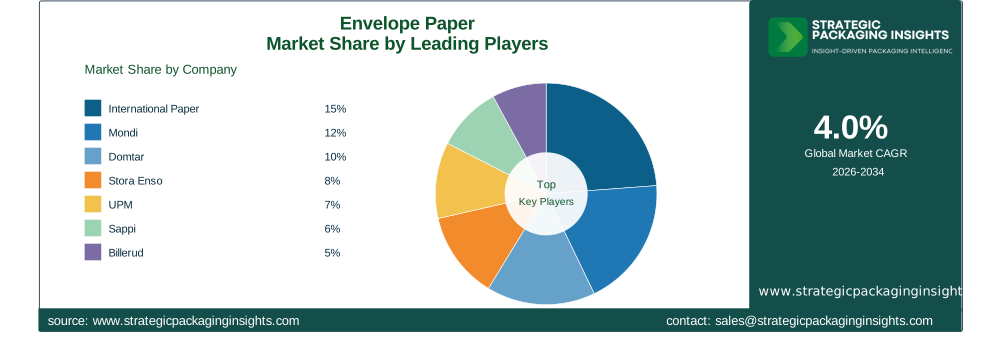
International Paper is a leading player in the envelope paper market, known for its extensive range of sustainable paper products. The company has a strong focus on innovation and sustainability, investing in advanced technologies to enhance the quality and functionality of its envelope paper offerings. Domtar is another key player, with a reputation for producing high-quality paper products that meet the needs of diverse end-users. The company's commitment to sustainability and responsible forestry practices has helped it maintain a strong market position.
Sylvamo, a spin-off from International Paper, is a significant player in the envelope paper market, known for its focus on sustainable paper solutions. The company has a strong presence in North America and Europe, with a diverse product portfolio that caters to various end-use applications. Mondi is another major player, recognized for its innovative paper technologies and commitment to sustainability. The company's extensive global presence and strong distribution network have helped it capture a significant share of the envelope paper market.
UPM and Stora Enso are also prominent players in the envelope paper market, known for their high-quality products and strong focus on sustainability. These companies have invested in advanced manufacturing technologies to enhance the efficiency and sustainability of their production processes. Sappi and JK Paper are other notable players, recognized for their commitment to innovation and sustainability. These companies have a strong presence in the Asia Pacific region, where demand for envelope paper products is growing rapidly.
Key Highlights
- Market Size: The envelope paper market was valued at USD 2.8 billion in 2025 and is projected to reach USD 3.6 billion by 2034.
- Growth Rate: The market is expected to grow at a CAGR of 2.80% during the forecast period.
- Leading Companies: Key players include International Paper, Domtar, Sylvamo, Mondi, UPM, and Stora Enso.
- Regional Insights: Asia Pacific is expected to witness significant growth, driven by increasing demand for sustainable packaging solutions.
- Sustainability Trends: The market is influenced by the growing demand for eco-friendly and recyclable envelope paper products.
- Regulatory Impact: Stringent regulations to reduce plastic usage are driving demand for paper-based alternatives.
- Innovation Focus: Companies are investing in advanced technologies to enhance the quality and functionality of envelope paper products.
Envelope Paper Market Segments Insights

By Paper Type Analysis
The envelope paper market is segmented by paper type, including wove paper, kraft paper, laid paper, recycled paper, security/opaque grades, and specialty & colored papers. Wove paper is widely used due to its smooth texture and versatility, making it suitable for various applications. Kraft paper, available in white and brown, is favored for its strength and durability, often used in commercial and transactional envelopes. Recycled paper is gaining popularity as sustainability becomes a priority for consumers and businesses. Companies like International Paper and Domtar are focusing on producing high-quality recycled envelope papers to meet this demand.
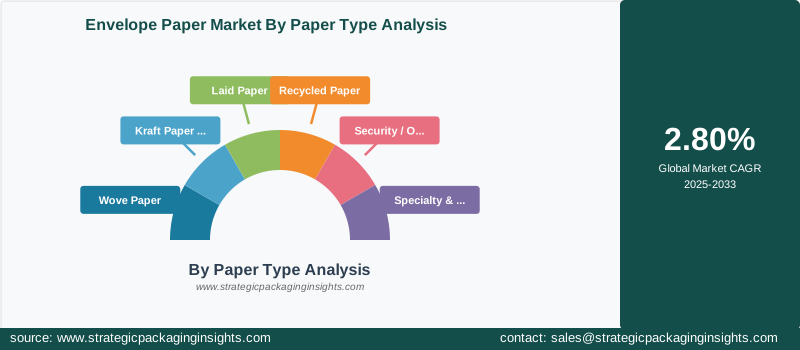
Security and opaque grades are essential for applications requiring confidentiality, such as financial and government mailers. These papers are designed to prevent unauthorized viewing of contents, ensuring privacy and security. Specialty and colored papers cater to niche markets, such as greeting cards and luxury packaging, where aesthetics and quality are crucial. The demand for these papers is driven by the need for unique and visually appealing envelope solutions. Companies are investing in research and development to create innovative paper types that meet the evolving needs of the market.
By Weight Analysis
The envelope paper market is also segmented by weight, with categories including below 80 GSM, 80-100 GSM, 100-120 GSM, and above 120 GSM. The weight of the paper is a critical factor influencing its suitability for different applications. Papers below 80 GSM are lightweight and often used for direct mail and commercial envelopes, where cost-effectiveness is a priority. Papers in the 80-100 GSM range offer a balance of strength and flexibility, making them suitable for a wide range of applications, including greeting card envelopes and padded mailers.
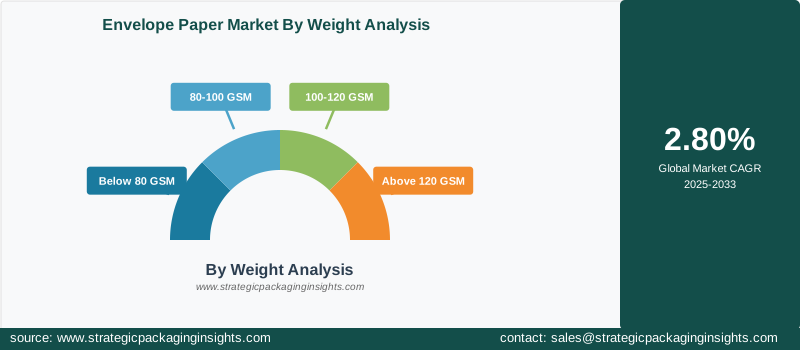
Papers in the 100-120 GSM range are favored for their durability and premium feel, often used in high-end applications such as security envelopes and specialty packaging. Papers above 120 GSM are used for applications requiring extra strength and rigidity, such as courier and padded mailers. The demand for different paper weights is influenced by factors such as cost, durability, and application requirements. Companies are focusing on producing a diverse range of paper weights to cater to the varied needs of the market.
By Application Analysis
The envelope paper market is segmented by application, including commercial/transactional envelopes, direct mail, courier & padded mailers, greeting card envelopes, and security envelopes. Commercial and transactional envelopes are widely used in business communications, where reliability and cost-effectiveness are essential. Direct mail is a growing segment, driven by the rise of targeted marketing campaigns and the need for personalized communication. Companies are investing in innovative envelope paper solutions to enhance the effectiveness of direct mail campaigns.

Courier and padded mailers are used for shipping and logistics applications, where durability and protection are crucial. The demand for these envelopes is driven by the growth of e-commerce and the need for secure and reliable packaging solutions. Greeting card envelopes are a niche segment, where aesthetics and quality are paramount. Companies are focusing on producing high-quality, visually appealing envelope papers to cater to this market. Security envelopes are essential for applications requiring confidentiality, such as financial and government mailers, where privacy and security are critical.
By End Use Analysis
The envelope paper market is segmented by end use, including envelope converters, printers, government & financial mailers, and e-commerce mailers. Envelope converters are a key segment, responsible for transforming raw paper into finished envelope products. These companies play a crucial role in the value chain, ensuring the availability of high-quality envelope papers for various applications. Printers are another important segment, using envelope papers for printing and customization purposes.
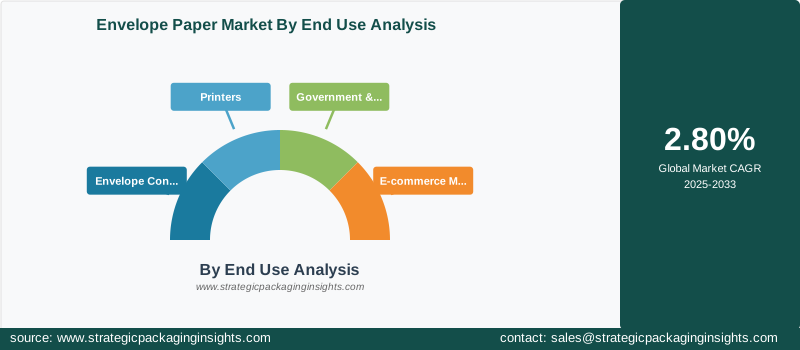
Government and financial mailers are significant end-users, requiring secure and reliable envelope solutions for confidential communications. The demand for envelope papers in this segment is driven by the need for privacy and security. E-commerce mailers are a growing segment, driven by the rise of online shopping and the need for efficient and cost-effective packaging solutions. Companies are focusing on producing high-quality envelope papers that meet the specific needs of these end-users, ensuring reliability and performance.
Envelope Paper Market Segments
The Envelope Paper market has been segmented on the basis ofBy Paper Type
- Wove Paper
- Kraft Paper (White, Brown)
- Laid Paper
- Recycled Paper
- Security / Opaque Grades
- Specialty & Colored
By Weight
- Below 80 GSM
- 80-100 GSM
- 100-120 GSM
- Above 120 GSM
By Application
- Commercial / Transactional Envelopes
- Direct Mail
- Courier & Padded Mailers
- Greeting Card Envelopes
- Security Envelopes
By End Use
- Envelope Converters
- Printers
- Government & Financial Mailers
- E-commerce Mailers
By Region
- North America (U.S., Canada, Mexico)
- Europe (Germany, UK, France, Italy, Spain, Rest of Europe)
- Asia Pacific (China, India, Japan, South Korea, Australia, Rest of Asia Pacific)
- Latin America (Brazil, Argentina, Rest of Latin America)
- Middle East & Africa (GCC Countries, South Africa, Rest of MEA)




