


Electrophotography Printing for Packaging Market Outlook
The Electrophotography Printing for Packaging market was valued at $3.74 billion in 2025 and is projected to reach $7.20 billion by 2034, growing at a CAGR of 7.6% during the forecast period 2026-2034. This market is witnessing significant growth due to the increasing demand for high-quality, cost-effective, and efficient printing solutions in the packaging industry. The rise in e-commerce and the need for personalized packaging are driving the adoption of electrophotography printing technologies. Additionally, advancements in digital printing technologies and the growing trend of short-run packaging are further propelling market growth. The market is also benefiting from the increasing use of sustainable and eco-friendly packaging materials, which are compatible with electrophotography printing techniques.
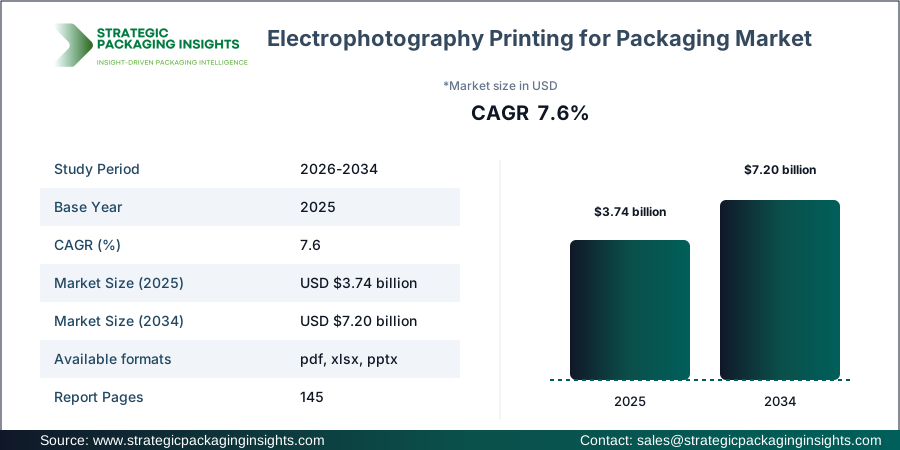
However, the market faces challenges such as high initial investment costs and the need for skilled professionals to operate advanced printing equipment. Regulatory constraints related to packaging waste and recycling are also impacting market dynamics. Despite these challenges, the market holds significant growth potential, driven by technological innovations and the expanding application scope of electrophotography printing in various packaging segments. The increasing focus on reducing carbon footprints and enhancing the recyclability of packaging materials is expected to create new opportunities for market players. Furthermore, the integration of IoT and AI in printing technologies is anticipated to revolutionize the packaging industry, offering enhanced efficiency and customization capabilities.
Report Scope
| Attributes | Details |
| Report Title | Electrophotography Printing for Packaging Market Size, Future Growth and Forecast 2034 |
| Technology | Digital Electrophotography, Liquid Toner, Dry Toner |
| Application | Labels, Folding Cartons, Flexible Packaging, Short-Run Packaging |
| End Use | Packaging Converters, Commercial Printers, Brand Owners, Retailers |
| Substrate Type | Paper, Film, Paperboard, Synthetic Substrates |
| Region | Asia Pacific, North America, Latin America, Europe, Middle East & Africa |
| Base Year | 2025 |
| Historic Period | 2018-2024 |
| Forecast Period | 2026-2034 |
| Number of Pages | 145 |
| Customization Available | Yes* |
Opportunities & Threats
The Electrophotography Printing for Packaging market presents numerous opportunities, particularly in the realm of customization and personalization. As consumer preferences shift towards unique and personalized packaging, brands are increasingly adopting electrophotography printing to meet these demands. This trend is particularly evident in the food and beverage industry, where packaging plays a crucial role in brand differentiation. Additionally, the rise of e-commerce has led to an increased demand for short-run packaging solutions, which electrophotography printing can efficiently fulfill. The ability to produce high-quality prints with quick turnaround times makes this technology an attractive option for businesses looking to enhance their packaging strategies.
Another significant opportunity lies in the development of eco-friendly and sustainable packaging solutions. With growing environmental concerns, there is a rising demand for packaging materials that are recyclable and biodegradable. Electrophotography printing is well-suited for printing on such materials, providing an edge over traditional printing methods. Companies that invest in sustainable packaging solutions are likely to gain a competitive advantage in the market. Furthermore, advancements in digital printing technologies are expected to drive innovation in the electrophotography printing sector, opening up new avenues for growth and expansion.
Despite the promising opportunities, the market faces certain threats that could hinder its growth. One of the primary challenges is the high cost associated with electrophotography printing equipment and materials. Small and medium-sized enterprises may find it difficult to invest in such technologies, limiting their adoption. Additionally, the market is subject to stringent regulations regarding packaging waste and recycling, which could pose compliance challenges for manufacturers. The need for skilled professionals to operate advanced printing equipment is another potential barrier, as the industry faces a shortage of trained personnel. Companies must address these challenges to fully capitalize on the growth potential of the electrophotography printing for packaging market.
Drivers & Challenges
The Electrophotography Printing for Packaging market is driven by several key factors, including the increasing demand for high-quality and cost-effective printing solutions. As consumers become more discerning, brands are under pressure to deliver packaging that not only protects the product but also enhances its appeal. Electrophotography printing offers superior print quality, vibrant colors, and precise detailing, making it an ideal choice for premium packaging applications. The technology's ability to produce short-run and customized packaging efficiently is another significant driver, catering to the growing trend of personalization in the packaging industry.
Technological advancements in digital printing are also playing a crucial role in driving market growth. Innovations such as the integration of IoT and AI in printing processes are enhancing the efficiency and capabilities of electrophotography printing. These technologies enable real-time monitoring and optimization of printing operations, resulting in improved productivity and reduced waste. Additionally, the development of eco-friendly printing materials and processes is aligning with the increasing focus on sustainability, further boosting the adoption of electrophotography printing in the packaging sector. The market is also benefiting from the expansion of e-commerce, which is driving demand for innovative and attractive packaging solutions.
However, the market faces several challenges that could impede its growth. One of the primary challenges is the high initial investment required for electrophotography printing equipment and materials. This can be a significant barrier for small and medium-sized enterprises, limiting their ability to adopt the technology. Additionally, the market is subject to stringent regulations regarding packaging waste and recycling, which could pose compliance challenges for manufacturers. The need for skilled professionals to operate advanced printing equipment is another potential barrier, as the industry faces a shortage of trained personnel. Companies must address these challenges to fully capitalize on the growth potential of the electrophotography printing for packaging market.
Market Share Analysis
The competitive landscape of the Electrophotography Printing for Packaging market is characterized by the presence of several key players who are driving innovation and growth in the industry. Companies such as HP Indigo, Xerox, Canon, and Konica Minolta hold significant market shares, leveraging their technological expertise and extensive product portfolios to maintain a competitive edge. These companies are continuously investing in research and development to enhance their printing technologies and expand their application scope in the packaging sector. The market is also witnessing strategic collaborations and partnerships among key players to strengthen their market positions and expand their customer base.
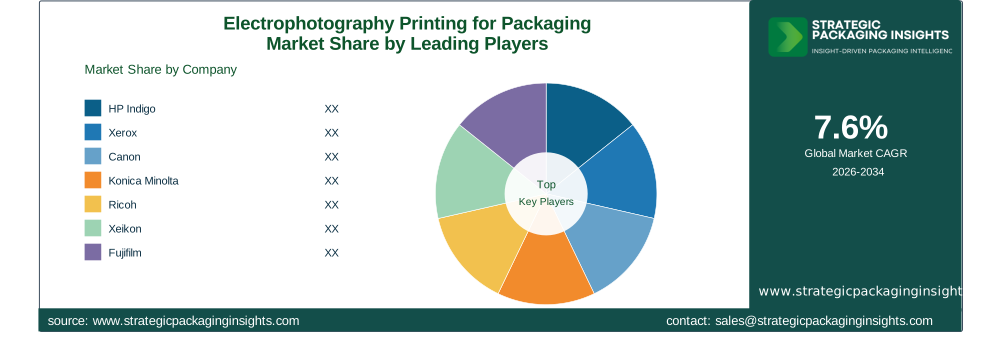
HP Indigo is a leading player in the electrophotography printing market, known for its advanced digital printing solutions that cater to a wide range of packaging applications. The company's focus on innovation and sustainability has enabled it to capture a significant share of the market. Xerox, another major player, offers a comprehensive range of electrophotography printing solutions that are widely used in the packaging industry. The company's emphasis on quality and reliability has helped it establish a strong presence in the market.
Canon and Konica Minolta are also prominent players in the market, offering cutting-edge printing technologies that cater to the evolving needs of the packaging industry. These companies are focused on expanding their product offerings and enhancing their technological capabilities to meet the growing demand for high-quality and cost-effective printing solutions. Ricoh and Xeikon are other notable players in the market, known for their innovative printing solutions and commitment to sustainability. These companies are actively investing in research and development to drive innovation and maintain their competitive edge in the market.
Fujifilm, Landa Digital Printing, Screen Holdings, and Heidelberg are also key players in the electrophotography printing for packaging market. These companies are leveraging their technological expertise and extensive industry experience to offer advanced printing solutions that cater to the diverse needs of the packaging sector. The market is characterized by intense competition, with companies focusing on innovation, quality, and customer satisfaction to gain a competitive advantage. As the market continues to evolve, companies are expected to adopt strategic initiatives such as mergers and acquisitions, partnerships, and product launches to strengthen their market positions and drive growth.
Key Highlights
- The Electrophotography Printing for Packaging market is projected to grow at a CAGR of 7.6% from 2026 to 2034.
- Increasing demand for high-quality and cost-effective printing solutions is driving market growth.
- Technological advancements in digital printing are enhancing the capabilities of electrophotography printing.
- The rise of e-commerce is boosting demand for innovative and attractive packaging solutions.
- Companies are focusing on sustainability and eco-friendly packaging materials to gain a competitive edge.
- High initial investment costs and regulatory constraints are key challenges for market players.
- Strategic collaborations and partnerships are helping companies expand their market presence.
- Integration of IoT and AI in printing technologies is revolutionizing the packaging industry.
- Personalization and customization trends are driving the adoption of electrophotography printing.
- Key players are investing in research and development to drive innovation and growth.
Top Countries Insights
In the Electrophotography Printing for Packaging market, the United States stands out as a leading country, with a market size of approximately $1.5 billion and a CAGR of 6%. The country's strong presence in the e-commerce sector and the increasing demand for personalized packaging are key growth drivers. Additionally, the focus on sustainability and the adoption of eco-friendly packaging materials are further propelling market growth. However, regulatory constraints related to packaging waste and recycling pose challenges for manufacturers.
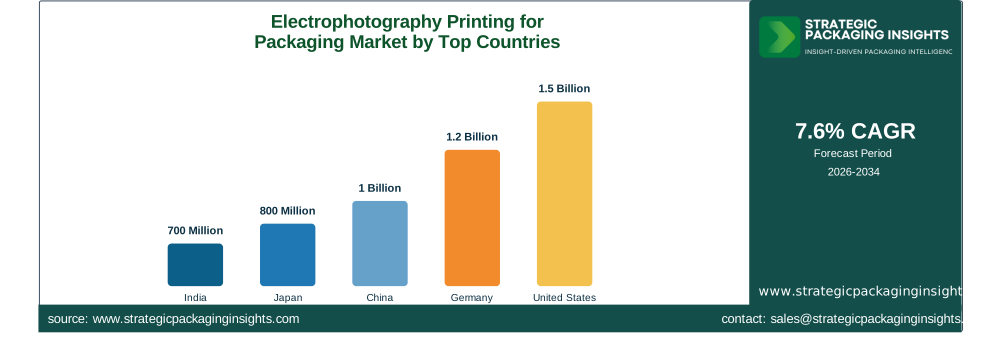
Germany is another significant player in the market, with a market size of around $1.2 billion and a CAGR of 5%. The country's advanced manufacturing capabilities and strong emphasis on quality and innovation are driving the adoption of electrophotography printing technologies. The growing trend of short-run packaging and the demand for high-quality prints are also contributing to market growth. However, the high cost of printing equipment and materials remains a challenge for small and medium-sized enterprises.
China is experiencing rapid growth in the electrophotography printing for packaging market, with a market size of approximately $1 billion and a CAGR of 8%. The country's booming e-commerce sector and the increasing demand for innovative packaging solutions are key growth drivers. Additionally, the government's focus on sustainability and environmental protection is encouraging the adoption of eco-friendly packaging materials. However, the market faces challenges related to regulatory compliance and the need for skilled professionals.
Japan is a key player in the market, with a market size of around $800 million and a CAGR of 4%. The country's strong focus on technological innovation and quality is driving the adoption of electrophotography printing technologies. The demand for high-quality and cost-effective printing solutions is also contributing to market growth. However, the market faces challenges related to high initial investment costs and the need for skilled professionals.
India is emerging as a significant market for electrophotography printing for packaging, with a market size of approximately $700 million and a CAGR of 9%. The country's growing e-commerce sector and the increasing demand for personalized packaging are key growth drivers. Additionally, the focus on sustainability and the adoption of eco-friendly packaging materials are further propelling market growth. However, the market faces challenges related to regulatory compliance and the need for skilled professionals.
Electrophotography Printing for Packaging Market Segments Insights

Technology Analysis
The technology segment of the Electrophotography Printing for Packaging market is primarily driven by advancements in digital electrophotography, liquid toner, and dry toner technologies. Digital electrophotography is gaining traction due to its ability to produce high-quality prints with vibrant colors and precise detailing. This technology is particularly popular in the packaging industry for short-run and customized packaging applications. Liquid toner technology is also witnessing significant growth, offering superior print quality and efficiency. The development of eco-friendly toners is further boosting the adoption of this technology. Dry toner technology, known for its cost-effectiveness and versatility, is widely used in various packaging applications, catering to the growing demand for high-quality and cost-effective printing solutions.
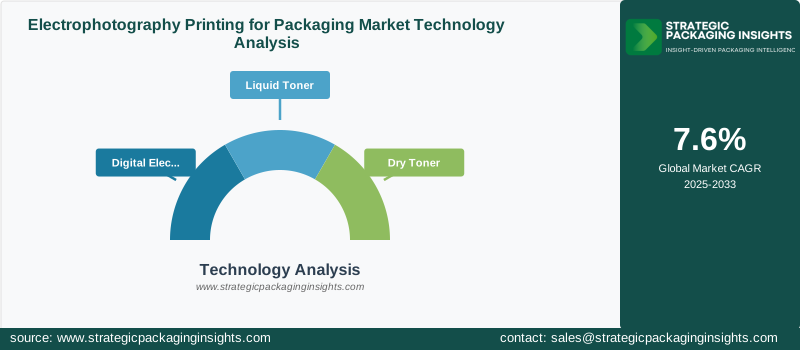
The increasing focus on sustainability and the development of eco-friendly printing materials are driving innovation in the technology segment. Companies are investing in research and development to enhance the capabilities of electrophotography printing technologies and expand their application scope in the packaging sector. The integration of IoT and AI in printing processes is also revolutionizing the industry, enabling real-time monitoring and optimization of printing operations. These technological advancements are expected to drive market growth and create new opportunities for market players.
Application Analysis
The application segment of the Electrophotography Printing for Packaging market includes labels, folding cartons, flexible packaging, and short-run packaging. Labels are a significant application area, with increasing demand for high-quality and customized labels driving market growth. The rise of e-commerce and the need for attractive and informative labels are further propelling the adoption of electrophotography printing technologies. Folding cartons are another key application area, with the demand for premium and sustainable packaging solutions driving market growth. The ability to produce high-quality prints with quick turnaround times makes electrophotography printing an attractive option for folding carton applications.
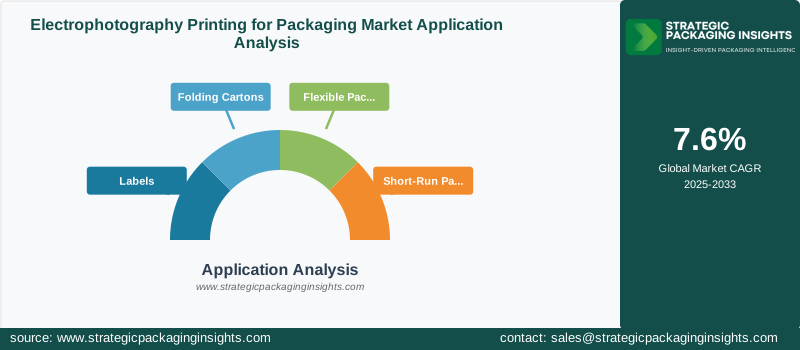
Flexible packaging is witnessing significant growth, driven by the increasing demand for lightweight and eco-friendly packaging solutions. Electrophotography printing offers superior print quality and efficiency, making it an ideal choice for flexible packaging applications. Short-run packaging is also gaining traction, with the growing trend of personalization and customization driving demand for electrophotography printing technologies. The ability to produce small quantities of customized packaging efficiently is a key advantage of this technology, catering to the evolving needs of the packaging industry.
End Use Analysis
The end-use segment of the Electrophotography Printing for Packaging market includes packaging converters, commercial printers, brand owners, and retailers. Packaging converters are a significant end-use segment, with the increasing demand for high-quality and cost-effective printing solutions driving market growth. The ability to produce customized and short-run packaging efficiently is a key advantage for packaging converters, catering to the evolving needs of the packaging industry. Commercial printers are also witnessing significant growth, with the demand for high-quality and efficient printing solutions driving the adoption of electrophotography printing technologies.
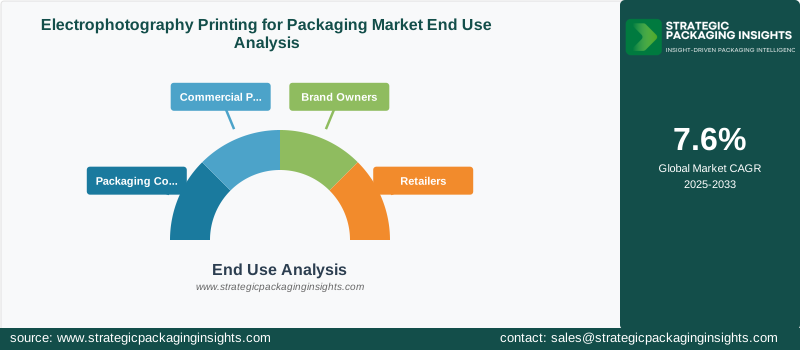
Brand owners and retailers are increasingly adopting electrophotography printing to enhance their packaging strategies and meet the growing demand for personalized and customized packaging. The ability to produce high-quality prints with quick turnaround times is a key advantage for brand owners and retailers, enabling them to differentiate their products and enhance their brand image. The focus on sustainability and the adoption of eco-friendly packaging materials are also driving the adoption of electrophotography printing technologies among brand owners and retailers.
Substrate Type Analysis
The substrate type segment of the Electrophotography Printing for Packaging market includes paper, film, paperboard, and synthetic substrates. Paper is a significant substrate type, with the increasing demand for eco-friendly and recyclable packaging materials driving market growth. Electrophotography printing offers superior print quality and efficiency, making it an ideal choice for paper-based packaging applications. Film is another key substrate type, with the demand for lightweight and flexible packaging solutions driving market growth. The ability to produce high-quality prints on film substrates is a key advantage of electrophotography printing technologies.
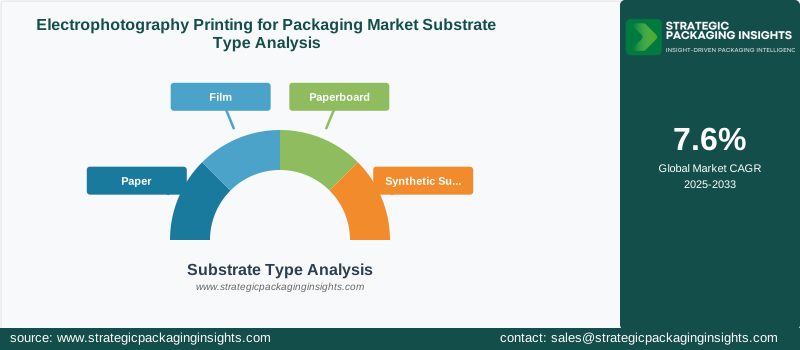
Paperboard is witnessing significant growth, driven by the increasing demand for premium and sustainable packaging solutions. Electrophotography printing offers superior print quality and efficiency, making it an ideal choice for paperboard packaging applications. Synthetic substrates are also gaining traction, with the demand for durable and versatile packaging solutions driving market growth. The ability to produce high-quality prints on synthetic substrates is a key advantage of electrophotography printing technologies, catering to the evolving needs of the packaging industry.
Electrophotography Printing for Packaging Market Segments
The Electrophotography Printing for Packaging market has been segmented on the basis ofTechnology
- Digital Electrophotography
- Liquid Toner
- Dry Toner
Application
- Labels
- Folding Cartons
- Flexible Packaging
- Short-Run Packaging
End Use
- Packaging Converters
- Commercial Printers
- Brand Owners
- Retailers
Substrate Type
- Paper
- Film
- Paperboard
- Synthetic Substrates
Region
- Asia Pacific
- North America
- Latin America
- Europe
- Middle East & Africa




