


Electrical Label Market Outlook
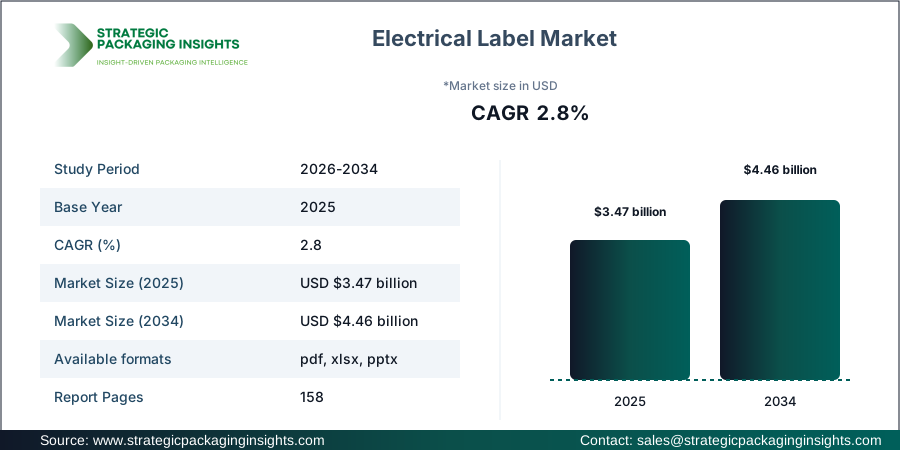
The Electrical Label market was valued at $3.47 billion in 2025 and is projected to reach $4.46 billion by 2034, growing at a CAGR of 2.8% during the forecast period 2026-2034. This market is driven by the increasing demand for efficient labeling solutions in the electrical and electronics sectors. The need for clear, durable, and compliant labeling solutions is paramount as industries strive to meet regulatory standards and enhance operational efficiency. The growth is further fueled by advancements in printing technologies and the rising adoption of automation in manufacturing processes. As industries continue to expand and innovate, the demand for high-quality electrical labels is expected to rise, providing significant growth opportunities for market players.
However, the market faces challenges such as fluctuating raw material prices and stringent environmental regulations. The volatility in the prices of raw materials like polyester and vinyl can impact the overall production costs, thereby affecting the pricing strategies of manufacturers. Additionally, the increasing focus on sustainability and eco-friendly products is pushing companies to innovate and develop labels that are not only durable but also environmentally friendly. Despite these challenges, the market holds immense potential for growth, driven by the continuous advancements in labeling technologies and the increasing demand from emerging economies.
Report Scope
| Attributes | Details |
| Report Title | Electrical Label Market Size, Future Growth and Forecast 2034 |
| By Product Type | Warning Labels, Cable Labels, Panel Labels, Equipment Labels |
| By Material Type | Polyester, Vinyl, Polyimide, Paper |
| By Printing Technology | Thermal Transfer, Digital, Flexographic |
| By End Use | Electronics, Electrical Equipment, Utilities, Industrial |
| Region | Asia Pacific, North America, Latin America, Europe, Middle East & Africa |
| Base Year | 2025 |
| Historic Period | 2018-2024 |
| Forecast Period | 2026-2034 |
| Number of Pages | 158 |
| Customization Available | Yes* |
Opportunities & Threats
The Electrical Label market presents numerous opportunities, particularly with the growing emphasis on automation and digitalization across industries. As companies strive to enhance operational efficiency and reduce human error, the demand for advanced labeling solutions that can seamlessly integrate with automated systems is on the rise. This trend is particularly evident in sectors such as electronics and industrial manufacturing, where precise labeling is crucial for maintaining product quality and compliance. Furthermore, the increasing adoption of smart labels, which incorporate technologies like RFID and QR codes, offers significant growth potential for market players looking to innovate and differentiate their offerings.
Another opportunity lies in the expanding markets of Asia Pacific and Latin America, where rapid industrialization and urbanization are driving the demand for electrical labels. These regions are witnessing a surge in infrastructure development and manufacturing activities, creating a robust demand for labeling solutions that can withstand harsh environmental conditions and provide reliable performance. Companies that can tailor their products to meet the specific needs of these markets stand to gain a competitive edge and capture a significant share of the growing demand.
On the flip side, the market faces threats from stringent regulatory requirements and the increasing focus on sustainability. As governments worldwide implement stricter regulations on labeling standards and environmental impact, companies must invest in research and development to create compliant and eco-friendly products. This can lead to increased production costs and pose a challenge for smaller players with limited resources. Additionally, the competitive landscape is intensifying, with established players and new entrants vying for market share, which could lead to price wars and margin pressures.
Drivers & Challenges
One of the primary drivers of the Electrical Label market is the increasing demand for safety and compliance in the electrical and electronics industries. As these sectors continue to grow, the need for clear and durable labeling solutions that can withstand harsh environments and provide critical information is paramount. This demand is further fueled by the rising awareness of safety standards and regulations, which require manufacturers to ensure that their products are properly labeled and compliant with industry norms. Additionally, the growing trend of automation in manufacturing processes is driving the adoption of advanced labeling technologies that can integrate seamlessly with automated systems, enhancing efficiency and reducing human error.
Another significant driver is the technological advancements in printing technologies, which are enabling the production of high-quality, durable labels at a lower cost. Innovations in digital and thermal transfer printing are allowing manufacturers to produce labels with greater precision and clarity, meeting the diverse needs of various industries. These advancements are also facilitating the development of smart labels, which incorporate technologies like RFID and QR codes, providing additional functionality and value to end-users. As industries continue to evolve and demand more sophisticated labeling solutions, the market is poised for sustained growth.
Despite these drivers, the market faces several challenges, including the volatility in raw material prices and the increasing focus on sustainability. Fluctuations in the prices of key materials like polyester and vinyl can impact production costs and affect pricing strategies, posing a challenge for manufacturers. Additionally, the growing emphasis on eco-friendly products is pushing companies to innovate and develop sustainable labeling solutions, which can require significant investment in research and development. These challenges, coupled with the intense competition in the market, necessitate strategic planning and innovation to maintain a competitive edge and capitalize on growth opportunities.
Market Share Analysis
The competitive landscape of the Electrical Label market is characterized by the presence of several key players, each striving to capture a significant share of the market. Companies like Avery Dennison, 3M, and Brady Corporation are leading the charge, leveraging their extensive product portfolios and strong distribution networks to maintain their market positions. These companies are known for their innovative labeling solutions that cater to a wide range of industries, from electronics to industrial manufacturing. Their focus on research and development, coupled with strategic partnerships and acquisitions, has enabled them to expand their market presence and offer cutting-edge products that meet the evolving needs of their customers.
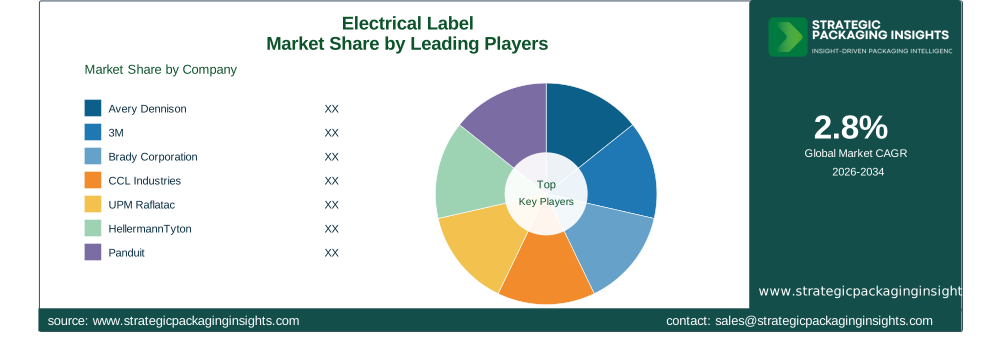
CCL Industries and UPM Raflatac are also prominent players in the market, known for their high-quality labeling solutions and commitment to sustainability. These companies have invested heavily in developing eco-friendly products that align with the growing demand for sustainable solutions. Their focus on innovation and customer-centric approaches has allowed them to capture a significant share of the market and establish themselves as leaders in the industry. Additionally, companies like HellermannTyton and Panduit are making strides in the market by offering specialized labeling solutions that cater to specific industry needs, such as cable management and electrical equipment labeling.
TE Connectivity and Zebra Technologies are also key players in the Electrical Label market, known for their advanced labeling technologies and strong focus on customer satisfaction. These companies have developed a range of products that cater to the diverse needs of their customers, from industrial labeling to smart labels with RFID capabilities. Their emphasis on quality and innovation has enabled them to maintain a competitive edge and capture a significant share of the market. TSC Auto ID, with its focus on providing cost-effective and reliable labeling solutions, is also gaining traction in the market, appealing to price-sensitive customers looking for high-quality products at competitive prices.
Key Highlights
- The Electrical Label market is projected to grow from $3.47 billion in 2025 to $4.46 billion by 2034, at a CAGR of 2.8%.
- Key drivers include the increasing demand for safety and compliance in the electrical and electronics industries.
- Technological advancements in printing technologies are enabling the production of high-quality, durable labels.
- The market faces challenges such as fluctuating raw material prices and stringent environmental regulations.
- Asia Pacific and Latin America present significant growth opportunities due to rapid industrialization and urbanization.
- Smart labels incorporating RFID and QR codes offer additional functionality and value to end-users.
- Key players include Avery Dennison, 3M, Brady Corporation, CCL Industries, and UPM Raflatac.
- The competitive landscape is characterized by intense competition and a focus on innovation and sustainability.
- Companies are investing in research and development to create compliant and eco-friendly products.
- The market is poised for sustained growth, driven by the continuous advancements in labeling technologies.
Top Countries Insights
In the Electrical Label market, the United States stands out as a key player, with a market size of approximately $1.2 billion and a CAGR of 3%. The country's strong industrial base and stringent regulatory standards drive the demand for high-quality labeling solutions. The focus on automation and digitalization in manufacturing processes further fuels the growth of the market, as companies seek advanced labeling technologies to enhance operational efficiency and compliance.
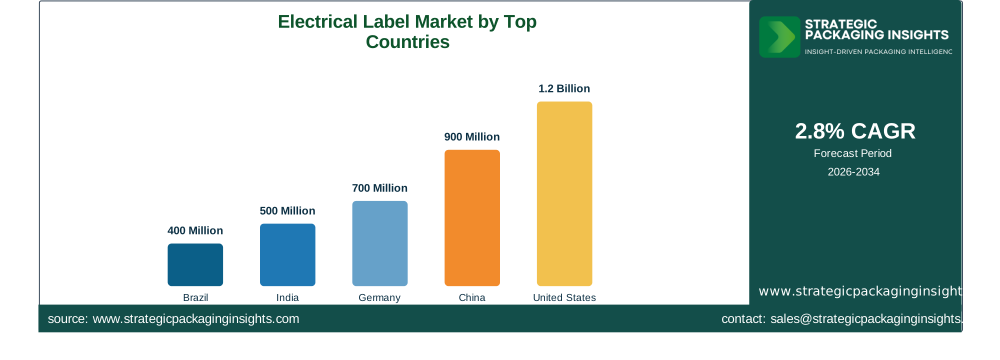
China, with its rapidly growing manufacturing sector, is another significant market, valued at around $900 million with a CAGR of 4%. The country's emphasis on industrialization and infrastructure development creates a robust demand for electrical labels that can withstand harsh environmental conditions. Additionally, the government's focus on safety and compliance standards drives the adoption of advanced labeling solutions across various industries.
Germany, known for its strong engineering and manufacturing sectors, has a market size of approximately $700 million and a CAGR of 2%. The country's commitment to quality and precision in manufacturing processes necessitates the use of high-quality labeling solutions. The focus on sustainability and eco-friendly products also drives innovation in the market, as companies strive to meet the growing demand for environmentally friendly labeling solutions.
India, with its burgeoning industrial sector, presents significant growth opportunities, with a market size of around $500 million and a CAGR of 5%. The country's rapid urbanization and infrastructure development create a strong demand for electrical labels that can provide reliable performance in diverse environmental conditions. The government's initiatives to promote industrial growth and compliance standards further drive the adoption of advanced labeling technologies.
Brazil, with its expanding manufacturing and utilities sectors, has a market size of approximately $400 million and a CAGR of 3%. The country's focus on infrastructure development and modernization of utilities drives the demand for durable and compliant labeling solutions. The emphasis on safety and regulatory compliance further fuels the growth of the market, as companies seek reliable labeling solutions to meet industry standards.
Electrical Label Market Segments Insights

Product Type Analysis
The Electrical Label market is segmented by product type into warning labels, cable labels, panel labels, and equipment labels. Warning labels are crucial for ensuring safety and compliance in various industries, providing critical information about potential hazards and safety precautions. The demand for these labels is driven by the increasing focus on safety standards and regulations, particularly in sectors like electronics and industrial manufacturing. Cable labels, on the other hand, are essential for effective cable management, helping to identify and organize cables in complex electrical systems. The growing trend of automation and digitalization in manufacturing processes is driving the demand for advanced cable labeling solutions that can integrate seamlessly with automated systems.
Panel labels are used to identify and provide information about electrical panels and components, ensuring proper installation and maintenance. The demand for these labels is fueled by the increasing complexity of electrical systems and the need for clear and accurate labeling to ensure safety and compliance. Equipment labels, which provide information about the specifications and operating instructions of electrical equipment, are also in high demand. The growing emphasis on operational efficiency and compliance in industries like utilities and industrial manufacturing is driving the adoption of advanced equipment labeling solutions that can withstand harsh environmental conditions and provide reliable performance.
Material Type Analysis
The Electrical Label market is segmented by material type into polyester, vinyl, polyimide, and paper. Polyester labels are known for their durability and resistance to harsh environmental conditions, making them ideal for use in industrial and outdoor applications. The demand for polyester labels is driven by the increasing need for durable and long-lasting labeling solutions in sectors like utilities and industrial manufacturing. Vinyl labels, on the other hand, are valued for their flexibility and versatility, making them suitable for a wide range of applications. The growing trend of customization and personalization in labeling solutions is driving the demand for vinyl labels, as companies seek to differentiate their products and enhance brand visibility.
Polyimide labels are used in high-temperature applications, providing excellent resistance to heat and chemicals. The demand for these labels is fueled by the increasing complexity of electronic devices and the need for reliable labeling solutions that can withstand extreme conditions. Paper labels, while less durable than other materials, are cost-effective and suitable for short-term applications. The demand for paper labels is driven by the growing emphasis on sustainability and eco-friendly products, as companies seek to reduce their environmental impact and meet the increasing demand for sustainable labeling solutions.
Printing Technology Analysis
The Electrical Label market is segmented by printing technology into thermal transfer, digital, and flexographic. Thermal transfer printing is widely used for producing durable and high-quality labels, offering excellent resistance to abrasion and environmental conditions. The demand for thermal transfer printing is driven by the increasing need for durable labeling solutions in sectors like industrial manufacturing and utilities. Digital printing, on the other hand, offers flexibility and customization, allowing for the production of high-quality labels with intricate designs and variable data. The growing trend of personalization and customization in labeling solutions is driving the demand for digital printing technologies, as companies seek to enhance brand visibility and differentiate their products.
Flexographic printing is known for its efficiency and cost-effectiveness, making it suitable for high-volume production runs. The demand for flexographic printing is fueled by the increasing need for cost-effective labeling solutions in sectors like electronics and electrical equipment. As industries continue to evolve and demand more sophisticated labeling solutions, the market for advanced printing technologies is poised for sustained growth, driven by the continuous advancements in printing technologies and the increasing demand for high-quality, durable labels.
End Use Analysis
The Electrical Label market is segmented by end use into electronics, electrical equipment, utilities, and industrial. The electronics sector is a major driver of the market, with the increasing complexity of electronic devices necessitating the use of high-quality labeling solutions that can withstand extreme conditions and provide reliable performance. The demand for electrical labels in this sector is driven by the growing emphasis on safety and compliance, as manufacturers strive to meet industry standards and enhance product quality.
The electrical equipment sector is also a significant contributor to the market, with the increasing demand for durable and compliant labeling solutions that can provide critical information about the specifications and operating instructions of electrical equipment. The utilities sector, with its focus on infrastructure development and modernization, is driving the demand for advanced labeling solutions that can withstand harsh environmental conditions and provide reliable performance. The industrial sector, with its emphasis on operational efficiency and compliance, is also a key driver of the market, with the increasing adoption of automation and digitalization in manufacturing processes driving the demand for advanced labeling technologies.
Electrical Label Market Segments
The Electrical Label market has been segmented on the basis ofBy Product Type
- Warning Labels
- Cable Labels
- Panel Labels
- Equipment Labels
By Material Type
- Polyester
- Vinyl
- Polyimide
- Paper
By Printing Technology
- Thermal Transfer
- Digital
- Flexographic
By End Use
- Electronics
- Electrical Equipment
- Utilities
- Industrial
Region
- Asia Pacific
- North America
- Latin America
- Europe
- Middle East & Africa




