


Drug Delivery Solutions Market Outlook
The Drug Delivery Solutions market was valued at $139.20 billion in 2025 and is projected to reach $271.66 billion by 2034, growing at a CAGR of 7.7% during the forecast period 2026-2034. This market is witnessing significant growth due to the increasing prevalence of chronic diseases such as diabetes, cancer, and respiratory disorders, which necessitate advanced drug delivery systems. The demand for more efficient, patient-friendly, and cost-effective drug delivery solutions is driving innovation and adoption across various healthcare settings. Additionally, technological advancements in drug delivery systems, such as smart inhalers and auto-injectors, are further propelling market growth. The growing geriatric population, which is more susceptible to chronic diseases, is also a key factor contributing to the market's expansion.
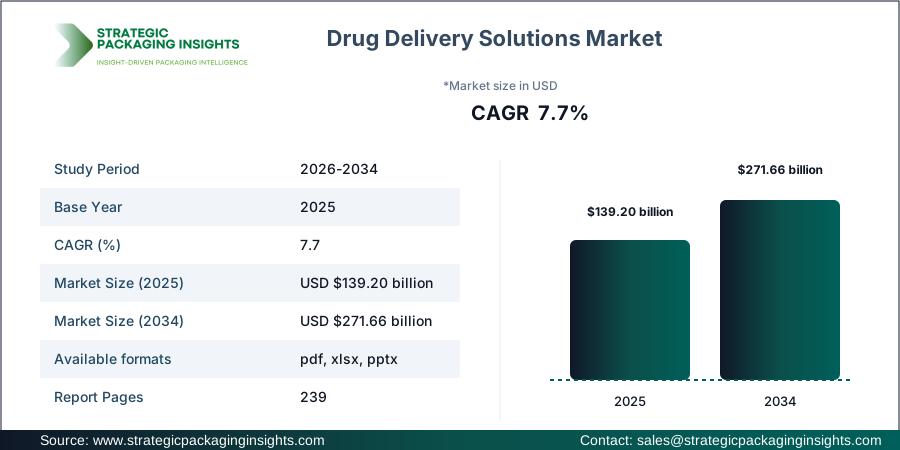
However, the market faces challenges such as stringent regulatory requirements and high costs associated with the development and manufacturing of advanced drug delivery systems. Despite these challenges, the market holds significant growth potential, driven by the increasing focus on personalized medicine and the development of biologics and biosimilars. The rise in self-administration of drugs, particularly in homecare settings, is also expected to boost market growth. Moreover, the ongoing research and development activities aimed at improving drug delivery efficiency and patient compliance are likely to create new opportunities for market players.
Report Scope
| Attributes | Details |
| Report Title | Drug Delivery Solutions Market Size, Future Growth and Forecast 2034 |
| By Product Type | Injectors, Syringes, Inhalers, Transdermal Systems |
| By Route | Injectable, Oral, Pulmonary, Transdermal |
| By Application | Diabetes, Oncology, Respiratory, Vaccines |
| By End Use | Hospitals, Homecare, Pharma Companies |
| Region | Asia Pacific, North America, Latin America, Europe, Middle East & Africa |
| Base Year | 2025 |
| Historic Period | 2018-2024 |
| Forecast Period | 2026-2034 |
| Number of Pages | 239 |
| Customization Available | Yes* |
Opportunities & Threats
The Drug Delivery Solutions market presents numerous opportunities, particularly in the realm of personalized medicine. As healthcare moves towards more individualized treatment plans, the demand for drug delivery systems that can cater to specific patient needs is on the rise. This trend is opening up avenues for companies to develop innovative solutions that enhance drug efficacy and patient compliance. Additionally, the increasing adoption of biologics and biosimilars is creating a need for specialized delivery systems, offering further growth opportunities for market players. The expansion of healthcare infrastructure in emerging economies is also providing a fertile ground for the growth of drug delivery solutions, as these regions seek to improve healthcare access and quality.
Another significant opportunity lies in the technological advancements in drug delivery systems. The integration of digital technologies, such as IoT and AI, into drug delivery devices is revolutionizing the market. These smart devices offer real-time monitoring and data collection, improving treatment outcomes and patient adherence. Companies that can leverage these technologies to develop innovative and user-friendly drug delivery solutions are likely to gain a competitive edge. Furthermore, the increasing focus on sustainability and eco-friendly packaging is driving the development of biodegradable and recyclable drug delivery systems, presenting new opportunities for market growth.
Despite the promising opportunities, the Drug Delivery Solutions market faces several threats. One of the primary challenges is the stringent regulatory landscape governing the approval and commercialization of drug delivery systems. Compliance with these regulations can be time-consuming and costly, posing a barrier to market entry for new players. Additionally, the high costs associated with the development and manufacturing of advanced drug delivery systems can limit their adoption, particularly in cost-sensitive markets. The competitive nature of the market, with numerous players vying for market share, also poses a threat to smaller companies that may struggle to compete with established players.
Drivers & Challenges
The Drug Delivery Solutions market is primarily driven by the increasing prevalence of chronic diseases, which necessitates the development of advanced drug delivery systems. Conditions such as diabetes, cancer, and respiratory disorders require ongoing medication management, driving the demand for efficient and patient-friendly delivery solutions. The growing geriatric population, which is more susceptible to chronic diseases, further fuels this demand. Additionally, the shift towards self-administration of drugs, particularly in homecare settings, is driving the adoption of user-friendly drug delivery devices. The rise in biologics and biosimilars, which require specialized delivery systems, is also a significant driver of market growth.
Technological advancements in drug delivery systems are another key driver of the market. The integration of digital technologies, such as IoT and AI, into drug delivery devices is enhancing their functionality and improving patient outcomes. These smart devices offer real-time monitoring and data collection, enabling personalized treatment plans and improving patient adherence. The development of novel drug delivery systems, such as microneedles and nanoparticle-based systems, is also driving market growth by offering more efficient and targeted drug delivery options. Furthermore, the increasing focus on sustainability and eco-friendly packaging is driving innovation in the development of biodegradable and recyclable drug delivery systems.
Despite the numerous drivers, the Drug Delivery Solutions market faces several challenges. One of the primary challenges is the stringent regulatory landscape governing the approval and commercialization of drug delivery systems. Compliance with these regulations can be time-consuming and costly, posing a barrier to market entry for new players. Additionally, the high costs associated with the development and manufacturing of advanced drug delivery systems can limit their adoption, particularly in cost-sensitive markets. The competitive nature of the market, with numerous players vying for market share, also poses a challenge to smaller companies that may struggle to compete with established players. Furthermore, the lack of awareness and education about advanced drug delivery systems among healthcare professionals and patients can hinder market growth.
Market Share Analysis
The competitive landscape of the Drug Delivery Solutions market is characterized by the presence of several key players, each striving to enhance their market position through strategic initiatives such as mergers and acquisitions, partnerships, and product innovations. Companies like BD, Gerresheimer, and West Pharmaceutical Services hold significant market shares due to their extensive product portfolios and strong distribution networks. These companies are continuously investing in research and development to introduce innovative drug delivery solutions that cater to the evolving needs of the healthcare industry. The focus on expanding their geographical presence, particularly in emerging markets, is also a key strategy adopted by these players to strengthen their market position.
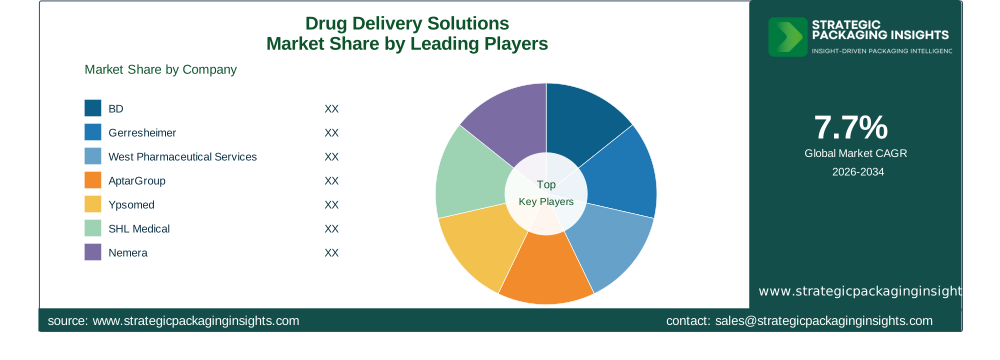
AptarGroup and Ypsomed are other prominent players in the market, known for their innovative drug delivery systems and strong customer base. These companies are leveraging technological advancements to develop smart drug delivery devices that offer enhanced patient compliance and treatment outcomes. The emphasis on sustainability and eco-friendly packaging is also a key focus area for these players, as they seek to align their product offerings with the growing demand for environmentally friendly solutions. Collaborations with pharmaceutical companies to develop customized drug delivery systems is another strategy employed by these players to gain a competitive edge.
SHL Medical, Nemera, and Owen Mumford are also key players in the Drug Delivery Solutions market, known for their expertise in the development of self-injection devices and other advanced drug delivery systems. These companies are focusing on expanding their product portfolios and enhancing their manufacturing capabilities to meet the growing demand for drug delivery solutions. The emphasis on patient-centric design and user-friendly interfaces is a key differentiator for these players, as they seek to improve patient adherence and treatment outcomes. Strategic partnerships with pharmaceutical companies and healthcare providers are also a key strategy employed by these players to expand their market reach.
Stevanato Group and B. Braun are other notable players in the market, known for their comprehensive range of drug delivery solutions and strong global presence. These companies are focusing on innovation and technological advancements to develop next-generation drug delivery systems that offer improved efficacy and patient compliance. The emphasis on quality and regulatory compliance is a key focus area for these players, as they seek to maintain their competitive edge in the market. The expansion of their manufacturing capabilities and distribution networks is also a key strategy employed by these players to strengthen their market position.
Key Highlights
- The Drug Delivery Solutions market is projected to grow at a CAGR of 7.7% from 2026 to 2034.
- Technological advancements in drug delivery systems, such as smart inhalers and auto-injectors, are driving market growth.
- The increasing prevalence of chronic diseases is a key driver of the market.
- The rise in self-administration of drugs is boosting the demand for user-friendly drug delivery devices.
- The integration of digital technologies into drug delivery systems is revolutionizing the market.
- The focus on sustainability and eco-friendly packaging is driving innovation in the market.
- Stringent regulatory requirements pose a challenge to market growth.
- The high costs associated with advanced drug delivery systems can limit their adoption.
- The competitive landscape is characterized by the presence of several key players, each striving to enhance their market position.
- Emerging markets offer significant growth opportunities for market players.
Top Countries Insights
In the Drug Delivery Solutions market, the United States holds a significant share, driven by the high prevalence of chronic diseases and the presence of major pharmaceutical companies. The market in the U.S. is expected to grow at a CAGR of 6%, supported by technological advancements and the increasing adoption of biologics. The favorable regulatory environment and strong healthcare infrastructure further contribute to market growth. However, the high costs associated with advanced drug delivery systems can pose a challenge to market expansion.
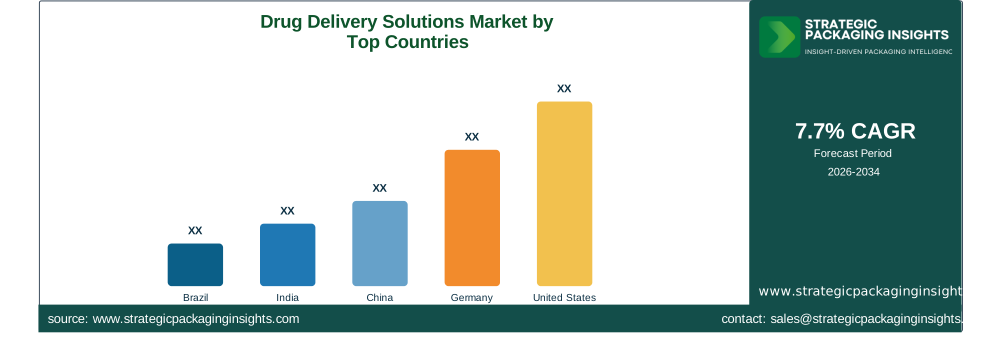
Germany is another key market for drug delivery solutions, with a CAGR of 5%. The country's strong focus on research and development, coupled with the presence of leading pharmaceutical companies, drives market growth. The increasing demand for personalized medicine and the development of biologics are key growth drivers in Germany. However, stringent regulatory requirements and high development costs can pose challenges to market growth.
China is witnessing rapid growth in the drug delivery solutions market, with a CAGR of 10%. The country's expanding healthcare infrastructure and increasing healthcare expenditure are key growth drivers. The rising prevalence of chronic diseases and the growing geriatric population further fuel market demand. However, the lack of awareness and education about advanced drug delivery systems can hinder market growth in China.
India is another emerging market for drug delivery solutions, with a CAGR of 9%. The country's large population and increasing prevalence of chronic diseases drive market growth. The government's focus on improving healthcare access and quality, coupled with the rising adoption of biologics, further supports market expansion. However, the high costs associated with advanced drug delivery systems can limit their adoption in India.
Brazil is also experiencing growth in the drug delivery solutions market, with a CAGR of 7%. The country's expanding healthcare infrastructure and increasing healthcare expenditure are key growth drivers. The rising prevalence of chronic diseases and the growing geriatric population further fuel market demand. However, the lack of awareness and education about advanced drug delivery systems can hinder market growth in Brazil.
Drug Delivery Solutions Market Segments Insights

Product Type Analysis
The product type segment of the Drug Delivery Solutions market is categorized into injectors, syringes, inhalers, and transdermal systems. Injectors are gaining popularity due to their ease of use and ability to deliver precise doses, making them ideal for self-administration. The increasing prevalence of chronic diseases, such as diabetes and cancer, is driving the demand for injectors. Syringes, on the other hand, remain a staple in drug delivery due to their versatility and cost-effectiveness. The development of pre-filled syringes is further boosting their adoption, particularly in hospital settings. Inhalers are witnessing significant growth, driven by the rising incidence of respiratory disorders and the development of smart inhalers that offer real-time monitoring and data collection. Transdermal systems are also gaining traction, offering a non-invasive and convenient method of drug delivery, particularly for pain management and hormone replacement therapies.
Route Analysis
The route segment of the Drug Delivery Solutions market is divided into injectable, oral, pulmonary, and transdermal. Injectable drug delivery remains the most common route, driven by its ability to deliver drugs directly into the bloodstream for rapid absorption. The development of auto-injectors and pen injectors is enhancing the convenience and safety of injectable drug delivery. Oral drug delivery is also a popular route, offering ease of administration and patient compliance. The development of controlled-release formulations is further boosting the adoption of oral drug delivery. Pulmonary drug delivery is gaining traction, driven by the increasing prevalence of respiratory disorders and the development of smart inhalers. Transdermal drug delivery is also witnessing growth, offering a non-invasive and convenient method of drug delivery, particularly for pain management and hormone replacement therapies.
Application Analysis
The application segment of the Drug Delivery Solutions market is categorized into diabetes, oncology, respiratory, and vaccines. The diabetes segment holds a significant share, driven by the increasing prevalence of diabetes and the development of advanced insulin delivery systems. The oncology segment is also witnessing growth, driven by the rising incidence of cancer and the development of targeted drug delivery systems. The respiratory segment is gaining traction, driven by the increasing prevalence of respiratory disorders and the development of smart inhalers. The vaccines segment is also witnessing growth, driven by the increasing demand for vaccines and the development of novel vaccine delivery systems.
End Use Analysis
The end use segment of the Drug Delivery Solutions market is divided into hospitals, homecare, and pharma companies. Hospitals remain the largest end user, driven by the increasing demand for advanced drug delivery systems in hospital settings. The development of pre-filled syringes and auto-injectors is enhancing the convenience and safety of drug delivery in hospitals. Homecare is also witnessing growth, driven by the increasing trend of self-administration of drugs and the development of user-friendly drug delivery devices. Pharma companies are also significant end users, driven by the increasing demand for customized drug delivery systems and the development of biologics and biosimilars.
Drug Delivery Solutions Market Segments
The Drug Delivery Solutions market has been segmented on the basis ofBy Product Type
- Injectors
- Syringes
- Inhalers
- Transdermal Systems
By Route
- Injectable
- Oral
- Pulmonary
- Transdermal
By Application
- Diabetes
- Oncology
- Respiratory
- Vaccines
By End Use
- Hospitals
- Homecare
- Pharma Companies
Region
- Asia Pacific
- North America
- Latin America
- Europe
- Middle East & Africa




