


Drawstring Bags Market Outlook
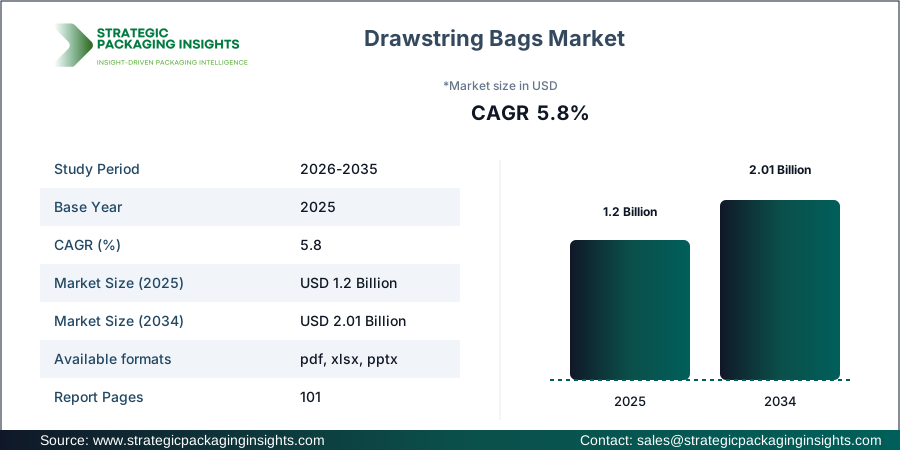
The Drawstring Bags market size was valued at USD $1.2 Billion in 2025 and is anticipated to reach USD $2.01 Billion by 2035, growing at a CAGR of 5.8% % during the forecast period according to Strategic Packaging Insights. The increasing demand for eco-friendly and reusable packaging solutions is a significant driver for the market. Consumers are increasingly opting for sustainable products, which is pushing manufacturers to innovate and offer drawstring bags made from recycled and biodegradable materials.Report Scope
| Attributes | Details |
| Report Title | Drawstring Bags Market Projected to Scale to 2.01 Billion by 2035, Assesses Strategic Packaging Insights |
| By Material | Polyester, Nylon, Cotton, Canvas, Non-Woven Fabric, Recycled Materials, Other Materials |
| By Product Type | Drawstring Backpacks, Drawstring Pouches, Drawstring Laundry Bags, Drawstring Gift Bags, Drawstring Packaging Bags, Drawstring Sports Bags |
| By Application | Sports and Fitness, Fashion and Lifestyle, Promotional and Corporate Gifting, Travel and Tourism, Retail Packaging, Household and Laundry, Food and Other Product Packaging |
| By End User | Individual Consumers, Retailers, Sports and Fitness Organizations, Corporate Buyers, E-Commerce Businesses, Industrial and Commercial Users |
| By Distribution Channel | Online Retail, Specialty Stores, Supermarkets and Hypermarkets, Direct Sales, Distributors and Wholesalers |
| By Region | North America, Europe, Asia-Pacific, Latin America, Middle East and Africa |
| Base Year | 2025 |
| Historic Period | 2018-2024 |
| Forecast Period | 2026-2035 |
| Number of Pages | 101 |
| Customization Available | Yes* |
Market Trends Analysis
The drawstring bags market is witnessing a shift towards sustainable materials, with a growing preference for bags made from recycled and biodegradable materials. This trend is driven by increasing consumer awareness and regulatory pressures to reduce plastic waste. As a result, manufacturers are investing in research and development to create eco-friendly alternatives, which is expected to enhance their competitive positioning and attract environmentally conscious consumers. Additionally, the rise of e-commerce is influencing purchasing behavior, with online retail channels becoming a significant distribution platform for drawstring bags.
Another notable trend is the customization of drawstring bags for promotional and corporate gifting purposes. Companies are leveraging these bags as marketing tools by incorporating logos and branding elements, which enhances brand visibility and customer engagement. This trend is particularly prominent in the fashion and lifestyle segment, where personalized products are gaining traction. The integration of digital printing technologies is facilitating this customization trend, enabling manufacturers to offer a wide range of design options to meet diverse consumer preferences.
Industry Transformation Analysis
The drawstring bags industry is undergoing significant transformation, driven by advancements in manufacturing technologies and shifts in consumer preferences. Automation and digitalization are playing a crucial role in enhancing operational efficiency and reducing production costs. Manufacturers are adopting automated processes for cutting, sewing, and printing, which not only improves productivity but also ensures consistent product quality. This transformation is enabling companies to meet the growing demand for drawstring bags while maintaining competitive pricing.
Furthermore, the industry is witnessing a shift towards localized production to reduce supply chain dependencies and enhance responsiveness to market demands. This trend is particularly evident in regions like Asia Pacific, where local manufacturers are expanding their production capacities to cater to both domestic and international markets. The focus on sustainability is also driving changes in the value chain, with companies exploring partnerships with suppliers of eco-friendly materials and investing in recycling infrastructure to support circular economy initiatives.
Trends & Disruptions Impacting Customers' Customers
Downstream customers, including retailers and corporate buyers, are increasingly prioritizing sustainability and customization in their purchasing decisions. The demand for eco-friendly drawstring bags is rising as consumers become more environmentally conscious and seek products that align with their values. This shift is prompting retailers to stock a wider range of sustainable options, while corporate buyers are opting for customized bags to enhance brand visibility and customer engagement. The growing emphasis on sustainability is also influencing the design and material choices of drawstring bags, with a focus on durability and recyclability.
These changes in downstream customer preferences are driving innovation and product development in the drawstring bags market. Manufacturers are investing in new materials and technologies to meet the evolving demands of their customers. The focus on customization is leading to the adoption of digital printing technologies, enabling manufacturers to offer personalized designs and branding options. As a result, the market is witnessing increased competition, with companies striving to differentiate their products through unique features and sustainable attributes. This trend is expected to create new market opportunities and drive future growth.
Drawstring Bags Market Ecosystem
The drawstring bags market ecosystem involves a complex interplay of raw material suppliers, manufacturers, distributors, and end users. Raw materials such as polyester, nylon, and cotton are sourced from suppliers and processed into finished products through manufacturing processes that include cutting, sewing, and printing. The distribution stage involves supplying these products to various retail channels, including online platforms and physical stores. End users, including individual consumers and corporate buyers, drive demand for drawstring bags, influencing production volumes and material choices.
Value creation in this ecosystem is heavily dependent on the efficient procurement of raw materials and the optimization of manufacturing processes. Supply chain dependencies, such as the availability of sustainable materials and the cost of production, play a critical role in determining the market's competitive dynamics. As consumer preferences shift towards eco-friendly products, manufacturers are increasingly focusing on sourcing recycled materials and investing in sustainable production practices. These changes are expected to impact the market by driving innovation and creating new opportunities for growth.
Analyst Perspective
Analyst Perspective: The drawstring bags market is poised for significant growth, driven by the increasing demand for sustainable and customizable products. The shift towards eco-friendly materials and the rise of e-commerce are key factors shaping the market's future.
Companies are expected to focus on innovation and sustainability to maintain competitive advantage. The integration of digital printing technologies and the adoption of automated manufacturing processes are likely to enhance operational efficiency and product differentiation. As consumer preferences continue to evolve, manufacturers will need to adapt their strategies to meet the demand for personalized and environmentally friendly products.
Market participants should closely monitor regulatory developments related to sustainability and packaging waste, as these could impact production costs and material choices. Additionally, the growing emphasis on circular economy initiatives presents opportunities for companies to invest in recycling infrastructure and develop closed-loop supply chains.
Opportunities & Threats
The drawstring bags market presents several opportunities for growth, particularly in the area of sustainable materials. As consumers become more environmentally conscious, there is a growing demand for bags made from recycled and biodegradable materials. This trend is creating opportunities for manufacturers to innovate and develop eco-friendly products that cater to this demand. Additionally, the rise of e-commerce is expanding the reach of drawstring bags, providing manufacturers with access to a broader customer base and new distribution channels.
Another opportunity lies in the customization of drawstring bags for promotional and corporate gifting purposes. Companies are increasingly using these bags as marketing tools, incorporating logos and branding elements to enhance brand visibility. This trend is driving demand for personalized products and creating opportunities for manufacturers to offer a wide range of design options. The integration of digital printing technologies is facilitating this trend, enabling manufacturers to provide customized solutions that meet diverse consumer preferences.
However, the market also faces several threats, including raw material volatility and regulatory uncertainty. The cost of raw materials, such as polyester and nylon, can fluctuate significantly, impacting production costs and profit margins. Additionally, regulatory changes related to sustainability and packaging waste could impose new requirements on manufacturers, increasing compliance costs and affecting material choices. Companies will need to navigate these challenges by diversifying their supply chains and investing in sustainable production practices.
Competition is another significant threat, with numerous players vying for market share in the drawstring bags industry. The presence of established brands and new entrants is intensifying competition, leading to pricing pressures and the need for continuous innovation. Manufacturers will need to differentiate their products through unique features and sustainable attributes to maintain a competitive edge. Additionally, the growing emphasis on sustainability is driving changes in consumer preferences, requiring companies to adapt their strategies to meet evolving demands.
Drivers & Challenges
The drawstring bags market is driven by several key factors, including the increasing demand for sustainable and reusable packaging solutions. As consumers become more environmentally conscious, there is a growing preference for products that align with their values, driving demand for drawstring bags made from recycled and biodegradable materials. This trend is further supported by regulatory pressures to reduce plastic waste, prompting manufacturers to innovate and offer eco-friendly alternatives. Additionally, the rise of e-commerce is expanding the reach of drawstring bags, providing manufacturers with access to a broader customer base and new distribution channels.
Another significant driver is the customization trend, with companies leveraging drawstring bags as marketing tools for promotional and corporate gifting purposes. The ability to incorporate logos and branding elements enhances brand visibility and customer engagement, driving demand for personalized products. This trend is particularly prominent in the fashion and lifestyle segment, where personalized products are gaining traction. The integration of digital printing technologies is facilitating this trend, enabling manufacturers to offer a wide range of design options to meet diverse consumer preferences.
Despite these drivers, the market faces several challenges, including raw material volatility and regulatory uncertainty. The cost of raw materials, such as polyester and nylon, can fluctuate significantly, impacting production costs and profit margins. Additionally, regulatory changes related to sustainability and packaging waste could impose new requirements on manufacturers, increasing compliance costs and affecting material choices. Companies will need to navigate these challenges by diversifying their supply chains and investing in sustainable production practices.
Packaging Market Economics
The economics of the drawstring bags market are influenced by several factors, including raw material costs, conversion costs, and logistics. The cost of raw materials, such as polyester, nylon, and cotton, plays a significant role in determining the overall production costs. Manufacturers must carefully manage these costs to maintain competitive pricing and profit margins. Conversion costs, including cutting, sewing, and printing, also impact the economics of the market, with automation and digitalization helping to reduce labor costs and improve efficiency.
Logistics is another critical factor, with the distribution of drawstring bags to various retail channels and end users influencing the overall cost structure. Efficient supply chain management is essential to minimize transportation costs and ensure timely delivery of products. Additionally, the focus on sustainability is driving changes in the economics of the market, with manufacturers investing in eco-friendly materials and recycling infrastructure to support circular economy initiatives. These investments are expected to enhance the market's competitiveness and create new opportunities for growth.
Packaging Value Chain & Cost Analysis
The value chain of the drawstring bags market involves several key stages, including raw material procurement, manufacturing, distribution, and retail. Raw materials, such as polyester, nylon, and cotton, are sourced from suppliers and processed into finished products through manufacturing processes that include cutting, sewing, and printing. The distribution stage involves supplying these products to various retail channels, including online platforms and physical stores. End users, including individual consumers and corporate buyers, drive demand for drawstring bags, influencing production volumes and material choices.
Efficient supply chain management is essential to minimize costs and ensure timely delivery of products. Manufacturers must carefully manage their procurement relationships and optimize their production processes to maintain competitive pricing and profit margins. The focus on sustainability is also driving changes in the value chain, with companies exploring partnerships with suppliers of eco-friendly materials and investing in recycling infrastructure to support circular economy initiatives. These changes are expected to impact the market by driving innovation and creating new opportunities for growth.
Unit Economics & Substrate Cost Analysis
The unit economics of drawstring bags are influenced by several factors, including raw material costs, conversion costs, and logistics. The cost of raw materials, such as polyester, nylon, and cotton, plays a significant role in determining the overall production costs. Manufacturers must carefully manage these costs to maintain competitive pricing and profit margins. Conversion costs, including cutting, sewing, and printing, also impact the unit economics of the market, with automation and digitalization helping to reduce labor costs and improve efficiency.
Logistics is another critical factor, with the distribution of drawstring bags to various retail channels and end users influencing the overall cost structure. Efficient supply chain management is essential to minimize transportation costs and ensure timely delivery of products. Additionally, the focus on sustainability is driving changes in the unit economics of the market, with manufacturers investing in eco-friendly materials and recycling infrastructure to support circular economy initiatives. These investments are expected to enhance the market's competitiveness and create new opportunities for growth.
Packaging Regulatory & Sustainability Analysis
The drawstring bags market is subject to various regulatory and sustainability considerations, particularly related to packaging waste and environmental impact. Regulatory bodies, such as the European Commission and the U.S. Environmental Protection Agency, are implementing measures to reduce plastic waste and promote sustainable packaging solutions. These regulations are driving manufacturers to innovate and develop eco-friendly alternatives, such as bags made from recycled and biodegradable materials.
Extended Producer Responsibility (EPR) schemes are also influencing the market, with companies being held accountable for the environmental impact of their products throughout their lifecycle. This is prompting manufacturers to invest in recycling infrastructure and develop closed-loop supply chains to support circular economy initiatives. Additionally, the growing emphasis on sustainability is driving changes in consumer preferences, with a focus on durability and recyclability. Companies will need to adapt their strategies to meet these evolving demands and comply with regulatory requirements.
Strategic Mergers, Acquisitions & Capacity Expansions
Recent strategic developments in the drawstring bags market include mergers, acquisitions, and capacity expansions aimed at enhancing competitive positioning and market reach. Companies are investing in new production facilities and expanding their manufacturing capacities to meet the growing demand for drawstring bags. For example, several manufacturers have announced plans to establish new plants in Asia Pacific to cater to both domestic and international markets.
Partnerships and collaborations are also playing a crucial role in driving innovation and sustainability in the market. Companies are exploring partnerships with suppliers of eco-friendly materials and investing in recycling infrastructure to support circular economy initiatives. These strategic developments are expected to enhance the market's competitiveness and create new opportunities for growth. Additionally, the focus on sustainability is driving changes in the value chain, with companies exploring partnerships with suppliers of eco-friendly materials and investing in recycling infrastructure to support circular economy initiatives.
Strategic Action Directives
Brand Packaging Engineers & Sustainability Directors should focus on material selection and mono-material qualification to enhance recyclability and meet sustainability targets. The integration of PCR materials and the development of eco-friendly alternatives are critical to maintaining competitive advantage.
Converter Operations & Extrusion Leads should prioritize line speed optimization and tooling efficiency to reduce production costs and improve operational efficiency. The focus on automation and digitalization is essential to enhance productivity and ensure consistent product quality.
Procurement & Material Sourcing Managers should diversify their supplier base and explore partnerships with suppliers of eco-friendly materials to mitigate raw material volatility and ensure a stable supply chain. The focus on sustainability is driving changes in procurement strategies, with an emphasis on sourcing recycled materials and investing in sustainable production practices.
Investors should monitor regulatory developments related to sustainability and packaging waste, as these could impact production costs and material choices. The growing emphasis on circular economy initiatives presents opportunities for companies to invest in recycling infrastructure and develop closed-loop supply chains.
Market Share Analysis
The drawstring bags market is characterized by intense competition, with several key players vying for market share. Companies such as Nike, Inc., Adidas AG, and Under Armour, Inc. are prominent players in the market, leveraging their strong brand presence and extensive distribution networks to maintain competitive advantage. These companies are focusing on innovation and sustainability to differentiate their products and meet evolving consumer demands.
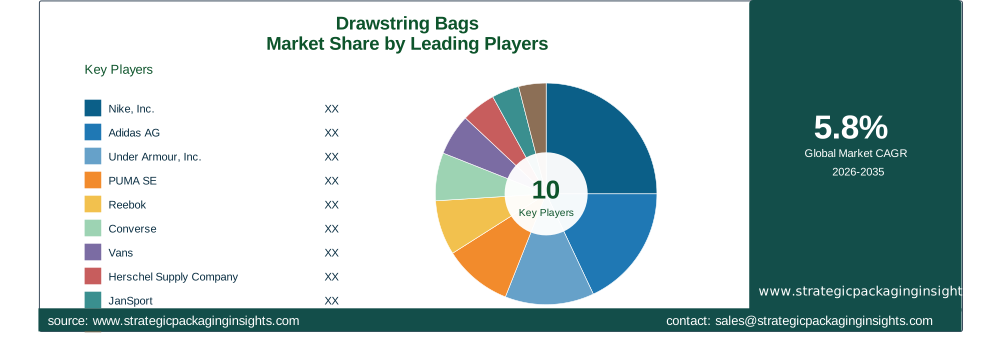
Other notable players in the market include PUMA SE, Reebok, Converse, Vans, and Herschel Supply Company. These companies are investing in new materials and technologies to enhance product offerings and expand their market reach. The focus on customization and eco-friendly materials is driving product development and creating new opportunities for growth.
Regional players, such as SanMar Corporation and Beechfield Brands, are also making significant contributions to the market, particularly in North America and Europe. These companies are focusing on localized production and distribution to enhance responsiveness to market demands and reduce supply chain dependencies. The emphasis on sustainability is driving changes in the value chain, with companies exploring partnerships with suppliers of eco-friendly materials and investing in recycling infrastructure to support circular economy initiatives.
The competitive landscape is further shaped by the presence of new entrants and smaller players, who are leveraging digital platforms and e-commerce channels to reach a broader customer base. These companies are focusing on niche markets and offering unique features to differentiate their products and gain market share. The growing emphasis on sustainability is driving changes in consumer preferences, requiring companies to adapt their strategies to meet evolving demands.
Key Highlights
- Largest Region: North America
- Fastest-Growing Region: Asia Pacific
- Largest Segment: Drawstring Backpacks
- Fastest-Growing Segment: Drawstring Sports Bags
- Base-year market size: USD 1.2 Billion
- Forecast-year market size: USD 2.01 Billion
- CAGR: 5.8%
- Important application: Promotional and Corporate Gifting
- Major end-use industry: Fashion and Lifestyle
- Major market driver: Demand for sustainable materials
Regional Insights
The drawstring bags market is witnessing significant growth across major regions, with North America being the largest market and Asia Pacific emerging as the fastest-growing region. The demand for sustainable and customizable products is driving market growth, with regional players focusing on localized production and distribution to enhance responsiveness to market demands.
North America
North America is the largest market for drawstring bags, driven by the presence of established brands and a strong focus on sustainability. The demand for eco-friendly products is rising, with consumers increasingly opting for bags made from recycled and biodegradable materials. The region is also witnessing a shift towards customization, with companies leveraging drawstring bags as marketing tools for promotional and corporate gifting purposes.
The presence of key players, such as Nike, Inc., Adidas AG, and Under Armour, Inc., is contributing to the market's growth, with these companies focusing on innovation and sustainability to maintain competitive advantage. The rise of e-commerce is also influencing purchasing behavior, with online retail channels becoming a significant distribution platform for drawstring bags.
Europe
Europe is a significant market for drawstring bags, with a strong emphasis on sustainability and eco-friendly materials. The region is witnessing a shift towards localized production, with companies focusing on reducing supply chain dependencies and enhancing responsiveness to market demands. The demand for customized products is also rising, with companies leveraging digital printing technologies to offer personalized designs and branding options.
Regulatory pressures to reduce plastic waste are driving innovation and product development, with manufacturers investing in new materials and technologies to meet evolving consumer demands. The focus on sustainability is also influencing the design and material choices of drawstring bags, with a focus on durability and recyclability.
Asia Pacific
Asia Pacific is the fastest-growing region for drawstring bags, driven by the increasing demand for sustainable and customizable products. The region is witnessing significant investments in manufacturing capacities, with local players expanding their production facilities to cater to both domestic and international markets. The rise of e-commerce is also contributing to the market's growth, with online retail channels providing manufacturers with access to a broader customer base.
The focus on sustainability is driving changes in the value chain, with companies exploring partnerships with suppliers of eco-friendly materials and investing in recycling infrastructure to support circular economy initiatives. The emphasis on customization is also influencing product development, with manufacturers leveraging digital printing technologies to offer personalized designs and branding options.
Latin America
Latin America is witnessing moderate growth in the drawstring bags market, with a focus on sustainability and eco-friendly materials. The region is experiencing a shift towards localized production, with companies focusing on reducing supply chain dependencies and enhancing responsiveness to market demands. The demand for customized products is also rising, with companies leveraging digital printing technologies to offer personalized designs and branding options.
Regulatory pressures to reduce plastic waste are driving innovation and product development, with manufacturers investing in new materials and technologies to meet evolving consumer demands. The focus on sustainability is also influencing the design and material choices of drawstring bags, with a focus on durability and recyclability.
Middle East & Africa
The Middle East & Africa region is witnessing steady growth in the drawstring bags market, driven by the increasing demand for sustainable and customizable products. The region is experiencing a shift towards localized production, with companies focusing on reducing supply chain dependencies and enhancing responsiveness to market demands. The demand for customized products is also rising, with companies leveraging digital printing technologies to offer personalized designs and branding options.
Regulatory pressures to reduce plastic waste are driving innovation and product development, with manufacturers investing in new materials and technologies to meet evolving consumer demands. The focus on sustainability is also influencing the design and material choices of drawstring bags, with a focus on durability and recyclability.
Drawstring Bags Market Segments Insights

By Material Analysis
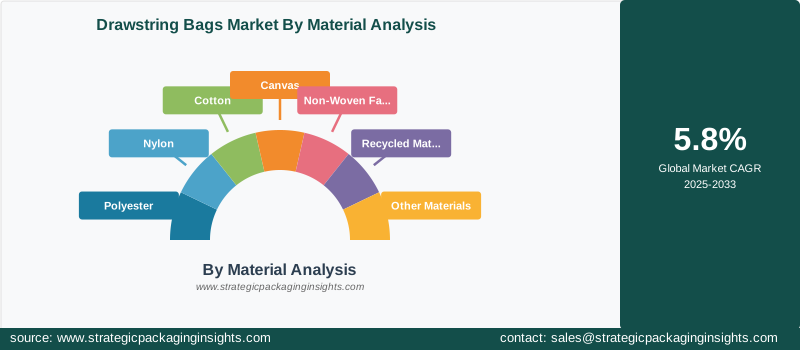
The drawstring bags market is segmented by material, with polyester, nylon, cotton, canvas, non-woven fabric, recycled materials, and other materials being the key categories. Polyester and nylon are the most commonly used materials due to their durability and cost-effectiveness. However, there is a growing demand for eco-friendly materials, such as recycled and biodegradable options, driven by increasing consumer awareness and regulatory pressures to reduce plastic waste.
Manufacturers are investing in research and development to create sustainable alternatives, which is expected to enhance their competitive positioning and attract environmentally conscious consumers. The focus on sustainability is also influencing material choices, with companies exploring partnerships with suppliers of eco-friendly materials and investing in recycling infrastructure to support circular economy initiatives.
By Product Type Analysis
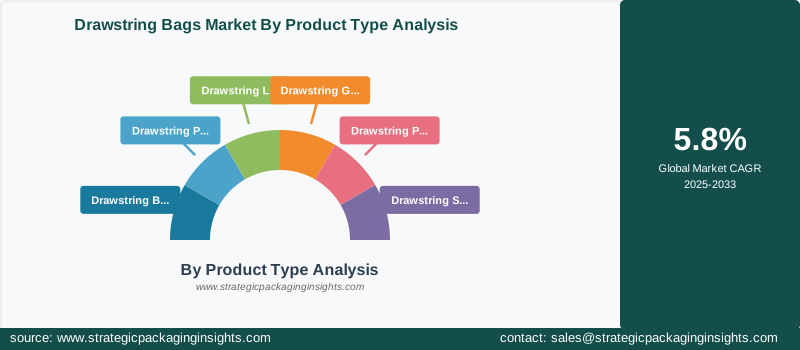
The drawstring bags market is segmented by product type, with drawstring backpacks, drawstring pouches, drawstring laundry bags, drawstring gift bags, drawstring packaging bags, and drawstring sports bags being the key categories. Drawstring backpacks are the largest segment, driven by their versatility and wide range of applications, including sports and fitness, travel and tourism, and fashion and lifestyle.
Drawstring sports bags are the fastest-growing segment, driven by the increasing demand for sports and fitness products. The focus on customization is also influencing product development, with manufacturers leveraging digital printing technologies to offer personalized designs and branding options. The integration of eco-friendly materials is further enhancing the appeal of these products, attracting environmentally conscious consumers.
By Application Analysis
The drawstring bags market is segmented by application, with sports and fitness, fashion and lifestyle, promotional and corporate gifting, travel and tourism, retail packaging, household and laundry, and food and other product packaging being the key categories. The promotional and corporate gifting segment is a significant driver of market growth, with companies leveraging drawstring bags as marketing tools to enhance brand visibility and customer engagement.
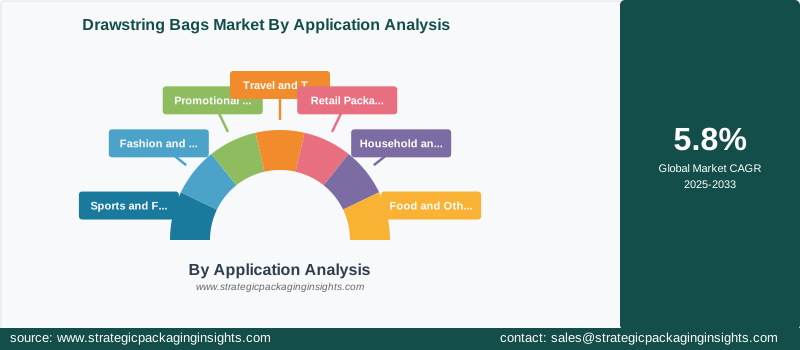
The focus on sustainability is also influencing application choices, with a growing demand for eco-friendly products in the fashion and lifestyle segment. The integration of digital printing technologies is facilitating customization, enabling manufacturers to offer personalized designs and branding options. The rise of e-commerce is also contributing to the market's growth, with online retail channels providing manufacturers with access to a broader customer base.
By End User Analysis
The drawstring bags market is segmented by end user, with individual consumers, retailers, sports and fitness organizations, corporate buyers, e-commerce businesses, and industrial and commercial users being the key categories. Individual consumers are the largest end-user segment, driven by the increasing demand for sustainable and customizable products.
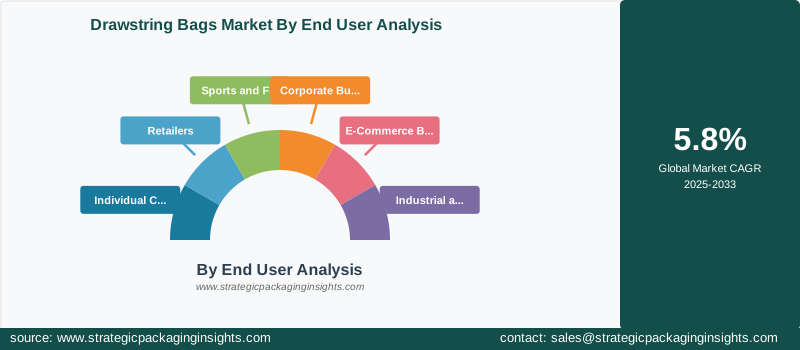
Corporate buyers are also a significant driver of market growth, leveraging drawstring bags as marketing tools for promotional and corporate gifting purposes. The focus on sustainability is influencing end-user choices, with a growing demand for eco-friendly products in the fashion and lifestyle segment. The rise of e-commerce is also contributing to the market's growth, with online retail channels providing manufacturers with access to a broader customer base.
By Distribution Channel Analysis
The drawstring bags market is segmented by distribution channel, with online retail, specialty stores, supermarkets and hypermarkets, direct sales, and distributors and wholesalers being the key categories. Online retail is the fastest-growing distribution channel, driven by the rise of e-commerce and the increasing demand for convenient and accessible shopping options.
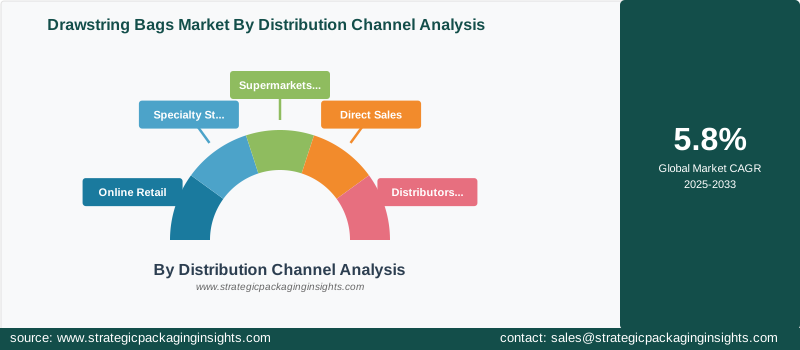
Specialty stores and supermarkets and hypermarkets are also significant distribution channels, providing consumers with a wide range of product options and personalized shopping experiences. The focus on sustainability is influencing distribution channel choices, with a growing demand for eco-friendly products in the fashion and lifestyle segment. The integration of digital printing technologies is facilitating customization, enabling manufacturers to offer personalized designs and branding options.
Drawstring Bags Market Segments
The Drawstring Bags market has been segmented on the basis ofBy Material
- Polyester
- Nylon
- Cotton
- Canvas
- Non-Woven Fabric
- Recycled Materials
- Other Materials
By Product Type
- Drawstring Backpacks
- Drawstring Pouches
- Drawstring Laundry Bags
- Drawstring Gift Bags
- Drawstring Packaging Bags
- Drawstring Sports Bags
By Application
- Sports and Fitness
- Fashion and Lifestyle
- Promotional and Corporate Gifting
- Travel and Tourism
- Retail Packaging
- Household and Laundry
- Food and Other Product Packaging
By End User
- Individual Consumers
- Retailers
- Sports and Fitness Organizations
- Corporate Buyers
- E-Commerce Businesses
- Industrial and Commercial Users
By Distribution Channel
- Online Retail
- Specialty Stores
- Supermarkets and Hypermarkets
- Direct Sales
- Distributors and Wholesalers
By Region
- North America
- Europe
- Asia-Pacific
- Latin America
- Middle East and Africa




