


Drag-Reduction Film Applications for Wing and Empennage Surfaces Market Outlook
The Drag-Reduction Film Applications for Wing and Empennage Surfaces market was valued at $389.45 million in 2025 and is projected to reach $818.31 million by 2034, growing at a CAGR of 8.6% during the forecast period 2026-2034. This market is driven by the increasing demand for fuel-efficient aircraft and the need to enhance aerodynamic performance. The aviation industry is continuously seeking innovative solutions to reduce fuel consumption and emissions, and drag-reduction films offer a promising avenue. These films are designed to minimize air resistance, thereby improving fuel efficiency and reducing operational costs for airlines. The market is also benefiting from advancements in material science, which are leading to the development of more effective and durable films.
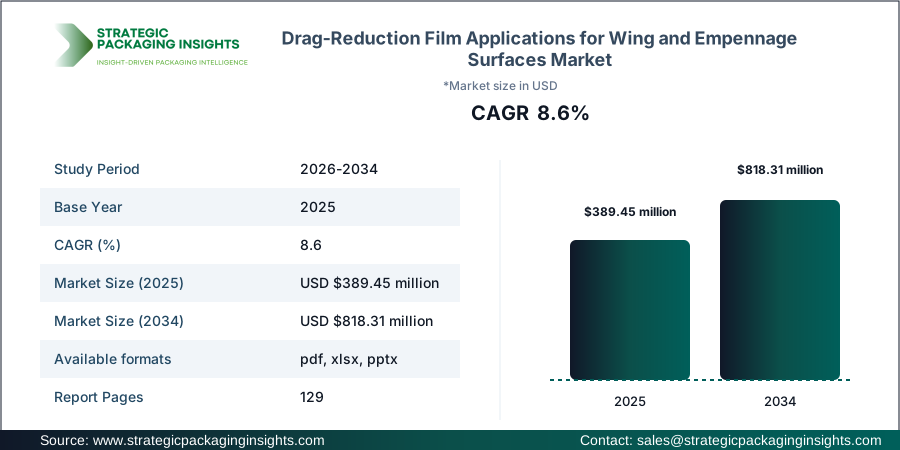
However, the market faces certain challenges, including regulatory hurdles and the high cost of advanced materials. The stringent regulations imposed by aviation authorities regarding safety and environmental impact can slow down the adoption of new technologies. Additionally, the initial investment required for implementing drag-reduction films can be substantial, which may deter smaller airlines and operators. Despite these challenges, the market holds significant growth potential, particularly with the increasing focus on sustainability and the reduction of carbon footprints in the aviation sector. As airlines strive to meet environmental targets, the demand for drag-reduction films is expected to rise, offering lucrative opportunities for manufacturers and suppliers.
Report Scope
| Attributes | Details |
| Report Title | Drag-Reduction Film Applications for Wing and Empennage Surfaces Market Size, Future Growth and Forecast 2034 |
| Film Type | Riblet Films, Protective Films, Low-Friction Films |
| Aircraft Part | Wings, Empennage, Fuselage Sections |
| Application | Fuel Efficiency, Surface Protection, Aerodynamic Performance |
| End Use | Commercial Aviation, Defense, MRO Providers |
| Region | Asia Pacific, North America, Latin America, Europe, Middle East & Africa |
| Base Year | 2025 |
| Historic Period | 2018-2024 |
| Forecast Period | 2026-2034 |
| Number of Pages | 129 |
| Customization Available | Yes* |
Opportunities & Threats
The Drag-Reduction Film Applications for Wing and Empennage Surfaces market presents numerous opportunities, particularly in the realm of commercial aviation. As airlines continue to prioritize fuel efficiency and cost reduction, the adoption of drag-reduction films is expected to increase. These films not only enhance aerodynamic performance but also contribute to significant fuel savings, making them an attractive option for airlines looking to improve their bottom line. Furthermore, the growing emphasis on sustainability and reducing carbon emissions in the aviation industry is likely to drive demand for these films. As governments and regulatory bodies impose stricter environmental regulations, airlines will be compelled to adopt innovative solutions like drag-reduction films to comply with these standards.
Another opportunity lies in the defense sector, where the need for advanced materials and technologies is paramount. Military aircraft require high-performance solutions to enhance their operational capabilities, and drag-reduction films can play a crucial role in achieving this. By improving fuel efficiency and reducing drag, these films can extend the range and endurance of military aircraft, providing a strategic advantage. Additionally, the maintenance, repair, and overhaul (MRO) sector offers significant growth potential for drag-reduction films. As airlines and operators seek to extend the lifespan of their aircraft and improve performance, the demand for MRO services incorporating drag-reduction technologies is expected to rise.
Despite the promising opportunities, the market faces certain threats that could hinder its growth. One of the primary challenges is the high cost associated with the development and implementation of drag-reduction films. The advanced materials and technologies required for these films can be expensive, which may limit their adoption, particularly among smaller airlines and operators. Additionally, the market is subject to stringent regulatory requirements, which can pose a barrier to entry for new players. Compliance with aviation safety and environmental standards is critical, and any failure to meet these requirements can result in significant financial and reputational risks for manufacturers and suppliers.
Drivers & Challenges
The primary driver of the Drag-Reduction Film Applications for Wing and Empennage Surfaces market is the increasing demand for fuel-efficient aircraft. As fuel prices continue to rise, airlines are under pressure to find ways to reduce fuel consumption and operational costs. Drag-reduction films offer a viable solution by minimizing air resistance and improving aerodynamic performance. This not only leads to significant fuel savings but also reduces carbon emissions, aligning with the industry's sustainability goals. Additionally, advancements in material science and technology are driving the development of more effective and durable drag-reduction films, further boosting market growth.
Another key driver is the growing focus on sustainability and environmental responsibility within the aviation industry. As governments and regulatory bodies impose stricter emissions standards, airlines are compelled to adopt innovative solutions to meet these requirements. Drag-reduction films, with their ability to enhance fuel efficiency and reduce emissions, are becoming an essential component of airlines' sustainability strategies. Furthermore, the increasing demand for lightweight materials in aircraft manufacturing is contributing to the adoption of drag-reduction films, as they offer a lightweight and efficient solution for improving aerodynamic performance.
Despite the positive drivers, the market faces several challenges that could impede its growth. One of the main challenges is the high cost of advanced materials and technologies required for drag-reduction films. The initial investment for implementing these films can be substantial, which may deter smaller airlines and operators from adopting them. Additionally, the market is subject to stringent regulatory requirements, which can slow down the adoption of new technologies. Compliance with aviation safety and environmental standards is critical, and any failure to meet these requirements can result in significant financial and reputational risks for manufacturers and suppliers. Moreover, the market is highly competitive, with several established players vying for market share, which can pose a challenge for new entrants.
Market Share Analysis
The competitive landscape of the Drag-Reduction Film Applications for Wing and Empennage Surfaces market is characterized by the presence of several key players, each striving to enhance their market position through innovation and strategic partnerships. Companies like 3M, Lufthansa Technik, Boeing, and Airbus are at the forefront of this market, leveraging their extensive experience and technological expertise to develop advanced drag-reduction solutions. These companies are investing heavily in research and development to create more effective and durable films that meet the evolving needs of the aviation industry.
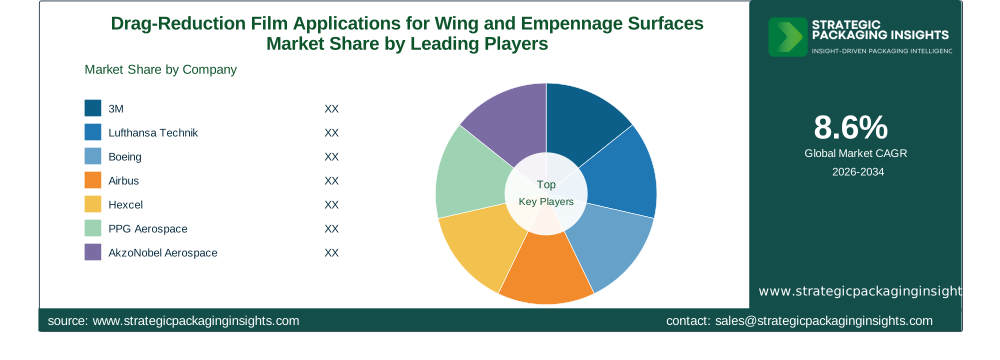
3M, a global leader in material science, holds a significant share of the market, thanks to its innovative approach and extensive product portfolio. The company's commitment to sustainability and environmental responsibility has positioned it as a preferred partner for airlines seeking to reduce their carbon footprint. Lufthansa Technik, a leading provider of MRO services, is also a major player in the market, offering comprehensive solutions that incorporate drag-reduction technologies to enhance aircraft performance and extend their lifespan.
Boeing and Airbus, two of the largest aircraft manufacturers in the world, are actively involved in the development and implementation of drag-reduction films. These companies are leveraging their extensive research and development capabilities to create cutting-edge solutions that improve fuel efficiency and reduce emissions. Hexcel, PPG Aerospace, and AkzoNobel Aerospace are also key players in the market, each contributing to the advancement of drag-reduction technologies through their expertise in advanced materials and coatings.
Toray Industries, Saint-Gobain, and Solvay are other notable companies in the market, each bringing their unique strengths and capabilities to the table. Toray Industries, a leader in carbon fiber and composite materials, is focused on developing lightweight and high-performance solutions for the aviation industry. Saint-Gobain, known for its expertise in high-performance materials, is actively involved in the development of innovative drag-reduction films that enhance aerodynamic performance. Solvay, a global leader in advanced materials and specialty chemicals, is also contributing to the market with its cutting-edge solutions designed to improve fuel efficiency and reduce emissions.
Key Highlights
- The market is projected to grow from $389.45 million in 2025 to $818.31 million by 2034, at a CAGR of 8.6%.
- Increasing demand for fuel-efficient aircraft is a major driver of market growth.
- Advancements in material science are leading to the development of more effective drag-reduction films.
- Stringent environmental regulations are driving the adoption of sustainable solutions in the aviation industry.
- The defense sector offers significant growth potential for drag-reduction films.
- High cost of advanced materials and technologies is a major challenge for the market.
- Key players in the market include 3M, Lufthansa Technik, Boeing, Airbus, and Hexcel.
Top Countries Insights
In the Drag-Reduction Film Applications for Wing and Empennage Surfaces market, the United States holds a significant share, driven by the presence of major aircraft manufacturers and a strong focus on innovation. The market size in the U.S. is substantial, with a CAGR of 9%. The country's emphasis on reducing carbon emissions and improving fuel efficiency is a key growth driver. Additionally, government initiatives to promote sustainable aviation practices are further boosting the market.
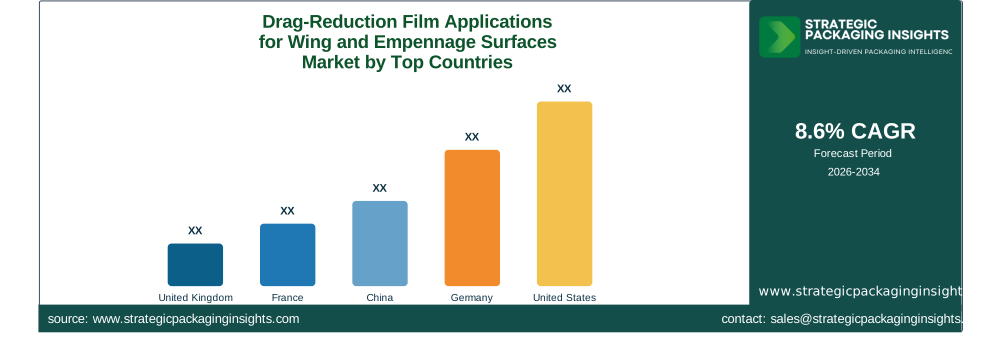
Germany is another key player in the market, with a CAGR of 8%. The country's strong aerospace industry and focus on advanced materials and technologies are driving the adoption of drag-reduction films. Germany's commitment to sustainability and environmental responsibility is also contributing to market growth, as airlines seek to comply with stringent emissions standards.
In Asia Pacific, China is emerging as a major market for drag-reduction films, with a CAGR of 10%. The country's rapidly growing aviation industry and increasing focus on fuel efficiency are key drivers of market growth. Government policies promoting sustainable aviation practices and investments in advanced materials and technologies are further supporting the market.
France, with a CAGR of 7%, is also a significant market for drag-reduction films. The country's strong aerospace industry and focus on innovation are driving the adoption of these films. France's commitment to reducing carbon emissions and improving fuel efficiency is further boosting the market, as airlines seek to meet environmental targets.
The United Kingdom, with a CAGR of 6%, is another important market for drag-reduction films. The country's emphasis on sustainability and environmental responsibility is driving the adoption of these films, as airlines strive to reduce their carbon footprint. The presence of major aerospace companies and a strong focus on research and development are also contributing to market growth.
Drag-Reduction Film Applications for Wing and Empennage Surfaces Market Segments Insights

Film Type Analysis
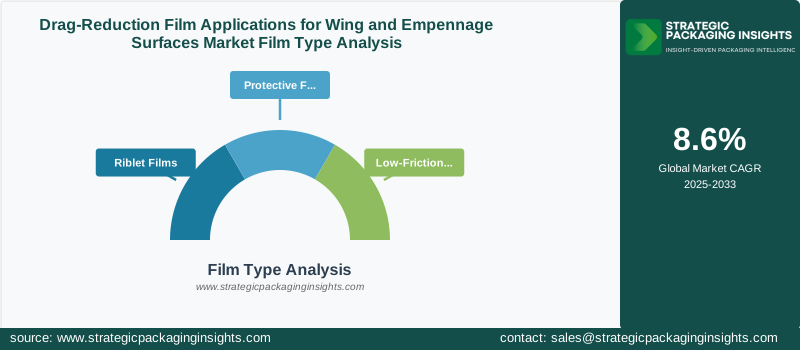
The film type segment in the Drag-Reduction Film Applications for Wing and Empennage Surfaces market is categorized into riblet films, protective films, and low-friction films. Riblet films are gaining traction due to their ability to significantly reduce drag by mimicking the texture of shark skin. These films are particularly effective in enhancing aerodynamic performance and fuel efficiency, making them a popular choice among airlines. Protective films, on the other hand, offer the added benefit of surface protection, safeguarding aircraft surfaces from environmental damage and wear. Low-friction films are also in demand for their ability to reduce air resistance and improve fuel efficiency, contributing to overall cost savings for airlines.
The demand for these films is driven by the increasing focus on sustainability and the need to reduce carbon emissions in the aviation industry. Airlines are seeking innovative solutions to improve fuel efficiency and reduce operational costs, and drag-reduction films offer a viable option. Additionally, advancements in material science are leading to the development of more effective and durable films, further boosting demand. The competitive landscape in this segment is characterized by the presence of several key players, each striving to enhance their market position through innovation and strategic partnerships.
Aircraft Part Analysis
The aircraft part segment is divided into wings, empennage, and fuselage sections. Wings are the primary focus for drag-reduction film applications, as they play a crucial role in determining the aerodynamic performance of an aircraft. The application of drag-reduction films on wings can lead to significant improvements in fuel efficiency and overall performance. Empennage, which includes the tail section of the aircraft, is another critical area for drag-reduction film applications. These films help enhance stability and control, contributing to improved flight performance.
Fuselage sections are also gaining attention for drag-reduction film applications, as airlines seek to optimize the entire aircraft for maximum efficiency. The demand for these films is driven by the increasing focus on fuel efficiency and the need to reduce carbon emissions. Airlines are investing in advanced materials and technologies to enhance the performance of their aircraft, and drag-reduction films are becoming an essential component of these efforts. The competitive landscape in this segment is characterized by the presence of several key players, each striving to enhance their market position through innovation and strategic partnerships.
Application Analysis
The application segment is categorized into fuel efficiency, surface protection, and aerodynamic performance. Fuel efficiency is the primary driver of demand for drag-reduction films, as airlines seek to reduce fuel consumption and operational costs. These films offer a viable solution by minimizing air resistance and improving aerodynamic performance, leading to significant fuel savings. Surface protection is another important application, as drag-reduction films help safeguard aircraft surfaces from environmental damage and wear, extending the lifespan of the aircraft.
Aerodynamic performance is also a key focus for drag-reduction film applications, as airlines strive to enhance the overall performance of their aircraft. The demand for these films is driven by the increasing focus on sustainability and the need to reduce carbon emissions. Airlines are seeking innovative solutions to improve fuel efficiency and reduce operational costs, and drag-reduction films offer a viable option. The competitive landscape in this segment is characterized by the presence of several key players, each striving to enhance their market position through innovation and strategic partnerships.
End Use Analysis
The end-use segment is divided into commercial aviation, defense, and MRO providers. Commercial aviation is the largest segment, driven by the increasing demand for fuel-efficient aircraft and the need to reduce operational costs. Airlines are investing in drag-reduction films to enhance aerodynamic performance and improve fuel efficiency, contributing to significant cost savings. The defense sector is also a key market for drag-reduction films, as military aircraft require high-performance solutions to enhance their operational capabilities.
MRO providers are another important end-use segment, as they offer maintenance, repair, and overhaul services that incorporate drag-reduction technologies. The demand for these services is driven by the need to extend the lifespan of aircraft and improve performance. The competitive landscape in this segment is characterized by the presence of several key players, each striving to enhance their market position through innovation and strategic partnerships. The demand for drag-reduction films is expected to continue growing, driven by the increasing focus on sustainability and the need to reduce carbon emissions in the aviation industry.
Drag-Reduction Film Applications for Wing and Empennage Surfaces Market Segments
The Drag-Reduction Film Applications for Wing and Empennage Surfaces market has been segmented on the basis ofFilm Type
- Riblet Films
- Protective Films
- Low-Friction Films
Aircraft Part
- Wings
- Empennage
- Fuselage Sections
Application
- Fuel Efficiency
- Surface Protection
- Aerodynamic Performance
End Use
- Commercial Aviation
- Defense
- MRO Providers
Region
- Asia Pacific
- North America
- Latin America
- Europe
- Middle East & Africa




