


DPP-Enabled Smart Labels and Inlays for FMCG Packaging Market Outlook
The DPP-Enabled Smart Labels and Inlays for FMCG Packaging market was valued at $478.40 million in 2025 and is projected to reach $1.06 billion by 2034, growing at a CAGR of 9.2% during the forecast period 2026-2034. This market is experiencing significant growth due to the increasing demand for enhanced product traceability and authentication in the fast-moving consumer goods (FMCG) sector. The integration of digital printing processes (DPP) with smart labeling technologies is revolutionizing packaging by providing real-time data and improving supply chain transparency. The adoption of these technologies is driven by the need for efficient inventory management, reduction in counterfeiting, and compliance with stringent regulatory standards. As consumer awareness regarding product authenticity and sustainability grows, the demand for smart labels and inlays is expected to surge, further propelling market expansion.
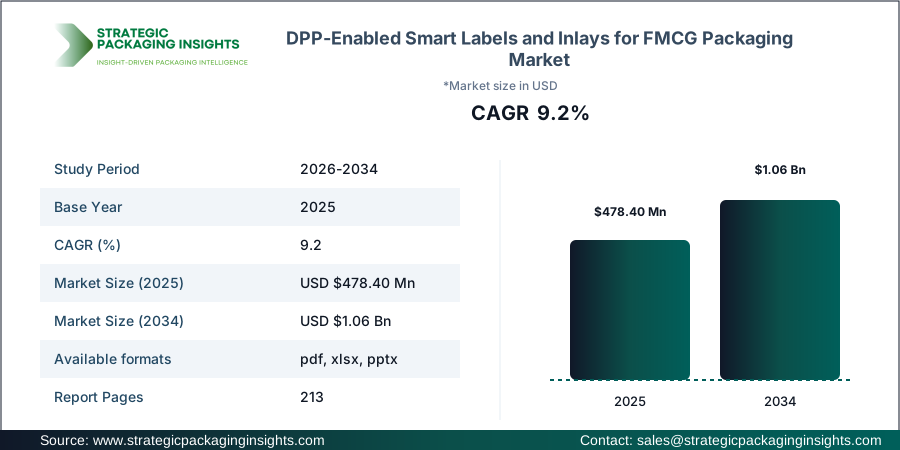
Report Scope
| Attributes | Details |
| Report Title | DPP-Enabled Smart Labels and Inlays for FMCG Packaging Market Size, Future Growth and Forecast 2034 |
| Technology | NFC, RFID, QR codes, Digital Watermarks |
| Label Type | Smart Labels, Inlays, Tamper-Evident Labels |
| Application | Product Traceability, Recycling Information, Authentication |
| End Use | FMCG, Beverages, Cosmetics, Retail |
| Region | Asia Pacific, North America, Latin America, Europe, Middle East & Africa |
| Base Year | 2025 |
| Historic Period | 2018-2024 |
| Forecast Period | 2026-2034 |
| Number of Pages | 213 |
| Customization Available | Yes* |
Opportunities & Threats
The DPP-Enabled Smart Labels and Inlays market presents numerous opportunities, particularly in the realm of product traceability and consumer engagement. With the rise of e-commerce and global trade, there is an increasing need for advanced labeling solutions that can provide detailed product information and ensure authenticity. Smart labels equipped with NFC and RFID technologies offer seamless integration with digital platforms, enabling brands to engage directly with consumers through personalized content and promotions. Additionally, the growing emphasis on sustainability and recycling is driving demand for labels that can convey recycling information and support circular economy initiatives. Companies that can innovate and offer eco-friendly labeling solutions are likely to gain a competitive edge in this evolving market landscape.
Another significant opportunity lies in the expansion of smart labeling applications beyond traditional FMCG sectors. Industries such as pharmaceuticals, automotive, and electronics are increasingly adopting smart labels for enhanced security and operational efficiency. The ability to track and authenticate products throughout the supply chain is becoming a critical requirement, especially in sectors where counterfeiting poses a significant risk. As regulatory bodies worldwide tighten their stance on product safety and traceability, the adoption of smart labels is expected to accelerate, creating lucrative opportunities for market players to diversify their offerings and tap into new industry verticals.
Despite the promising growth prospects, the market faces certain restrainers that could impede its progress. One of the primary challenges is the high cost associated with the implementation of smart labeling technologies. The initial investment required for integrating DPP systems and smart label infrastructure can be substantial, particularly for small and medium-sized enterprises (SMEs). Additionally, the complexity of managing and analyzing the vast amounts of data generated by smart labels can be daunting for companies lacking the necessary technological expertise. Furthermore, concerns regarding data privacy and security may hinder the widespread adoption of these technologies, as consumers and businesses alike become increasingly cautious about sharing sensitive information.
Drivers & Challenges
The primary drivers of the DPP-Enabled Smart Labels and Inlays market include the increasing demand for enhanced product traceability and the need for efficient supply chain management. As global supply chains become more complex, the ability to track products in real-time and ensure their authenticity has become a critical requirement for businesses. Smart labels equipped with RFID and NFC technologies provide a seamless solution for monitoring product movement and verifying their origin, thereby reducing the risk of counterfeiting and ensuring compliance with regulatory standards. Additionally, the growing consumer preference for transparency and sustainability is driving demand for labels that can provide detailed product information and support recycling initiatives.
Another significant driver is the rapid advancement of digital printing technologies, which has made it easier and more cost-effective to produce smart labels and inlays. The integration of DPP with smart labeling solutions allows for greater customization and flexibility, enabling brands to create unique and engaging packaging designs that resonate with consumers. This technological innovation is not only enhancing the aesthetic appeal of packaging but also improving its functionality by enabling real-time data capture and analysis. As a result, companies are increasingly investing in smart labeling solutions to differentiate their products and gain a competitive edge in the market.
However, the market also faces several challenges that could hinder its growth. One of the primary challenges is the lack of standardization in smart labeling technologies, which can lead to compatibility issues and hinder interoperability between different systems. This lack of uniformity can create barriers to adoption, particularly for companies operating in multiple regions with varying regulatory requirements. Additionally, the high cost of implementing smart labeling solutions can be a significant deterrent for small and medium-sized enterprises (SMEs), which may lack the financial resources to invest in advanced technologies. Furthermore, concerns regarding data privacy and security remain a critical challenge, as businesses and consumers alike become increasingly wary of sharing sensitive information.
Market Share Analysis
The competitive landscape of the DPP-Enabled Smart Labels and Inlays market is characterized by the presence of several key players who are actively engaged in product innovation and strategic partnerships to strengthen their market position. Companies such as Avery Dennison, CCL Industries, and UPM Raflatac are leading the market with their extensive product portfolios and strong distribution networks. These companies are focusing on expanding their product offerings to cater to the growing demand for smart labeling solutions across various industries. Additionally, they are investing in research and development to enhance the functionality and performance of their products, thereby gaining a competitive edge in the market.
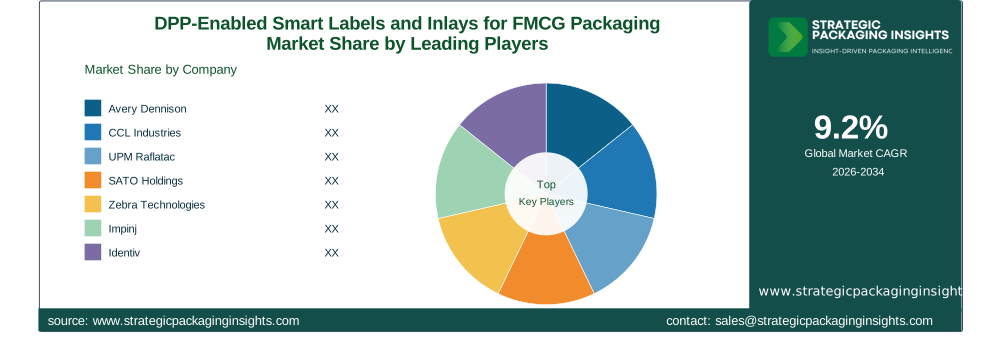
Avery Dennison holds a significant market share, driven by its comprehensive range of smart labeling solutions and its commitment to sustainability. The company is actively involved in developing eco-friendly labels that support recycling initiatives and reduce environmental impact. CCL Industries is another major player in the market, known for its innovative labeling solutions and strong focus on customer engagement. The company is leveraging its expertise in digital printing technologies to offer customized labeling solutions that enhance brand visibility and consumer interaction.
UPM Raflatac is a key player in the market, renowned for its high-quality labeling solutions and commitment to sustainability. The company is investing in advanced technologies to improve the performance and functionality of its products, thereby meeting the evolving needs of its customers. SATO Holdings and Zebra Technologies are also prominent players in the market, known for their expertise in RFID and barcode technologies. These companies are focusing on expanding their product offerings and strengthening their distribution networks to capture a larger share of the market.
Other notable companies in the market include Impinj, Identiv, Checkpoint Systems, Digimarc, and Schreiner Group. These companies are actively engaged in product innovation and strategic collaborations to enhance their market presence. Impinj is known for its advanced RFID solutions, while Identiv specializes in secure identification and authentication technologies. Checkpoint Systems is a leading provider of loss prevention and merchandise visibility solutions, while Digimarc is renowned for its digital watermarking technologies. Schreiner Group is a key player in the market, known for its innovative labeling solutions and strong focus on customer satisfaction.
Key Highlights
- The market is projected to grow from $478.40 million in 2025 to $1.06 billion by 2034, at a CAGR of 9.2%.
- Increasing demand for product traceability and authentication is driving market growth.
- Smart labels equipped with NFC and RFID technologies offer seamless integration with digital platforms.
- Growing emphasis on sustainability and recycling is boosting demand for eco-friendly labeling solutions.
- Advancements in digital printing technologies are enhancing the functionality and customization of smart labels.
- Lack of standardization in smart labeling technologies poses a challenge to market growth.
- High implementation costs can be a deterrent for small and medium-sized enterprises (SMEs).
- Concerns regarding data privacy and security remain a critical challenge for the market.
Top Countries Insights
In the DPP-Enabled Smart Labels and Inlays for FMCG Packaging market, the United States is a leading player, with a market size of approximately $200 million and a CAGR of 8%. The country's strong emphasis on technological innovation and advanced supply chain management practices are key growth drivers. The presence of major market players and a robust regulatory framework further support market expansion. However, challenges such as high implementation costs and data privacy concerns may hinder growth.
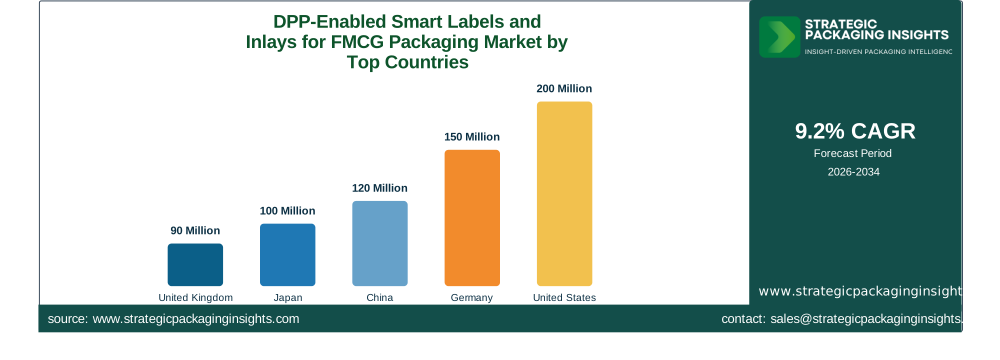
Germany is another significant market, with a market size of around $150 million and a CAGR of 7%. The country's strong focus on sustainability and recycling initiatives is driving demand for eco-friendly labeling solutions. Additionally, the presence of a well-established manufacturing sector and stringent regulatory standards are supporting market growth. However, the lack of standardization in smart labeling technologies may pose a challenge to market expansion.
China is a rapidly growing market, with a market size of approximately $120 million and a CAGR of 10%. The country's booming e-commerce sector and increasing consumer awareness regarding product authenticity are key growth drivers. The government's focus on enhancing supply chain transparency and reducing counterfeiting is further boosting demand for smart labeling solutions. However, challenges such as regulatory complexities and data privacy concerns may hinder market growth.
Japan is a key market, with a market size of around $100 million and a CAGR of 6%. The country's strong emphasis on technological innovation and advanced manufacturing practices are driving demand for smart labeling solutions. The presence of major market players and a robust regulatory framework further support market expansion. However, challenges such as high implementation costs and data privacy concerns may hinder growth.
The United Kingdom is another important market, with a market size of approximately $90 million and a CAGR of 5%. The country's strong focus on sustainability and recycling initiatives is driving demand for eco-friendly labeling solutions. Additionally, the presence of a well-established retail sector and stringent regulatory standards are supporting market growth. However, the lack of standardization in smart labeling technologies may pose a challenge to market expansion.
DPP-Enabled Smart Labels and Inlays for FMCG Packaging Market Segments Insights

Technology Analysis
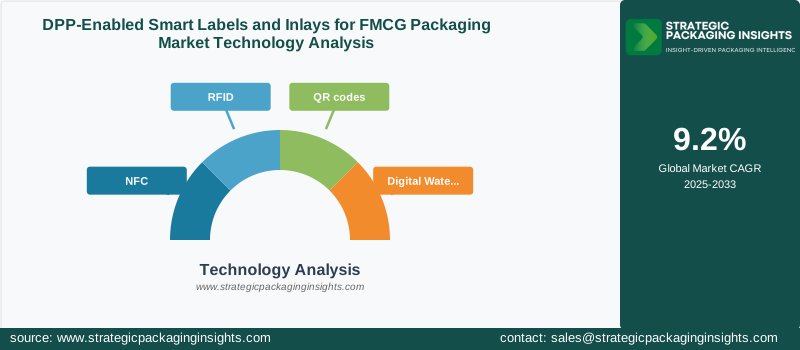
The technology segment of the DPP-Enabled Smart Labels and Inlays market is primarily driven by the increasing adoption of NFC, RFID, QR codes, and digital watermarks. NFC and RFID technologies are gaining traction due to their ability to provide real-time data and enhance supply chain transparency. These technologies enable seamless integration with digital platforms, allowing brands to engage directly with consumers through personalized content and promotions. QR codes and digital watermarks are also becoming popular due to their cost-effectiveness and ease of implementation. As consumer awareness regarding product authenticity and sustainability grows, the demand for these technologies is expected to surge, further propelling market expansion.
Competition within the technology segment is intense, with companies focusing on innovation and strategic partnerships to gain a competitive edge. The integration of digital printing processes (DPP) with smart labeling technologies is revolutionizing packaging by providing real-time data and improving supply chain transparency. Companies that can innovate and offer eco-friendly labeling solutions are likely to gain a competitive edge in this evolving market landscape. Additionally, the growing emphasis on sustainability and recycling is driving demand for labels that can convey recycling information and support circular economy initiatives.
Label Type Analysis
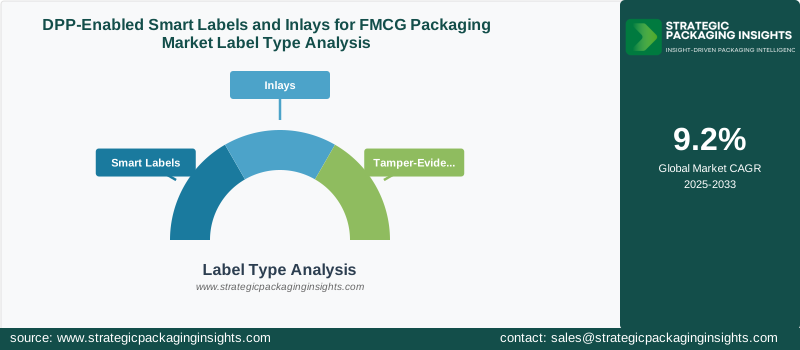
The label type segment of the DPP-Enabled Smart Labels and Inlays market includes smart labels, inlays, and tamper-evident labels. Smart labels are gaining popularity due to their ability to provide detailed product information and ensure authenticity. Inlays are also becoming popular due to their cost-effectiveness and ease of implementation. Tamper-evident labels are gaining traction due to their ability to enhance product security and prevent counterfeiting. As regulatory bodies worldwide tighten their stance on product safety and traceability, the adoption of these labels is expected to accelerate, creating lucrative opportunities for market players to diversify their offerings and tap into new industry verticals.
Competition within the label type segment is intense, with companies focusing on innovation and strategic partnerships to gain a competitive edge. The integration of digital printing processes (DPP) with smart labeling technologies is revolutionizing packaging by providing real-time data and improving supply chain transparency. Companies that can innovate and offer eco-friendly labeling solutions are likely to gain a competitive edge in this evolving market landscape. Additionally, the growing emphasis on sustainability and recycling is driving demand for labels that can convey recycling information and support circular economy initiatives.
Application Analysis
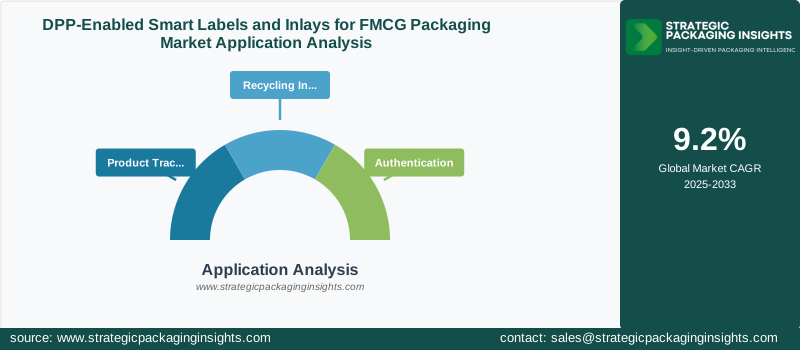
The application segment of the DPP-Enabled Smart Labels and Inlays market includes product traceability, recycling information, and authentication. Product traceability is gaining traction due to the increasing demand for enhanced supply chain transparency and the need to reduce counterfeiting. Recycling information is becoming popular due to the growing emphasis on sustainability and the need to support circular economy initiatives. Authentication is gaining traction due to the increasing demand for enhanced product security and the need to ensure authenticity. As regulatory bodies worldwide tighten their stance on product safety and traceability, the adoption of these applications is expected to accelerate, creating lucrative opportunities for market players to diversify their offerings and tap into new industry verticals.
Competition within the application segment is intense, with companies focusing on innovation and strategic partnerships to gain a competitive edge. The integration of digital printing processes (DPP) with smart labeling technologies is revolutionizing packaging by providing real-time data and improving supply chain transparency. Companies that can innovate and offer eco-friendly labeling solutions are likely to gain a competitive edge in this evolving market landscape. Additionally, the growing emphasis on sustainability and recycling is driving demand for labels that can convey recycling information and support circular economy initiatives.
End Use Analysis
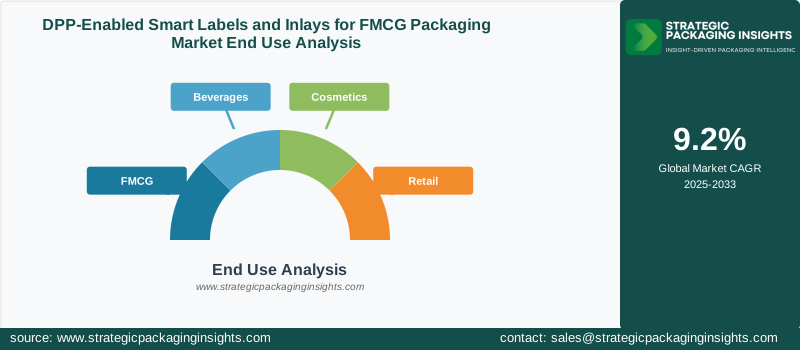
The end use segment of the DPP-Enabled Smart Labels and Inlays market includes FMCG, beverages, cosmetics, and retail. The FMCG sector is the largest end user of smart labels and inlays, driven by the increasing demand for enhanced product traceability and the need to reduce counterfeiting. The beverages sector is also a significant end user, driven by the need for efficient supply chain management and the growing emphasis on sustainability. The cosmetics sector is gaining traction due to the increasing demand for enhanced product security and the need to ensure authenticity. The retail sector is also a significant end user, driven by the need for efficient inventory management and the growing emphasis on consumer engagement.
Competition within the end use segment is intense, with companies focusing on innovation and strategic partnerships to gain a competitive edge. The integration of digital printing processes (DPP) with smart labeling technologies is revolutionizing packaging by providing real-time data and improving supply chain transparency. Companies that can innovate and offer eco-friendly labeling solutions are likely to gain a competitive edge in this evolving market landscape. Additionally, the growing emphasis on sustainability and recycling is driving demand for labels that can convey recycling information and support circular economy initiatives.
DPP-Enabled Smart Labels and Inlays for FMCG Packaging Market Segments
The DPP-Enabled Smart Labels and Inlays for FMCG Packaging market has been segmented on the basis ofTechnology
- NFC
- RFID
- QR codes
- Digital Watermarks
Label Type
- Smart Labels
- Inlays
- Tamper-Evident Labels
Application
- Product Traceability
- Recycling Information
- Authentication
End Use
- FMCG
- Beverages
- Cosmetics
- Retail
Region
- Asia Pacific
- North America
- Latin America
- Europe
- Middle East & Africa




