


Direct To Shape Inkjet Printing Market Outlook
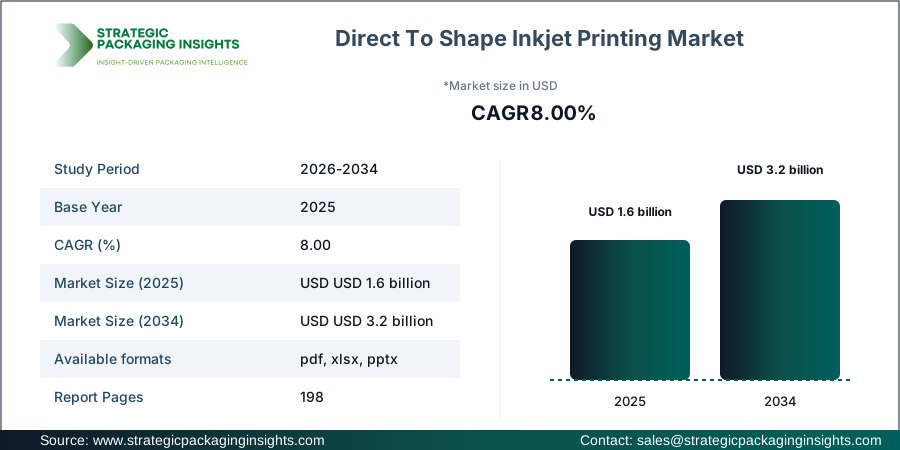
The Direct To Shape Inkjet Printing market size was valued at USD 1.6 billion in 2025 and is anticipated to reach USD 3.2 billion by 2034, growing at a CAGR of 8.00% during the forecast period according to Strategic Packaging Insights. This market is witnessing significant growth due to the increasing demand for customized and personalized packaging solutions across various industries. Companies like Krones and KHS are leading the charge by offering innovative printing solutions that cater to the evolving needs of brand owners and consumers. The ability to print directly onto three-dimensional objects without the need for labels is revolutionizing the packaging industry, offering cost-effective and environmentally friendly alternatives.
One of the most impactful drivers of this market is the growing emphasis on sustainability and eco-friendly packaging solutions. According to industry reports, consumers are increasingly favoring products that demonstrate a commitment to environmental responsibility. This trend is pushing companies like Xaar and Ricoh to develop advanced inkjet printing technologies that reduce waste and energy consumption. The adoption of water-based and UV-curable inks is a testament to the industry's shift towards greener practices. Government regulations aimed at reducing carbon footprints and promoting sustainable packaging are further propelling the market forward, making it a lucrative space for investment and innovation.
Report Scope
| Attributes | Details |
| Report Title | Direct To Shape Inkjet Printing Market Size, Future Growth and Forecast 2034 |
| By Substrate | Plastic Containers (Bottles, Tubes, Cups), Glass Bottles, Metal Cans, Paperboard Shapes |
| By Ink Type | UV-Curable, Water-Based, LED-Curable |
| By Component | Printers / Systems, Inks & Consumables, Services |
| By End Use | Beverage, Cosmetics & Personal Care, Pharmaceuticals, Promotional & Custom Products |
| By Region | North America (U.S., Canada, Mexico), Europe (Germany, UK, France, Italy, Spain, Rest of Europe), Asia Pacific (China, India, Japan, South Korea, Australia, Rest of Asia Pacific), Latin America (Brazil, Argentina, Rest of Latin America), Middle East & Africa (GCC Countries, South Africa, Rest of MEA) |
| Base Year | 2025 |
| Historic Period | 2018-2024 |
| Forecast Period | 2026-2034 |
| Number of Pages | 198 |
| Customization Available | Yes* |
Sustainability & Circular Economy Analysis
Sustainability initiatives are reshaping the Direct To Shape Inkjet Printing market by driving the adoption of recyclable materials and eco-friendly inks. Companies are increasingly focusing on reducing their carbon footprint by using water-based and UV-curable inks, which are less harmful to the environment. This shift is not only meeting regulatory requirements but also aligning with consumer preferences for sustainable products. The use of lightweight packaging materials is another trend gaining traction, as it reduces transportation costs and energy consumption, further enhancing the market's appeal.
The circular economy is influencing packaging design and manufacturing processes by encouraging the use of reusable and recyclable materials. Extended Producer Responsibility (EPR) regulations are prompting companies to rethink their packaging strategies, leading to innovations in design and material selection. This is fostering a competitive environment where companies like INX International and Tonejet are investing in research and development to create sustainable packaging solutions that meet both regulatory standards and consumer expectations.
As sustainability becomes a key differentiator in the market, companies are leveraging ESG initiatives to enhance their brand image and market competitiveness. This is influencing investment decisions and supply chain strategies, as businesses seek to align with partners who share their commitment to sustainability. The focus on waste reduction and eco-friendly material innovation is not only driving market growth but also ensuring long-term competitiveness in an increasingly environmentally conscious market.
Packaging Value Chain & Supply Chain Analysis
The packaging value chain in the Direct To Shape Inkjet Printing market is complex, involving multiple stakeholders from raw material suppliers to end-users. Raw material sourcing is critical, as the availability and cost of substrates like plastic, glass, and metal directly impact production capabilities and pricing strategies. Packaging converters and manufacturers play a pivotal role in transforming these materials into finished products, with companies like Velox and LSINC leading the way in innovation and efficiency.
Supply chain efficiency is crucial for maintaining competitiveness in this market. Strategic partnerships with logistics providers and distributors ensure timely delivery and reduce operational costs. The integration of advanced packaging machinery and automation technologies is enhancing production capabilities, allowing companies to meet the growing demand for customized and personalized packaging solutions. Inventory management and procurement strategies are also evolving, with a focus on localization and global sourcing to mitigate risks and ensure supply chain resilience.
Recycling networks are becoming increasingly important as companies strive to meet sustainability goals and comply with regulatory requirements. The collaboration between brand owners, retailers, and recycling facilities is essential for creating a closed-loop system that minimizes waste and maximizes resource efficiency. This holistic approach to the packaging value chain is driving innovation and fostering a competitive environment where companies can thrive by offering sustainable and cost-effective solutions.
Opportunities & Threats
The Direct To Shape Inkjet Printing market presents numerous opportunities for growth, driven by the increasing demand for personalized and customized packaging solutions. The ability to print directly onto three-dimensional objects without the need for labels is revolutionizing the packaging industry, offering cost-effective and environmentally friendly alternatives. Companies like Krones and KHS are leading the charge by offering innovative printing solutions that cater to the evolving needs of brand owners and consumers. The growing emphasis on sustainability and eco-friendly packaging solutions is another significant opportunity, as consumers increasingly favor products that demonstrate a commitment to environmental responsibility.
Technological advancements in inkjet printing are opening new avenues for market expansion. The development of advanced inkjet printing technologies that reduce waste and energy consumption is a testament to the industry's shift towards greener practices. The adoption of water-based and UV-curable inks is further propelling the market forward, making it a lucrative space for investment and innovation. Government regulations aimed at reducing carbon footprints and promoting sustainable packaging are also creating opportunities for companies to differentiate themselves in the market by offering eco-friendly solutions.
However, the market also faces several threats, including the high cost of advanced printing technologies and the need for significant capital investment. The complexity of the supply chain and the reliance on raw material availability can also pose challenges, as fluctuations in material costs and supply chain disruptions can impact production capabilities and pricing strategies. Additionally, the competitive landscape is becoming increasingly crowded, with new entrants and existing players vying for market share, which can lead to pricing pressures and margin erosion.
Drivers & Challenges
One of the primary drivers of the Direct To Shape Inkjet Printing market is the growing demand for customized and personalized packaging solutions. Consumers are increasingly seeking unique and personalized products, and companies are responding by offering innovative printing solutions that cater to these preferences. The ability to print directly onto three-dimensional objects without the need for labels is revolutionizing the packaging industry, offering cost-effective and environmentally friendly alternatives. This trend is further supported by the growing emphasis on sustainability and eco-friendly packaging solutions, as consumers increasingly favor products that demonstrate a commitment to environmental responsibility.
Technological advancements in inkjet printing are also driving market growth. The development of advanced inkjet printing technologies that reduce waste and energy consumption is a testament to the industry's shift towards greener practices. The adoption of water-based and UV-curable inks is further propelling the market forward, making it a lucrative space for investment and innovation. Government regulations aimed at reducing carbon footprints and promoting sustainable packaging are also creating opportunities for companies to differentiate themselves in the market by offering eco-friendly solutions.
Despite these drivers, the market faces several challenges, including the high cost of advanced printing technologies and the need for significant capital investment. The complexity of the supply chain and the reliance on raw material availability can also pose challenges, as fluctuations in material costs and supply chain disruptions can impact production capabilities and pricing strategies. Additionally, the competitive landscape is becoming increasingly crowded, with new entrants and existing players vying for market share, which can lead to pricing pressures and margin erosion.
Market Share Analysis
The Direct To Shape Inkjet Printing market is characterized by a competitive landscape with several key players vying for market share. Companies like Krones, KHS, and Xaar are leading the market with their innovative printing solutions and strong market presence. These companies have established themselves as leaders in the industry by offering advanced technologies and comprehensive solutions that cater to the evolving needs of brand owners and consumers. Their focus on sustainability and eco-friendly practices has further strengthened their market position, as consumers increasingly favor products that demonstrate a commitment to environmental responsibility.
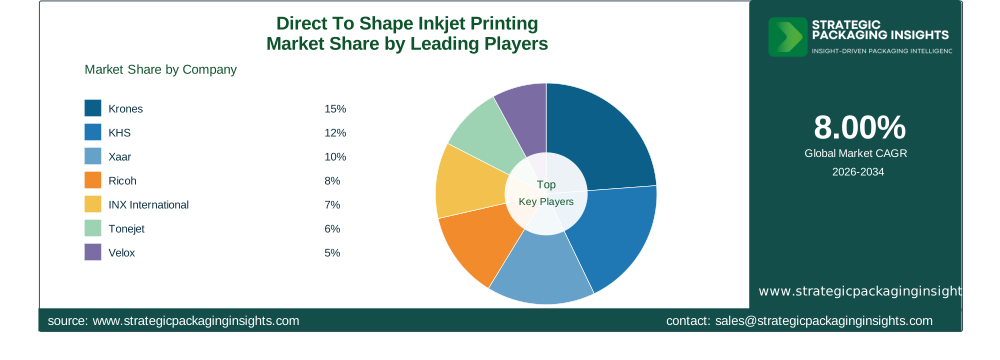
In addition to these market leaders, several other companies are making significant contributions to the market. Ricoh, INX International, and Tonejet are known for their cutting-edge technologies and innovative solutions that address the growing demand for customized and personalized packaging. These companies have invested heavily in research and development to create advanced inkjet printing technologies that reduce waste and energy consumption, aligning with the industry's shift towards greener practices.
Velox, LSINC, and Inkcups are also key players in the market, offering a range of products and services that cater to various end-use industries. These companies have established themselves as leaders in the industry by offering comprehensive solutions that address the unique needs of their clients. Their focus on sustainability and eco-friendly practices has further strengthened their market position, as consumers increasingly favor products that demonstrate a commitment to environmental responsibility.
The competitive landscape is further characterized by strategic partnerships and collaborations between companies. These partnerships enable companies to leverage each other's strengths and capabilities to create innovative solutions that meet the evolving needs of the market. As the market continues to grow, companies are expected to focus on expanding their product portfolios and enhancing their market presence through strategic acquisitions and partnerships.
Key Highlights
- Market Size: The Direct To Shape Inkjet Printing market was valued at USD 1.6 billion in 2025 and is projected to reach USD 3.2 billion by 2034.
- Growth Rate: The market is expected to grow at a CAGR of 8.00% during the forecast period.
- Leading Companies: Key players include Krones, KHS, Xaar, Ricoh, and INX International.
- Technological Advancements: The adoption of water-based and UV-curable inks is driving market growth.
- Sustainability Focus: Increasing emphasis on eco-friendly packaging solutions is a significant market driver.
- Regional Insights: Asia Pacific is expected to witness the highest growth rate during the forecast period.
- End-Use Industries: The beverage and cosmetics & personal care sectors are major contributors to market demand.
Direct To Shape Inkjet Printing Market Segments Insights

By Substrate Analysis
The substrate segment of the Direct To Shape Inkjet Printing market is diverse, encompassing plastic containers, glass bottles, metal cans, and paperboard shapes. Plastic containers, including bottles, tubes, and cups, dominate the market due to their widespread use in the beverage and cosmetics industries. The versatility and cost-effectiveness of plastic make it a preferred choice for manufacturers looking to offer customized and personalized packaging solutions. Glass bottles are also gaining traction, particularly in the premium beverage and cosmetics sectors, where the aesthetic appeal and perceived quality of glass are highly valued by consumers.
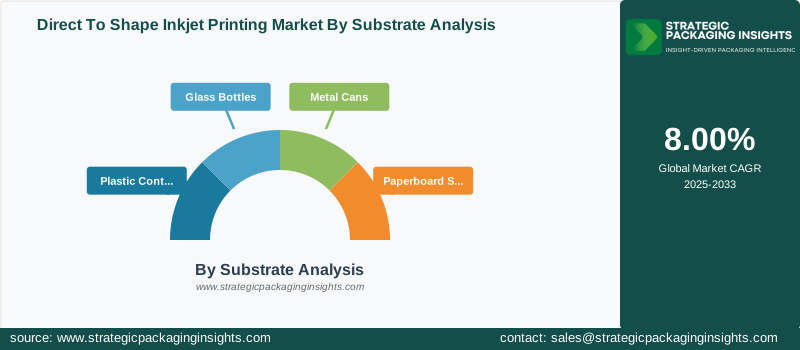
Metal cans are another significant segment, driven by the demand for durable and recyclable packaging solutions. The use of metal cans is particularly prevalent in the beverage industry, where they offer excellent protection against light and oxygen, preserving the quality and freshness of the product. Paperboard shapes are gaining popularity in the promotional and custom products segment, where their lightweight and eco-friendly properties align with consumer preferences for sustainable packaging solutions. The growing emphasis on sustainability and eco-friendly practices is expected to drive demand for recyclable and biodegradable substrates, further propelling the market forward.
By Ink Type Analysis
The ink type segment of the Direct To Shape Inkjet Printing market is characterized by the use of UV-curable, water-based, and LED-curable inks. UV-curable inks are widely used due to their fast curing times and excellent adhesion properties, making them ideal for printing on a variety of substrates, including plastic, glass, and metal. The ability to cure instantly under UV light reduces production times and increases efficiency, making UV-curable inks a popular choice among manufacturers.
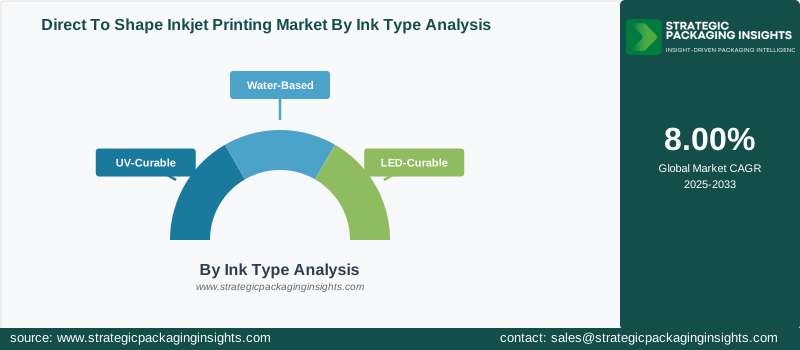
Water-based inks are gaining popularity due to their eco-friendly properties and low environmental impact. These inks are free from volatile organic compounds (VOCs) and hazardous air pollutants (HAPs), making them a preferred choice for companies looking to reduce their carbon footprint and comply with environmental regulations. LED-curable inks are also gaining traction, offering similar benefits to UV-curable inks but with lower energy consumption and longer lamp life. The growing emphasis on sustainability and eco-friendly practices is expected to drive demand for water-based and LED-curable inks, further propelling the market forward.
By Component Analysis
The component segment of the Direct To Shape Inkjet Printing market includes printers/systems, inks & consumables, and services. Printers and systems are the backbone of the market, with companies like Krones and KHS offering advanced printing solutions that cater to the evolving needs of brand owners and consumers. These systems are designed to handle a wide range of substrates and ink types, providing manufacturers with the flexibility to offer customized and personalized packaging solutions.
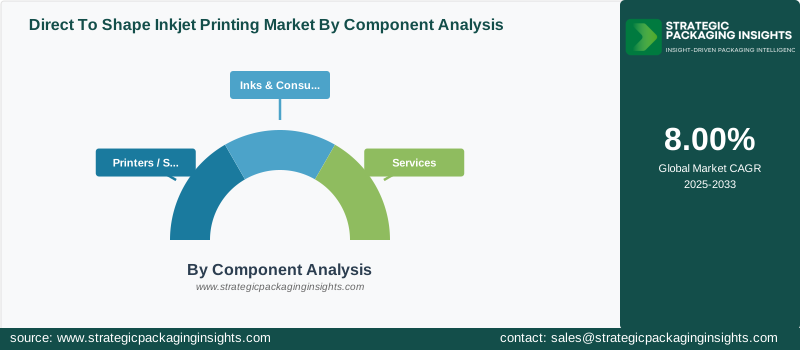
Inks and consumables are another critical component, with companies like INX International and Tonejet leading the way in innovation and sustainability. The development of eco-friendly inks and consumables is a key focus for manufacturers, as they seek to reduce waste and energy consumption while meeting regulatory requirements. Services, including maintenance, training, and technical support, are also essential for ensuring the smooth operation of printing systems and maximizing their efficiency and lifespan.
By End Use Analysis
The end-use segment of the Direct To Shape Inkjet Printing market is diverse, encompassing the beverage, cosmetics & personal care, pharmaceuticals, and promotional & custom products industries. The beverage industry is a major driver of market demand, with companies seeking innovative packaging solutions that enhance brand visibility and consumer engagement. The ability to print directly onto bottles and cans without the need for labels is revolutionizing the industry, offering cost-effective and environmentally friendly alternatives.
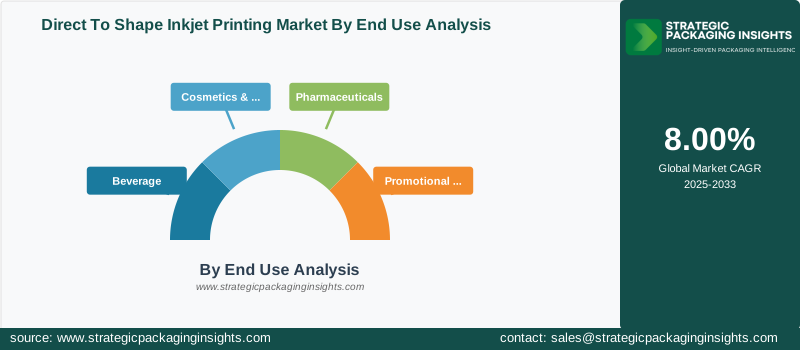
The cosmetics & personal care industry is another significant segment, driven by the demand for customized and personalized packaging solutions that reflect brand identity and appeal to consumers. The use of direct-to-shape inkjet printing allows companies to create unique and eye-catching designs that differentiate their products in a crowded market. The pharmaceuticals industry is also adopting this technology, with companies seeking to enhance product safety and compliance through innovative packaging solutions. Promotional and custom products are gaining popularity, as companies look to create unique and memorable experiences for consumers through personalized packaging.
Direct To Shape Inkjet Printing Market Segments
The Direct To Shape Inkjet Printing market has been segmented on the basis ofBy Substrate
- Plastic Containers (Bottles, Tubes, Cups)
- Glass Bottles
- Metal Cans
- Paperboard Shapes
By Ink Type
- UV-Curable
- Water-Based
- LED-Curable
By Component
- Printers / Systems
- Inks & Consumables
- Services
By End Use
- Beverage
- Cosmetics & Personal Care
- Pharmaceuticals
- Promotional & Custom Products
By Region
- North America (U.S., Canada, Mexico)
- Europe (Germany, UK, France, Italy, Spain, Rest of Europe)
- Asia Pacific (China, India, Japan, South Korea, Australia, Rest of Asia Pacific)
- Latin America (Brazil, Argentina, Rest of Latin America)
- Middle East & Africa (GCC Countries, South Africa, Rest of MEA)




