


Digital Watermark Sorting Technology for Packaging Market Outlook
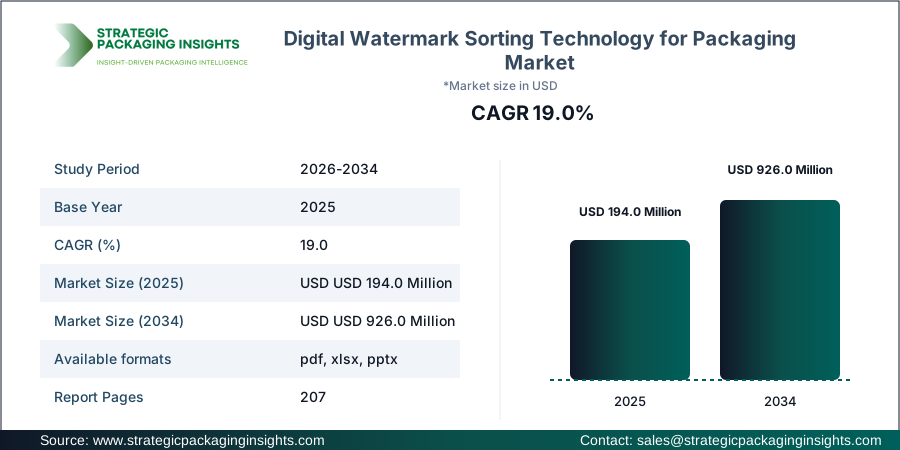
The Digital Watermark Sorting Technology for Packaging market size was valued at USD 194.0 Million in 2025 and is anticipated to reach USD 926.0 Million by 2034, growing at a CAGR of 19.0% during the forecast period according to Strategic Packaging Insights. This impressive growth trajectory is driven by the increasing demand for efficient sorting solutions in the packaging industry, where companies like Digimarc Corporation and TOMRA Systems ASA are leading the charge. The technology's ability to enhance recycling processes by accurately identifying and sorting packaging materials is a key factor propelling market expansion. As environmental concerns and regulatory pressures mount, the adoption of digital watermark sorting technology is expected to surge, offering significant opportunities for stakeholders across the value chain.
One of the most impactful drivers of this market is the growing emphasis on sustainability and waste reduction. Governments and environmental organizations worldwide are advocating for improved recycling practices, which has led to increased investments in advanced sorting technologies. According to recent reports, initiatives like the HolyGrail 2.0, supported by major industry players such as Amcor plc and Avery Dennison, are pushing the boundaries of digital watermark technology to achieve higher recycling rates. These efforts are not only enhancing the efficiency of recycling processes but also aligning with global sustainability goals, thereby driving the market forward.
Report Scope
| Attributes | Details |
| Report Title | Digital Watermark Sorting Technology for Packaging Market Size, Future Growth and Forecast 2034 |
| By Technology | Invisible Digital Watermarks, AI-Based Image Recognition, Optical Sorting Systems, Machine Vision Software |
| By Component | Sorting Software, Detection Cameras, Optical Sensors, Sorting Equipment, Cloud Analytics Platforms |
| By Packaging Material | Plastic Packaging, Paper & Paperboard, Glass, Metal, Flexible Packaging |
| By End User | Material Recovery Facilities (MRFs), Recycling Companies, Packaging Manufacturers, Consumer Goods Companies, Municipal Waste Management Authorities |
| Region | Asia Pacific, North America, Latin America, Europe, Middle East & Africa |
| Base Year | 2025 |
| Historic Period | 2018-2024 |
| Forecast Period | 2026-2034 |
| Number of Pages | 207 |
| Customization Available | Yes* |
Sustainability & Circular Economy Analysis
Sustainability initiatives and circular economy practices are reshaping the packaging market, with digital watermark sorting technology playing a pivotal role. The integration of recyclable materials and reusable packaging solutions is becoming increasingly important as companies strive to meet consumer demands for eco-friendly products. Innovations in lightweight packaging and eco-friendly materials are reducing the carbon footprint of packaging, while waste reduction strategies are being implemented to minimize environmental impact. These trends are influencing packaging design and manufacturing processes, encouraging companies to invest in sustainable solutions that enhance their market competitiveness.
Extended Producer Responsibility (EPR) regulations are driving packaging manufacturers and brand owners to adopt digital watermark sorting technology to comply with stringent recycling mandates. By incorporating digital watermarks into packaging, companies can improve the accuracy of sorting processes, ensuring that materials are correctly identified and recycled. This not only aids in regulatory compliance but also enhances supply chain strategies by reducing waste and optimizing resource utilization. As a result, companies are increasingly prioritizing sustainability in their investment decisions, recognizing the long-term benefits of aligning with circular economy principles.
Consumer preferences for sustainable packaging are also influencing market dynamics, with a growing demand for products that are environmentally friendly and socially responsible. Packaging regulations are evolving to reflect these preferences, encouraging companies to adopt innovative solutions that reduce their environmental impact. Digital watermark sorting technology is at the forefront of these efforts, enabling more efficient recycling processes and supporting the transition to a circular economy. By embracing these sustainability trends, companies can enhance their brand reputation, attract environmentally conscious consumers, and secure a competitive edge in the market.
Packaging Value Chain & Supply Chain Analysis
The packaging value chain is a complex ecosystem involving multiple stakeholders, from raw material suppliers to recycling networks. Digital watermark sorting technology is enhancing supply chain efficiency by improving the accuracy and speed of sorting processes. Raw material sourcing is becoming more sustainable, with companies prioritizing eco-friendly materials that align with circular economy principles. Packaging converters and manufacturers are leveraging advanced technologies to optimize production capabilities and reduce waste, while logistics providers are streamlining distribution channels to ensure timely delivery of products.
Strategic partnerships are playing a crucial role in enhancing supply chain resilience and competitiveness. Companies are collaborating with technology providers, such as Digimarc Corporation and TOMRA Systems ASA, to integrate digital watermark sorting solutions into their operations. These partnerships are enabling companies to access cutting-edge technologies that improve sorting accuracy and efficiency, ultimately enhancing their market performance. Additionally, localization strategies are being implemented to reduce transportation costs and minimize the environmental impact of supply chain operations.
Recycling networks are a critical component of the packaging value chain, with digital watermark sorting technology facilitating more efficient recycling processes. By accurately identifying and sorting packaging materials, companies can improve recycling rates and reduce the amount of waste sent to landfills. This not only supports sustainability goals but also enhances regulatory compliance, as companies are required to meet increasingly stringent recycling mandates. As a result, digital watermark sorting technology is becoming an essential tool for packaging manufacturers, suppliers, and distributors seeking to enhance their market competitiveness and align with global sustainability trends.
Opportunities & Threats
The Digital Watermark Sorting Technology for Packaging market presents numerous opportunities for growth and innovation. One significant opportunity lies in the increasing demand for sustainable packaging solutions. As consumers become more environmentally conscious, there is a growing need for packaging that is both recyclable and eco-friendly. Companies that invest in digital watermark sorting technology can capitalize on this trend by offering innovative solutions that enhance recycling processes and reduce environmental impact. Additionally, the integration of AI-based image recognition and machine vision software into sorting systems presents opportunities for technological advancements that can further improve sorting accuracy and efficiency.
Another opportunity in this market is the potential for expansion into emerging markets. As developing countries continue to urbanize and industrialize, there is an increasing need for efficient waste management solutions. Digital watermark sorting technology can play a crucial role in addressing these challenges by improving recycling rates and reducing waste. Companies that establish a presence in these markets can benefit from the growing demand for advanced sorting solutions and position themselves as leaders in the global packaging industry. Furthermore, strategic partnerships with local governments and waste management authorities can facilitate market entry and drive growth.
Despite the numerous opportunities, the market also faces certain threats that could hinder growth. One significant threat is the high cost of implementing digital watermark sorting technology. The initial investment required for equipment and software can be substantial, which may deter smaller companies from adopting these solutions. Additionally, the complexity of integrating digital watermarks into existing packaging designs can pose challenges for manufacturers. Companies must carefully consider these factors and develop strategies to overcome these barriers in order to fully capitalize on the opportunities presented by this market.
Drivers & Challenges
The Digital Watermark Sorting Technology for Packaging market is driven by several key factors. One of the primary drivers is the increasing focus on sustainability and environmental responsibility. As governments and organizations worldwide implement stricter recycling regulations, there is a growing need for advanced sorting solutions that can accurately identify and sort packaging materials. Digital watermark technology offers a reliable and efficient solution to these challenges, enabling companies to improve recycling rates and reduce waste. Additionally, the growing consumer demand for eco-friendly products is driving companies to invest in sustainable packaging solutions, further fueling market growth.
Another significant driver of this market is the technological advancements in sorting systems. The integration of AI-based image recognition and machine vision software into sorting equipment is enhancing the accuracy and efficiency of sorting processes. These technologies enable companies to identify and sort packaging materials with greater precision, reducing contamination and improving recycling rates. As a result, companies are increasingly adopting digital watermark sorting technology to enhance their operations and meet regulatory requirements. Furthermore, the development of cloud analytics platforms is providing companies with valuable insights into their sorting processes, enabling them to optimize operations and improve efficiency.
Despite the positive drivers, the market also faces several challenges that could impact growth. One of the primary challenges is the high cost of implementing digital watermark sorting technology. The initial investment required for equipment and software can be substantial, which may deter smaller companies from adopting these solutions. Additionally, the complexity of integrating digital watermarks into existing packaging designs can pose challenges for manufacturers. Companies must carefully consider these factors and develop strategies to overcome these barriers in order to fully capitalize on the opportunities presented by this market.
Market Share Analysis
The competitive landscape of the Digital Watermark Sorting Technology for Packaging market is characterized by the presence of several key players, each striving to enhance their market position through innovation and strategic partnerships. Companies like Digimarc Corporation and TOMRA Systems ASA are at the forefront of this market, leveraging their expertise in digital watermark technology to offer advanced sorting solutions. These companies are investing heavily in research and development to improve the accuracy and efficiency of their sorting systems, ensuring they remain competitive in a rapidly evolving market.
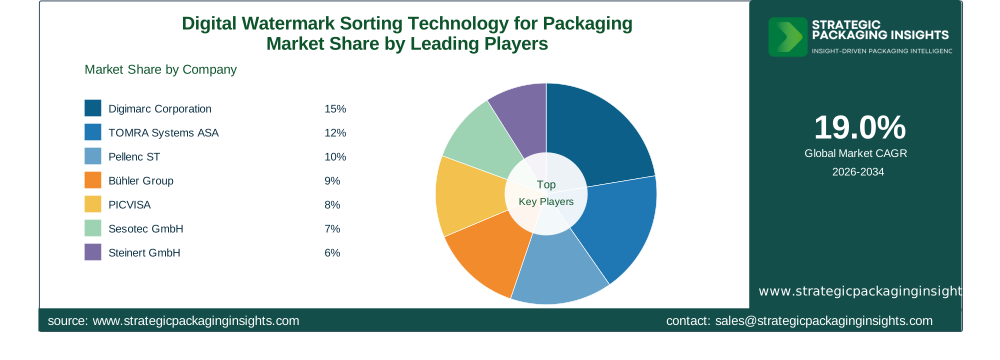
Digimarc Corporation, a leader in digital watermark technology, is known for its innovative solutions that enhance the sorting and recycling of packaging materials. The company's technology is widely used by packaging manufacturers and recycling companies to improve sorting accuracy and efficiency. TOMRA Systems ASA, another major player in the market, offers a range of sorting solutions that incorporate digital watermark technology. The company's systems are designed to optimize recycling processes and reduce waste, making them a popular choice among packaging manufacturers and waste management authorities.
Pellenc ST and Bühler Group are also significant players in the market, offering advanced sorting solutions that incorporate digital watermark technology. Pellenc ST's systems are known for their high accuracy and efficiency, making them a preferred choice for recycling companies and material recovery facilities. Bühler Group, a global leader in sorting technology, offers a range of solutions that enhance the sorting and recycling of packaging materials. The company's systems are widely used by packaging manufacturers and waste management authorities to improve recycling rates and reduce waste.
Other notable companies in the market include PICVISA, Sesotec GmbH, and Steinert GmbH, each offering unique solutions that enhance the sorting and recycling of packaging materials. These companies are investing in research and development to improve the accuracy and efficiency of their sorting systems, ensuring they remain competitive in a rapidly evolving market. Additionally, companies like MSS Inc., Valvan Baling Systems, and EVRYTHNG are also making significant contributions to the market, offering innovative solutions that enhance the sorting and recycling of packaging materials.
Key Highlights
- Market Size: USD 194.0 Million in 2025, projected to reach USD 926.0 Million by 2034.
- Growth Rate: Impressive CAGR of 19.0% during the forecast period.
- Leading Companies: Digimarc Corporation, TOMRA Systems ASA, Pellenc ST, and Bühler Group.
- Technological Advancements: Integration of AI-based image recognition and machine vision software.
- Sustainability Focus: Increasing demand for eco-friendly and recyclable packaging solutions.
- Regulatory Compliance: Stricter recycling regulations driving market growth.
- Emerging Markets: Expansion opportunities in developing countries.
- Strategic Partnerships: Collaborations with technology providers enhancing market competitiveness.
- Consumer Preferences: Growing demand for sustainable and socially responsible packaging.
Digital Watermark Sorting Technology for Packaging Market Segments Insights

By Technology Analysis
The Digital Watermark Sorting Technology for Packaging market is segmented by technology into Invisible Digital Watermarks, AI-Based Image Recognition, Optical Sorting Systems, and Machine Vision Software. Invisible digital watermarks are gaining traction due to their ability to seamlessly integrate into packaging designs without altering the appearance. This technology is particularly favored by packaging manufacturers and consumer goods companies seeking to enhance recycling processes without compromising brand aesthetics. AI-based image recognition is another key segment, offering advanced capabilities for identifying and sorting packaging materials with high precision. This technology is being adopted by recycling companies and material recovery facilities to improve sorting accuracy and efficiency.
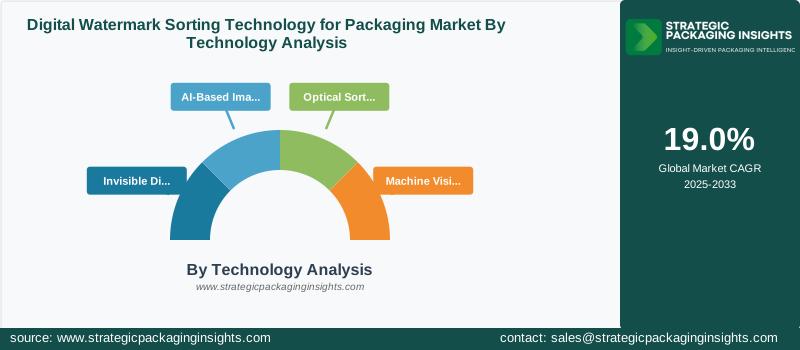
Optical sorting systems are also a significant segment, providing automated solutions for sorting packaging materials based on their physical properties. These systems are widely used by recycling companies and municipal waste management authorities to enhance recycling rates and reduce waste. Machine vision software is an emerging segment, offering advanced capabilities for analyzing and interpreting visual data to improve sorting processes. This technology is being integrated into sorting equipment to enhance accuracy and efficiency, making it a valuable tool for packaging manufacturers and waste management authorities. Overall, the by technology segment is characterized by rapid innovation and technological advancements, driving market growth and enhancing the competitiveness of key players.
By Component Analysis
The market is also segmented by component into Sorting Software, Detection Cameras, Optical Sensors, Sorting Equipment, and Cloud Analytics Platforms. Sorting software is a critical component, providing the algorithms and data processing capabilities necessary for accurate sorting. This software is being continuously improved to enhance sorting accuracy and efficiency, making it a key focus for companies investing in digital watermark sorting technology. Detection cameras and optical sensors are essential components, providing the visual data needed for sorting processes. These components are being integrated into sorting equipment to enhance accuracy and efficiency, making them a valuable tool for packaging manufacturers and waste management authorities.
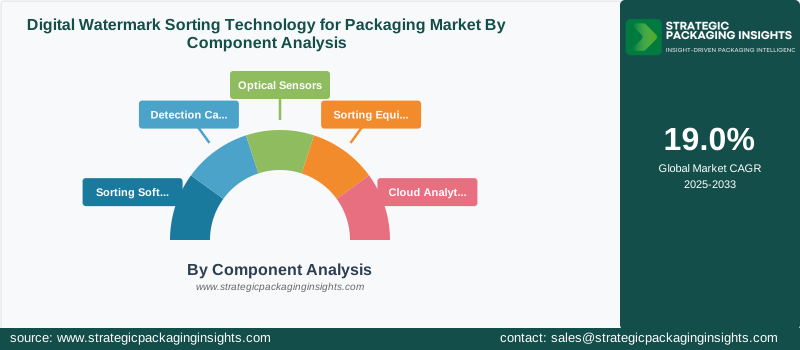
Sorting equipment is another significant segment, providing the physical infrastructure needed for sorting processes. This equipment is being continuously improved to enhance sorting accuracy and efficiency, making it a key focus for companies investing in digital watermark sorting technology. Cloud analytics platforms are an emerging segment, offering advanced capabilities for analyzing and interpreting sorting data. These platforms are being integrated into sorting systems to provide valuable insights into sorting processes, enabling companies to optimize operations and improve efficiency. Overall, the by component segment is characterized by rapid innovation and technological advancements, driving market growth and enhancing the competitiveness of key players.
By Packaging Material Analysis
The market is segmented by packaging material into Plastic Packaging, Paper & Paperboard, Glass, Metal, and Flexible Packaging. Plastic packaging is a significant segment, with digital watermark sorting technology being used to enhance recycling processes and reduce waste. This technology is being adopted by packaging manufacturers and recycling companies to improve sorting accuracy and efficiency, making it a valuable tool for enhancing sustainability efforts. Paper & paperboard is another key segment, with digital watermark sorting technology being used to improve recycling rates and reduce waste. This technology is being adopted by packaging manufacturers and waste management authorities to enhance recycling processes and reduce environmental impact.
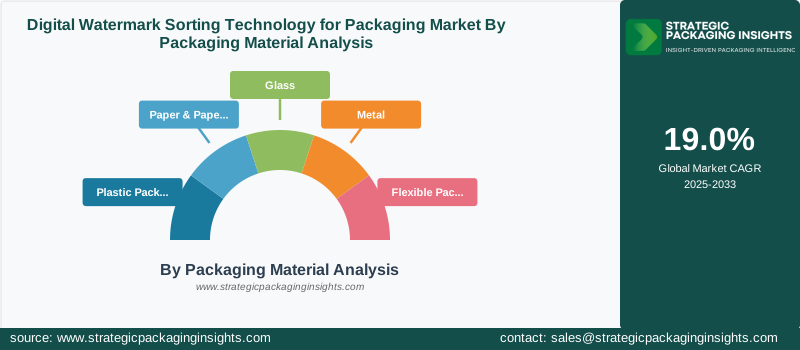
Glass and metal packaging are also significant segments, with digital watermark sorting technology being used to improve sorting accuracy and efficiency. This technology is being adopted by recycling companies and material recovery facilities to enhance recycling rates and reduce waste. Flexible packaging is an emerging segment, with digital watermark sorting technology being used to improve sorting accuracy and efficiency. This technology is being adopted by packaging manufacturers and consumer goods companies to enhance recycling processes and reduce environmental impact. Overall, the by packaging material segment is characterized by rapid innovation and technological advancements, driving market growth and enhancing the competitiveness of key players.
By End User Analysis
The market is segmented by end user into Material Recovery Facilities (MRFs), Recycling Companies, Packaging Manufacturers, Consumer Goods Companies, and Municipal Waste Management Authorities. Material recovery facilities are a significant segment, with digital watermark sorting technology being used to enhance sorting processes and improve recycling rates. This technology is being adopted by recycling companies and waste management authorities to enhance recycling processes and reduce waste. Packaging manufacturers are another key segment, with digital watermark sorting technology being used to improve sorting accuracy and efficiency. This technology is being adopted by packaging manufacturers and consumer goods companies to enhance recycling processes and reduce environmental impact.
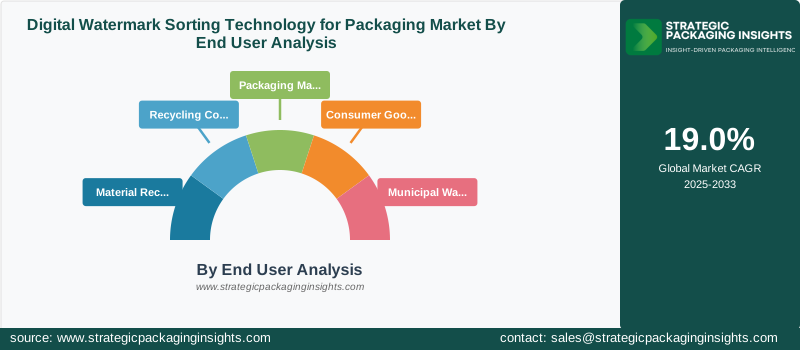
Recycling companies are also a significant segment, with digital watermark sorting technology being used to improve sorting accuracy and efficiency. This technology is being adopted by recycling companies and material recovery facilities to enhance recycling rates and reduce waste. Municipal waste management authorities are an emerging segment, with digital watermark sorting technology being used to improve sorting accuracy and efficiency. This technology is being adopted by waste management authorities and recycling companies to enhance recycling processes and reduce environmental impact. Overall, the by end user segment is characterized by rapid innovation and technological advancements, driving market growth and enhancing the competitiveness of key players.
Digital Watermark Sorting Technology for Packaging Market Segments
The Digital Watermark Sorting Technology for Packaging market has been segmented on the basis ofBy Technology
- Invisible Digital Watermarks
- AI-Based Image Recognition
- Optical Sorting Systems
- Machine Vision Software
By Component
- Sorting Software
- Detection Cameras
- Optical Sensors
- Sorting Equipment
- Cloud Analytics Platforms
By Packaging Material
- Plastic Packaging
- Paper & Paperboard
- Glass
- Metal
- Flexible Packaging
By End User
- Material Recovery Facilities (MRFs)
- Recycling Companies
- Packaging Manufacturers
- Consumer Goods Companies
- Municipal Waste Management Authorities
Region
- Asia Pacific
- North America
- Latin America
- Europe
- Middle East & Africa




