


Digital Watermark Packaging Market Outlook
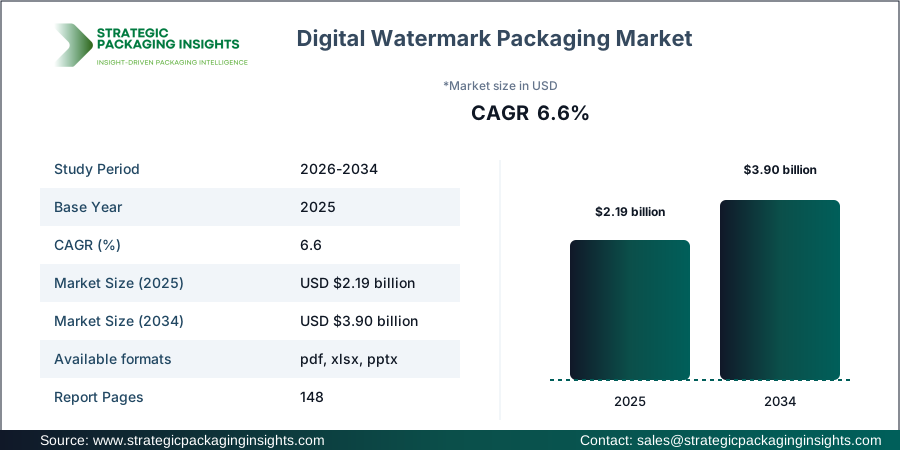
The Digital Watermark Packaging market was valued at $2.19 billion in 2025 and is projected to reach $3.90 billion by 2034, growing at a CAGR of 6.6% during the forecast period 2026-2034. This market is witnessing significant growth due to the increasing demand for advanced packaging solutions that offer enhanced security and traceability. The rise in counterfeit products has driven the need for digital watermarking technologies, which provide a robust solution for brand protection and product authentication. Additionally, the growing emphasis on sustainable packaging and recycling has further propelled the adoption of digital watermarking in packaging, as it aids in efficient sorting and recycling processes. The market is also benefiting from technological advancements and the integration of IoT in packaging, which enhances consumer engagement and provides valuable data insights for brands.
Report Scope
| Attributes | Details |
| Report Title | Digital Watermark Packaging Market Size, Future Growth and Forecast 2034 |
| Technology | Invisible Watermarking, QR-Based Watermarking, Smart Labeling, Serialization |
| Application | Recycling Sorting, Brand Protection, Consumer Engagement, Traceability |
| Packaging Type | Labels, Flexible Packaging, Cartons, Bottles |
| End Use | FMCG, Food & Beverage, Pharmaceuticals, Retail |
| Region | Asia Pacific, North America, Latin America, Europe, Middle East & Africa |
| Base Year | 2025 |
| Historic Period | 2018-2024 |
| Forecast Period | 2026-2034 |
| Number of Pages | 148 |
| Customization Available | Yes* |
Opportunities & Threats
One of the significant opportunities in the Digital Watermark Packaging market is the increasing demand for sustainable and eco-friendly packaging solutions. As environmental concerns continue to rise, consumers and regulatory bodies are pushing for packaging that minimizes environmental impact. Digital watermarking technology offers a unique advantage in this regard, as it facilitates efficient recycling and waste management processes. By enabling precise sorting of packaging materials, digital watermarks help reduce contamination in recycling streams, thereby enhancing the quality of recycled materials. This trend is expected to drive the adoption of digital watermarking in packaging, particularly in regions with stringent environmental regulations.
Another opportunity lies in the growing need for brand protection and anti-counterfeiting measures. With the proliferation of counterfeit products in various industries, companies are increasingly investing in technologies that can safeguard their brand integrity and ensure product authenticity. Digital watermarking provides a covert and secure method for embedding unique identifiers in packaging, making it difficult for counterfeiters to replicate. This technology not only helps in detecting counterfeit products but also aids in tracking and tracing products throughout the supply chain. As a result, industries such as pharmaceuticals, FMCG, and luxury goods are expected to drive the demand for digital watermark packaging solutions.
However, the market faces certain restraints, such as the high initial costs associated with implementing digital watermarking technology. The integration of digital watermarks into packaging requires specialized equipment and software, which can be expensive for small and medium-sized enterprises. Additionally, the lack of awareness and understanding of digital watermarking technology among end-users poses a challenge to market growth. Educating stakeholders about the benefits and applications of digital watermarking is crucial for its widespread adoption. Furthermore, concerns regarding data privacy and security may hinder the adoption of digital watermarking in certain applications, as companies need to ensure that consumer data is protected.
Drivers & Challenges
The primary driver of the Digital Watermark Packaging market is the increasing focus on sustainability and environmental responsibility. As consumers become more environmentally conscious, there is a growing demand for packaging solutions that are not only functional but also eco-friendly. Digital watermarking technology plays a crucial role in this context by enabling efficient recycling and waste management. By providing precise sorting capabilities, digital watermarks help reduce contamination in recycling streams, thereby improving the quality of recycled materials. This aligns with the global push towards a circular economy and is expected to drive the adoption of digital watermarking in packaging.
Another significant driver is the rising need for enhanced brand protection and anti-counterfeiting measures. Counterfeit products pose a significant threat to brand reputation and consumer safety, prompting companies to invest in technologies that can safeguard their products. Digital watermarking offers a covert and secure method for embedding unique identifiers in packaging, making it difficult for counterfeiters to replicate. This technology not only helps in detecting counterfeit products but also aids in tracking and tracing products throughout the supply chain. As a result, industries such as pharmaceuticals, FMCG, and luxury goods are expected to drive the demand for digital watermark packaging solutions.
Despite these drivers, the market faces challenges such as the high initial costs associated with implementing digital watermarking technology. The integration of digital watermarks into packaging requires specialized equipment and software, which can be expensive for small and medium-sized enterprises. Additionally, the lack of awareness and understanding of digital watermarking technology among end-users poses a challenge to market growth. Educating stakeholders about the benefits and applications of digital watermarking is crucial for its widespread adoption. Furthermore, concerns regarding data privacy and security may hinder the adoption of digital watermarking in certain applications, as companies need to ensure that consumer data is protected.
Market Share Analysis
The competitive landscape of the Digital Watermark Packaging market is characterized by the presence of several key players who are actively engaged in product innovation and strategic partnerships to enhance their market position. Companies such as Digimarc, Avery Dennison, and CCL Industries are at the forefront of this market, leveraging their technological expertise and extensive industry experience to offer advanced digital watermarking solutions. These companies are focusing on expanding their product portfolios and strengthening their distribution networks to cater to the growing demand for digital watermark packaging solutions across various industries.
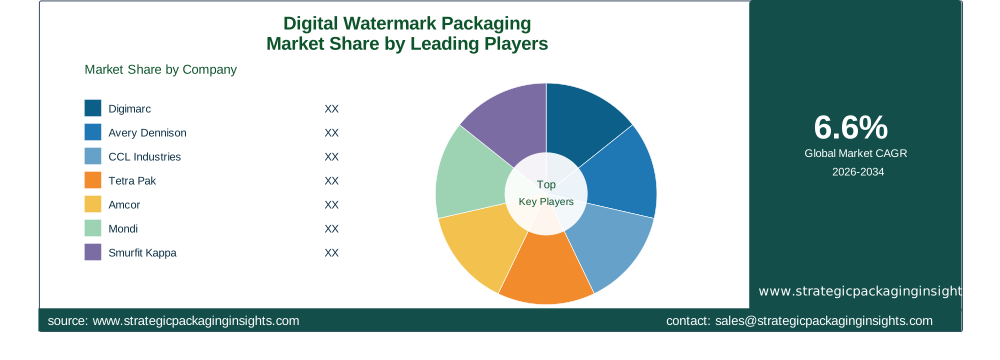
Digimarc, a leading player in the market, is known for its innovative digital watermarking technology that enables seamless integration into packaging materials. The company has established strategic partnerships with major packaging manufacturers and brands to enhance its market reach and offer customized solutions. Avery Dennison, another prominent player, offers a wide range of digital watermarking solutions that cater to different packaging types and applications. The company's focus on sustainability and eco-friendly packaging solutions has further strengthened its position in the market.
CCL Industries, a global leader in specialty label and packaging solutions, has made significant investments in digital watermarking technology to enhance its product offerings. The company's extensive distribution network and strong customer base provide a competitive advantage in the market. Tetra Pak, known for its innovative packaging solutions, has also ventured into the digital watermarking space, offering solutions that enhance product traceability and consumer engagement. Amcor, Mondi, and Smurfit Kappa are other key players in the market, focusing on expanding their digital watermarking capabilities to meet the growing demand for advanced packaging solutions.
Constantia Flexibles, Huhtamaki, and Berry Global are also notable players in the Digital Watermark Packaging market, offering a range of solutions that cater to different end-use industries. These companies are investing in research and development to enhance their product offerings and stay competitive in the market. The overall competitive landscape is characterized by a high level of innovation and strategic collaborations, as companies strive to offer differentiated solutions and capture a larger share of the market.
Key Highlights
- The Digital Watermark Packaging market is projected to grow at a CAGR of 6.6% from 2026 to 2034.
- Increasing demand for sustainable and eco-friendly packaging solutions is driving market growth.
- Digital watermarking technology offers enhanced brand protection and anti-counterfeiting measures.
- High initial costs and lack of awareness are key challenges for market growth.
- Technological advancements and IoT integration are enhancing consumer engagement.
- Key players in the market include Digimarc, Avery Dennison, and CCL Industries.
- Strategic partnerships and product innovation are crucial for market competitiveness.
Top Countries Insights
In the Digital Watermark Packaging market, the United States holds a significant share, driven by the presence of major packaging companies and a strong focus on innovation. The market in the U.S. is valued at approximately $1.2 billion, with a CAGR of 5%. The demand for digital watermarking solutions is fueled by the need for advanced packaging technologies that offer enhanced security and traceability. Additionally, stringent regulations regarding packaging waste and recycling are driving the adoption of digital watermarking in the country.
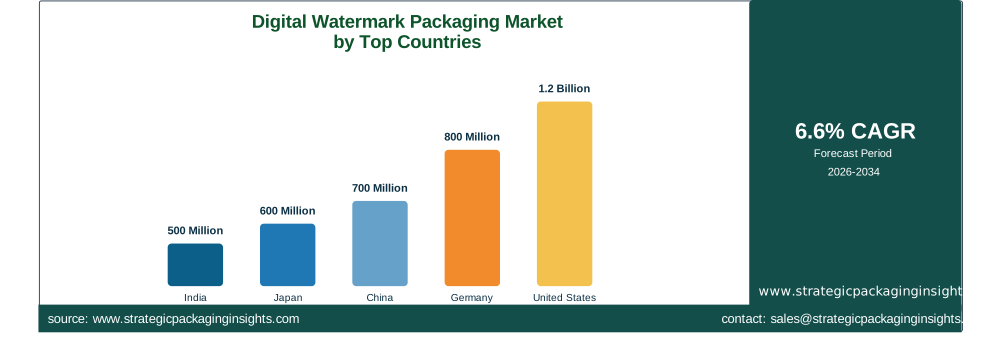
Germany is another key market for digital watermark packaging, with a market size of around $800 million and a CAGR of 6%. The country's strong emphasis on sustainability and environmental responsibility has led to increased adoption of digital watermarking technology in packaging. The presence of leading packaging manufacturers and a well-established recycling infrastructure further support market growth in Germany.
China is witnessing rapid growth in the Digital Watermark Packaging market, with a market size of approximately $700 million and a CAGR of 8%. The country's booming e-commerce sector and increasing demand for secure and traceable packaging solutions are driving the adoption of digital watermarking technology. Additionally, government initiatives to promote sustainable packaging and reduce packaging waste are expected to boost market growth in China.
In Japan, the Digital Watermark Packaging market is valued at around $600 million, with a CAGR of 4%. The country's advanced technological infrastructure and focus on innovation are key drivers of market growth. The demand for digital watermarking solutions is also supported by the need for enhanced brand protection and anti-counterfeiting measures in various industries.
India is emerging as a promising market for digital watermark packaging, with a market size of approximately $500 million and a CAGR of 7%. The country's growing consumer base and increasing awareness of sustainable packaging solutions are driving the adoption of digital watermarking technology. Additionally, government initiatives to promote recycling and waste management are expected to support market growth in India.
Digital Watermark Packaging Market Segments Insights

Technology Analysis
The technology segment of the Digital Watermark Packaging market is categorized into Invisible Watermarking, QR-Based Watermarking, Smart Labeling, and Serialization. Invisible Watermarking is gaining traction due to its ability to embed information without altering the visual appearance of the packaging. This technology is particularly favored in industries where aesthetics are crucial, such as luxury goods and cosmetics. QR-Based Watermarking, on the other hand, is popular for its ease of use and ability to engage consumers through interactive content. Smart Labeling and Serialization are also witnessing growth, driven by the need for enhanced traceability and supply chain management.
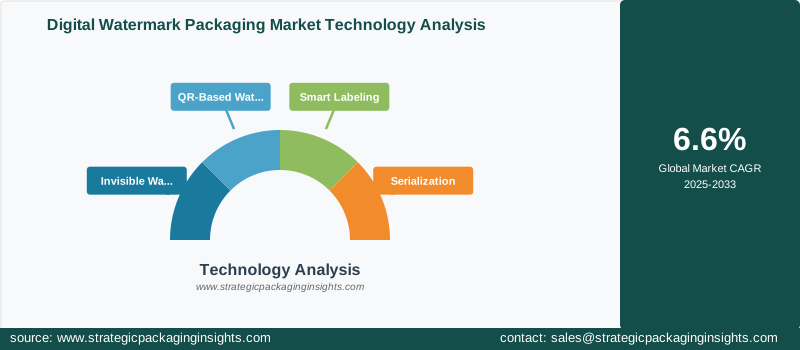
Invisible Watermarking is expected to dominate the market, owing to its versatility and wide range of applications. This technology is increasingly being used for brand protection and anti-counterfeiting measures, as it provides a covert method for embedding unique identifiers in packaging. QR-Based Watermarking is also gaining popularity, particularly in the FMCG and retail sectors, where it is used to enhance consumer engagement and provide product information. Smart Labeling and Serialization are being adopted in industries such as pharmaceuticals and food & beverage, where traceability and supply chain transparency are critical.
Application Analysis
The application segment of the Digital Watermark Packaging market includes Recycling Sorting, Brand Protection, Consumer Engagement, and Traceability. Recycling Sorting is a key application, as digital watermarking technology enables efficient sorting of packaging materials, reducing contamination in recycling streams. This application is particularly important in regions with stringent environmental regulations and a strong focus on sustainability. Brand Protection is another significant application, as digital watermarking provides a secure method for detecting counterfeit products and safeguarding brand integrity.
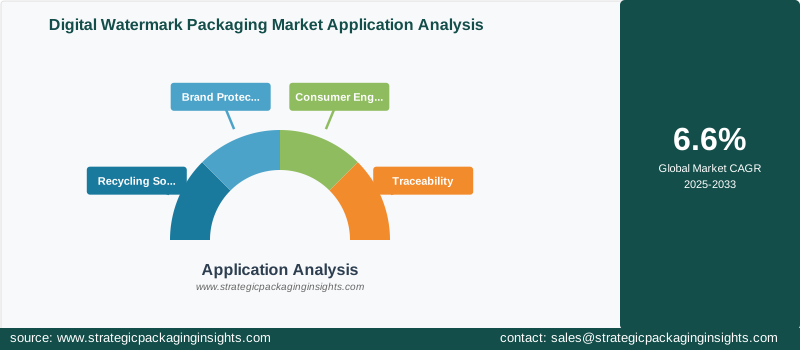
Consumer Engagement is also a growing application, as digital watermarking technology allows brands to connect with consumers through interactive content and personalized experiences. This application is particularly popular in the retail and FMCG sectors, where brands are looking to enhance customer loyalty and drive sales. Traceability is a critical application in industries such as pharmaceuticals and food & beverage, where digital watermarking technology is used to track and trace products throughout the supply chain, ensuring product safety and compliance with regulatory requirements.
Packaging Type Analysis
The packaging type segment of the Digital Watermark Packaging market includes Labels, Flexible Packaging, Cartons, and Bottles. Labels are the most widely used packaging type for digital watermarking, as they offer a convenient and cost-effective method for embedding information. Flexible Packaging is also gaining popularity, driven by the demand for lightweight and sustainable packaging solutions. Cartons and Bottles are being increasingly used in industries such as food & beverage and pharmaceuticals, where digital watermarking technology is used to enhance product traceability and consumer engagement.
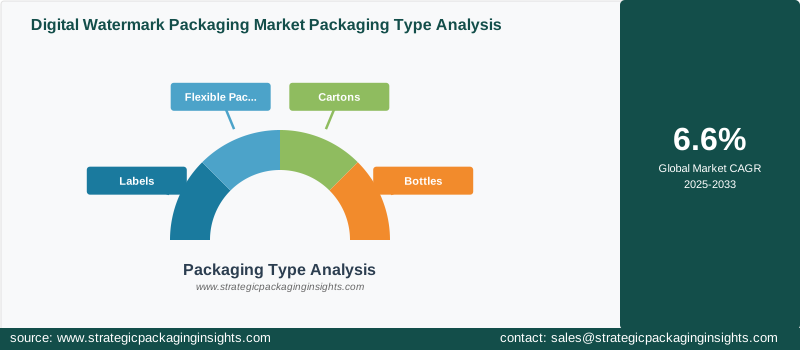
Labels are expected to dominate the market, owing to their versatility and ease of integration with digital watermarking technology. Flexible Packaging is also witnessing growth, as it offers a sustainable alternative to traditional packaging materials. Cartons and Bottles are being adopted in industries where product safety and traceability are critical, as digital watermarking technology provides a secure method for tracking and tracing products throughout the supply chain. The demand for these packaging types is expected to increase, driven by the growing focus on sustainability and the need for advanced packaging solutions.
End Use Analysis
The end-use segment of the Digital Watermark Packaging market includes FMCG, Food & Beverage, Pharmaceuticals, and Retail. The FMCG sector is a major driver of market growth, as companies in this industry are increasingly adopting digital watermarking technology to enhance brand protection and consumer engagement. The Food & Beverage industry is also a significant end-user, as digital watermarking technology is used to ensure product safety and compliance with regulatory requirements.
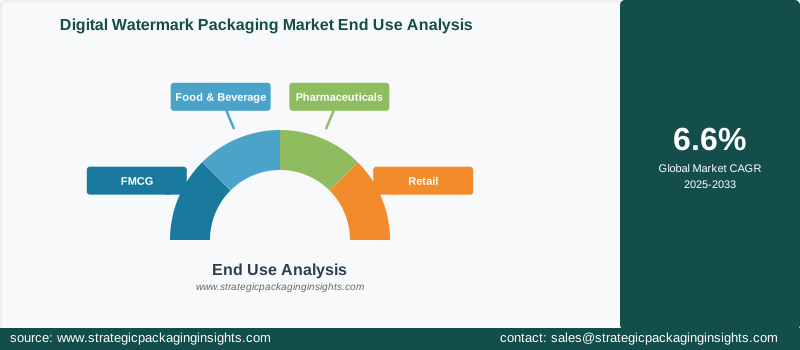
The Pharmaceuticals industry is another key end-user, as digital watermarking technology provides a secure method for tracking and tracing products throughout the supply chain. This is particularly important in an industry where product safety and compliance are critical. The Retail sector is also adopting digital watermarking technology, as it offers a convenient method for enhancing consumer engagement and providing personalized experiences. The demand for digital watermarking solutions in these end-use industries is expected to increase, driven by the need for advanced packaging solutions that offer enhanced security and traceability.
Digital Watermark Packaging Market Segments
The Digital Watermark Packaging market has been segmented on the basis ofTechnology
- Invisible Watermarking
- QR-Based Watermarking
- Smart Labeling
- Serialization
Application
- Recycling Sorting
- Brand Protection
- Consumer Engagement
- Traceability
Packaging Type
- Labels
- Flexible Packaging
- Cartons
- Bottles
End Use
- FMCG
- Food & Beverage
- Pharmaceuticals
- Retail
Region
- Asia Pacific
- North America
- Latin America
- Europe
- Middle East & Africa




