


Digital Product Passport Solutions for Packaging Market Outlook
The Digital Product Passport Solutions for Packaging market size was valued at USD 318.0 Million in 2025 and is anticipated to reach USD 1.34 Billion by 2034, growing at a CAGR of 17.3% during the forecast period according to Strategic Packaging Insights. This market is witnessing significant growth due to the increasing demand for transparency and traceability in packaging, driven by consumer awareness and regulatory requirements. Companies like SAP and Avery Dennison are leading the charge by developing innovative solutions that integrate seamlessly into existing packaging systems, enhancing both compliance and consumer engagement.
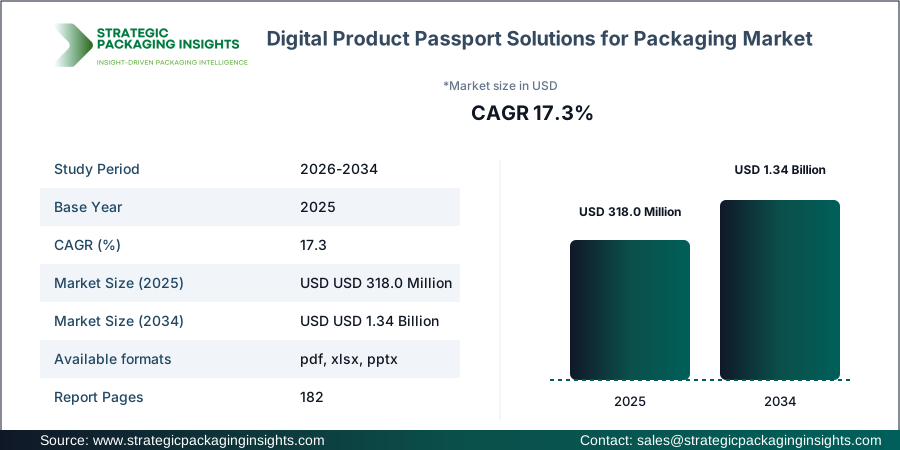
The most impactful driver in this market is the growing emphasis on sustainability and circular economy practices. Governments worldwide are implementing stringent regulations to ensure that packaging is recyclable and traceable throughout its lifecycle. This regulatory push is encouraging companies to adopt digital product passport solutions, which not only help in compliance but also in reducing waste and improving resource efficiency. As a result, companies like Kezzler and EVRYTHNG (Digimarc) are investing heavily in R&D to develop advanced technologies that support these sustainability goals, thereby driving market growth.
Report Scope
| Attributes | Details |
| Report Title | Digital Product Passport Solutions for Packaging Market Size, Future Growth and Forecast 2034 |
| By Deployment | Cloud-Based, On-Premises, Hybrid |
| By Technology | QR Code-Based, RFID & NFC, Blockchain, IoT-Enabled Traceability, Digital Twin Platforms |
| By Functionality | Product Traceability, Compliance Management, Material & Composition Tracking, Recyclability Assessment, Supply Chain Transparency, Lifecycle Data Management |
| By End User | Food & Beverage, Personal Care & Cosmetics, Healthcare & Pharmaceuticals, Consumer Goods, Industrial Packaging, Retail & E-commerce |
| Region | Asia Pacific, North America, Latin America, Europe, Middle East & Africa |
| Base Year | 2025 |
| Historic Period | 2018-2024 |
| Forecast Period | 2026-2034 |
| Number of Pages | 182 |
| Customization Available | Yes* |
Sustainability & Circular Economy Analysis
Sustainability initiatives and circular economy practices are profoundly influencing the packaging market. The integration of recyclable materials and reusable packaging is becoming a standard expectation, driven by both consumer demand and regulatory mandates. Companies are innovating with eco-friendly materials and lightweight packaging solutions to reduce their carbon footprint. This shift is not only about compliance but also about gaining a competitive edge in the market. As consumers become more environmentally conscious, their preferences are steering companies towards sustainable packaging solutions, which in turn influences design and manufacturing processes.
Eco-friendly material innovation and waste reduction strategies are at the forefront of packaging design. Companies are investing in research and development to create materials that are not only sustainable but also cost-effective. This trend is influencing investment decisions and supply chain strategies, as companies seek to align their operations with ESG initiatives. The focus on reducing carbon footprints is also driving the adoption of digital product passport solutions, which provide transparency and traceability throughout the supply chain, ensuring compliance with packaging regulations and extended producer responsibility (EPR) requirements.
These sustainability trends are reshaping the competitive landscape of the packaging market. Companies that can effectively integrate these practices into their operations are likely to see long-term market competitiveness. Regulatory compliance is becoming a key differentiator, and companies that can demonstrate their commitment to sustainability are more likely to attract investment and consumer loyalty. As a result, the packaging industry is witnessing a shift towards more sustainable and transparent practices, which are essential for maintaining market relevance and competitiveness in the long run.
Packaging Value Chain & Supply Chain Analysis
The packaging value chain is a complex ecosystem that involves multiple stakeholders, from raw material sourcing to recycling networks. Raw material availability is a critical factor that influences the entire supply chain, as it affects production capabilities and cost structures. Packaging converters and manufacturers play a pivotal role in transforming raw materials into finished products, and their efficiency directly impacts market performance. Companies are increasingly focusing on strategic partnerships and procurement strategies to ensure a steady supply of materials and enhance supply chain resilience.
Logistics and distribution channels are integral components of the packaging supply chain. Efficient transportation and inventory management are essential for maintaining competitiveness in the market. Companies are adopting localization strategies to reduce transportation costs and improve supply chain efficiency. Global sourcing is also a common practice, as companies seek to leverage cost advantages and access to diverse markets. However, this approach requires robust supply chain management to mitigate risks associated with geopolitical uncertainties and trade regulations.
Recycling networks are becoming increasingly important in the packaging value chain, as companies strive to meet sustainability goals and regulatory requirements. The integration of digital product passport solutions is enhancing supply chain transparency and traceability, enabling companies to track the lifecycle of their products and ensure compliance with recycling mandates. This transparency is not only beneficial for regulatory compliance but also for building consumer trust and brand loyalty. As a result, companies that can effectively manage their supply chains and integrate sustainability practices are likely to see improved market performance and competitiveness.
Opportunities & Threats
The Digital Product Passport Solutions for Packaging market presents numerous opportunities for growth and innovation. One significant opportunity lies in the increasing demand for transparency and traceability in packaging. As consumers become more conscious of the environmental impact of their purchases, they are demanding more information about the products they buy. This trend is driving companies to adopt digital product passport solutions that provide detailed information about the lifecycle of a product, from raw material sourcing to end-of-life disposal. Companies that can effectively leverage these solutions to enhance consumer engagement and build brand loyalty are likely to see significant growth in the coming years.
Another opportunity in this market is the growing emphasis on sustainability and circular economy practices. Governments worldwide are implementing regulations to ensure that packaging is recyclable and traceable throughout its lifecycle. This regulatory push is encouraging companies to adopt digital product passport solutions, which not only help in compliance but also in reducing waste and improving resource efficiency. Companies that can effectively integrate these solutions into their operations are likely to gain a competitive edge in the market, as consumers increasingly prioritize sustainability in their purchasing decisions.
However, the market also faces several threats that could hinder its growth. One significant threat is the high cost of implementing digital product passport solutions. Many companies, particularly small and medium-sized enterprises, may find it challenging to invest in the necessary technology and infrastructure to support these solutions. Additionally, the complexity of integrating these solutions into existing systems can pose significant challenges, particularly for companies with limited technical expertise. As a result, companies that cannot overcome these barriers may struggle to compete in the market, limiting their growth potential.
Drivers & Challenges
One of the primary drivers of the Digital Product Passport Solutions for Packaging market is the increasing demand for transparency and traceability in packaging. Consumers are becoming more conscious of the environmental impact of their purchases and are demanding more information about the products they buy. This trend is driving companies to adopt digital product passport solutions that provide detailed information about the lifecycle of a product, from raw material sourcing to end-of-life disposal. Companies that can effectively leverage these solutions to enhance consumer engagement and build brand loyalty are likely to see significant growth in the coming years.
Another key driver of this market is the growing emphasis on sustainability and circular economy practices. Governments worldwide are implementing regulations to ensure that packaging is recyclable and traceable throughout its lifecycle. This regulatory push is encouraging companies to adopt digital product passport solutions, which not only help in compliance but also in reducing waste and improving resource efficiency. Companies that can effectively integrate these solutions into their operations are likely to gain a competitive edge in the market, as consumers increasingly prioritize sustainability in their purchasing decisions.
Despite these drivers, the market also faces several challenges that could hinder its growth. One significant challenge is the high cost of implementing digital product passport solutions. Many companies, particularly small and medium-sized enterprises, may find it challenging to invest in the necessary technology and infrastructure to support these solutions. Additionally, the complexity of integrating these solutions into existing systems can pose significant challenges, particularly for companies with limited technical expertise. As a result, companies that cannot overcome these barriers may struggle to compete in the market, limiting their growth potential.
Market Share Analysis
The competitive landscape of the Digital Product Passport Solutions for Packaging market is characterized by the presence of several key players, each striving to gain a larger share of the market. Companies like SAP, Avery Dennison, and Kezzler are leading the market with their innovative solutions and strong market presence. These companies are investing heavily in research and development to enhance their product offerings and maintain their competitive edge. The market is also witnessing the entry of new players, such as Circularise and osapiens, who are bringing fresh perspectives and innovative solutions to the table.
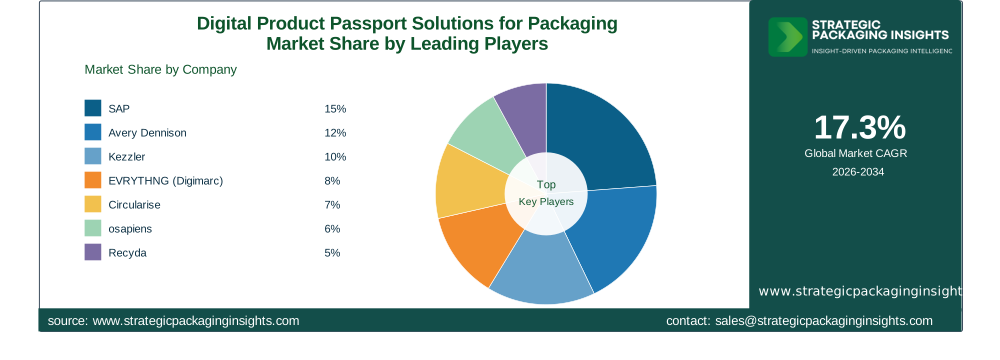
SAP is a major player in the market, known for its comprehensive digital product passport solutions that integrate seamlessly with existing packaging systems. The company's solutions are designed to enhance compliance and consumer engagement, making them a popular choice among packaging manufacturers and brand owners. Avery Dennison is another key player, offering a range of solutions that focus on sustainability and traceability. The company's innovative approach to packaging design and manufacturing has helped it maintain a strong market position.
Kezzler is a leading provider of digital product passport solutions, known for its advanced technology and focus on sustainability. The company's solutions are designed to provide transparency and traceability throughout the supply chain, helping companies meet regulatory requirements and enhance consumer trust. EVRYTHNG (Digimarc) is another prominent player, offering a range of solutions that focus on digital identity and traceability. The company's innovative approach to packaging design and manufacturing has helped it maintain a strong market position.
Other notable players in the market include Circularise, osapiens, Recyda, GS1, Spherity, iPoint Systems, 3E, Trace One, Makersite, DPP Cloud, and Specright. These companies are investing heavily in research and development to enhance their product offerings and maintain their competitive edge. The market is also witnessing the entry of new players, who are bringing fresh perspectives and innovative solutions to the table. As a result, the competitive landscape of the Digital Product Passport Solutions for Packaging market is dynamic and constantly evolving.
Key Highlights
- Market Size: USD 318.0 Million in 2025, projected to reach USD 1.34 Billion by 2034.
- Growth Rate: Forecasted CAGR of 17.3% during the forecast period.
- Leading Companies: SAP, Avery Dennison, Kezzler, EVRYTHNG (Digimarc).
- Key Segments: Cloud-Based, QR Code-Based, Product Traceability, Food & Beverage.
- Regional Insights: Asia Pacific and North America are leading regions.
- Sustainability Focus: Emphasis on recyclable materials and eco-friendly innovations.
- Regulatory Impact: Stringent regulations driving market growth.
Digital Product Passport Solutions for Packaging Market Segments Insights

By Deployment Analysis
The deployment segment of the Digital Product Passport Solutions for Packaging market is categorized into Cloud-Based, On-Premises, and Hybrid solutions. Cloud-Based solutions are gaining traction due to their scalability and cost-effectiveness. They offer flexibility and ease of integration, making them a popular choice among small and medium-sized enterprises. On-Premises solutions, on the other hand, are preferred by large enterprises that require greater control over their data and systems. Hybrid solutions offer a combination of both, providing the benefits of cloud computing while maintaining the security of on-premises systems.
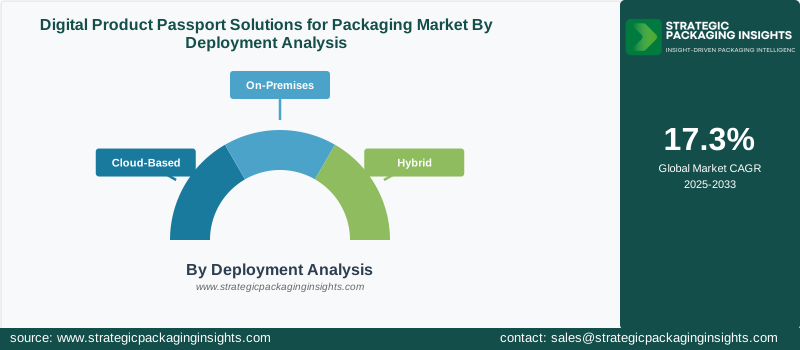
The demand for Cloud-Based solutions is driven by the increasing need for real-time data access and collaboration across different locations. These solutions enable companies to streamline their operations and improve efficiency, making them an attractive option for businesses looking to enhance their competitiveness. On-Premises solutions are favored by companies with stringent data security requirements, as they offer greater control over data management and compliance. Hybrid solutions are gaining popularity as they provide the flexibility to adapt to changing business needs while ensuring data security and compliance.
By Technology Analysis
The technology segment of the Digital Product Passport Solutions for Packaging market includes QR Code-Based, RFID & NFC, Blockchain, IoT-Enabled Traceability, and Digital Twin Platforms. QR Code-Based solutions are widely used due to their simplicity and cost-effectiveness. They provide a quick and easy way to access product information, making them a popular choice among consumers. RFID & NFC technologies offer enhanced traceability and security, making them ideal for high-value products and sensitive applications.
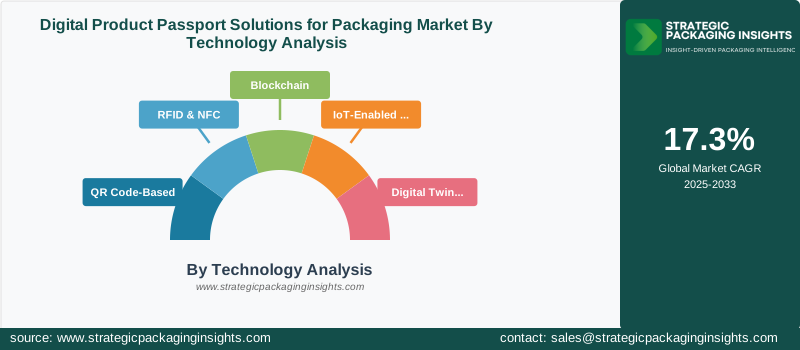
Blockchain technology is gaining traction due to its ability to provide secure and transparent data management. It offers a decentralized approach to data storage, ensuring data integrity and reducing the risk of fraud. IoT-Enabled Traceability solutions are becoming increasingly popular as they provide real-time data access and monitoring, enabling companies to optimize their supply chain operations. Digital Twin Platforms offer a virtual representation of physical products, allowing companies to simulate and analyze product performance and lifecycle management.
By Functionality Analysis
The functionality segment of the Digital Product Passport Solutions for Packaging market includes Product Traceability, Compliance Management, Material & Composition Tracking, Recyclability Assessment, Supply Chain Transparency, and Lifecycle Data Management. Product Traceability solutions are essential for ensuring product safety and quality, making them a critical component of the packaging industry. Compliance Management solutions help companies meet regulatory requirements and avoid penalties, ensuring smooth operations and market access.
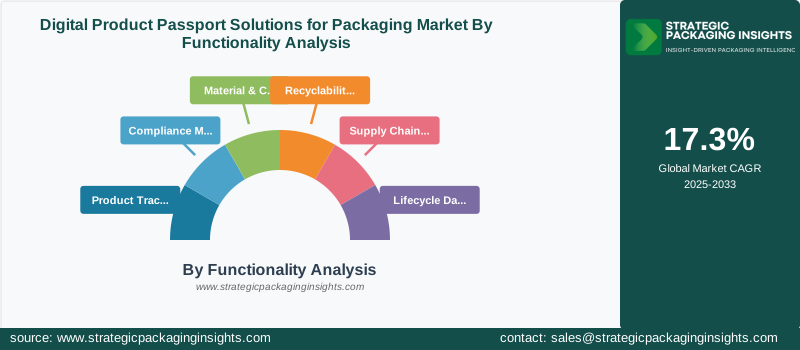
Material & Composition Tracking solutions provide detailed information about the materials used in packaging, enabling companies to optimize their resource usage and reduce waste. Recyclability Assessment solutions help companies evaluate the environmental impact of their packaging and identify opportunities for improvement. Supply Chain Transparency solutions provide real-time visibility into supply chain operations, enabling companies to optimize their logistics and inventory management. Lifecycle Data Management solutions offer a comprehensive view of a product's lifecycle, helping companies make informed decisions about product design and development.
By End User Analysis
The end-user segment of the Digital Product Passport Solutions for Packaging market includes Food & Beverage, Personal Care & Cosmetics, Healthcare & Pharmaceuticals, Consumer Goods, Industrial Packaging, and Retail & E-commerce. The Food & Beverage industry is a major adopter of digital product passport solutions, driven by the need for transparency and traceability in food safety and quality. Personal Care & Cosmetics companies are also adopting these solutions to enhance consumer engagement and build brand loyalty.
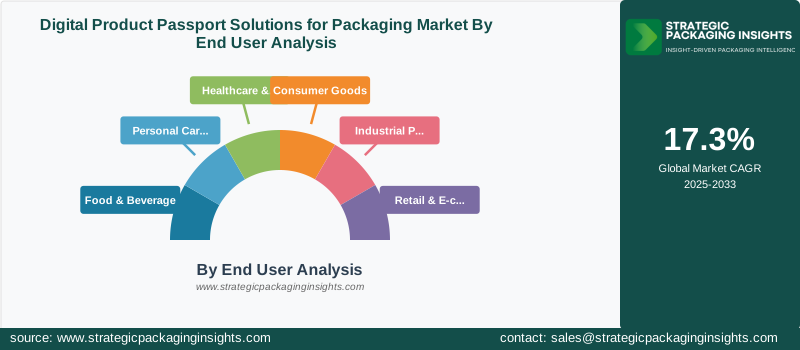
The Healthcare & Pharmaceuticals industry is leveraging digital product passport solutions to ensure compliance with regulatory requirements and enhance supply chain transparency. Consumer Goods companies are adopting these solutions to optimize their packaging operations and reduce waste. Industrial Packaging companies are using digital product passport solutions to enhance product traceability and improve operational efficiency. Retail & E-commerce companies are leveraging these solutions to enhance consumer engagement and streamline their logistics and inventory management.
Digital Product Passport Solutions for Packaging Market Segments
The Digital Product Passport Solutions for Packaging market has been segmented on the basis ofBy Deployment
- Cloud-Based
- On-Premises
- Hybrid
By Technology
- QR Code-Based
- RFID & NFC
- Blockchain
- IoT-Enabled Traceability
- Digital Twin Platforms
By Functionality
- Product Traceability
- Compliance Management
- Material & Composition Tracking
- Recyclability Assessment
- Supply Chain Transparency
- Lifecycle Data Management
By End User
- Food & Beverage
- Personal Care & Cosmetics
- Healthcare & Pharmaceuticals
- Consumer Goods
- Industrial Packaging
- Retail & E-commerce
Region
- Asia Pacific
- North America
- Latin America
- Europe
- Middle East & Africa




