


Die-cut Box Market Outlook
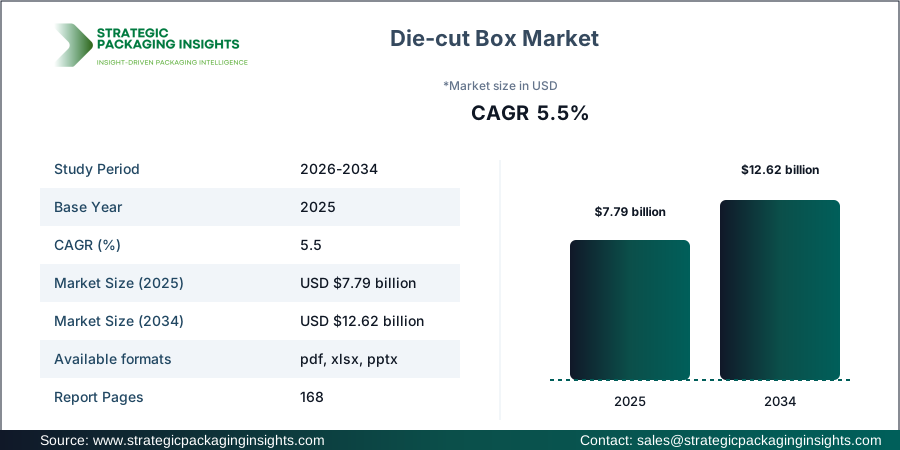
The Die-cut Box market size was valued at USD 7.79 billion in 2025 and is anticipated to reach USD 12.62 billion by 2034, growing at a CAGR of 5.5% during the forecast period according to Strategic Packaging Insights. This growth trajectory is largely driven by the increasing demand for sustainable and customizable packaging solutions across various industries. Companies like International Paper and WestRock are at the forefront, leveraging advanced manufacturing technologies to produce high-quality die-cut boxes that cater to the evolving needs of sectors such as e-commerce and food packaging. The rise in online shopping and the need for efficient packaging solutions that ensure product safety and brand visibility are significant contributors to the market's expansion.
One of the most impactful drivers of the Die-cut Box market is the growing emphasis on sustainability and eco-friendly packaging solutions. According to recent government initiatives and environmental regulations, there is a strong push towards reducing carbon footprints and minimizing waste. This has led to increased adoption of recyclable and biodegradable materials in packaging. Companies like Smurfit Kappa and DS Smith are investing heavily in research and development to innovate eco-friendly packaging solutions that align with these sustainability goals. The shift towards sustainable packaging is not only a regulatory requirement but also a consumer-driven trend, as more customers prefer brands that demonstrate environmental responsibility.
Report Scope
| Attributes | Details |
| Report Title | Die-cut Box Market Size, Future Growth and Forecast 2034 |
| By Material Type | Corrugated Board, Paperboard, Kraft Board, Rigid Board |
| By Box Type | Mailer Boxes, Display Boxes, Window Boxes, Folding Boxes |
| By Application | E-commerce, Food Packaging, Electronics, Cosmetics |
| By End Use | Retail, FMCG, Logistics, Consumer Goods |
| Region | Asia Pacific, North America, Latin America, Europe, Middle East & Africa |
| Base Year | 2025 |
| Historic Period | 2018-2024 |
| Forecast Period | 2026-2034 |
| Number of Pages | 168 |
| Customization Available | Yes* |
Sustainability & Circular Economy Analysis
Sustainability initiatives and circular economy practices are significantly shaping the packaging market, particularly in the die-cut box segment. The integration of recyclable materials and reusable packaging solutions is becoming a standard practice among leading manufacturers. Companies are increasingly focusing on lightweight packaging to reduce material usage and transportation costs, which also contributes to a lower carbon footprint. The innovation in eco-friendly materials is driven by consumer demand for sustainable products and stringent packaging regulations that mandate waste reduction and recycling.
These sustainability trends are influencing packaging design and manufacturing processes. For instance, the use of biodegradable materials and water-based inks is becoming more prevalent, allowing companies to meet environmental standards while maintaining product quality. Investment decisions are increasingly being guided by ESG (Environmental, Social, and Governance) initiatives, with companies prioritizing projects that align with sustainability goals. This shift is also affecting supply chain strategies, as businesses seek to partner with suppliers and logistics providers that share their commitment to sustainability.
Regulatory compliance and extended producer responsibility (EPR) are further driving the adoption of sustainable practices in the packaging industry. Companies are required to take responsibility for the entire lifecycle of their products, from production to disposal. This has led to the development of innovative waste reduction strategies and recycling networks. As a result, businesses that embrace these sustainability trends are likely to gain a competitive edge in the market, as they can offer environmentally friendly packaging solutions that appeal to eco-conscious consumers and comply with regulatory requirements.
Packaging Value Chain & Supply Chain Analysis
The packaging value chain and supply chain ecosystem for die-cut boxes is complex and involves multiple stakeholders, from raw material suppliers to end consumers. Raw material sourcing is a critical component, with companies like International Paper and Georgia-Pacific ensuring a steady supply of high-quality materials such as corrugated board and kraft board. Packaging converters and manufacturers play a vital role in transforming these materials into finished products, utilizing advanced machinery and technology to enhance production efficiency and product quality.
Logistics and distribution channels are essential for ensuring that die-cut boxes reach their intended markets efficiently. Companies are investing in robust logistics networks to optimize transportation and reduce lead times. Strategic partnerships with logistics providers and retailers are crucial for maintaining supply chain resilience and meeting customer demands. Inventory management and procurement strategies are also key factors, as businesses strive to balance supply and demand while minimizing costs.
Global sourcing and localization are important considerations in the die-cut box market. While some companies focus on local production to reduce transportation costs and carbon emissions, others leverage global sourcing to access a wider range of materials and technologies. Supply chain efficiency is influenced by factors such as raw material availability, production capabilities, and strategic partnerships. Companies that can effectively manage these elements are better positioned to compete in the market and deliver high-quality products to their customers.
Opportunities & Threats
The Die-cut Box market presents numerous opportunities for growth, driven by the increasing demand for customized and sustainable packaging solutions. The rise of e-commerce and online retail has created a significant need for packaging that not only protects products during transit but also enhances the unboxing experience for consumers. Companies that can offer innovative and aesthetically pleasing packaging designs are likely to capture a larger market share. Additionally, the growing focus on sustainability presents opportunities for businesses to develop eco-friendly packaging solutions that align with consumer preferences and regulatory requirements.
Another opportunity lies in the expansion of the food packaging and electronics sectors, which require specialized packaging solutions to ensure product safety and integrity. The demand for die-cut boxes in these industries is expected to grow as companies seek packaging that offers both functionality and visual appeal. Furthermore, advancements in digital printing technology provide opportunities for manufacturers to offer personalized packaging solutions that cater to the unique needs of different brands and products.
However, the market also faces threats, particularly from the volatility of raw material prices and the increasing competition from alternative packaging solutions. The cost of materials such as corrugated board and kraft board can fluctuate due to factors such as supply chain disruptions and changes in demand. Additionally, the rise of flexible packaging and other innovative solutions poses a threat to the traditional die-cut box market. Companies must continuously innovate and adapt to changing market conditions to remain competitive.
Drivers & Challenges
One of the primary drivers of the Die-cut Box market is the growing demand for sustainable and eco-friendly packaging solutions. As consumers become more environmentally conscious, there is an increasing preference for packaging that is recyclable, biodegradable, and made from renewable resources. This trend is further supported by government regulations and initiatives aimed at reducing waste and promoting sustainability. Companies that can offer packaging solutions that meet these criteria are likely to gain a competitive advantage in the market.
Another significant driver is the rise of e-commerce and online retail, which has led to an increased demand for packaging that ensures product safety and enhances the customer experience. Die-cut boxes are particularly well-suited for this purpose, as they can be customized to fit a wide range of products and provide excellent protection during transit. The ability to offer personalized and visually appealing packaging solutions is a key factor driving market growth.
Despite these drivers, the market faces several challenges, including the volatility of raw material prices and the need for continuous innovation. The cost of materials such as corrugated board and kraft board can fluctuate due to factors such as supply chain disruptions and changes in demand. Additionally, companies must invest in research and development to stay ahead of the competition and meet the evolving needs of consumers. The increasing competition from alternative packaging solutions, such as flexible packaging, also poses a challenge to the traditional die-cut box market.
Market Share Analysis
The competitive landscape of the Die-cut Box market is characterized by the presence of several key players, each striving to capture a larger share of the market through innovation, strategic partnerships, and expansion into new markets. International Paper, WestRock, and Smurfit Kappa are among the leading companies in the industry, known for their extensive product portfolios and commitment to sustainability. These companies have established themselves as leaders by leveraging advanced manufacturing technologies and investing in research and development to create high-quality, eco-friendly packaging solutions.
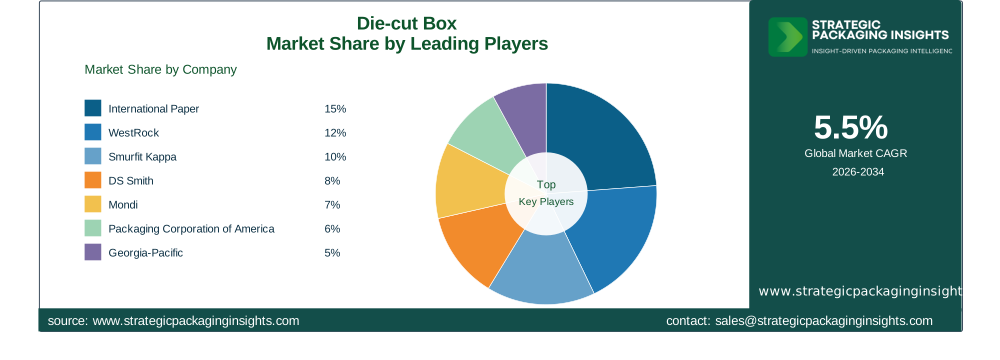
DS Smith and Mondi are also prominent players in the market, recognized for their innovative packaging designs and focus on customer-centric solutions. These companies have built strong relationships with clients across various industries, including e-commerce, food packaging, and electronics, by offering customized packaging solutions that meet specific needs. Their ability to adapt to changing market trends and consumer preferences has enabled them to maintain a competitive edge.
Packaging Corporation of America and Georgia-Pacific are key contributors to the market, known for their robust supply chain networks and commitment to sustainability. These companies have invested in state-of-the-art manufacturing facilities and technologies to enhance production efficiency and reduce environmental impact. Their focus on sustainable practices and eco-friendly materials has positioned them as leaders in the industry.
Pratt Industries, Stora Enso, and Rengo are also significant players in the Die-cut Box market, each with a unique approach to packaging solutions. Pratt Industries is recognized for its commitment to recycling and waste reduction, while Stora Enso focuses on renewable materials and innovative design. Rengo, a leading Japanese packaging company, has expanded its global presence through strategic acquisitions and partnerships, further strengthening its position in the market.
Key Highlights
- Market Size: The Die-cut Box market was valued at USD 7.79 billion in 2025 and is projected to reach USD 12.62 billion by 2034.
- Growth Rate: The market is expected to grow at a CAGR of 5.5% during the forecast period.
- Leading Companies: Key players include International Paper, WestRock, Smurfit Kappa, and DS Smith.
- Material Type: Corrugated Board and Kraft Board are the most widely used materials.
- Application Growth: E-commerce and Food Packaging are the fastest-growing application segments.
- Regional Insights: Asia Pacific is expected to witness the highest growth rate.
- Sustainability Focus: Increasing demand for eco-friendly and recyclable packaging solutions.
Die-cut Box Market Segments Insights

Material Type Analysis
The material type segment of the Die-cut Box market is dominated by corrugated board, which is favored for its durability, versatility, and cost-effectiveness. Corrugated board is widely used in various applications, including e-commerce and food packaging, due to its ability to provide excellent protection and cushioning for products during transit. Kraft board is another popular material, known for its strength and eco-friendly properties. The demand for kraft board is driven by the increasing focus on sustainability and the need for recyclable packaging solutions.
Paperboard and rigid board are also significant materials in the market, each offering unique benefits for specific applications. Paperboard is lightweight and easy to print on, making it ideal for packaging that requires high-quality graphics and branding. Rigid board, on the other hand, is known for its sturdiness and is often used for packaging high-value or fragile items. The choice of material is influenced by factors such as cost, environmental impact, and the specific requirements of the application.
Box Type Analysis
The box type segment of the Die-cut Box market includes mailer boxes, display boxes, window boxes, and folding boxes, each catering to different packaging needs. Mailer boxes are particularly popular in the e-commerce sector, where they are used to ship a wide range of products securely. Display boxes are designed to enhance product visibility and are commonly used in retail settings to attract consumer attention. Window boxes offer a unique combination of protection and visibility, allowing consumers to view the product without opening the packaging.
Folding boxes are versatile and can be customized to fit various product sizes and shapes. They are widely used in industries such as cosmetics and electronics, where packaging aesthetics and functionality are equally important. The demand for different box types is influenced by factors such as consumer preferences, product requirements, and industry trends. Companies that can offer a diverse range of box types are better positioned to meet the needs of different markets and gain a competitive advantage.
Application Analysis
The application segment of the Die-cut Box market is driven by the growing demand from industries such as e-commerce, food packaging, electronics, and cosmetics. E-commerce is one of the fastest-growing segments, fueled by the rise of online shopping and the need for packaging that ensures product safety and enhances the unboxing experience. Food packaging is another significant application, with die-cut boxes being used to package a wide range of food products, from fresh produce to ready-to-eat meals.
The electronics industry also relies heavily on die-cut boxes to protect sensitive components and devices during transit. The demand for packaging solutions that offer both protection and visual appeal is driving innovation in this segment. In the cosmetics industry, die-cut boxes are used to package products such as perfumes, skincare items, and makeup, where packaging aesthetics play a crucial role in brand differentiation and consumer appeal.
End Use Analysis
The end-use segment of the Die-cut Box market includes retail, FMCG, logistics, and consumer goods, each with unique packaging requirements. The retail sector is a major driver of demand, as businesses seek packaging solutions that enhance product presentation and attract consumer attention. FMCG companies require packaging that is both functional and visually appealing, as packaging plays a key role in brand recognition and consumer choice.
Logistics is another important end-use segment, with die-cut boxes being used to package and transport a wide range of products efficiently. The demand for durable and customizable packaging solutions is high in this sector, as companies seek to optimize their supply chains and reduce costs. The consumer goods industry also relies on die-cut boxes for packaging a variety of products, from household items to personal care products, where packaging design and functionality are critical factors in consumer decision-making.
Die-cut Box Market Segments
The Die-cut Box market has been segmented on the basis ofBy Material Type
- Corrugated Board
- Paperboard
- Kraft Board
- Rigid Board
By Box Type
- Mailer Boxes
- Display Boxes
- Window Boxes
- Folding Boxes
By Application
- E-commerce
- Food Packaging
- Electronics
- Cosmetics
By End Use
- Retail
- FMCG
- Logistics
- Consumer Goods
Region
- Asia Pacific
- North America
- Latin America
- Europe
- Middle East & Africa




