


Deposit Return Scheme Equipment Market Outlook
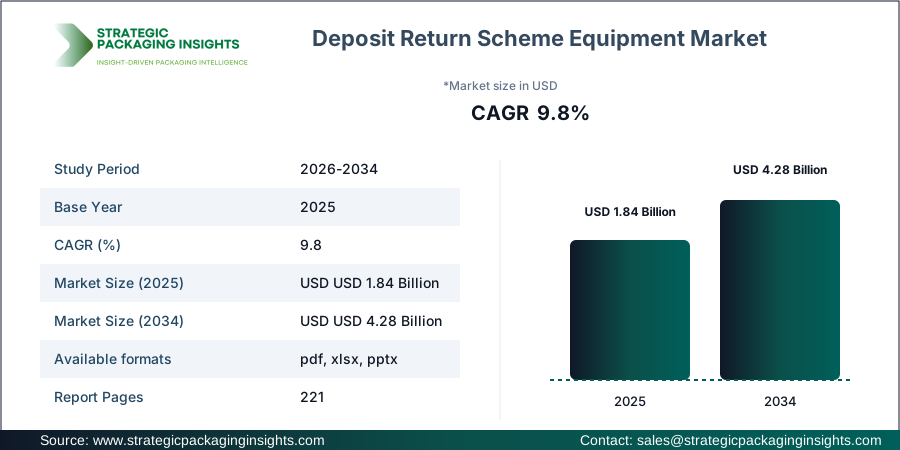
The Deposit Return Scheme Equipment market size was valued at USD 1.84 Billion in 2025 and is anticipated to reach USD 4.28 Billion by 2034, growing at a CAGR of 9.8% during the forecast period according to Strategic Packaging Insights. The market is witnessing significant growth due to increasing environmental awareness and government regulations aimed at reducing waste and promoting recycling. Companies like TOMRA Systems ASA and Envipco Holding N.V. are leading the charge by developing innovative solutions that enhance the efficiency and effectiveness of deposit return schemes. These companies are focusing on advanced technologies such as AI and IoT to improve the accuracy and speed of sorting and counting processes, thereby driving market growth.
One of the most impactful drivers of the Deposit Return Scheme Equipment market is the growing emphasis on sustainability and circular economy practices. Governments worldwide are implementing stringent regulations to reduce plastic waste and promote recycling, which is boosting the demand for deposit return schemes. For instance, the European Union's directive on single-use plastics has accelerated the adoption of deposit return schemes across member states. This regulatory push, combined with increasing consumer awareness about environmental issues, is expected to drive the market's growth over the forecast period. Companies like TOMRA Systems ASA are well-positioned to capitalize on these trends by offering state-of-the-art equipment that meets regulatory requirements and consumer expectations.
Report Scope
| Attributes | Details |
| Report Title | Deposit Return Scheme Equipment Market Size, Future Growth and Forecast 2034 |
| By Equipment Type | Reverse Vending Machines (RVMs), Bottle & Can Collection Systems, Sorting Equipment, Counting & Compaction Systems, Deposit Refund Kiosks, Bag Drop Systems |
| By Container Type | PET Bottles, Aluminum Cans, Glass Bottles, HDPE Containers, Multi-Material Beverage Containers |
| By Installation | Indoor, Outdoor |
| By End User | Supermarkets & Hypermarkets, Convenience Stores, Retail Chains, Beverage Producers, Recycling Centers, Municipal Authorities |
| Region | Asia Pacific, North America, Latin America, Europe, Middle East & Africa |
| Base Year | 2025 |
| Historic Period | 2018-2024 |
| Forecast Period | 2026-2034 |
| Number of Pages | 221 |
| Customization Available | Yes* |
Sustainability & Circular Economy Analysis
Sustainability initiatives and circular economy practices are profoundly influencing the Deposit Return Scheme Equipment market. The focus on reducing plastic waste and promoting recycling has led to the development of innovative equipment that supports these goals. Companies are investing in recyclable materials and reusable packaging solutions to align with consumer preferences for eco-friendly products. This shift towards sustainability is driving the demand for advanced deposit return scheme equipment that can efficiently sort and process various types of containers, including PET bottles, aluminum cans, and glass bottles.
The integration of eco-friendly material innovation and waste reduction strategies is reshaping the packaging market. Companies are adopting lightweight packaging solutions to minimize their carbon footprint and comply with environmental regulations. Extended producer responsibility (EPR) initiatives are also playing a crucial role in driving the adoption of deposit return schemes. These initiatives require manufacturers to take responsibility for the entire lifecycle of their products, including recycling and disposal, which is boosting the demand for efficient deposit return scheme equipment.
As sustainability trends continue to influence packaging design and manufacturing, companies are making strategic investment decisions to enhance their supply chain strategies. Regulatory compliance is becoming a key factor in determining long-term market competitiveness. Companies that can effectively integrate sustainability into their operations are likely to gain a competitive edge in the market. This trend is encouraging manufacturers, brand owners, and retailers to invest in advanced deposit return scheme equipment that supports their sustainability goals and meets regulatory requirements.
Packaging Value Chain & Supply Chain Analysis
The packaging value chain and supply chain ecosystem are critical components of the Deposit Return Scheme Equipment market. Raw material sourcing, packaging converters, and manufacturers play a vital role in ensuring the availability and quality of equipment. Companies are focusing on strategic partnerships with suppliers and distributors to enhance supply chain efficiency and reduce costs. The availability of raw materials, such as metals and plastics, is crucial for the production of deposit return scheme equipment, and any disruptions in the supply chain can impact market performance.
Logistics and distribution channels are essential for the successful implementation of deposit return schemes. Efficient transportation and inventory management are necessary to ensure the timely delivery of equipment to end-users, such as supermarkets, convenience stores, and recycling centers. Companies are adopting localization strategies to reduce transportation costs and improve supply chain resilience. Global sourcing is also becoming increasingly important as companies seek to expand their market presence and meet the growing demand for deposit return scheme equipment.
Supply chain efficiency and strategic partnerships are key factors influencing the overall competitiveness of the Deposit Return Scheme Equipment market. Companies that can effectively manage their supply chains and establish strong relationships with suppliers and distributors are likely to gain a competitive advantage. The ability to quickly adapt to changes in raw material availability and transportation costs is crucial for maintaining market performance and meeting customer demand. As the market continues to grow, companies are investing in advanced technologies and innovative solutions to enhance their supply chain capabilities and improve their market position.
Opportunities & Threats
The Deposit Return Scheme Equipment market presents numerous opportunities for growth and innovation. One of the key opportunities lies in the increasing adoption of deposit return schemes by governments and municipalities worldwide. As more regions implement these schemes to reduce waste and promote recycling, the demand for advanced equipment is expected to rise. Companies that can offer innovative solutions that enhance the efficiency and effectiveness of deposit return schemes are likely to capture a significant share of the market. Additionally, the growing emphasis on sustainability and circular economy practices presents opportunities for companies to develop eco-friendly equipment that aligns with consumer preferences and regulatory requirements.
Another opportunity in the market is the integration of advanced technologies such as artificial intelligence (AI) and the Internet of Things (IoT) into deposit return scheme equipment. These technologies can improve the accuracy and speed of sorting and counting processes, enhancing the overall efficiency of deposit return schemes. Companies that can leverage these technologies to offer innovative solutions are likely to gain a competitive edge in the market. Furthermore, the increasing focus on reducing carbon footprints and promoting sustainable practices presents opportunities for companies to develop equipment that supports these goals and meets the evolving needs of consumers and regulators.
Despite the numerous opportunities, the Deposit Return Scheme Equipment market also faces several threats. One of the primary challenges is the high initial cost of equipment, which can be a barrier to adoption for some end-users. Additionally, the market is subject to regulatory changes and fluctuations in raw material prices, which can impact the cost and availability of equipment. Companies must navigate these challenges by developing cost-effective solutions and establishing strong relationships with suppliers and distributors to ensure a steady supply of raw materials. Furthermore, the market is highly competitive, with numerous players vying for market share, which can lead to price pressures and reduced profit margins.
Drivers & Challenges
The Deposit Return Scheme Equipment market is driven by several key factors, including increasing environmental awareness and government regulations aimed at reducing waste and promoting recycling. The growing emphasis on sustainability and circular economy practices is encouraging the adoption of deposit return schemes, which is driving the demand for advanced equipment. Companies like TOMRA Systems ASA and Envipco Holding N.V. are leading the charge by developing innovative solutions that enhance the efficiency and effectiveness of deposit return schemes. These companies are focusing on advanced technologies such as AI and IoT to improve the accuracy and speed of sorting and counting processes, thereby driving market growth.
Another significant driver of the market is the increasing consumer awareness about environmental issues and the demand for eco-friendly products. Consumers are becoming more conscious of their environmental impact and are seeking products and services that align with their sustainability goals. This shift in consumer preferences is encouraging companies to invest in advanced deposit return scheme equipment that supports their sustainability initiatives and meets regulatory requirements. Additionally, the growing focus on reducing carbon footprints and promoting sustainable practices is driving the demand for equipment that can efficiently sort and process various types of containers, including PET bottles, aluminum cans, and glass bottles.
Despite the positive drivers, the Deposit Return Scheme Equipment market faces several challenges. One of the primary challenges is the high initial cost of equipment, which can be a barrier to adoption for some end-users. Additionally, the market is subject to regulatory changes and fluctuations in raw material prices, which can impact the cost and availability of equipment. Companies must navigate these challenges by developing cost-effective solutions and establishing strong relationships with suppliers and distributors to ensure a steady supply of raw materials. Furthermore, the market is highly competitive, with numerous players vying for market share, which can lead to price pressures and reduced profit margins.
Market Share Analysis
The Deposit Return Scheme Equipment market is characterized by a competitive landscape with several key players vying for market share. Companies like TOMRA Systems ASA, Envipco Holding N.V., and RVM Systems AB are leading the market with their innovative solutions and advanced technologies. These companies are focusing on developing equipment that enhances the efficiency and effectiveness of deposit return schemes, thereby driving market growth. TOMRA Systems ASA, for instance, is known for its state-of-the-art reverse vending machines that offer high accuracy and speed in sorting and counting processes.
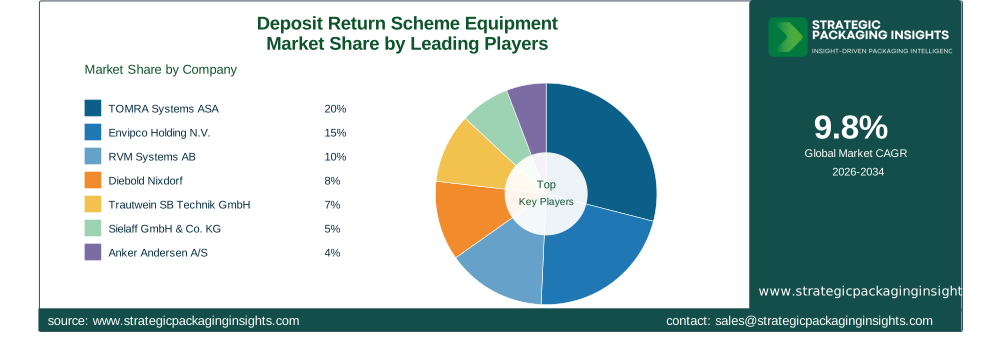
Envipco Holding N.V. is another major player in the market, offering a wide range of deposit return scheme equipment, including reverse vending machines and sorting systems. The company is known for its focus on sustainability and circular economy practices, which has helped it gain a competitive edge in the market. RVM Systems AB is also a key player, offering innovative solutions that enhance the efficiency of deposit return schemes. The company's equipment is designed to meet the evolving needs of consumers and regulators, making it a preferred choice for many end-users.
Diebold Nixdorf and Trautwein SB Technik GmbH are also prominent players in the market, offering a range of deposit return scheme equipment that supports sustainability initiatives and meets regulatory requirements. These companies are focusing on developing cost-effective solutions that enhance the efficiency of deposit return schemes and reduce the environmental impact of packaging waste. Sielaff GmbH & Co. KG and Anker Andersen A/S are also key players, known for their innovative solutions and advanced technologies that support the growing demand for deposit return scheme equipment.
Other notable players in the market include Kansmacker Ltd., Repant ASA, Aco Recycling, Pellenc ST, PICVISA, Bühler Group, Visy, and CleanRiver Recycling Solutions. These companies are focusing on developing equipment that aligns with consumer preferences for eco-friendly products and meets regulatory requirements. The competitive landscape of the Deposit Return Scheme Equipment market is characterized by a focus on innovation, sustainability, and regulatory compliance, with companies striving to gain a competitive edge through advanced technologies and strategic partnerships.
Key Highlights
- The Deposit Return Scheme Equipment market is projected to grow from USD 1.84 Billion in 2025 to USD 4.28 Billion by 2034, at a CAGR of 9.8%.
- Key players like TOMRA Systems ASA and Envipco Holding N.V. are driving market growth with innovative solutions.
- Government regulations and sustainability initiatives are major drivers of market demand.
- Advanced technologies such as AI and IoT are enhancing the efficiency of deposit return schemes.
- The market is characterized by a competitive landscape with numerous players vying for market share.
- High initial equipment costs and regulatory changes are key challenges facing the market.
- Asia Pacific is expected to witness significant growth due to increasing environmental awareness and government initiatives.
Deposit Return Scheme Equipment Market Segments Insights

By Equipment Type Analysis
The Deposit Return Scheme Equipment market is segmented by equipment type, including Reverse Vending Machines (RVMs), Bottle & Can Collection Systems, Sorting Equipment, Counting & Compaction Systems, Deposit Refund Kiosks, and Bag Drop Systems. Reverse Vending Machines (RVMs) are expected to dominate the market due to their efficiency in collecting and sorting recyclable containers. These machines are widely used in supermarkets, convenience stores, and recycling centers, making them a crucial component of deposit return schemes. Companies like TOMRA Systems ASA and Envipco Holding N.V. are leading the market with their advanced RVMs that offer high accuracy and speed in sorting and counting processes.
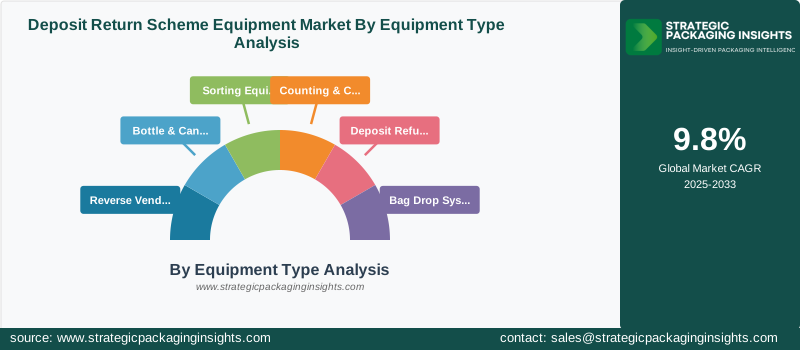
Bottle & Can Collection Systems and Sorting Equipment are also significant segments of the market, driven by the increasing demand for efficient recycling solutions. These systems are designed to handle large volumes of recyclable containers, making them ideal for use in retail chains and recycling centers. Counting & Compaction Systems and Deposit Refund Kiosks are gaining traction due to their ability to streamline the recycling process and enhance consumer convenience. Bag Drop Systems are also becoming popular, particularly in regions with high recycling rates, as they offer a convenient and efficient way to collect and process recyclable containers.
By Container Type Analysis
The market is also segmented by container type, including PET Bottles, Aluminum Cans, Glass Bottles, HDPE Containers, and Multi-Material Beverage Containers. PET Bottles and Aluminum Cans are expected to dominate the market due to their widespread use and high recycling rates. These containers are commonly used in the beverage industry, making them a key focus for deposit return schemes. Companies are investing in advanced equipment that can efficiently sort and process these containers, enhancing the overall efficiency of deposit return schemes.
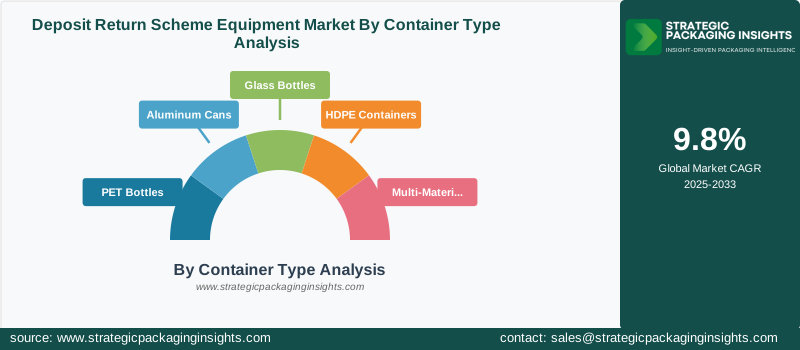
Glass Bottles and HDPE Containers are also significant segments of the market, driven by the increasing demand for sustainable packaging solutions. These containers are widely used in the food and beverage industry, making them a crucial component of deposit return schemes. Multi-Material Beverage Containers are gaining traction due to their versatility and ability to accommodate various types of beverages. Companies are focusing on developing equipment that can efficiently handle these containers, ensuring their effective recycling and reducing environmental impact.
By Installation Analysis
The Deposit Return Scheme Equipment market is segmented by installation, including Indoor and Outdoor installations. Indoor installations are expected to dominate the market due to their widespread use in supermarkets, convenience stores, and retail chains. These installations are designed to handle large volumes of recyclable containers, making them ideal for use in high-traffic areas. Companies are investing in advanced equipment that can efficiently sort and process containers in indoor environments, enhancing the overall efficiency of deposit return schemes.
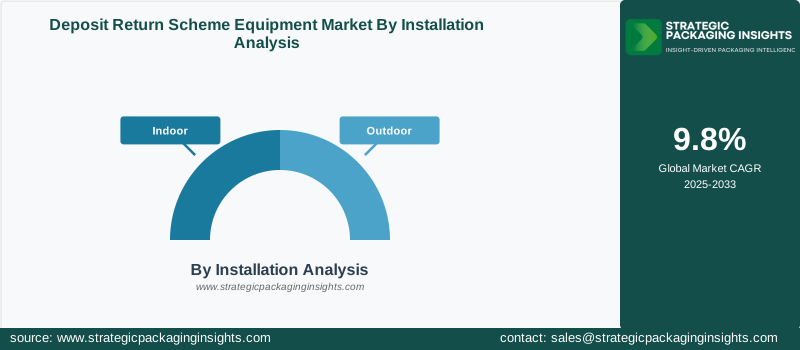
Outdoor installations are also gaining traction, particularly in regions with high recycling rates and strong environmental awareness. These installations are designed to withstand harsh weather conditions and handle large volumes of recyclable containers, making them ideal for use in recycling centers and municipal authorities. Companies are focusing on developing equipment that can efficiently operate in outdoor environments, ensuring their effective recycling and reducing environmental impact.
By End User Analysis
The market is also segmented by end-user, including Supermarkets & Hypermarkets, Convenience Stores, Retail Chains, Beverage Producers, Recycling Centers, and Municipal Authorities. Supermarkets & Hypermarkets are expected to dominate the market due to their widespread use of deposit return schemes to enhance consumer convenience and promote recycling. These establishments are investing in advanced equipment that can efficiently sort and process recyclable containers, enhancing the overall efficiency of deposit return schemes.
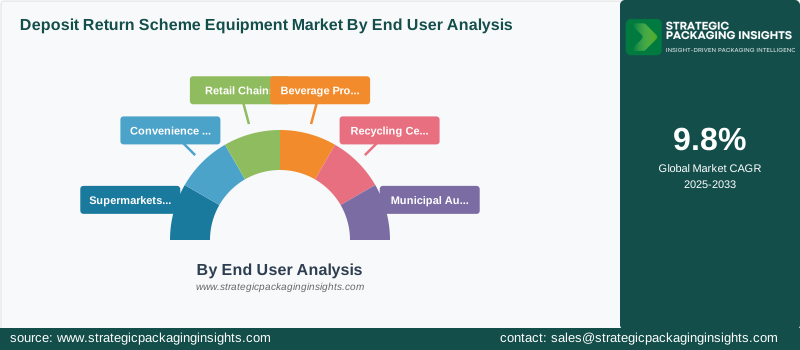
Convenience Stores and Retail Chains are also significant segments of the market, driven by the increasing demand for efficient recycling solutions. These establishments are focusing on developing equipment that can efficiently handle large volumes of recyclable containers, ensuring their effective recycling and reducing environmental impact. Beverage Producers and Recycling Centers are also key end-users of deposit return scheme equipment, as they play a crucial role in the recycling process and are investing in advanced equipment to enhance their operations. Municipal Authorities are also significant end-users, as they are responsible for implementing and managing deposit return schemes in their regions.
Deposit Return Scheme Equipment Market Segments
The Deposit Return Scheme Equipment market has been segmented on the basis ofBy Equipment Type
- Reverse Vending Machines (RVMs)
- Bottle & Can Collection Systems
- Sorting Equipment
- Counting & Compaction Systems
- Deposit Refund Kiosks
- Bag Drop Systems
By Container Type
- PET Bottles
- Aluminum Cans
- Glass Bottles
- HDPE Containers
- Multi-Material Beverage Containers
By Installation
- Indoor
- Outdoor
By End User
- Supermarkets & Hypermarkets
- Convenience Stores
- Retail Chains
- Beverage Producers
- Recycling Centers
- Municipal Authorities
Region
- Asia Pacific
- North America
- Latin America
- Europe
- Middle East & Africa




