


Decentralized Packaging Kiosks Market Outlook
The Decentralized Packaging Kiosks market was valued at $1.44 billion in 2025 and is projected to reach $2.96 billion by 2034, growing at a CAGR of 8.3% during the forecast period 2026-2034. This market is witnessing significant growth due to the increasing demand for sustainable and eco-friendly packaging solutions. The rise in consumer awareness regarding environmental issues and the push for reducing plastic waste are driving the adoption of decentralized packaging kiosks. These kiosks offer a convenient and efficient way for consumers to refill and recycle packaging, thereby reducing the overall environmental footprint. The integration of advanced technologies such as IoT and automated dispensing systems is further enhancing the functionality and appeal of these kiosks, making them a preferred choice for both consumers and businesses.
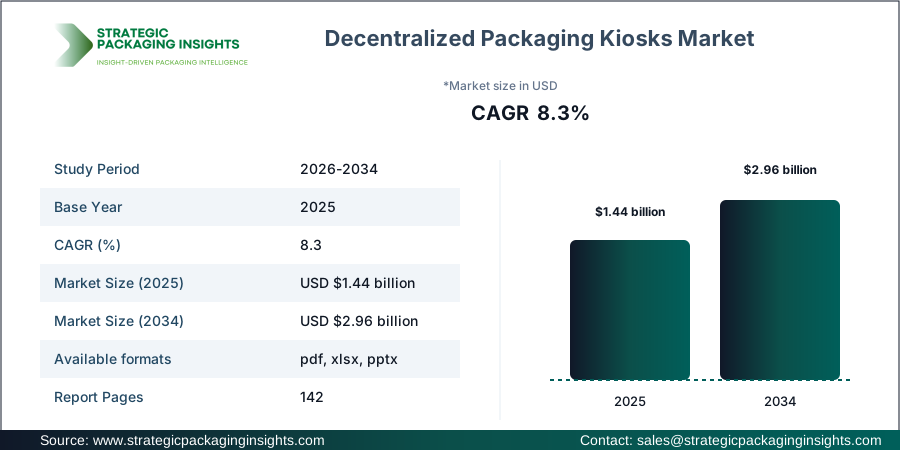
Despite the promising growth prospects, the decentralized packaging kiosks market faces certain challenges. Regulatory constraints and the need for substantial initial investments can act as barriers to market entry for new players. Additionally, the market's growth potential is somewhat limited by the slow adoption rate in certain regions due to lack of awareness and infrastructure. However, the increasing focus on sustainability and the growing trend of circular economy practices present significant opportunities for market expansion. Companies are investing in research and development to innovate and improve the efficiency of these kiosks, which is expected to drive market growth in the coming years.
Report Scope
| Attributes | Details |
| Report Title | Decentralized Packaging Kiosks Market Size, Future Growth and Forecast 2034 |
| By Product Type | Refill Kiosks, Smart Packaging Kiosks, Vending-Style Packaging Units |
| By Technology | IoT-Enabled, Automated Dispensing, QR/RFID Enabled |
| By Application | Retail Refill, Foodservice, E-Commerce Pickup |
| By End Use | Retailers, FMCG Brands, Hospitality, Logistics |
| Region | Asia Pacific, North America, Latin America, Europe, Middle East & Africa |
| Base Year | 2025 |
| Historic Period | 2018-2024 |
| Forecast Period | 2026-2034 |
| Number of Pages | 142 |
| Customization Available | Yes* |
Opportunities & Threats
The decentralized packaging kiosks market presents numerous opportunities for growth, primarily driven by the increasing consumer demand for sustainable packaging solutions. As environmental concerns continue to rise, consumers are actively seeking ways to reduce their carbon footprint, and decentralized packaging kiosks offer a viable solution. These kiosks enable consumers to refill and recycle packaging, thereby minimizing waste and promoting sustainability. Additionally, the integration of advanced technologies such as IoT and automated dispensing systems enhances the functionality and convenience of these kiosks, making them more appealing to consumers and businesses alike. The growing trend of circular economy practices further supports the adoption of decentralized packaging kiosks, as they align with the principles of reducing, reusing, and recycling.
Another significant opportunity lies in the expansion of decentralized packaging kiosks into new markets and regions. As awareness of environmental issues continues to grow, there is a rising demand for sustainable packaging solutions in emerging markets. Companies can capitalize on this trend by expanding their presence in these regions and offering innovative and efficient packaging solutions. Furthermore, partnerships and collaborations with retailers, FMCG brands, and other stakeholders can help drive the adoption of decentralized packaging kiosks and increase market penetration. By leveraging these opportunities, companies can position themselves as leaders in the sustainable packaging industry and gain a competitive edge in the market.
However, the decentralized packaging kiosks market also faces certain threats that could hinder its growth. One of the primary challenges is the regulatory landscape, which can vary significantly across different regions. Compliance with local regulations and standards can be complex and costly, posing a barrier to market entry for new players. Additionally, the initial investment required for setting up decentralized packaging kiosks can be substantial, which may deter some companies from entering the market. Furthermore, the slow adoption rate in certain regions due to lack of awareness and infrastructure can limit market growth. Companies need to address these challenges by investing in research and development, raising awareness, and collaborating with stakeholders to drive market adoption.
Drivers & Challenges
The decentralized packaging kiosks market is primarily driven by the increasing consumer demand for sustainable and eco-friendly packaging solutions. As environmental concerns continue to rise, consumers are actively seeking ways to reduce their carbon footprint, and decentralized packaging kiosks offer a viable solution. These kiosks enable consumers to refill and recycle packaging, thereby minimizing waste and promoting sustainability. Additionally, the integration of advanced technologies such as IoT and automated dispensing systems enhances the functionality and convenience of these kiosks, making them more appealing to consumers and businesses alike. The growing trend of circular economy practices further supports the adoption of decentralized packaging kiosks, as they align with the principles of reducing, reusing, and recycling.
Another significant driver of the decentralized packaging kiosks market is the increasing focus on sustainability and the push for reducing plastic waste. Governments and regulatory bodies worldwide are implementing stringent regulations and policies to curb plastic pollution, which is driving the adoption of sustainable packaging solutions. Decentralized packaging kiosks offer an effective way to comply with these regulations and reduce the environmental impact of packaging. Furthermore, the rising awareness of environmental issues among consumers is leading to a shift in consumer preferences towards sustainable products and solutions. Companies that offer decentralized packaging kiosks can capitalize on this trend by positioning themselves as leaders in the sustainable packaging industry and gaining a competitive edge in the market.
Despite the promising growth prospects, the decentralized packaging kiosks market faces certain challenges. One of the primary challenges is the regulatory landscape, which can vary significantly across different regions. Compliance with local regulations and standards can be complex and costly, posing a barrier to market entry for new players. Additionally, the initial investment required for setting up decentralized packaging kiosks can be substantial, which may deter some companies from entering the market. Furthermore, the slow adoption rate in certain regions due to lack of awareness and infrastructure can limit market growth. Companies need to address these challenges by investing in research and development, raising awareness, and collaborating with stakeholders to drive market adoption.
Market Share Analysis
The decentralized packaging kiosks market is characterized by a competitive landscape with several key players vying for market share. Companies such as Algramo, Loop, TerraCycle, Replenish, and EcoSPIRITS are leading the charge in this market, offering innovative and sustainable packaging solutions. These companies have established themselves as leaders in the industry by leveraging advanced technologies and focusing on sustainability. Algramo, for instance, has gained significant market share by offering refillable packaging solutions that reduce plastic waste and promote sustainability. Similarly, Loop has partnered with major brands to offer reusable packaging solutions, further driving the adoption of decentralized packaging kiosks.
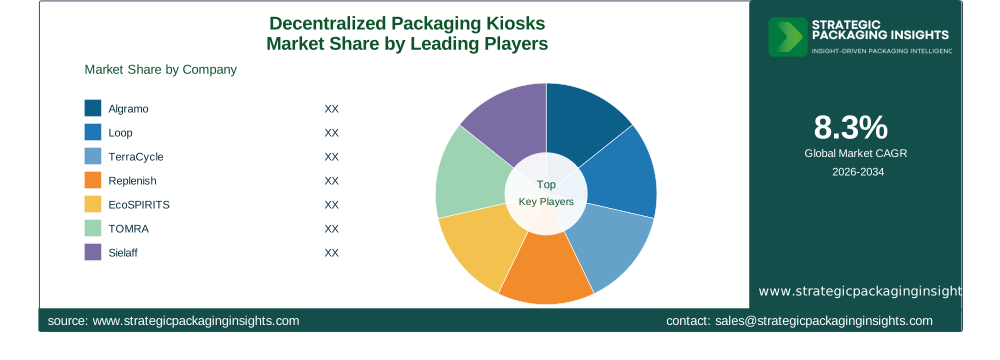
Other notable players in the market include TOMRA, Sielaff, Crane Payment Innovations, Diebold Nixdorf, and Fuji Electric. These companies are investing in research and development to innovate and improve the efficiency of their packaging kiosks. TOMRA, for example, is known for its advanced reverse vending machines that enable consumers to recycle packaging and reduce waste. Sielaff and Crane Payment Innovations are also making significant strides in the market by offering automated dispensing systems that enhance the functionality and convenience of packaging kiosks. Diebold Nixdorf and Fuji Electric are focusing on integrating IoT and other advanced technologies into their kiosks to improve their performance and appeal to consumers.
The competitive landscape of the decentralized packaging kiosks market is further intensified by the presence of several regional players. These companies are leveraging their local expertise and knowledge to offer customized solutions that cater to the specific needs of their markets. By focusing on innovation and sustainability, these regional players are gaining a competitive edge and increasing their market share. The market is also witnessing a trend of partnerships and collaborations among key players, which is helping to drive the adoption of decentralized packaging kiosks and expand their reach. Overall, the decentralized packaging kiosks market is poised for significant growth, driven by the increasing demand for sustainable packaging solutions and the efforts of key players to innovate and improve their offerings.
Key Highlights
- The decentralized packaging kiosks market is projected to grow at a CAGR of 8.3% from 2026 to 2034.
- Key players in the market include Algramo, Loop, TerraCycle, Replenish, and EcoSPIRITS.
- Advanced technologies such as IoT and automated dispensing systems are enhancing the functionality of packaging kiosks.
- The market is driven by the increasing demand for sustainable and eco-friendly packaging solutions.
- Regulatory constraints and the need for substantial initial investments pose challenges to market growth.
- The market is witnessing a trend of partnerships and collaborations among key players.
- Regional players are leveraging their local expertise to offer customized solutions and gain a competitive edge.
- The growing trend of circular economy practices supports the adoption of decentralized packaging kiosks.
- Companies are investing in research and development to innovate and improve the efficiency of their kiosks.
Top Countries Insights
In the decentralized packaging kiosks market, the United States stands out as a leading country with a market size of approximately $500 million and a CAGR of 9%. The country's strong focus on sustainability and environmental protection drives the demand for decentralized packaging solutions. Government initiatives and policies aimed at reducing plastic waste further support market growth. Additionally, the presence of key players and technological advancements in the region contribute to the market's expansion.
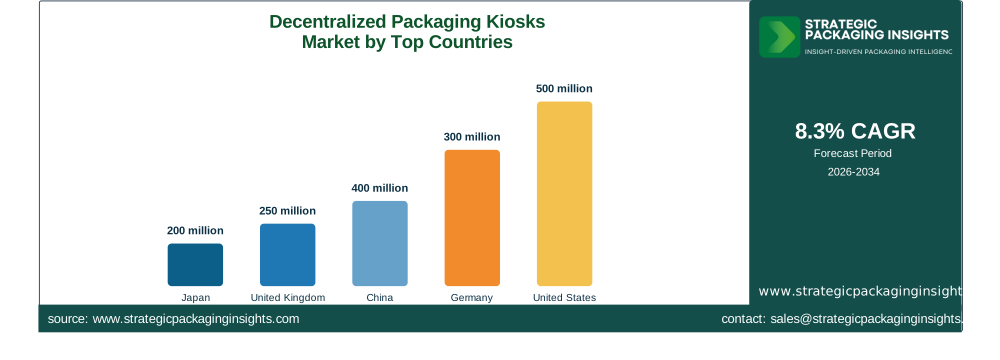
Germany is another significant player in the decentralized packaging kiosks market, with a market size of around $300 million and a CAGR of 8%. The country's robust recycling infrastructure and strong environmental regulations create a favorable environment for the adoption of sustainable packaging solutions. The German government's commitment to reducing plastic waste and promoting circular economy practices further drives the market's growth. Additionally, the presence of innovative companies and technological advancements in the region contribute to the market's expansion.
China is emerging as a key market for decentralized packaging kiosks, with a market size of approximately $400 million and a CAGR of 10%. The country's rapid urbanization and growing middle class drive the demand for sustainable packaging solutions. Government initiatives aimed at reducing plastic waste and promoting environmental sustainability further support market growth. Additionally, the presence of key players and technological advancements in the region contribute to the market's expansion.
In the United Kingdom, the decentralized packaging kiosks market is valued at around $250 million, with a CAGR of 7%. The country's strong focus on sustainability and environmental protection drives the demand for decentralized packaging solutions. Government initiatives and policies aimed at reducing plastic waste further support market growth. Additionally, the presence of key players and technological advancements in the region contribute to the market's expansion.
Japan is also a significant player in the decentralized packaging kiosks market, with a market size of approximately $200 million and a CAGR of 6%. The country's strong focus on sustainability and environmental protection drives the demand for decentralized packaging solutions. Government initiatives and policies aimed at reducing plastic waste further support market growth. Additionally, the presence of key players and technological advancements in the region contribute to the market's expansion.
Decentralized Packaging Kiosks Market Segments Insights

Product Type Analysis
The decentralized packaging kiosks market is segmented by product type into refill kiosks, smart packaging kiosks, and vending-style packaging units. Refill kiosks are gaining popularity due to their ability to reduce packaging waste and promote sustainability. These kiosks allow consumers to refill their containers with products, thereby minimizing the need for single-use packaging. Smart packaging kiosks, on the other hand, are equipped with advanced technologies such as IoT and automated dispensing systems, enhancing their functionality and convenience. Vending-style packaging units offer a convenient and efficient way for consumers to access products, making them a popular choice in high-traffic areas such as shopping malls and airports.
The demand for refill kiosks is driven by the increasing consumer awareness of environmental issues and the push for reducing plastic waste. These kiosks offer a sustainable and eco-friendly solution for packaging, aligning with the principles of the circular economy. Smart packaging kiosks are also gaining traction due to their ability to provide real-time data and insights into consumer behavior, enabling companies to optimize their operations and improve customer satisfaction. Vending-style packaging units are popular in regions with high population density, where convenience and accessibility are key factors driving consumer preferences.
Technology Analysis
The decentralized packaging kiosks market is segmented by technology into IoT-enabled, automated dispensing, and QR/RFID enabled kiosks. IoT-enabled kiosks are gaining traction due to their ability to provide real-time data and insights into consumer behavior. These kiosks are equipped with sensors and connectivity features that enable companies to monitor and optimize their operations, improving efficiency and customer satisfaction. Automated dispensing kiosks offer a convenient and efficient way for consumers to access products, making them a popular choice in high-traffic areas such as shopping malls and airports.
QR/RFID enabled kiosks are also gaining popularity due to their ability to provide a seamless and contactless experience for consumers. These kiosks use QR codes and RFID technology to enable consumers to access products and services quickly and efficiently. The demand for IoT-enabled kiosks is driven by the increasing focus on data-driven decision-making and the need for real-time insights into consumer behavior. Automated dispensing kiosks are popular in regions with high population density, where convenience and accessibility are key factors driving consumer preferences. QR/RFID enabled kiosks are gaining traction due to their ability to provide a seamless and contactless experience for consumers, aligning with the growing trend of digitalization and automation.
Application Analysis
The decentralized packaging kiosks market is segmented by application into retail refill, foodservice, and e-commerce pickup. Retail refill kiosks are gaining popularity due to their ability to reduce packaging waste and promote sustainability. These kiosks allow consumers to refill their containers with products, thereby minimizing the need for single-use packaging. Foodservice kiosks offer a convenient and efficient way for consumers to access food and beverages, making them a popular choice in high-traffic areas such as shopping malls and airports.
E-commerce pickup kiosks are also gaining traction due to the increasing popularity of online shopping and the need for convenient and efficient delivery solutions. These kiosks provide a secure and convenient way for consumers to pick up their online orders, reducing the need for home delivery and minimizing the environmental impact of transportation. The demand for retail refill kiosks is driven by the increasing consumer awareness of environmental issues and the push for reducing plastic waste. Foodservice kiosks are popular in regions with high population density, where convenience and accessibility are key factors driving consumer preferences. E-commerce pickup kiosks are gaining traction due to the growing trend of online shopping and the need for efficient and sustainable delivery solutions.
End Use Analysis
The decentralized packaging kiosks market is segmented by end use into retailers, FMCG brands, hospitality, and logistics. Retailers are increasingly adopting decentralized packaging kiosks to offer sustainable and eco-friendly packaging solutions to their customers. These kiosks enable retailers to reduce packaging waste and promote sustainability, aligning with the growing trend of circular economy practices. FMCG brands are also leveraging decentralized packaging kiosks to enhance their sustainability initiatives and reduce their environmental impact.
The hospitality industry is adopting decentralized packaging kiosks to offer convenient and efficient packaging solutions to their guests. These kiosks provide a seamless and contactless experience for consumers, enhancing customer satisfaction and loyalty. The logistics industry is also leveraging decentralized packaging kiosks to optimize their operations and reduce the environmental impact of transportation. The demand for decentralized packaging kiosks in the retail sector is driven by the increasing consumer awareness of environmental issues and the push for reducing plastic waste. FMCG brands are adopting these kiosks to enhance their sustainability initiatives and reduce their environmental impact. The hospitality and logistics industries are leveraging decentralized packaging kiosks to optimize their operations and enhance customer satisfaction.
Decentralized Packaging Kiosks Market Segments
The Decentralized Packaging Kiosks market has been segmented on the basis ofBy Product Type
- Refill Kiosks
- Smart Packaging Kiosks
- Vending-Style Packaging Units
By Technology
- IoT-Enabled
- Automated Dispensing
- QR/RFID Enabled
By Application
- Retail Refill
- Foodservice
- E-Commerce Pickup
By End Use
- Retailers
- FMCG Brands
- Hospitality
- Logistics
Region
- Asia Pacific
- North America
- Latin America
- Europe
- Middle East & Africa




