


Dairy Packaging Machine Market Outlook
The Dairy Packaging Machine market was valued at $21.74 billion in 2025 and is projected to reach $35.78 billion by 2034, growing at a CAGR of 5.7% during the forecast period 2026-2034. This growth is driven by the increasing demand for dairy products globally, which necessitates efficient and advanced packaging solutions. The market is witnessing a shift towards automation, with automatic machines gaining significant traction due to their efficiency and ability to reduce labor costs. Additionally, the rise in consumer preference for packaged dairy products, driven by urbanization and changing lifestyles, is further propelling the market growth.
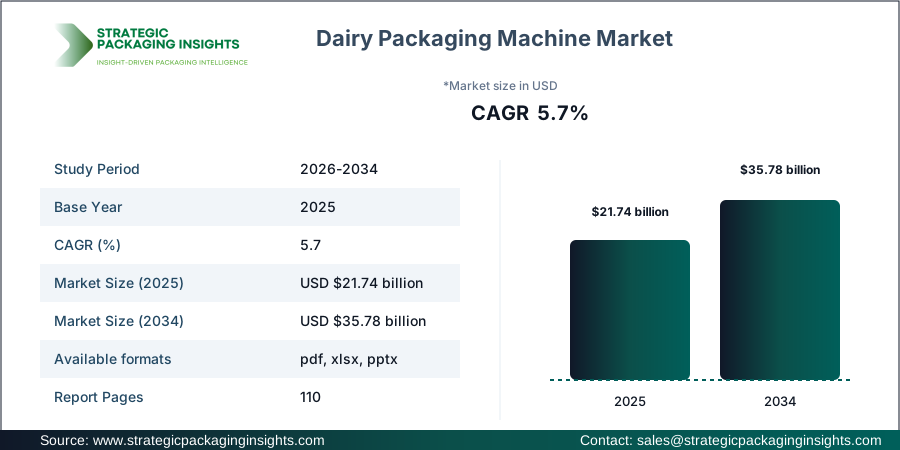
However, the market faces challenges such as stringent regulatory standards and high initial investment costs associated with advanced packaging machinery. Despite these restraints, the market holds substantial growth potential, particularly in emerging economies where the dairy industry is expanding rapidly. Technological advancements in packaging machinery, such as the integration of IoT and AI for enhanced operational efficiency, are expected to create lucrative opportunities for market players. Moreover, the increasing focus on sustainable packaging solutions is likely to drive innovation and growth in the market.
Report Scope
| Attributes | Details |
| Report Title | Dairy Packaging Machine Market Size, Future Growth and Forecast 2034 |
| Type | Automatic, Semi-automatic |
| End Use | Milk, Yogurt, Cheese |
| Technology | Filling, Sealing, Labeling |
| Region | Asia Pacific, North America, Latin America, Europe, Middle East & Africa |
| Base Year | 2025 |
| Historic Period | 2018-2024 |
| Forecast Period | 2026-2034 |
| Number of Pages | 110 |
| Customization Available | Yes* |
Opportunities & Threats
The Dairy Packaging Machine market presents numerous opportunities, particularly with the growing demand for sustainable and eco-friendly packaging solutions. As consumers become more environmentally conscious, there is a significant push towards reducing plastic waste and adopting biodegradable materials. This trend is encouraging manufacturers to innovate and develop machines that can handle a variety of sustainable packaging materials. Additionally, the rise of smart packaging technologies, which offer features like freshness indicators and traceability, is opening new avenues for growth. These technologies not only enhance consumer experience but also provide valuable data to manufacturers, enabling them to optimize their supply chains and improve product quality.
Another opportunity lies in the expansion of the dairy industry in emerging markets. Countries in Asia Pacific and Latin America are witnessing a surge in dairy consumption, driven by increasing population and rising disposable incomes. This is leading to a higher demand for efficient packaging solutions to ensure product safety and extend shelf life. Companies that can offer cost-effective and reliable packaging machines tailored to the needs of these markets are likely to gain a competitive edge. Furthermore, the trend towards automation in the packaging industry is creating opportunities for manufacturers to develop advanced machines that can enhance productivity and reduce operational costs.
Despite these opportunities, the market faces certain threats that could hinder its growth. One of the primary challenges is the high cost of advanced packaging machinery, which can be a significant barrier for small and medium-sized enterprises. Additionally, the market is subject to stringent regulations regarding food safety and packaging standards, which can increase compliance costs and limit the entry of new players. The volatility in raw material prices, particularly for metals and plastics used in machine manufacturing, also poses a threat to market stability. Companies need to navigate these challenges carefully to capitalize on the growth opportunities in the market.
Drivers & Challenges
The Dairy Packaging Machine market is primarily driven by the increasing demand for dairy products worldwide. As urbanization continues to rise, there is a growing preference for packaged dairy products due to their convenience and longer shelf life. This trend is particularly evident in developing countries, where the middle-class population is expanding rapidly. Additionally, advancements in packaging technology, such as the development of machines that offer high-speed operations and enhanced precision, are driving market growth. These innovations enable manufacturers to meet the rising demand for packaged dairy products efficiently and cost-effectively.
Another significant driver is the shift towards automation in the packaging industry. Automatic packaging machines are gaining popularity due to their ability to reduce labor costs and improve operational efficiency. These machines offer features such as automated filling, sealing, and labeling, which enhance productivity and ensure consistent product quality. The integration of IoT and AI technologies in packaging machines is further boosting their adoption, as these technologies enable real-time monitoring and predictive maintenance, reducing downtime and operational costs. As a result, companies are increasingly investing in advanced packaging machinery to stay competitive in the market.
However, the market faces several challenges that could impede its growth. One of the major challenges is the high initial investment required for advanced packaging machinery. Small and medium-sized enterprises, in particular, may find it difficult to afford these machines, limiting their ability to compete with larger players. Additionally, the market is subject to stringent regulations regarding food safety and packaging standards, which can increase compliance costs and create barriers to entry for new players. The volatility in raw material prices, particularly for metals and plastics used in machine manufacturing, also poses a challenge to market stability. Companies need to address these challenges effectively to capitalize on the growth opportunities in the market.
Market Share Analysis
The competitive landscape of the Dairy Packaging Machine market is characterized by the presence of several key players who hold significant market shares. Tetra Pak, a leading company in the market, is known for its innovative packaging solutions and strong global presence. The company has a diverse product portfolio that caters to various segments of the dairy industry, making it a dominant player in the market. SIG, another major player, is renowned for its advanced filling and packaging technologies, which have gained widespread adoption in the dairy sector. The company's focus on sustainability and innovation has helped it maintain a strong market position.
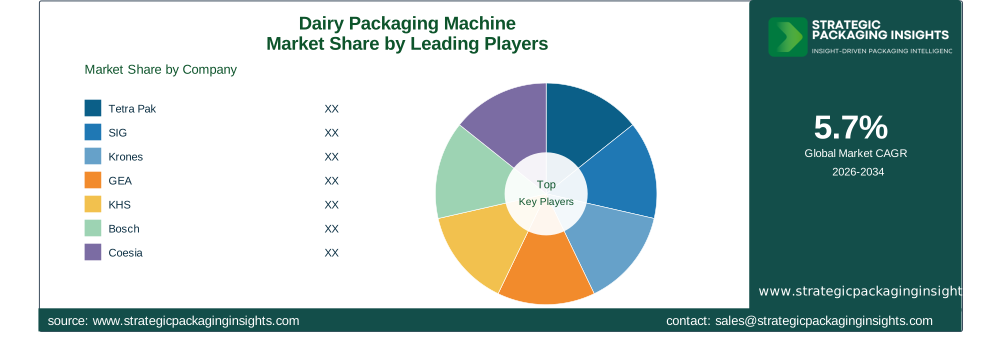
Krones is a key player in the market, offering a wide range of packaging machines that cater to the needs of the dairy industry. The company's emphasis on automation and efficiency has made it a preferred choice for many dairy manufacturers. GEA, known for its engineering excellence, provides comprehensive packaging solutions that enhance productivity and ensure product safety. The company's strong focus on research and development has enabled it to introduce cutting-edge technologies in the market, further strengthening its competitive position.
KHS, Bosch, and Coesia are other prominent players in the market, each offering unique solutions that cater to the diverse needs of the dairy industry. KHS is known for its high-performance packaging machines that offer flexibility and reliability. Bosch, with its extensive experience in the packaging industry, provides innovative solutions that enhance operational efficiency and reduce costs. Coesia, a leader in industrial and packaging solutions, offers advanced machines that cater to the specific requirements of the dairy sector.
Sidel, IMA, and SPX Flow are also key players in the market, each contributing to the competitive landscape with their innovative solutions and strong market presence. Sidel is known for its expertise in PET packaging solutions, while IMA offers a wide range of machines that cater to various segments of the dairy industry. SPX Flow, with its focus on engineering excellence, provides comprehensive solutions that enhance productivity and ensure product safety. These companies, with their strong focus on innovation and customer satisfaction, are expected to continue playing a significant role in the growth of the Dairy Packaging Machine market.
Key Highlights
- The Dairy Packaging Machine market is projected to grow from $21.74 billion in 2025 to $35.78 billion by 2034, at a CAGR of 5.7%.
- Automatic packaging machines are gaining popularity due to their efficiency and ability to reduce labor costs.
- Technological advancements, such as IoT and AI integration, are driving innovation in packaging machinery.
- The market is witnessing a shift towards sustainable and eco-friendly packaging solutions.
- Emerging markets in Asia Pacific and Latin America are experiencing a surge in dairy consumption, driving demand for packaging machines.
- Stringent regulatory standards and high initial investment costs pose challenges to market growth.
- Key players in the market include Tetra Pak, SIG, Krones, GEA, KHS, Bosch, Coesia, Sidel, IMA, and SPX Flow.
- The rise of smart packaging technologies is opening new avenues for growth in the market.
- Volatility in raw material prices poses a threat to market stability.
- Companies are increasingly investing in advanced packaging machinery to stay competitive.
Top Countries Insights
In the Dairy Packaging Machine market, the United States stands out as a key player, with a market size of approximately $5.2 billion and a CAGR of 4%. The country's robust dairy industry, coupled with a strong focus on technological advancements, drives the demand for efficient packaging solutions. The presence of major market players and a well-established supply chain further bolster the market's growth. However, stringent regulatory standards and high labor costs pose challenges to market expansion.
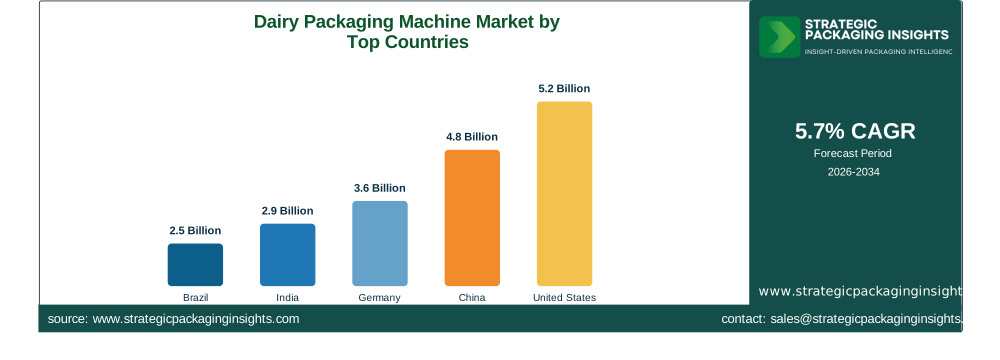
China, with a market size of around $4.8 billion and a CAGR of 7%, is experiencing rapid growth in the Dairy Packaging Machine market. The country's expanding middle class and increasing dairy consumption are key drivers of this growth. Additionally, government initiatives to modernize the dairy industry and improve food safety standards are encouraging the adoption of advanced packaging machinery. However, the market faces challenges such as fluctuating raw material prices and intense competition from local manufacturers.
Germany, with a market size of approximately $3.6 billion and a CAGR of 5%, is a significant player in the European Dairy Packaging Machine market. The country's strong engineering capabilities and focus on innovation drive the demand for advanced packaging solutions. The presence of leading market players and a well-developed infrastructure further support market growth. However, the market faces challenges such as high production costs and stringent environmental regulations.
India, with a market size of around $2.9 billion and a CAGR of 8%, is witnessing significant growth in the Dairy Packaging Machine market. The country's rapidly growing population and increasing dairy consumption are key drivers of this growth. Government initiatives to promote the dairy industry and improve food safety standards are also contributing to market expansion. However, the market faces challenges such as inadequate infrastructure and a fragmented supply chain.
Brazil, with a market size of approximately $2.5 billion and a CAGR of 6%, is a key player in the Latin American Dairy Packaging Machine market. The country's expanding dairy industry and increasing consumer preference for packaged dairy products drive the demand for efficient packaging solutions. However, the market faces challenges such as economic instability and fluctuating raw material prices, which can impact market growth.
Dairy Packaging Machine Market Segments Insights

Type Analysis
The Dairy Packaging Machine market is segmented by type into automatic and semi-automatic machines. Automatic machines are gaining significant traction due to their ability to enhance productivity and reduce labor costs. These machines offer features such as automated filling, sealing, and labeling, which ensure consistent product quality and operational efficiency. The integration of IoT and AI technologies in automatic machines is further boosting their adoption, as these technologies enable real-time monitoring and predictive maintenance. As a result, companies are increasingly investing in automatic packaging machinery to stay competitive in the market.
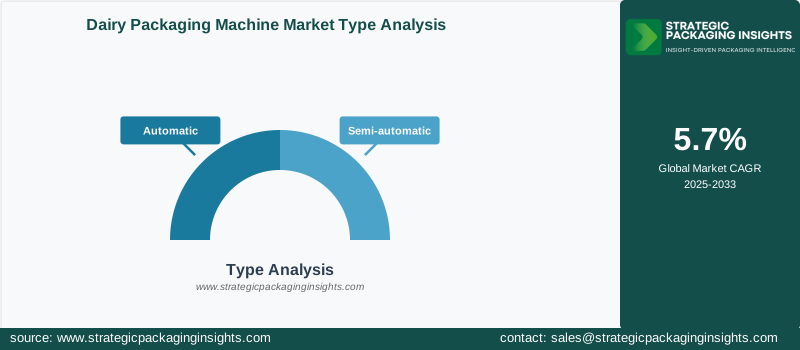
Semi-automatic machines, on the other hand, are preferred by small and medium-sized enterprises due to their lower initial investment costs. These machines offer flexibility and can be easily integrated into existing production lines, making them a cost-effective solution for companies with limited budgets. However, the demand for semi-automatic machines is expected to decline in the coming years as more companies shift towards automation to enhance productivity and reduce operational costs. The market for semi-automatic machines is likely to remain stable in regions with a high concentration of small and medium-sized enterprises.
End Use Analysis
The Dairy Packaging Machine market is segmented by end use into milk, yogurt, and cheese. The milk segment holds the largest market share, driven by the high demand for packaged milk products worldwide. The increasing preference for convenient and longer shelf-life products is boosting the demand for efficient packaging solutions in this segment. Companies are focusing on developing advanced packaging machines that can handle various packaging formats and materials to cater to the diverse needs of the milk industry.
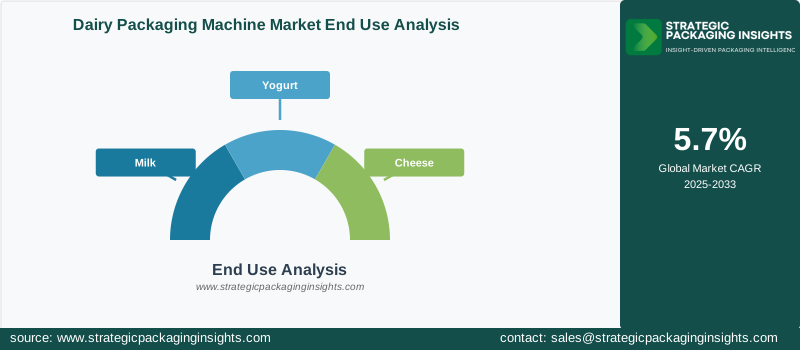
The yogurt segment is experiencing significant growth, driven by the rising popularity of yogurt as a healthy snack option. The demand for innovative packaging solutions that enhance product appeal and extend shelf life is driving the adoption of advanced packaging machinery in this segment. The cheese segment, although smaller in comparison, is also witnessing growth due to the increasing demand for packaged cheese products. Companies are investing in packaging machines that offer high-speed operations and precision to meet the rising demand for packaged cheese products.
Technology Analysis
The Dairy Packaging Machine market is segmented by technology into filling, sealing, and labeling. The filling technology segment holds the largest market share, driven by the high demand for efficient and precise filling solutions in the dairy industry. Companies are focusing on developing advanced filling machines that offer high-speed operations and enhanced precision to meet the rising demand for packaged dairy products. The integration of IoT and AI technologies in filling machines is further boosting their adoption, as these technologies enable real-time monitoring and predictive maintenance.
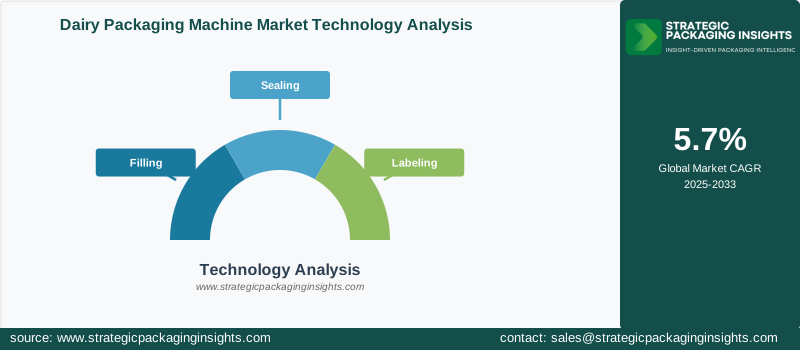
The sealing technology segment is also witnessing significant growth, driven by the increasing demand for packaging solutions that ensure product safety and extend shelf life. Companies are investing in advanced sealing machines that offer flexibility and reliability to cater to the diverse needs of the dairy industry. The labeling technology segment, although smaller in comparison, is also experiencing growth due to the rising demand for innovative labeling solutions that enhance product appeal and provide valuable information to consumers.
Dairy Packaging Machine Market Segments
The Dairy Packaging Machine market has been segmented on the basis ofType
- Automatic
- Semi-automatic
End Use
- Milk
- Yogurt
- Cheese
Technology
- Filling
- Sealing
- Labeling
Region
- Asia Pacific
- North America
- Latin America
- Europe
- Middle East & Africa




