


Dairy Container Market Outlook
The Dairy Container market was valued at $27.54 billion in 2025 and is projected to reach $38.34 billion by 2034, growing at a CAGR of 3.7% during the forecast period 2026-2034. This growth is driven by increasing consumer demand for dairy products, coupled with advancements in packaging technology that enhance product shelf life and safety. The market is also benefiting from the rising trend of sustainable packaging solutions, as consumers and manufacturers alike are becoming more environmentally conscious. The demand for dairy containers is further bolstered by the expanding dairy industry, particularly in emerging markets where dairy consumption is on the rise.
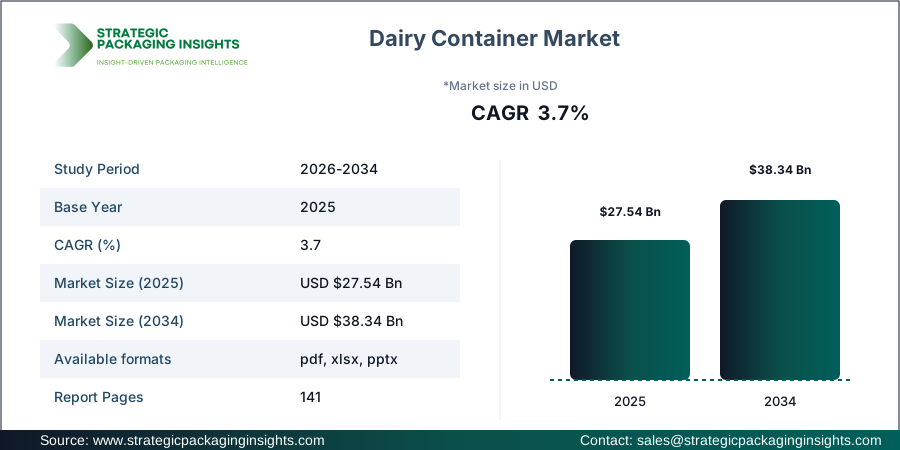
However, the market faces challenges such as stringent regulatory requirements regarding food safety and packaging materials, which can increase production costs. Additionally, the volatility in raw material prices, particularly plastics, poses a significant restraint. Despite these challenges, the market holds substantial growth potential, driven by innovations in biodegradable and recyclable packaging materials. The increasing focus on reducing carbon footprints and enhancing the recyclability of packaging materials is expected to create new opportunities for market players.
Report Scope
| Attributes | Details |
| Report Title | Dairy Container Market Size, Future Growth and Forecast 2034 |
| Product Type | Cups, Tubs, Bottles, Cartons |
| Material Type | PP, PET, HDPE, Paperboard |
| Application | Milk, Yogurt, Cheese, Cream |
| End Use | Dairy Processors, Retailers, Foodservice |
| Region | Asia Pacific, North America, Latin America, Europe, Middle East & Africa |
| Base Year | 2025 |
| Historic Period | 2018-2024 |
| Forecast Period | 2026-2034 |
| Number of Pages | 141 |
| Customization Available | Yes* |
Opportunities & Threats
The Dairy Container market presents numerous opportunities, particularly in the realm of sustainable packaging solutions. As environmental concerns continue to rise, there is a growing demand for eco-friendly packaging options that reduce waste and carbon emissions. Companies that invest in developing biodegradable and recyclable containers are likely to gain a competitive edge. Additionally, the increasing consumption of dairy products in emerging markets offers significant growth opportunities. As disposable incomes rise and dietary habits shift, the demand for packaged dairy products is expected to surge, driving the need for innovative packaging solutions.
Another opportunity lies in the technological advancements in packaging materials and processes. Innovations such as smart packaging, which can monitor the freshness and quality of dairy products, are gaining traction. These technologies not only enhance consumer safety but also improve supply chain efficiency. Furthermore, the trend towards personalized and convenient packaging solutions, such as single-serve containers, is expected to drive market growth. Companies that can offer customizable and user-friendly packaging options are likely to attract a broader consumer base.
Despite these opportunities, the market faces several threats, including regulatory challenges and fluctuating raw material prices. Stringent regulations regarding food safety and packaging materials can increase compliance costs for manufacturers. Additionally, the volatility in the prices of raw materials, particularly plastics, can impact profit margins. The market also faces competition from alternative packaging solutions, such as glass and metal, which are perceived as more sustainable by some consumers. Companies must navigate these challenges by investing in research and development to create cost-effective and compliant packaging solutions.
Drivers & Challenges
One of the primary drivers of the Dairy Container market is the increasing demand for dairy products globally. As consumers become more health-conscious, the consumption of dairy products such as milk, yogurt, and cheese is on the rise. This trend is particularly evident in emerging markets, where rising disposable incomes and changing dietary habits are driving demand. Additionally, the growing trend of on-the-go consumption is boosting the demand for convenient and portable packaging solutions. The development of innovative packaging technologies that enhance product shelf life and safety is also driving market growth.
Another significant driver is the shift towards sustainable packaging solutions. As environmental concerns continue to rise, consumers and manufacturers are increasingly seeking eco-friendly packaging options. The development of biodegradable and recyclable containers is gaining traction, as companies aim to reduce their carbon footprint and meet consumer demand for sustainable products. Furthermore, advancements in packaging materials and technologies, such as smart packaging, are enhancing product safety and supply chain efficiency, further driving market growth.
However, the market faces several challenges, including regulatory hurdles and raw material price volatility. Stringent regulations regarding food safety and packaging materials can increase compliance costs for manufacturers. Additionally, the volatility in the prices of raw materials, particularly plastics, can impact profit margins. The market also faces competition from alternative packaging solutions, such as glass and metal, which are perceived as more sustainable by some consumers. Companies must navigate these challenges by investing in research and development to create cost-effective and compliant packaging solutions.
Market Share Analysis
The Dairy Container market is characterized by a competitive landscape with several key players vying for market share. Companies such as Amcor, Berry Global, ALPLA, and Tetra Pak are leading the market with their innovative packaging solutions and strong distribution networks. These companies are focusing on expanding their product portfolios and enhancing their production capabilities to meet the growing demand for dairy containers. Additionally, they are investing in research and development to create sustainable and cost-effective packaging solutions.
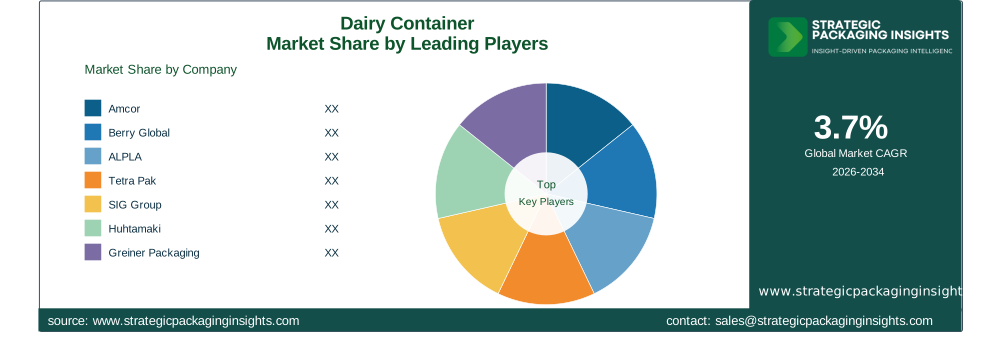
Amcor is a prominent player in the market, known for its extensive range of packaging solutions and commitment to sustainability. The company has been actively investing in developing recyclable and biodegradable packaging materials to meet consumer demand for eco-friendly products. Berry Global is another key player, offering a wide range of packaging solutions for the dairy industry. The company is focused on expanding its product offerings and enhancing its production capabilities to cater to the growing demand for dairy containers.
ALPLA is a leading provider of plastic packaging solutions, known for its innovative and sustainable products. The company has been investing in research and development to create cost-effective and environmentally friendly packaging solutions. Tetra Pak, a global leader in food processing and packaging solutions, is known for its innovative and sustainable packaging solutions. The company is focused on expanding its product portfolio and enhancing its production capabilities to meet the growing demand for dairy containers.
Other notable players in the market include SIG Group, Huhtamaki, Greiner Packaging, Silgan Plastics, Graham Packaging, and Pactiv Evergreen. These companies are focusing on expanding their product offerings and enhancing their production capabilities to cater to the growing demand for dairy containers. They are also investing in research and development to create sustainable and cost-effective packaging solutions. The competitive landscape of the Dairy Container market is characterized by a focus on innovation, sustainability, and cost-effectiveness.
Key Highlights
- The Dairy Container market is projected to grow at a CAGR of 3.7% from 2026 to 2034.
- Increasing demand for dairy products is driving market growth.
- Technological advancements in packaging materials are enhancing product safety and shelf life.
- Sustainable packaging solutions are gaining traction among consumers and manufacturers.
- Emerging markets offer significant growth opportunities for market players.
- Stringent regulations and raw material price volatility pose challenges to market growth.
- Key players are focusing on innovation and sustainability to gain a competitive edge.
- Smart packaging technologies are gaining popularity in the market.
- Personalized and convenient packaging solutions are driving market growth.
- Competition from alternative packaging solutions, such as glass and metal, is a challenge for market players.
Top Countries Insights
In the Dairy Container market, the United States stands out with a market size of approximately $8.5 billion and a CAGR of 3%. The growth in this region is driven by the high consumption of dairy products and the increasing demand for sustainable packaging solutions. The presence of major market players and technological advancements in packaging materials further bolster the market. However, regulatory challenges and competition from alternative packaging solutions pose challenges.
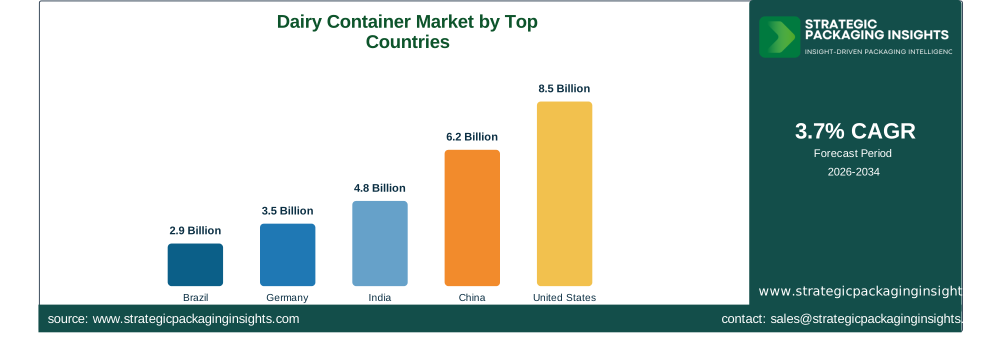
China is another significant market, with a size of around $6.2 billion and a CAGR of 5%. The rapid urbanization and rising disposable incomes in the country are driving the demand for packaged dairy products. The government's focus on food safety and sustainability is also encouraging the adoption of innovative packaging solutions. However, the market faces challenges such as regulatory hurdles and raw material price volatility.
India, with a market size of approximately $4.8 billion and a CAGR of 6%, is experiencing significant growth in the Dairy Container market. The increasing consumption of dairy products, coupled with the rising demand for convenient and portable packaging solutions, is driving market growth. The government's initiatives to promote sustainable packaging solutions are also contributing to market expansion. However, the market faces challenges such as regulatory compliance and competition from alternative packaging solutions.
Germany, with a market size of around $3.5 billion and a CAGR of 2%, is a key player in the European Dairy Container market. The country's focus on sustainability and innovation in packaging solutions is driving market growth. The presence of major market players and technological advancements in packaging materials further bolster the market. However, regulatory challenges and competition from alternative packaging solutions pose challenges.
Brazil, with a market size of approximately $2.9 billion and a CAGR of 4%, is experiencing growth in the Dairy Container market. The increasing consumption of dairy products and the rising demand for sustainable packaging solutions are driving market growth. The government's focus on food safety and sustainability is also encouraging the adoption of innovative packaging solutions. However, the market faces challenges such as regulatory hurdles and raw material price volatility.
Dairy Container Market Segments Insights

Product Type Analysis
The Dairy Container market is segmented by product type into cups, tubs, bottles, and cartons. Each of these segments caters to different consumer needs and preferences, driving demand across various applications. Cups and tubs are particularly popular for yogurt and cream products, offering convenience and portion control. Bottles are widely used for milk and liquid dairy products, providing ease of use and storage. Cartons, known for their sustainability, are gaining traction for milk and juice packaging, appealing to environmentally conscious consumers.
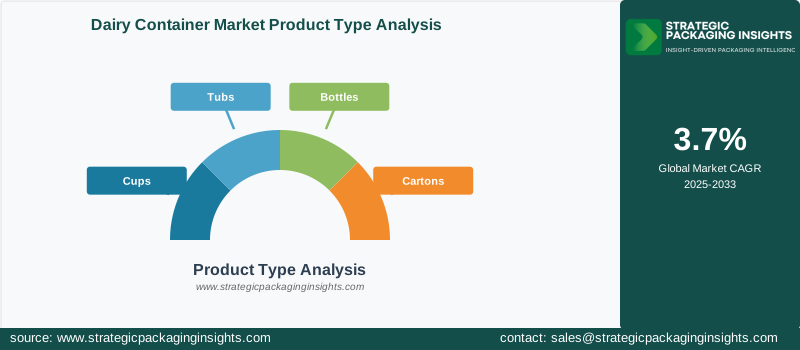
The demand for these product types is driven by the increasing consumption of dairy products and the growing trend of on-the-go consumption. Consumers are seeking convenient and portable packaging solutions that fit their busy lifestyles. Additionally, the development of innovative packaging technologies that enhance product shelf life and safety is driving demand for these product types. Companies are focusing on expanding their product portfolios and enhancing their production capabilities to meet the growing demand for dairy containers.
Material Type Analysis
The Dairy Container market is segmented by material type into PP, PET, HDPE, and paperboard. Each of these materials offers unique benefits and is chosen based on the specific requirements of the product being packaged. PP and PET are popular choices for their durability and versatility, making them suitable for a wide range of dairy products. HDPE is known for its strength and resistance to impact, making it ideal for milk and liquid dairy products. Paperboard, known for its sustainability, is gaining traction for its eco-friendly properties.
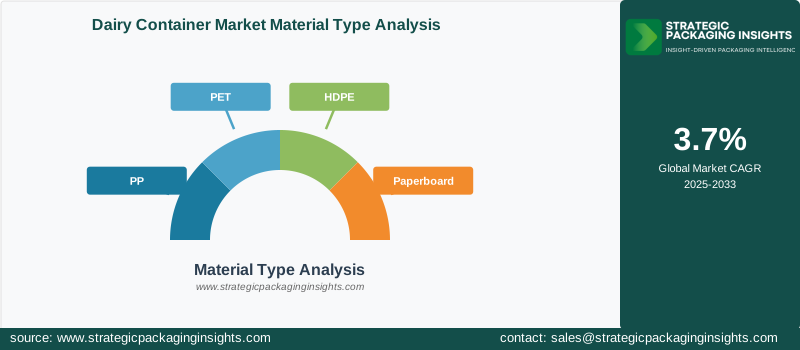
The demand for these materials is driven by the increasing focus on sustainability and the need for cost-effective packaging solutions. Companies are investing in research and development to create innovative and sustainable packaging materials that meet consumer demand for eco-friendly products. Additionally, advancements in packaging materials and technologies, such as smart packaging, are enhancing product safety and supply chain efficiency, further driving demand for these materials.
Application Analysis
The Dairy Container market is segmented by application into milk, yogurt, cheese, and cream. Each of these applications has unique packaging requirements, driving demand for specific container types and materials. Milk, being a staple dairy product, requires durable and leak-proof packaging solutions, such as bottles and cartons. Yogurt, known for its convenience and health benefits, is often packaged in cups and tubs, offering portion control and ease of use. Cheese and cream, with their diverse product offerings, require versatile packaging solutions that cater to different consumer preferences.
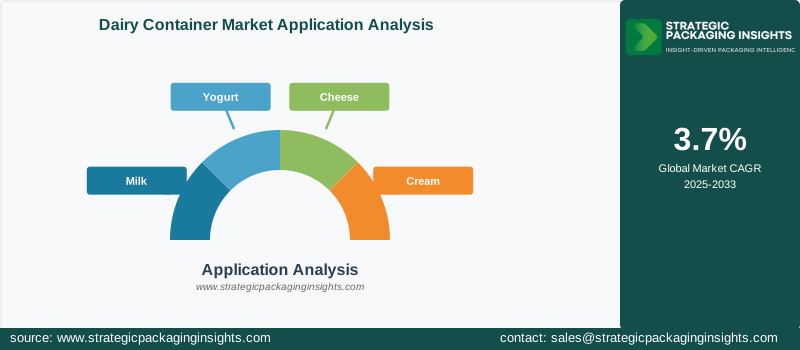
The demand for these applications is driven by the increasing consumption of dairy products and the growing trend of on-the-go consumption. Consumers are seeking convenient and portable packaging solutions that fit their busy lifestyles. Additionally, the development of innovative packaging technologies that enhance product shelf life and safety is driving demand for these applications. Companies are focusing on expanding their product portfolios and enhancing their production capabilities to meet the growing demand for dairy containers.
End Use Analysis
The Dairy Container market is segmented by end use into dairy processors, retailers, and foodservice. Each of these end-use segments has unique packaging requirements, driving demand for specific container types and materials. Dairy processors require durable and cost-effective packaging solutions that ensure product safety and quality. Retailers, on the other hand, focus on packaging solutions that enhance product visibility and appeal to consumers. The foodservice industry, known for its fast-paced environment, requires convenient and portable packaging solutions that cater to on-the-go consumption.
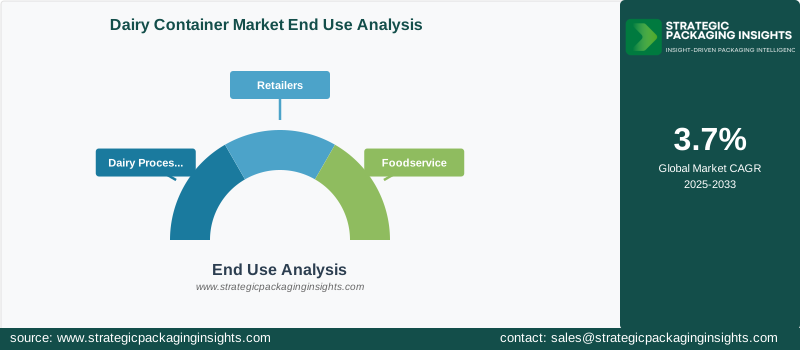
The demand for these end-use segments is driven by the increasing consumption of dairy products and the growing trend of on-the-go consumption. Consumers are seeking convenient and portable packaging solutions that fit their busy lifestyles. Additionally, the development of innovative packaging technologies that enhance product shelf life and safety is driving demand for these end-use segments. Companies are focusing on expanding their product portfolios and enhancing their production capabilities to meet the growing demand for dairy containers.
Dairy Container Market Segments
The Dairy Container market has been segmented on the basis ofProduct Type
- Cups
- Tubs
- Bottles
- Cartons
Material Type
- PP
- PET
- HDPE
- Paperboard
Application
- Milk
- Yogurt
- Cheese
- Cream
End Use
- Dairy Processors
- Retailers
- Foodservice
Region
- Asia Pacific
- North America
- Latin America
- Europe
- Middle East & Africa




