


Cryogenic Vials and Tubes Market Outlook
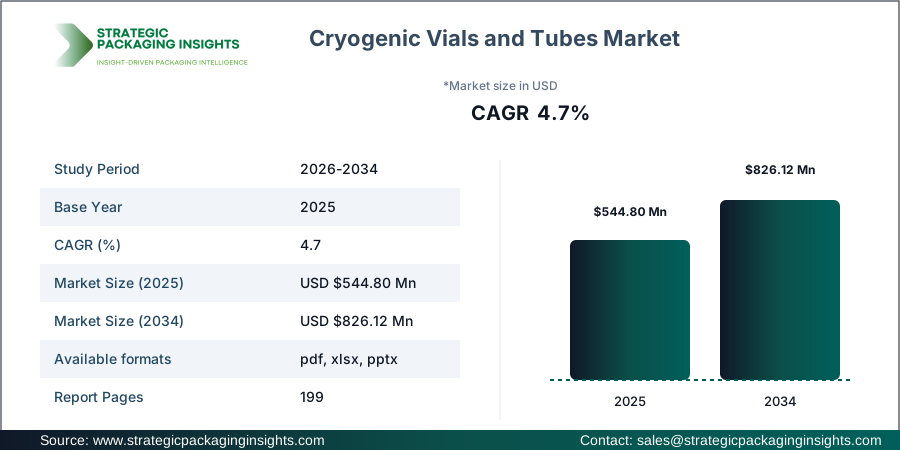
The Cryogenic Vials and Tubes market was valued at $544.80 million in 2025 and is projected to reach $826.12 million by 2034, growing at a CAGR of 4.7% during the forecast period 2026-2034. This market is driven by the increasing demand for secure and reliable storage solutions in biobanking and research applications. The rise in chronic diseases and the subsequent need for advanced diagnostic and therapeutic solutions have further fueled the demand for cryogenic vials and tubes. Additionally, the growing focus on personalized medicine and the expansion of biopharmaceuticals are significant contributors to market growth. The market is also benefiting from technological advancements in cryogenic storage solutions, which enhance the safety and efficiency of biological sample storage.
However, the market faces challenges such as stringent regulatory requirements and high costs associated with cryogenic storage solutions. The need for compliance with various international standards and guidelines can be a barrier for new entrants. Despite these challenges, the market holds significant growth potential due to the increasing investments in healthcare infrastructure and the rising demand for biobanking services. The development of innovative products with enhanced features, such as improved sealing and labeling, is expected to create new opportunities for market players. Furthermore, the growing trend of outsourcing biobanking services to specialized providers is likely to drive market expansion.
Report Scope
| Attributes | Details |
| Report Title | Cryogenic Vials and Tubes Market Size, Future Growth and Forecast 2034 |
| Product Type | Externally Threaded Vials, Internally Threaded Vials, Self-Standing Vials |
| Capacity | Below 1 ml, 1–2 ml, Above 2 ml |
| Application | Cell Storage, Biobanking, Research, Diagnostics |
| End Use | Labs, Biobanks, Pharma, Hospitals |
| Region | Asia Pacific, North America, Latin America, Europe, Middle East & Africa |
| Base Year | 2025 |
| Historic Period | 2018-2024 |
| Forecast Period | 2026-2034 |
| Number of Pages | 199 |
| Customization Available | Yes* |
Opportunities & Threats
The Cryogenic Vials and Tubes market presents numerous opportunities, particularly in the realm of biobanking and personalized medicine. As the demand for personalized treatment options grows, so does the need for efficient storage solutions for biological samples. This trend is expected to drive the adoption of cryogenic vials and tubes, as they offer reliable and secure storage for sensitive materials. Additionally, the increasing focus on research and development in the pharmaceutical and biotechnology sectors is likely to boost the demand for cryogenic storage solutions. The expansion of biobanks and the growing trend of outsourcing biobanking services to specialized providers also present significant growth opportunities for market players.
Another opportunity lies in the development of innovative products with enhanced features, such as improved sealing and labeling. These advancements can help manufacturers differentiate their products in a competitive market and cater to the specific needs of end-users. Furthermore, the increasing investments in healthcare infrastructure, particularly in emerging economies, are expected to drive the demand for cryogenic vials and tubes. As healthcare facilities expand and modernize, the need for advanced storage solutions for biological samples will continue to grow, creating new opportunities for market players.
Despite the promising opportunities, the Cryogenic Vials and Tubes market faces several threats, including stringent regulatory requirements and high costs associated with cryogenic storage solutions. Compliance with various international standards and guidelines can be a barrier for new entrants and may limit the growth of smaller players. Additionally, the high costs of cryogenic storage solutions can be a deterrent for some end-users, particularly in resource-constrained settings. The market also faces competition from alternative storage solutions, which may offer lower costs or different features that appeal to specific end-users.
Drivers & Challenges
The Cryogenic Vials and Tubes market is primarily driven by the increasing demand for secure and reliable storage solutions in biobanking and research applications. The rise in chronic diseases and the subsequent need for advanced diagnostic and therapeutic solutions have further fueled the demand for cryogenic vials and tubes. Additionally, the growing focus on personalized medicine and the expansion of biopharmaceuticals are significant contributors to market growth. The market is also benefiting from technological advancements in cryogenic storage solutions, which enhance the safety and efficiency of biological sample storage. These factors are expected to drive the market's growth during the forecast period.
Another key driver of the Cryogenic Vials and Tubes market is the increasing investments in healthcare infrastructure and the rising demand for biobanking services. As healthcare facilities expand and modernize, the need for advanced storage solutions for biological samples will continue to grow. The development of innovative products with enhanced features, such as improved sealing and labeling, is also expected to create new opportunities for market players. Furthermore, the growing trend of outsourcing biobanking services to specialized providers is likely to drive market expansion. These factors, combined with the increasing focus on research and development in the pharmaceutical and biotechnology sectors, are expected to propel the market's growth.
Despite the promising growth prospects, the Cryogenic Vials and Tubes market faces several challenges. One of the primary challenges is the stringent regulatory requirements and high costs associated with cryogenic storage solutions. Compliance with various international standards and guidelines can be a barrier for new entrants and may limit the growth of smaller players. Additionally, the high costs of cryogenic storage solutions can be a deterrent for some end-users, particularly in resource-constrained settings. The market also faces competition from alternative storage solutions, which may offer lower costs or different features that appeal to specific end-users. These challenges must be addressed for the market to achieve its full growth potential.
Market Share Analysis
The Cryogenic Vials and Tubes market is characterized by a competitive landscape with several key players dominating the market. Companies such as Thermo Fisher Scientific, Corning, DWK Life Sciences, Greiner Bio-One, Sarstedt, Eppendorf, Nunc, Azenta Life Sciences, BioLife Solutions, and Globe Scientific hold significant market shares. These companies are known for their extensive product portfolios, strong distribution networks, and continuous focus on research and development. The competitive landscape is further intensified by the presence of numerous regional and local players, which contribute to the market's dynamic nature.
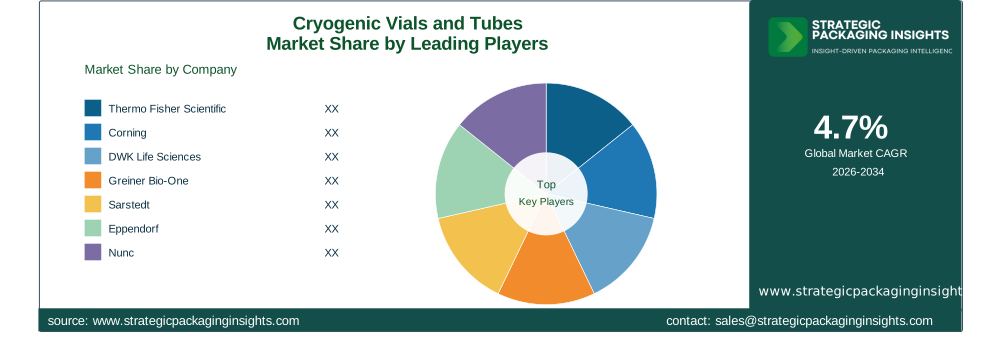
Thermo Fisher Scientific is a leading player in the Cryogenic Vials and Tubes market, known for its comprehensive range of products and solutions for cryogenic storage. The company's strong focus on innovation and customer-centric approach has helped it maintain a dominant position in the market. Corning, another major player, is recognized for its high-quality cryogenic storage solutions and extensive global presence. The company's commitment to sustainability and continuous product development has contributed to its strong market position.
DWK Life Sciences and Greiner Bio-One are also prominent players in the market, offering a wide range of cryogenic vials and tubes for various applications. These companies have established themselves as reliable providers of high-quality storage solutions, catering to the needs of diverse end-users. Sarstedt and Eppendorf are known for their innovative product offerings and strong focus on customer satisfaction. Their extensive distribution networks and commitment to quality have helped them secure significant market shares.
Other notable players in the Cryogenic Vials and Tubes market include Nunc, Azenta Life Sciences, BioLife Solutions, and Globe Scientific. These companies are recognized for their specialized product offerings and strong focus on research and development. Their ability to adapt to changing market demands and continuously innovate has enabled them to maintain competitive positions in the market. Overall, the competitive landscape of the Cryogenic Vials and Tubes market is characterized by a mix of established players and emerging companies, each striving to capture a larger share of the growing market.
Key Highlights
- The Cryogenic Vials and Tubes market is projected to grow at a CAGR of 4.7% from 2026 to 2034.
- Increasing demand for biobanking and personalized medicine is driving market growth.
- Technological advancements in cryogenic storage solutions enhance safety and efficiency.
- Stringent regulatory requirements pose challenges for new market entrants.
- High costs of cryogenic storage solutions can be a deterrent for some end-users.
- Key players include Thermo Fisher Scientific, Corning, and DWK Life Sciences.
- Emerging markets present significant growth opportunities for market players.
- Outsourcing biobanking services to specialized providers is a growing trend.
- Innovative products with enhanced features are expected to drive market expansion.
Top Countries Insights
In the Cryogenic Vials and Tubes market, the United States holds a significant share due to its advanced healthcare infrastructure and strong focus on research and development. The market in the U.S. is driven by the increasing demand for biobanking services and personalized medicine. The country's robust regulatory framework and high adoption of advanced technologies further contribute to market growth. The U.S. market is expected to grow at a CAGR of 5%, with a market size of approximately $200 million.
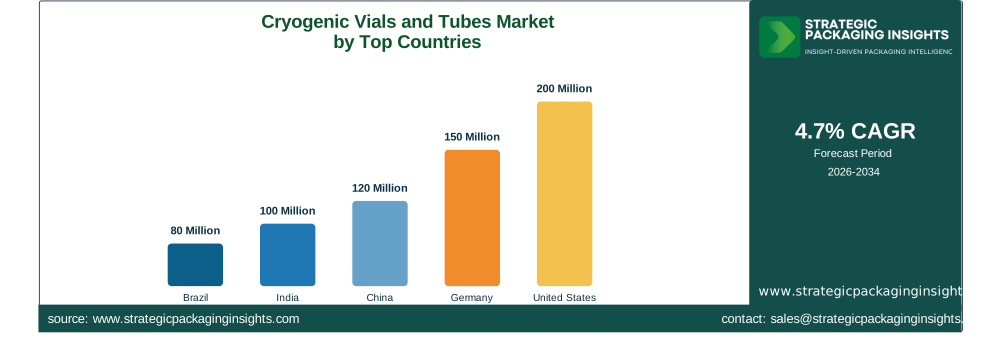
Germany is another key player in the Cryogenic Vials and Tubes market, with a strong focus on innovation and quality. The country's well-established pharmaceutical and biotechnology sectors drive the demand for cryogenic storage solutions. Germany's market is characterized by a high level of technological advancement and a strong emphasis on research and development. The market is projected to grow at a CAGR of 4%, with a market size of around $150 million.
China is emerging as a significant market for Cryogenic Vials and Tubes, driven by the rapid expansion of its healthcare infrastructure and increasing investments in biopharmaceuticals. The country's growing focus on personalized medicine and biobanking services is expected to drive market growth. China's market is projected to grow at a CAGR of 6%, with a market size of approximately $120 million.
India is also witnessing significant growth in the Cryogenic Vials and Tubes market, fueled by the increasing demand for advanced healthcare solutions and the expansion of biobanking services. The country's growing pharmaceutical and biotechnology sectors contribute to market growth. India's market is expected to grow at a CAGR of 7%, with a market size of around $100 million.
Brazil is another important market for Cryogenic Vials and Tubes, driven by the increasing demand for biobanking services and the expansion of healthcare infrastructure. The country's focus on research and development and the adoption of advanced technologies contribute to market growth. Brazil's market is projected to grow at a CAGR of 5%, with a market size of approximately $80 million.
Cryogenic Vials and Tubes Market Segments Insights

Product Type Analysis
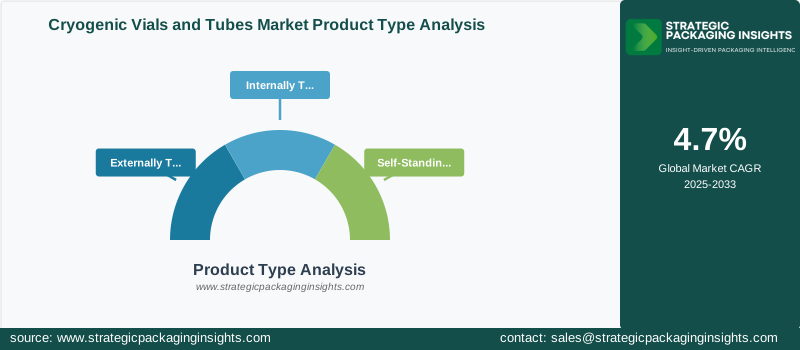
The Cryogenic Vials and Tubes market is segmented by product type into externally threaded vials, internally threaded vials, and self-standing vials. Externally threaded vials are preferred for their ease of handling and reduced risk of contamination, making them a popular choice in laboratories and biobanks. Internally threaded vials offer enhanced sealing capabilities, providing an extra layer of protection for sensitive samples. Self-standing vials are designed for stability and ease of use, particularly in high-throughput environments. The demand for these products is driven by the need for reliable and secure storage solutions in various applications, including cell storage, biobanking, and research.
The market for externally threaded vials is expected to grow significantly due to their widespread adoption in biobanking and research applications. These vials offer a cost-effective solution for secure sample storage, making them an attractive option for end-users. Internally threaded vials are gaining popularity due to their superior sealing capabilities, which are crucial for maintaining sample integrity. Self-standing vials are increasingly being used in high-throughput environments, where stability and ease of use are essential. The growing demand for these products is driven by the increasing focus on personalized medicine and the expansion of biopharmaceuticals.
Capacity Analysis
The Cryogenic Vials and Tubes market is segmented by capacity into below 1 ml, 1-2 ml, and above 2 ml. Vials with a capacity below 1 ml are commonly used for storing small sample volumes, making them ideal for applications such as cell storage and diagnostics. Vials with a capacity of 1-2 ml are widely used in biobanking and research applications, where larger sample volumes are required. Vials with a capacity above 2 ml are used for storing bulk samples, making them suitable for high-volume applications in laboratories and biobanks.
The demand for vials with a capacity of 1-2 ml is expected to grow significantly due to their widespread use in biobanking and research applications. These vials offer a versatile solution for storing a wide range of sample volumes, making them an attractive option for end-users. Vials with a capacity below 1 ml are gaining popularity due to their suitability for small sample volumes, which are increasingly being used in personalized medicine and diagnostics. Vials with a capacity above 2 ml are being used in high-volume applications, where bulk sample storage is required. The growing demand for these products is driven by the increasing focus on research and development in the pharmaceutical and biotechnology sectors.
Application Analysis
The Cryogenic Vials and Tubes market is segmented by application into cell storage, biobanking, research, and diagnostics. Cell storage is a key application area, driven by the increasing demand for secure and reliable storage solutions for biological samples. Biobanking is another significant application, with the growing trend of outsourcing biobanking services to specialized providers driving market growth. Research applications are also contributing to market expansion, with the increasing focus on personalized medicine and the development of new therapies.
The demand for cryogenic vials and tubes in cell storage applications is expected to grow significantly due to the increasing focus on personalized medicine and the expansion of biopharmaceuticals. Biobanking applications are also driving market growth, with the growing trend of outsourcing biobanking services to specialized providers. Research applications are contributing to market expansion, with the increasing focus on personalized medicine and the development of new therapies. The growing demand for these products is driven by the need for reliable and secure storage solutions in various applications, including cell storage, biobanking, and research.
End Use Analysis
The Cryogenic Vials and Tubes market is segmented by end use into labs, biobanks, pharma, and hospitals. Labs are a key end-user segment, driven by the increasing demand for secure and reliable storage solutions for biological samples. Biobanks are another significant end-user segment, with the growing trend of outsourcing biobanking services to specialized providers driving market growth. Pharma companies are also contributing to market expansion, with the increasing focus on personalized medicine and the development of new therapies.
The demand for cryogenic vials and tubes in labs is expected to grow significantly due to the increasing focus on research and development in the pharmaceutical and biotechnology sectors. Biobanks are also driving market growth, with the growing trend of outsourcing biobanking services to specialized providers. Pharma companies are contributing to market expansion, with the increasing focus on personalized medicine and the development of new therapies. Hospitals are also a key end-user segment, with the increasing demand for advanced healthcare solutions driving market growth. The growing demand for these products is driven by the need for reliable and secure storage solutions in various end-use applications.
Cryogenic Vials and Tubes Market Segments
The Cryogenic Vials and Tubes market has been segmented on the basis ofProduct Type
- Externally Threaded Vials
- Internally Threaded Vials
- Self-Standing Vials
Capacity
- Below 1 ml
- 1–2 ml
- Above 2 ml
Application
- Cell Storage
- Biobanking
- Research
- Diagnostics
End Use
- Labs
- Biobanks
- Pharma
- Hospitals
Region
- Asia Pacific
- North America
- Latin America
- Europe
- Middle East & Africa




