


Cryogenic Vial Market Outlook
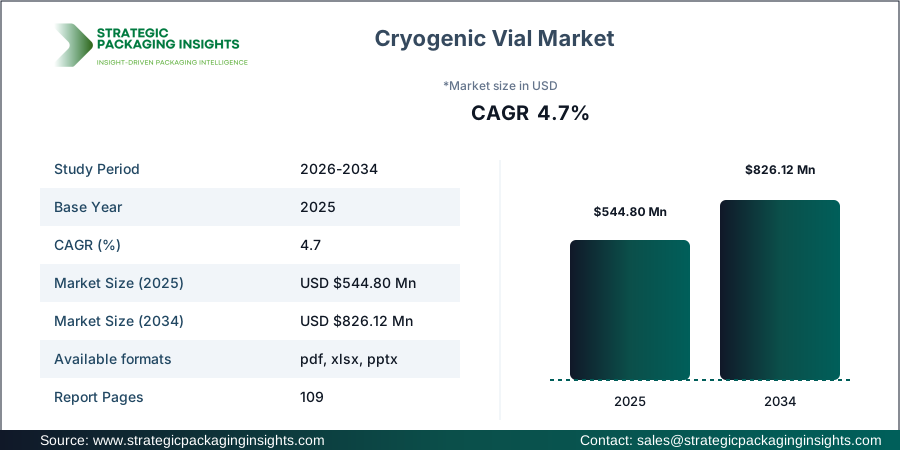
The Cryogenic Vial market was valued at $544.80 million in 2025 and is projected to reach $826.12 million by 2034, growing at a CAGR of 4.7% during the forecast period 2026-2034. This market is driven by the increasing demand for secure and efficient storage solutions in biobanking and research applications. The rise in chronic diseases and the subsequent need for advanced diagnostic and therapeutic solutions have further fueled the demand for cryogenic vials. Additionally, the growing investments in healthcare infrastructure and the expansion of biopharmaceutical industries are expected to bolster market growth. The market is also witnessing technological advancements in vial design and materials, enhancing their durability and compatibility with various storage conditions.
However, the market faces challenges such as stringent regulatory requirements and the high cost of cryogenic storage solutions, which may hinder growth to some extent. Despite these challenges, the market holds significant growth potential due to the increasing focus on personalized medicine and the rising trend of biobanking for future medical research. The development of eco-friendly and sustainable vial materials is also expected to create new opportunities for market players. As the demand for cryogenic vials continues to rise, manufacturers are focusing on expanding their product portfolios and enhancing their distribution networks to cater to a broader customer base.
Report Scope
| Attributes | Details |
| Report Title | Cryogenic Vial Market Size, Future Growth and Forecast 2034 |
| Product Type | Externally Threaded Vials, Internally Threaded Vials, Self-Standing Vials |
| Capacity | Below 1 ml, 1–2 ml, Above 2 ml |
| Application | Cell Storage, Biobanking, Research, Diagnostics |
| End Use | Labs, Biobanks, Pharma, Hospitals |
| Region | Asia Pacific, North America, Latin America, Europe, Middle East & Africa |
| Base Year | 2025 |
| Historic Period | 2018-2024 |
| Forecast Period | 2026-2034 |
| Number of Pages | 109 |
| Customization Available | Yes* |
Opportunities & Threats
The Cryogenic Vial market presents numerous opportunities, particularly in the realm of personalized medicine and biobanking. As healthcare systems worldwide shift towards more personalized treatment approaches, the demand for cryogenic vials is expected to surge. These vials are essential for storing biological samples at ultra-low temperatures, preserving their integrity for future analysis and treatment development. Additionally, the increasing prevalence of chronic diseases and the growing emphasis on early diagnosis and treatment are driving the need for advanced storage solutions, further boosting market growth. The expansion of biopharmaceutical industries and the rise in research activities related to cell and gene therapies also present lucrative opportunities for market players.
Another significant opportunity lies in the development of eco-friendly and sustainable cryogenic vial materials. With the growing awareness of environmental issues and the push for sustainable practices, manufacturers are focusing on creating vials that are not only effective in preserving samples but also environmentally friendly. This trend is expected to open new avenues for innovation and product development in the market. Furthermore, the increasing investments in healthcare infrastructure, particularly in emerging economies, are likely to create additional growth opportunities for the Cryogenic Vial market.
Despite the promising opportunities, the market faces certain threats that could impede its growth. One of the primary challenges is the stringent regulatory landscape governing the production and use of cryogenic vials. Compliance with these regulations can be complex and costly, posing a barrier for new entrants and smaller players in the market. Additionally, the high cost of cryogenic storage solutions may limit their adoption, particularly in cost-sensitive regions. The market also faces competition from alternative storage solutions, which could impact the demand for cryogenic vials.
Drivers & Challenges
The Cryogenic Vial market is primarily driven by the increasing demand for secure and efficient storage solutions in the healthcare and research sectors. The rise in chronic diseases and the subsequent need for advanced diagnostic and therapeutic solutions have significantly contributed to the market's growth. Cryogenic vials play a crucial role in preserving biological samples at ultra-low temperatures, ensuring their integrity for future analysis and treatment development. Additionally, the growing investments in healthcare infrastructure and the expansion of biopharmaceutical industries are expected to bolster market growth. The market is also witnessing technological advancements in vial design and materials, enhancing their durability and compatibility with various storage conditions.
Another key driver of the Cryogenic Vial market is the increasing focus on personalized medicine and biobanking. As healthcare systems worldwide shift towards more personalized treatment approaches, the demand for cryogenic vials is expected to surge. These vials are essential for storing biological samples at ultra-low temperatures, preserving their integrity for future analysis and treatment development. The expansion of biopharmaceutical industries and the rise in research activities related to cell and gene therapies also present lucrative opportunities for market players. Furthermore, the increasing investments in healthcare infrastructure, particularly in emerging economies, are likely to create additional growth opportunities for the Cryogenic Vial market.
Despite the promising growth drivers, the Cryogenic Vial market faces several challenges that could impede its growth. One of the primary challenges is the stringent regulatory landscape governing the production and use of cryogenic vials. Compliance with these regulations can be complex and costly, posing a barrier for new entrants and smaller players in the market. Additionally, the high cost of cryogenic storage solutions may limit their adoption, particularly in cost-sensitive regions. The market also faces competition from alternative storage solutions, which could impact the demand for cryogenic vials. Manufacturers need to focus on innovation and cost-effective solutions to overcome these challenges and maintain their competitive edge in the market.
Market Share Analysis
The Cryogenic Vial market is characterized by a competitive landscape with several key players striving to maintain their market positions. Companies such as Thermo Fisher Scientific, Corning, DWK Life Sciences, Greiner Bio-One, Sarstedt, Eppendorf, Nunc, Azenta Life Sciences, BioLife Solutions, and Globe Scientific are prominent players in this market. These companies are focusing on expanding their product portfolios, enhancing their distribution networks, and investing in research and development to gain a competitive edge. The market is witnessing strategic collaborations, mergers, and acquisitions as companies aim to strengthen their market presence and expand their customer base.
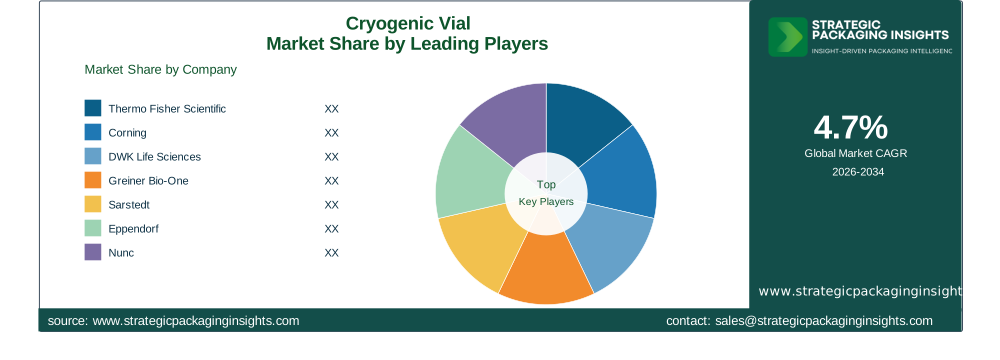
Thermo Fisher Scientific holds a significant share in the Cryogenic Vial market, leveraging its extensive product portfolio and strong distribution network. The company is known for its innovative solutions and commitment to quality, making it a preferred choice among customers. Corning, another major player, is recognized for its advanced vial designs and materials, which enhance the durability and compatibility of its products. DWK Life Sciences and Greiner Bio-One are also key players, offering a wide range of cryogenic vials that cater to various applications in the healthcare and research sectors.
Sarstedt and Eppendorf are renowned for their high-quality cryogenic vials, which are widely used in laboratories and biobanks. These companies focus on continuous innovation and product development to meet the evolving needs of their customers. Nunc, a subsidiary of Thermo Fisher Scientific, is known for its reliable and efficient cryogenic storage solutions, further strengthening the company's market position. Azenta Life Sciences and BioLife Solutions are also notable players, offering specialized cryogenic vials for biobanking and research applications.
Globe Scientific is another key player in the Cryogenic Vial market, known for its cost-effective and reliable storage solutions. The company focuses on expanding its product offerings and enhancing its distribution network to reach a broader customer base. Overall, the competitive landscape of the Cryogenic Vial market is dynamic, with companies continuously striving to innovate and improve their products to meet the growing demand for advanced storage solutions.
Key Highlights
- The Cryogenic Vial market is projected to grow at a CAGR of 4.7% from 2026 to 2034.
- Increasing demand for personalized medicine and biobanking is driving market growth.
- Technological advancements in vial design and materials are enhancing product durability.
- Stringent regulatory requirements pose a challenge for market players.
- Eco-friendly and sustainable vial materials are emerging as a key trend.
- North America holds a significant share in the Cryogenic Vial market.
- Key players are focusing on expanding their product portfolios and distribution networks.
- High cost of cryogenic storage solutions may limit market adoption.
- Emerging economies present lucrative growth opportunities for market players.
- Strategic collaborations and mergers are shaping the competitive landscape.
Top Countries Insights
In the Cryogenic Vial market, the United States holds a prominent position, with a market size of approximately $200 million and a CAGR of 5%. The country's advanced healthcare infrastructure and significant investments in research and development are key growth drivers. The increasing focus on personalized medicine and biobanking further boosts the demand for cryogenic vials. However, stringent regulatory requirements and high costs pose challenges for market players.
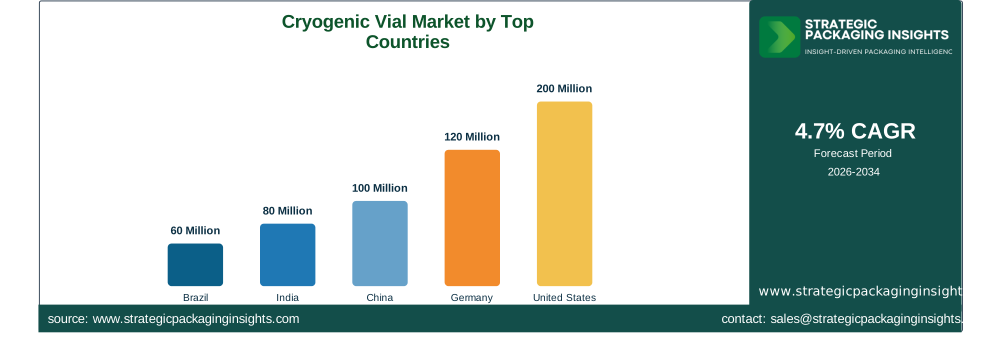
Germany is another key market, with a market size of around $120 million and a CAGR of 4%. The country's strong presence in the biopharmaceutical industry and emphasis on research and innovation drive the demand for cryogenic vials. The development of eco-friendly vial materials is a notable trend in the German market, aligning with the country's focus on sustainability.
China is experiencing rapid growth in the Cryogenic Vial market, with a market size of approximately $100 million and a CAGR of 7%. The country's expanding healthcare infrastructure and increasing investments in biopharmaceuticals are significant growth drivers. The rising prevalence of chronic diseases and the growing emphasis on early diagnosis and treatment further fuel market growth.
India is also witnessing significant growth, with a market size of around $80 million and a CAGR of 6%. The country's growing healthcare sector and increasing focus on research and development are key drivers. The demand for cryogenic vials is further boosted by the rising trend of biobanking and personalized medicine.
Brazil is a notable market in Latin America, with a market size of approximately $60 million and a CAGR of 5%. The country's expanding healthcare infrastructure and increasing investments in research and development drive the demand for cryogenic vials. However, economic challenges and regulatory complexities pose challenges for market players.
Cryogenic Vial Market Segments Insights

Product Type Analysis
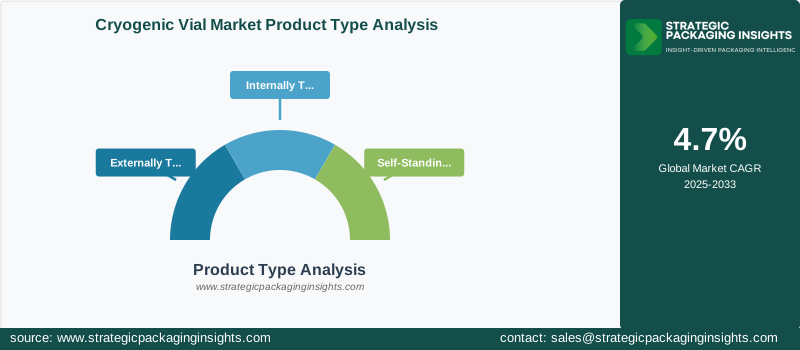
The Cryogenic Vial market is segmented by product type into externally threaded vials, internally threaded vials, and self-standing vials. Externally threaded vials are preferred for their ease of handling and secure sealing, making them suitable for various applications in laboratories and biobanks. Internally threaded vials offer enhanced sealing capabilities, reducing the risk of contamination and ensuring sample integrity. Self-standing vials are designed for stability and ease of use, particularly in high-throughput environments. The demand for these vials is driven by their versatility and compatibility with automated systems, which are increasingly used in research and diagnostic applications.
Technological advancements in vial design and materials are enhancing the durability and performance of cryogenic vials, further driving their adoption. Manufacturers are focusing on developing vials with improved sealing mechanisms and resistance to extreme temperatures, ensuring the safe storage of biological samples. The increasing emphasis on personalized medicine and biobanking is also boosting the demand for cryogenic vials, as these applications require reliable and efficient storage solutions. The market is witnessing a trend towards the development of eco-friendly and sustainable vial materials, aligning with the growing focus on environmental sustainability.
Capacity Analysis
The Cryogenic Vial market is segmented by capacity into below 1 ml, 1-2 ml, and above 2 ml. Vials with a capacity of 1-2 ml are the most commonly used, as they offer a balance between sample volume and storage efficiency. These vials are widely used in research and diagnostic applications, where precise sample measurements are crucial. Vials with a capacity below 1 ml are preferred for applications requiring smaller sample volumes, such as cell storage and biobanking. Vials with a capacity above 2 ml are used for storing larger sample volumes, particularly in pharmaceutical and clinical research applications.
The demand for cryogenic vials across different capacities is driven by the increasing need for secure and efficient storage solutions in the healthcare and research sectors. The rise in chronic diseases and the subsequent need for advanced diagnostic and therapeutic solutions have significantly contributed to the market's growth. Manufacturers are focusing on expanding their product portfolios to cater to the diverse needs of their customers, offering vials in various capacities and designs. The market is also witnessing a trend towards the development of vials with enhanced sealing mechanisms and resistance to extreme temperatures, ensuring the safe storage of biological samples.
Application Analysis
The Cryogenic Vial market is segmented by application into cell storage, biobanking, research, and diagnostics. Biobanking is a major application segment, driven by the increasing focus on personalized medicine and the need for secure storage of biological samples. Cryogenic vials are essential for preserving the integrity of samples at ultra-low temperatures, ensuring their viability for future analysis and treatment development. The rise in research activities related to cell and gene therapies is also boosting the demand for cryogenic vials, as these applications require reliable and efficient storage solutions.
In the diagnostics segment, cryogenic vials are used for storing samples for various diagnostic tests, including molecular and genetic testing. The increasing prevalence of chronic diseases and the growing emphasis on early diagnosis and treatment are driving the demand for advanced storage solutions in this segment. The market is witnessing a trend towards the development of vials with enhanced sealing mechanisms and resistance to extreme temperatures, ensuring the safe storage of biological samples. Manufacturers are focusing on expanding their product portfolios to cater to the diverse needs of their customers, offering vials in various capacities and designs.
End Use Analysis
The Cryogenic Vial market is segmented by end use into labs, biobanks, pharma, and hospitals. Labs and biobanks are the primary end users of cryogenic vials, driven by the increasing demand for secure and efficient storage solutions in research and diagnostic applications. The rise in chronic diseases and the subsequent need for advanced diagnostic and therapeutic solutions have significantly contributed to the market's growth. Cryogenic vials play a crucial role in preserving biological samples at ultra-low temperatures, ensuring their integrity for future analysis and treatment development.
In the pharmaceutical sector, cryogenic vials are used for storing samples for various research and development activities, including drug discovery and clinical trials. The increasing investments in biopharmaceutical industries and the expansion of healthcare infrastructure are expected to bolster market growth in this segment. Hospitals also use cryogenic vials for storing samples for various diagnostic tests, including molecular and genetic testing. The market is witnessing a trend towards the development of vials with enhanced sealing mechanisms and resistance to extreme temperatures, ensuring the safe storage of biological samples. Manufacturers are focusing on expanding their product portfolios to cater to the diverse needs of their customers, offering vials in various capacities and designs.
Cryogenic Vial Market Segments
The Cryogenic Vial market has been segmented on the basis ofProduct Type
- Externally Threaded Vials
- Internally Threaded Vials
- Self-Standing Vials
Capacity
- Below 1 ml
- 1–2 ml
- Above 2 ml
Application
- Cell Storage
- Biobanking
- Research
- Diagnostics
End Use
- Labs
- Biobanks
- Pharma
- Hospitals
Region
- Asia Pacific
- North America
- Latin America
- Europe
- Middle East & Africa




