


Cryoboxes Market Outlook
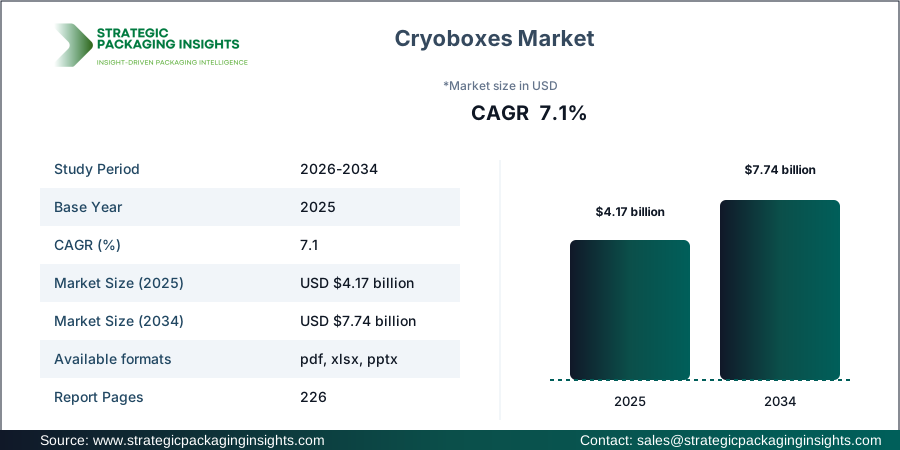
The cryoboxes market was valued at $4.17 billion in 2025 and is projected to reach $7.74 billion by 2034, growing at a CAGR of 7.1% during the forecast period 2026-2034. This growth is driven by the increasing demand for efficient and reliable storage solutions in biobanking, cell storage, and vaccine storage applications. The rise in research activities, particularly in the fields of biotechnology and pharmaceuticals, has significantly contributed to the market's expansion. Additionally, the growing emphasis on personalized medicine and the need for advanced storage solutions in research labs and hospitals are further propelling the market forward. The adoption of cryoboxes is also being fueled by advancements in material technology, which enhance the durability and efficiency of these storage solutions.
Despite the promising growth prospects, the cryoboxes market faces certain challenges that could hinder its expansion. Regulatory constraints and stringent quality standards imposed by healthcare authorities can pose significant barriers to market entry for new players. Moreover, the high cost associated with advanced cryoboxes, particularly those made from stainless steel and polycarbonate, may limit their adoption among cost-sensitive end-users. However, the market holds substantial growth potential, driven by the increasing focus on biobanking and the rising demand for cryogenic storage solutions in emerging economies. As the healthcare and biopharmaceutical sectors continue to evolve, the cryoboxes market is expected to witness sustained growth, supported by ongoing innovations and strategic collaborations among key industry players.
Report Scope
| Attributes | Details |
| Report Title | Cryoboxes Market Size, Future Growth and Forecast 2034 |
| Material Type | Polypropylene, Polycarbonate, Cardboard, Stainless Steel |
| Storage Type | Freezer Boxes, Cryogenic Boxes, Microtube Boxes, Slide Boxes |
| Application | Biobanking, Cell Storage, Vaccine Storage, Laboratory Samples |
| End Use | Research Labs, Hospitals, Biopharma Companies, Cryobanks |
| Region | Asia Pacific, North America, Latin America, Europe, Middle East & Africa |
| Base Year | 2025 |
| Historic Period | 2018-2024 |
| Forecast Period | 2026-2034 |
| Number of Pages | 226 |
| Customization Available | Yes* |
Opportunities & Threats
The cryoboxes market presents numerous opportunities for growth, particularly in the realm of biobanking and personalized medicine. As the demand for personalized treatments increases, so does the need for efficient storage solutions that can preserve biological samples at ultra-low temperatures. This trend is expected to drive the adoption of cryoboxes, especially in research labs and biopharma companies. Additionally, the growing focus on vaccine storage, driven by global vaccination campaigns and the need for effective cold chain solutions, offers significant growth potential for the market. The development of innovative cryobox designs that enhance storage efficiency and ease of use is also likely to create new opportunities for market players.
Another opportunity lies in the expansion of cryogenic storage solutions in emerging markets. As healthcare infrastructure improves in regions such as Asia Pacific and Latin America, the demand for advanced storage solutions is expected to rise. This presents a lucrative opportunity for cryobox manufacturers to expand their presence in these regions. Furthermore, the increasing investment in research and development activities, particularly in the fields of genomics and proteomics, is likely to boost the demand for cryoboxes, as these applications require reliable storage solutions for biological samples.
However, the cryoboxes market also faces certain threats that could impact its growth trajectory. One of the primary challenges is the stringent regulatory environment governing the storage of biological samples. Compliance with these regulations can be complex and costly, particularly for smaller market players. Additionally, the high cost of advanced cryoboxes, coupled with the availability of alternative storage solutions, may limit their adoption among cost-sensitive end-users. The market also faces competition from other storage technologies, such as automated storage systems, which offer enhanced efficiency and convenience. These factors could pose significant challenges to the growth of the cryoboxes market in the coming years.
Drivers & Challenges
The cryoboxes market is primarily driven by the increasing demand for efficient storage solutions in the healthcare and biopharmaceutical sectors. The rise in research activities, particularly in the fields of biotechnology and pharmaceuticals, has significantly contributed to the market's expansion. As research labs and biopharma companies continue to invest in advanced storage solutions, the demand for cryoboxes is expected to grow. Additionally, the growing emphasis on personalized medicine and the need for reliable storage solutions for biological samples are further propelling the market forward. The adoption of cryoboxes is also being fueled by advancements in material technology, which enhance the durability and efficiency of these storage solutions.
Another key driver of the cryoboxes market is the increasing focus on vaccine storage. With global vaccination campaigns underway, there is a growing need for effective cold chain solutions that can preserve vaccines at ultra-low temperatures. Cryoboxes offer an ideal solution for this purpose, as they provide reliable and efficient storage for vaccines. The development of innovative cryobox designs that enhance storage efficiency and ease of use is also likely to drive market growth. Furthermore, the expansion of cryogenic storage solutions in emerging markets presents a lucrative opportunity for cryobox manufacturers to expand their presence in these regions.
Despite the promising growth prospects, the cryoboxes market faces certain challenges that could hinder its expansion. One of the primary challenges is the stringent regulatory environment governing the storage of biological samples. Compliance with these regulations can be complex and costly, particularly for smaller market players. Additionally, the high cost of advanced cryoboxes, particularly those made from stainless steel and polycarbonate, may limit their adoption among cost-sensitive end-users. The market also faces competition from other storage technologies, such as automated storage systems, which offer enhanced efficiency and convenience. These factors could pose significant challenges to the growth of the cryoboxes market in the coming years.
Market Share Analysis
The cryoboxes market is characterized by a competitive landscape with several key players vying for market share. Among the leading companies in this market are Thermo Fisher Scientific, Corning, Eppendorf, Azenta Life Sciences, Greiner Bio-One, Sarstedt, Heathrow Scientific, DWK Life Sciences, BRAND, and VWR International. These companies are at the forefront of innovation, continuously developing new products and solutions to meet the evolving needs of the market. Their strong focus on research and development, coupled with strategic collaborations and partnerships, has enabled them to maintain a competitive edge in the market.
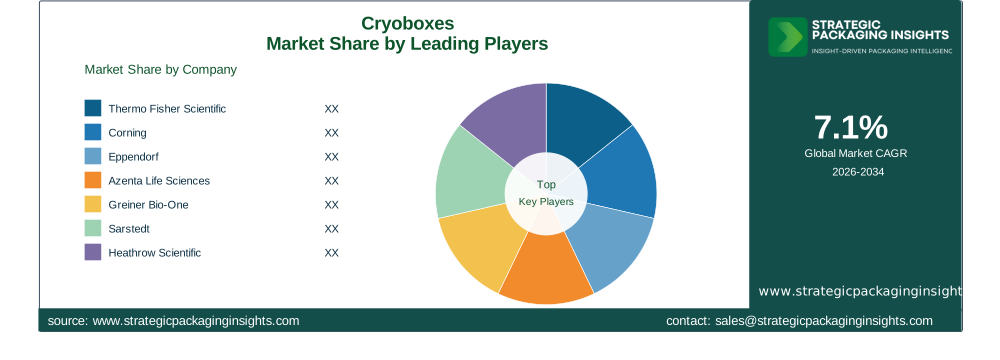
Thermo Fisher Scientific is a prominent player in the cryoboxes market, known for its extensive product portfolio and strong global presence. The company offers a wide range of cryoboxes designed for various applications, including biobanking, cell storage, and vaccine storage. Corning, another key player, is renowned for its innovative storage solutions and commitment to quality. The company's cryoboxes are widely used in research labs and biopharma companies, owing to their durability and efficiency.
Eppendorf is a leading provider of cryoboxes, offering a diverse range of products that cater to the needs of the healthcare and biopharmaceutical sectors. The company's focus on customer-centric solutions and continuous product innovation has helped it establish a strong foothold in the market. Azenta Life Sciences, formerly known as Brooks Life Sciences, is another major player in the cryoboxes market. The company is known for its advanced storage solutions and commitment to sustainability, which have contributed to its growing market share.
Greiner Bio-One and Sarstedt are also significant players in the cryoboxes market, offering a wide range of storage solutions for various applications. These companies have a strong focus on quality and innovation, which has enabled them to maintain a competitive position in the market. Heathrow Scientific, DWK Life Sciences, BRAND, and VWR International are other notable players in the market, each offering unique products and solutions that cater to the diverse needs of the market. The competitive landscape of the cryoboxes market is expected to remain dynamic, with companies continuing to invest in research and development to enhance their product offerings and expand their market presence.
Key Highlights
- The cryoboxes market is projected to grow from $4.17 billion in 2025 to $7.74 billion by 2034, at a CAGR of 7.1%.
- Key drivers include the increasing demand for biobanking, personalized medicine, and vaccine storage solutions.
- Regulatory constraints and high costs of advanced cryoboxes pose significant challenges to market growth.
- Emerging markets in Asia Pacific and Latin America offer lucrative growth opportunities for cryobox manufacturers.
- Thermo Fisher Scientific, Corning, and Eppendorf are among the leading players in the cryoboxes market.
- Innovations in material technology are enhancing the durability and efficiency of cryoboxes.
- The market faces competition from alternative storage technologies, such as automated storage systems.
- Strategic collaborations and partnerships are key strategies adopted by market players to enhance their market presence.
- The growing focus on sustainability is driving the development of eco-friendly cryobox solutions.
- Advancements in cryogenic storage solutions are expected to drive market growth in the coming years.
Top Countries Insights
In the cryoboxes market, the United States stands out as a leading country, with a market size of approximately $1.2 billion and a CAGR of 6%. The country's strong focus on research and development, coupled with a well-established healthcare infrastructure, drives the demand for advanced storage solutions. The presence of key market players and the increasing investment in biobanking and personalized medicine further contribute to the market's growth in the United States.
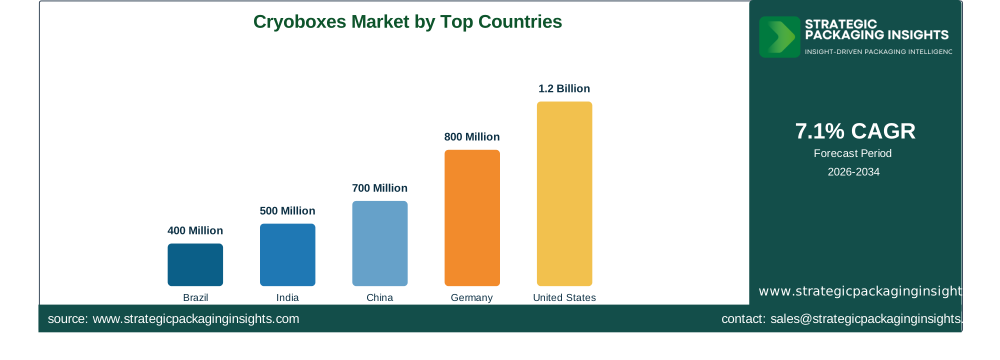
Germany is another significant player in the cryoboxes market, with a market size of around $800 million and a CAGR of 5%. The country's robust pharmaceutical industry and strong emphasis on quality and innovation drive the demand for cryoboxes. Additionally, Germany's focus on sustainability and eco-friendly solutions is expected to boost the adoption of advanced cryoboxes in the coming years.
China is emerging as a key market for cryoboxes, with a market size of approximately $700 million and a CAGR of 8%. The country's rapidly growing healthcare sector and increasing investment in research and development activities are driving the demand for efficient storage solutions. The government's focus on improving healthcare infrastructure and promoting biobanking initiatives further supports the market's growth in China.
India is also witnessing significant growth in the cryoboxes market, with a market size of around $500 million and a CAGR of 9%. The country's expanding biopharmaceutical industry and increasing focus on vaccine storage solutions are key drivers of market growth. Additionally, the government's initiatives to enhance healthcare infrastructure and promote research activities are expected to boost the demand for cryoboxes in India.
Brazil is another important market for cryoboxes, with a market size of approximately $400 million and a CAGR of 7%. The country's growing healthcare sector and increasing investment in research and development activities are driving the demand for advanced storage solutions. The government's focus on improving healthcare infrastructure and promoting biobanking initiatives further supports the market's growth in Brazil.
Cryoboxes Market Segments Insights

Material Type Analysis
The material type segment of the cryoboxes market is crucial, as it determines the durability and efficiency of the storage solutions. Polypropylene and polycarbonate are the most commonly used materials, owing to their excellent thermal resistance and durability. Polypropylene cryoboxes are favored for their cost-effectiveness and lightweight properties, making them ideal for large-scale storage applications. On the other hand, polycarbonate cryoboxes are preferred for their superior strength and clarity, which allow for easy identification of stored samples. Cardboard cryoboxes, while less durable, offer an eco-friendly alternative for short-term storage needs. Stainless steel cryoboxes, though more expensive, provide unmatched durability and are ideal for long-term storage in harsh environments.
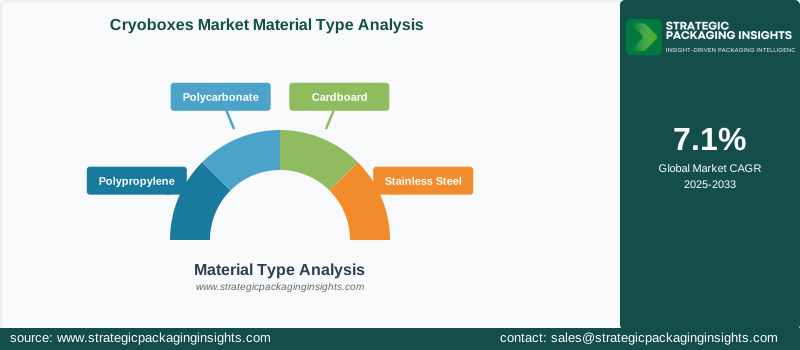
The demand for polypropylene and polycarbonate cryoboxes is expected to remain strong, driven by their widespread use in research labs and biopharma companies. The growing focus on sustainability is also likely to boost the adoption of eco-friendly cardboard cryoboxes. However, the high cost of stainless steel cryoboxes may limit their adoption among cost-sensitive end-users. As material technology continues to advance, manufacturers are likely to develop innovative cryobox designs that enhance storage efficiency and ease of use, further driving the growth of this segment.
Storage Type Analysis
The storage type segment of the cryoboxes market is diverse, catering to various storage needs across different applications. Freezer boxes are the most commonly used storage type, owing to their ability to maintain ultra-low temperatures for extended periods. Cryogenic boxes, designed for storage at extremely low temperatures, are gaining popularity in biobanking and vaccine storage applications. Microtube boxes, which offer compact storage solutions for small samples, are widely used in research labs and biopharma companies. Slide boxes, though less common, provide specialized storage solutions for microscope slides and other flat samples.
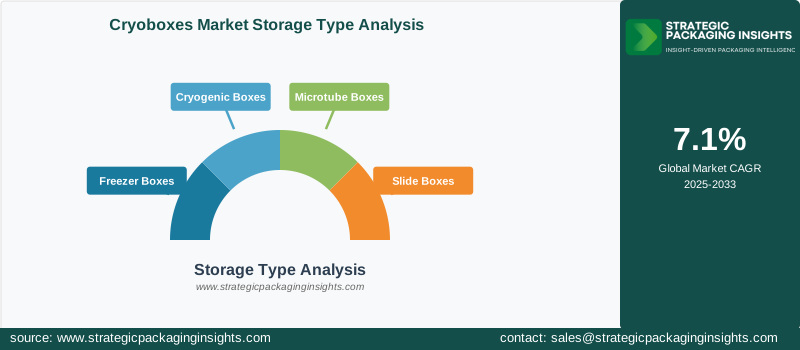
The demand for freezer and cryogenic boxes is expected to remain strong, driven by the increasing focus on biobanking and vaccine storage. The growing emphasis on personalized medicine and the need for reliable storage solutions for biological samples are also likely to boost the adoption of microtube boxes. As the healthcare and biopharmaceutical sectors continue to evolve, manufacturers are likely to develop innovative storage solutions that cater to the diverse needs of the market, further driving the growth of this segment.
Application Analysis
The application segment of the cryoboxes market is driven by the increasing demand for efficient storage solutions in biobanking, cell storage, and vaccine storage applications. Biobanking, which involves the collection and preservation of biological samples for research purposes, is a major driver of the cryoboxes market. The growing focus on personalized medicine and the need for reliable storage solutions for biological samples are further propelling the market forward. Cell storage, which involves the preservation of cells for research and therapeutic purposes, is another key application driving the demand for cryoboxes.
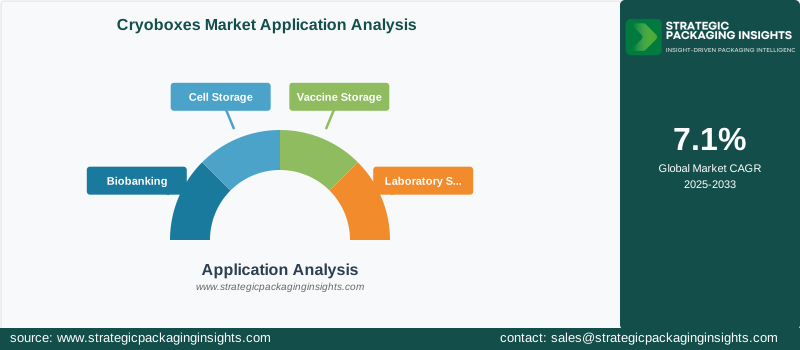
Vaccine storage, driven by global vaccination campaigns and the need for effective cold chain solutions, is expected to witness significant growth in the coming years. The development of innovative cryobox designs that enhance storage efficiency and ease of use is also likely to drive market growth. As the healthcare and biopharmaceutical sectors continue to evolve, the demand for cryoboxes in laboratory samples and other applications is expected to increase, further driving the growth of this segment.
End Use Analysis
The end-use segment of the cryoboxes market is diverse, catering to various storage needs across different sectors. Research labs and biopharma companies are the primary end-users of cryoboxes, owing to their extensive use in research and development activities. The growing focus on personalized medicine and the need for reliable storage solutions for biological samples are further propelling the market forward. Hospitals, which require efficient storage solutions for vaccines and other biological samples, are also significant end-users of cryoboxes.
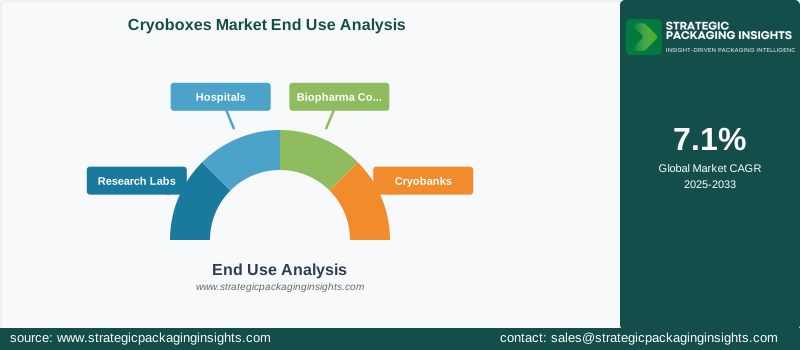
Cryobanks, which specialize in the storage of biological samples for research and therapeutic purposes, are another key end-user driving the demand for cryoboxes. The increasing investment in biobanking and the growing emphasis on personalized medicine are expected to boost the demand for cryoboxes in cryobanks. As the healthcare and biopharmaceutical sectors continue to evolve, the demand for cryoboxes in other end-use applications is expected to increase, further driving the growth of this segment.
Cryoboxes Market Segments
The Cryoboxes market has been segmented on the basis ofMaterial Type
- Polypropylene
- Polycarbonate
- Cardboard
- Stainless Steel
Storage Type
- Freezer Boxes
- Cryogenic Boxes
- Microtube Boxes
- Slide Boxes
Application
- Biobanking
- Cell Storage
- Vaccine Storage
- Laboratory Samples
End Use
- Research Labs
- Hospitals
- Biopharma Companies
- Cryobanks
Region
- Asia Pacific
- North America
- Latin America
- Europe
- Middle East & Africa




