


Crown Closures Market Outlook
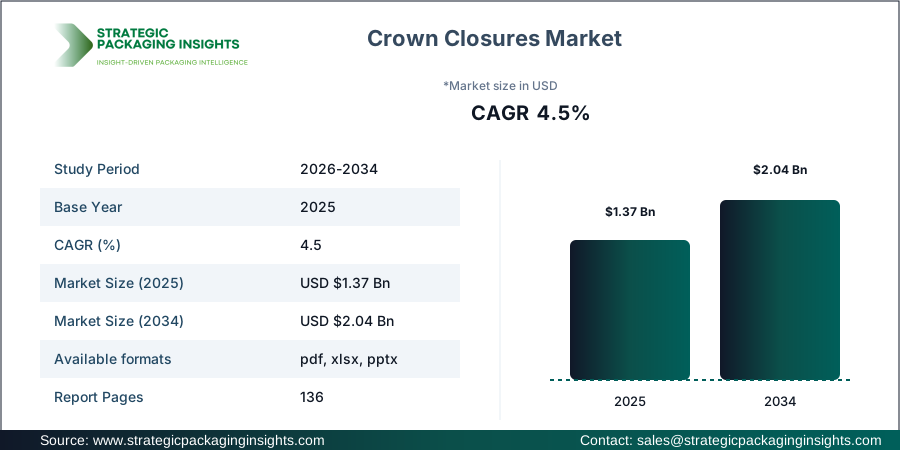
The Crown Closures market size was valued at USD 1.37 billion in 2025 and is anticipated to reach USD 2.04 billion by 2034, growing at a CAGR of 4.5% during the forecast period according to Strategic Packaging Insights. Crown Holdings, a leading player in this market, has been instrumental in driving growth through innovative product offerings and strategic partnerships. The increasing demand for beverages, particularly in emerging markets, is a significant driver for the crown closures market. As consumer preferences shift towards convenience and sustainability, the demand for efficient and eco-friendly packaging solutions like crown closures is expected to rise.
One of the most impactful drivers of the crown closures market is the growing emphasis on sustainability and eco-friendly packaging solutions. Governments and regulatory bodies worldwide are implementing stringent regulations to reduce plastic waste and promote the use of recyclable materials. This trend is encouraging manufacturers like Crown Holdings to innovate and develop closures that are not only functional but also environmentally friendly. The increasing consumer awareness and preference for sustainable packaging are further propelling the market growth, making it a lucrative opportunity for companies to invest in sustainable product development.
Report Scope
| Attributes | Details |
| Report Title | Crown Closures Market Size, Future Growth and Forecast 2034 |
| Material Type | Steel, Aluminum, Tinplate |
| Product Type | Pry-Off Crown Closures, Twist Crown Closures, Oxygen-Scavenging Crowns |
| Application | Beer, Carbonated Drinks, Mineral Water, Specialty Beverages |
| End Use | Beverage Brands, Breweries, Bottlers, Retail |
| Region | Asia Pacific, North America, Latin America, Europe, Middle East & Africa |
| Base Year | 2025 |
| Historic Period | 2018-2024 |
| Forecast Period | 2026-2034 |
| Number of Pages | 136 |
| Customization Available | Yes* |
Sustainability & Circular Economy Analysis
Sustainability initiatives are significantly shaping the crown closures market, with a strong focus on recyclable materials and eco-friendly innovations. Companies are increasingly adopting lightweight packaging solutions to reduce material usage and carbon footprint. This shift is driven by consumer demand for sustainable products and regulatory pressures to minimize environmental impact. The use of recyclable materials in crown closures not only aligns with circular economy principles but also enhances brand image and consumer loyalty.
Extended Producer Responsibility (EPR) is another critical factor influencing the market. Under EPR, manufacturers are accountable for the entire lifecycle of their products, including disposal. This responsibility encourages companies to design closures that are easier to recycle and have a lower environmental impact. As a result, investment in R&D for sustainable materials and waste reduction strategies is becoming a priority for market players.
These sustainability trends are reshaping packaging design and manufacturing processes. Companies are investing in advanced technologies to produce closures that meet regulatory standards and consumer expectations. This focus on sustainability is not only a compliance requirement but also a strategic move to enhance market competitiveness and ensure long-term growth. As the market evolves, businesses that prioritize eco-friendly practices are likely to gain a competitive edge.
Packaging Value Chain & Supply Chain Analysis
The packaging value chain for crown closures involves several critical stages, from raw material sourcing to distribution. Efficient raw material procurement is essential for maintaining cost-effectiveness and ensuring a steady supply of high-quality materials. Packaging converters and manufacturers play a pivotal role in transforming these materials into finished products, with a focus on innovation and quality control. Companies like Crown Holdings are leveraging strategic partnerships to enhance their production capabilities and expand their market reach.
Supply chain efficiency is crucial for the crown closures market, as it directly impacts production timelines and cost management. Logistics and distribution channels must be optimized to ensure timely delivery of products to brand owners and retailers. This requires robust inventory management systems and strategic localization efforts to mitigate risks associated with global sourcing. Companies are increasingly adopting digital solutions to enhance supply chain visibility and resilience.
Recycling networks are an integral part of the supply chain, supporting the circular economy by facilitating the collection and processing of used closures. This not only helps in waste reduction but also provides a source of raw materials for new products. As sustainability becomes a key market driver, companies are investing in recycling infrastructure and collaborating with stakeholders to promote closed-loop systems. These efforts are essential for maintaining market competitiveness and meeting consumer expectations for sustainable packaging solutions.
Opportunities & Threats
The crown closures market presents numerous opportunities, particularly in emerging economies where the demand for beverages is on the rise. The growing middle-class population and increasing disposable incomes are driving the consumption of packaged beverages, thereby boosting the demand for crown closures. Companies can capitalize on this trend by expanding their production capacities and enhancing their distribution networks in these regions. Additionally, the shift towards premium and specialty beverages offers opportunities for manufacturers to develop innovative closure solutions that cater to specific consumer preferences.
Technological advancements in packaging materials and manufacturing processes also present significant opportunities for market players. The development of smart closures with features like tamper-evidence and freshness indicators can enhance product appeal and consumer trust. Companies that invest in R&D to create such value-added products are likely to gain a competitive advantage. Furthermore, collaborations with beverage brands to develop customized closure solutions can strengthen market position and drive growth.
However, the market also faces certain threats, primarily from the increasing competition and fluctuating raw material prices. The entry of new players and the expansion of existing ones can intensify competition, leading to price wars and margin pressures. Additionally, the volatility in raw material prices, particularly metals like aluminum and steel, can impact production costs and profitability. Companies need to adopt strategic sourcing and pricing strategies to mitigate these risks and maintain market stability.
Drivers & Challenges
The crown closures market is driven by several key factors, including the rising demand for beverages and the growing emphasis on sustainability. The increasing consumption of carbonated drinks, beer, and specialty beverages is a major driver, as these products require reliable and efficient closure solutions. Additionally, the shift towards eco-friendly packaging is encouraging manufacturers to innovate and develop sustainable closures that meet regulatory standards and consumer expectations.
Another significant driver is the technological advancements in closure design and manufacturing. Companies are investing in advanced machinery and processes to enhance production efficiency and product quality. The development of closures with enhanced features, such as tamper-evidence and oxygen-scavenging capabilities, is also driving market growth. These innovations not only improve product safety and shelf life but also offer a competitive edge in the market.
Despite these drivers, the market faces challenges such as regulatory compliance and raw material price volatility. Stringent regulations on packaging materials and waste management require companies to invest in sustainable practices and technologies. Additionally, fluctuations in raw material prices can impact production costs and profitability. Companies need to adopt strategic sourcing and pricing strategies to mitigate these challenges and maintain market competitiveness.
Market Share Analysis
The crown closures market is characterized by a competitive landscape with several key players vying for market share. Crown Holdings, a leading company in the market, holds a significant share due to its extensive product portfolio and global presence. The company's focus on innovation and sustainability has helped it maintain a competitive edge. Pelliconi, another major player, is known for its high-quality closures and strong customer relationships, contributing to its substantial market share.
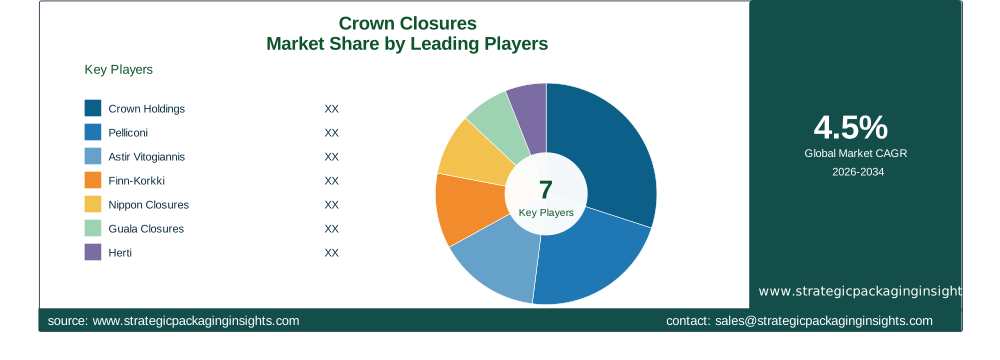
Astir Vitogiannis and Finn-Korkki are also prominent players in the market, offering a range of closure solutions for various applications. These companies have established themselves as reliable suppliers, with a focus on product quality and customer satisfaction. Nippon Closures and Guala Closures are recognized for their innovative products and strong market presence, further enhancing the competitive landscape.
Herti and Tecnocap are key players that have gained market share through strategic partnerships and expansion into new markets. Their focus on sustainability and product innovation has positioned them as leaders in the industry. Bericap and Massilly are also significant contributors to the market, known for their advanced manufacturing capabilities and commitment to quality.
Overall, the market is highly competitive, with companies focusing on product differentiation and strategic collaborations to gain a competitive advantage. The emphasis on sustainability and innovation is driving market dynamics, with players investing in R&D to develop eco-friendly and technologically advanced closure solutions. As the market continues to evolve, companies that prioritize these factors are likely to maintain and enhance their market positions.
Key Highlights
- The Crown Closures market is projected to grow from USD 1.37 billion in 2025 to USD 2.04 billion by 2034.
- Forecast CAGR of 4.5% indicates steady growth driven by demand for sustainable packaging.
- Key players include Crown Holdings, Pelliconi, and Astir Vitogiannis, known for innovation and quality.
- Emerging markets present significant growth opportunities due to rising beverage consumption.
- Technological advancements in closure design enhance product appeal and consumer trust.
- Sustainability initiatives and regulatory compliance are reshaping market dynamics.
- Strategic partnerships and R&D investments are crucial for maintaining competitive advantage.
Crown Closures Market Segments Insights

Material Type Analysis
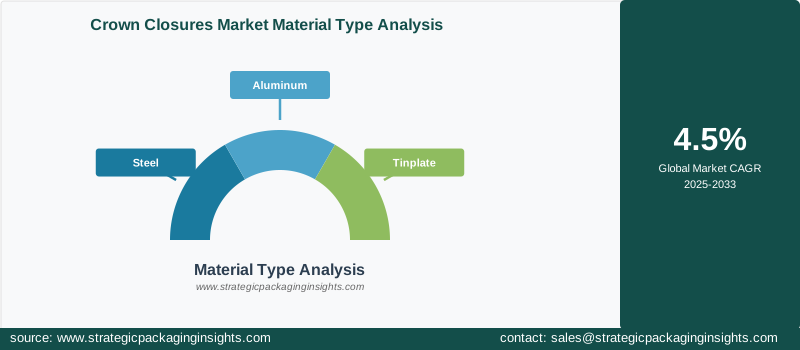
The material type segment in the crown closures market is primarily categorized into steel, aluminum, and tinplate. Steel closures are widely used due to their durability and cost-effectiveness, making them a popular choice among beverage manufacturers. Aluminum closures, on the other hand, are gaining traction due to their lightweight nature and recyclability, aligning with the growing demand for sustainable packaging solutions. Tinplate closures offer excellent corrosion resistance and are preferred for specific applications where product integrity is crucial. The choice of material is influenced by factors such as cost, sustainability, and application requirements, with manufacturers focusing on innovation to enhance material performance and meet consumer expectations.
As sustainability becomes a key market driver, the demand for recyclable materials like aluminum is expected to rise. Companies are investing in R&D to develop advanced materials that offer superior performance while minimizing environmental impact. This trend is reshaping the material type segment, with a focus on eco-friendly solutions that align with regulatory standards and consumer preferences. The competition among material suppliers is intensifying, with players striving to offer innovative and cost-effective solutions to gain a competitive edge in the market.
Product Type Analysis
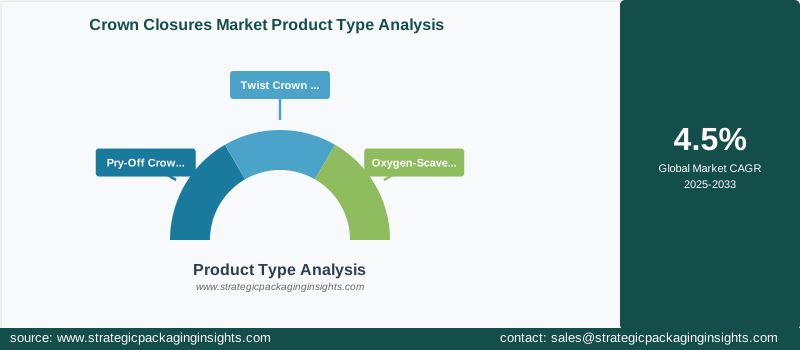
The product type segment in the crown closures market includes pry-off crown closures, twist crown closures, and oxygen-scavenging crowns. Pry-off closures are traditional and widely used in the beer industry due to their reliability and cost-effectiveness. Twist crown closures offer convenience and ease of use, making them popular for carbonated drinks and specialty beverages. Oxygen-scavenging crowns are designed to enhance product shelf life by reducing oxygen ingress, making them ideal for applications where product freshness is critical. The choice of product type is influenced by factors such as application requirements, consumer preferences, and cost considerations.
Innovation in product design is a key trend in this segment, with manufacturers focusing on developing closures that offer enhanced functionality and consumer appeal. The demand for closures with tamper-evidence and freshness indicators is rising, driven by consumer demand for product safety and quality assurance. Companies are investing in advanced manufacturing technologies to produce closures that meet these requirements, enhancing their market competitiveness. As the market evolves, the focus on product differentiation and innovation is expected to drive growth in the product type segment.
Application Analysis
The application segment of the crown closures market is dominated by beer, carbonated drinks, mineral water, and specialty beverages. Beer remains the largest application segment, driven by the global popularity of the beverage and the need for reliable closure solutions. Carbonated drinks and mineral water are also significant segments, with the demand for convenient and sustainable packaging solutions driving growth. Specialty beverages, including energy drinks and flavored waters, are gaining traction, offering opportunities for manufacturers to develop innovative closure solutions that cater to specific consumer preferences.
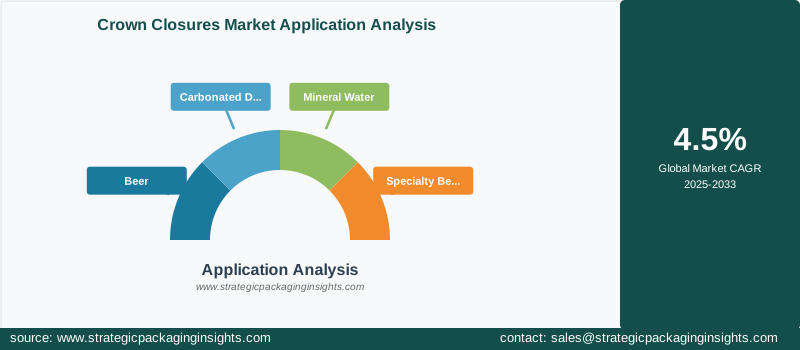
The growing demand for premium and specialty beverages is reshaping the application segment, with manufacturers focusing on developing closures that enhance product appeal and consumer experience. The emphasis on sustainability and convenience is driving innovation in closure design, with companies investing in R&D to develop solutions that meet these requirements. As consumer preferences continue to evolve, the application segment is expected to witness significant growth, offering lucrative opportunities for market players.
End Use Analysis
The end-use segment of the crown closures market includes beverage brands, breweries, bottlers, and retail. Beverage brands are the primary end-users, driving demand for closures that offer product safety, convenience, and sustainability. Breweries and bottlers are also significant end-users, with the need for reliable and cost-effective closure solutions driving market growth. The retail segment is gaining importance as consumer preferences shift towards packaged beverages, offering opportunities for manufacturers to develop innovative closure solutions that cater to retail requirements.
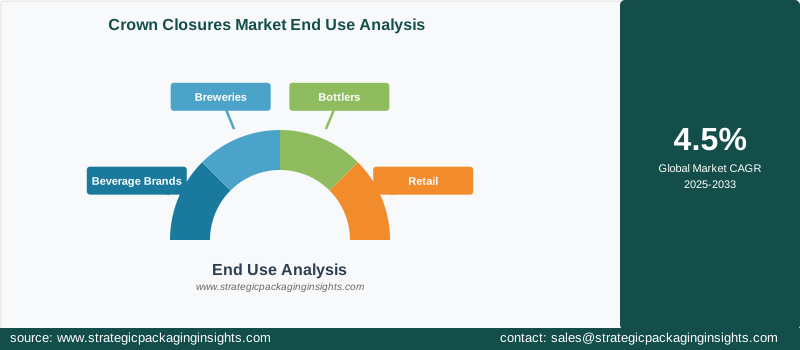
The focus on sustainability and consumer convenience is reshaping the end-use segment, with manufacturers investing in advanced technologies to develop closures that meet these requirements. The emphasis on product differentiation and brand image is driving innovation in closure design, with companies collaborating with beverage brands to develop customized solutions. As the market evolves, the end-use segment is expected to witness significant growth, offering lucrative opportunities for market players.
Crown Closures Market Segments
The Crown Closures market has been segmented on the basis ofMaterial Type
- Steel
- Aluminum
- Tinplate
Product Type
- Pry-Off Crown Closures
- Twist Crown Closures
- Oxygen-Scavenging Crowns
Application
- Beer
- Carbonated Drinks
- Mineral Water
- Specialty Beverages
End Use
- Beverage Brands
- Breweries
- Bottlers
- Retail
Region
- Asia Pacific
- North America
- Latin America
- Europe
- Middle East & Africa




