


CPP Packaging Films Market Outlook
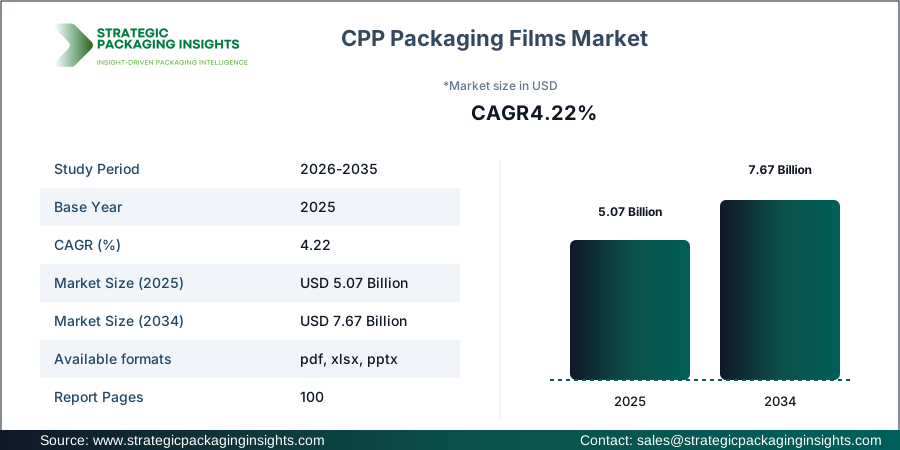
The CPP Packaging Films market size was valued at USD $5.07 Billion in 2025 and is anticipated to reach USD $7.67 Billion by 2035, growing at a CAGR of 4.22% % during the forecast period according to Strategic Packaging Insights. The market is primarily driven by the increasing demand for flexible packaging solutions in the food and beverage industry, which requires high-performance films for product protection and shelf-life extension. The adoption of CPP films is further supported by their cost-effectiveness and versatility in various packaging applications.Report Scope
| Attributes | Details |
| Report Title | CPP Packaging Films Market Projected to Scale to 7.67 Billion by 2035, Assesses Strategic Packaging Insights |
| By Film Type | General CPP Films, Metalized CPP Films, Retort CPP Films, Multi-Layer CPP Films, Coated CPP Films, Anti-Fog CPP Films, High Barrier CPP Films |
| By Thickness | Below 20 Microns, 20–30 Microns, 30–40 Microns, Above 40 Microns |
| By Layer Structure | Single-Layer Films, Three-Layer Films, Five-Layer Films, Multi-Layer Films |
| By Surface Treatment | Untreated, Corona Treated, Flame Treated, Chemical Treated |
| By Application | Food Packaging, Consumer Goods Packaging, Pharmaceutical Packaging, Industrial Packaging, Labels, Laminates, Textile Packaging, Other Applications |
| By End Use Industry | Food and Beverage, Pharmaceuticals, Personal Care and Cosmetics, Consumer Goods, Healthcare, Industrial, Electronics, Textiles |
| By Packaging Format | Pouches, Bags, Wrappers, Laminated Films, Sachets, Labels, Other Formats |
| By Region | North America, Europe, Asia-Pacific, Latin America, Middle East and Africa |
| Base Year | 2025 |
| Historic Period | 2018-2024 |
| Forecast Period | 2026-2035 |
| Number of Pages | 100 |
| Customization Available | Yes* |
Market Trends Analysis
The CPP Packaging Films market is witnessing a shift towards sustainable packaging solutions, with a growing emphasis on recyclability and the use of post-consumer recycled (PCR) content. This trend is driven by regulatory pressures and consumer demand for environmentally friendly packaging options. Companies are investing in advanced film technologies to enhance barrier properties and reduce material usage, aligning with sustainability goals. Additionally, the rise of e-commerce is boosting demand for durable and lightweight packaging solutions, further propelling the market growth.
Technological advancements in film extrusion and coating processes are enabling the production of high-performance CPP films with enhanced properties such as clarity, sealability, and barrier protection. The integration of digital printing technologies is also gaining traction, allowing for customized and high-quality packaging designs. These innovations are enhancing the competitive positioning of CPP films in the packaging industry, driving investment in research and development to meet evolving customer needs and regulatory requirements.
Industry Transformation Analysis
The CPP Packaging Films industry is undergoing significant transformation, with manufacturers focusing on operational efficiency and sustainability integration. The shift towards localized production to reduce carbon footprints and meet regional demand is becoming more pronounced. Companies are expanding their production capacities and investing in state-of-the-art machinery to enhance film quality and production speed. This transformation is driven by the need to meet stringent regulatory standards and consumer expectations for sustainable packaging solutions.
Value-chain transformation is evident as companies collaborate with suppliers and converters to optimize material flows and reduce waste. The adoption of circular economy principles is influencing procurement strategies, with a focus on sourcing sustainable raw materials and enhancing recycling capabilities. These changes are expected to have a long-term commercial impact, improving cost efficiencies and strengthening market competitiveness.
Trends & Disruptions Impacting Customers' Customers
Downstream customers, particularly in the food and beverage industry, are increasingly prioritizing sustainability and cost-effectiveness in their packaging solutions. This shift is driven by consumer demand for eco-friendly products and regulatory mandates for reduced packaging waste. As a result, there is a growing preference for CPP films due to their recyclability and ability to extend product shelf life. The demand for high-barrier films is also rising, driven by the need for enhanced product protection and freshness.
These changes are influencing product demand and innovation in the CPP Packaging Films market. Manufacturers are focusing on developing films with improved barrier properties and reduced environmental impact. The need for customized packaging solutions is driving investment in digital printing technologies, enabling brands to differentiate their products and enhance consumer engagement. These trends present significant market opportunities for companies that can adapt to evolving customer requirements and regulatory landscapes.
CPP Packaging Films Market Ecosystem
The CPP Packaging Films market ecosystem involves a complex interplay of raw material suppliers, film producers, converters, and distributors. Value creation is driven by the ability to produce high-quality films that meet specific customer requirements. Supply-chain dependencies are evident in the procurement of polypropylene resins and additives, which are critical for film production. Capacity constraints in film production can impact the availability of CPP films, influencing downstream demand and pricing dynamics.
Changes in the ecosystem, such as advancements in recycling technologies and increased focus on sustainability, are expected to drive market growth. Companies that can effectively manage supply-chain relationships and optimize material flows are likely to gain a competitive advantage. The integration of circular economy principles is also influencing procurement strategies, with a focus on sourcing sustainable raw materials and enhancing recycling capabilities.
Analyst Perspective
Analyst Perspective: The CPP Packaging Films market is poised for significant growth, driven by increasing demand for sustainable and high-performance packaging solutions. The integration of advanced film technologies and digital printing capabilities is enhancing the competitive positioning of CPP films in the packaging industry.
Companies should focus on developing films with improved barrier properties and reduced environmental impact to meet evolving customer requirements and regulatory landscapes. The shift towards localized production and circular economy principles is expected to improve cost efficiencies and strengthen market competitiveness.
Market participants should monitor advancements in recycling technologies and regulatory changes, as these factors will influence procurement strategies and product development. Companies that can effectively manage supply-chain relationships and optimize material flows are likely to gain a competitive advantage in the market.
Opportunities & Threats
The CPP Packaging Films market presents significant opportunities for growth, driven by the increasing demand for flexible packaging solutions in the food and beverage industry. The shift towards sustainable packaging and the integration of advanced film technologies are expected to enhance market competitiveness. Companies that can develop high-performance films with improved barrier properties and reduced environmental impact are likely to gain a competitive advantage.
Technological advancements in film extrusion and coating processes are enabling the production of high-quality CPP films with enhanced properties such as clarity, sealability, and barrier protection. The integration of digital printing technologies is also gaining traction, allowing for customized and high-quality packaging designs. These innovations are expected to drive investment in research and development to meet evolving customer needs and regulatory requirements.
However, the market faces several threats, including raw material price volatility and regulatory uncertainty. The availability of polypropylene resins and additives is critical for film production, and supply constraints can impact pricing dynamics and product availability. Companies must navigate complex regulatory landscapes and adapt to changing consumer preferences for sustainable packaging solutions.
Competition from alternative packaging materials and technologies also poses a threat to the CPP Packaging Films market. Companies must continuously innovate and differentiate their products to maintain market share. The integration of circular economy principles and advancements in recycling technologies are expected to mitigate some of these challenges, but companies must remain vigilant and proactive in addressing market threats.
Drivers & Challenges
The CPP Packaging Films market is driven by the increasing demand for flexible packaging solutions in the food and beverage industry. The need for high-performance films that offer product protection and shelf-life extension is a key driver of market growth. The cost-effectiveness and versatility of CPP films make them an attractive option for various packaging applications, further supporting market expansion.
Regulatory pressures and consumer demand for sustainable packaging solutions are also driving market growth. Companies are investing in advanced film technologies to enhance barrier properties and reduce material usage, aligning with sustainability goals. The rise of e-commerce is boosting demand for durable and lightweight packaging solutions, further propelling the market growth.
However, the market faces several challenges, including raw material price volatility and regulatory uncertainty. The availability of polypropylene resins and additives is critical for film production, and supply constraints can impact pricing dynamics and product availability. Companies must navigate complex regulatory landscapes and adapt to changing consumer preferences for sustainable packaging solutions.
Packaging Market Economics
The economics of the CPP Packaging Films market are influenced by several factors, including raw material costs, conversion costs, and energy expenses. The price of polypropylene resins, a key raw material, can fluctuate due to supply-demand dynamics and geopolitical factors. Conversion costs, including extrusion and coating processes, are critical in determining the overall cost structure of CPP films.
Energy costs also play a significant role in the production of CPP films, as film extrusion and coating processes are energy-intensive. Companies must optimize production processes to reduce energy consumption and improve cost efficiencies. The integration of advanced film technologies and digital printing capabilities can enhance production efficiency and reduce waste, further improving the economics of CPP films.
Packaging Value Chain & Cost Analysis
The value chain of the CPP Packaging Films market involves several tiers, including resin synthesis, film extrusion, and converting. Resin synthesis involves the production of polypropylene resins and additives, which are critical for film production. Film extrusion involves the processing of resins into films with desired properties, while converting involves the processing of films into various packaging formats.
Downstream activities, such as co-packing and distribution, are critical in delivering films to end users. The integration of circular economy principles and advancements in recycling technologies are expected to enhance the value chain, improving cost efficiencies and reducing environmental impact. Companies must optimize material flows and manage supply-chain relationships to gain a competitive advantage in the market.
Unit Economics & Substrate Cost Analysis
The unit economics of CPP Packaging Films are influenced by several factors, including raw material costs, energy expenses, and conversion costs. The price of polypropylene resins, a key raw material, can fluctuate due to supply-demand dynamics and geopolitical factors. Energy costs also play a significant role in the production of CPP films, as film extrusion and coating processes are energy-intensive.
Conversion costs, including extrusion and coating processes, are critical in determining the overall cost structure of CPP films. Companies must optimize production processes to reduce energy consumption and improve cost efficiencies. The integration of advanced film technologies and digital printing capabilities can enhance production efficiency and reduce waste, further improving the unit economics of CPP films.
Packaging Regulatory & Sustainability Analysis
The CPP Packaging Films market is subject to various regulatory and sustainability requirements, including packaging regulations, extended producer responsibility (EPR), and recycling targets. Regulatory bodies such as the European Commission and the U.S. Environmental Protection Agency (EPA) are imposing stricter guidelines on packaging waste and recyclability, driving companies to adopt sustainable packaging solutions.
Companies must navigate complex regulatory landscapes and adapt to changing consumer preferences for sustainable packaging solutions. The integration of circular economy principles and advancements in recycling technologies are expected to enhance compliance with regulatory requirements and improve sustainability performance. Companies that can effectively manage regulatory challenges and align with sustainability goals are likely to gain a competitive advantage in the market.
Strategic Mergers, Acquisitions & Capacity Expansions
Recent strategic developments in the CPP Packaging Films market include mergers, acquisitions, and capacity expansions by key players. Companies such as Mitsubishi Chemical Corporation and BASF SE are investing in new production facilities and expanding their product portfolios to enhance market competitiveness. These strategic moves are driven by the need to meet increasing demand for high-performance films and align with sustainability goals.
Partnerships and collaborations with suppliers and converters are also gaining traction, enabling companies to optimize material flows and reduce waste. The integration of advanced film technologies and digital printing capabilities is enhancing production efficiency and product quality, driving investment in research and development. These strategic developments are expected to have a significant impact on market growth and competitive dynamics.
Strategic Action Directives
Brand Packaging Engineers & Sustainability Directors should focus on material selection and mono-material qualification to enhance recyclability and barrier performance. The integration of post-consumer recycled (PCR) content and advanced film technologies can improve sustainability performance and align with regulatory requirements.
Converter Operations & Extrusion Leads should optimize line speed and tooling to enhance production efficiency and reduce scrap. The integration of digital printing technologies can enable customized packaging solutions and improve product differentiation.
Procurement & Material Sourcing Managers should diversify resin contracts and price indexing to mitigate raw material price volatility. The integration of circular economy principles and advancements in recycling technologies can enhance procurement strategies and improve cost efficiencies.
Investors should monitor capacity expansions and strategic mergers and acquisitions to identify growth opportunities and assess market concentration. The integration of advanced film technologies and digital printing capabilities can enhance production efficiency and product quality, driving investment in research and development.
Market Share Analysis
The CPP Packaging Films market is characterized by a competitive landscape with several key players, including Mitsubishi Chemical Corporation, BASF SE, and SABIC. These companies are investing in advanced film technologies and expanding their production capacities to enhance market competitiveness. The integration of digital printing capabilities and sustainable packaging solutions is driving innovation and product differentiation.
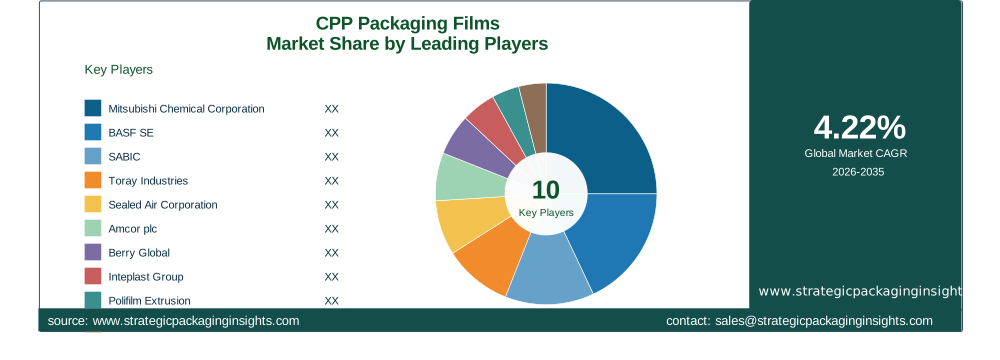
Companies such as Toray Industries and Sealed Air Corporation are focusing on developing high-performance films with improved barrier properties and reduced environmental impact. The rise of e-commerce and increasing demand for flexible packaging solutions are driving market growth, creating opportunities for companies that can adapt to evolving customer requirements and regulatory landscapes.
Berry Global and Amcor plc are leveraging their global presence and extensive product portfolios to strengthen their market positions. These companies are investing in research and development to enhance film quality and production efficiency, aligning with sustainability goals and regulatory requirements. The competitive dynamics of the CPP Packaging Films market are expected to evolve as companies continue to innovate and differentiate their products.
Inteplast Group and Polifilm Extrusion are focusing on optimizing material flows and reducing waste to improve cost efficiencies and strengthen market competitiveness. The integration of circular economy principles and advancements in recycling technologies are expected to enhance compliance with regulatory requirements and improve sustainability performance. Companies that can effectively manage supply-chain relationships and optimize production processes are likely to gain a competitive advantage in the market.
Key Highlights
- Largest Region: Asia Pacific
- Fastest-Growing Region: Asia Pacific
- Largest Segment: Food Packaging
- Fastest-Growing Segment: Consumer Goods Packaging
- Base-year market size: $5.07 Billion
- Forecast-year market size: $7.67 Billion
- CAGR: 4.22%
- Important application: Food Packaging
- Major end-use industry: Food and Beverage
- Major market driver: Demand for sustainable packaging solutions
Regional Insights
The CPP Packaging Films market is experiencing significant growth across major regions, with Asia Pacific emerging as the largest and fastest-growing region. The increasing demand for flexible packaging solutions in countries like China and India is driving market expansion. North America and Europe are also witnessing steady growth, supported by advancements in film technologies and regulatory pressures for sustainable packaging solutions.
North America
The North American CPP Packaging Films market is characterized by a strong focus on sustainability and innovation. The demand for high-performance films in the food and beverage industry is driving market growth. Companies are investing in advanced film technologies to enhance barrier properties and reduce material usage, aligning with regulatory requirements and consumer preferences for eco-friendly packaging solutions.
The rise of e-commerce is also boosting demand for durable and lightweight packaging solutions, further propelling market growth. The integration of digital printing technologies is enabling customized packaging designs, enhancing product differentiation and consumer engagement. The competitive landscape is evolving as companies focus on innovation and sustainability to meet changing customer needs and regulatory landscapes.
Europe
The European CPP Packaging Films market is driven by stringent regulatory requirements and consumer demand for sustainable packaging solutions. The integration of circular economy principles and advancements in recycling technologies are enhancing compliance with regulatory requirements and improving sustainability performance. Companies are investing in research and development to develop high-performance films with improved barrier properties and reduced environmental impact.
The demand for flexible packaging solutions in the food and beverage industry is driving market growth, supported by advancements in film extrusion and coating processes. The integration of digital printing technologies is enabling customized packaging designs, enhancing product differentiation and consumer engagement. The competitive landscape is evolving as companies focus on innovation and sustainability to meet changing customer needs and regulatory landscapes.
Asia Pacific
The Asia Pacific CPP Packaging Films market is experiencing significant growth, driven by increasing demand for flexible packaging solutions in countries like China and India. The rise of e-commerce and the growing food and beverage industry are driving market expansion. Companies are investing in advanced film technologies to enhance barrier properties and reduce material usage, aligning with sustainability goals and regulatory requirements.
The integration of digital printing technologies is enabling customized packaging designs, enhancing product differentiation and consumer engagement. The competitive landscape is evolving as companies focus on innovation and sustainability to meet changing customer needs and regulatory landscapes. The integration of circular economy principles and advancements in recycling technologies are expected to enhance compliance with regulatory requirements and improve sustainability performance.
Latin America
The Latin American CPP Packaging Films market is witnessing steady growth, driven by increasing demand for flexible packaging solutions in the food and beverage industry. The integration of advanced film technologies and digital printing capabilities is enhancing production efficiency and product quality, driving investment in research and development.
Companies are focusing on developing high-performance films with improved barrier properties and reduced environmental impact to meet evolving customer requirements and regulatory landscapes. The competitive landscape is evolving as companies focus on innovation and sustainability to meet changing customer needs and regulatory landscapes. The integration of circular economy principles and advancements in recycling technologies are expected to enhance compliance with regulatory requirements and improve sustainability performance.
Middle East & Africa
The Middle East & Africa CPP Packaging Films market is experiencing steady growth, driven by increasing demand for flexible packaging solutions in the food and beverage industry. The integration of advanced film technologies and digital printing capabilities is enhancing production efficiency and product quality, driving investment in research and development.
Companies are focusing on developing high-performance films with improved barrier properties and reduced environmental impact to meet evolving customer requirements and regulatory landscapes. The competitive landscape is evolving as companies focus on innovation and sustainability to meet changing customer needs and regulatory landscapes. The integration of circular economy principles and advancements in recycling technologies are expected to enhance compliance with regulatory requirements and improve sustainability performance.
CPP Packaging Films Market Segments Insights

By Film Type Analysis
The CPP Packaging Films market is segmented by film type, with General CPP Films, Metalized CPP Films, Retort CPP Films, Multi-Layer CPP Films, Coated CPP Films, Anti-Fog CPP Films, and High Barrier CPP Films being the key categories. General CPP Films are widely used due to their cost-effectiveness and versatility in various packaging applications. Metalized CPP Films are gaining traction for their enhanced barrier properties, making them suitable for food packaging applications that require extended shelf life.
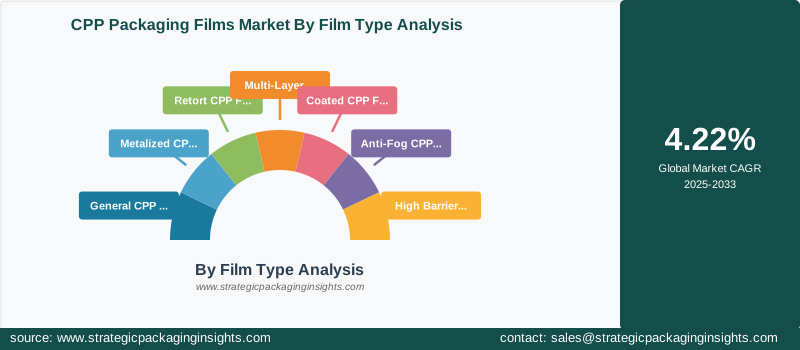
Retort CPP Films are designed for high-temperature applications, providing excellent heat resistance and sealability. Multi-Layer CPP Films offer superior barrier protection and are used in applications requiring high-performance packaging solutions. Coated CPP Films are gaining popularity for their enhanced printability and surface properties, enabling customized packaging designs. Anti-Fog CPP Films are used in applications where clarity and visibility are critical, such as fresh produce packaging. High Barrier CPP Films are designed for applications requiring superior barrier protection, such as pharmaceutical and industrial packaging.
By Thickness Analysis
The CPP Packaging Films market is segmented by thickness, with categories including Below 20 Microns, 20-30 Microns, 30-40 Microns, and Above 40 Microns. Films with thickness below 20 microns are used in applications requiring lightweight and cost-effective packaging solutions. The 20-30 microns segment is gaining traction due to its balance between cost and performance, making it suitable for a wide range of packaging applications.
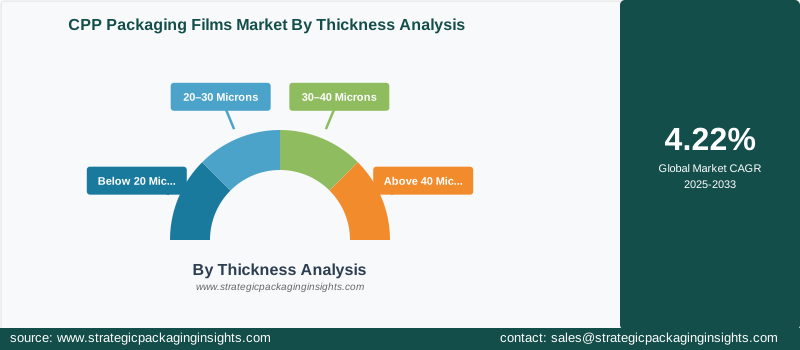
Films with thickness between 30-40 microns offer enhanced barrier properties and are used in applications requiring superior protection, such as food and pharmaceutical packaging. The above 40 microns segment is used in applications requiring high-strength and durability, such as industrial and heavy-duty packaging. The demand for films with varying thicknesses is driven by the need for customized packaging solutions that meet specific performance requirements.
By Layer Structure Analysis
The CPP Packaging Films market is segmented by layer structure, with categories including Single-Layer Films, Three-Layer Films, Five-Layer Films, and Multi-Layer Films. Single-Layer Films are widely used due to their simplicity and cost-effectiveness, making them suitable for applications requiring basic packaging solutions. Three-Layer Films offer enhanced barrier properties and are used in applications requiring improved protection and shelf life.
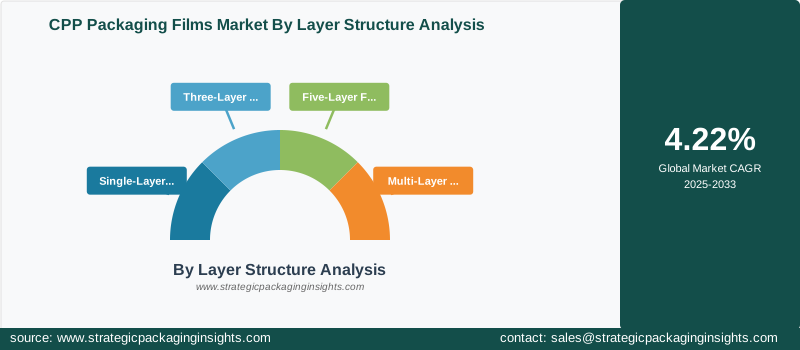
Five-Layer Films provide superior barrier protection and are used in applications requiring high-performance packaging solutions. Multi-Layer Films offer the highest level of barrier protection and are used in applications requiring advanced packaging solutions, such as pharmaceutical and industrial packaging. The demand for films with varying layer structures is driven by the need for customized packaging solutions that meet specific performance requirements.
By Surface Treatment Analysis
The CPP Packaging Films market is segmented by surface treatment, with categories including Untreated, Corona Treated, Flame Treated, and Chemical Treated. Untreated films are used in applications requiring basic packaging solutions, while corona treated films offer enhanced printability and adhesion properties, making them suitable for applications requiring customized packaging designs.
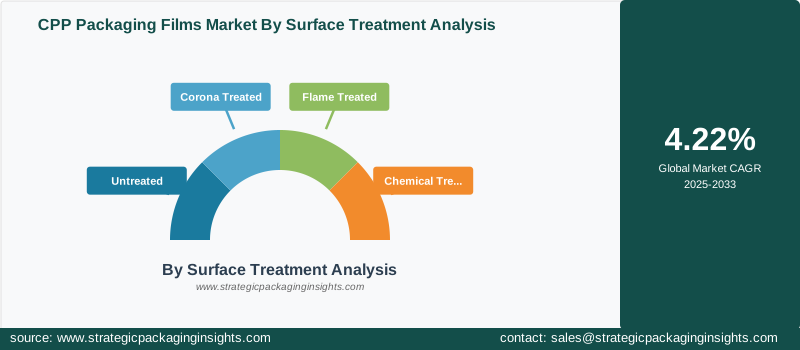
Flame treated films provide improved surface properties and are used in applications requiring enhanced printability and adhesion. Chemical treated films offer superior surface properties and are used in applications requiring advanced packaging solutions, such as pharmaceutical and industrial packaging. The demand for films with varying surface treatments is driven by the need for customized packaging solutions that meet specific performance requirements.
By Application Analysis
The CPP Packaging Films market is segmented by application, with categories including Food Packaging, Consumer Goods Packaging, Pharmaceutical Packaging, Industrial Packaging, Labels, Laminates, Textile Packaging, and Other Applications. Food Packaging is the largest segment, driven by the increasing demand for flexible packaging solutions that offer product protection and shelf-life extension.
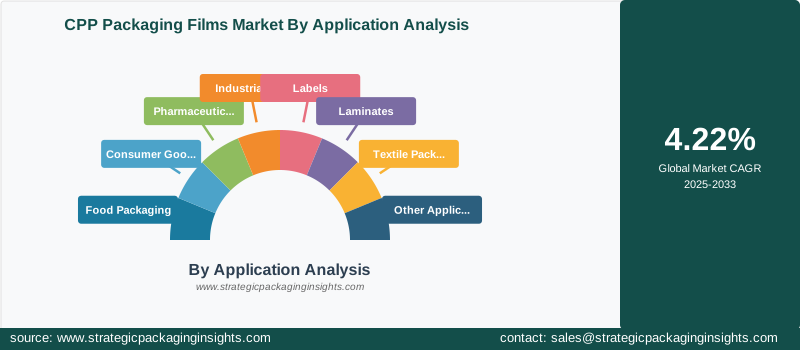
Consumer Goods Packaging is the fastest-growing segment, driven by the rise of e-commerce and the need for durable and lightweight packaging solutions. Pharmaceutical Packaging is gaining traction due to the need for high-performance films with superior barrier properties. Industrial Packaging is used in applications requiring high-strength and durability, while Labels and Laminates are used in applications requiring customized packaging designs. Textile Packaging is used in applications requiring lightweight and cost-effective packaging solutions.
By End Use Industry Analysis
The CPP Packaging Films market is segmented by end use industry, with categories including Food and Beverage, Pharmaceuticals, Personal Care and Cosmetics, Consumer Goods, Healthcare, Industrial, Electronics, and Textiles. The Food and Beverage industry is the largest end-use industry, driven by the increasing demand for flexible packaging solutions that offer product protection and shelf-life extension.
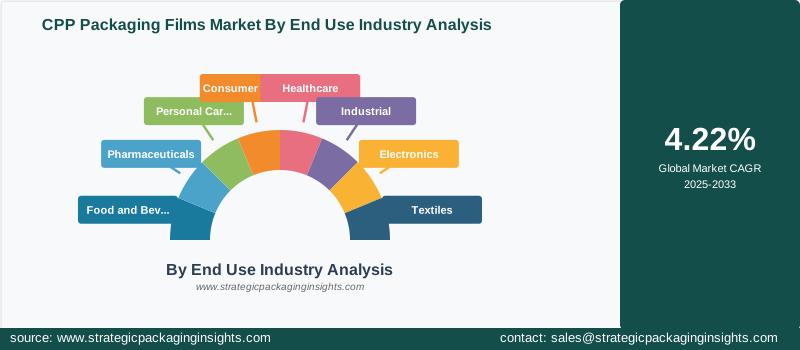
The Pharmaceuticals industry is gaining traction due to the need for high-performance films with superior barrier properties. The Personal Care and Cosmetics industry is driven by the need for customized packaging solutions that enhance product differentiation and consumer engagement. The Consumer Goods industry is the fastest-growing segment, driven by the rise of e-commerce and the need for durable and lightweight packaging solutions. The Healthcare, Industrial, Electronics, and Textiles industries are also witnessing steady growth, driven by the need for high-performance packaging solutions that meet specific performance requirements.
By Packaging Format Analysis
The CPP Packaging Films market is segmented by packaging format, with categories including Pouches, Bags, Wrappers, Laminated Films, Sachets, Labels, and Other Formats. Pouches are widely used due to their versatility and cost-effectiveness, making them suitable for a wide range of packaging applications. Bags are gaining traction due to their durability and ability to accommodate larger volumes, making them suitable for industrial and heavy-duty packaging applications.
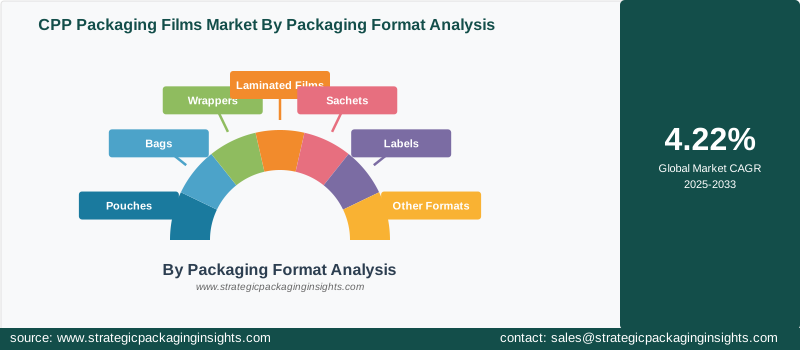
Wrappers are used in applications requiring lightweight and cost-effective packaging solutions, while laminated films offer enhanced barrier properties and are used in applications requiring superior protection. Sachets are used in applications requiring small-volume packaging solutions, while labels are used in applications requiring customized packaging designs. The demand for films with varying packaging formats is driven by the need for customized packaging solutions that meet specific performance requirements.
CPP Packaging Films Market Segments
The CPP Packaging Films market has been segmented on the basis ofBy Film Type
- General CPP Films
- Metalized CPP Films
- Retort CPP Films
- Multi-Layer CPP Films
- Coated CPP Films
- Anti-Fog CPP Films
- High Barrier CPP Films
By Thickness
- Below 20 Microns
- 20–30 Microns
- 30–40 Microns
- Above 40 Microns
By Layer Structure
- Single-Layer Films
- Three-Layer Films
- Five-Layer Films
- Multi-Layer Films
By Surface Treatment
- Untreated
- Corona Treated
- Flame Treated
- Chemical Treated
By Application
- Food Packaging
- Consumer Goods Packaging
- Pharmaceutical Packaging
- Industrial Packaging
- Labels
- Laminates
- Textile Packaging
- Other Applications
By End Use Industry
- Food and Beverage
- Pharmaceuticals
- Personal Care and Cosmetics
- Consumer Goods
- Healthcare
- Industrial
- Electronics
- Textiles
By Packaging Format
- Pouches
- Bags
- Wrappers
- Laminated Films
- Sachets
- Labels
- Other Formats
By Region
- North America
- Europe
- Asia-Pacific
- Latin America
- Middle East and Africa




