


Cosmetic Tube Packaging Market Outlook
The Cosmetic Tube Packaging market was valued at $4.42 billion in 2025 and is projected to reach $8.13 billion by 2034, growing at a CAGR of 7.0% during the forecast period 2026-2034. This market is experiencing significant growth due to the increasing demand for convenient and sustainable packaging solutions in the beauty and personal care industry. The rise in consumer awareness regarding the environmental impact of packaging materials is driving the shift towards eco-friendly and recyclable tube packaging options. Additionally, the growing popularity of travel-sized and on-the-go products is further propelling the demand for cosmetic tube packaging, as these tubes offer portability and ease of use.
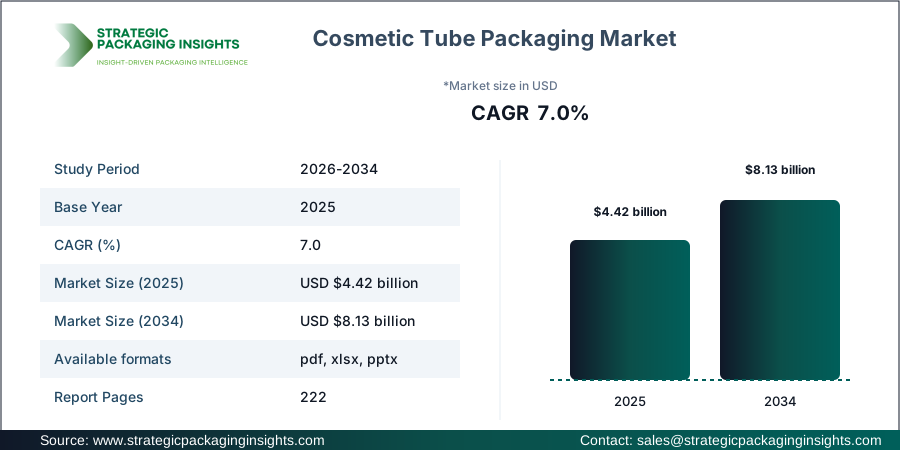
Despite the promising growth prospects, the Cosmetic Tube Packaging market faces challenges such as stringent regulatory requirements and the high cost of raw materials. Regulatory bodies across various regions are imposing strict guidelines on packaging materials to ensure consumer safety and environmental sustainability. This has led to increased compliance costs for manufacturers, which could potentially hinder market growth. However, advancements in packaging technologies and the development of innovative materials are expected to create new opportunities for market players. The increasing focus on product differentiation and branding is also driving the demand for customized and aesthetically appealing tube packaging solutions.
Report Scope
| Attributes | Details |
| Report Title | Cosmetic Tube Packaging Market Size, Future Growth and Forecast 2034 |
| Material | Plastic, Aluminum, Laminate |
| Closure | Flip-Top, Screw Cap, Nozzle |
| Application | Skincare, Haircare, Oral Care |
| Volume | Small, Medium, Large |
| Region | Asia Pacific, North America, Latin America, Europe, Middle East & Africa |
| Base Year | 2025 |
| Historic Period | 2018-2024 |
| Forecast Period | 2026-2034 |
| Number of Pages | 222 |
| Customization Available | Yes* |
Opportunities & Threats
The Cosmetic Tube Packaging market presents numerous opportunities for growth, primarily driven by the rising demand for sustainable and eco-friendly packaging solutions. As consumers become more environmentally conscious, there is a growing preference for packaging materials that are recyclable and biodegradable. This trend is encouraging manufacturers to invest in research and development to create innovative packaging solutions that meet these demands. Additionally, the increasing popularity of e-commerce platforms is providing a significant boost to the market, as online retailers require durable and attractive packaging to enhance the customer experience and protect products during transit.
Another opportunity lies in the expanding beauty and personal care industry, particularly in emerging markets. As disposable incomes rise and consumer preferences shift towards premium and luxury products, there is a growing demand for high-quality packaging solutions that reflect the brand's image and appeal to discerning customers. This trend is driving the adoption of advanced packaging technologies and materials, such as airless tubes and multi-layer laminates, which offer superior protection and preservation of product formulations.
However, the market also faces threats from the volatility of raw material prices and the increasing competition from alternative packaging solutions. The fluctuating prices of materials such as plastic and aluminum can impact the profitability of manufacturers, leading to potential price hikes for end consumers. Additionally, the growing popularity of alternative packaging formats, such as jars and bottles, poses a challenge to the tube packaging market. To mitigate these threats, companies are focusing on strategic partnerships and collaborations to enhance their product offerings and expand their market presence.
Drivers & Challenges
One of the primary drivers of the Cosmetic Tube Packaging market is the increasing consumer demand for convenient and user-friendly packaging solutions. Tubes offer several advantages, such as ease of use, portability, and precise dispensing, making them a preferred choice for a wide range of cosmetic products. The growing trend of personalization and customization in the beauty industry is also driving the demand for unique and aesthetically appealing tube designs that enhance brand identity and consumer engagement.
Technological advancements in packaging materials and manufacturing processes are further propelling market growth. Innovations such as airless tubes, which prevent contamination and extend the shelf life of products, are gaining popularity among consumers and manufacturers alike. Additionally, the development of sustainable and eco-friendly materials, such as biodegradable plastics and recycled aluminum, is addressing the environmental concerns associated with traditional packaging materials and driving the shift towards greener alternatives.
Despite these drivers, the market faces several challenges, including stringent regulatory requirements and the high cost of raw materials. Regulatory bodies across various regions are imposing strict guidelines on packaging materials to ensure consumer safety and environmental sustainability. This has led to increased compliance costs for manufacturers, which could potentially hinder market growth. Furthermore, the volatility of raw material prices, particularly for plastic and aluminum, poses a significant challenge to manufacturers, impacting their profitability and pricing strategies.
Market Share Analysis
The Cosmetic Tube Packaging market is characterized by intense competition among key players, with companies striving to gain a competitive edge through product innovation, strategic partnerships, and mergers and acquisitions. The market is dominated by several major players, including Essel Propack, Albea, Hoffmann Neopac, Berry Global, Montebello Packaging, CTL-TH Packaging, Linhardt, Kimpai, Tubex, and Huhtamaki. These companies hold a significant share of the market, leveraging their extensive product portfolios, strong distribution networks, and advanced manufacturing capabilities to maintain their market positions.
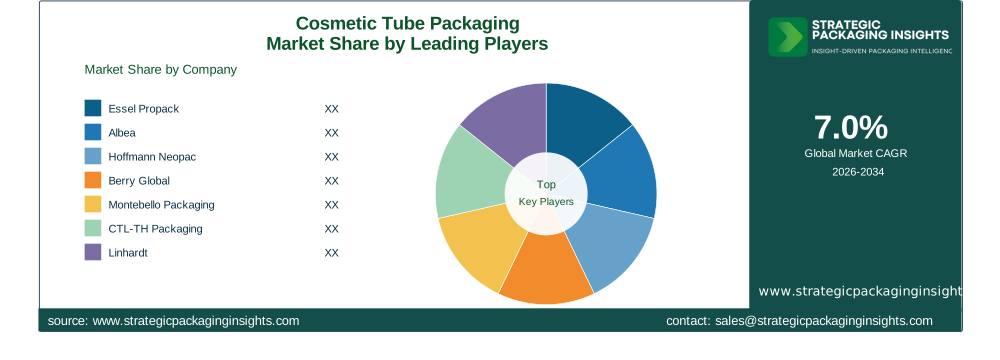
Essel Propack is a leading player in the market, known for its innovative packaging solutions and commitment to sustainability. The company offers a wide range of tube packaging options, including laminated and plastic tubes, catering to various applications in the beauty and personal care industry. Albea, another major player, is renowned for its comprehensive product offerings and focus on customization and design. The company's expertise in manufacturing high-quality and aesthetically appealing packaging solutions has enabled it to establish a strong presence in the market.
Hoffmann Neopac is a key player in the market, specializing in the production of high-barrier tubes that offer superior protection and preservation of product formulations. The company's focus on innovation and sustainability has positioned it as a preferred choice for premium and luxury brands. Berry Global, a global leader in packaging solutions, offers a diverse range of tube packaging options, including plastic and laminate tubes, catering to various consumer needs and preferences.
Montebello Packaging, CTL-TH Packaging, Linhardt, Kimpai, Tubex, and Huhtamaki are also prominent players in the market, each offering unique product offerings and capabilities. These companies are continuously investing in research and development to enhance their product portfolios and expand their market presence. The competitive landscape of the Cosmetic Tube Packaging market is characterized by a focus on innovation, sustainability, and customer-centric solutions, with companies striving to meet the evolving needs of consumers and maintain their competitive edge.
Key Highlights
- The Cosmetic Tube Packaging market is projected to grow at a CAGR of 7.0% from 2026 to 2034.
- Increasing demand for sustainable and eco-friendly packaging solutions is driving market growth.
- Technological advancements in packaging materials and manufacturing processes are propelling market expansion.
- The rise of e-commerce platforms is boosting the demand for durable and attractive packaging solutions.
- Emerging markets offer significant growth opportunities due to rising disposable incomes and changing consumer preferences.
- Stringent regulatory requirements and volatile raw material prices pose challenges to market growth.
- Key players in the market include Essel Propack, Albea, Hoffmann Neopac, Berry Global, and Montebello Packaging.
Top Countries Insights
In the Cosmetic Tube Packaging market, the United States stands out as a key player, with a market size of approximately $1.2 billion and a CAGR of 5%. The country's robust beauty and personal care industry, coupled with a strong focus on innovation and sustainability, drives the demand for advanced packaging solutions. Government regulations promoting eco-friendly packaging further bolster market growth, encouraging manufacturers to adopt sustainable practices and materials.
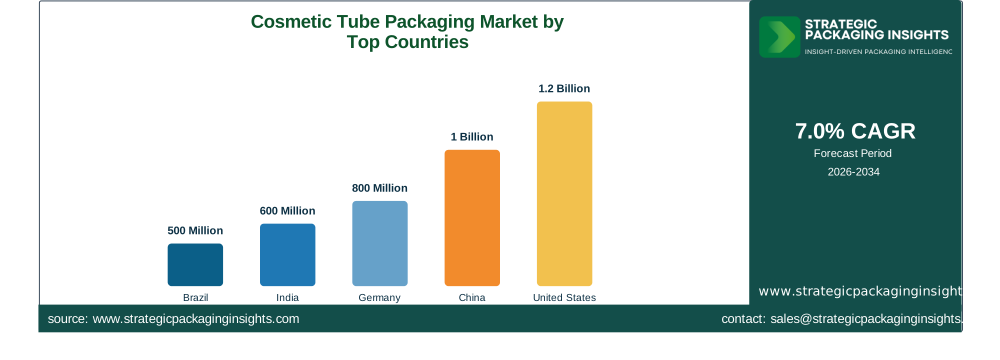
China, with a market size of around $1 billion and a CAGR of 8%, is another significant player in the market. The country's rapidly growing middle class and increasing consumer spending on beauty and personal care products are driving the demand for high-quality packaging solutions. Additionally, the government's initiatives to promote sustainable packaging and reduce plastic waste are encouraging manufacturers to invest in eco-friendly materials and technologies.
Germany, with a market size of approximately $800 million and a CAGR of 6%, is a leading market in Europe. The country's strong emphasis on sustainability and environmental protection drives the demand for recyclable and biodegradable packaging solutions. The presence of major cosmetic brands and a well-established packaging industry further contribute to market growth, with companies focusing on innovation and customization to meet consumer preferences.
India, with a market size of around $600 million and a CAGR of 9%, is an emerging market with significant growth potential. The country's expanding beauty and personal care industry, driven by rising disposable incomes and changing consumer preferences, is fueling the demand for advanced packaging solutions. Government initiatives promoting sustainable packaging and reducing plastic waste are also encouraging manufacturers to adopt eco-friendly practices.
Brazil, with a market size of approximately $500 million and a CAGR of 7%, is a key market in Latin America. The country's growing beauty and personal care industry, coupled with a strong focus on sustainability, drives the demand for innovative and eco-friendly packaging solutions. The presence of major cosmetic brands and a well-established packaging industry further contribute to market growth, with companies focusing on product differentiation and branding to capture consumer attention.
Cosmetic Tube Packaging Market Segments Insights

Material Analysis
The material segment of the Cosmetic Tube Packaging market is primarily driven by the increasing demand for sustainable and eco-friendly packaging solutions. Plastic, aluminum, and laminate are the key materials used in the production of cosmetic tubes, each offering unique benefits and applications. Plastic tubes are widely used due to their lightweight, cost-effectiveness, and versatility, making them suitable for a wide range of cosmetic products. However, the growing environmental concerns associated with plastic waste are driving the shift towards more sustainable alternatives, such as aluminum and laminate tubes.
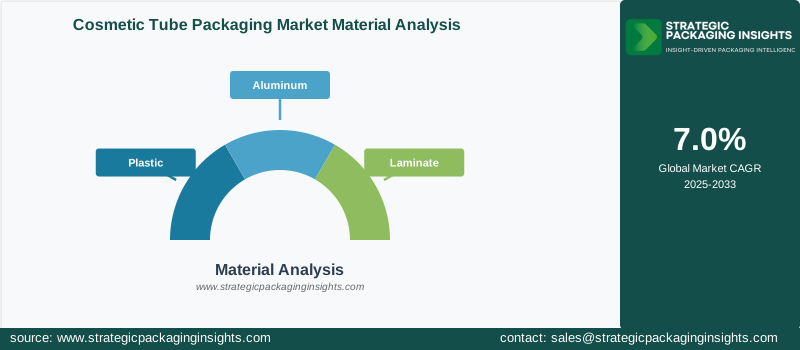
Aluminum tubes are gaining popularity due to their recyclability and superior barrier properties, which help preserve the integrity and shelf life of cosmetic products. The increasing focus on sustainability and the rising demand for premium and luxury packaging solutions are driving the adoption of aluminum tubes in the market. Laminate tubes, on the other hand, offer a combination of the benefits of plastic and aluminum, providing excellent barrier properties and a premium look and feel. The growing trend of personalization and customization in the beauty industry is also driving the demand for unique and aesthetically appealing laminate tube designs.
Closure Analysis
The closure segment of the Cosmetic Tube Packaging market is characterized by the increasing demand for user-friendly and convenient packaging solutions. Flip-top, screw cap, and nozzle closures are the key types used in cosmetic tubes, each offering unique benefits and applications. Flip-top closures are widely used due to their ease of use and convenience, allowing consumers to dispense products with one hand. The growing trend of on-the-go and travel-sized products is driving the demand for flip-top closures, as they offer portability and ease of use.
Screw cap closures are popular for their secure sealing and tamper-evident features, making them suitable for a wide range of cosmetic products. The increasing focus on product safety and security is driving the demand for screw cap closures in the market. Nozzle closures, on the other hand, are gaining popularity for their precise dispensing and control, making them ideal for products that require accurate application, such as serums and creams. The growing trend of personalization and customization in the beauty industry is also driving the demand for unique and aesthetically appealing closure designs.
Application Analysis
The application segment of the Cosmetic Tube Packaging market is driven by the increasing demand for convenient and user-friendly packaging solutions in the beauty and personal care industry. Skincare, haircare, and oral care are the key applications of cosmetic tubes, each offering unique benefits and applications. Skincare products, such as creams, lotions, and serums, are the largest application segment, driven by the growing consumer demand for anti-aging and skincare solutions. The increasing focus on product safety and preservation is driving the demand for advanced packaging solutions that offer superior protection and preservation of product formulations.
Haircare products, such as shampoos, conditioners, and styling products, are another significant application segment, driven by the growing consumer demand for haircare solutions that offer convenience and ease of use. The increasing trend of personalization and customization in the beauty industry is driving the demand for unique and aesthetically appealing packaging solutions that enhance brand identity and consumer engagement. Oral care products, such as toothpaste and mouthwash, are also driving the demand for cosmetic tube packaging, as consumers seek convenient and user-friendly packaging solutions that offer precise dispensing and control.
Volume Analysis
The volume segment of the Cosmetic Tube Packaging market is characterized by the increasing demand for convenient and user-friendly packaging solutions in various sizes. Small, medium, and large volumes are the key segments, each offering unique benefits and applications. Small volumes are gaining popularity due to the growing trend of travel-sized and on-the-go products, as consumers seek portable and convenient packaging solutions that offer ease of use and portability. The increasing focus on personalization and customization in the beauty industry is also driving the demand for unique and aesthetically appealing small volume designs.
Medium volumes are widely used for a wide range of cosmetic products, offering a balance between convenience and cost-effectiveness. The growing consumer demand for value-for-money products is driving the demand for medium volume packaging solutions that offer a balance between convenience and cost-effectiveness. Large volumes, on the other hand, are gaining popularity for their cost-effectiveness and suitability for bulk products, such as shampoos and conditioners. The increasing focus on sustainability and the rising demand for eco-friendly packaging solutions are driving the shift towards larger volume packaging solutions that offer reduced material usage and waste.
Cosmetic Tube Packaging Market Segments
The Cosmetic Tube Packaging market has been segmented on the basis ofMaterial
- Plastic
- Aluminum
- Laminate
Closure
- Flip-Top
- Screw Cap
- Nozzle
Application
- Skincare
- Haircare
- Oral Care
Volume
- Small
- Medium
- Large
Region
- Asia Pacific
- North America
- Latin America
- Europe
- Middle East & Africa




